Showing posts with label sustainable agriculture. Show all posts

Monday, September 2, 2024

September 2024 science summary (nut sustainability & freshwater protection in Chile)

post-knee surgery setup

Hi,


I didn't read much science this last month. I had knee surgery instead (the pic above shows the cool leg squeezing machines and icing machine I got). But I've got a review of one article on freshwater protection in Chile, AND as a treat a guest review from Randy Swaty and Sarah Bixby of an article comparing the pros and cons of different kinds of nuts! They even included some discussion questions. If you are reading this and want to do a guest review just let me know!

If you know someone who wants to sign up to receive these summaries, they can do so at http://bit.ly/sciencejon (no need to email me).

NUTS! (review by Randy Swaty and Sarah Bixby):

Walnuts for the win? Well, it depends.  Being a conscientious consumer is challenging.  Just try to figure out which nuts are most sustainable.  A Google search turned up typical top-10 lists and shallow articles.  Google scholar pointed us to Cap et al., 2023 which assesses 8 nuts and 2 seeds (see article for specifics) against 3 environmental, 2 nutritional and 6 social criteria.   We did not come away with a clear answer, but learned: 1) indicators we thought of (e.g., transportation and packaging) were not included (see citation they reference Tillman and Clark, 2014), 2) walnuts and sunflower seeds generally ranked the highest with cashews ranking the lowest (by far), 3) Figure 5 was a favorite, where the authors rank nuts based on ‘regret’.  Surprisingly, while just two of the eleven criteria are nutrition criteria, chestnuts’ poor nutrition ranking knocked the tree nut right out of the least regret category and 4) seeds outperformed nuts on nutritional criteria-we’ll be looking for more data on seeds.  The authors also present some hope (mostly-as usual there’s exceptions) in Figure 6 where they report “improvement” in 10 of their 11 criteria if consumption patterns followed the baseline rank order.

Jon's side note: In the first draft of this review they also had discussion questions; we cut them for brevity but I loved the idea and the curiosity this article spawned for them! Email me if you want to be connected w/ Randy and Sarah to follow up :) 


FRESHWATER PROTECTION:
Weber Salazar et al. 2024 is a legal analysis overview of freshwater protection in Chile. While Chile lacks a national river conservation system, there are several relevant policies including: the water code which recognizes water as a public good and establised theoretically required minimum ecological flows (via updates in 2005 and 2022), regulations of protected areas and forests, urban wetlands law (for estuaries near urban developments), and recreational fishing law. Water quality standards are weak (limiting both which pollutants are covered and where they apply). The 2022 new constitution offered a new water framework, but it was rejected (as was another consitution in 2023 with much weaker environmental protection). Granting water rights for environmental purposes has been quite limited but there are efforts to improve that. The authors also surveyed 1,612 Chileans (plus 30 semi-structured interviews) about attitudes towards river and river protection. 85% said they had a connection to a specific river (80% a river near where they lived. with tourism the most frequently mentioned connection followed by cultural and a source of water), and 99% of respondents said protection of Chilean rivers was necessary (44% favored legislation for specific rivers, 33% preferred constitutional protection, and 22% favored protected areas). There's a lot more interesting results here (more than I can fit in a short summary) and I recommend a closer look to anyone working in Chile.


REFERENCES:

Cap, S., Bots, P. and Scherer, L., 2023. Environmental, nutritional and social assessment of nuts. Sustainability Science18(2), pp.933-949. https://link.springer.com/article/10.1007/s11625-022-01146-7

Weber Salazar, P., Macpherson, E., & Willaarts, B. A. (2024). Towards durable legal protections for rivers in Chile. Water International, 00(00), 1–24. https://doi.org/10.1080/02508060.2024.2346394

Sincerely,
 
Jon

Tuesday, November 1, 2022

November 2022 science summary

Jack o' lantern w bloodshot eyes
Greetings,

Happy belated Halloween!

This month I have four articles on different facets of climate change (drought, ecological adaptation, and mitigation through peatlands), plus one big new global paper on the environmental impact of food.

If you know someone who wants to sign up to receive these summaries, they can do so at http://bit.ly/sciencejon


FOOD / AGRICULTURE:
Halpern et al. 2022 is the latest paper to try and compare the global environmental footprint of almost all foods (both aquatic and terrestrial), using greenhouse gases (GHGs but excluding land use change), "blue" water consumption (from irrigation), nutrient pollution (N&P, excluding crop N fixing), and land use. Note that blue water consumption excludes rainfall, and focuses on evaporation & transpiration as opposed to "water use" (the amount pumped out) much of which returns to surface and ground water. This lets us compare the impact of different foods, look at which foods have the most total impact (and thus offer the most opportunity to improve via changes in practice or biology), and see which countries have the most environmental impact from food (India, China, the U.S., Brazil, and Pakistan - see Figs 2, 3, and especially 4). Spend some time with Fig 4, it's dense and interesting. For example, you can see that India has slightly more total impact than China, but produces substantially less food by all 3 metrics (calories, protein, and mass). Most of the data here are similar to what we've seen before, but still interesting (e.g., U.S. soy is 2.4 times more efficient than Indian soy). Reporting "cumulative" impacts can be confusing - wheat and rice have similar total impact in Fig 5, but Fig 6 shows that rice is far more inefficient per tons of protein produced). Fig 5 and 6 would be useful in looking at which crops and livestock species to focus on improved genetics or practices to have the most impact. But if you want to know "what should I eat" this paper makes it really hard to find that (Fig 6 is closest, or look at Supplementary Data 3 for country-specific "total environmental pressure" data using the food key from Table S6). So for example they find goats have a higher impact than cows, and in the US soy is the most environmentally efficient source of protein while sugar beets are the most environmentally efficient source of calories.


CLIMATE CHANGE & DROUGHT:
Cook et al. 2015 estimates the likelihood of summer droughts (June through August) in the American Central Plains and Southwest between 2050 and 2100. Their findings are striking, even under the RCP 4.5 climate scenario (which they put in the supplement, focusing instead on the much less likely RCP 8.5 scenario). They predict the following chances of a decadal (11 year) or multidecadal (35 year) drought: decadal ~94% Central Plains and ~97% Southwest, multidecadal ~73%  Central Plains and ~80% for Southwest (see Fig S13 on the past page of the supplement). That's pretty scary, and they further note this is drier than even the historically dry period from the years 1100-1300. However, this is a lot more pessimistic than the IPCC (as the authors acknowledge), and I'm not qualified to go deep enough in the methods to weigh in as to how likely this is. But as we have already seen out West, droughts lasting multiple years have very different implications both for communities and agriculture. Tree crops will be increasingly untenable as the risk of multi-year droughts increase, and farmers may have to switch to very different crops to make it through these dry periods.


CLIMATE ADAPTATION (ECOLOGICAL):
Moore and Schindler 2022 is an opinion piece arguing that more diverse strategies are needed to help prepare ecosystems for climate change. They argue that conservation needs to adapt to shifting ecosystems and unpredictable futures by maintaining complexity, especially by promoting enhanced gene flow and facilitating the ability of habitat to shift to new places as climate changes. Given uncertainty in climate changes and ecosystem response, they argue that refugia may not be as robust as promoting climate corridors and habitat heterogeneity. Local conservation work to address current stresses and future threats is another important aspect of improving resilience: by working on known threats we can make ecosystems more able to withstand the unknown. Finally, as ecosystems and populations shift, resource management needs to adapt to these new realities rather than sticking to long-term plans.


PEATLANDS - CLIMATE MITIGATION:
Richardson et al. 2022 estimates the potential climate mitigation benefits of rewetting drained peatlands (specifically pocosin - a bog found in the SE US dominated by trees and/or shrubs). They measured water table depth, soil characteristics, dissolved organic carbon, and emissions of CO2 & methand & nitrous oxide at 5 sites (3 drained, 1 restored, 1 natural). The drained peatlands emitted a net of 21.2 t CO2e / ha (Table 2). They conducted additional detailed measurements on the drained peatlands, and combined the data into a model to predict how water table would impact emissions. Methane and nitrous oxide were excluded since CO2 was responsible for 98% of CO2e (Fig 3). Validation found the model to be conservative and w/in 18% of measurements out of the training sample. The pocosin always emit more carbon than they absorb in fall and winter, but re-wetting peat resulted in them being a net sink in spring and summer. Rewetting from a water table 60 cm deep tp 30 cm deep cut annual net emissions by 91% (abstract says 94% but see Table 2 for the correct numbers). Rewetting from to 20 cm deep switched the pocosoins from a carbon source to a sink, sequestering 3.3 t CO2e / ha / yr. Re-wetting also reduces the risk of peat fires which would increase emissions much more. Finally, Table 3 has their estimate of how much restorable peatlands (drained peatlands currently used for agriculture or forest plantations) could be re-wetted. Note that Evans et al. 2021 earlier found that raising the water table to these levels are likely to reduce crop yields (or require a switch to different crops and cultivars), but that raising the water level to the bottom of the root zone is a clear win-win.

Goldstein et al. 2020 looks at peat fires in Indonesia and what causes them, especially the sub-surface fires which cause the most air pollution and can burn for a long time. Their answer: it's complicated. They essentially find three requirements for sub-surface fires: 1) drainage lowers the water table and dries out the peat, 2) fire is ignited (for one of many reasons), and 3) enough fuel is present (like tree logs) that the fire burns long enough to reach deeper layers (dry weather also has a big influence). Much of the widespread use of fire does NOT result in these deep fires, b/c either the site isn't dry enough or it burns often enough there is insufficient fuel on the surface. The authors try hard not to blame anyone for these fires, but do argue that major drainage projects are likely a dominant factor.


REFERENCES:

Cook, B. I., Ault, T. R., & Smerdon, J. E. (2015). Unprecedented 21st century drought risk in the American Southwest and Central Plains. Science Advances, 1(1), 1–8. https://doi.org/10.1126/sciadv.1400082

Goldstein, J. E., Graham, L., Ansori, S., Vetrita, Y., Thomas, A., Applegate, G., Vayda, A. P., Saharjo, B. H., & Cochrane, M. A. (2020). Beyond slash‐and‐burn: The roles of human activities, altered hydrology and fuels in peat fires in Central Kalimantan, Indonesia. Singapore Journal of Tropical Geography, 41(2), 190–208. https://doi.org/10.1111/sjtg.12319

Halpern, B. S., Frazier, M., Verstaen, J., Rayner, P., Clawson, G., Blanchard, J. L., Cottrell, R. S., Froehlich, H. E., Gephart, J. A., Jacobsen, N. S., Kuempel, C. D., McIntyre, P. B., Metian, M., Moran, D., Nash, K. L., Többen, J., & Williams, D. R. (2022). The environmental footprint of global food production. Nature Sustainability. https://doi.org/10.1038/s41893-022-00965-x

Moore, J. W., & Schindler, D. E. (2022). Getting ahead of climate change for ecological adaptation and resilience. Science, 376(6600), 1421–1426. https://doi.org/10.1126/science.abo3608

Richardson, C. J., Flanagan, N. E., Wang, H., & Ho, M. (2022). Annual carbon sequestration and loss rates under altered hydrology and fire regimes in southeastern USA pocosin peatlands. Global Change Biology, July, 1–15. https://doi.org/10.1111/gcb.16366


Sincerely,
 
Jon
 
p.s. the photo was my attempt to make a Jack o 'lantern w/ bloodshot eyes

Friday, July 1, 2022

July 2022 science summary

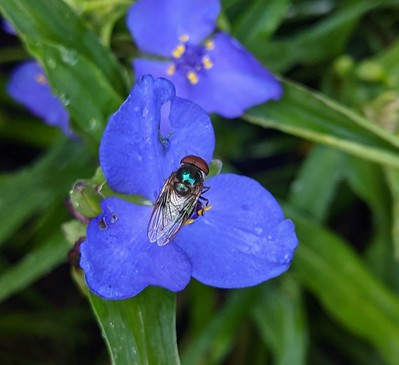
Bromeliad fly (Copestylum) on spiderwort (Tradescantia)

Hello,


This month is another grab bag: one paper on equity in fire management, two on biodiversity data, one asking how much conservation has helped species, and one pretty bad one on how ag practices impact nutrients.

If you know someone who wants to sign up to receive these summaries, they can do so at http://bit.ly/sciencejon (no need to email me).

FIRE MANAGEMENT:
Anderson et al. 2020 found that rich white communities who had a fire nearby tend to get additional prescribed fire (even when not needed). This is partly due to their ability to self-advocate at relevant planning meetings. It raises equity and social justice concerns about how we could instead base fire management on factors like social and/or ecological vulnerability. As context, here is a map showing how wildfire risk varies across the U.S.: https://www.nytimes.com/interactive/2022/05/16/climate/wildfire-risk-map-properties.html


BIODIVERSITY DATA:
Saran et al. 2022 has a good overview of biodiversity information portals, 16 global (Table 1) and 5 country-specific (from Australia, Canada, India, and the U.S., Table 2). It's a great complement to Nicholson et al. 2021 (an overview of ecosystem indicators) by providing actual data sources and some info about what each portal includes. The paper certainly isn't "comprehensive" as the title advertises, but it's a great start and I learned about some new useful resources by reading it.

Before threatened species can get protection, they need to be assessed to document how vulnerable they are. But there is a substantial backlog of species waiting to be assessed. Levin et al. 2022 offers a fairly simple (but ultimately unsuccessful) way to re-prioritize unassessed species for the IUCN red list to allow a better chance of assessing the ones that are in trouble so they can get protection. They use a rapid estimate of "extent of occurrence" (the species' range and spatial distribution of threats) as a proxy for vulnerability. At first it's exciting to see that it was 92% accurate at identifying which species were of the Least Concern (showing potential to flag species not worth assessing). But two questions are more relevant (and Fig 1 has the answers): what % of vulnerable species does it correctly recommend assessing (40%) and what % of recommendations for assessment are for species that are actually vulnerable (23%). The discussion has interesting notes on some of the aspects that confused the model (like 5 ash app threatened by Emerald Ash Borer and the American Chestnut threatened by blight) - widespread spp. hit hard by invasives are challenging to accurately assess using simple approaches like this. Hopefully the next iteration of the tool will be more successful, if they could substantially reduce false negatives for vulnerable species it could provide assessment priorities directly, or if they could substantially reduce false positives for vulnerable species it could help by indicating species that likely shouldn't be assessed.


CONSERVATION IMPACT:
Jellesmark et al. 2022 is a global (see Fig 1 map) preprint looking at how conservation has impacted targeted vertebrate species (by comparing pairs of populations targeted for conservation with those in the same country that did not receive conservation attention). I honestly don't know enough about the underlying data source (Living Planet Database) to speak to the reliability of their results (I'll wait for peer review for that, there is at least one very important typo where they use "invertebrate" when they clearly mean "vertebrate"). They found that population size of assessed vertebrates dropped 24% over 46 years, but estimate that without conservation it would have dropped 32% (and this likely underestimates the impact of conservation). They split out conservation actions into 7 groups (land/water protection, land/water mgmt, species mgmt, education/awareness, law/policy, livelihoods/incentives, and external capacity building), and capacity building followed by the first three showed the strongest results (Fig 5).


SUSTAINABLE AGRICULTURE:
Montgomery et al. 2022 asks how nutrients from ‘regenerative’ farms (that use no-till, crop  rotations, and cover crops) differ from other farms, but I wouldn't recommend it. This paper is pretty weak methodologically, results were inappropriately highlighted and over-interpreted, and the results I initially planned to write about didn’t hold up when I looked at raw data. Some key caveats: it is a very small sample size, 4/5 authors have financial interests the paper furthers, only one author appears to be a scientist (a geomorphologist), and the methods are thin and read like they may have gone looking for pairs of farms that would support the desired narrative (plus they used a very rough method to measure organic matter). At first I thought the most interesting / meaningful results are for cabbage: 10 assessed nutrients were substantially higher on regenerative farms, compared to 4 that were the same, 4 that were substantially lower, and 3 not assessed. But when you dive in, that 70% difference in vitamin E is from 0.004 to 0.007 mg/100g (essentially nil). Ditto with wheat results, 50% more calcium than “almost none” is still almost none. The animal results are hard to interpret because they don’t provide enough detail on differences between ‘regenerative’ vs. ‘conventional’ (although findings that grass-finished beef have more nutrient content have been reported in other lit, in alignment w/ results here). Some results look more meaningful (20% more vitamin C in cabbage is worthwhile) but there is such variation in the soil organic matter and soil health across the farms it’s really hard to know what is significant and what is accidental. One last note - 'regenerative' here almost certainly means 'genetically modified’ for most crops, since it’s hard to do no-till without them.


REFERENCES:

Anderson, S., Plantinga, A., & Wibbenmeyer, M. (2020). Inequality in Agency Responsiveness: Evidence from Salient Wildfire Events (Issue December). https://www.rff.org/publications/working-papers/inequality-agency-responsiveness-evidence-salient-wildfire-events/

Jellesmark, S., Blackburn, T. M., Dove, S., Geldmann, J., Visconti, P., Gregory, R. D., McRae, L., & Hoffmann, M. (2022). Assessing the global impact of targeted conservation actions on species abundance. BioRxiv, 2022.01.14.476374. https://doi.org/10.1101/2022.01.14.476374

Levin, M. O., Meek, J. B., Boom, B., Kross, S. M., & Eskew, E. A. (2022). Using publicly available data to conduct rapid assessments of extinction risk. Conservation Science and Practice, November 2020, 1–9. https://doi.org/10.1111/csp2.12628

Montgomery, D. R., Biklé, A., Archuleta, R., Brown, P., & Jordan, J. (2022). Soil health and nutrient density: preliminary comparison of regenerative and conventional farming. PeerJ, 10, e12848. https://doi.org/10.7717/peerj.12848

Saran, S., Chaudhary, S. K., Singh, P., Tiwari, A., & Kumar, V. (2022). A comprehensive review on biodiversity information portals. Biodiversity and Conservation, 0123456789. https://doi.org/10.1007/s10531-022-02420-x

Sincerely,
 
Jon
 
p.s. This photo is of what I think is a bromeliad fly (Copestylum) on a Tradescantia flower in my garden. First time I have seen one!

Monday, February 1, 2021

February 2021 science summary

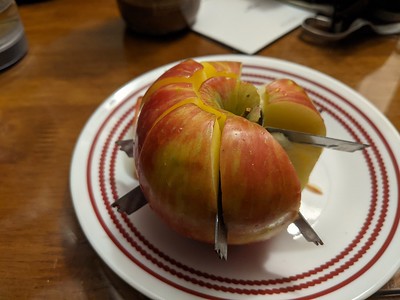
Broken apple slicer

Hello,


I couldn't resist sharing the image above. When my apple slicer broke, the result seemed very nightmarishly 2020 (a piece of fruit full of sharp metal)!

I've got 5 articles on freshwater this month, plus one on conservation planning across land and sea. Also, if you missed the panel discussion I hosted about how scientists can improve their impact (with Lynn Scarlett, Yoshi Ota, Christian Pohl, and Mark Reed), I learned a lot so recommend it! The recording is available here: https://www.openchannels.org/webinars/2021/how-do-science-so-it-influences-marine-policy-and-management-panel-discussion and their combined high-level advice is here: https://bit.ly/OCTO-panel-advice

If you know someone who wants to sign up to receive these summaries, they can do so at http://bit.ly/sciencejon

FRESHWATER:

The findings of Leal et al. 2020 may seem obvious, but they're important to highlight: conservation planning focused on terrestrial species only does a poor job at protecting freshwater biodiversity. They did some modeling in Brazil to look at trade-offs between freshwater and terrestrial species, and how to improve planning. Their low-bar recommendation is that even without data on freshwater biodiversity, just considering aquatic connectivity in additional to terrestrial species roughly doubles the benefit to freshwater species with almost no decrease in terrestrial benefits (Fig 3e & 3f, purple lines). If planning considers both terrestrial and freshwater biodiversity data, about a 5% decrease in terrestrial benefits leads to a ~400% increase in freshwater benefits (Fig 3e & 3f, aqua lines). This represents a strong case against assuming terrestrial work will do a good job at protecting freshwater ecosystems, and the idea of just including aquatic connectivity is an appealing entry point in places where better freshwater data are unavailable.

Improving water quality in agricultural landscapes (and downstream water bodies like the Gulf of Mexico) can be accomplished via changing inputs (e.g., using less fertilizer, or applying more stable forms at the right times), soil management to keep soil and nutrients in the field, edge-of-field practices like riparian buffers that intercept runoff, and through in-stream wetlands. Cheng et al. 2020 modeled how much nitrogen (N) wetlands remove from streams in the US (860,000 metric tons / year, and found that 10% more wetlands (+5 million hectares) could double N removal if they were in the right places (See Figs 3 & 5, although there are no big surprises here). This builds on other work about the essential role of wetlands in removing water pollution in concert with work on farms (e.g. Tomer et al. 2015 in JEQ), but highlights the need for landscape-scale planning and optimization for restoration to be as effective as possible. But one reason there are fewer wetlands in watersheds losing lots of N is that farmland tends to be productive and expensive there, and their proposal to double N removal requires losing 2% of total US cropland area. The authors also don't account for the potential increase in nitrous oxide which is a potent greenhouse gas. If you don't have the appetite for the whole article, this 1-page summary (Finlay 2020) has more detail: https://media.nature.com/original/magazine-assets/d41586-020-03515-7/d41586-020-03515-7.pdf

King et al. 2021 offer a model of the costs and benefits of removing river barriers (dams, culverts, canal locks, and even natural waterfalls) in southern England. They find the benefits of barrier removal exceed the costs, but note that benefits are only estimated via reported willingness to pay for improved species richness and abundance (which were lumped in with more publicly accessible river bank, which I think could skew the data). They estimated a cost of >53 million pounds to remove all 650 barriers on the river Wey. My real take away is that removing barriers is expensive, but if we trust reported WTP, there may be support for fees that go to barrier removal if it is likely to lead to better recreational opportunities.

Lin et al. 2020 is a overview of how historic canals impact aquatic ecosystems (both positively and negatively), and opportunities to improve their management for conservation. It's global but focused mostly in Europe and North America. Canals can harm biodiversity by providing entry to non-native species and pathogens, allowing interbreeding which reduces genetic diversity, and serve as 'ecological traps' by attracting species that will die or be heavily stressed during drought or other events. On the other hand, canals can help biodiversity by providing connectivity and migratory pathways when rivers are fragmented, as well as provide refuges from human disturbance and climate change in some cases. Regardless, thoughtful management (or intentional abandonment) can improve environmental outcomes if done well. See Fig. 3 for broad examples,  Table 1 for variables that can inform management, and Fig. 4 for which management options relate to different objectives. The authors note that canals can be challenging to balance the human needs that the canals were originally built for with conservation objectives.


CONSERVATION PLANNING
:
Tulloch et al. 2021 used Marxan w/ Connectivity for a case study (in Papua New Guinea) that looks at connections across land and sea and highlights intersections (like how forests and inshore reefs are connected). The idea was to improve on planning focused on a single realm (marine or terrestrial or freshwater). Fig 1 is a flowchart of the process they used. While the title mentions freshwater, they had no freshwater goals, and instead only used rivers as a connection between ecosystems on land and sea.

REFERENCES:
Cheng, F. Y., Van Meter, K. J., Byrnes, D. K., & Basu, N. B. (2020). Maximizing US nitrate removal through wetland protection and restoration. Nature, 588(7839), 625–630. https://doi.org/10.1038/s41586-020-03042-5

Finlay, J. (2020). Making the most of wetland restorations. Nature, 588, 592–593.

King, S., O’Hanley, J. R., & Fraser, I. (2021). How to choose? A bioeconomic model for optimizing river barrier mitigation actions. Ecological Economics, 181(March), 106892. https://doi.org/10.1016/j.ecolecon.2020.106892

Leal, C. G., Lennox, G. D., Ferraz, S. F. B., Ferreira, J., Gardner, T. A., Thomson, J. R., Berenguer, E., Lees, A. C., Hughes, R. M., Mac Nally, R., Aragão, L. E. O. C., de Brito, J. G., Castello, L., Garrett, R. D., Hamada, N., Juen, L., Leitão, R. P., Louzada, J., Morello, T. F., … Barlow, J. (2020). Integrated terrestrial-freshwater planning doubles conservation of tropical aquatic species. Science, 370(6512), 117–121. https://doi.org/10.1126/science.aba7580

Lin, H. Y., Cooke, S. J., Wolter, C., Young, N., & Bennett, J. R. (2020). On the conservation value of historic canals for aquatic ecosystems. Biological Conservation, 251(February), 108764. https://doi.org/10.1016/j.biocon.2020.108764

Tulloch, V. J. D., Atkinson, S., Possingham, H. P., Peterson, N., Linke, S., Allan, J. R., Kaiye, A., Keako, M., Sabi, J., Suruman, B., & Adams, V. M. (2021). Minimizing cross-realm threats from land-use change: A national-scale conservation framework connecting land, freshwater and marine systems. Biological Conservation, 254(July 2020), 108954. https://doi.org/10.1016/j.biocon.2021.108954


Sincerely,
 
Jon

Friday, May 24, 2019

New book chapter (from CUP) available on agricultural metrics & corporate sustainability

Once upon a time (late 2013 or early 2014) I was asked to co-write a chapter on sustainable agriculture metrics with Peter Kareiva. I learned a lot writing it, and when I realized it would take a while to get published I wrote a blog post about the most surprising thing I learned (that global agricultural land had been decreasing since 1998, not rapidly expanding): https://blog.nature.org/science/2014/06/18/global-agriculture-land-sustainability-deforestation-foodsecurity

That surprise, and the blowback I got after publishing it, inspired me to write another book chapter which came out in late 2017:
http://fish.freeshell.org/publications/DataNotDogma-Chapter11-preformatted.pdf
and a follow-up blog since my writing wasn't clear enough: http://sciencejon.blogspot.com/2018/01/take-2-what-i-wish-id-put-in-my-recent.html

But now, 5+ years later, the actual original book is finally published!

Those interested can read the final chapter at http://fish.freeshell.org/publications/FisherKareiva_CUP_2019_preformatted.pdf

The first half is OK but is out of date and was written when I knew far less about agriculture. I'd skip to the 2nd half (start with the "Can Corporate Sustainability reporting be a force for improved agricultural practices?" section). There's some interesting content I haven't seen anywhere else on corporate sustainabiltiy and food labels.

I haven't read the rest of the book yet but am looking forward to it! You can get the whole book here:  Agricultural Resilience: Perspectives from Ecology and Economics (Cambridge University Press)

Friday, May 3, 2019

May 2019 science journal article summary

Pretty flower

Merry May!

This month's summary is a bit of a grab bag as I settle into my new job and am reading a wide variety of topics.

I'm very happy to report that after about 5 years, a book I contributed a chapter to is finally published! The chapter is "Using environmental metrics to promote sustainability and resilience in agriculture" (co-authored by Peter Kareiva) and it's in "Agricultural Resilience: Perspectives from Ecology and Economics" from Cambridge University Press: https://www.cambridge.org/gb/academic/subjects/life-sciences/ecology-and-conservation/agricultural-resilience-perspectives-ecology-and-economics?format=PB

Unfortunately I wrote it when I knew far less about agriculture (and how to write well), so I can't entirely recommend it (especially all the specific metrics). But it has some useful content. The section "Food labels and sustainability" is still unique as far as I know in providing a concise (2 page) summary of research around food labels and consumer preferences around sustainability (although there are more comprehensive resources, e.g. "The Green Bundle" by Magali Delmas and David Colgan). The corporate sustainability information is badly dated but a decent primer for folks new to the field. Anyway, you can read my chapter here if interested: http://fish.freeshell.org/publications/FisherKareiva_CUP_2019_preformatted.pdf or buy the book from the link above. I haven't seen any of the other chapters yet but hopefully given the long wait they're all fantastic!

Also, normally when I find a paper not as useful as I hoped I don't review it. This month I'm including a couple that I'd normally skip since it may also be useful to see limitations flagged for papers which may be used to overstate a case.

To sign up to receive these summaries, visit http://bit.ly/sciencejon


CLIMATE CHANGE:
Anderson et al. 2019 argues that while investing in natural climate solutions (aka NCS, e.g. trees) is important to mitigate climate change, cuts to emissions from energy and industry are also urgent and imperative. As they put it, it's not "either/or" but "yes, and." Their key point is that while NCS offer many benefits, delaying emissions reductions from energy and industry by even a few years can add up to more than offset the reductions from NCS. They close by calling for conservationists to ensure that NCS mitigation is optimized, while also amplifying the need to work on complementary solutions to reduce anthropogenic emissions at their source.

Dinerstein et al. 2019 is a new spin on an older 'half earth' idea. They outline a "global deal for nature:" an ambitious plan for new protected areas and "other effective area-based conservation measures" (OECMs) which could include indigenous reserves and well-managed grazing areas. By 2030 they seek 30% of earth to be formally protected (currently we're at 15%) plus 20% more as 'climate stabilization areas.' The goal would be to minimize climate change and species extinctions via a companion to the Paris agreement, since preventing habitat loss and maintaining connectivity is much easier and cheaper than restoration after the fact. The paper is useful in identifying key areas for protection and potential policy mechanisms to consider. But Table 3 makes it clear that this is a wish list of several big policies that the environmental movement has been unable to achieve, without a plausible path to galvanize new support and/or come up with creative solutions beyond keeping humans out of most of the planet.

Searchinger et al. 2018 is an attempt to calculate the "carbon opportunity cost" of different ag land uses and habitats. Unfortunately, the assumptions taken together make this paper not very useful. For example, the idea that if food is not produced somewhere it simply will be produced elsewhere with global average values is a big stretch, but it's even more of a stretch to assume that intensifying production in one place will lead to land sparing elsewhere.


WILDLIFE CONNECTIVITY:
Dickson  et al. 2019 is an overview of how electrical "circuit theory" has been incorporated into the science of wildlife connectivity (mostly through an open source tool called circuitscape). Some key advances: recognizing that wildlife don't typically know and use a single optimal path, identifying pinch points that limit flow, and better explaining genetic patterns across a landscape. However, for animals with better knowledge of their landscape (e.g. seasonally migrating ungulates), circuit theory does not perform as well. They close with a quick summary of other applications in groundwater and fire. Check out figure 3 for a great example of how to make a basic bar chart fun and accessible.


SEAGRASSES:
Armitage and Fourqurean 2016 looked at how nutrient availability (both historic and manipulated) impacted seagrass biomass and soil organic carbon (SOC). Sites with a history of lower nutrient availability had lower soil SOC and much lower biomass (both above-ground and below-ground). Adding nutrients boosted above-ground biomass (especially P in nutrient-poor sites, with a smaller effect of N in moderate-nutrient sites), but below-ground biomass didn't respond as consistently. In fact, more sites lost below-ground biomass with extra P than gained it (the abstract misstates the findings). While it would have taken a longer study to accurately detect SOC changes due to biomass inputs, it actually went down with P addition. The authors hypothesize that the extra above-ground biomass from fertilization could trap more sediment and lead to higher SOC, which is plausible, but would have to be tested by a future study (as well as checking for impacts on N2O that could offset the C gains).

Kovacs et al. 2018 mapped seagrass in Australia (in clear shallow waters, ideal conditions) using four satellite sensors with pixel size from 30m to 2m. The results are surprising - overall all sensors had similar overall accuracy for both species ID and % cover. As expected, higher resolution  made it possible to see more detail (Figure 2 is great to compare sensors), but since it wasn't more accurate that would only be relevant if fine-scale distribution patterns were of special interest. Otherwise sticking with the coarser data would save time and money for mapping.


REMOTE SENSING:
Two new lidar satellites were launched recently: ICESat-2 launched in Sep 2018 and GEDI in Dec (initial GEDI data should be released in June, ICESat-2 hasn't announced a date yet). While GEDI is more focused on measuring forest canopy height, ICESat-2 is also mapping vegetation (in addition to ice sheets, clouds, land surface, and more). GEDI will focus on middle latitudes, and ICESat-2 on the poles. Having these data available globally will be a big deal, especially for estimating forest carbon. For more on ICESat-2, Neuenschwander and Pitts 2019 has details on one of the planned data products (ATL08) which maps both ground surface and tree canopies. It's a dense paper, but Figures 4 & 8 are useful to get a sense of the output (they used simulated data), and the discussion has several useful details. The raw data is grouped into 100m cells to have enough photons per cell, but another data product (ATL03) maps each photon individually and can be used to investigate patterns within each 100m cell. Note that tree canopy height is consistently underestimated by ATL08.


SUSTAINABLE AGRICULTURE:
Sun et al. 2018 argues that countries that import crops may also create local pollution problems, contrary to the usual thought that importing food shifts the environmental burden to the exporting country. Their case study shows that as China started importing more soy and growing other crops domestically, their nitrogen overuse increased. However, that doesn't make a strong general case for their assertion, and while China could certainly benefit from more soy rotation, fertilizer overuse there is driven by a series of political and cultural factors that again make it hard to generalize.


REFERENCES:
Anderson, C. M., DeFries, R. S., Litterman, R., Matson, P. A., Nepstad, D. C., Pacala, S., … Field, C. B. (2019). Natural climate solutions are not enough. Science, 363(6430), 933–934. https://doi.org/10.1126/science.aaw2741  

Armitage, A. R., & Fourqurean, J. W. (2016). Carbon storage in seagrass soils: long-term nutrient history exceeds the effects of near-term nutrient enrichment. Biogeosciences, 13(1), 313–321. https://doi.org/10.5194/bg-13-313-2016

Dickson, B. G., Albano, C. M., Anantharaman, R., Beier, P., Fargione, J., Graves, T. A., … Theobald, D. M. (2018). Circuit-theory applications to connectivity science and conservation. Conservation Biology, 33(2), 239–249. https://doi.org/10.1111/cobi.13230

Dinerstein, E., Vynne, C., Sala, E., Joshi, A. R., Fernando, S., Lovejoy, T. E., … Wikramanayake, E. (2019). A Global Deal For Nature: Guiding principles, milestones, and targets. Science Advances, 5(4). https://doi.org/10.1126/sciadv.aaw2869

Fisher, J.R.B. and Kareiva, P. 2019. Using environmental metrics to promote sustainability and resilience in agriculture. In Gardner et al. (Eds), Agricultural Resilience: Perspectives from Ecology and Economics. Cambridge University Press

Kovacs, E., Roelfsema, C., Lyons, M., Zhao, S., & Phinn, S. (2018). Seagrass habitat mapping: how do Landsat 8 OLI, Sentinel-2, ZY-3A, and Worldview-3 perform? Remote Sensing Letters, 9(7), 686–695. https://doi.org/10.1080/2150704X.2018.1468101

Neuenschwander, A., & Pitts, K. (2019). The ATL08 land and vegetation product for the ICESat-2 Mission. Remote Sensing of Environment, 221 (April 2018), 247–259. https://doi.org/10.1016/j.rse.2018.11.005

Searchinger, T. D., Wirsenius, S., Beringer, T., & Dumas, P. (2018). Assessing the efficiency of changes in land use for mitigating climate change. Nature, 564(7735), 249–253. https://doi.org/10.1038/s41586-018-0757-z

Sun, J., Mooney, H., Wu, W., Tang, H., Tong, Y., Xu, Z., … Liu, J. (2018). Importing food damages domestic environment: Evidence from global soybean trade. Proceedings of the National Academy of Sciences, 115(21), 5415–5419. https://doi.org/10.1073/pnas.1718153115


Sincerely,

Jon

p.s. If you'd like to keep track of what I write as well as what I read, I always link to both my informal blog posts and my formal publications (plus these summaries) at http://sciencejon.blogspot.com/

Monday, April 1, 2019

April 2019 science journal article summary

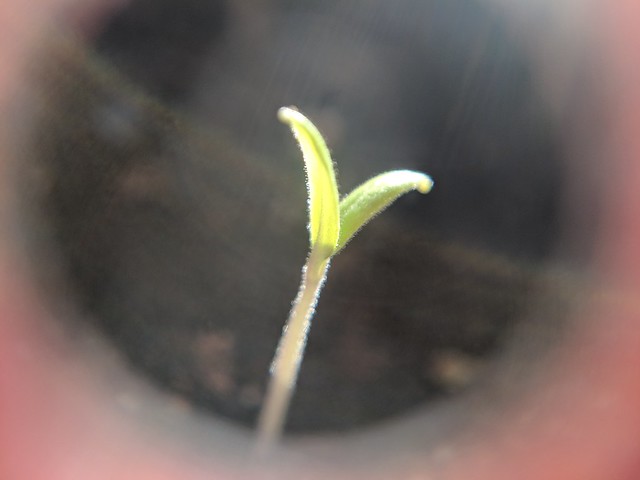
Tomato seedlings

Happy Spring!

Since I've just changed jobs I asked for help in putting this summary together; Steve Wood from The Nature Conservancy kindly reviewed four of the articles below. Also, these summaries come from me (and Steve in this case) and do not reflect the views of our employers or any other organization. Any mistakes are my own.

If you know someone who wants to sign up to receive these summaries, they can do so at http://bit.ly/sciencejonFinally, for folks interested in science communications, I've been getting a lot of good ideas from the short daily emails Bob Lalasz (from Science + Story) sends. You can check out a few examples at https://medium.com/science-plus-story and if interested sign up at https://scienceplusstory.com/quick-list-opt-in/

WILDLIFE CORRIDORS:
Tack et al. 2019 identifies priority areas to focus land protection on the most important wildlife corridors used by pronghorn and greater sage grouse in the Northern Great Plains, specifically north-central Montana into southern Saskatchewan. Sage grouse in this area depend on migration, as do about half of the pronghorn population. Private lands in the area are roughly half ranches on native sagebrush, and half cropland (with public land typically primarily used for cattle grazing). Cropland expansion is the main driver of habitat loss (followed by energy development), and protected areas only cover ~5% of pathways for both species. So priorities for protection are on lands used for migration with a higher chance of cultivation. Note Figure 4 which shows the importance of unprotected public, private, and even cultivated land. Fences impede migration, but marking them with flags reduces collisions.

SUSTAINABLE AGRICULTURE:
McGill et al. 2018 modeled greenhouse gases (GHGs) of groundwater-irrigated vs rainfed croplands in the Midwest US. Irrigated fields had higher net GHGs (27 g CO2e/m2/yr) than rainfed (a net sink, -14g CO2e/m2/yr), mainly due to higher N2O emissions and fossil fuel use to pump groundwater. However, since irrigation also increased yield the emissions per unit of crop yield were similar: 0.04 kg CO2e/ kg yield for irrigated vs -0.03 kg CO2e/ kg yield for rainfed (again a GHG sink). Finding the rainfed system to be a net GHGS sink is surprising and unusual, even if you assume that no-till farms have net C sequestration (which is unlikely). There are some other odd findings like fertilization reducing soil C. But the overall idea should be valid: irrigation will generally lead to wetter soil (w/ higher N2O emissions more than offsetting higher soil C) plus energy use to pump water.

Smith et al. 2019 is a review of the environmental impact widespread adoption of the voluntary Bonsucro standard for sugar cane could have. They find impressive potential, especially if efforts are targeted well and involve compliance with all standards and criteria. Half of global environmental potential benefits could be met with only 10% of total production area (check out figure 4 for details). However there are several challenges, including what to do with farms totally unable to meet those standards (e.g. large areas in India). This paper also models impact IF all participating farms actually met all target outcomes, and doesn't look at how companies could drive that or what would be practical with different levels of investment. Nonetheless, this shows a lot of potential especially if we can move beyond practice based frameworks to those that are outcome-based and carefully targeted. You can read a blog about this work here:
https://twin-cities.umn.edu/news-events/research-brief-targeted-sustainability-standards-agriculture-hold-promise-global?fbclid=IwAR27p0_IHCXRrRFogBMtGgBPajMRiZhQoWMR1k8M_0fo_zWiXvQ56Ww481M

Han et al. 2018 is a meta-analysis of 68 studies of how straw incorporation affected carbon sequestration and crop yields across China. On average it sequestered 0.35 t C / ha / yr in the upper 20 cm of soil, and boosted crop yields 13%. It worked best on clay soils, high crop intensities, and in areas where soil is currently being degraded (NE China).


GUEST REVIEWS FROM STEVE WOOD:
Have questions about the four papers below? Contact Steve at stephen.wood@TNC.ORG.

Soil health has become a major are of interest, but there is uncertainty about how to measure and define it. Derner et al. 2018 tackle the question of how to define soil health for grazing lands. This is an important task because the notion of soil health emerged from row-crop agriculture, yet the way grazing lands are managed and the environmental services they provide are starkly different to row crop agriculture.
The authors argue that a soil health approach to grazing lands should re-focus grazing management on managing for ecosystem processes, rather than maximizing short-term profit. And this requires building cross-institutional capacity and training, adaptive management, and long-term monitoring. The authors argue against adoption of a single set of practices or indicators. For instance, a soil health indicator from row crop agriculture is high soil cover, but in grazing systems high amounts of bare ground can be necessary for some grassland bird species. This paper is also noteworthy for the mix of authors--everything from university professor to rancher.

The two papers by Unks et al. 2019 aim to understand the drivers of pastoralist livelihood vulnerability in one of the Northern Rangeland Trust community conservancies. They argue that the rangeland institutions in central Kenya going back to the colonial era have promoted formal land tenure, whether at the individual or community level. But, because forage production is patchy, successful grazing requires a high level of mobility to access resources in different areas at different times. This type of management is at odds with formal property regimes, as well as at odds with realities of modern life, like employment at conservancy lodges and keeping children in school. Herders now face limited mobility, which means that livestock husbandry has shifted towards browsers, like goats and camels, which do better on lands with low grass productivity. Limited mobility also has made livestock husbandry more individualistic, leading to greater inequality among households. Greater inequality leads to unequal ability to cope with future climate change.

The papers offer nuanced insight into the drivers of change and livelihood vulnerability. The narrative promoted by conservation non-profits tends to be more simplistic: poor current management--stocking rates, population growth--is the main driver of poor vegetation and livelihoods. By showing the importance of long-standing institutional, climatic, and socio-economic change, the authors imply that land-tenure-based management plans (like those promoted at NRT) will not fix the ecological or livelihood challenges. In bringing more nuance they highlight greater challenges, but they don’t offer insight into what solutions to those greater challenges might be.

Finally, Rosenzweig et al. 2018 focuses on quantifying whether it is possible to lower fertilizer and herbicide use while maintaining yields via changing crop rotations. The focus is on dryland, no-till wheat in Colorado and Nebraska. They tested three groups of cropping systems, all of which had wheat in the winter. In the summer they differed by: (1) natural fallow one out of two years;  (2) a summer crop (corn, sorghum, millet, peas, or sunflowers) replacing fallow every couple of years; (3) continuous cropping with mixtures of the same crops from (2). They showed that the continuous cropping system had the highest nutrient retention, greater fungal colonization of roots (which increases nutrient retention), lowest herbicide use, lowest yield penalty, and highest profitability. Continuous cultivation had greater net revenue than basic fallow by $100 per hectare per year.

One reason I like this paper is that it challenges the idea that continuous cultivation is inherently bad and that natural fallow/regeneration is good. The paper shows that planning cropping and restoration is likely the key to ecological intensification. One limitation of this study is that because there were multiple crop combinations in each of the categories tested that it’s not possible to discern which of those combinations had the greatest effect.


REFERENCES:
Derner, J. D., Smart, A. J., Toombs, T. P., Larsen, D., McCulley, R. L., Goodwin, J., et al. (2018). Soil Health as a Transformational Change Agent for US Grazing Lands Management. Rangeland Ecology & Management, 71(4), 403–408. http://doi.org/10.1016/j.rama.2018.03.007

Han, X., Xu, C., Dungait, J. A. J., Bol, R., Wang, X., Wu, W., & Meng, F. (2018). Straw incorporation increases crop yield and soil organic carbon sequestration but varies under different natural conditions and farming practices in China: a system analysis. Biogeosciences, 15(7), 1933–1946. https://doi.org/10.5194/bg-15-1933-2018

McGill, B. M., Hamilton, S. K., Millar, N., & Robertson, G. P. (2018). The greenhouse gas cost of agricultural intensification with groundwater irrigation in a Midwest U.S. row cropping system. Global Change Biology, 24(12), 5948–5960. https://doi.org/10.1111/gcb.14472

Rosenzweig, S. T., Stromberger, M. E., & Schipanski, M. E. (2018). Intensified dryland crop rotations support greater grain production with fewer inputs. Agriculture, Ecosystems and Environment, 264, 63–72. http://doi.org/10.1016/j.agee.2018.05.017

Smith, W. K., Nelson, E., Johnson, J. A., Polasky, S., Milder, J. C., Gerber, J. S., … Siebert, S. (2019). Voluntary sustainability standards could significantly reduce detrimental impacts of global agriculture. Proceedings of the National Academy of Sciences, 116(6), 2130–2137. https://doi.org/10.1073/pnas.1707812116

Tack, J. D., Jakes, A. F., Jones, P. F., Smith, J. T., Newton, R. E., Martin, B. H., … Naugle, D. E. (2019). Beyond protected areas: private lands and public policy anchor intact pathways for multi-species wildlife migration. Biological Conservation, 234, 18–27. https://doi.org/10.1016/j.biocon.2019.03.017

Unks, R. R., King, E. G., German, L. A., Wachira, N. P., & Nelson, D. R. (2019). Unevenness in scale mismatches: Institutional change, pastoralist livelihoods, and herding ecology in Laikipia, Kenya. Geoforum, 99, 74–87. http://doi.org/10.1016/j.geoforum.2018.12.010

Unks, R. R., King, E. G., Nelson, D. R., Wachira, N. P., & German, L. A. (2019). Constraints, multiple stressors, and stratified adaptation: Pastoralist livelihood vulnerability in a semi-arid wildlife conservation context in Central Kenya. Global Environmental Change, 54, 124–134. http://doi.org/10.1016/j.gloenvcha.2018.11.013


Sincerely,

Jon

p.s. If you'd like to keep track of what I write as well as what I read, I always link to both my informal blog posts and my formal publications (plus these summaries) at http://sciencejon.blogspot.com/

Wednesday, February 20, 2019

How many trees make a forest?


It seems bizarre, but it's surprisingly hard to agree on what should count as a forest, or deforestation. If we can't agree on what deforestation is and how to measure it, we can't stop it. I wrote a blog post about this surprising problem for Mongabay:
How many trees make a forest?

It explains the issue, and why The Accountability Framework (a coalition of NGOs providing guidance on how companies can set and implement credible deforestation-free commitments) is so critical to solve it.

Friday, February 1, 2019

February 2019 science journal article summary

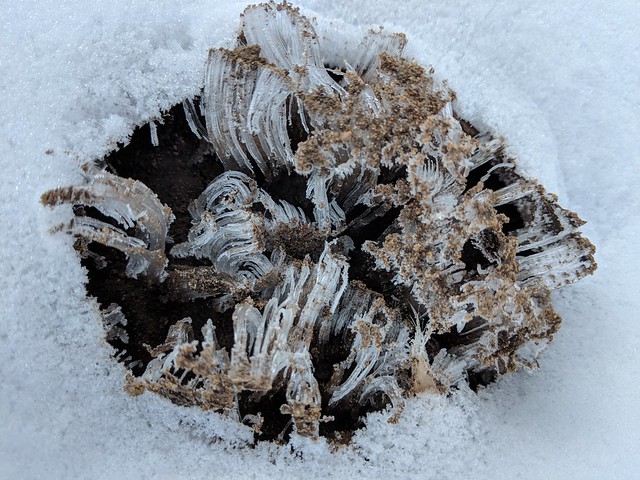
Needle ice
Hello,

Here are some articles focused on genomics, but with a few others on deforestation, ecosystem services, and sustainable agriculture. The photo above of needle ice in my backyard is totally unrelated, but I'd never seen or even heard of it, and I found it super cool. Read about it on wikipedia!

Let me know if you need a copy of any of these articles. If you know someone who wants to sign up to receive these summaries, they can do so at http://bit.ly/sciencejon

DEFORESTATION:
Jokpe & Schoneveld 2018 is a close look at zero-deforestation commitments (ZDC) by 50 influential  corporate "power brokers."  They identify several problems with implementation gaps and externalities. In particular they note that a lack of traceability and transparency about where commodities are sourced from makes verification difficult (and most companies rely on asking their suppliers to honestly self-report deforestation). They also report that 3/4 of companies with ZDC don't require company wide commitments from suppliers (so those suppliers can just sell deforestation linked products to other companies who don't care). This one is long but worth reading for breakouts by sector and other useful info. Note that TNC in this article refers to transnational companies and not The Nature Conservancy. The problems and gaps identified are things we're hoping to address with the Accountability Framework (https://accountability-framework.org/), which should be formally launched this spring.

ECOSYSTEM SERVICES:
There are many methods and tools to assess ecosystem services. Neugarten et al. 2018 is a report reviewing 9 assessment tools (EST, PA-BAT, TESSA, ARIES, C$N, InVEST, MIMES, SolVES, and WW) and providing decision trees on how to pick the right one for a given need. This is a fantastic reference for anyone working with ecosystem services, and it covers both written guidance documents and modeling tools. They recommend you identify the analysis question or need and think hard about expertise and resources you have to do the analysis before selecting a tool.

GENOMICS / GENE EDITING / GENETIC ENGINEERING:
Photosynthesis in plants relies on an enzyme called RuBisCO, sometimes called 'the most incompetent enzyme in the world' due to its inefficiency and energy loss during respiration. South et al. 2019 present a new transgenic GMO tobacco plant which improves the efficiency of respiration. As a result, their best modified tobacco plants had 41% higher biomass (including 33% more leaf biomass but also larger stems). It's not clear how much of the biomass gain could be translated to improved yields for grains or other crops, but that's still a potentially huge step forward which should be further explored. Eisenhut & Weber 2019 is a nice very short (1.5 page) summary of the article, and you can also read a blog about it here which includes some nice diagrams: https://phys.org/news/2019-01-scientists-shortcut-photosynthetic-glitch-boost.html

Kofler et al. 2018 is an editorial on benefits and risks of altering the DNA of wild organisms via gene editing. They call for collective oversight to ensure careful thought is given to environmental, social, and ethical concerns, and especially to local community involvement in each decision to potentially release an edited organism (as well as international bodies like IUCN). They stress that "using this technology irresponsibly or not using it at all could prove damaging" - and give good examples of each.

Sprink et al. 2016 looks at regulation of gene editing, and the difference between a process based approach (where the key factor is how an organism was modified) vs a product based approach (where the outcome is the key factor regardless of the process used). They argue that the European approach is outdated and doesn't reflect the continuum of modern technology (including several different applications of gene editing). They also dive into a legal argument of why it should be changed, and how it compares to the US and other countries. They make a good argument that regulation should be based on a genetic trait and product rather than the process used to develop it. This one is complex and wonky but a good reference, especially box 1 with definitions of several gene editing approaches.

Halewood et al. 2018 is an overview of how CGIAR is looking to use crop genome sequencing to drive more crop diversity and find crop traits that can deliver better outcomes for people and nature. Most readers can safely skip information on specific molecular markers (e.g. Table 1) but should read page 372 which lists several applications of gene editing technology and genotyping.

Zhong 2019 looks at how soy genotype and rhizobium inoculation (of seed or soil) impact plant growth, soy nodulation (the nodules help them fix nitrogen via bacteria), and microbiome. They found that the microbiome of soy varies depending on the genotype of soy. In particular whether the genotype forms high or low numbers of root nodules. Low-nodulation soy had more co-occurrence of the taxonomic groups (a more connected network) than the high-nodulation soy (figure 4). Both genotypes had their microbiome network connections increased by inoculation. The efficacy of the inoculant  varies depending on plant genotype. See figure 1c / 1d for details. Low-nodule soy got a significant boost in nodulation from inoculation, but still had fewer nodules than high-nodule soy (for which nodulation was unaffected by inoculation). Both genotypes of soy got a roughly similar growth boost from inoculation. This means that to evaluate biological seed treatments / inoculation we have to look at the intersection of the inoculant, plant genetics, and baseline soil microbiome.


SUSTAINABLE AGRICULTURE:
Eichler Inwood et al. 2018 is a thoughtful review of several different frameworks to assess agricultural sustainability (in different contexts and scales). Table 4 is a nice summary of the 9 frameworks they cover, with Table 5 providing more details on how and where they work. None are ideal in every context. Thy conclude with recommendations about how to select a framework (see Table 6 for properties they should have), choose indicators, collect data etc.

REFERENCES:
Eichler Inwood, S. E., López-Ridaura, S., Kline, K. L., Gérard, B., Monsalue, A. G., Govaerts, B., & Dale, V. H. (2018). Assessing sustainability in agricultural landscapes: a review of approaches. Environmental Reviews, 26(3), 299–315. https://doi.org/10.1139/er-2017-0058

Eisenhut, M., & Weber, A. P. M. (2019). Improving crop yield. Science, 363(6422), 32–33. https://doi.org/10.1126/science.aav8979

Halewood, M., Lopez Noriega, I., Ellis, D., Roa, C., Rouard, M., & Sackville Hamilton, R. (2018). Using Genomic Sequence Information to Increase Conservation and Sustainable Use of Crop Diversity and Benefit-Sharing. Biopreservation and Biobanking, 16(5), 368–376. https://doi.org/10.1089/bio.2018.0043

Jopke, P., & Schoneveld, G. C. (2018). Corporate commitments to zero deforestation: An evaluation of externality problems and implementation gaps. Occasional Paper 181. Bogor, Indonesia: CIFOR.

Kofler, N., Collins, J. P., Kuzma, J., Marris, E., Esvelt, K., Nelson, M. P., … Schmitz, O. J. (2018). Editing nature: Local roots of global governance: Science, 362(6414), 527–529. https://doi.org/10.1126/science.aat4612

Neugarten, R. A., Langhammer, P. F., Osipova, E., Bagstad, K. J., Bhagabati, N., Butchart, S. H. M., … Willcock, S. (2018). Tools for measuring, modelling, and valuing ecosystem services: guidance for Key Biodiversity Areas, natural World Heritage sites, and protected areas. (C. Groves, Ed.). Gland, Switzerland: IUCN. https://doi.org/10.2305/IUCN.CH.2018.PAG.28.en

South, P. F., Cavanagh, A. P., Liu, H. W., & Ort, D. R. (2019). Synthetic glycolate metabolism pathways stimulate crop growth and productivity in the field. Science, 363(6422), eaat9077. https://doi.org/10.1126/SCIENCE.AAT9077

Sprink, T., Eriksson, D., Schiemann, J., & Hartung, F. (2016). Regulatory hurdles for genome editing: process- vs. product-based approaches in different regulatory contexts. Plant Cell Reports, 35(7), 1493–1506. https://doi.org/10.1007/s00299-016-1990-2

Zhong, Y., Yang, Y., Liu, P., Xu, R., Rensing, C., Fu, X., & Liao, H. (2019). Genotype and rhizobium inoculation modulate the assembly of soybean rhizobacterial communities. Plant, Cell & Environment. https://doi.org/10.1111/pce.13519


Sincerely,

Jon

p.s. as a reminder, you can search all of the science articles written by TNC staff (that we know of) here http://www.conservationgateway.org/ConservationPlanning/ToolsData/sitepages/article-list.aspx
(as you publish please email science_pubs@tnc.org to help keep this resource current).
If you'd like to keep track of what I write as well as what I read, I always link to both my informal blog posts and my formal publications (plus these summaries) at http://sciencejon.blogspot.com/

Wednesday, January 2, 2019

January 2019 science journal article summary: best of 2018

Christmas cookie decorating party

Happy new year!

Resolved to try harder to keep with science? Why not start with some of the best papers from last year that you may have missed? This month I picked my favorite 15 articles that I reviewed in 2018, plus a few other resources. A few were published earlier, but I read them all last year. I picked some because of importance, others because they were interesting, and two plug my own work.

There is one new article I couldn't resist mentioning, which is about the Camboriú water fund that I worked on. Kroeger et al. 2019 talks about how the water fund was designed, including estimating the impact it would have on land use change and water quality. We were able to show that it provided a positive financial return on investment after 44 years (if you include some modest societal co-benefits like flood control and biodiversity). PDF available here until ~Feb 10 after which an unformatted PDF is available here.

I also wanted to once again plug a cool resource  to help you figure out which journal to submit a paper to: http://jane.biosemantics.org/  You enter the title and abstract of your paper and it gives you a list of appropriate journals. You may also want these tips on how to write an abstract to get found easily in Google and Google Scholar: https://authorservices.wiley.com/author-resources/Journal-Authors/Prepare/writing-for-seo.html and my blog on how to ensure all of your own research is viewable by others: http://sciencejon.blogspot.com/2018/03/tips-for-helping-people-to-find-your.html

Finally, my wife's comment on my book chapter on global agriculture land use trends (that there was no clear key take-away point) has stuck with me as a reminder of how important it is to get input from non-scientists on science writing. Here's a short blog where I tried to supplement the chapter: http://sciencejon.blogspot.com/2018/01/take-2-what-i-wish-id-put-in-my-recent.html

ARTICLES:
Carvin et al 2018 is a study I've been eagerly awaiting for years. It is a rigorous paired watershed study looking at the impact of a carefully targeted set of agricultural interventions, and is one of the first papers in the US to show we CAN improve water quality at a watershed scale (50 km2) through shifting ag. Initial work had found 9% of the area was contributing 40% of the phosphorous load, so the authors really targeted those heavy contributors. They found a 55% reduction in phosphorus runoff loads and suspended sediment event loads decreased by 52% for events during unfrozen soil conditions  into the Pecatonica River tributary during storm events. This is big news as these outcomes have been elusive. However, this watershed was picked as one of the most likely to respond well, and those seeking to replicate these results should also carefully select their watersheds. Contact Steve Richter at TNC for more info.

Cui et al 2018 reports on the results of an ambitious study that worked with 21 million farmers (!) of maize, rice, and wheat over 10 years. China currently has some of the least efficient farms in the world, presenting a huge need to improve. This study used a soil & crop management framework that resulted in ~11% improved yield while reducing N application by ~16% (and reactive N losses by ~25%), and GHGs by 14-22% depending on crop. The scale is impressive: altogether they influenced 37.7 million ha. Interestingly, extension staff impacted over 10 times the area per staff person (471 ha / person) compared to agribusiness partners (see Fig 2). Regardless, this is good news in showing that it's possible to achieve "win-win" outcomes at scale even with smallholders. On the other hand, nitrogen efficiency is so poor in China, that much larger changes are needed to bring them in line with world averages, let alone truly sustainable targets (highlighting that policy changes are likely needed as well). Fig 1 has a great breakdown of impacts by crop and region.

Almost everyone who works for or closely with The Nature Conservancy heard about the 2017 "Natural Climate Solutions" paper (Griscom et al. 2017, I reviewed it in November 2017). If you've been waiting for the sequel - good news! Fargione et al. 2018 just provided a similar analysis specifically for the United States. It's short, excellent, and worth reading, but if you're impatient skip to Figure 1. That summarizes the potential of each pathway and splits out how much is achievable at different carbon prices. They found a maximum potential of 1.2 Pg (aka 1200 million metric tons) CO2e / yr (21% of current US emissions and ~27% of 2005 emissions), and ~300 Tg (million metric tons) achievable at $10 / t CO2e (~5% of US emissions). The biggest low cost opportunities are in planting cover crops followed by forest management, avoided habitat conversion, and improved farm nutrient management. You can read more about it on TNC's web site at https://www.nature.org/en-us/explore/newsroom/natural-climate-solutions-study/ or at https://eurekalert.org/pub_releases/2018-11/cu-nsr111418.php

Fisher et al. 2018 ("Knowledge diffusion within a large conservation organization and beyond") looks at how people find information about innovations and share them, specifically the spread of Conservation by Design 2.0 (CbD 2.0). We review how earlier versions of CbD spread from TNC (looking at published science articles and expert interviews), then use tons of varied data to look at CbD 2.0. I wrote a blog about the paper here: http://sciencejon.blogspot.com/2018/03/share-good-news-paper-on-improving.html
and the full paper is at: http://journals.plos.org/plosone/article?id=10.1371/journal.pone.0193716
but here's a summary of what we learned:
  1.  Sending repeated broadly-targeted communications (e.g. all-staff email / newsletters / etc.) that make it easy for recipients to find out more worked better than more narrowly focused communications (e.g. plenary talks, emails from executives).
  2. Expert interviews revealed several factors to promote diffusion: bringing in partners early to develop and test methods, committing up front to sustain support for the planning methods, having in-person workshops, using peer-review and shared learning, providing financial support, explaining how the methods address existing needs planners already have, and the existence of a support and learning network like the conservation coaches network (CCNET). 
  3. Organizations may wish to use internal data to identify staff likely to play a key role in diffusing so that they can encourage that process (the paper has details on how, with more forthcoming in an upcoming paper)
  4. Working with academics on publications represents a potential way to get the word out with relatively low effort for organizations (academics I have worked with in other contexts are often very interested in data no one else has access to, and have published cool papers from those data). 
  5. For scientists interested in this topic, we learned a lot about how to study knowledge diffusion, and share tips for researchers (e.g. thinking about image-blocking, legal and privacy constraints, distinguishing internal and external website visits, etc.).

Fisher & Kareiva 2019 (still in press) is a book chapter about sustainable agriculture that I write a few years ago. The first half is OK but is out of date and was written when I knew far less about agriculture. I'd skip to the 2nd half (start with the "Can Corporate Sustainability reporting be a force for improved agricultural practices?" section). There's some interesting content I haven't seen anywhere else on corporate sustainabiltiy and food labels. The chapter is available from: http://fish.freeshell.org/publications/FisherKareiva_CUP_2019_preformatted.pdf

Garnett et al. 2017 ("Grazed and Confused") is a very thoughtful review of the climate change / GHG impact of ruminants (largely cattle). Their first key findings is that even with good grazing ruminants still have high net GHG emissions. They also note sequestering soil carbon often has trade-offs with methane and nitrous oxide. Finally, as demand for animal protein rises sharply there is likely to be both land conversion and increasing GHGs as a result. These have all been reported widely in other studies, but it's a nice summary. On the one hand, it's hard to pull out quantitative results from this paper. On the other, it does a great job of covering the various arguments and counterpoints around cattle and carbon, and presenting the data in a value-neutral tone. Anyone interested in this topic should at least skim the 8-page summary.

Given how much research there is on trying to get crops to fix their own nitrogen, the finding by Griesmann et al. 2018 that many plants have lost the ability to fix N blew my mind. By comparing genomes of N-fixing plants to those that don't, they were able to find that ~3/4 of the species in their sample that didn't fix N had an ancestor that could! They suggest that the fact this ability has been lost multiple times reflects that plants spend a lot of energy to support N fixation, and that when N levels are adequate in the soil they eventually can lose the ability to fix it. In other words, as we try to engineer plants to fix their own N, it's worth reflecting on the costs that may have led plants in the past to reject this evolutionary path.
There's a blog on this one at http://www.sciencemag.org/news/2018/05/many-plants-need-bacterial-roommates-survive-so-why-do-some-kick-them-out

Hansen et al 2018 is a cool paper using empirical data to test how effective wetlands in the Minnesota River basin are at reducing nitrates in an ag landscape compared to cover crops and land retirement. They compared river water quality at ~200 sites under different flow conditions to high-resolution data on wetlands and land use to map correlations (they didn't get at true causation). They found wetlands were 5 times more effective per unit area at removing nitrates compared to cover crops and land retirement (although it's much harder to make a business case to a farmer around wetland creation). They also found wetlands strategically placed to intercept as much flow as possible were much more effective (see Fig 4 - the concept is obvious but the numbers are interesting). All these findings align well with prior work emphasizing the critical role of well-placed wetlands to improve water quality. If you read this paper watch out for the term "crop cover" (% of a given site area used to grow crops) as opposed to "cover crops" (presence of an additional crop on farmland that would otherwise be fallow for part of the year), as they're not super clear how they use the two terms.

Klein et al. 2007 is a fantastic reference examining dependence on animal pollination across 115 major crop species (ignoring crops like corn which are entirely wind-pollinated). I mainly use Appendix 2, which for each crop lists how much it benefits from animal pollination (from entirely dependent on animal pollinators like cocoa or squash, to receiving almost no benefit) as well as listing the type of pollinator, pointing to references, etc. While the appendix is my favorite part, they also note in the main paper that a) non-insect pollinators (e.g. birds and bats) are less well studied and b) as agriculture intensifies wild pollinators are likely to decline. This means thinking about pollinator habitat in and around farms can be important for some crops, and the appendix can identify which ones are most likely to see more benefit.

Nevle & Bird 2008 is grim but fascinating. They find a connection between seemingly unrelated factors: global CO2 levels and pandemics among indigenous people in the Americas brought on by European contact. They link the population crash to a reduction in burning of forests for swidden agriculture, subsequent forest regrowth storing ~5-10 Gt carbon, and argue this is a likely contributor to a small measured reduction in global atmospheric CO2 at the same time. It's more of an interesting hypothesis with data which is consistent than real 'proof' but it's still a fascinating (if depressing) read.

Rasmussen et al. 2018 is a global review of whether or not agricultural intensification is good for both people and the environment. While they find income and food production generally go up, ecosystem services go down in most cases. The figures have great summaries of results by geography, by metric of ecosystem services or human well being, and by separating 'win-win' cases from 'lose-lose' and mixed results in different contexts. The specific case studies are very interesting and thought provoking. Surprisingly, increased inputs were more likely to lead to win-win outcomes, with crop changes as reduced fallow more likely to lead to lose-lose. This is a relatively understudied area (this paper summarizes 53 studies) given the importance of intensification strategies; the lack of evidence for consistent positive outcomes doesn't mean intensification CAN'T work, but shows more work (design and monitoring) is needed to ensure we succeed in our goals. See https://www.scidev.net/global/agriculture/news/intensified-farming-rarely-aids-wellbeing-environment.html for a blog on the subject.

Springmann et al. 2018 asks what it would take to sharply reduce the impact of global food production by 2050 (and stay within resource constraints) without simply offsetting impacts like GHGs through reforestation or other mitigation. They look at 3 options (diet change, tech and management, and  reducing food waste) across 5 aspects: GHGs, fresh water use, land use, nitrogen, and phosphorous. They key finding is that no one category of solution is enough, and that for GHGs in particular major diet change (towards mostly plant based foods) would have to be part of the solution. Figure 3 summarizes this set of scenarios nicely. With their medium ambition scenario, they find halving food loss and waste improves impact 6-16% (relative to 2050), improving tech and management reduces impact 3-30%, and modest diet change improves 5-29% (see Figure 2), or they could all be combined for a 25-45% reduction. Note that their findings are global averages, and some places will deviate considerably (e.g. they find nuts and seeds don't account for much overall water use, but in places like California they have a big water footprint). Check the methods for country-level data. You can read two articles about this study here: https://www.washingtonpost.com/health/2018/10/10/how-will-or-billion-people-eat-without-destroying-environment/ and here: https://www.theguardian.com/environment/2018/oct/10/huge-reduction-in-meat-eating-essential-to-avoid-climate-breakdown

For over a year now, TNC staff have been hearing about a science analysis asking whether it's possible for both people and nature to thrive (in a shared conservation vision). Tallis et al 2018 is the newly available science paper behind that analysis. It compares two 2050 global scenarios: business as usual (BAU), and one designed to improve human and environmental outcomes (Sustainability). The latter would result in 577 million ha more habitat than BAU, while limiting climate change, improving air quality, and more. It doesn't assume we can drastically change diets, and sticks with biophysical constraints, but it does recognize that there are major social, economic, and political barriers to making the sustainability scenario a reality. The discussion has several thoughtful limits and caveats, but it's still exciting to see what is at least possible, if not easy to achieve. You will have to read the supplemental material to get a good sense of the work, but the main paper is conveniently short. One final note is that they assume climate change won't impact ag much in either scenario, which is optimistic. You can read all about the paper and its findings here: https://www.nature.org/en-us/what-we-do/our-insights/perspectives/the-science-of-sustainability/?vu=r.v_twopaths

VanZanten et al. 2018 is a really thoughtful paper that takes a refreshing approach to looking at the environmental impact of animal foods in our diet. They note that while using arable land to feed livestock (rather than directly feeding humans) is inherently inefficient, there are some grasslands, food waste, and food by-products like distillers grains that humans can't eat. So to minimize land used to feed the world, ~10% of calories (& ~1/3 of protein needed) could come from animal foods. Fig 4 shows how animal consumption in different regions compares to the protein goal, and Fig 5 shows a similar breakdown for calories and other nutrients. They cover how different animals fit in (e.g. ruminants for grasslands, pigs for food waste, etc.), noted that GHGs are still higher in their scenario than an all-vegan diet, and cover several interesting caveats and twists. One thing they didn't mention - some of the underlying studies have a large role for milk, which people have trouble digesting in many places around the world. But is is a really well done paper and I highly recommend it.

Woodard & Verteramo-Chiu look at how much better the Federal Crop Insurance Program (FCIP) could perform if it used soil data to establish rates and coverage. In other words, how could FCIP incentivize soil health practices that would reduce risks and costs of the program, while avoiding perverse incentives (e.g. in the past crop insurance was not available to farmers using cover crops). It's a fairly wonky economics paper, but they make a good case for much errors and bias exist in the current program. The key finding is that farms with high-quality soils are generally overpaying, and low-quality farms are underpaying. See Fig 3 for an example of how strong the pricing erors are (up to a factor of 6). By accounting for soils data (and perhaps current practices), this program could be an important driver to get farmers to start rebuilding healthier soils to keep premiums low. They focus on top corn producing states where soil quality is relatively homogeneous; benefits of accounting for soil should be higher in regions with more varied soil. With predicted volatility from climate change, improving crop insurance will be increasingly important.

REFERENCES:
Carvin, R., Good, L. W., Fitzpatrick, F., Diehl, C., Songer, K., Meyer, K. J., … Richter, S. (2018). Testing a two-scale focused conservation strategy for reducing phosphorus and sediment loads from agricultural watersheds. Journal of Soil and Water Conservation, 73(3), 298–309. https://doi.org/10.2489/jswc.73.3.298

Cui, Z., Zhang, H., Chen, X., Zhang, C., Ma, W., Huang, C., … Dou, Z. (2018). Pursuing sustainable productivity with millions of smallholder farmers. Nature, 555, 363–366. https://doi.org/10.1038/nature25785

Fargione, J. E., Bassett, S., Boucher, T., Bridgham, S. D., Conant, R. T., Cook-patton, S. C., … Griscom, B. W. (2018). Natural climate solutions for the United States. Science Advances, 4(November).

Fisher, J. R. B. and Kareiva, P. (In Press, 2019). Using environmental metrics to promote sustainability and resilience in agriculture. In Gardner et al. (Eds), Agricultural Resilience: Perspectives from Ecology and Economics. Cambridge University Press. Manuscript accepted for publication.

Fisher, J. R. B., Montambault, J., Burford, K. P., Gopalakrishna, T., Masuda, Y. J., Reddy, S. M. W., … Salcedo, A. I. (2018). Knowledge diffusion within a large conservation organization and beyond. PLoS ONE, 13(3), 1–24. https://doi.org/10.1371/journal.pone.0193716

Garnett T., Godde C., Muller A., Röös E., Smith P., de Boer I.J.M., Ermgassen E., Herrero M., van Middelaar C., Schader C. and van Zanten H. (2017). Grazed and confused? Ruminating on cattle, grazing systems, methane, nitrous oxide, the soil carbon sequestration question. Food Climate Research Network, University of Oxford http://www.fcrn.org.uk

Griesmann, M., Chang, Y., Liu, X., Song, Y., Haberer, G., Crook, M. B., … Cheng, S. (2018). Phylogenomics reveals multiple losses of nitrogen-fixing root nodule symbiosis. Science, 361(6398). https://doi.org/10.1126/science.aat1743

Hansen, A. T., Dolph, C. L., Foufoula-Georgiou, E., & Finlay, J. C. (2018). Contribution of wetlands to nitrate removal at the watershed scale. Nature Geoscience. https://doi.org/10.1038/s41561-017-0056-6

Klein, A.-M., Vaissière, B. E., Cane, J. H., Steffan-Dewenter, I., Cunningham, S. a, Kremen, C., & Tscharntke, T. (2007). Importance of pollinators in changing landscapes for world crops. Proceedings. Biological Sciences / The Royal Society, 274(1608), 303–313. https://doi.org/10.1098/rspb.2006.3721

Kroeger, T., Klemz, C., Boucher, T., Fisher, J. R. B., Acosta, E., Cavassani, A. T., … Dacol, K. (2019). Returns on investment in watershed conservation: Application of a best practices analytical framework to the Rio Camboriú Water Producer program, Santa Catarina, Brazil. Science of The Total Environment, 657, 1368–1381. https://doi.org/10.1016/j.scitotenv.2018.12.116

Nevle, R. J., & Bird, D. K. (2008). Effects of syn-pandemic fire reduction and reforestation in the tropical Americas on atmospheric CO2 during European conquest. Palaeogeography, Palaeoclimatology, Palaeoecology, 264(1–2), 25–38. https://doi.org/10.1016/j.palaeo.2008.03.008

Rasmussen, L. V., Coolsaet, B., Martin, A., Mertz, O., Pascual, U., Corbera, E., … Ryan, C. M. (2018). Social-ecological outcomes of agricultural intensification. Nature Sustainability, 1(6), 275–282. https://doi.org/10.1038/s41893-018-0070-8

Springmann, M., Clark, M., Mason-D’Croz, D., Wiebe, K., Bodirsky, B. L., Lassaletta, L., … Willett, W. (2018). Options for keeping the food system within environmental limits. Nature. https://doi.org/10.1038/s41586-018-0594-0

Tallis, H. M., Hawthorne, P. L., Polasky, S., Reid, J., Beck, M. W., Brauman, K., … McPeek, B. (2018). An attainable global vision for conservation and human well-being. Frontiers in Ecology and the Environment, 1–8. https://doi.org/10.1002/fee.1965

Van Zanten, H. H. E., Herrero, M., Hal, O. Van, Röös, E., Muller, A., Garnett, T., … De Boer, I. J. M. (2018). Defining a land boundary for sustainable livestock consumption. Global Change Biology, (April). https://doi.org/10.1111/gcb.14321

Woodard, J. D., & Verteramo-Chiu, L. J. (2017). Efficiency impacts of utilizing soil data in the pricing of the federal crop insurance program. American Journal of Agricultural Economics, 99(3), 757–772. https://doi.org/10.1093/ajae/aaw099

Thursday, November 1, 2018

November 2018 science journal article summary

Hi there,

Here are some mixed articles focused on general conservation, global agriculture, no-till farming, and remote sensing. Let me know if you need a copy of any of them. If you know someone who wants to sign up to receive these summaries, they can do so at http://eepurl.com/diB0nr

Also for anyone attending TNC's Global Science Gathering in Houston - let me know if you'd like to join for a side meeting for scientists working on sustainable agriculture.

CONSERVATION (GENERAL):
For over a year now, TNC staff have been hearing about a science analysis asking whether it's possible for both people and nature to thrive (in a shared conservation vision). Tallis et al 2018 is the newly available science paper behind that analysis. It compares two 2050 global scenarios: business as usual (BAU), and one designed to improve human and environmental outcomes (Sustainability). The latter would result in 577 million ha more habitat than BAU, while limiting climate change, improving air quality, and more. It doesn't assume we can drastically change diets, and sticks with biophysical constraints, but it does recognize that there are major social, economic, and political barriers to making the sustainability scenario a reality. The discussion has several thoughtful limits and caveats, but it's still exciting to see what is at least possible, if not easy to achieve. You will have to read the supplemental material to get a good sense of the work, but the main paper is conveniently short. One final note is that they assume climate change won't impact ag much in either scenario, which is optimistic. You can read all about the paper and its findings here: https://www.nature.org/en-us/what-we-do/our-insights/perspectives/the-science-of-sustainability/?vu=r.v_twopaths

The Nature Conservancy has recently shifted priorities away from land protection in general, to focusing on larger areas (to reduce fragmentation and improve resilience). Armsworth et al. 2018 asks how that focus affects the ecological return on investment (ROI). They found that larger areas are the most efficient way to improve connectivity and reduce fragmentation, offering 2-3 times the ecological return compared to small sites (TNC can buy properties that are 10x the size for just 5x the cost). However, smaller areas offer 5-8 times the ecological ROI for the number of species protected. Optimizing for species persistence rather than simply presence again favors larger areas (although the authors caution that this finding may be an artefact). These findings aren't surprising, but they are an important reminder that protecting some small areas will likely be important to protect endemic species.

GLOBAL AGRICULTURE:
Springman et al. 2018 asks what it would take to sharply reduce the impact of global food production by 2050 (and stay within resource constraints) without simply offsetting impacts like GHGs through reforestation or other mitigation. They look at 3 options (diet change, tech and management, and  reducing food waste) across 5 aspects: GHGs, fresh water use, land use, nitrogen, and phosphorous. They key finding is that no one category of solution is enough, and that for GHGs in particular major diet change (towards mostly plant based foods) would have to be part of the solution. Figure 3 summarizes this set of scenarios nicely. With their medium ambition scenario, they find halving food loss and waste improves impact 6-16% (relative to 2050), improving tech and management reduces impact 3-30%, and modest diet change improves 5-29% (see Figure 2), or they could all be combined for a 25-45% reduction. Note that their findings are global averages, and some places will deviate considerably (e.g. they find nuts and seeds don't account for much overall water use, but in places like California they have a big water footprint). Check the methods for country-level data. You can read two articles about this study here: https://www.washingtonpost.com/health/2018/10/10/how-will-or-billion-people-eat-without-destroying-environment/ and here: https://www.theguardian.com/environment/2018/oct/10/huge-reduction-in-meat-eating-essential-to-avoid-climate-breakdown

Pretty et al. 2018 has good news - they show improvements in global implementation of several forms of sustainable agricultural practices. They focus on practices that they see as representing "redesign" of agriculture as part of sustainable intensification or "SI" (offering yield and environmental benefits). This includes integrated pest management (IPM), conservation agriculture / soil health practices, and several others. They find some form of "SI" practices on 29% of global farms covering 9% of global agricultural land (crop and pasture). This shows progress is being made (although much remains to do). However, one caveat is not apparent in the paper: they define these practices as inherently intensifying or yield-promoting, but do NOT filter on farms where actual increases in yield have been measured. That's important as each of these practices has the potential to boost or reduce yield depending on how it's implemented, so it's unlikely that all of these farms actually represent true sustainable intensification. The lead author told me in a message that in developing nations would always be "win-win," and in more industrialized countries environmental benefits improved but yields could go up or down or stay the same.

Williams et al. 2018 is another paper on the land sparing vs. land sharing debate, focusing on carbon stocks. They use a mix of interviews and field data to model relationships between agricultural yield and above ground carbon, and then do a bit of modeling. They found that as crop yields go up, above ground carbon goes down (as expected). Nonetheless, across the landscapes they looked at, land sparing led to the most C stocks compared to land sharing or intermediate strategies. There are a few caveats which they helpfully admit to. First, results could vary for other environmental outcomes like water quality. They didn't look at social impacts (from either farms or ecosystem services from habitat). They don't look at methane or nitrous oxide, so for intense systems with inefficient fertilizer use the C benefit would be reduced. Finally, land sparing will not happen on its own - making farms more profitable gives them incentive to clear more habitat unless there are countervailing factors (e.g. zoning, taxes or penalties for clearing, incentives, etc.). You can read a blog about this one at https://www.npr.org/sections/thesalt/2018/08/03/634344754/which-vision-of-farming-is-better-for-the-planet

AGRICULTURE / NO-TILL:
Two recent papers (both Daryanto et al. 2017) find that no-till (NT) farming can increase the loss of nutrients under some conditions. They found that NT often increases loss of nitrate (NO3-) - generally there is similar or less runoff, but more leaching. But results vary across soil textures, climate, and crop management.

For phosphorous (P), overall NT led to lower nutrients ending up in aquatic ecosystems, and less  particulate P export (except during wet years). But it increased dissolved P loss. There are lots of caveats and conditions on the results (e.g. no-till most effectively reduced particulate P from 0-3% slope, but on 4-9% slopes it actually increased P load), so it's worth reading the papers in full. A key finding of both papers is that NT has to be combined with other practices to be effective in reducing nutrient loss, that it doesn't work as well in dryland regions, and that NT benefits decrease over time so they  recommend occasional tillage (once every ~10 years) despite likely tradeoffs in soil carbon. TNC’s Carrie Vollmer-Sanders has seen similar results for P. She recommends a focus on fertilizer placement (subsurface when possible), periodic tillage (every ~10 years), and strip tillage when it’s dry enough. There's a paper about the P results here: https://www.cornandsoybeandigest.com/fertilizer/no-till-benefits-challenged

REMOTE SENSING:
Seifert et al. 2018 has two parts: a remote sensing method to detect cover crops, and an analysis of their impact on crop yields. For remote sensing, "accuracy" is complicated but their method correctly identified whether or not cover crops were present 92% of the time, which is 68% better than expected by chance alone. They relied on readily available data, so this method should be applicable elsewhere. The second piece is that they found cover crops are grown on poor performing field (presumably in an effort to improve soils as they tended to be on poor soils). After a year of cover cropping corn yields went up on average by 0.65%, and soy by 0.35%, but read the results on p6 as there's a lot of variation (from long term cover crops reducing yields, or only improving after several years, etc., varying by state and crop). Hopefully making it easier to detect cover crops will improve our ability to understand their impacts.

If you've ever done remote sensing work in the tropics, you've noticed that you often want imagery when plants are growing, aka the rainy season when clouds limit available imagery. Pedraza et al. 2018 (from several TNC colleagues and their partners) uses radar data (ALOS PALSAR, which can see through clouds) to look for farm-level deforestation in Colombia. It worked reasonably well, mostly between 62% and 100% accurate: see table 4, focusing on user and producer accuracy as overally accuracy is skewed by the high proportion of nonforest. They found that accuracy was lower in dry forests and mountainous terrain, although they improved it by integrating some optical data. It's a useful paper for anyone looking at integrating radar data for tropical remote sensing.

REFERENCES:
Armsworth, P. R., Jackson, H. B., Cho, S. H., Clark, M., Fargione, J. E., Iacona, G. D., … Sutton, N. A. (2018). Is conservation right to go big? Protected area size and conservation return-on-investment. Biological Conservation, 225(November 2017), 229–236. https://doi.org/10.1016/j.biocon.2018.07.005

Daryanto, S., Wang, L., & Jacinthe, P.-A. (2017). Impacts of no-tillage management on nitrate loss from corn, soybean and wheat cultivation: A meta-analysis. Scientific Reports, 7(1), 12117. https://doi.org/10.1038/s41598-017-12383-7

Daryanto, S., Wang, L., & Jacinthe, P. A. (2017). Meta-analysis of phosphorus loss from no-till soils. Journal of Environmental Quality, 46(5), 1028–1037. https://doi.org/10.2134/jeq2017.03.0121

Pedraza, C., Clerici, N., Forero, C., Melo, A., Navarrete, D., Lizcano, D., … Galindo, G. (2018). Zero Deforestation Agreement Assessment at Farm Level in Colombia Using ALOS PALSAR. Remote Sensing, 10(9), 1464. https://doi.org/10.3390/rs10091464

Pretty, J., Benton, T. G., Bharucha, Z. P., Dicks, L. V, Flora, C. B., Godfray, H. C. J., … Wratten, S. (2018). Global assessment of agricultural system redesign for sustainable intensification. Nature Sustainability, 1(8), 441–446. https://doi.org/10.1038/s41893-018-0114-0

Seifert, C. A., Azzari, G., & Lobell, D. B. (2018). Satellite detection of cover crops and their effects on crop yield in the Midwestern United States. Environmental Research Letters, 13(6). https://doi.org/10.1088/1748-9326/aac4c8

Springmann, M., Clark, M., Mason-D’Croz, D., Wiebe, K., Bodirsky, B. L., Lassaletta, L., … Willett, W. (2018). Options for keeping the food system within environmental limits. Nature. https://doi.org/10.1038/s41586-018-0594-0

Tallis, H. M., Hawthorne, P. L., Polasky, S., Reid, J., Beck, M. W., Brauman, K., … McPeek, B. (2018). An attainable global vision for conservation and human well-being. Frontiers in Ecology and the Environment, 1–8. https://doi.org/10.1002/fee.1965

Williams, D. R., Phalan, B., Feniuk, C., Green, R. E., Williams, D. R., Phalan, B., … Balmford, A. (2018). Carbon Storage and Land-Use Strategies in Agricultural Landscapes across Three Continents. Current Biology, 28(15), 2500–2505. https://doi.org/10.1016/j.cub.2018.05.087


Sincerely,

Jon

p.s. as a reminder, you can search all of the science articles written by TNC staff (that we know of) here http://www.conservationgateway.org/ConservationPlanning/ToolsData/sitepages/article-list.aspx
(as you publish please email science_pubs@tnc.org to help keep this resource current).
If you'd like to keep track of what I write as well as what I read, I always link to both my informal blog posts and my formal publications (plus these summaries) at http://sciencejon.blogspot.com/