Showing posts with label nitrogen fixation. Show all posts

Friday, February 1, 2019

February 2019 science journal article summary

Needle ice
Hello,

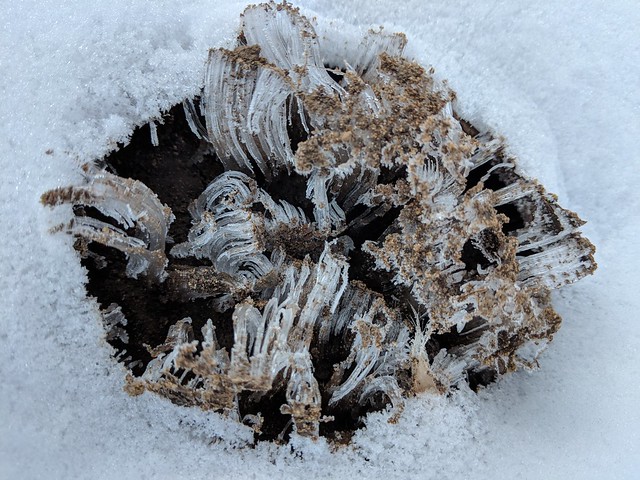
Here are some articles focused on genomics, but with a few others on deforestation, ecosystem services, and sustainable agriculture. The photo above of needle ice in my backyard is totally unrelated, but I'd never seen or even heard of it, and I found it super cool. Read about it on wikipedia!

Let me know if you need a copy of any of these articles. If you know someone who wants to sign up to receive these summaries, they can do so at http://bit.ly/sciencejon

DEFORESTATION:
Jokpe & Schoneveld 2018 is a close look at zero-deforestation commitments (ZDC) by 50 influential  corporate "power brokers."  They identify several problems with implementation gaps and externalities. In particular they note that a lack of traceability and transparency about where commodities are sourced from makes verification difficult (and most companies rely on asking their suppliers to honestly self-report deforestation). They also report that 3/4 of companies with ZDC don't require company wide commitments from suppliers (so those suppliers can just sell deforestation linked products to other companies who don't care). This one is long but worth reading for breakouts by sector and other useful info. Note that TNC in this article refers to transnational companies and not The Nature Conservancy. The problems and gaps identified are things we're hoping to address with the Accountability Framework (https://accountability-framework.org/), which should be formally launched this spring.

ECOSYSTEM SERVICES:
There are many methods and tools to assess ecosystem services. Neugarten et al. 2018 is a report reviewing 9 assessment tools (EST, PA-BAT, TESSA, ARIES, C$N, InVEST, MIMES, SolVES, and WW) and providing decision trees on how to pick the right one for a given need. This is a fantastic reference for anyone working with ecosystem services, and it covers both written guidance documents and modeling tools. They recommend you identify the analysis question or need and think hard about expertise and resources you have to do the analysis before selecting a tool.

GENOMICS / GENE EDITING / GENETIC ENGINEERING:
Photosynthesis in plants relies on an enzyme called RuBisCO, sometimes called 'the most incompetent enzyme in the world' due to its inefficiency and energy loss during respiration. South et al. 2019 present a new transgenic GMO tobacco plant which improves the efficiency of respiration. As a result, their best modified tobacco plants had 41% higher biomass (including 33% more leaf biomass but also larger stems). It's not clear how much of the biomass gain could be translated to improved yields for grains or other crops, but that's still a potentially huge step forward which should be further explored. Eisenhut & Weber 2019 is a nice very short (1.5 page) summary of the article, and you can also read a blog about it here which includes some nice diagrams: https://phys.org/news/2019-01-scientists-shortcut-photosynthetic-glitch-boost.html

Kofler et al. 2018 is an editorial on benefits and risks of altering the DNA of wild organisms via gene editing. They call for collective oversight to ensure careful thought is given to environmental, social, and ethical concerns, and especially to local community involvement in each decision to potentially release an edited organism (as well as international bodies like IUCN). They stress that "using this technology irresponsibly or not using it at all could prove damaging" - and give good examples of each.

Sprink et al. 2016 looks at regulation of gene editing, and the difference between a process based approach (where the key factor is how an organism was modified) vs a product based approach (where the outcome is the key factor regardless of the process used). They argue that the European approach is outdated and doesn't reflect the continuum of modern technology (including several different applications of gene editing). They also dive into a legal argument of why it should be changed, and how it compares to the US and other countries. They make a good argument that regulation should be based on a genetic trait and product rather than the process used to develop it. This one is complex and wonky but a good reference, especially box 1 with definitions of several gene editing approaches.

Halewood et al. 2018 is an overview of how CGIAR is looking to use crop genome sequencing to drive more crop diversity and find crop traits that can deliver better outcomes for people and nature. Most readers can safely skip information on specific molecular markers (e.g. Table 1) but should read page 372 which lists several applications of gene editing technology and genotyping.

Zhong 2019 looks at how soy genotype and rhizobium inoculation (of seed or soil) impact plant growth, soy nodulation (the nodules help them fix nitrogen via bacteria), and microbiome. They found that the microbiome of soy varies depending on the genotype of soy. In particular whether the genotype forms high or low numbers of root nodules. Low-nodulation soy had more co-occurrence of the taxonomic groups (a more connected network) than the high-nodulation soy (figure 4). Both genotypes had their microbiome network connections increased by inoculation. The efficacy of the inoculant  varies depending on plant genotype. See figure 1c / 1d for details. Low-nodule soy got a significant boost in nodulation from inoculation, but still had fewer nodules than high-nodule soy (for which nodulation was unaffected by inoculation). Both genotypes of soy got a roughly similar growth boost from inoculation. This means that to evaluate biological seed treatments / inoculation we have to look at the intersection of the inoculant, plant genetics, and baseline soil microbiome.


SUSTAINABLE AGRICULTURE:
Eichler Inwood et al. 2018 is a thoughtful review of several different frameworks to assess agricultural sustainability (in different contexts and scales). Table 4 is a nice summary of the 9 frameworks they cover, with Table 5 providing more details on how and where they work. None are ideal in every context. Thy conclude with recommendations about how to select a framework (see Table 6 for properties they should have), choose indicators, collect data etc.

REFERENCES:
Eichler Inwood, S. E., López-Ridaura, S., Kline, K. L., Gérard, B., Monsalue, A. G., Govaerts, B., & Dale, V. H. (2018). Assessing sustainability in agricultural landscapes: a review of approaches. Environmental Reviews, 26(3), 299–315. https://doi.org/10.1139/er-2017-0058

Eisenhut, M., & Weber, A. P. M. (2019). Improving crop yield. Science, 363(6422), 32–33. https://doi.org/10.1126/science.aav8979

Halewood, M., Lopez Noriega, I., Ellis, D., Roa, C., Rouard, M., & Sackville Hamilton, R. (2018). Using Genomic Sequence Information to Increase Conservation and Sustainable Use of Crop Diversity and Benefit-Sharing. Biopreservation and Biobanking, 16(5), 368–376. https://doi.org/10.1089/bio.2018.0043

Jopke, P., & Schoneveld, G. C. (2018). Corporate commitments to zero deforestation: An evaluation of externality problems and implementation gaps. Occasional Paper 181. Bogor, Indonesia: CIFOR.

Kofler, N., Collins, J. P., Kuzma, J., Marris, E., Esvelt, K., Nelson, M. P., … Schmitz, O. J. (2018). Editing nature: Local roots of global governance: Science, 362(6414), 527–529. https://doi.org/10.1126/science.aat4612

Neugarten, R. A., Langhammer, P. F., Osipova, E., Bagstad, K. J., Bhagabati, N., Butchart, S. H. M., … Willcock, S. (2018). Tools for measuring, modelling, and valuing ecosystem services: guidance for Key Biodiversity Areas, natural World Heritage sites, and protected areas. (C. Groves, Ed.). Gland, Switzerland: IUCN. https://doi.org/10.2305/IUCN.CH.2018.PAG.28.en

South, P. F., Cavanagh, A. P., Liu, H. W., & Ort, D. R. (2019). Synthetic glycolate metabolism pathways stimulate crop growth and productivity in the field. Science, 363(6422), eaat9077. https://doi.org/10.1126/SCIENCE.AAT9077

Sprink, T., Eriksson, D., Schiemann, J., & Hartung, F. (2016). Regulatory hurdles for genome editing: process- vs. product-based approaches in different regulatory contexts. Plant Cell Reports, 35(7), 1493–1506. https://doi.org/10.1007/s00299-016-1990-2

Zhong, Y., Yang, Y., Liu, P., Xu, R., Rensing, C., Fu, X., & Liao, H. (2019). Genotype and rhizobium inoculation modulate the assembly of soybean rhizobacterial communities. Plant, Cell & Environment. https://doi.org/10.1111/pce.13519


Sincerely,

Jon

p.s. as a reminder, you can search all of the science articles written by TNC staff (that we know of) here http://www.conservationgateway.org/ConservationPlanning/ToolsData/sitepages/article-list.aspx
(as you publish please email science_pubs@tnc.org to help keep this resource current).
If you'd like to keep track of what I write as well as what I read, I always link to both my informal blog posts and my formal publications (plus these summaries) at http://sciencejon.blogspot.com/

Monday, September 3, 2018

September 2018 science journal article roundup


Aloha,

This is the 50th of these science summaries, and somehow I am still not caught up with all the interesting papers I have! For that occasion, I'm tackling a number of papers that didn't group nicely but still looked relevant. So there are papers on GMOs, fertilization and nitrogen fixation, food security, and Chinese ag.


GMOs:
You've probably heard the debate about whether or not to label genetically engineered / modified food. On the one hand, consumers argue that food should be transparent about its origins to enable consumers to choose. The counterargument has been that since there isn't good evidence that GMOs can harm human health, it could result in consumers thinking it's being labeled b/c it's dangerous. But Kolodinsky and Lusk (2018) have some surprising good news - after GMO labels became mandatory in Vermont, consumer concern / opposition to GMOs actually went down (while in other states there was a non-significant small increase)! Figure 1 shows this graphically. However, after looking at Table 1 I'm less convinced as they have data for five points in time, and concern in the most recent data is about the same as the earliest data. So the finding could be an artifact of how they did their regression, but it's still a promising possibility worth looking into to better understand how these kinds of
labels may affect consumer beliefs.

Cheke 2018 is a commentary on how the use of pest control traits by GM crops can have unintended side-effects, just as traditional chemical pesticide use can. He presents brief interesting case studies, and essentially argues that we need long-term monitoring data to understand how novel forms of pest control impact target pests, non-target pests, and natural predators of pests. To be clear, this isn't an anti-GM paper, it just notes that switching from aerial sprays to toxins within the plant may have unintended consequences. See Zhang et al. 2018 under Chinese Agriculture below for more detail on Bt cotton as a case study.


FOOD SECURITY:
Hasegawa et al. 2018 is an analysis of how climate mitigation may impact food security. They find that climate mitigation may cause more hunger than the direct effects of climate change. Livestock in particular would be more expensive (given higher GHG emissions and land use). The primary drivers would be food price increases driven by: tax on GHG emissions, higher land rents if ag expansion is slowed, and land competition by biofuel. However, this outcome isn't inevitable if policy is crafted more carefully. For example, a tax focused on animal products could drive a shift to producing more food consumable directly by humans, and revenue could be used for food aid. The key questions are thinking about who will bear the costs of implementation, and how it may affect food prices and thus food security for poor people in particular.


AGRICULTURE / NITROGEN FIXATION / FERTILIZER:
Van Deynze et al 2018 has been getting lots of press. The authors describe a landrace (local cultivar) of maize in Mexico that can fix its own nitrogen via microbes that hang out in aerial roots covered in goopy sugary mucilage. The authors did isotope tracing to verify that N was coming from the air and entering the aerial roots. Since corn uses tons of fertilizer, having it make its own sounds pretty exciting. In this case, it allows corn to be grown in nitrogen-depleted fields in Mexico, with ~30-80% of needed nitrogen coming from the air (varying by field and growth stage, but often ~50%). Unfortunately, this type of N-fixation is not as efficient as how legumes do it, and N-fixing maize is not brand new (Steve Wood sent me this paper from 1975 on the topic: http://www.pnas.org/content/72/6/2389.short). But (as Steve also pointed out) this is a pretty understudied area and there's a lot we don't know about the potential, which if nothing else shows the value in promoting crop diversity
so we don't lose potentially useful varities like this!
See https://news.wisc.edu/corn-that-acquires-its-own-nitrogen-identified-reducing-need-for-fertilizer/ for a blog post on this research.

Given how much research there is on trying to get crops to fix their own nitrogen, the finding by Griesmann et al. 2018 that many plants have lost the ability to fix N blew my mind. By comparing genomes of N-fixing plants to those that don't, they were able to find that ~3/4 of the species in their sample that didn't fix N had an ancestor that could! They suggest that the fact this ability has been lost multiple times reflects that plants spend a lot of energy to support N fixation, and that when N levels are adequate in the soil they eventually can lose the ability to fix it. In other words, as we try to engineer plants to fix their own N, it's worth reflecting on the costs that may have led plants in the past to reject this evolutionary path.
There's a blog on this one at http://www.sciencemag.org/news/2018/05/many-plants-need-bacterial-roommates-survive-so-why-do-some-kick-them-out

Chen et al. 2018 takes a different approach to improving fertilizer use in ag. They provide a review of possible ways to improve the environmental impacts of making chemical nitrogenous fertilizer. Currently the Haber-Bosch process relies on methane, so getting hydrogen from water instead could have many benefits if the higher energy cost can be overcome. This is a pretty technical paper but the first page is an overview that is much more accessible and introduces the possibilities.


CHINESE AGRICULTURE:
Zuo et al 2018 is a nice dense analysis of how Chinese agriculture has changed over the past ~20 years, focusing on crop yield and five environmental indicators (irrigation water, excess N, excess P, land use, and GHGs). While total crop calories produced increased by 66% (with only 1% more net land use), and environmental intensity (impact per calorie) went down, the total environmental impact still worsened quite a bit. This is a common challenge in sustainable intensification - it's often relatively easy to boost yields, but challenging to reduce actual impacts to the environment at the same time. The authors also note that urbanization has pushed cropland to more marginal and water-scarce areas, and future shifts in cropland may pose further challenges. This is worth reading in its entirety for anyone working in Chinese ag, but Table 1 summarizes the changes well, and Figure 3 is an intriguing map with potential priority areas to focus on different indicators.

Zhang et al. 2018 is a look at the impacts of planting Bt cotton (genetically engineered to produce the Bt toxin) in China on three major pests, and how that relates to farm management and nearby land use. The good news is that the use of Bt cotton decreased spraying for bollworm, which in turn allowed natural predators of aphids to recover (which reduced aphid population). Unfortunately, the reduced spraying also allowed mirid bugs to increase. Figure 3 shows how the infestations and spraying changed over time as Bt cotton was rolled out. These trade-offs show the need to think holistically about pest control. Farms in landscapes with more non-farm land use (urban, water, forest, grass, 'unused') had less aphids and mirid bugs (but bollworms were unaffected, and other research has found diverse land use may promote mirid bugs). Finally, farmers were found to spray for aphids and bollwords at non-damaging levels, which represents a missed opportunity to increase their profits (via reduced
costs) and improve their sustainability.


REFERENCES:
Cheke, R. A. (2018). New pests for old as GMOs bring on substitute pests. Proceedings of the National Academy of Sciences, 201811261. https://doi.org/10.1073/pnas.1811261115

Chen, J. G., Crooks, R. M., Seefeldt, L. C., Bren, K. L., Bullock, R. M., Darensbourg, M. Y., … Schrock, R. R. (2018). Beyond fossil fuel–driven nitrogen transformations. Science, 360(6391), eaar6611. https://doi.org/10.1126/science.aar6611

Griesmann, M., Chang, Y., Liu, X., Song, Y., Haberer, G., Crook, M. B., … Cheng, S. (2018). Phylogenomics reveals multiple losses of nitrogen-fixing root nodule symbiosis. Science, 361(6398). https://doi.org/10.1126/science.aat1743

Hasegawa, T., Fujimori, S., Havlík, P., Valin, H., Bodirsky, B. L., Doelman, J. C., … Witzke, P. (2018). Risk of increased food insecurity under stringent global climate change mitigation policy. Nature Climate Change, 8(8), 699–703. https://doi.org/10.1038/s41558-018-0230-x

Kolodinsky, J., & Lusk, J. L. (2018). Mandatory Labels can Improve Attitudes toward Genetically Engineered Food. Science Advances, In press(June), 1–6. https://doi.org/10.1126/sciadv.aaq1413

Van Deynze, A., Zamora, P., Delaux, P., Heitmann, C., Jayaraman, D., Rajasekar, S., … Bennett, A. B. (2018). Nitrogen fixation in a landrace of maize is supported by a mucilage-associated diazotrophic microbiota. PLOS Biology, 16(8), e2006352. https://doi.org/10.1371/journal.pbio.2006352

Zhang, W., Lu, Y., Werf, W. Van Der, Huang, J., Wu, F., Zhou, K., & Deng, X. (2018). Multidecadal, county-level analysis of the effects of land use, Bt cotton, and weather on cotton pests in China. Proceedings of the National Academy of Sciences. https://doi.org/10.1073/pnas.1721436115

Zuo, L., Zhang, Z., Carlson, K. M., MacDonald, G. K., Brauman, K. A., Liu, Y., … West, P. C. (2018). Progress towards sustainable intensification in China challenged by land-use change. Nature Sustainability, 1(6), 304–313. https://doi.org/10.1038/s41893-018-0076-2