Showing posts with label deforestation. Show all posts

Monday, December 1, 2025

December 2025 Science Summary

Woody debris in underpass to improve small mammal conductivity

Greetings,


This month I am summarizing three science papers about climate change plus I wanted to share a cool idea I recently learned about.

Here's the cool idea: recent research in Colorado (by Julia Kintsch from ECO-resolutions among others) has found that simply adding lines of woody debris underneath underpasses (see the photo above) boosted underpass use by small mammals. Cover features composed of salvaged logs and branches with sufficient interstitial space through which small animals can move doubled the number of species documented using large bridges under an interstate to access habitats on either side. They detected 17 species using the cover features, including small mammals, amphibians, reptiles, and the federally threatened Preble’s meadow jumping mouse. This is a really cheap intervention worth trying out more broadly, please help spread the word!

If you know someone who wants to sign up to receive these summaries, they can do so at http://subscribe.sciencejon.com (no need to email me).


FORESTATION (REFORESTATION AND AFFORESTATION):
Wang et al. 2025 finds that earlier estimates of how much of the worth could be forested were much too high. One the one hand - this means we can't count on trees to do as much sequestering as some models hoped for. But as one of the authors (Susan Cook-Patton) points out (in this excellent post) the larger area wasn't feasible anyway, so this smaller estimate gives us more actionable priorities for planting. She also notes that while reducing fossil fuels (and protection of acutely threatened forests) is higher priority than forestation, we absolutely need all of the above. Note: reforestation is restoring trees where they used to be, afforestation is planting trees in what used to be grasslands or other ecosystems, forestation is both.

CLIMATE CHANGE - CARBON MARKETS AND ALBEDO:
Riley et al. 2025 have an update on an issue I've written about several times: that the albedo of trees (how much they reflect sunlight compared to bare soil) can reduce or even fully negate the climate benefit of trees in some cases. They looked at 172 tree planting projects in the voluntary carbon market to see how carbon credits issued compared to true climate impact once albedo was considered. On average 18% of the issued credits shouldn't have been, and 25% of the projects offered more than double the credits they should have once albedo was considered. 12% of the projects (a subset of that 25%) were even net harmful (representing 30% of total credits issued). In good news, 9% of projects actually had more benefit than estimated, and over half of projects had 0-25% of their issued carbon credits negated by albedo. This is important to get right, but a shortcut is to focus protection and forestation in more tropical places while avoiding areas with heavy snow cover and/or very light-colored soils (the pink places in Fig 2a are good to avoid).

DEFORESTATION AND CLIMATE CHANGE:
Franco et al. 2025 looks at how both deforestation and climate change have affected temperature and precipitation in the Amazon. Losing trees not only increases atmospheric carbon which drives global warming, for tropical forests in particular it also increases LOCAL warming and especially decreases water cycling. They found that deforestation caused 3/4 of the decline in dry season precipitation but only 17% of the increase in temperature. This is similar to other work which has found deforestation has delayed the onset of the rainy season in the Cerrado (Spera et al. 2016) and Pantanal (Lázaro et al. 2020).


REFERENCES:

Franco, M. A., Rizzo, L. V., Teixeira, M. J., Artaxo, P., Azevedo, T., Lelieveld, J., Nobre, C. A., Pöhlker, C., Pöschl, U., Shimbo, J., Xu, X., & Machado, L. A. T. (2025). How climate change and deforestation interact in the transformation of the Amazon rainforest. Nature Communications, 16(1), 7944. https://doi.org/10.1038/s41467-025-63156-0

Lázaro, W. L., & Oliveira-júnior, E. S. (2020). Thematic Section : Opinions about Aquatic Ecology in a Changing World Climate change reflected in one of the largest wetlands in the world : an overview of the Northern Pantanal water regime. Acta Limnologica Brasiliensia, 32, 8.

Riley, L. M., Cook-Patton, S. C., Albert, L. P., Still, C. J., Williams, C. A., & Bukoski, J. J. (2025). Accounting for albedo in carbon market protocols. Nature Communications, 16(1), 8810. https://doi.org/10.1038/s41467-025-64317-x

Spera, S. A., Galford, G. L., Coe, M. T., Macedo, M. N., & Mustard, J. F. (2016). Land-use change affects water recycling in Brazil’s last agricultural frontier. Global Change Biology, 22(10), 3405–3413. https://doi.org/10.1111/gcb.13298

Wang, Y., Zhu, Y., Cook-Patton, S. C., Sun, W., Zhang, W., Ciais, P., Li, T., Smith, P., Yuan, W., Zhu, X., Canadell, J. G., Deng, X., Xu, Y., Xu, H., Yue, C., & Qin, Z. (2025). Land availability and policy commitments limit global climate mitigation from forestation. Science, 389(6763), 931–934. https://doi.org/10.1126/science.adj6841


Sincerely,
 
Jon

Wednesday, October 1, 2025

October 2025 Science Summary

Puppy party

Greetings,


I've got a mixed bag of four mostly unrelated science articles this month.

If you know someone who wants to sign up to receive these summaries, they can do so at http://subscribe.sciencejon.com (no need to email me).


CLIMATE CHANGE:
Chen et al. 2025 reviews the evidence (from 21 studies with at least 10 years of data) that climate change may cause 3 problems (see Fig 1): mountaintop species going extinct when conditions become too warm for them, species not able to move upslope as fast as conditions change, and bottomland diversity declining b/c no warm-tolerant species can replace areas abandoned by species moving upslope. Using a model they found that mountaintop extinctions are not happening more than expected w/o climate change, many species ARE moving upslope but rarely having range contract, and only limited homogenization of bottomland species. They note including moisture changes and nitrogen deposition could have changed the results, and more research is needed to figure out why these problems are occurring in limited cases.


FOREST CARBON:
Schnabel et al 2025 has experimental evidence that after 16 years, planted forests in Panama with a mix of 5 native species sequestered 57% more aboveground carbon than monocultures. Both treatments lost soil carbon relative to the pasture they started with (see section 4.3 for possible explanations) but still gained a net of 24.7 t C / ha (90.7 t CO2e/ha) due to the aboveground gains. See  https://news.mongabay.com/2025/04/diverse-forests-and-forest-rewilding-offer-resilience-against-climate-change/ for more.


DATA AND DEFORESTATION:
Roquette et al. 2025 is ostensibly about the technical details around land use mapping in Mato Grosso, Brazil. But it actually makes a much broader point: boring things like data sources and algorithms used can have an outsize backdoor policy impact. They argue that a shift in how land use was classified could sneakily allow a ton of deforestation. Basically by changing how "forest" is defined and reclassifying some forest as a type of savanna (confusingly, cerrado is an ecosystem but the Cerrado is a biome / region), this could allow deforestation since 80% of forest has to be set aside from development but only 35% of savanna does. In some cases the new map actually does the reverse (classifying what was savanna as forest) but that can be reversed upon request. The worst case scenario is that up to 4,1 million ha could be authorized for deforestation.


MINING AND TOXICITY:
Foerster et al. 2025 found that giant otters in the Pantanal are showing evidence of mercury contamination in the Pantanal – higher when they’re closer to gold mines (except for streams close to the mine over land but not connected by water). Their results aren’t conclusive but it seems likely that the values are high enough to be causing toxicity, and that otters aren’t able to flush out the mercury by molting their fur, nor by having selenium bind to the mercury. They measured mercury in fur rather than directly in the liver, but based on other research they think it’s likely levels are high enough in some animals to cause serious toxicity and perhaps even death. 


REFERENCES:
Chen, Y.-H., Lenoir, J., & Chen, I.-C. (2025). Limited evidence for range shift–driven extinction in mountain biota. Science, 388(6748), 741–747. https://doi.org/10.1126/science.adq9512

Foerster, N., Soresini, G., Leuchtenberger, C., Bócoli, D. de A., Paiva, J. de B., Brait, C. H. H., & Mourão, G. (2025). Pervasive mercury contamination of a semi-aquatic apex predator across the Pantanal wetland. Environmental Conservation, 1–6. https://doi.org/10.1017/S0376892925100155

Roquette, J. G., Vacchiano, M. C., Daher, F. R. G., & Finger, Z. (2025). Pseudo-legal deforestation due to changes in the classification of native vegetation in Mato Grosso, Brazil. Environmental Conservation, 1–7. https://doi.org/10.1017/S037689292510012X

Schnabel, F., Guillemot, J., Barry, K. E., Brunn, M., Cesarz, S., Eisenhauer, N., Gebauer, T., Guerrero‐Ramirez, N. R., Handa, I. T., Madsen, C., Mancilla, Lady, Monteza, J., Moore, T., Oelmann, Y., Scherer‐Lorenzen, M., Schwendenmann, L., Wagner, A., Wirth, C., & Potvin, C. (2025). Tree Diversity Increases Carbon Stocks and Fluxes Above—But Not Belowground in a Tropical Forest Experiment. Global Change Biology, 31(2). https://doi.org/10.1111/gcb.70089


Sincerely,
 
Jon
 
p.s. These four foster puppies were getting some wiggles out in my yard before a "puppy party" which raises money for an animal rescue (Homeward Trails) and helps them find homes

Tuesday, July 2, 2024

July 2024 science summary

Baby bunny nibbling a weed

Hello,

I've just got two science articles this month, but also wanted a plug a book I found really interesting: The Culture Code by Daniel Coyle. There's not a lot of brand new content - he draws heavily on concepts of psychological safety and vulnerability (see Amy Edmondson), learning from failure, how to give effective feedback, ways to generate candor and tough love, making space for feedback, etc.

The reason this one stuck w/ me is that he has pretty compelling real world examples of organizations and leaders that embody some of the recommendations. One of his suggestions was also new to me and really resonates: "resist the temptation to reflexively add value." I've thought before about 1) whether or not my review or input can make something better and how much, and 2) whether I'd add enough value for it to be worth my time. But he notes that 3) every time you weigh in on something, you're missing a chance to express trust in the author and build their confidence that they don't NEED your input for it to be good enough. I'm still grappling with how to put this into practice, but the book is a fast read and I recommend it.

If you know someone who wants to sign up to receive these summaries, they can do so at http://bit.ly/sciencejon (no need to email me).


MAMMALS:
Greenspoon et. al 2023 is an attempt to estimate the biomass of all wild mammals on earth (combined), arriving at 60 Mt total: 20 Mt (million metric tons) on land (half from "even-hoofed" mammals, see FIg 2), and 40 Mt in oceans (23 Mt of which comes from baleen whales). But the kicker is that they estimate human biomass at 390 Mt, and livestock biomass at 630 Mt (420 Mt from cattle: which is more than all humans plus all wild land mammals). Fig 4 awkwardly tries to compare all mammal biomass on earth, showing how wild species have been squeezed. The wild mammal estimates mostly come from the IUCN red list which skews towards expert assessments of more threatened spp., and the numbers won't be "right" for several reasons (these estimates are hard, and the data are highly limiting). But it seems solid that humans and livestock substantially outweigh wild mammals.
There's a good critique of the paper (arguing that Greenspoon et al. underestimate biomass by a factor of 5.5) by Santini et al. here https://www.pnas.org/doi/10.1073/pnas.2308958121 and a reply from the Greenspoon authors pointing out why the methods used in the critique are also (differently) flawed: https://www.pnas.org/doi/10.1073/pnas.2316314121


PANTANAL / CATTLE RANCHING:
Junk and da Cunha 2012 argue that when ranchers clear trees and shrubs from grazing lands, that should not be equated with deforestation. They note that from the perspective of ranchers, all trees and shrubs within pastures (whether native or not) are "invasive species." It's unusual to use that language to describe the regeneration of trees in what used to be forest (as of ~250 years ago before cattle were introduced) but makes sense from the perspective of someone trying to keep land suitable for cattle (and they note the land was managed for thousands of years to promote other wild game species, making parts of the Pantanal a cultural landscape). Table 1 lists their recommended methods to clear some of the more common woody species. They also discuss how starting in the 1980s, money from a gold rush was used to drive higher-density cattle ranching using African grass species.


REFERENCES:
Greenspoon, L., Krieger, E., Sender, R., Rosenberg, Y., Bar-On, Y. M., Moran, U., Antman, T., Meiri, S., Roll, U., Noor, E., & Milo, R. (2023). The global biomass of wild mammals. Proceedings of the National Academy of Sciences, 120(10), 2017. https://doi.org/10.1073/pnas.2204892120

REPLY AND COUNTER-REPLY TO GREENSPOON:

  • Santini, L., Berzaghi, F., & Benítez-López, A. (2024). Total population reports are ill-suited for global biomass estimation of wild animals. Proceedings of the National Academy of Sciences, 121(4), 1–3. https://doi.org/10.1073/pnas.2308958121   
  • Greenspoon, L., Rosenberg, Y., Meiri, S., Roll, U., Noor, E., & Milo, R. (2024). Reply to Santini et al.: Total population reports are necessary for global biomass estimation of wild mammals. Proceedings of the National Academy of Sciences of the United States of America, 121(4), 1–2. https://doi.org/10.1073/pnas.2316314121

    
Junk, W. J., & Nunes da Cunha, C. (2012). Pasture clearing from invasive woody plants in the Pantanal: a tool for sustainable management or environmental destruction? Wetlands Ecology and Management, 20(2), 111–122. https://doi.org/10.1007/s11273-011-9246-y


Sincerely,
 
Jon
 
p.s. This is a baby rabbit nibbling a weed in my garden. We had a nest of even tinier ones born more recently, but this guy was the cutest of them all.

Thursday, September 1, 2022

September 2022 science summary

Goldfinches on cutleaf coneflowers

Hi,


First I wanted to say how sorry I was to hear that one of the lead authors I highlighted last month (Jonathan Higgins) has since passed away. Higs was a force of nature and he will be missed by many. I'm very glad that my last email exchange with him was about how useful his paper was and the impact I thought it would have, which made him very happy.

This month I am summarizing three articles on climate change, one on tropical forest recovery, and one on conservation and human well-being. If you know someone who wants to sign up to receive these summaries, they can do so at http://bit.ly/sciencejon (no need to email me).


CLIMATE CHANGE:
Gopalakrishna et al. 2022 highlights the need for local studies of climate mitigation potential. They found that if you avoid conflict w/ ag lands, forest restoration potential is lower in India than global estimates (and they suspect the same would be true in other tropical countries with lots of ag lands). They found 1.6 million ha of lands that could be restored; the plurality was degraded forest followed by scrub. If those lands were restored, they estimate it could provide 61.3 Mt (million tons) of carbon sequestration. They also roughly estimate 14.7 million ha of ag lands could incorporate agroforestry practices for up to another 98 Mt of carbon over 30 years. So the key take-aways here are a) we can't rely on global estimates for in-country work and b) if we can find ways to add trees to lands producing food w/o impacting food production (which is sometimes possible) there is a lot of opportunity there.

Noon et al. 2022 is a fantastic resource mapping global priority habitats for conservation to protect and/or manage to slow climate change. They focus on "irrecoverable carbon" - meaning carbon that will take 30+ years to recover after it is lost due to conversion or degradation. Fig 1 has a global map of irrecoverable carbon with a few hotspots highlighted (or use this web map which has slightly different symbology https://irrecoverable.resilienceatlas.org/map). But more useful is Fig 2 which splits out the carbon by how it's threatened (by land conversion, climate change, both, or neither) to identify where protection vs. management makes sense. Note that in Fig 2 darker colors mean more carbon within each of the four risks, but they are not consistent across the four risks (to see the highest total carbon you still need Fig 1). Fig 3 highlights how uneven irrecoverable carbon in, 50% of it is in just 3% of global land area! If you work on carbon in nature, read the whole paper. Many thanks to the authors who kindly answered my questions and sent me their data so I could make my own maps!

Reed 2021 tackles the thorny issue of how montane meadowns in California (wet grasslands in mountains) mitigate or worsen climate change. They found that a) these ecosystems store a lot of carbon, b) on net they can be either a big carbon source (10/13 sites) or a big carbon sink (3/13 sites) c) the sites that were a source had similar plant species to sink sites, but typically had groundwater closer to the surface, more root biomass, and less bare ground, d) methane emissions were consistently low, and e) they're not sure what caused most meadows to become net carbon sources (the high carbon stock indicate they all used to be sinks) but think it depends mostly on how much water and dissolved carbon flows into the meadows from uplands and thus upland forest loss is a likely culprit. The discussion is interesting - they hypothesize that hydrologic restoration in the meadow and upland forest management could slow carbon losses but think it's a safer bet to try and maintain sites that are currently net carbon sinks.


FOREST RESILIENCE / RECOVERY:
Poorter et al. 2021 look at how long it took for tropical forests (in Central & South America plus West Africa) to recover after deforestation, finding them pretty resilient. They found recovery to 90% of old growth values took 1-9 yrs for soil, plant function took 3-27 yrs, forest structure took 27-119 (tree size variation 27, max tree size 49, biomass 119), species diversity took 37-59, and species composition took 120 years. They thus argue secondary (regrowing) forests are still ecologically important and deserve conservation (protection, restoration, and management). Note that most of their sites had low to mid intensity land use after deforestation like swidden agriculture, so soil degradation was relatively minor. It's short and worth the read, but as is common w/ papers in Science I found the figures hard to decipher but useful once you put in the time. Fig 1B shows roughly how quickly different attributes recover over time (soil is brown, plant function is purple, structure is green, and diversity is turquoise); Fig 2 is similar but breaks out sub-indicators and is more precise; and Fig 3D is my favorite (how long it takes each attribute to return to 90% of old growth values). Here are the abbreviations since they are not defined in a single place! 
AGB=aboveground biomass
BD=soil bulk density
C=soil carbon
DMAX=maximum tree diameter
N=soil nitrogen
NF=proportional basal area of nitrogen-fixing species
SC=species composition (how similar abundance of each species is to old growth)
SD=Simpson diversity (~diversity of common species)
SH=structural heterogeneity (variation in tree size)
SR=species richness (number of species present)
SLA=community-weighted mean specific leaf area
WD=community-weighted mean wood density


NATURE & PEOPLE:
Huynh et al. 2022 is a global literature review of 300 peer-reviewed papers on the many intangible ways nature impacts people (what they call "cultural ecosystem services" or CESs). So it leaves out physical effects like providing food, clean water, reducing storms, etc. (which are well studied) and focuses on things like recreation, spiritual fulfillment, aesthetics, etc. If you enjoy taxonomies / classifications you will like this paper, and if not, you will find it a slog, since the heart of it is a framework to classify many ways people and nature interact (see Table 1 and Figure 2). But it's worth at least reading through Table 1 and pondering a bit. Ssome like how nature can help people bond ('Cohesive') were new to me but rang true; others felt like splitting hairs (e.g., splitting spiritual experiences into 'Intuitive' and 'Transcendentive'). Beyond the framework, they found 86% of over 1,000 observations positively impacted people (more studies looked at this and there is likely bias in the lit - it's not necessarily that nature is inherently overwhelmingly beneficial). Their expert judgment is that the biggest benefits come from mental and physical health, particularly from recreation (including tourism) and aesthetic values (the size of boxes in Fig 3 shows how many studies they had for each of 227 'pathways').The biggest negative impacts came from concern about safety ('Apprehensive'), or the loss of ecosystem services when nature is damaged or lost ('Destructive' - although it seems odd to me to mix that in with actual harms from nature itself), with only a few 'Irritative' (annoyance or disgust, e.g., from wildlife noise or excrement). In the end the paper gave me 'Cognitive' benefits but was not very 'Satisfactive.' The Washington Post has an overview of the paper here: https://www.washingtonpost.com/climate-solutions/2022/08/05/nature-study-impact-hiking-outdoors/


REFERENCES:

Gopalakrishna, T., Lomax, G., Aguirre‐Gutiérrez, J., Bauman, D., Roy, P. S., Joshi, P. K., & Malhi, Y. (2022). Existing land uses constrain climate change mitigation potential of forest restoration in India. Conservation Letters, December 2021, 1–11. https://doi.org/10.1111/conl.12867

Huynh, L. T. M., Gasparatos, A., Su, J., Dam Lam, R., Grant, E. I., & Fukushi, K. (2022). Linking the nonmaterial dimensions of human-nature relations and human well-being through cultural ecosystem services. Science Advances, 8(31), 1–22. https://doi.org/10.1126/sciadv.abn8042

Noon, M. L., Goldstein, A., Ledezma, J. C., Roehrdanz, P. R., Cook-Patton, S. C., Spawn-Lee, S. A., Wright, T. M., Gonzalez-Roglich, M., Hole, D. G., Rockström, J., & Turner, W. R. (2022). Mapping the irrecoverable carbon in Earth’s ecosystems. Nature Sustainability, 5(1), 37–46. https://doi.org/10.1038/s41893-021-00803-6

Poorter, L., Craven, D., Jakovac, C. C., van der Sande, M. T., Amissah, L., Bongers, F., Chazdon, R. L., Farrior, C. E., Kambach, S., Meave, J. A., Muñoz, R., Norden, N., Rüger, N., van Breugel, M., Almeyda Zambrano, A. M., Amani, B., Andrade, J. L., Brancalion, P. H. S., Broadbent, E. N., … Hérault, B. (2021). Multidimensional tropical forest recovery. Science, 374(6573), 1370–1376. https://doi.org/10.1126/science.abh3629

Reed, C. C., Merrill, A. G., Drew, W. M., Christman, B., Hutchinson, R. A., Keszey, L., Odell, M., Swanson, S., Verburg, P. S. J., Wilcox, J., Hart, S. C., & Sullivan, B. W. (2021). Montane Meadows: A Soil Carbon Sink or Source? Ecosystems, 24(5), 1125–1141. https://doi.org/10.1007/s10021-020-00572-x


p.s. the photo shows a goldfinch amidst my cutleaf coneflowers, watching me watch him (these flowers are only ~5 ft from a living room window)

Thursday, August 1, 2019

August 2019 science journal article summary


Photo from Mick Garratt

Greetings,

Hot weather and a vacation in the woods have me thinking about climate change and habitat conversion (with articles on deforestation, landscape conservation, biodiversity, and livestock sustainability).

If you know someone who wants to sign up to receive these summaries, they can do so at http://bit.ly/sciencejon

LANDSCAPE CONSERVATION:
Runting et al. 2019 argues that debates about 'land sparing' vs 'land sharing' miss an important point - good forest management is likely more important. They run several scenarios with different degrees of land sharing vs sparing, and conventional vs. improved management (reduced-impact logging, longer plantation rotation, and strictly enforcing protected areas). They saw the best outcomes with improved management and a mix of sparing and sharing (but favoring sparing, see Figure 4). Check out Figure 2 for what an 'optimal' scenario looks like compared to extreme sharing or sparing (but ignore the idea that tiny islands of protected areas or holes in larger ones are ideal - this is almost certainly an artifact). There's a blog on this one at https://nature4climate.org/news/headline-stories/cant-see-the-wood-for-the-trees-making-the-most-of-our-forests-for-biodiversity-and-wood-production/

Kennedy et al. 2019 calculates how modified by human activities land around the world is. While only 5% of land area was 'unmodified', most of the world was 'moderately modified.' The authors argue that ecoregions with moderate modification may be good candidates for high priority conservation action, because they tend to have some relatively intact lands near to highly modified lands (which thus may pose a threat in the near future). In particular, the tropical and subtropical dry broadleaf forests biome (mostly in Mexico, India, Argentina, & SE Asia) was found to be the most threatened (high conversion relative to protection). While they didn't include all threats (e.g. logging, invasive species, climate change, and more) these data can be used to evaluate the suitability of lands for protection. You can explore the findings and maps at http://gdra-tnc.org/current/ and you can download the data from http://s3.amazonaws.com/DevByDesign-Web/Apps/gHM/index.html


CLIMATE CHANGE:
Bastin et al. 2019 estimate 900 million ha of land could be reforested globally (excluding cropland and urban areas), which could store 205 Gt of carbon (752 Gt CO2e). Alternatively, they predict we'll lose 223 million ha of forest by 2050 under business as usual. This paper has been broadly criticized for overstating the role of reforestation in climate mitigation (while reforestation is important, the authors' conclusion that it's the most important solution is a fringe opinion), especially since they call for a focus on boreal plantings which reduces albedo relative to bare snow and ice (thus reducing the climate mitigation contribution). Here's a blog covering the paper including the critique: http://blogs.discovermagazine.com/crux/2019/07/10/reforestation-climate-change-plant-trees/#.XSdzAehJE2w

Diaz et al. 2018 looks at trade-offs between different forest management options for Douglas-fir in the NW US that could improve carbon storage. They compare managing the land to optimize net present value (NPV) to managing for sustained timber yield (with different levels of environmental management, e.g. longer rotations and some aspects of FSC certification). They find that environmental constraints boost carbon storage but hurt net present value. For example, one scenario had 26% more carbon, but 15% less timber and 21% lower NPV. They explore different policy options and challenges related to driving more carbon storage in timberlands.


DEFORESTATION:
Lambin et al. 2018 look at how effective company commitments to end deforestation are. The key finding is that public policy can significantly improve the likelihood of reducing deforestation relative to private action alone. For example, the Soy Moratorium combined sector-wide commitments with monitoring and public disincentives to clear forest in Brazil, with some success. They call for better company commitments (as called for by the Accountability Framework, https://accountability-framework.org/), and recommend public policies including: legal reform & enforcement, land tenure reform, working with people clearing the most forest, broadening scope (companies, commodities, & regions), incentivizing all actors in the supply chain to participate (e.g. fertilizer companies rarely engage in these commitments), improving traceability and transparency, and increasing demand for deforestation-free products.


LIVESTOCK SUSTAINABILITY:
Schader et al. 2015 looks at how shifting what we feed cattle could improve sustainability. The idea is to feed them less food humans could eat (like corn), and more grass and by-products we can't or don't eat (e.g. distiller's grains, bran, oilseed cake, etc.), which also limits the total amount of livestock which can be raised in this way. Figure 1 is a great overview of what this would mean, for example a big reduction in pigs and chicken and only modest increases in other livestock (that can eat grass). But note a cardinal data visualization sin: inconsistent scaling of bar charts (e.g. the soil erosion from water chart makes it look like their preferred scenario has only 42% the erosion of the reference scenario, but it actually has 88% the erosion) which means you have to look carefully. Still, it's an important concept to explore, and a useful contribution to the conversation.

What are the barriers to using livestock practices that reduce GHGs? Kipling et al. 2019 asked Welsh ranchers and other stakeholders in a series of interviews and workshops. They focused on the conceptual framework rather than the practices, splitting them into practical limitations (e.g. costs and infrastructure, see Figure 1), knowledge limitations (being unaware of options and how they work, see Figure 2), and cognitive limitations and interests (complexity and competing values, see Figures 3 & 4). There aren't any big surprises here, but it's a useful overview, especially the quotes from ranchers for each concept they present.


BIODIVERSITY:
Humphreys et al. 2019 looks at recent (since 1900) and historic plant extinction, and compares it to animal extinctions. The most interesting findings are that the IUCN Red List data on extinct plants are pretty poor (with 50 Red List species incorrectly listed as extinct, and 491 extinct species missing from the Red List), that 54% of plants reported extinct were later rediscovered (or reclassified to be the same as an extant species), that thousands of extant plant species are 'functionally extinct' (too few exist to form a viable population going forward), and that 55% of the 571 plant species that have gone extinct have done so since 1900. This is a short paper and worth reading.

REFERENCES:
Bastin, J.-F., Finegold, Y., Garcia, C., Mollicone, D., Rezende, M., Routh, D., … Crowther, T. W. (2019). The global tree restoration potential. Science, 365(6448), 76–79. https://doi.org/10.1126/science.aax0848

Diaz, D. D., Loreno, S., Ettl, G. J., & Davies, B. (2018). Tradeoffs in timber, carbon, and cash flow under alternative management systems for Douglas-Fir in the Pacific Northwest. Forests, 9(8), 1–25. https://doi.org/10.3390/f9080447

Humphreys, A. M., Govaerts, R., Ficinski, S. Z., Nic Lughadha, E., & Vorontsova, M. S. (2019). Global dataset shows geography and life form predict modern plant extinction and rediscovery. Nature Ecology & Evolution, 3(July). https://doi.org/10.1038/s41559-019-0906-2

Kennedy, C. M., Oakleaf, J. R., Theobald, D. M., Baruch-Mordo, S., & Kiesecker, J. (2019). Managing the Middle: A Shift in Conservation Priorities based on the Global Human Modification Gradient. Global Change Biology, (June 2018), 1–17. https://doi.org/10.1111/gcb.14549

Kipling, R. P., Taft, H. E., Chadwick, D. R., Styles, D., & Moorby, J. (2019). Challenges to implementing greenhouse gas mitigation measures in livestock agriculture: A conceptual framework for policymakers. Environmental Science and Policy, 92(November 2018), 107–115. https://doi.org/10.1016/j.envsci.2018.11.013

Lambin, F., Gibbs, H. K., Heilmayr, R., Carlson, K. M., Fleck, L., Garret, R., … Walker, N. (2017). The role of supply-chain initiatives in reducing deforestation. Nature Climate Change, 8(February), 109–116. https://doi.org/10.1038/s41558-017-0061-1

Runting, R. K., Ruslandi, Griscom, B. W., Struebig, M. J., Satar, M., Meijaard, E., … Venter, O. (2019). Larger gains from improved management over sparing–sharing for tropical forests. Nature Sustainability, 2(1), 53–61. https://doi.org/10.1038/s41893-018-0203-0

Schader, C., Muller, A., El-Hage Scialabba, N., Hecht, J., Isensee, A., Erb, K. H., … Niggli, U. (2015). Impacts of feeding less food-competing feedstuffs to livestock on global food system sustainability. Journal of the Royal Society Interface, 12(113). https://doi.org/10.1098/rsif.2015.0891


Sincerely,

Jon

p.s. If you'd like to keep track of what I write as well as what I read, I always link to both my informal blog posts and my formal publications (plus these summaries) at http://sciencejon.blogspot.com/

Wednesday, February 20, 2019

How many trees make a forest?


It seems bizarre, but it's surprisingly hard to agree on what should count as a forest, or deforestation. If we can't agree on what deforestation is and how to measure it, we can't stop it. I wrote a blog post about this surprising problem for Mongabay:
How many trees make a forest?

It explains the issue, and why The Accountability Framework (a coalition of NGOs providing guidance on how companies can set and implement credible deforestation-free commitments) is so critical to solve it.

Friday, February 1, 2019

February 2019 science journal article summary

Needle ice
Hello,

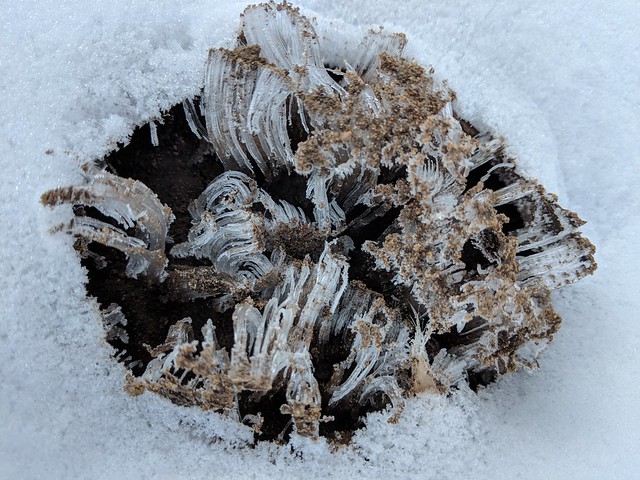
Here are some articles focused on genomics, but with a few others on deforestation, ecosystem services, and sustainable agriculture. The photo above of needle ice in my backyard is totally unrelated, but I'd never seen or even heard of it, and I found it super cool. Read about it on wikipedia!

Let me know if you need a copy of any of these articles. If you know someone who wants to sign up to receive these summaries, they can do so at http://bit.ly/sciencejon

DEFORESTATION:
Jokpe & Schoneveld 2018 is a close look at zero-deforestation commitments (ZDC) by 50 influential  corporate "power brokers."  They identify several problems with implementation gaps and externalities. In particular they note that a lack of traceability and transparency about where commodities are sourced from makes verification difficult (and most companies rely on asking their suppliers to honestly self-report deforestation). They also report that 3/4 of companies with ZDC don't require company wide commitments from suppliers (so those suppliers can just sell deforestation linked products to other companies who don't care). This one is long but worth reading for breakouts by sector and other useful info. Note that TNC in this article refers to transnational companies and not The Nature Conservancy. The problems and gaps identified are things we're hoping to address with the Accountability Framework (https://accountability-framework.org/), which should be formally launched this spring.

ECOSYSTEM SERVICES:
There are many methods and tools to assess ecosystem services. Neugarten et al. 2018 is a report reviewing 9 assessment tools (EST, PA-BAT, TESSA, ARIES, C$N, InVEST, MIMES, SolVES, and WW) and providing decision trees on how to pick the right one for a given need. This is a fantastic reference for anyone working with ecosystem services, and it covers both written guidance documents and modeling tools. They recommend you identify the analysis question or need and think hard about expertise and resources you have to do the analysis before selecting a tool.

GENOMICS / GENE EDITING / GENETIC ENGINEERING:
Photosynthesis in plants relies on an enzyme called RuBisCO, sometimes called 'the most incompetent enzyme in the world' due to its inefficiency and energy loss during respiration. South et al. 2019 present a new transgenic GMO tobacco plant which improves the efficiency of respiration. As a result, their best modified tobacco plants had 41% higher biomass (including 33% more leaf biomass but also larger stems). It's not clear how much of the biomass gain could be translated to improved yields for grains or other crops, but that's still a potentially huge step forward which should be further explored. Eisenhut & Weber 2019 is a nice very short (1.5 page) summary of the article, and you can also read a blog about it here which includes some nice diagrams: https://phys.org/news/2019-01-scientists-shortcut-photosynthetic-glitch-boost.html

Kofler et al. 2018 is an editorial on benefits and risks of altering the DNA of wild organisms via gene editing. They call for collective oversight to ensure careful thought is given to environmental, social, and ethical concerns, and especially to local community involvement in each decision to potentially release an edited organism (as well as international bodies like IUCN). They stress that "using this technology irresponsibly or not using it at all could prove damaging" - and give good examples of each.

Sprink et al. 2016 looks at regulation of gene editing, and the difference between a process based approach (where the key factor is how an organism was modified) vs a product based approach (where the outcome is the key factor regardless of the process used). They argue that the European approach is outdated and doesn't reflect the continuum of modern technology (including several different applications of gene editing). They also dive into a legal argument of why it should be changed, and how it compares to the US and other countries. They make a good argument that regulation should be based on a genetic trait and product rather than the process used to develop it. This one is complex and wonky but a good reference, especially box 1 with definitions of several gene editing approaches.

Halewood et al. 2018 is an overview of how CGIAR is looking to use crop genome sequencing to drive more crop diversity and find crop traits that can deliver better outcomes for people and nature. Most readers can safely skip information on specific molecular markers (e.g. Table 1) but should read page 372 which lists several applications of gene editing technology and genotyping.

Zhong 2019 looks at how soy genotype and rhizobium inoculation (of seed or soil) impact plant growth, soy nodulation (the nodules help them fix nitrogen via bacteria), and microbiome. They found that the microbiome of soy varies depending on the genotype of soy. In particular whether the genotype forms high or low numbers of root nodules. Low-nodulation soy had more co-occurrence of the taxonomic groups (a more connected network) than the high-nodulation soy (figure 4). Both genotypes had their microbiome network connections increased by inoculation. The efficacy of the inoculant  varies depending on plant genotype. See figure 1c / 1d for details. Low-nodule soy got a significant boost in nodulation from inoculation, but still had fewer nodules than high-nodule soy (for which nodulation was unaffected by inoculation). Both genotypes of soy got a roughly similar growth boost from inoculation. This means that to evaluate biological seed treatments / inoculation we have to look at the intersection of the inoculant, plant genetics, and baseline soil microbiome.


SUSTAINABLE AGRICULTURE:
Eichler Inwood et al. 2018 is a thoughtful review of several different frameworks to assess agricultural sustainability (in different contexts and scales). Table 4 is a nice summary of the 9 frameworks they cover, with Table 5 providing more details on how and where they work. None are ideal in every context. Thy conclude with recommendations about how to select a framework (see Table 6 for properties they should have), choose indicators, collect data etc.

REFERENCES:
Eichler Inwood, S. E., López-Ridaura, S., Kline, K. L., Gérard, B., Monsalue, A. G., Govaerts, B., & Dale, V. H. (2018). Assessing sustainability in agricultural landscapes: a review of approaches. Environmental Reviews, 26(3), 299–315. https://doi.org/10.1139/er-2017-0058

Eisenhut, M., & Weber, A. P. M. (2019). Improving crop yield. Science, 363(6422), 32–33. https://doi.org/10.1126/science.aav8979

Halewood, M., Lopez Noriega, I., Ellis, D., Roa, C., Rouard, M., & Sackville Hamilton, R. (2018). Using Genomic Sequence Information to Increase Conservation and Sustainable Use of Crop Diversity and Benefit-Sharing. Biopreservation and Biobanking, 16(5), 368–376. https://doi.org/10.1089/bio.2018.0043

Jopke, P., & Schoneveld, G. C. (2018). Corporate commitments to zero deforestation: An evaluation of externality problems and implementation gaps. Occasional Paper 181. Bogor, Indonesia: CIFOR.

Kofler, N., Collins, J. P., Kuzma, J., Marris, E., Esvelt, K., Nelson, M. P., … Schmitz, O. J. (2018). Editing nature: Local roots of global governance: Science, 362(6414), 527–529. https://doi.org/10.1126/science.aat4612

Neugarten, R. A., Langhammer, P. F., Osipova, E., Bagstad, K. J., Bhagabati, N., Butchart, S. H. M., … Willcock, S. (2018). Tools for measuring, modelling, and valuing ecosystem services: guidance for Key Biodiversity Areas, natural World Heritage sites, and protected areas. (C. Groves, Ed.). Gland, Switzerland: IUCN. https://doi.org/10.2305/IUCN.CH.2018.PAG.28.en

South, P. F., Cavanagh, A. P., Liu, H. W., & Ort, D. R. (2019). Synthetic glycolate metabolism pathways stimulate crop growth and productivity in the field. Science, 363(6422), eaat9077. https://doi.org/10.1126/SCIENCE.AAT9077

Sprink, T., Eriksson, D., Schiemann, J., & Hartung, F. (2016). Regulatory hurdles for genome editing: process- vs. product-based approaches in different regulatory contexts. Plant Cell Reports, 35(7), 1493–1506. https://doi.org/10.1007/s00299-016-1990-2

Zhong, Y., Yang, Y., Liu, P., Xu, R., Rensing, C., Fu, X., & Liao, H. (2019). Genotype and rhizobium inoculation modulate the assembly of soybean rhizobacterial communities. Plant, Cell & Environment. https://doi.org/10.1111/pce.13519


Sincerely,

Jon

p.s. as a reminder, you can search all of the science articles written by TNC staff (that we know of) here http://www.conservationgateway.org/ConservationPlanning/ToolsData/sitepages/article-list.aspx
(as you publish please email science_pubs@tnc.org to help keep this resource current).
If you'd like to keep track of what I write as well as what I read, I always link to both my informal blog posts and my formal publications (plus these summaries) at http://sciencejon.blogspot.com/

Tuesday, May 1, 2018

May 2018 Science Journal Article roundup

burning logged forest

Merry May!

Most of this summary was written on a red-eye flight to China, so apologies if it makes even less sense than usual, and please let me know if you spot errors or omissions! There's some focus on habitat conversion, but I threw in two water quality papers, plus one each on grazing and soil C, and one on knowledge diffusion.

KNOWLEDGE DIFFUSION / INFORMATION SHARING:
There's another paper out from the study of how Conservation by Design (CbD) 2.0 spread through TNC and beyond. This paper (led by Yuta Masuda, I'm a co-author) focuses on "boundary spanners" - people with informal connections across departments / geography. These “boundary spanners” are four times more likely to spread information about “innovations” (here that means info about CbD 2.0) and to drive changes in attitude that encourage adoption. However, their advantage in spreading info only exists when they have <4 direct reports and are relatively low in the organizational hierarchy (counting levels of who reports to their direct reports etc. etc.). There's a blog with more info at: https://www.sciencedaily.com/releases/2018/04/180409090127.htm and you can read the paper at http://rdcu.be/Kre4


HABITAT CONVERSION:
Nevle & Bird 2008 is grim but fascinating. They find a connection between seemingly unrelated factors: global CO2 levels and pandemics among indigenous people in the Americas brought on by European contact. They link the population crash to a reduction in burning of forests for swidden agriculture, subsequent forest regrowth storing ~5-10 Gt carbon, and argue this is a likely contributor to a small measured reduction in global atmospheric CO2 at the same time. It's more of an interesting hypothesis with data which is consistent than real 'proof' but it's still a fascinating (if depressing) read.

OK, you know food choices matter for habitat conversion, and several alternatives to conventional meat are 'hot' right now. But what protein source has the most promise for sustainability? Alexander 2017 has some answers. They look at a few categories: insects (crickets and mealworms), plant-based imitation meats (they looked at humble tofu rather than newer products like the 'bloody' impossible burger), cultured meat (real meat from animal cells grown in a lab), and aquaculture. Fig 1 has the results on efficiency - tofu came out on top (if you find it gross, let me know, preparation is key and rarely done right in the US), followed by bugs. Cultured meat didn't have much edge over pork and poultry. Table 2 then shows what the global impact on land use would be under different diet change scenarios (including odd ones like replacing 50% of current animal products with beef, doubling the ag footprint on earth). While insects came out as less efficient than plant foods, that could change if we found ways to use food waste for a significant portion of the insect feed.

Chaplin-Kramer 2015 asks how much it matters which lands get deforested in terms of impact on carbon storage and biodiversity. They look at two regions of Brazil and find where conversion happens affects its impact by a factor of 2-4, which conversion deep inside forests more harmful than nibbling away at the edges (although they note that their modelling scenarios use patterns different from what is typically seen in the real world). The discussion has some good points about how development of roads into new regions will likely have a higher impact than investment in infrastructure around existing agricultural lands.

Tyukavina et al 2017 has details on deforestation and forest degradation in the Brazilian Amazon since 2000. Figure 2A is my favorite - it conveys both the reduction in overall tree cover loss since a 2004 peak, and also the shift in what the land was cleared for. Pasture is consistently the biggest chunk, followed by swidden (small scale slash & burn) and then permanent croplands. There's lots of other interesting data here but that figure was the high point for me.

Wright et al 2017 uses a recent high-quality data set on conversion of natural habitat to / from farmland to show that there is a correlation between how much habitat was converted to farmland and how close the land is to the nearest ethanol refinery. While this study didn't correct for other factors, they point to another study which did and still found refinery proximity to be significant with conversion. The ability of refineries to stimulate conversion were highest where corn acreage was low to start. See http://wxpr.org/post/study-links-ethanol-production-habitat-destruction for a blog post aobut this one.

Kastens et al 2017 uses remote sensing data to look at conversion of forests in Brazil to soy farmland. The key finding is that the forest to soy conversion rate was cut in half after the 2006 soy moratorium. You can see the shift in Figure 5 by noting the change in the slope of the green line, but the abrupt difference right after the moratorium is more apparent in table 3.


AGRICULTURE (WATER QUALITY):
Hansen et al 2018 is a cool paper using empirical data to test how effective wetlands in the Minnesota River basin are at reducing nitrates in an ag landscape compared to cover crops and land retirement. They compared river water quality at ~200 sites under different flow conditions to high-resolution data on wetlands and land use to map correlations (they didn't get at true causation). They found wetlands were 5 times more effective per unit area at removing nitrates compared to cover crops and land retirement (although it's much harder to make a business case to a farmer around wetland creation). They also found wetlands strategically placed to intercept as much flow as possible were much more effective (see Fig 4 - the concept is obvious but the numbers are interesting). All these findings align well with prior work emphasizing the critical role of well-placed wetlands to improve water quality. If you read this paper watch out for the term "crop cover" (% of a given site area used to grow crops) as opposed to "cover crops" (presence of an additional crop on farmland that would otherwise be fallow for part of the year), as they're not super clear how they use the two terms.

Another potentially important tool to improve water quality can be controlled drainage aka "drainage water management" or DWM for short. The basic idea is that for cropland with 'tile drains' the nutrient-laden water can be stored and later reapplied to the field. Ross et al 2016 (led by several TNC colleagues) looked at both how effective DWM was on average in reducing the flow of water, N, and P from tile drained landscapes (they were all cut roughly in half), and identified what tended to make DWM work best. DWM performed better at higher fertilizer rates, when aggressively managed during the non-growing season, and there's a lot more evidence on N than P. Possible caveats: DWM can increase surface flow (and potentially erosion) as well as increase N2O by keeping fields wetter depending on how it's done.


GRAZING / SOIL CARBON:
Naverette 2016 (led by TNC's Diego Naverette) is another paper showing that we need different grazing strategies in temperate and tropical climates. There is considerable interest in temperate regions about the potential for high-intensity rotational grazing to improve soil carbon sequestration under some conditions. But this paper found in their study area (part of Colombia / Brazil / Peru), conversion from forest to grazing lands at intensities >1 head per ha led to soil carbon declining by 20% on average after 20 years, while conversion from forest to low-intensity grazing lands (<1 head / ha) actually led to a 40% increase! It's important to note rather than looking at individual pastures, the study looked at one "high intensity" region and one "low intensity region," so it's not controlling for soil type or other variables. Also note that the low intensity region includes a lot of abandoned pasture land which was regrowing with trees and shrubs, and questions of 'land sparing' by intensive grazing were not addressed. But this is useful baseline data we can use to evaluate the contribution of silvopastoral systems.

REFERENCES:
Alexander, P., Brown, C., Arneth, A., Dias, C., Finnigan, J., Moran, D., & Rounsevell, M. D. A. (2017). Could consumption of insects, cultured meat or imitation meat reduce global agricultural land use? Global Food Security, (April), 1–11. https://doi.org/10.1016/j.gfs.2017.04.001

Chaplin-Kramer, R., Sharp, R. P., Mandle, L., Sim, S., Johnson, J., Butnar, I., … Kareiva, P. M. (2015). Spatial patterns of agricultural expansion determine impacts on biodiversity and carbon storage. Proceedings of the National Academy of Sciences, 112(24), 7402–7407. https://doi.org/10.1073/pnas.1406485112

Hansen, A. T., Dolph, C. L., Foufoula-Georgiou, E., & Finlay, J. C. (2018). Contribution of wetlands to nitrate removal at the watershed scale. Nature Geoscience. https://doi.org/10.1038/s41561-017-0056-6

Kastens, J. H., Brown, J. C., Coutinho, A. C., & Esquerdo, D. M. (2017). Soy moratorium impacts on soybean and deforestation dynamics in Mato Grosso , Brazil, 1–21.

Masuda, Y. J., Liu, Y., Reddy, S. M. W., Frank, K. A., Burford, K., Fisher, J. R. B., & Montambault, J. (2018). Innovation diffusion within large environmental NGOs through informal network agents. Nature Sustainability, 1(4), 190–197. https://doi.org/10.1038/s41893-018-0045-9

Navarrete, D., Sitch, S., Aragão, L. E. O. C., & Pedroni, L. (2016). Conversion from forests to pastures in the Colombian Amazon leads to contrasting soil carbon dynamics depending on land management practices. Global Change Biology, 22(10), 3503–3517. https://doi.org/10.1111/gcb.13266

Nevle, R. J., & Bird, D. K. (2008). Effects of syn-pandemic fire reduction and reforestation in the tropical Americas on atmospheric CO2 during European conquest. Palaeogeography, Palaeoclimatology, Palaeoecology, 264(1–2), 25–38. https://doi.org/10.1016/j.palaeo.2008.03.008

Ross, J. A., Herbert, M. E., Sowa, S. P., Frankenberger, J. R., King, K. W., Christopher, S. F., … Yen, H. (2016). A synthesis and comparative evaluation of factors influencing the effectiveness of drainage water management. Agricultural Water Management, 178, 366–376. https://doi.org/10.1016/j.agwat.2016.10.011

Tyukavina, A., Hansen, M. C., Potapov, P. V., Stehman, S. V., Smith-Rodriguez, K., Okpa, C., & Aguilar, R. (2017). Types and rates of forest disturbance in Brazilian Legal Amazon, 2000–2013. Science Advances, 3(4), 1–16. https://doi.org/10.1126/sciadv.1601047

Wright, C. K., Larson, B., Lark, T. J., & Gibbs, H. K. (n.d.). Recent grassland losses are concentrated around U . S . ethanol refineries, 44001.


Sincerely,

Jon

p.s. as a reminder, you can search all of the science articles written by TNC staff (that we know of) here http://www.conservationgateway.org/ConservationPlanning/ToolsData/sitepages/article-list.aspx
(as you publish please email science_pubs@tnc.org to help keep this resource current).
If you'd like to keep track of what I write as well as what I read, I always link to both my informal blog posts and my formal publications (plus these summaries) at http://sciencejon.blogspot.com/