Showing posts with label journal articles. Show all posts

Friday, February 1, 2019

February 2019 science journal article summary

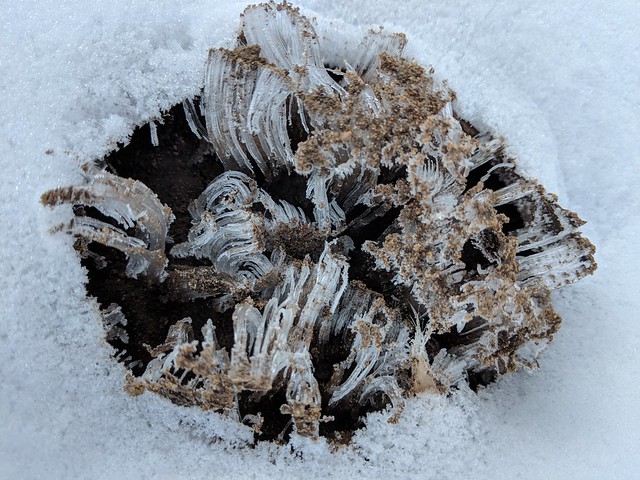
Needle ice
Hello,

Here are some articles focused on genomics, but with a few others on deforestation, ecosystem services, and sustainable agriculture. The photo above of needle ice in my backyard is totally unrelated, but I'd never seen or even heard of it, and I found it super cool. Read about it on wikipedia!

Let me know if you need a copy of any of these articles. If you know someone who wants to sign up to receive these summaries, they can do so at http://bit.ly/sciencejon

DEFORESTATION:
Jokpe & Schoneveld 2018 is a close look at zero-deforestation commitments (ZDC) by 50 influential  corporate "power brokers."  They identify several problems with implementation gaps and externalities. In particular they note that a lack of traceability and transparency about where commodities are sourced from makes verification difficult (and most companies rely on asking their suppliers to honestly self-report deforestation). They also report that 3/4 of companies with ZDC don't require company wide commitments from suppliers (so those suppliers can just sell deforestation linked products to other companies who don't care). This one is long but worth reading for breakouts by sector and other useful info. Note that TNC in this article refers to transnational companies and not The Nature Conservancy. The problems and gaps identified are things we're hoping to address with the Accountability Framework (https://accountability-framework.org/), which should be formally launched this spring.

ECOSYSTEM SERVICES:
There are many methods and tools to assess ecosystem services. Neugarten et al. 2018 is a report reviewing 9 assessment tools (EST, PA-BAT, TESSA, ARIES, C$N, InVEST, MIMES, SolVES, and WW) and providing decision trees on how to pick the right one for a given need. This is a fantastic reference for anyone working with ecosystem services, and it covers both written guidance documents and modeling tools. They recommend you identify the analysis question or need and think hard about expertise and resources you have to do the analysis before selecting a tool.

GENOMICS / GENE EDITING / GENETIC ENGINEERING:
Photosynthesis in plants relies on an enzyme called RuBisCO, sometimes called 'the most incompetent enzyme in the world' due to its inefficiency and energy loss during respiration. South et al. 2019 present a new transgenic GMO tobacco plant which improves the efficiency of respiration. As a result, their best modified tobacco plants had 41% higher biomass (including 33% more leaf biomass but also larger stems). It's not clear how much of the biomass gain could be translated to improved yields for grains or other crops, but that's still a potentially huge step forward which should be further explored. Eisenhut & Weber 2019 is a nice very short (1.5 page) summary of the article, and you can also read a blog about it here which includes some nice diagrams: https://phys.org/news/2019-01-scientists-shortcut-photosynthetic-glitch-boost.html

Kofler et al. 2018 is an editorial on benefits and risks of altering the DNA of wild organisms via gene editing. They call for collective oversight to ensure careful thought is given to environmental, social, and ethical concerns, and especially to local community involvement in each decision to potentially release an edited organism (as well as international bodies like IUCN). They stress that "using this technology irresponsibly or not using it at all could prove damaging" - and give good examples of each.

Sprink et al. 2016 looks at regulation of gene editing, and the difference between a process based approach (where the key factor is how an organism was modified) vs a product based approach (where the outcome is the key factor regardless of the process used). They argue that the European approach is outdated and doesn't reflect the continuum of modern technology (including several different applications of gene editing). They also dive into a legal argument of why it should be changed, and how it compares to the US and other countries. They make a good argument that regulation should be based on a genetic trait and product rather than the process used to develop it. This one is complex and wonky but a good reference, especially box 1 with definitions of several gene editing approaches.

Halewood et al. 2018 is an overview of how CGIAR is looking to use crop genome sequencing to drive more crop diversity and find crop traits that can deliver better outcomes for people and nature. Most readers can safely skip information on specific molecular markers (e.g. Table 1) but should read page 372 which lists several applications of gene editing technology and genotyping.

Zhong 2019 looks at how soy genotype and rhizobium inoculation (of seed or soil) impact plant growth, soy nodulation (the nodules help them fix nitrogen via bacteria), and microbiome. They found that the microbiome of soy varies depending on the genotype of soy. In particular whether the genotype forms high or low numbers of root nodules. Low-nodulation soy had more co-occurrence of the taxonomic groups (a more connected network) than the high-nodulation soy (figure 4). Both genotypes had their microbiome network connections increased by inoculation. The efficacy of the inoculant  varies depending on plant genotype. See figure 1c / 1d for details. Low-nodule soy got a significant boost in nodulation from inoculation, but still had fewer nodules than high-nodule soy (for which nodulation was unaffected by inoculation). Both genotypes of soy got a roughly similar growth boost from inoculation. This means that to evaluate biological seed treatments / inoculation we have to look at the intersection of the inoculant, plant genetics, and baseline soil microbiome.


SUSTAINABLE AGRICULTURE:
Eichler Inwood et al. 2018 is a thoughtful review of several different frameworks to assess agricultural sustainability (in different contexts and scales). Table 4 is a nice summary of the 9 frameworks they cover, with Table 5 providing more details on how and where they work. None are ideal in every context. Thy conclude with recommendations about how to select a framework (see Table 6 for properties they should have), choose indicators, collect data etc.

REFERENCES:
Eichler Inwood, S. E., López-Ridaura, S., Kline, K. L., Gérard, B., Monsalue, A. G., Govaerts, B., & Dale, V. H. (2018). Assessing sustainability in agricultural landscapes: a review of approaches. Environmental Reviews, 26(3), 299–315. https://doi.org/10.1139/er-2017-0058

Eisenhut, M., & Weber, A. P. M. (2019). Improving crop yield. Science, 363(6422), 32–33. https://doi.org/10.1126/science.aav8979

Halewood, M., Lopez Noriega, I., Ellis, D., Roa, C., Rouard, M., & Sackville Hamilton, R. (2018). Using Genomic Sequence Information to Increase Conservation and Sustainable Use of Crop Diversity and Benefit-Sharing. Biopreservation and Biobanking, 16(5), 368–376. https://doi.org/10.1089/bio.2018.0043

Jopke, P., & Schoneveld, G. C. (2018). Corporate commitments to zero deforestation: An evaluation of externality problems and implementation gaps. Occasional Paper 181. Bogor, Indonesia: CIFOR.

Kofler, N., Collins, J. P., Kuzma, J., Marris, E., Esvelt, K., Nelson, M. P., … Schmitz, O. J. (2018). Editing nature: Local roots of global governance: Science, 362(6414), 527–529. https://doi.org/10.1126/science.aat4612

Neugarten, R. A., Langhammer, P. F., Osipova, E., Bagstad, K. J., Bhagabati, N., Butchart, S. H. M., … Willcock, S. (2018). Tools for measuring, modelling, and valuing ecosystem services: guidance for Key Biodiversity Areas, natural World Heritage sites, and protected areas. (C. Groves, Ed.). Gland, Switzerland: IUCN. https://doi.org/10.2305/IUCN.CH.2018.PAG.28.en

South, P. F., Cavanagh, A. P., Liu, H. W., & Ort, D. R. (2019). Synthetic glycolate metabolism pathways stimulate crop growth and productivity in the field. Science, 363(6422), eaat9077. https://doi.org/10.1126/SCIENCE.AAT9077

Sprink, T., Eriksson, D., Schiemann, J., & Hartung, F. (2016). Regulatory hurdles for genome editing: process- vs. product-based approaches in different regulatory contexts. Plant Cell Reports, 35(7), 1493–1506. https://doi.org/10.1007/s00299-016-1990-2

Zhong, Y., Yang, Y., Liu, P., Xu, R., Rensing, C., Fu, X., & Liao, H. (2019). Genotype and rhizobium inoculation modulate the assembly of soybean rhizobacterial communities. Plant, Cell & Environment. https://doi.org/10.1111/pce.13519


Sincerely,

Jon

p.s. as a reminder, you can search all of the science articles written by TNC staff (that we know of) here http://www.conservationgateway.org/ConservationPlanning/ToolsData/sitepages/article-list.aspx
(as you publish please email science_pubs@tnc.org to help keep this resource current).
If you'd like to keep track of what I write as well as what I read, I always link to both my informal blog posts and my formal publications (plus these summaries) at http://sciencejon.blogspot.com/

Wednesday, January 2, 2019

January 2019 science journal article summary: best of 2018

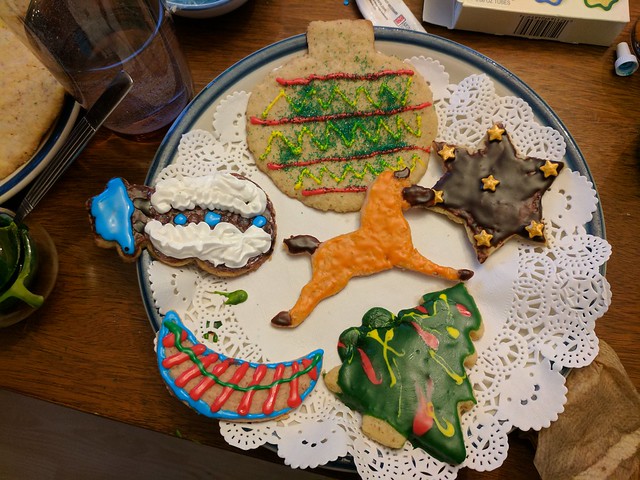
Christmas cookie decorating party

Happy new year!

Resolved to try harder to keep with science? Why not start with some of the best papers from last year that you may have missed? This month I picked my favorite 15 articles that I reviewed in 2018, plus a few other resources. A few were published earlier, but I read them all last year. I picked some because of importance, others because they were interesting, and two plug my own work.

There is one new article I couldn't resist mentioning, which is about the Camboriú water fund that I worked on. Kroeger et al. 2019 talks about how the water fund was designed, including estimating the impact it would have on land use change and water quality. We were able to show that it provided a positive financial return on investment after 44 years (if you include some modest societal co-benefits like flood control and biodiversity). PDF available here until ~Feb 10 after which an unformatted PDF is available here.

I also wanted to once again plug a cool resource  to help you figure out which journal to submit a paper to: http://jane.biosemantics.org/  You enter the title and abstract of your paper and it gives you a list of appropriate journals. You may also want these tips on how to write an abstract to get found easily in Google and Google Scholar: https://authorservices.wiley.com/author-resources/Journal-Authors/Prepare/writing-for-seo.html and my blog on how to ensure all of your own research is viewable by others: http://sciencejon.blogspot.com/2018/03/tips-for-helping-people-to-find-your.html

Finally, my wife's comment on my book chapter on global agriculture land use trends (that there was no clear key take-away point) has stuck with me as a reminder of how important it is to get input from non-scientists on science writing. Here's a short blog where I tried to supplement the chapter: http://sciencejon.blogspot.com/2018/01/take-2-what-i-wish-id-put-in-my-recent.html

ARTICLES:
Carvin et al 2018 is a study I've been eagerly awaiting for years. It is a rigorous paired watershed study looking at the impact of a carefully targeted set of agricultural interventions, and is one of the first papers in the US to show we CAN improve water quality at a watershed scale (50 km2) through shifting ag. Initial work had found 9% of the area was contributing 40% of the phosphorous load, so the authors really targeted those heavy contributors. They found a 55% reduction in phosphorus runoff loads and suspended sediment event loads decreased by 52% for events during unfrozen soil conditions  into the Pecatonica River tributary during storm events. This is big news as these outcomes have been elusive. However, this watershed was picked as one of the most likely to respond well, and those seeking to replicate these results should also carefully select their watersheds. Contact Steve Richter at TNC for more info.

Cui et al 2018 reports on the results of an ambitious study that worked with 21 million farmers (!) of maize, rice, and wheat over 10 years. China currently has some of the least efficient farms in the world, presenting a huge need to improve. This study used a soil & crop management framework that resulted in ~11% improved yield while reducing N application by ~16% (and reactive N losses by ~25%), and GHGs by 14-22% depending on crop. The scale is impressive: altogether they influenced 37.7 million ha. Interestingly, extension staff impacted over 10 times the area per staff person (471 ha / person) compared to agribusiness partners (see Fig 2). Regardless, this is good news in showing that it's possible to achieve "win-win" outcomes at scale even with smallholders. On the other hand, nitrogen efficiency is so poor in China, that much larger changes are needed to bring them in line with world averages, let alone truly sustainable targets (highlighting that policy changes are likely needed as well). Fig 1 has a great breakdown of impacts by crop and region.

Almost everyone who works for or closely with The Nature Conservancy heard about the 2017 "Natural Climate Solutions" paper (Griscom et al. 2017, I reviewed it in November 2017). If you've been waiting for the sequel - good news! Fargione et al. 2018 just provided a similar analysis specifically for the United States. It's short, excellent, and worth reading, but if you're impatient skip to Figure 1. That summarizes the potential of each pathway and splits out how much is achievable at different carbon prices. They found a maximum potential of 1.2 Pg (aka 1200 million metric tons) CO2e / yr (21% of current US emissions and ~27% of 2005 emissions), and ~300 Tg (million metric tons) achievable at $10 / t CO2e (~5% of US emissions). The biggest low cost opportunities are in planting cover crops followed by forest management, avoided habitat conversion, and improved farm nutrient management. You can read more about it on TNC's web site at https://www.nature.org/en-us/explore/newsroom/natural-climate-solutions-study/ or at https://eurekalert.org/pub_releases/2018-11/cu-nsr111418.php

Fisher et al. 2018 ("Knowledge diffusion within a large conservation organization and beyond") looks at how people find information about innovations and share them, specifically the spread of Conservation by Design 2.0 (CbD 2.0). We review how earlier versions of CbD spread from TNC (looking at published science articles and expert interviews), then use tons of varied data to look at CbD 2.0. I wrote a blog about the paper here: http://sciencejon.blogspot.com/2018/03/share-good-news-paper-on-improving.html
and the full paper is at: http://journals.plos.org/plosone/article?id=10.1371/journal.pone.0193716
but here's a summary of what we learned:
  1.  Sending repeated broadly-targeted communications (e.g. all-staff email / newsletters / etc.) that make it easy for recipients to find out more worked better than more narrowly focused communications (e.g. plenary talks, emails from executives).
  2. Expert interviews revealed several factors to promote diffusion: bringing in partners early to develop and test methods, committing up front to sustain support for the planning methods, having in-person workshops, using peer-review and shared learning, providing financial support, explaining how the methods address existing needs planners already have, and the existence of a support and learning network like the conservation coaches network (CCNET). 
  3. Organizations may wish to use internal data to identify staff likely to play a key role in diffusing so that they can encourage that process (the paper has details on how, with more forthcoming in an upcoming paper)
  4. Working with academics on publications represents a potential way to get the word out with relatively low effort for organizations (academics I have worked with in other contexts are often very interested in data no one else has access to, and have published cool papers from those data). 
  5. For scientists interested in this topic, we learned a lot about how to study knowledge diffusion, and share tips for researchers (e.g. thinking about image-blocking, legal and privacy constraints, distinguishing internal and external website visits, etc.).

Fisher & Kareiva 2019 (still in press) is a book chapter about sustainable agriculture that I write a few years ago. The first half is OK but is out of date and was written when I knew far less about agriculture. I'd skip to the 2nd half (start with the "Can Corporate Sustainability reporting be a force for improved agricultural practices?" section). There's some interesting content I haven't seen anywhere else on corporate sustainabiltiy and food labels. The chapter is available from: http://fish.freeshell.org/publications/FisherKareiva_CUP_2019_preformatted.pdf

Garnett et al. 2017 ("Grazed and Confused") is a very thoughtful review of the climate change / GHG impact of ruminants (largely cattle). Their first key findings is that even with good grazing ruminants still have high net GHG emissions. They also note sequestering soil carbon often has trade-offs with methane and nitrous oxide. Finally, as demand for animal protein rises sharply there is likely to be both land conversion and increasing GHGs as a result. These have all been reported widely in other studies, but it's a nice summary. On the one hand, it's hard to pull out quantitative results from this paper. On the other, it does a great job of covering the various arguments and counterpoints around cattle and carbon, and presenting the data in a value-neutral tone. Anyone interested in this topic should at least skim the 8-page summary.

Given how much research there is on trying to get crops to fix their own nitrogen, the finding by Griesmann et al. 2018 that many plants have lost the ability to fix N blew my mind. By comparing genomes of N-fixing plants to those that don't, they were able to find that ~3/4 of the species in their sample that didn't fix N had an ancestor that could! They suggest that the fact this ability has been lost multiple times reflects that plants spend a lot of energy to support N fixation, and that when N levels are adequate in the soil they eventually can lose the ability to fix it. In other words, as we try to engineer plants to fix their own N, it's worth reflecting on the costs that may have led plants in the past to reject this evolutionary path.
There's a blog on this one at http://www.sciencemag.org/news/2018/05/many-plants-need-bacterial-roommates-survive-so-why-do-some-kick-them-out

Hansen et al 2018 is a cool paper using empirical data to test how effective wetlands in the Minnesota River basin are at reducing nitrates in an ag landscape compared to cover crops and land retirement. They compared river water quality at ~200 sites under different flow conditions to high-resolution data on wetlands and land use to map correlations (they didn't get at true causation). They found wetlands were 5 times more effective per unit area at removing nitrates compared to cover crops and land retirement (although it's much harder to make a business case to a farmer around wetland creation). They also found wetlands strategically placed to intercept as much flow as possible were much more effective (see Fig 4 - the concept is obvious but the numbers are interesting). All these findings align well with prior work emphasizing the critical role of well-placed wetlands to improve water quality. If you read this paper watch out for the term "crop cover" (% of a given site area used to grow crops) as opposed to "cover crops" (presence of an additional crop on farmland that would otherwise be fallow for part of the year), as they're not super clear how they use the two terms.

Klein et al. 2007 is a fantastic reference examining dependence on animal pollination across 115 major crop species (ignoring crops like corn which are entirely wind-pollinated). I mainly use Appendix 2, which for each crop lists how much it benefits from animal pollination (from entirely dependent on animal pollinators like cocoa or squash, to receiving almost no benefit) as well as listing the type of pollinator, pointing to references, etc. While the appendix is my favorite part, they also note in the main paper that a) non-insect pollinators (e.g. birds and bats) are less well studied and b) as agriculture intensifies wild pollinators are likely to decline. This means thinking about pollinator habitat in and around farms can be important for some crops, and the appendix can identify which ones are most likely to see more benefit.

Nevle & Bird 2008 is grim but fascinating. They find a connection between seemingly unrelated factors: global CO2 levels and pandemics among indigenous people in the Americas brought on by European contact. They link the population crash to a reduction in burning of forests for swidden agriculture, subsequent forest regrowth storing ~5-10 Gt carbon, and argue this is a likely contributor to a small measured reduction in global atmospheric CO2 at the same time. It's more of an interesting hypothesis with data which is consistent than real 'proof' but it's still a fascinating (if depressing) read.

Rasmussen et al. 2018 is a global review of whether or not agricultural intensification is good for both people and the environment. While they find income and food production generally go up, ecosystem services go down in most cases. The figures have great summaries of results by geography, by metric of ecosystem services or human well being, and by separating 'win-win' cases from 'lose-lose' and mixed results in different contexts. The specific case studies are very interesting and thought provoking. Surprisingly, increased inputs were more likely to lead to win-win outcomes, with crop changes as reduced fallow more likely to lead to lose-lose. This is a relatively understudied area (this paper summarizes 53 studies) given the importance of intensification strategies; the lack of evidence for consistent positive outcomes doesn't mean intensification CAN'T work, but shows more work (design and monitoring) is needed to ensure we succeed in our goals. See https://www.scidev.net/global/agriculture/news/intensified-farming-rarely-aids-wellbeing-environment.html for a blog on the subject.

Springmann et al. 2018 asks what it would take to sharply reduce the impact of global food production by 2050 (and stay within resource constraints) without simply offsetting impacts like GHGs through reforestation or other mitigation. They look at 3 options (diet change, tech and management, and  reducing food waste) across 5 aspects: GHGs, fresh water use, land use, nitrogen, and phosphorous. They key finding is that no one category of solution is enough, and that for GHGs in particular major diet change (towards mostly plant based foods) would have to be part of the solution. Figure 3 summarizes this set of scenarios nicely. With their medium ambition scenario, they find halving food loss and waste improves impact 6-16% (relative to 2050), improving tech and management reduces impact 3-30%, and modest diet change improves 5-29% (see Figure 2), or they could all be combined for a 25-45% reduction. Note that their findings are global averages, and some places will deviate considerably (e.g. they find nuts and seeds don't account for much overall water use, but in places like California they have a big water footprint). Check the methods for country-level data. You can read two articles about this study here: https://www.washingtonpost.com/health/2018/10/10/how-will-or-billion-people-eat-without-destroying-environment/ and here: https://www.theguardian.com/environment/2018/oct/10/huge-reduction-in-meat-eating-essential-to-avoid-climate-breakdown

For over a year now, TNC staff have been hearing about a science analysis asking whether it's possible for both people and nature to thrive (in a shared conservation vision). Tallis et al 2018 is the newly available science paper behind that analysis. It compares two 2050 global scenarios: business as usual (BAU), and one designed to improve human and environmental outcomes (Sustainability). The latter would result in 577 million ha more habitat than BAU, while limiting climate change, improving air quality, and more. It doesn't assume we can drastically change diets, and sticks with biophysical constraints, but it does recognize that there are major social, economic, and political barriers to making the sustainability scenario a reality. The discussion has several thoughtful limits and caveats, but it's still exciting to see what is at least possible, if not easy to achieve. You will have to read the supplemental material to get a good sense of the work, but the main paper is conveniently short. One final note is that they assume climate change won't impact ag much in either scenario, which is optimistic. You can read all about the paper and its findings here: https://www.nature.org/en-us/what-we-do/our-insights/perspectives/the-science-of-sustainability/?vu=r.v_twopaths

VanZanten et al. 2018 is a really thoughtful paper that takes a refreshing approach to looking at the environmental impact of animal foods in our diet. They note that while using arable land to feed livestock (rather than directly feeding humans) is inherently inefficient, there are some grasslands, food waste, and food by-products like distillers grains that humans can't eat. So to minimize land used to feed the world, ~10% of calories (& ~1/3 of protein needed) could come from animal foods. Fig 4 shows how animal consumption in different regions compares to the protein goal, and Fig 5 shows a similar breakdown for calories and other nutrients. They cover how different animals fit in (e.g. ruminants for grasslands, pigs for food waste, etc.), noted that GHGs are still higher in their scenario than an all-vegan diet, and cover several interesting caveats and twists. One thing they didn't mention - some of the underlying studies have a large role for milk, which people have trouble digesting in many places around the world. But is is a really well done paper and I highly recommend it.

Woodard & Verteramo-Chiu look at how much better the Federal Crop Insurance Program (FCIP) could perform if it used soil data to establish rates and coverage. In other words, how could FCIP incentivize soil health practices that would reduce risks and costs of the program, while avoiding perverse incentives (e.g. in the past crop insurance was not available to farmers using cover crops). It's a fairly wonky economics paper, but they make a good case for much errors and bias exist in the current program. The key finding is that farms with high-quality soils are generally overpaying, and low-quality farms are underpaying. See Fig 3 for an example of how strong the pricing erors are (up to a factor of 6). By accounting for soils data (and perhaps current practices), this program could be an important driver to get farmers to start rebuilding healthier soils to keep premiums low. They focus on top corn producing states where soil quality is relatively homogeneous; benefits of accounting for soil should be higher in regions with more varied soil. With predicted volatility from climate change, improving crop insurance will be increasingly important.

REFERENCES:
Carvin, R., Good, L. W., Fitzpatrick, F., Diehl, C., Songer, K., Meyer, K. J., … Richter, S. (2018). Testing a two-scale focused conservation strategy for reducing phosphorus and sediment loads from agricultural watersheds. Journal of Soil and Water Conservation, 73(3), 298–309. https://doi.org/10.2489/jswc.73.3.298

Cui, Z., Zhang, H., Chen, X., Zhang, C., Ma, W., Huang, C., … Dou, Z. (2018). Pursuing sustainable productivity with millions of smallholder farmers. Nature, 555, 363–366. https://doi.org/10.1038/nature25785

Fargione, J. E., Bassett, S., Boucher, T., Bridgham, S. D., Conant, R. T., Cook-patton, S. C., … Griscom, B. W. (2018). Natural climate solutions for the United States. Science Advances, 4(November).

Fisher, J. R. B. and Kareiva, P. (In Press, 2019). Using environmental metrics to promote sustainability and resilience in agriculture. In Gardner et al. (Eds), Agricultural Resilience: Perspectives from Ecology and Economics. Cambridge University Press. Manuscript accepted for publication.

Fisher, J. R. B., Montambault, J., Burford, K. P., Gopalakrishna, T., Masuda, Y. J., Reddy, S. M. W., … Salcedo, A. I. (2018). Knowledge diffusion within a large conservation organization and beyond. PLoS ONE, 13(3), 1–24. https://doi.org/10.1371/journal.pone.0193716

Garnett T., Godde C., Muller A., Röös E., Smith P., de Boer I.J.M., Ermgassen E., Herrero M., van Middelaar C., Schader C. and van Zanten H. (2017). Grazed and confused? Ruminating on cattle, grazing systems, methane, nitrous oxide, the soil carbon sequestration question. Food Climate Research Network, University of Oxford http://www.fcrn.org.uk

Griesmann, M., Chang, Y., Liu, X., Song, Y., Haberer, G., Crook, M. B., … Cheng, S. (2018). Phylogenomics reveals multiple losses of nitrogen-fixing root nodule symbiosis. Science, 361(6398). https://doi.org/10.1126/science.aat1743

Hansen, A. T., Dolph, C. L., Foufoula-Georgiou, E., & Finlay, J. C. (2018). Contribution of wetlands to nitrate removal at the watershed scale. Nature Geoscience. https://doi.org/10.1038/s41561-017-0056-6

Klein, A.-M., Vaissière, B. E., Cane, J. H., Steffan-Dewenter, I., Cunningham, S. a, Kremen, C., & Tscharntke, T. (2007). Importance of pollinators in changing landscapes for world crops. Proceedings. Biological Sciences / The Royal Society, 274(1608), 303–313. https://doi.org/10.1098/rspb.2006.3721

Kroeger, T., Klemz, C., Boucher, T., Fisher, J. R. B., Acosta, E., Cavassani, A. T., … Dacol, K. (2019). Returns on investment in watershed conservation: Application of a best practices analytical framework to the Rio Camboriú Water Producer program, Santa Catarina, Brazil. Science of The Total Environment, 657, 1368–1381. https://doi.org/10.1016/j.scitotenv.2018.12.116

Nevle, R. J., & Bird, D. K. (2008). Effects of syn-pandemic fire reduction and reforestation in the tropical Americas on atmospheric CO2 during European conquest. Palaeogeography, Palaeoclimatology, Palaeoecology, 264(1–2), 25–38. https://doi.org/10.1016/j.palaeo.2008.03.008

Rasmussen, L. V., Coolsaet, B., Martin, A., Mertz, O., Pascual, U., Corbera, E., … Ryan, C. M. (2018). Social-ecological outcomes of agricultural intensification. Nature Sustainability, 1(6), 275–282. https://doi.org/10.1038/s41893-018-0070-8

Springmann, M., Clark, M., Mason-D’Croz, D., Wiebe, K., Bodirsky, B. L., Lassaletta, L., … Willett, W. (2018). Options for keeping the food system within environmental limits. Nature. https://doi.org/10.1038/s41586-018-0594-0

Tallis, H. M., Hawthorne, P. L., Polasky, S., Reid, J., Beck, M. W., Brauman, K., … McPeek, B. (2018). An attainable global vision for conservation and human well-being. Frontiers in Ecology and the Environment, 1–8. https://doi.org/10.1002/fee.1965

Van Zanten, H. H. E., Herrero, M., Hal, O. Van, Röös, E., Muller, A., Garnett, T., … De Boer, I. J. M. (2018). Defining a land boundary for sustainable livestock consumption. Global Change Biology, (April). https://doi.org/10.1111/gcb.14321

Woodard, J. D., & Verteramo-Chiu, L. J. (2017). Efficiency impacts of utilizing soil data in the pricing of the federal crop insurance program. American Journal of Agricultural Economics, 99(3), 757–772. https://doi.org/10.1093/ajae/aaw099
Friday, March 16, 2018

Tips for helping people to find your journal articles (and be able to read them)

After years of working on a project and getting it accepted for publication at a journal, it can be heartbreaking when no one reads it.

The two biggest barriers are usually: finding out about it, and having it behind a paywall. Since open-source publishing usually costs extra, I don't always have funding to do it. But here are tips on overcoming both barriers.

Helping people discover that your article exists:
People mostly find my research either through Google Scholar or Researchgate, although occasionally ORCID brings people in. Researchgate is easy to edit manually to add entries (but don't upload the full-text there publicly, see the section below for important legal considerations), and both ORCID and Google Scholar do a good job pulling articles directly from the journals (usually within a few weeks of publication). However! If ORCID or Google Scholar is missing any of your research you think should be listed, you can manually add entries there too (in Google go to your profile and hit the gray + above the list of articles, in ORCID hit "+ add works"). Note that blogs and other non-peer-reviewed sources will show up in Google Scholar if someone cites the source.

That helps scientists find your articles. But for anything you really hope will have an impact, sit down and make a communications plan, ideally when you're first designing the research in conjunction with key stakeholders and communications experts. Who do you hope will read the article, and what do you hope they will do as a result? Once you have your key audiences, consider whether writing a blog or two would help get people get interested (and get clear on the point of the paper), and enlist help in getting the message to the right people. The reason doing this early is so important is that you may actually write a different paper once you know what your intended audience currently thinks and cares about, and what may motivate them to take action.

OK, hopefully you've verified your research is all discoverable, but what if people want to actually read it? Most journals don't let you share the final version of the article at all (unless it's open-source), and they also don't let you host even a submitted / pre-formatted version on Researchgate. So here's the two-part trick I use:

Helping people access your article:
First, get a personal web site of some kind (there are plenty of free options, but it's important it's a personal site and not a repository like researchgate; I use freeshell.org which is crusty but very cheap - $36 for life).

Next, double-check the legal agreement for any publishers you want to share your content from (this is critical: this blog is not legal advice or a substitute for doing your homework on licensing for your articles). Most publishers grant permission to share a "submitted" version of the article on the author's personal web site (but nowhere else), and the ones that don't (or have an embargo) often grant it upon request (this just happened with me and Cambridge University Press). This is often called "self-archiving" or "green open access". So once you have verified permission, upload the files to your web site.

Then set up a "publications" page on your web site, which will help Google discover it. Google has instructions on how to do this and I have an example you can copy if desired here: http://fish.freeshell.org/publications.html
Usually once I add the entry to this page linking to the new pdf, Google Scholar finds it within about 3 weeks. The main thing is naming the web page "publications.html" and linking to the PDF via the article title.

Finally, people often request papers via Researchgate even though the PDF is already discoverable via Google Scholar. This is annoying since you usually can't legally host your paper there. But what you can do is create a redirect document in Word and save to pdf, and host that redirect document in Researchgate (e.g. see this example I made). That way it shows up as 'full text available' and people click through to the paper.

Of course, none of this ensures that your paper will be clearly written and compelling, but hopefully you're all over that, right?

Thursday, February 1, 2018

February 2018 Science Journal Article Summary

Sad winter kale
Greetings,

The struggle to find good produce in the depth of winter (see my sad kale above) has me thinking about nutrients, so this month I've focused on papers about nutrients in the sense of fertilizer on croplands (focused on N & P, plus one about crop nutrition).

Interested in short blogs or talks? I have a new blog connecting the story of my family's farm with my work on scaling sustainable agriculture. The blog is at https://blog.nature.org/science/2018/01/25/scaling-sustainable-agriculture/ and was adopted from my "TED-style" talk: https://www.youtube.com/watch?v=EPDBKJj_fSo. Here's another with the "so what" that was missing from my recent book chapter on global agriculture land use trends. http://sciencejon.blogspot.com/2018/01/take-2-what-i-wish-id-put-in-my-recent.html

Finally: unrelated to science, I was impressed how much the Engaging Across Differences has jump-started the way I think about and engage around diversity. They're looking for people to sign up for the next workshops, and I'd encourage all TNC staff to give it serious thought. Let me know if you'd like to discuss further; it's led me to co-host an ongoing workshop at our headquarters about how we can all step up and be better allies to each other.

AGRICULTURE (NITROGEN)The first three papers all come from Xin Zhang at China Agricultural University in Beijing.
Zhang et al 2015 (in Nature) looks at global historic patterns of nitrogen fertilizer use and efficiency, identifying opportunities for improvement. Optimizing nitrogen use efficiency (NUE) means avoiding N loss to the air and water, but also ensuring crops have enough N. Start with Table 1 - which highlights the severe (and worsening) excess in India and China, driven partly by low subsidized fertilizer prices. Fig 4 is also really interesting - it compares efficency in the US and China, partly due to efficiency, and partly due to what we grow (e.g. in the US we grow a lot of soy that doesn't need N).

The other Zhang et al 2015 article (in JEQ) looks at how the economics of promoting technology and best management practices to improve nitrogen use efficiency (NUE) on farms. They model different kinds of improvements, whether they maintain yields at a lower input rate, improve yields at a similar input rate, or improve yields but require more fertilizer as well (e.g. by improving crop genetics). It's a cool (albeit wonky) paper, and Figures 4-7 explore the conditions under which implementing these practices can boost both profit and environmental outcomes. Table 4 shows that for Midwestern corn, at relatively high fertilizer prices improved genetics can be the best strategy, while at lower prices other approaches perform better (with changing the crop running the risk of environmental harm from excess nitrogen). They conclude with policy recommendations around how shifting from subsidies for fertilizer to subsidies for improved practices can help improve NUE. Table 6 has guidelines on how to find the optimal price ranges for both fertilizer and BMPs. A final twist: practices that don't boost yield are less likely to be adopted (even if they save cost), while yield-boosting practices are more appealing but also run more risk of excess N being lost.

Zhang et al. 2017 has some good news in the form of a case study in Huantai county in northern China. While China's overall NUE has gotten worse over the past several decades, it has improved in Huantai. Primary drivers appear to be incorporation of crop straw into soil, and subsidized mechanization of farmland in the area. Overuse of groundwater for irrigation, however, remains a major challenge. Nonetheless, this provides a road map for how the rest of China may be able to follow suit.

Wagner-Riddle et al. 2017 looks specifically at the importance of soil freezing and thawing in correctly estimating N2O emissions. Essentially, when frozen soil thaws, it emits a lot more N2o (a potent greenhouse gas). They estimate that global N2O emissions from cropland may be 17-28% too low due to neglecting to account for soil freezing and thawing.

Sweeney 2017 is another paper finding that long term no-till redistributes soil carbon to the surface but doesn't boost total soil carbon (this case was a claypan soil). More oddly, they found tillage and N fertilization didn't impact soil bulk density or resistance.


AGRICULTURE (phosphorous): The next two articles are cited in this blog about phosphorous (P) in Lake Erie (thanks to Joe F for passing it on, and to Carrie V-S for following up): https://blogs.nicholas.duke.edu/citizenscientist/phosphorus-in-lake-erie/
Christianson et al. 2016 is a review of phosphorous being lost via farm drainage, both subsurface (tile) drains and surface drains like ditches. There is a lot of interesting data packed in here, but three things jumped out at me. First is that overall P loads were higher in surface drainage than subsurface drainage (Fig 2). The other was that no-till fields lost about triple the P compared to conventional or even conservation tillage. So no-till may reduce sediment losses but increase P losses, presenting an interesting trade-off. Third is that P losses tend to be relatively small (<5% applied) compared to N losses (~15-20%), which reduces the economic incentive for farmers to address P loss.

Jarvie et al. 2017 looked at soluble reactive phosphorous (SRP) in the Western Lake Erie Basin, and looked for correlations with changing agricultural practices. They had data for changes in tillage, and used changing "flashiness" of river flow as a proxy for increased drainage. They note that many factors could have caused the increasing river SRP loads, but attribute 1/3 to increased drainage water flow and 2/3 to an increase in SRP delivery. They concluded that no-till and drainage were both likely responsible for the increasing SRP delivery, but I'm not convinced. Figure 3 and Table 4 show that across the three studied rivers there was not a clear relationship between tillage and drainage and SRP.


AGRICULTURE
(nutrition):
I had a few people mention stories about Myers et al 2014 recently about how climate change will impact crop nutrition. This study found that CO2 levels of ~550ppm (which we will likely hit in ~50 years) zinc and iron levels will be lower in wheat, rice, peas, and soy (and wheat and rice having lower protein as well). The decreases are modest; the biggest decline was in wheat, with 9% lower zinc and 5% less iron. This is a legitimate concern (albeit a minor one), but what I find most interesting is how people I spoke to thought the results were much worse. One person told me that even now (not 50 years away) even healthy foods like kale were basically junk food, another thought we were already seeing nutrient deficiencies because of this. So, let's watch out for how climate is changing nutrient density, but in the meantime, keep loading up on those collard greens! If you're worried about zinc and iron there are some great options like pumpkin seeds and sesame seeds. You can read a story about this at https://news.nationalgeographic.com/news/2014/05/140507-crops-nutrition-climate-change-carbon-dioxide-science/ and the full article at https://www.nature.com/articles/nature13179.epdf?referrer_access_token=76wOkmaasSrVgR9Mzrl9ltRgN0jAjWel9jnR3ZoTv0PMO7CPYghaROZ8qcdXJ1XpBQ-HSZ0qsiW_gsnZNm-k2tQbZpybQuj_TyTm_QE_T7II9y4nRL-jY0UkROfWdT1gnDq8RPHQf8p05_0tlFvHfeU6vWI1uWKmjMIFQ4iSJEGlh4PO6nfwfm-1i-9N-5wi&tracking_referrer=news.nationalgeographic.com

REFERENCES:
Christianson, L. E., Harmel, R. D., Smith, D., Williams, M. R., & King, K. (2016). Assessment and Synthesis of 50 Years of Published Drainage Phosphorus Losses. Journal of Environment Quality, 45(5), 1467. https://doi.org/10.2134/jeq2015.12.0593

Jarvie, H. P., Johnson, L. T., Sharpley, A. N., Smith, D. R., Baker, D. B., Bruulsema, T. W., & Confesor, R. (2017). Increased Soluble Phosphorus Loads to Lake Erie: Unintended Consequences of Conservation Practices? Journal of Environment Quality, 46(1), 123. https://doi.org/10.2134/jeq2016.07.0248

Myers, S. S., Zanobetti, A., Kloog, I., Huybers, P., Leakey, A. D. B., Bloom, A. J., … Usui, Y. (2014). Increasing CO2 threatens human nutrition. Nature, 510, 139. Retrieved from http://dx.doi.org/10.1038/nature13179

Sweeney, D. W. (2017). Does 20 Years of Tillage and N Fertilization Influence Properties of a Claypan Soil in the Eastern Great Plains? Agricultural & Environmental Letters, 2(1), 0. https://doi.org/10.2134/ael2017.08.0025

Wagner-Riddle, C., Congreves, K. A., Abalos, D., Berg, A. A., Brown, S. E., Ambadan, J. T., … Tenuta, M. (2017). Globally important nitrous oxide emissions from croplands induced by freeze–thaw cycles. Nature Geoscience, 10(March). https://doi.org/10.1038/ngeo2907

Zhang, X., Davidson, E. A., Mauzerall, D. L., Searchinger, T. D., Dumas, P., & Shen, Y. (2015). Managing nitrogen for sustainable development. Nature, 528(7580), doi:10.1038/nature15743. https://doi.org/10.1038/nature15743

Zhang, X., Mauzerall, D. L., Davidson, E. a, Kanter, D. R., & Cai, R. (2015). The economic and environmental consequences of implementing nitrogen-efficient technologies and management practices in agriculture. Journal of Environmental Quality, 44(2), 312–24. https://doi.org/10.2134/jeq2014.03.0129

Zhang, X., Bol, R., Rahn, C., Xiao, G., Meng, F., & Wu, W. (2017). Agricultural sustainable intensification improved nitrogen use efficiency and maintained high crop yield during 1980–2014 in Northern China. Science of The Total Environment, 596–597, 61–68. https://doi.org/10.1016/j.scitotenv.2017.04.064

Monday, January 1, 2018

January 2018 science journal article summary

Happy new year! Here are a handful of articles focused on global agriculture analyses, plus one with bad news on climate change, and a 2018 #MyScienceResolution. 

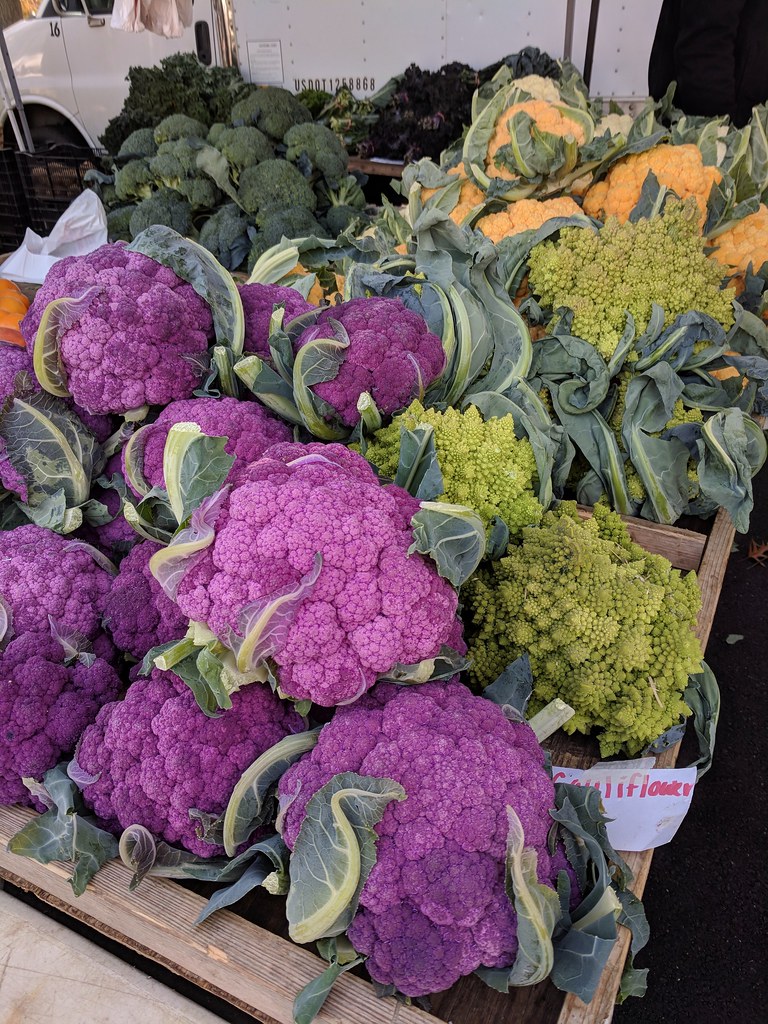
Cauliflower, romesco, and broccoli at the farmer's market

 I also want to pass on a cool resource Eddie Game alerted me know. It's a tool to help you figure out which journal to submit a paper to: http://jane.biosemantics.org/  You enter the title and abstract of your paper and it gives you a list of appropriate journals. You may also want these tips on how to write an abstract to get found easily in Google and Google Scholar: https://authorservices.wiley.com/author-resources/Journal-Authors/Prepare/writing-for-seo.html

On to the articles!

GLOBAL AGRICULTURE:
Somehow I'd missed West et al 2014, which is a great (and very short) summary of opportunities to improve agriculture around the world. Just looking at the two figures is highly educational: Fig 1 shows the potential to increase yields on poorly performing croplands to even 50% of their potential yields (which would provide enough food for 850 million more people, while still leaving plenty of room to improve), and Fig 2 shows how much we can reduce environmental impacts of ag in key regions without reducing yields. The spatial patterns aren't surprising, but the specific numbers are highly motivating. For example, China alone produces 28% of global N2O emissions (a potent greenhouse gas). Reducing excessive nutrients and improving water efficiency of crops around the world would have a big impact, as would reducing the amount of animal products we eat and the amount of food that is wasted. Be sure to check out the supplement for more great maps.

Phalan et al 2016 tackles a tricky problem at the heart of TNC's work with ag: how can we ensure that intensification reduces conversion rather than incentivizing it through higher profits? It's under two pages, so I'd recommend just reading it. But the mechanisms they propose to boost yield and promote nature are: 1) land use zoning (specify land for ag and land for conservation, as Costa Rica did), 2) use payments, subsidies, or land taxes (e.g. a program in India where herders set aside habitat in exchange for insurance and technical assistance), 3) "spatially strategic" deployment of tech / infrastructure / ag knowledge (e.g. focusing on staple crops which have more stable demand), and 4) standards (including voluntary ones) and certification. I found this to be good food for thought about how TNC could tighten our theory of change.

Hanspach et al 2017 looks at trade-offs between food security and biodiversity for ag in the "global south" (developing countries). They surveyed 110 self-reported experts and looked for patterns. Surprisingly, while in many landscapes there were clear trade-offs between food security and biodiversity, several respondents reported other cases where the two goals were linked (either in "win-win" or "lose-lose" cases). Figure 2a shows where each landscape fell. Infrastructure, market access, and financial resources were all associated with poor biodiversity but good food security, meaning investment in intensification on its own will likely not lead to conservation outcomes. Social equity and land access were found to be necessary but not sufficient for both food and biodiversity goals. Relying on expert assessments isn't a replacement for good empirical data, but this still has useful elements for TNC to incorporate in our ag work.

Gerber et al 2016 is a global analysis of N2O emissions from croplands. The key point is that areas with very low N use and production can use much more fertilizer with relatively small increases in N2O emissions, while areas with high N excess can use a little less to get big reductions in N2O. For example, cutting N application by 5% in Shandong province (China) would reduce N2O by 9%. Be sure to check out Table 2 (N application totals and rates by country) and Fig 3 (N2O emissions per unit of N applied at a sub-national level), and fig 4 if you're interested in specific crops. Note that they used a new approach which in general predicts significantly lower emissions than other models (they go over several caveats in detail).

Zomer et al 2017 estimates that globally cropland soils could sequester 0.90-1.85 Pg C / yr (1 Pg = 1 billion metric tons) for at least 20 years. This estimate derives from how much soil C has been lost relative to historic levels, along with estimates from an earlier paper of how much sequestration can be achieved through a range of conservation practices (e.g. cover cropping, conservation tillage, rotational grazing, etc.). Table 2 and Figure 2 show where the authors see the most room for improvement (the Midwest US, India, and Europe in particular). TNC's Deborah Bossio is second author so she should be able to answer any questions you may have.

A new paper from NatureNet fellow Kyle Davis (2017) investigates the impact of changing and moving crops on existing croplands around the world to improve yield and reduce water consumption. The hypothetical optimal crop patterns consumed 14% less rainwater and 12% less "blue" water (irrigation from surface and ground), while also producing 10% more calories, 19% more protein, and other benefits. A big caveat is that this involves not only shifting what is grown where (already a big task) but also shifting how much we produce of each crop. For example, they cut production of wheat, rice, corn, and sugar in favor of more soy and tubers (like potato and sweet potato). The interesting part to me is thinking about how this approach could be used in a national land use planning exercise with more realistic constraints.


CLIMATE:
Brown & Caldeira 2017 has some bad news about climate change. They looked at several climate models and scenarios and evaluated how well they predicted the recent past (looking at 9 variables, not just temperature). They predict warming ~15% higher than currently predicted and have a narrower confident interval for predictions. For climate wonks, they note that emissions in line with the RCP 4.5 scenario are likely to produce warming previously associated with RCP 6.0. There are several important caveats in the discussion, but this nonetheless raises the urgency to take aggressive action on climate to minimize the projected impacts. Take a look at Figuyre 2 which shows the new narrower predictions in red for different emissions scenarios. You can read an overview of the paper herehttps://phys.org/news/2017-12-more-severe-climate-accurate.html or a longer blog from the authors here: https://patricktbrown.org/2017/11/29/greater-future-global-warming-inferred-from-earths-recent-energy-budget/


SCIENCE COMMUNICATION:

I haven’t read the Pelger 2017 study it’s based on, but this blog post gave me an idea for a 2018 science resolution! https://marcommunique.wordpress.com/2017/12/19/new-research-shows-explaining-things-to-normal-people-can-help-scientists-be-better-at-their-jobs/ Essentially students writing for a non-scientific audience found that it helped their science writing as well. So if you work as a scientist, commit to writing a blog, or talking to your friends and family about your work without making their eyes glaze over! I'm going to shoot for my next peer-reviewed article to be readable by an ordinary human being. If you need more motivation, check out this inspirational talk by Dan Rather with a vision for a revolution in science communications as a foundation for changing how we think about truth and “fake news” in society: https://eos.org/articles/dan-rathers-vision-for-scientists-in-an-era-of-fake-news (thanks to Laurel Saito for the link).

REFERENCES:
Brown, P. T., & Caldeira, K. (2017). Greater future global warming inferred from Earth’s recent energy budget. Nature, 552(7683), 45–50. https://doi.org/10.1038/nature24672

Davis, K. F., Rulli, M. C., Seveso, A., & D’Odorico, P. (2017). Increased food production and reduced water use through optimized crop distribution. Nature Geoscience, 10(12), 919–924. https://doi.org/10.1038/s41561-017-0004-5

Gerber, J. S., Carlson, K. M., Makowski, D., Mueller, N. D., Garcia de Cortazar-Atauri, I., Havlík, P., … West, P. C. (2016). Spatially explicit estimates of N2O emissions from croplands suggest climate mitigation opportunities from improved fertilizer management. Global Change Biology, 22(10), 3383–3394. https://doi.org/10.1111/gcb.13341

Hanspach, J., Abson, D. J., French Collier, N., Dorresteijn, I., Schultner, J., & Fischer, J. (2017). From trade-offs to synergies in food security and biodiversity conservation. Frontiers in Ecology and the Environment, 15(9), 489–494. https://doi.org/10.1002/fee.1632

Phalan, B., Green, R. E., Dicks, L. V., Dotta, G., Feniuk, C., Lamb, A., … Balmford, A. (2016). How can higher-yield farming help to spare nature? Science, 351(6272), 450–451. https://doi.org/10.1126/science.aad0055

West, P. C., Gerber, J. S., Engstrom, P. M., Mueller, N. D., Brauman, K. A., Carlson, K. M., … Siebert, S. (2014). Leverage points for improving global food security and the environment. Science, 345(6194), 325–328.

Zomer, R. J., Bossio, D. A., Sommer, R., & Verchot, L. V. (2017). Global Sequestration Potential of Increased Organic Carbon in Cropland Soils. Scientific Reports, 7(1), 15554. https://doi.org/10.1038/s41598-017-15794-8

Friday, December 1, 2017

December science journal article summary

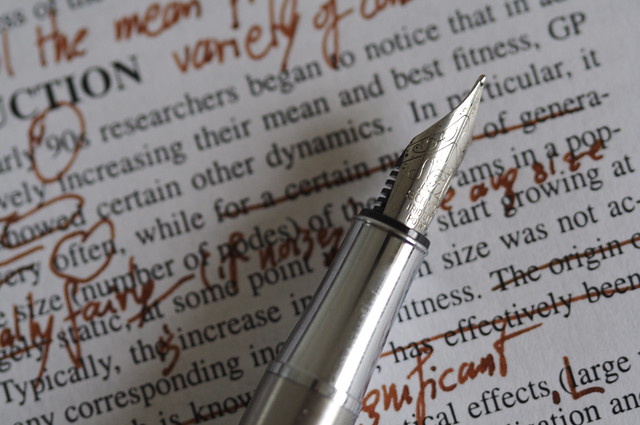
2008-01-26 (Editing a paper) - 31
Photo from Nic McPhee under Creative Commons license

Hi,

As we approach end of year deadlines, I've been doing less science reading. I'm guessing others are in the same boat, so this is a small review. The focus this month is how we can do science in a way that leads to greater impact. Two articles are about writing science articles more clearly, two are about collaboration, and one is a call for academics to do more to promote action in sustainability. Enjoy!

SCIENCE ARTICLE WRITING / SCIENCE COMMUNICATIONS:
Many scientists bristle at the notion that we should write more clearly. But we also hate reading articles and finding they don't deliver on what the title and abstract promises. Mensh & Kording 2017 offers 10 rules for writing more clearly. Different disciplines have different norms around structure, language, etc., but I think this is a great place to begin. Short on time? Read Table 1 (on p8) which summarizes the rules and how to know if you get it wrong. I'm excited to try this for my next paper!

Ever wonder how scientists pick authorship order, sort out who did what, and decide who's on a paper at all? If so, you may want to skim Sauermann & Haeussler 2017. It's on the long and dense side, but has some interesting insights (especially if you're a scientist making those decisions). In general, contribution statements offer more info than author order (although they can be hard to read), see Figure 4. Figure 1 shows that after the first author, the last author is most likely to have played a broad role in the paper. Finally, I was struck by the "inclusion as an author" section on page 4 which lists an international standard for being an author which is significant higher than what I usually see. Basically, this is food for thought for folks who read and/or write a lot of science papers.


COLLABORATION:
As we increasingly focus on big, tough problems, collaboration across sectors is more important than ever. It's also really hard. In cross-sector projects I've worked on, differences in terminology, priorities, expertise, etc. have slowed down progress. The Bridge Collaborative is an initiative led by TNC aiming to help collaboration across environmental, development, and health sectors. Their new guidance report has insights for those of you doing this kind of cross-sector work (or aspiring to).

Bodin 2017 asks a more basic question: when and how does collaboration really make sense (with a specific focus on collaborative governance for environmental problems)? Their brief answer: "The capacity of collaborative governance to deliver sustainable solutions for any given environmental problem ranges from highly effective to essentially worthless." That may seem flippant, but he provides useful parameters to answer the question for a given context. The 1-page summary is better written than the longer version (which is broad enough to feel a bit unfocused), but the long version has details about knowledge diffusion and building functional social networks that people trying to work in this way will likely appreciate.


ADVICE FOR ACADEMIC INSTITUTIONS
Keeler et al 2017 is a paper led by some folks at the Natural Capital Project (with current and former TNC co-authors) calling for academic institutions and do more to help "serve society and the planet." It's a quick and well written read, but they have five main ideas: provide training to help students become environmental leaders (not just professors), recognize the value of applied / relevant work (which is sometimes seen as inferior to basic research), move faster (accepting uncertainty and the need for iteration), make people front and center in environmental science, and shift academic structure to encourage innovation (e.g. NatCap itself is one example of academics partnering with NGOs to do rapid applied science). I often meet academics frustrated that their work isn't being put to ues more, and this gives them some ideas of changes to promote at their institutions.


REFERENCES:
Bodin, Ö. (2017). Collaborative environmental governance: Achieving collective action in social-ecological systems. Science, 357(6352), eaan1114. https://doi.org/10.1126/science.aan1114
https://doi.org/10.1126/science.aan1114

Keeler, B. L., Chaplin-Kramer, R., Guerry, A. D., Addison, P. F. E., Bettigole, C., Burke, I. C., … Vira, B. (2017). Society Is Ready for a New Kind of Science—Is Academia? BioScience, 67(7). https://doi.org/10.1093/biosci/bix051

Mensh, B., & Kording, K. P. (2017). Ten simple rules for structuring papers. PLOS Computational Biology, 13(9). https://doi.org/10.1371/journal.pcbi.1005619

Sauermann, H., & Haeussler, C. (2017). Authorship and contribution disclosures. Science Advances, 3(11), e1700404. https://doi.org/10.1126/sciadv.1700404

Tallis H, Kreis K, Olander L, Ringler C et al. 2017. Bridge Collaborative Practitioner’s Guide: Principles and Guidance for Cross-sector Action Planning and Evidence Evaluation. Washington DC: The Nature Conservancy

Wednesday, November 1, 2017

November science journal article summary

Nihao November!


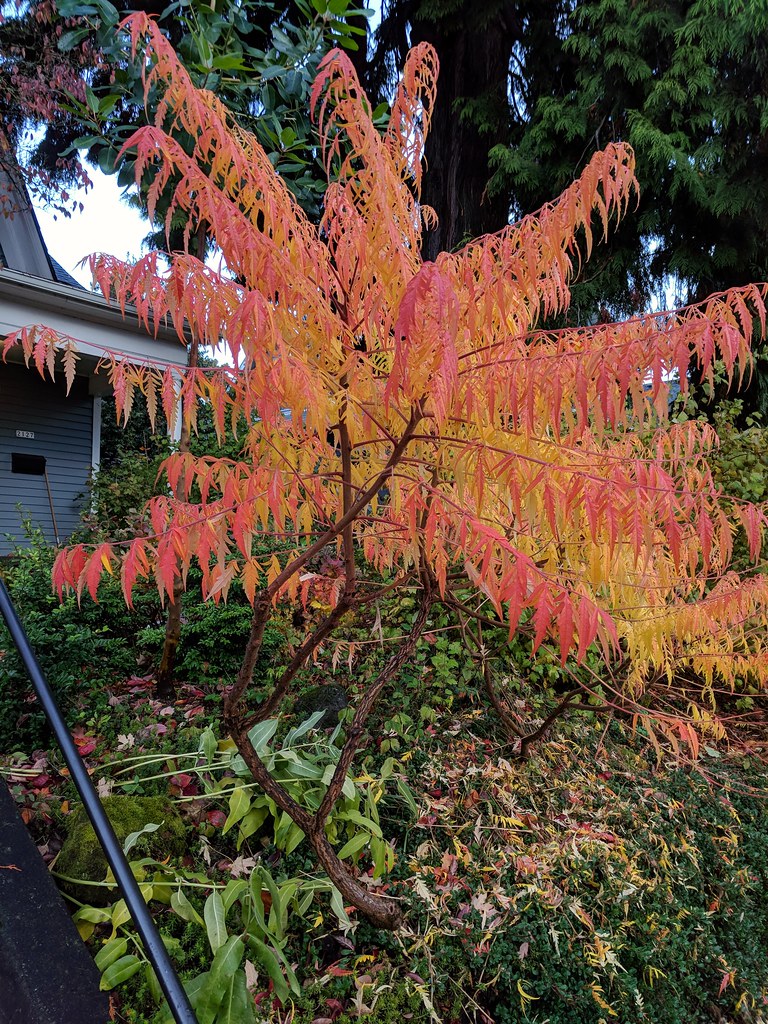
Fall sumac

I've got a good one for you this month! It's less focused than usual, but there are three key topics, plus a mix of a few others:
First, if you're about to delete this unread, please take this survey (which takes <1 minute) to let me know if you have input on how these summaries could be more useful: https://www.surveymonkey.com/r/BCVDKQR . Thanks to all who responded; results are summarized at the end of this email.

Second, the long-awaited "Natural Climate Solutions" paper from TNC is out. Read it: it's only 5 pages and will be highly relevant to virtually everyone working in conservation. It makes a solid case for how immediately investing in nature to reduce GHGs can buy us much-needed time to bring down emissions and invent new technology.

Third, a new book came out Oct 12: Effective Conservation Science: Data Not Dogma. It includes chapters from myself and several TNC authors, and is full of fascinating stories of how we react to science that counters conventional wisdom. I also share related articles below on how we can work through our biases.

CLIMATE CHANGE / NATURAL CLIMATE SOLUTIONS
Griscom et al 2017 (the natural climate solutions paper) packs a lot of good content in, but two things in particular excite me. First is making the case for massive rapid investment in nature: while we develop new tech and bring down emissions, we can use proven solutions like trees to buy time and make progress (see figure 2: nature could get us 37% of mitigation needs by 2030 at <$100/t CO2e / yr). We need the tech too, but nature is something that works today to bring down GHGs. Second is breaking down their top 20 options for nature-based climate mitigation into the theoretical maximum impact (about 1/2 of which would cost <$100 / t CO2e / yr), what we would need to hit Paris targets of <2 degrees C, and the subset of mitigation which is cheap (<$10/t CO2e / yr). See Figure 1 for this breakdown, which highlights that forests are absolutely critical (2/3 of cost-effective mitigation), and that the biggest opportunities for cheap mitigation are preventing forest loss (and improving forest management), improving fertilizer use on farms, and keeping peatlands intact. The forest goals rely heavily on a small reduction in grazing lands (4%). I'm leaving out lots of important details to keep this short: just read the paper. It's worth it. Read all about it (or watch videos) at https://global.nature.org/initiatives/natural-climate-solutions/natures-make-or-break-potential-for-climate-change

DATA NOT DOGMA:
The book Effective Conservation Science: Data Not Dogma tells stories of scientists whose unconventional and inconvenient results challenge us all to broaden our thinking and consider how we respond to new information that undermines what we think we know. My chapter is around how my analysis and blog post showing that globally agriculture has been taking up a smaller footprint since 1998. You can buy the book here: https://global.oup.com/academic/product/effective-conservation-science-9780198808985?cc=se&lang=en& and read a review of one chapter here: www.slate.com/articles/technology/future_tense/2017/08/conservation_biologists_are_struggling_to_balance_science_and_advocacy.html and read an ugly (unformatted) version of my chapter here: http://fish.freeshell.org/publications/DataNotDogma-Chapter11-preformatted.pdf  

Here are three more papers on the topic of scientific bias:
In 1992 E.O. Wilson asserted that invasive species were the second greatest driver of species extinction (second only to habitat destruction). He did so without providing evidence or details behind his calculations, but this claim was rapidly repeated and taken as gospel by environmental scientists. In fact, TNC played a major role in elevating Wilson's claim by not only citing it (in a BioScience paper and related book), but adding that "scientists generally agree" with Wilson's claim (again without evidence). Chew 2015 tells the captivating story about how this happened, using clear writing, thought-provoking questions, and numerous examples of bias in language that should be neutral and scientific. He also tells us how the idea eventually became subject to critique. I have seen this phenomenon firsthand; I follow a trail of citation breadcrumbs from authors to discover a primary source with an assertion that cannot be supported by what's in the paper (e.g. a book chapter on soil by Rattan Lal). When scientists don't closely read the papers we cite (or read them at all), our biases blossom and spread. If you're interested in invasive species or how spurious claims spread, this is a great read (albeit long).

Warren et al 2017 asks how common it is for scientists to be biased with regard to invasive species: using value-laden language and favoring interpretation that emphasizes the impacts of invasive species even when the data are not clear (as exemplified by the Chew 2015 article). They found bias to be common, but also that it has been declining since a series of papers in 2004-2005 that argued against language vilifying invasive species. This paper is fairly simplistic but gets at a key nuance: even a bias which is generally true is counter-productive in science. This paper shows hope that with awareness of bias, we can make efforts to at least reduce the expression of that bias in our work.

Holman et al 2015 provides more evidence of scientific bias, and argues for the use of "blinding" when conducting research to limit the potential for bias to affect study results. This means scientists collecting data don't know whether the subjects or area they're observing is a treatment or a control. This makes it harder for preconceptions to affect measurements (whether subjective, or even "rounding" seemingly objective metrics to fit bias), and they present evidence that nonblind studies often inflate the effect of the actions being studied. If "working blind" sounds extreme to you, read my blog post about "Clever Hans" - a horse who was believed to be able to do math (but in fact was only skilled at reading when his audience believed he had the right answer): https://blog.nature.org/science/2015/02/12/horses-doing-math-clever-hans-lessons-conservation-science/

As a final thought on bias, check out the Minasny & McBratney article in the Soil section below, which challenges a key assertion for TNC's agriculture work (that boosting soil organic matter improves water holding capacity). Read the summary below, and observe your feelings and reaction if it challenges what you believe.

SOIL
Minasny & McBratney 2017 use a meta-analysis to argue against something generally believed to be true by people working on sustainable agriculture: they provide evidence that increasing soil organic matter has a relatively small effect on water holding capacity (particularly for plant-available water content). If they're right, it reduces TNC's argument that improving soil health via boosting organic matter on farms will substantially improve crop resilience to drought. The authors note that soils that benefit most from increases in organic matter are sandy and very low in organic matter to begin (both of which make sense). They have a good discussion of limitations of their analysis, in particular the fact that they focused only on soil and not what's above it. Cover crops and crop residue / stubble are likely to add to the small benefits shown via soil. There is also a lot of nuance and potential to reframe their analysis in a way that could show larger benefits. At the same time, recognizing that most of us have a bias on this topic, this is a useful reminder to check our assumptions about both the efficacy of practices and the key mode of action and metrics that we should focus on. The authors led a key paper on the "4 per mille" initiative on boosting soil carbon, so are not hostile to the notion of boosting soil carbon. You can read a news article about this one here: https://phys.org/news/2017-10-adding-soil-limited-effect-capacity.html

GENERAL ECOLOGY / BIODIVERSITY
Remember as a kid how many bugs would get splattered on the windshield of your car? Ever notice there are less now? A recent study (Hallman et al 2017) indicates this is a real phenomenon, with dramatic declines in flying insects. The authors tracked the total biomass of insects at 63 locations within nature preserves in Germany; from 1989 to 2016 biomass plummeted by 76%. They sampled several habitat types and found consistent declines. It's alarming to see this within protected areas, although the authors note virtually all are surrounded by agriculture. That could both pull insects away from natural areas, and provide more pesticide drift into the natural areas. Other studies have shown major insect declines, but none this severe, and I don't know of others within protected areas.

SCIENCE COMMUNICATIONS
I've been pondering what we think we know and how to communicate thorny issues (as per data not dogma). I'd recommend a book I'm reading: "Do I make myself clear?" by Harold Evans, which is helping me. While not for scientists, I saw my writing sins laid bare in this book. I'm looking to simplify my writing in science papers, and to better talk about science in general. I have a long way to go! I'm working on summarizing key lessons amidst all of the stories in the book. One useful tool is the Hemingway app, which helps you identify problematic text and how to improve it: http://www.hemingwayapp.com/

AGRICULTURE:
As noted in my August 2017 review, neonicotinoids (neonics for short) are a class of insecticide currently under close scrutiny for impacts on bees. Mitchell et al 2017 found neonics in 75% of the 198 honey samples they tested, although mostly at very low levels. All neonics were at safe levels for humans, and most were at levels considered safe for bees. This is useful to show both that these pesticides are very common, that they are being consumed by bees, and that they often occur in concert with other neonics (all of which is concerning). But the reporting (and fundraising) around this has glossed over the very low levels. While 48% of samples had total neonic levels over a very conservative threshold for potential harm to bees (0.1 ng / g, a more reasonable (still likely conservative, albeit arbitrary) threshold of 2 ng / g was only detected in 8% of samples. The honey was collected via "citizen science"; the researchers asked colleagues, friends, and family to bring them honey produced in a known location. That also raises the question of whether or not these honey samples are typical.


RESULTS FROM SURVEY ABOUT THESE SUMMARIES:
I'm guessing the folks who didn't respond would have had more critical feedback, but overall here's what I learned from the ~40 respondents:
  • 90% of you usually at least skim these for relevant content
  • 90% of you found the level of detail about right (including some who said they could use less detail but were content to tolerate the current length), the rest found them too long.
  • Several folks especially liked both grouping articles by topic, and focusing each month primarily on one topic. I'll endeavor to keep that up, despite failing to do so this month.
Some opportunities to improve I'll be mulling over:
  • Set up a monthly journal club to talk about the papers (this one is already in the works, stay tuned for more info and let me know if you would like to provide input)
  • Make a lead theme more clear up front and include a short summary of the entire email
  • Tie each article to TNC's shared conservation agenda
  • Each quarter send a list of bullets of main issues under debate in conservation to encourage us to follow up
REFERENCES:
Chew, M. K. (2015). Ecologists, Environmentalists, Experts, and the Invasion of the “Second Greatest Threat.” International Review of Environmental History, 1, 7–41. Retrieved from http://www.academia.edu/14884830/Ecologists_Environmentalists_Experts_and_the_Invasion_of_the_Second_Greatest_Threat 

Evans, H. (2017). Do I make myself clear? Why writing well matters. Little, Brown, and Company: New York, NY. 416p.

Fisher, J. R. B. (2017). Global agricultural expansion – the sky isn’t falling (yet). In Kareiva, P., Silliman, B, and Marvier, M. (Eds), Effective Conservation Science: Data not Dogma. Oxford University Press, Oxford, UK, pages 73-79. https://global.oup.com/academic/product/effective-conservation-science-9780198808985?cc=se&lang=en&

Griscom, B. W., Adams, J., Ellis, P. W., Houghton, R. A., Lomax, G., Miteva, D. A., … Fargione, J. (2017). Natural Climate Solutions. Proceedings of the National Academy of Sciences, (6), 11–12. https://doi.org/10.1073/pnas.1710465114

Hallmann, C. A., Sorg, M., Jongejans, E., Siepel, H., Hofland, N., Schwan, H., … de Kroon, H. (2017). More than 75 percent decline over 27 years in total flying insect biomass in protected areas. Plos One, 12(10), e0185809. https://doi.org/10.1371/journal.pone.0185809

Holman, L., Head, M. L., Lanfear, R., & Jennions, M. D. (2015). Evidence of experimental bias in the life sciences: Why we need blind data recording. PLoS Biology, 13(7), 1–12. https://doi.org/10.1371/journal.pbio.1002190

Minasny, B., & Mcbratney, A. B. (2017). Limited effect of organic matter on soil available water capacity. European Journal of Soil Science, (2000), 1–9. https://doi.org/10.1111/ejss.12475

Mitchell, E. A. D., Mulhauser, B., Mulot, M., & Aebi, A. (2017). A worldwide survey of neonicotinoids in honey. Science, 111(October), 109–111. https://doi.org/10.1126/science.aan3684

Warren, R. J., King, J. R., Tarsa, C., Haas, B., & Henderson, J. (2017). A systematic review of context bias in invasion biology. PLoS ONE, 12(8), 1–12. https://doi.org/10.1371/journal.pone.0182502

Sunday, October 1, 2017

October science journal article summary

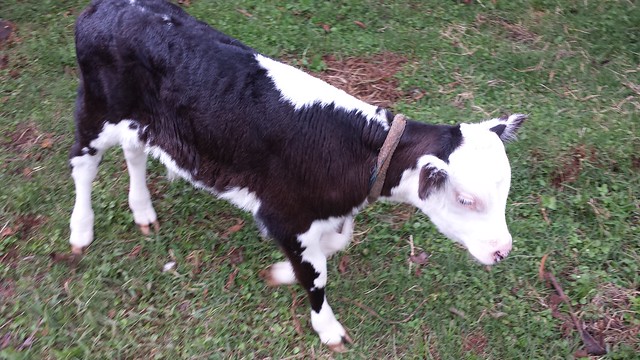
Calf

Here's some science to make your October outstanding! I have a 3-question survey about these summaries that should take a minute or less to answer; please consider taking it (or emailing me if you prefer). I'm trying to get a sense of how often people read them, whether the level of detail is right or not, and get any other feedback people have: https://www.surveymonkey.com/r/BCVDKQR


The focus of this review is on reducing the impacts of animal agriculture (especially cattle). For anyone who missed my June 2016 review, I'll re-recommend Herrero et al 2016 as a fantastic overview of the potential for improving GHG emissions in the livestock sector. Their top picks were improved feed digestibility (including more cereals, distiller's grains, etc. to supplement or replace grass and hay), feed additives, avoiding land use change through intensification, and carbon sequestration from better grazing.


ANIMAL AGRICULTURE:
There a lot of discussion on how to shrink the high carbon footprint of cattle (beef and dairy), and one focal area is on enteric methane (mainly cow burps). Hristov et al 2015 is a study showing that a feed additive (3NOP) was able to reduce dairy methane production by ~30% (with oddly similar impact regardless of the dose) without substantially affecting milk yield (although it increased weight gain by 80% over the 12 week period). This is a relatively small study (48 cows) and it would be see what the impact is throughout the life of dairy cattle (as often gut flora adapts to these kinds of additives over time), but this combined with a couple of similar studies they cite are exciting enough to be worth recommending more trails and pilots.

Kinley et al 2016 is a similar paper looking at a different feed additive (this one based on seaweed). This is only an in vitro study (messing with petri dishes rather than actual cows) but they found adding doses of 2% or greater to a grass diet virtually eliminated methane production. Note that a very similar paper (Machado et al 2015) had similar results, but with two key differences: they saw a strong benefit at 1% dose (where Kinley had a weaker response at that dose), and they also saw some side effects that could impact cattle health at 2% and above. While this was only in vitro and only tested for 3 days, it's still worth investigating and comparing to 3NOP for efficacy and potential positive and negative side effects.

Swain et al 2018 (it came out online early) is a paper from the Breakthrough Institute arguing for a shift to more intensive livestock systems, especially switching from grass-finished to grain-finished beef. They make a number of good points; it's not really debatable that feedlot cattle require less land and time, and most scientists agree the GHG emissions are lower per unit of meat in feedlot systems as well. They briefly discuss some of the potential tradeoffs including animal welfare and antibiotic use and how they might be addressed, and the issue of how to ensure that higher productivity actually leads to land sparing as opposed to driving more habitat conversion. While a good read, there are a few things they don't cover that should also be part of the conversation. One is that in some cases we may actually prefer a high land use footprint, if the grazing lands are high-quality natural grasslands that would otherwise be converted to other uses. But it's still a worthwhile read with good food for thought.

Odadi et al. 2017 (authored by a NatureNet fellow, along with TNC's Joe Fargione) looks at the impact of planned grazing (focus on intensive rotational grazing, but including several other factors) on a variety of outcomes in Kenya. They found substantial improvements in vegetation (cover, species richness and diversity, etc.), presence and richness of wildlife, cattle weight gain during dry periods when they were in poor condition, and the amount of cattle supported per unit of land area. The cool thing to highlight here is that they were able to improve cattle condition as well as wildlife habitat. One critical ingredient to success was more active involvement from pastoralists; this does mean more effort for them but it appears that the benefits make it worth promoting.

AGRICULTURE:

Remember the synthesis of evidence for how several agricultural practices impact a suite of outcomes that Rodd Kelsey led (I sent it out last month)? This month I'm sharing one more 2-page document, which has a great chart summarizing the evidence for each of the practices evaluated on each of the outcomes. If you want to explore more deeply, you can do so at http://www.conservationevidence.com/data/index/?synopsis_id[]=22


REFERENCES:
Herrero, M., Conant, R., Havlik, P., Hristov, A. N., Smith, P., Gerber, P., … Thornton, P. K. (2016). Greenhouse gas mitigation potentials in the livestock sector. Nature Climate Change, 6(May), 452–461. https://doi.org/10.1038/nclimate2925

Hristov, A. N., Oh, J., Giallongo, F., Frederick, T. W., Harper, M. T., Weeks, H. L., … Duval, S. (2015). An inhibitor persistently decreased enteric methane emission from dairy cows with no negative effect on milk production. Proceedings of the National Academy of Sciences of the United States of America, 112(34), 10663–10668. https://doi.org/10.1073/pnas.1504124112

Kinley, R. D., De Nys, R., Vucko, M. J., MacHado, L., & Tomkins, N. W. (2016). The red macroalgae Asparagopsis taxiformis is a potent natural antimethanogenic that reduces methane production during in vitro fermentation with rumen fluid. Animal Production Science, 56(3), 282–289. https://doi.org/10.1071/AN15576

Machado, L., Magnusson, M., Paul, N. A., Kinley, R., de Nys, R., & Tomkins, N. (2016). Dose-response effects of Asparagopsis taxiformis and Oedogonium sp. on in vitro fermentation and methane production. Journal of Applied Phycology, 28(2), 1443–1452. https://doi.org/10.1007/s10811-015-0639-9

Odadi, W. O., Fargione, J., & Rubenstein, D. I. (2017). Vegetation, Wildlife, and Livestock Responses to Planned Grazing Management in an African Pastoral Landscape. Land Degradation and Development, (March). https://doi.org/10.1002/ldr.2725

Swain, M., Blomqvist, L., McNamara, J., & Ripple, W. J. (2018). Reducing the environmental impact of global diets. Science of the Total Environment, 610–611, 1207–1209. https://doi.org/10.1016/j.scitotenv.2017.08.125

Friday, September 1, 2017

September science journal article summary

This month I've got a number of good papers, but I want to highlight two in particular. First, you know how hard it is to keep track of science, and Rodd Kelsey has just put out a book that summarizes the impacts of 20 different agricultural management practices (focused on Mediterranean climates). This will be a great reference for anyone working on ag. The other is a paper of mine that just came out. It's an analysis of the Camboriú water fund in Brazil with broadly useful suggestions on how to pick the right data source in a given context ("how much data is enough").

VALUE OF INFORMATION (VOI):
My new paper (Fisher et al 2017) is essentially an analysis for the Camboriú water fund of how the choice of input data impacts the decision you'd make as a result. We compared a relatively quick analysis on free 30m resolution data to a more complex analysis using 1m data. I'd recommend most people skip most of the paper (which is quite technical) and just start with the two blogs I wrote about it (an overview at https://blog.nature.org/science/2017/08/24/camboriu-data-for-water-funds/, and a more technical one for people working with spatial data at https://rsecjournalblog.wordpress.com/2017/08/25/how-much-data-is-enough-investigating-how-spatial-data-resolution-impacts-conservation-decision-making/). In short, we found that the simpler analysis would have led us to the same decision in Brazil, but that for other water funds the choice of data could be critical (as the ROI was over 1 with 1m data, but below 1 with 30m data). Table 5 and the discussion have several guidelines to consider in how to select whether relatively low or high resolution data is most appropriate for a given context. I'm pretty excited about that part of the paper, and I'd really welcome feedback on it from anyone so inclined.
UPDATE: in December 2018 another science paper came out about the overall water fund project: https://www.sciencedirect.com/science/article/pii/S0048969718349611?via%3Dihub


AGRICULTURE:
Rodd Kelsey and his team just released a synopsis of the evidence synthesis they did for 20 different ag management practices and their effect on several ecosystem services (Shackelford et al 2017). It's a reference for finding information on a practice of interest, and a peer-reviewed version is forthcoming which will include expert assessment and scoring of the evidence as well. Everything in this book is also available and searchable online at http://www.conservationevidence.com under the Mediterranean Farmlands set of practices. I think this is a big step forward for TNC, especially for agriculture, but also as an example of what stepping up our evidence as part of CbD 2.0 can look like. Contact Rodd with any questions or comments you have.

Snyder 2017 is a useful reference with a lot of data on nutrient losses in the Mississippi River Basin and hypoxia in the Gulf of Mexico (as well as some global info, see Fig. 16). They show that overall the amount of nitrogen exported to the Gulf has trended down over the last 35 years (although with tons of annual variation, largely due to changes in precipitation) but phosphorous has trended up (Figs 10-13). Hypoxia in the Gulf is expected to lag way behind stream nutrient levels, and again is highly variable based on several climate variables each year, but Figure 14 shows that the average hypoxic zone from 2010-2015 is almost triple the size of the recently revised target for 2035 (<5,000 km2). So while it's not a surprise, this is more evidence that we really need to step up our game, especially given the projected impacts of climate change (see Sinha et al 2017 below) which will make our task significantly harder.


CLIMATE CHANGE:
You've probably heard about "payment for ecosystem services" (PES) where a land owner / manager is paid to do something (e.g. change how they farm) or to NOT do something (e.g. not cutting down trees they would otherwise clear). Until now there hadn't been a robust, fully randomized experiment to test how well they work. Jayachandran et al 2017 is a study looking at 121 villages in Uganda, half of which were paid for two years to not cut trees (with payments tied to area of intact forest as measured via remote sensing). The good news is that overall it worked well: participating villages deforested half as much as control (4.2% forest loss vs 9.1% loss), and there didn't seem to be leakage (cutting down other neighboring forests). It also appeared to be cost-effective (based on assumptions about how villagers would respond after the 2-year program ended). Remaining questions: what would happen under a long-term version of this program (or if it was actually abandoned after 2 years), could the program be adjusted to reduce deforestation even more from participants, how can program overhead costs (1/2 of total) be cut, and could there be side-effects on biodiversity or humans? The bigger question is whether or not this would scale, the authors note that only 1/3 of people they approached agreed to participate, that if scaled up nationally it could impact timber prices which could cause some rebound, and that weaker enforcement or monitoring in a large-scale effort could impact efficacy. The calculations on costs and benefits in particular are a bit tricky, let me know if you'd like to discuss further. I'd recommend only people involved in PES schemes actually read the paper (and a longer version I can share), for others check out https://www.theatlantic.com/science/archive/2017/07/paying-people-to-preserve-their-trees/534351/?utm_source=atltw and/or http://www.nber.org/digest/aug16/w22378.html for a good overview of the paper.

Several of you sent me articles about Harwatt et al 2017, which calculated how much impact replacing all beef consumed in the US with beans would have on climate change. Note that this paper doesn't model a real world scenario, rather it performs a very simple calculation by first calculating the GHG impact of switching from beef to beans (they ran it two ways, keeping total calories the same, and keeping protein intake the same), and then comparing that to the US 2020 GHG reduction targets under the Paris agreement. They found that this switch could meet between 46-75% of the US obligations (which is a lot), based almost entirely on Nijdam et al 2012 which provided the data on emissions. I have a few concerns about the methods of this paper; I don't see the US-specific data in the Nijdam paper they cite for it, and this paper's assertion that emissions in the US per kg of beef are almost double a global average appears contrary to the underlying paper's findings that intensive systems have much lower emissions. I'm guessing this may be due to inappropriately weighting culled dairy in Europe but I can't tell b/c they don't provide the detail. So while the general idea (we should eat more beans and less beef to fight climate change) is sound, I wouldn't trust these specific numbers.


CLIMATE CHANGE & AGRICULTURE:
Kim et al 2017 argues that especially warm weather in the Arctic has led to reduced vegetation growth (from forests to crops) in Canada and some of the U.S., primarily via colder temperatures (as well as less rain in South-central U.S.). In the U.S. crop yields were 1-4% lower on average as a result, up to 20% lower for corn yields in Texas (but with the majority of states unaffected, and only a few showing a very strong relationship). As with much of climatology, this is more about concerning patterns than ironclad proof of trouble ahead. But it makes a good point about some of the complex and unexpected impacts of climate change for us to watch out for.
There's a news article about the paper here: https://www.washingtonpost.com/news/energy-environment/wp/2017/07/10/the-stubbornly-persistent-idea-about-climate-change-that-just-wont-go-away/?utm_term=.9a374e5ce552 and you can read the full paper here.

Zhao et al 2017 also looks at how climate change may reduce crop yields, although through the lens of how global temperature increases will affect wheat, rice, maize, and soy yields. They draw on and summarize four independent analytical methods (historic data, field trial data, and both global and local crop models), which is a cool trick to increase confidence in the findings. On average, they predict each degree C increase will drop wheat yields roughly 6%, rice by 3%, maize by 7%, and soy by 3%. As you'd expect, results are quite spatially heterogeneous (including a few isolated positive effects), see Fig 3 for details. There are a lot of somewhat simplistic assumptions necessary to make these estimates work but they make a good case for temperature increases causing yields to drop on existing farms. Note that they did not account for shifting cultivation (e.g. moving plantings north to reflect new conditions) or other forms of adaptation.

One concern about climate change is the shift to more intense rain (causing more runoff, erosion, and flooding than steadier weaker rain), as well as increased rain in some areas (including the US). Sinha et al 2017 does some modeling based on climate projections to predict global changes in nitrogen loads in rivers (which leads to eutrophication in coastal waters, e.g. the dead zone in the Gulf), finding that they will increase substantially in 2070-2100 (with some increase 2031-2060). There are a lot of scenarios in the paper, but under "business as usual" for climate change they predict an overall increase in N loading of 19% for 20170-2100 (driven primarily by the Northeast, Upper Mississippi, and Great Lakes regions (see Fig 1 for details, Fig 2 is less useful since it groups areas with opposing trends). They note that simply to offset that increase, we would need to reduce nitrogen inputs to farms by 33%; to actually make progress on reducing eutrophication we would have to do substantially more. They also show other countries at risk of increasing N loading, especially India, parts of China, and SE Asia. It's worth noting there are a lot of assumptions in this paper, but the overall trend that moving to flashier rain is likely to make the problem with nutrient runoff from agriculture worse is something we need to be thinking about, especially if we are unsuccessful in limiting climate change. There's a news article about the paper at https://www.nytimes.com/2017/07/27/climate/nitrogen-fertilizers-climate-change-pollution-waterways-global-warming.html


REFERENCES:
Fisher, J. R. B., Acosta, E., Dennedy-Frank, P. J., Boucher, T., Kroeger, T., & Giberti, S. (2017). The impact of satellite imagery’s spatial resolution on land use classification and modeled water quality. Remote Sensing in Ecology and Conservation, 1–13. https://doi.org/10.1002/rse2.61

Harwatt, H., Sabaté, J., Eshel, G., Soret, S., & Ripple, W. (2017). Substituting beans for beef as a contribution towards US climate change targets. Climatic Change, 143 (1-2)(July), 261–270. https://doi.org/10.1007/s10584-017-1969-1

Jayachandran, S., de Laat, J., Lambin, E. F., Stanton, C. Y., Audy, R., & Thomas, N. E. (2017). Cash for carbon: A randomized trial of payments for ecosystem services to reduce deforestation. Science, 357(6348), 267–273. https://doi.org/10.1126/science.aan0568

Kim, J.-S., Kug, J.-S., Jeong, S.-J., Huntzinger, D. N., Michalak, A. M., Schwalm, C. R., … Schaefer, K. (2017). Reduced North American terrestrial primary productivity linked to anomalous Arctic warming. Nature Geoscience, 10(8), 572–576. https://doi.org/10.1038/ngeo2986

Shackelford, G. E., Kelsey, R., Robertson, R. J., Williams, D. R., & Dicks, L. V. (n.d.). Sustainable agriculture in California and other Mediterranean ecosystems. Synopses of Conservation Evidence Series. University of Cambridge, Cambridge, UK.

Sinha, E., Michalak, A. M., & Balaji, V. (2017). Eutrophication will increase during the 21st century as a result of precipitation changes. Science, 357(6349), 405–408. https://doi.org/10.1126/science.aan2409

Snyder, C. S. (2017). Progress in Reducing Nutrient Loss in the Mississippi River Basin – But Effects on Gulf Hypoxia Still Lag. IPNI: Peachtree Corners, Georgia.

Zhao, C., Liu, B., Piao, S., Wang, X., Lobell, D. B., Huang, Y., … Asseng, S. (2017). Temperature increase reduces global yields of major crops in four independent estimates. Proceedings of the National Academy of Sciences, 201701762. https://doi.org/10.1073/pnas.1701762114