Showing posts with label soil. Show all posts

Monday, April 1, 2019

April 2019 science journal article summary

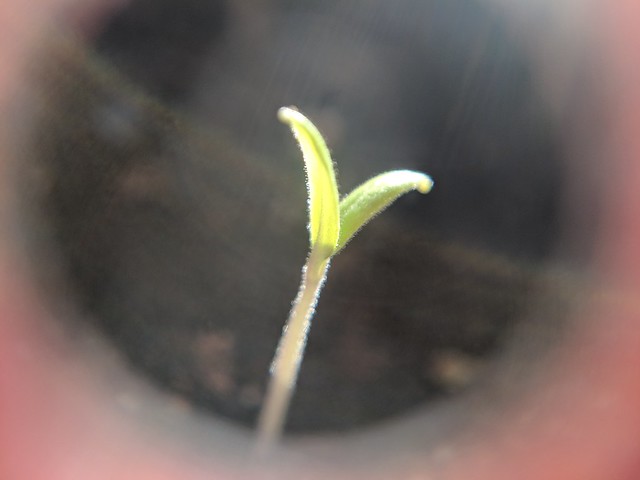
Tomato seedlings

Happy Spring!

Since I've just changed jobs I asked for help in putting this summary together; Steve Wood from The Nature Conservancy kindly reviewed four of the articles below. Also, these summaries come from me (and Steve in this case) and do not reflect the views of our employers or any other organization. Any mistakes are my own.

If you know someone who wants to sign up to receive these summaries, they can do so at http://bit.ly/sciencejonFinally, for folks interested in science communications, I've been getting a lot of good ideas from the short daily emails Bob Lalasz (from Science + Story) sends. You can check out a few examples at https://medium.com/science-plus-story and if interested sign up at https://scienceplusstory.com/quick-list-opt-in/

WILDLIFE CORRIDORS:
Tack et al. 2019 identifies priority areas to focus land protection on the most important wildlife corridors used by pronghorn and greater sage grouse in the Northern Great Plains, specifically north-central Montana into southern Saskatchewan. Sage grouse in this area depend on migration, as do about half of the pronghorn population. Private lands in the area are roughly half ranches on native sagebrush, and half cropland (with public land typically primarily used for cattle grazing). Cropland expansion is the main driver of habitat loss (followed by energy development), and protected areas only cover ~5% of pathways for both species. So priorities for protection are on lands used for migration with a higher chance of cultivation. Note Figure 4 which shows the importance of unprotected public, private, and even cultivated land. Fences impede migration, but marking them with flags reduces collisions.

SUSTAINABLE AGRICULTURE:
McGill et al. 2018 modeled greenhouse gases (GHGs) of groundwater-irrigated vs rainfed croplands in the Midwest US. Irrigated fields had higher net GHGs (27 g CO2e/m2/yr) than rainfed (a net sink, -14g CO2e/m2/yr), mainly due to higher N2O emissions and fossil fuel use to pump groundwater. However, since irrigation also increased yield the emissions per unit of crop yield were similar: 0.04 kg CO2e/ kg yield for irrigated vs -0.03 kg CO2e/ kg yield for rainfed (again a GHG sink). Finding the rainfed system to be a net GHGS sink is surprising and unusual, even if you assume that no-till farms have net C sequestration (which is unlikely). There are some other odd findings like fertilization reducing soil C. But the overall idea should be valid: irrigation will generally lead to wetter soil (w/ higher N2O emissions more than offsetting higher soil C) plus energy use to pump water.

Smith et al. 2019 is a review of the environmental impact widespread adoption of the voluntary Bonsucro standard for sugar cane could have. They find impressive potential, especially if efforts are targeted well and involve compliance with all standards and criteria. Half of global environmental potential benefits could be met with only 10% of total production area (check out figure 4 for details). However there are several challenges, including what to do with farms totally unable to meet those standards (e.g. large areas in India). This paper also models impact IF all participating farms actually met all target outcomes, and doesn't look at how companies could drive that or what would be practical with different levels of investment. Nonetheless, this shows a lot of potential especially if we can move beyond practice based frameworks to those that are outcome-based and carefully targeted. You can read a blog about this work here:
https://twin-cities.umn.edu/news-events/research-brief-targeted-sustainability-standards-agriculture-hold-promise-global?fbclid=IwAR27p0_IHCXRrRFogBMtGgBPajMRiZhQoWMR1k8M_0fo_zWiXvQ56Ww481M

Han et al. 2018 is a meta-analysis of 68 studies of how straw incorporation affected carbon sequestration and crop yields across China. On average it sequestered 0.35 t C / ha / yr in the upper 20 cm of soil, and boosted crop yields 13%. It worked best on clay soils, high crop intensities, and in areas where soil is currently being degraded (NE China).


GUEST REVIEWS FROM STEVE WOOD:
Have questions about the four papers below? Contact Steve at stephen.wood@TNC.ORG.

Soil health has become a major are of interest, but there is uncertainty about how to measure and define it. Derner et al. 2018 tackle the question of how to define soil health for grazing lands. This is an important task because the notion of soil health emerged from row-crop agriculture, yet the way grazing lands are managed and the environmental services they provide are starkly different to row crop agriculture.
The authors argue that a soil health approach to grazing lands should re-focus grazing management on managing for ecosystem processes, rather than maximizing short-term profit. And this requires building cross-institutional capacity and training, adaptive management, and long-term monitoring. The authors argue against adoption of a single set of practices or indicators. For instance, a soil health indicator from row crop agriculture is high soil cover, but in grazing systems high amounts of bare ground can be necessary for some grassland bird species. This paper is also noteworthy for the mix of authors--everything from university professor to rancher.

The two papers by Unks et al. 2019 aim to understand the drivers of pastoralist livelihood vulnerability in one of the Northern Rangeland Trust community conservancies. They argue that the rangeland institutions in central Kenya going back to the colonial era have promoted formal land tenure, whether at the individual or community level. But, because forage production is patchy, successful grazing requires a high level of mobility to access resources in different areas at different times. This type of management is at odds with formal property regimes, as well as at odds with realities of modern life, like employment at conservancy lodges and keeping children in school. Herders now face limited mobility, which means that livestock husbandry has shifted towards browsers, like goats and camels, which do better on lands with low grass productivity. Limited mobility also has made livestock husbandry more individualistic, leading to greater inequality among households. Greater inequality leads to unequal ability to cope with future climate change.

The papers offer nuanced insight into the drivers of change and livelihood vulnerability. The narrative promoted by conservation non-profits tends to be more simplistic: poor current management--stocking rates, population growth--is the main driver of poor vegetation and livelihoods. By showing the importance of long-standing institutional, climatic, and socio-economic change, the authors imply that land-tenure-based management plans (like those promoted at NRT) will not fix the ecological or livelihood challenges. In bringing more nuance they highlight greater challenges, but they don’t offer insight into what solutions to those greater challenges might be.

Finally, Rosenzweig et al. 2018 focuses on quantifying whether it is possible to lower fertilizer and herbicide use while maintaining yields via changing crop rotations. The focus is on dryland, no-till wheat in Colorado and Nebraska. They tested three groups of cropping systems, all of which had wheat in the winter. In the summer they differed by: (1) natural fallow one out of two years;  (2) a summer crop (corn, sorghum, millet, peas, or sunflowers) replacing fallow every couple of years; (3) continuous cropping with mixtures of the same crops from (2). They showed that the continuous cropping system had the highest nutrient retention, greater fungal colonization of roots (which increases nutrient retention), lowest herbicide use, lowest yield penalty, and highest profitability. Continuous cultivation had greater net revenue than basic fallow by $100 per hectare per year.

One reason I like this paper is that it challenges the idea that continuous cultivation is inherently bad and that natural fallow/regeneration is good. The paper shows that planning cropping and restoration is likely the key to ecological intensification. One limitation of this study is that because there were multiple crop combinations in each of the categories tested that it’s not possible to discern which of those combinations had the greatest effect.


REFERENCES:
Derner, J. D., Smart, A. J., Toombs, T. P., Larsen, D., McCulley, R. L., Goodwin, J., et al. (2018). Soil Health as a Transformational Change Agent for US Grazing Lands Management. Rangeland Ecology & Management, 71(4), 403–408. http://doi.org/10.1016/j.rama.2018.03.007

Han, X., Xu, C., Dungait, J. A. J., Bol, R., Wang, X., Wu, W., & Meng, F. (2018). Straw incorporation increases crop yield and soil organic carbon sequestration but varies under different natural conditions and farming practices in China: a system analysis. Biogeosciences, 15(7), 1933–1946. https://doi.org/10.5194/bg-15-1933-2018

McGill, B. M., Hamilton, S. K., Millar, N., & Robertson, G. P. (2018). The greenhouse gas cost of agricultural intensification with groundwater irrigation in a Midwest U.S. row cropping system. Global Change Biology, 24(12), 5948–5960. https://doi.org/10.1111/gcb.14472

Rosenzweig, S. T., Stromberger, M. E., & Schipanski, M. E. (2018). Intensified dryland crop rotations support greater grain production with fewer inputs. Agriculture, Ecosystems and Environment, 264, 63–72. http://doi.org/10.1016/j.agee.2018.05.017

Smith, W. K., Nelson, E., Johnson, J. A., Polasky, S., Milder, J. C., Gerber, J. S., … Siebert, S. (2019). Voluntary sustainability standards could significantly reduce detrimental impacts of global agriculture. Proceedings of the National Academy of Sciences, 116(6), 2130–2137. https://doi.org/10.1073/pnas.1707812116

Tack, J. D., Jakes, A. F., Jones, P. F., Smith, J. T., Newton, R. E., Martin, B. H., … Naugle, D. E. (2019). Beyond protected areas: private lands and public policy anchor intact pathways for multi-species wildlife migration. Biological Conservation, 234, 18–27. https://doi.org/10.1016/j.biocon.2019.03.017

Unks, R. R., King, E. G., German, L. A., Wachira, N. P., & Nelson, D. R. (2019). Unevenness in scale mismatches: Institutional change, pastoralist livelihoods, and herding ecology in Laikipia, Kenya. Geoforum, 99, 74–87. http://doi.org/10.1016/j.geoforum.2018.12.010

Unks, R. R., King, E. G., Nelson, D. R., Wachira, N. P., & German, L. A. (2019). Constraints, multiple stressors, and stratified adaptation: Pastoralist livelihood vulnerability in a semi-arid wildlife conservation context in Central Kenya. Global Environmental Change, 54, 124–134. http://doi.org/10.1016/j.gloenvcha.2018.11.013


Sincerely,

Jon

p.s. If you'd like to keep track of what I write as well as what I read, I always link to both my informal blog posts and my formal publications (plus these summaries) at http://sciencejon.blogspot.com/

Friday, March 1, 2019

Transition for monthly science updates


Greetings,

As many of you have heard, this is my last day at The Nature Conservancy; I'll be taking a new job at The Pew Charitable Trusts on their conservation science team. I don't know yet what will happen with these summaries but don't despair! I hope to keep them going in some form - likely with a different topical focus. If you know someone who is feeling lucky and wants to sign up to receive these summaries despite the uncertainty, they can do so at http://bit.ly/sciencejon

I've been frantically wrapping up work so have read less science than usual this month. But I did write a blog post explaining why seemingly silly questions like how to define forests and deforestation are actually both tricky and really important: How many trees make a forest? I talk about The Accountability Framework and the critical role it can play in helping to end deforestation:
https://news.mongabay.com/2019/02/how-many-trees-make-a-forest-commentary/

The only papers I reviewed this month are one about how scientists read scientific literature, and two soil papers (from TNC's Deborah Bossio and Steve Wood) which are both summarized on this blog: https://nature4climate.org/news/headline-stories/time-to-let-soil-shine-a-global-agenda-for-collective-action-on-soil-carbon/

READING SCIENTIFIC LITERATURE:
Colleagues working in applied conservation often tell me they have no time to read scientific literature. Tenopir et al. 2015 is an article about how faculty in five US universities seek out scholarly literature (including but not limited to the sciences)! I'll be honest - I skimmed this looking for two bits of information: scientists reported reading an average of 26 articles per month (Fig 1), and spent 32 minutes on each article (Fig 2). I read fewer articles, and usually read them faster. But even these academics are spending less than two days out of the month on this. Surely most of us can find a few hours! There are some other interesting tidbits here. Almost 2/3 of articles read are from the last two years - so have a good comms plan for your research! Also, NONE of the surveyed scientists read articles on a mobile device like a tablet, which is a huge missed opportunity for those long commutes on mass transit!

SOILS:
Soil organic carbon (SOC) is often claimed to improve crop yields.  Oldfield et al. 2019 tests that claim with a global meta-analysis of maize and wheat. They find higher SOC is associated with higher yields, up to ~2% SOC. They then look at the ~2/3 of global maize and wheat lands below 2% to estimate the opportunity to improve yield by boosting those soils to 2% SOC. Globally they estimate that we could produce ~5% more maize and ~10% more wheat, which represents 32% of the global yield gap for maize (largely in the US), and 60% for wheat (largely in China). Check out Figure 4 for global opportunity maps. Note that there is a lot of variance in the data, and it's even possible yields could decline slightly as SOC increases.

Vermeulen et al. 2019 is a call to action on improving global soil carbon stocks. It reviews some of the challenges that have impeded action at scale,and emerging opportunities that could give soil initiatives a boost. They call out three key needs, and look at possible actions to advance all three. First, a compelling vision for action led by political champions. Second, a stronger business case (including evidence of success for both public and private investors). Finally: a more compelling value proposition for farmers and land managers. They also highlight the need for practical measurement protocols, and several policy gaps. It's a quick read at 3 pages so worth a look.

REFERENCES:
Oldfield, E. E., Bradford, M. A., & Wood, S. A. (2019). Global meta-analysis of the relationship between soil organic matter and crop yields. SOIL, 5, 13–32. https://doi.org/10.5194/soil-2018-21

Tenopir, C., King, D. W., Christian, L., & Volentine, R. (2015). Scholarly article seeking, reading, and use: A continuing evolution from print to electronic in the sciences and social sciences. Learned Publishing, 28(2), 93–105. https://doi.org/10.1087/20150203

Vermeulen, S., Bossio, D., Lehmann, J., Luu, P., Paustian, K., Webb, C., … Warnken, M. (2019). A global agenda for collective action on soil carbon. Nature Sustainability, 2(1), 2–4. https://doi.org/10.1038/s41893-018-0212-z


Sincerely,

Jon

p.s. as a reminder, you can search all of the science articles written by TNC staff (that we know of) here http://www.conservationgateway.org/ConservationPlanning/ToolsData/sitepages/article-list.aspx
(as you publish please email science_pubs@tnc.org to help keep this resource current). This will be my last plug for this resource since I'm leaving TNC.
If you'd like to keep track of what I write as well as what I read, I always link to both my informal blog posts and my formal publications (plus these summaries) at http://sciencejon.blogspot.com/
Wednesday, November 1, 2017

November science journal article summary

Nihao November!


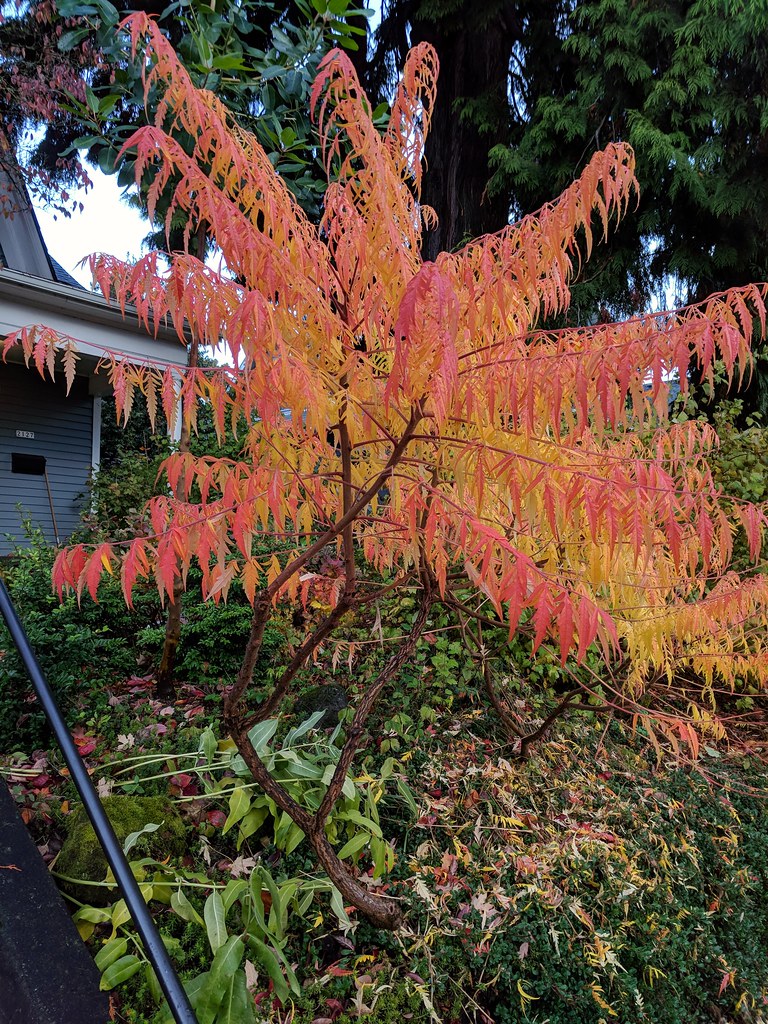
Fall sumac

I've got a good one for you this month! It's less focused than usual, but there are three key topics, plus a mix of a few others:
First, if you're about to delete this unread, please take this survey (which takes <1 minute) to let me know if you have input on how these summaries could be more useful: https://www.surveymonkey.com/r/BCVDKQR . Thanks to all who responded; results are summarized at the end of this email.

Second, the long-awaited "Natural Climate Solutions" paper from TNC is out. Read it: it's only 5 pages and will be highly relevant to virtually everyone working in conservation. It makes a solid case for how immediately investing in nature to reduce GHGs can buy us much-needed time to bring down emissions and invent new technology.

Third, a new book came out Oct 12: Effective Conservation Science: Data Not Dogma. It includes chapters from myself and several TNC authors, and is full of fascinating stories of how we react to science that counters conventional wisdom. I also share related articles below on how we can work through our biases.

CLIMATE CHANGE / NATURAL CLIMATE SOLUTIONS
Griscom et al 2017 (the natural climate solutions paper) packs a lot of good content in, but two things in particular excite me. First is making the case for massive rapid investment in nature: while we develop new tech and bring down emissions, we can use proven solutions like trees to buy time and make progress (see figure 2: nature could get us 37% of mitigation needs by 2030 at <$100/t CO2e / yr). We need the tech too, but nature is something that works today to bring down GHGs. Second is breaking down their top 20 options for nature-based climate mitigation into the theoretical maximum impact (about 1/2 of which would cost <$100 / t CO2e / yr), what we would need to hit Paris targets of <2 degrees C, and the subset of mitigation which is cheap (<$10/t CO2e / yr). See Figure 1 for this breakdown, which highlights that forests are absolutely critical (2/3 of cost-effective mitigation), and that the biggest opportunities for cheap mitigation are preventing forest loss (and improving forest management), improving fertilizer use on farms, and keeping peatlands intact. The forest goals rely heavily on a small reduction in grazing lands (4%). I'm leaving out lots of important details to keep this short: just read the paper. It's worth it. Read all about it (or watch videos) at https://global.nature.org/initiatives/natural-climate-solutions/natures-make-or-break-potential-for-climate-change

DATA NOT DOGMA:
The book Effective Conservation Science: Data Not Dogma tells stories of scientists whose unconventional and inconvenient results challenge us all to broaden our thinking and consider how we respond to new information that undermines what we think we know. My chapter is around how my analysis and blog post showing that globally agriculture has been taking up a smaller footprint since 1998. You can buy the book here: https://global.oup.com/academic/product/effective-conservation-science-9780198808985?cc=se&lang=en& and read a review of one chapter here: www.slate.com/articles/technology/future_tense/2017/08/conservation_biologists_are_struggling_to_balance_science_and_advocacy.html and read an ugly (unformatted) version of my chapter here: http://fish.freeshell.org/publications/DataNotDogma-Chapter11-preformatted.pdf  

Here are three more papers on the topic of scientific bias:
In 1992 E.O. Wilson asserted that invasive species were the second greatest driver of species extinction (second only to habitat destruction). He did so without providing evidence or details behind his calculations, but this claim was rapidly repeated and taken as gospel by environmental scientists. In fact, TNC played a major role in elevating Wilson's claim by not only citing it (in a BioScience paper and related book), but adding that "scientists generally agree" with Wilson's claim (again without evidence). Chew 2015 tells the captivating story about how this happened, using clear writing, thought-provoking questions, and numerous examples of bias in language that should be neutral and scientific. He also tells us how the idea eventually became subject to critique. I have seen this phenomenon firsthand; I follow a trail of citation breadcrumbs from authors to discover a primary source with an assertion that cannot be supported by what's in the paper (e.g. a book chapter on soil by Rattan Lal). When scientists don't closely read the papers we cite (or read them at all), our biases blossom and spread. If you're interested in invasive species or how spurious claims spread, this is a great read (albeit long).

Warren et al 2017 asks how common it is for scientists to be biased with regard to invasive species: using value-laden language and favoring interpretation that emphasizes the impacts of invasive species even when the data are not clear (as exemplified by the Chew 2015 article). They found bias to be common, but also that it has been declining since a series of papers in 2004-2005 that argued against language vilifying invasive species. This paper is fairly simplistic but gets at a key nuance: even a bias which is generally true is counter-productive in science. This paper shows hope that with awareness of bias, we can make efforts to at least reduce the expression of that bias in our work.

Holman et al 2015 provides more evidence of scientific bias, and argues for the use of "blinding" when conducting research to limit the potential for bias to affect study results. This means scientists collecting data don't know whether the subjects or area they're observing is a treatment or a control. This makes it harder for preconceptions to affect measurements (whether subjective, or even "rounding" seemingly objective metrics to fit bias), and they present evidence that nonblind studies often inflate the effect of the actions being studied. If "working blind" sounds extreme to you, read my blog post about "Clever Hans" - a horse who was believed to be able to do math (but in fact was only skilled at reading when his audience believed he had the right answer): https://blog.nature.org/science/2015/02/12/horses-doing-math-clever-hans-lessons-conservation-science/

As a final thought on bias, check out the Minasny & McBratney article in the Soil section below, which challenges a key assertion for TNC's agriculture work (that boosting soil organic matter improves water holding capacity). Read the summary below, and observe your feelings and reaction if it challenges what you believe.

SOIL
Minasny & McBratney 2017 use a meta-analysis to argue against something generally believed to be true by people working on sustainable agriculture: they provide evidence that increasing soil organic matter has a relatively small effect on water holding capacity (particularly for plant-available water content). If they're right, it reduces TNC's argument that improving soil health via boosting organic matter on farms will substantially improve crop resilience to drought. The authors note that soils that benefit most from increases in organic matter are sandy and very low in organic matter to begin (both of which make sense). They have a good discussion of limitations of their analysis, in particular the fact that they focused only on soil and not what's above it. Cover crops and crop residue / stubble are likely to add to the small benefits shown via soil. There is also a lot of nuance and potential to reframe their analysis in a way that could show larger benefits. At the same time, recognizing that most of us have a bias on this topic, this is a useful reminder to check our assumptions about both the efficacy of practices and the key mode of action and metrics that we should focus on. The authors led a key paper on the "4 per mille" initiative on boosting soil carbon, so are not hostile to the notion of boosting soil carbon. You can read a news article about this one here: https://phys.org/news/2017-10-adding-soil-limited-effect-capacity.html

GENERAL ECOLOGY / BIODIVERSITY
Remember as a kid how many bugs would get splattered on the windshield of your car? Ever notice there are less now? A recent study (Hallman et al 2017) indicates this is a real phenomenon, with dramatic declines in flying insects. The authors tracked the total biomass of insects at 63 locations within nature preserves in Germany; from 1989 to 2016 biomass plummeted by 76%. They sampled several habitat types and found consistent declines. It's alarming to see this within protected areas, although the authors note virtually all are surrounded by agriculture. That could both pull insects away from natural areas, and provide more pesticide drift into the natural areas. Other studies have shown major insect declines, but none this severe, and I don't know of others within protected areas.

SCIENCE COMMUNICATIONS
I've been pondering what we think we know and how to communicate thorny issues (as per data not dogma). I'd recommend a book I'm reading: "Do I make myself clear?" by Harold Evans, which is helping me. While not for scientists, I saw my writing sins laid bare in this book. I'm looking to simplify my writing in science papers, and to better talk about science in general. I have a long way to go! I'm working on summarizing key lessons amidst all of the stories in the book. One useful tool is the Hemingway app, which helps you identify problematic text and how to improve it: http://www.hemingwayapp.com/

AGRICULTURE:
As noted in my August 2017 review, neonicotinoids (neonics for short) are a class of insecticide currently under close scrutiny for impacts on bees. Mitchell et al 2017 found neonics in 75% of the 198 honey samples they tested, although mostly at very low levels. All neonics were at safe levels for humans, and most were at levels considered safe for bees. This is useful to show both that these pesticides are very common, that they are being consumed by bees, and that they often occur in concert with other neonics (all of which is concerning). But the reporting (and fundraising) around this has glossed over the very low levels. While 48% of samples had total neonic levels over a very conservative threshold for potential harm to bees (0.1 ng / g, a more reasonable (still likely conservative, albeit arbitrary) threshold of 2 ng / g was only detected in 8% of samples. The honey was collected via "citizen science"; the researchers asked colleagues, friends, and family to bring them honey produced in a known location. That also raises the question of whether or not these honey samples are typical.


RESULTS FROM SURVEY ABOUT THESE SUMMARIES:
I'm guessing the folks who didn't respond would have had more critical feedback, but overall here's what I learned from the ~40 respondents:
  • 90% of you usually at least skim these for relevant content
  • 90% of you found the level of detail about right (including some who said they could use less detail but were content to tolerate the current length), the rest found them too long.
  • Several folks especially liked both grouping articles by topic, and focusing each month primarily on one topic. I'll endeavor to keep that up, despite failing to do so this month.
Some opportunities to improve I'll be mulling over:
  • Set up a monthly journal club to talk about the papers (this one is already in the works, stay tuned for more info and let me know if you would like to provide input)
  • Make a lead theme more clear up front and include a short summary of the entire email
  • Tie each article to TNC's shared conservation agenda
  • Each quarter send a list of bullets of main issues under debate in conservation to encourage us to follow up
REFERENCES:
Chew, M. K. (2015). Ecologists, Environmentalists, Experts, and the Invasion of the “Second Greatest Threat.” International Review of Environmental History, 1, 7–41. Retrieved from http://www.academia.edu/14884830/Ecologists_Environmentalists_Experts_and_the_Invasion_of_the_Second_Greatest_Threat 

Evans, H. (2017). Do I make myself clear? Why writing well matters. Little, Brown, and Company: New York, NY. 416p.

Fisher, J. R. B. (2017). Global agricultural expansion – the sky isn’t falling (yet). In Kareiva, P., Silliman, B, and Marvier, M. (Eds), Effective Conservation Science: Data not Dogma. Oxford University Press, Oxford, UK, pages 73-79. https://global.oup.com/academic/product/effective-conservation-science-9780198808985?cc=se&lang=en&

Griscom, B. W., Adams, J., Ellis, P. W., Houghton, R. A., Lomax, G., Miteva, D. A., … Fargione, J. (2017). Natural Climate Solutions. Proceedings of the National Academy of Sciences, (6), 11–12. https://doi.org/10.1073/pnas.1710465114

Hallmann, C. A., Sorg, M., Jongejans, E., Siepel, H., Hofland, N., Schwan, H., … de Kroon, H. (2017). More than 75 percent decline over 27 years in total flying insect biomass in protected areas. Plos One, 12(10), e0185809. https://doi.org/10.1371/journal.pone.0185809

Holman, L., Head, M. L., Lanfear, R., & Jennions, M. D. (2015). Evidence of experimental bias in the life sciences: Why we need blind data recording. PLoS Biology, 13(7), 1–12. https://doi.org/10.1371/journal.pbio.1002190

Minasny, B., & Mcbratney, A. B. (2017). Limited effect of organic matter on soil available water capacity. European Journal of Soil Science, (2000), 1–9. https://doi.org/10.1111/ejss.12475

Mitchell, E. A. D., Mulhauser, B., Mulot, M., & Aebi, A. (2017). A worldwide survey of neonicotinoids in honey. Science, 111(October), 109–111. https://doi.org/10.1126/science.aan3684

Warren, R. J., King, J. R., Tarsa, C., Haas, B., & Henderson, J. (2017). A systematic review of context bias in invasion biology. PLoS ONE, 12(8), 1–12. https://doi.org/10.1371/journal.pone.0182502

Friday, May 19, 2017

Talk and interview at the DC March for Science

At the DC March for Science I was fortunate enough to give the first talk of the day (on Danny Karp's research on wildlife habitat and food safety), and to talk with The Weather Channel about The Nature Conservancy's work on soil.

Here's the interview from The Weather Channel:


And here's a video of my talk (the lighting wasn't great, apologies for that); note that if you go to http://salad.sciencejon.com you can download my slides and copy / paste text to ask companies to discourage their growers from clearing habitat:

Wednesday, November 9, 2016

reThink Soil: A Roadmap to U.S. Soil Health

We just released a new report on the potential benefits of adoption soil health practices in the U.S., and the conclusions are pretty exciting! You can read a brief overview, the executive summary, and the full paper at http://nature.org/soil. Much of the analysis was done by consultants we worked with, but I provided lots of scientific guidance and review throughout the process.


The web page has a good summary of some of the key points, but to put it even more succinctly, we argue that the adoption of three soil health practices (no-till, cover crops, and crop rotations) on U.S. row crops could have massive benefits both to society (e.g. improved water quality, reduced GHGs) and to the farmers implementing them (reduced soil erosion, improved soil quality and resilience).

For instance, if half of the farmland used to grow corn, soy, and wheat were to adopt all three practices, it could generate $7.4 billion in total benefits, and if all the farmland for those three crops adopted them it could be $19.6 billion (note that it's not double because some farms already use some of these practices). If you take the more optimistic upper range of our estimates, total societal benefit for 100% adoption of all three practices could be $49.8 billion. A lot of the science is uncertain, so these estimates are rough but we drew on the best available data to come up with them, and we are confident that the magnitude of the opportunity is valid even if the exact numbers are off.