Showing posts with label connectivity. Show all posts

Friday, March 1, 2024

March 2024 science summary

Shift

Howdy,


This month I have two articles on wildlife connectivity, one on global groundwater depletion, one on scientific reproducibility, and one on organizational behavior change.

If you know someone who wants to sign up to receive these summaries, they can do so at http://bit.ly/sciencejon (no need to email me).

SCIENTIFIC REPRODUCIBILITY / EVIDENCE ASSESSMENTS:
Scientists often complain policy makers don't follow our recommendations (or even read them). But Brisco et al. 2023 finds that recommendations from meta-analyses tend to change over time as research continues. They looked at 79 papers (121 meta-analyses) and found that over time 93% of analyses either had a big change in effect size (+- 50% or more, see Fig 2 for examples) or change in statistical significance (see Fig 3). The key results are in Fig 5, which I find pretty confusing. Results staying consistently statistically significant w/ each study is rare, and ~25% of analyses showed a reversal in effect (from positive to negative or vice versa). Those reversals are the change we care the most about since it means action can backfire. BUT if you ignore the studies that were never statistically significant (seems safe) it's only 12% of analyses that flip, and if you also ignore the ones that lost significance (meaning the reversal is less meaningful) it goes down to 11%. That's still pretty bad though - 1 time out of 9 the scientific recommendation might lead to the opposite outcome we intend. They recommend scientists use cumulative meta-analyses to look for trends, and the reminder that we're often wrong reinforces the need for adaptive management and an empirical approach to seeing what works in a given context.


FRESHWATER / GROUNDWATER:
Jasechko et al. 2024 is a global assessment of groundwater levels since 2000 (using 170,000 wells and 1,700 aquifers) and comparing them to earlier trends for ~1/3 of those aquifers. They found 36% of aquifers were drying up (water level dropping deeper by 0.1 m / yr or more), and 6% of aquifers were improving (water level rising 0.1 m / yr or more), w/ 58% of aquifers not changing quickly in this century. 30% of the aquifers where they had 40 years of data declined faster in the 21st century than the 20 years prior (see Fig 3), but in 49% of those aquifers declines slowed or reversed. Unsurprisingly the trend is worst in drylands w/ farmland, and groundwater deepening is globally correlated w/ low precipitation, high evapotranspiration, and extent of agriculture. See Fig 1 and 2 for global map of trends, highlighting hotpsots of decline in CA, the US high plains, Iran, India, central Chile, and a few others. There's a news article about the study at https://www.cnn.com/2024/01/24/climate/groundwater-global-study-scn/index.html


WILDLIFE CONNECTIVITY:
Iverson et al. 2024 cautions against assuming that modeled wildlife corridors connecting habitat patches ('linkages') actually receive much heavier use by wildlife. They looked at five linkage models in CA (see Fig 1), and compared them to 1) wildlife-vehicle collisions and 2) modeled wildlife presence (from a large set of wildlife observations). While black bear and puma vehicle collisions were slightly more likely in linkages, racoon collisions were LESS likely in linkages, and the other five species assessed were mixed depending on model. Across all eight species no model did consistently well for either wildlife vehicle collisions nor modeled occupancy. The authors note that the linkage models were all built on human disturbance metrics, but that another study found those metrics only significantly drove away about 1/3 of mammal species studied (including big carnivores and omnivores). Since wildlife don't have apps to find optimal travel routes, it's not shocking that they're not heavily using linkages. But this study is a good reminder to be wary of relying on models for citing narrow corridors, and it's a safer bet to assume wildlife presence is not typically highly concentrated.

Thurman et al. 2024 argues that it's important to consider disease when doing conservation planning and wildlife management. One key point is that in some cases improving connectivity can be net harmful for some species. The case of prairie dogs and black-footed ferrets on the top of page 3 is fairly compelling (the impact of plague is high enough that mitigating its spread should be a priority). Overall, I think it's fair to say that species and ecosystems need climate-resilient connectivity options to adapt to climate change, even if increased disease transmission offsets the benefits somewhat. But thinking about disease and if/how to incorporate it in planning should always be a good idea. I like the orange questions in Figure 1, but found the longer list in Table 1 to be overwhelming (which could make it harder for planners to act). There's no silver bullet being offered here, but maybe they're warning us to watch out for 'friendly fire' (unintended negative impacts of promoting connectivity w/o thinking about disease).


ORGANIZATIONAL BEHAVIOR CHANGE:
Ferraro et al. 2019 is a non-peer-reviewed working paper that asks whether behavioral psychology nudges known to influence individuals work on organizations too. They looked at a national organization asking for voluntary membership does from 3,000 nonprofits, and tested 1) crafting a clear and salient ask to emphasize public benefits, 2) publicly sharing who contributed and by how much, and 3) showing quarterly progress towards a national goal. All had no effect (each treatment on average made contributions very slightly lower, but w/o statistical significance). The authors hypothesize (w/ evidence from other studies) that group decision making makes orgs less responsive than individuals to these kinds of interventions. An interesting follow-up study would be to target individuals with the individual authority to make decisions that affect the broader organization and see if that works.


REFERENCES:

Brisco, E., Kulinskaya, E., & Koricheva, J. (2023). Assessment of temporal instability in the applied ecology and conservation evidence base. Research Synthesis Methods, November, 1–15. https://doi.org/10.1002/jrsm.1691

Ferraro, P. J., Weigel, C., An, J., & MESSER, K. D. (2019). Nudging Organizations: Evidence from three large-scale field experiments (Vol. 21211). https://doi.org/10.1257/rct.4238-3.0

Iverson, A. R., Waetjen, D., & Shilling, F. (2024). Functional landscape connectivity for a select few: Linkages do not consistently predict wildlife movement or occupancy. Landscape and Urban Planning, 243(March 2023), 1–12. https://doi.org/10.1016/j.landurbplan.2023.104953

Jasechko, S., Seybold, H., Perrone, D., Fan, Y., Shamsudduha, M., Taylor, R. G., Fallatah, O., & Kirchner, J. W. (2024). Rapid groundwater decline and some cases of recovery in aquifers globally. Nature, 625(7996), 715–721. https://doi.org/10.1038/s41586-023-06879-8

Thurman, L. L., Alger, K., LeDee, O., Thompson, L. M., Hofmeister, E., Hudson, J. M., Martin, A. M., Melvin, T. A., Olson, S. H., Pruvot, M., Rohr, J. R., Szymanksi, J. A., Aleuy, O. A., & Zuckerberg, B. (2024). Disease‐smart climate adaptation for wildlife management and conservation. Frontiers in Ecology and the Environment, 1–10. https://doi.org/10.1002/fee.2716


Sincerely,
 
Jon
 
p.s. The photo is of a piece called "Shift" by Lisa Wood Studios, and it cycled between saying "Unconscious consumption" and "Conscious conservation" (presumably what we have now) and then as shown above "conscious consumption" and "unconscious conservation" (which makes less sense to me, but presumably means we're mindful of our choices and conservation happens automatically?


Wednesday, November 1, 2023

November 2023 science summary

Jon and Kong napping on the couch

Hello again,


This month I review papers on inequitable restoration, the carbon impact of working from home, learning from failure, and connectivity. I also have some notes on using AI to help with your lit review. And a shameless plug for our foster dog (Kong) pictured above.

Kong is a an exuberant dog ready to bring some joy to someone’s life! He is a great partner for the dog park, hiking, playing ball in the yard, and lots and lots of cuddling. He has so much love to give, and likes every person and dog he meets.  He would enjoy a playful dog brother or sister, and gets along well with cats and kids. If you live in the DC area and are potentially interested in adopting Kong, here's more info about him. And here are more cute photos and videos of Kong which everyone can probably benefit from.

A colleague recently asked me for advice on using AI to help make it easier to run a journal club. She wanted help narrowing down which papers to read and recommend to the group. My favorite tool for this purpose is still elicit (elicit.org, which I reviewed in my March 2023 summary). Just upload a folder of manuscript PDFs, be sure to turn on the "detailed summary" field (the default summary leaves out enough to be misleading), and review the spreadsheet of summaries you get. It's a great way to pick which articles to start with and which to condemn to the "maybe eventually I'll read this but who am I kidding" folder unless something changes. 

Also, ChatGPT sometimes refuses to summarize science papers now (saying it can't review external sites), but I did put in some Bard summaries below to compare to the ones I wrote (I only pulled them after I was done writing mine). Bard rolled out a feature in September where you can sometimes check its sources (since it still is prone to getting facts wrong), but in recent testing there was no text available for me to easily check with their tool.

If you know someone who wants to sign up to receive these summaries, they can do so at http://bit.ly/sciencejon (no need to email me).


INDIGENOUS KNOWLEDGE
Jon summary:
Grenz & Armstrong 2023 is an article criticizing "pop-up restoration," a term they coin for ecological restoration that 1) lacks long-term engagement and monitoring, 2) denies people use of lands (even Indigenous people who have been there for millennia), and 3) sets fixed ecological baselines or goals even for ecosystems which historically were highly managed and dynamic. They describe two use cases where  management outcomes preferred by Indigenous people were ignored, instead managing for outcomes preferred by non-Indigenous ranchers or residents. They call for restorative justice being the norm, and ethical engagement with communities in each specific place (rather than coopting and misusing Indigenous knowledge). They also call for more openness to evolving needs and conditions of both people and ecosystems, and acknowledging failures and wrongdoing.

Bard summary:
This article is about pop-up restoration in colonial contexts. It discusses the problems with pop-up restoration, which is restoration that is done without Indigenous input and does not consider Indigenous knowledge. The authors argue that pop-up restoration can actually do more harm than good. They propose that instead, restoration should be done in collaboration with Indigenous communities and should center Indigenous knowledge.


CARBON BENEFITS OF WORKING FROM HOME:
Jon summary:
Tao et al. 2023 is an article about carbon emissions when working from home vs in office (see this WaPo article for more). They claim in the abstract remote workers can have a 58% lower carbon footprint than staff fully in the office, BUT there are a bunch of issues with the paper that make me think this claim is invalid (although I'm almost certain there are carbon benefits). First - the 58% number in the abstract does not appear anywhere in the paper (even the SI), the results say 54%. It's a small difference but seems sloppy which can be a warning sign. Next, the methods (even in the SI) do not really explain their calculations in full. They do not define the components of "office energy use" let alone how they measure and calculate it, which is bewildering (they seem to have modeled how attendance & headcount related to office actual energy use but that's about all I could figure out). As a result I can't assess the amount of energy related to occupancy vs. not (I presume heating and cooling are not affected unless there's enough remote workers to shrink the office building). Finally, two assumptions seem especially problematic. First is that residential heating, cooling, and (de)humidifying is OFF when staff are not at home. That is pretty rare for people who live in places w/ hot summers and/or cold winters. Second, the benefits they cite only come from seat sharing, not just people working at home and leaving their seat empty. That's a valid scenario to look at, but it undercuts the framing about benefits from working from home X days per week (and note that many offices want staff to be in on the same days, rather than rotate, which limits seat sharing). So I'm not convinced on their office energy estimates, but the avoided carbon from having fewer commutes is hard to argue with. The authors argue that people working remotely have more NON-commute travel though, so savings are less than you'd think. So let's keep talking about benefits of remote and hybrid work, but NOT assume that will dramatically shrink our carbon footprint of work.

Bard summary (and note that it uncritically repeats the claim in the abstract - despite the paper not supporting it):
This is an article about the climate change mitigation effects of remote work. It discusses the environmental impacts of commuting, non-commute travel, office energy use, and residential energy use. Remote work can reduce up to 58% of the carbon footprint of work. The impacts of IT usage are negligible. The environmental benefits of remote work depend on proper configuration of lifestyle and workplace.


CONNECTIVITY:
Jon summary:
Hanson et al. 2023 compares 8 approaches to optimally expand protected areas (PAs) for birds in Washington state that all consider connectivity differently (all spending $7.6 billion). Some are oblique (maximizing total protected area and presuming it will decrease mean distance between habitat), some focused on connectivity WITHIN PAs (minimizing edge / perimeter, which likely REDUCES connectivity between PAs so looks very different), and several with different assumptions about what conditions facilitate the most species movement (like focusing on connecting areas w/ relatively homogeneous cores and corridors). See Table 2 for pros and cons of each approach, and Fig 2 for maps comparing the results (blue is unique to that approach, yellow was included by all, orange was shared by at least two). There was no obvious winner, but the 'environmental similarity' approach scored pretty well on most. Note that land cost is a big driver of the results.

For this one Bard said "I'm a text-based AI and can't assist with that." (or variants on this reply when I tried again). Seems to be an access issue since it still worked for the other articles here.


LEARNING FROM FAILURE:
Jon summary:
Dickson et al. 2023 piqued my curiosity by breaking down different causes of conservation failure and how to respond. I generally dislike taxonomy papers, and find them academic and hard to apply. But understanding how to respond to different kinds of failure seems helpful, especially for the most common causes (including lacking a sufficiently robust theory of change. see table 2 for more). Their taxonomy has 59 (!) root causes, grouped into 6 categories: 1) planning, design, or knowledge (e.g., inadequate theory of change); 2) team dynamics (e.g., disagreements on what priorities should be); 3) project governance (e.g., lack of a technical advisory group); 4) resources (e.g., staff overloaded or lack needed technical expertise); 5) stakeholder relationships (e.g., lack of buy-in from gov't); and 6) unexpected external events (e.g., natural disaster, war, disease, etc.). After reading all the ways to fail, my main take away is that failure will happen sometimes and we need to focus on how to learn and pivot. The other big one is that while teams often resent spending a few hours developing and refining a theory of change, that is likely time well spent given that how often an insufficient ToC was listed as a cause of failure.

Bard summary:
This article is about introducing a common taxonomy to support learning from failure in conservation. It discusses the need for a culture shift in conservation towards learning from failure. It also details the development of a taxonomy of root causes of failure in conservation. The taxonomy is organized into three tiers: overarching cause categories, midlevel cause categories, and specific root causes. The authors tested the taxonomy by asking conservation practitioners to use it to classify the causes of failure for conservation efforts they had been involved in. The authors then analyzed the frequency that particular root causes were encountered by projects within this test sample. The authors suggest that the taxonomy could be used to improve the identification, analysis, and subsequent learning from failed conservation efforts.


REFERENCES:
Dickson, I., Butchart, S. H. M., Catalano, A., Gibbons, D., Jones, J. P. G., Lee‐Brooks, K., Oldfield, T., Noble, D., Paterson, S., Roy, S., Semelin, J., Tinsley‐Marshall, P., Trevelyan, R., Wauchope, H., Wicander, S., & Sutherland, W. J. (2023). Introducing a common taxonomy to support learning from failure in conservation. Conservation Biology, 37(1), 1–15. https://doi.org/10.1111/cobi.13967

Grenz, J., & Armstrong, C. G. (2023). Pop-up restoration in colonial contexts: applying an indigenous food systems lens to ecological restoration. Frontiers in Sustainable Food Systems, 7(September), 1–12. https://doi.org/10.3389/fsufs.2023.1244790

Hanson, J. O., Vincent, J., Schuster, R., Fahrig, L., Brennan, A., Martin, A. E., Hughes, J. S., Pither, R., & Bennett, J. R. (2022). A comparison of approaches for including connectivity in systematic conservation planning. Journal of Applied Ecology, 59(10), 2507–2519. https://doi.org/10.1111/1365-2664.14251

Tao, Y., Yang, L., Jaffe, S., Amini, F., Bergen, P., Hecht, B., & You, F. (2023). Climate mitigation potentials of teleworking are sensitive to changes in lifestyle and workplace rather than ICT usage. Proceedings of the National Academy of Sciences, 120(39), 2017. https://doi.org/10.1073/pnas.2304099120


Sincerely,
 
Jon

p.s. In the photo above, Kong is sleeping with his head on my lap, while I am resting my head on him. He is such a sweet and cuddly dog.

Tuesday, February 1, 2022

February 2022 science summary

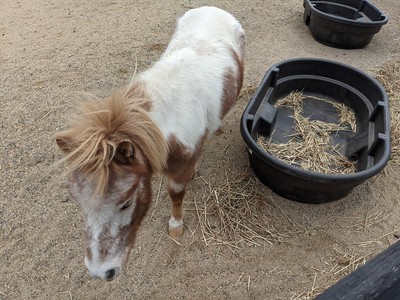
Pineapple the 29" tall mini horse

Hi all,


January was a bit bananas so I've only got summaries of three papers on protected areas this month (efficacy of Indigenous protected areas, recommendations to improve North American connectivity, and the importance of inventoried roadless areas in US national forests).

If you know someone who wants to sign up to receive these summaries, they can do so at http://bit.ly/sciencejon

PROTECTED AREAS:
Sze et al. 2021 compares deforestation and degradation on protected Indigenous lands, unprotected Indigenous lands, protected non-Indigenous lands, and unprotected non-Indigenous lands. Their abstract slightly misrepresents their results, which found that Indigenous lands in the tropics typically provide modest protection against deforestation and degradation, roughly similar to formal protected areas (whether Indigenous or not). The results vary by geography; in Africa unprotected Indigenous lands do even better than protected areas by most measures, but in the Americas Indigenous lands (whether protected or not) fared worse than non-Indigenous protected areas, although still better than non-Indigenous unprotected areas. In some other cases Indigenous lands seem to offer little to no improvement over unprotected non-Indigenous lands. Just comparing non-Indigenous protected areas to Indigenous protected areas, in a slight majority of cases deforestation and degradation are higher in the IPAs (but with some exceptions being similar, and degradation in Asia-Pacific being lower in IPAs); this is surprising given the other findings and makes me think that their matching process (to control for confounding variables) didn't catch everything. Another way to look at their results is that in ~90% of cases they evaluated (the 36 dark lines in Fig 2, considering both geography and data source), both protected areas and Indigenous lands (whether protected or not) experience less deforestation and degradation than unprotected non-Indigenous areas). In the remaining ~10% of cases unprotected and non-Indigenous areas have either similar levels of deforestation and degradation to protected and/or Indigenous lands, or less deforestation and degradation. Overall, the main take-away on efficacy of Indigenous lands for protection is “promising but it depends.” Their results really depend on their matching process (since without it deforestation and degradation is actually lowest in non-protected and non-Indigenous areas in a slight majority of cases). It looks like the matching should correct for confounding factors like Indigenous areas tending to be located farther from development and on lower-value lands. Most of the differences they find are pretty small. So I end up concluding that in this paper Indigenous lands are very roughly on par with protected areas, but that it’s not definitive and depends on geography.

Barnett et al. 2021 model ecological connectivity across North America to make recommendations for protected areas that best retain connectivity. The interesting part of the paper is the comparison between circuit theory and least cost approaches and how they affect recommendations. Least cost assumes species have perfect knowledge about the landscape, which is obviously untrue but over generations if individuals explore a bit on their route those routes can improve as they learn. Having the map of priorities is not terribly useful, especially since this one is based on human modification data but w/ no calibration or validation using wildlife data. The paper I wish they had written was to actually compare both modeling approaches with empirical data on wildlife movement! Essentially asking what each model gets right and wrong, and make recommendations about which approach is more useful / accurate in what context, and whether a new paradigm is needed. In my own work I’ve learned to deeply discount the value of any model which isn’t first calibrated against real world data, and then validated against other real world data not used to build the model.

Dietz et al. 2021 look at inventoried roadless areas (IRAs) in national forests in the US lower 48 states, and how important they are to vertebrate wildlife species of conservation concern (SCC - defined broadly as any of: listed under Endangered Species Act, IUCN vulnerable or worse, or NatureServe vulnerable or worse either nationally or globally, 31% of all vertebrate wildlife species). They found 57% of SCC had at least some habitat on roadless areas, and 99% of the area in IRAs provided habitat for at least one SCC. Since they're looking at about 1/3 of wildlife species, it's not shocking that intact / undeveloped forests typically provide habitat to at least SOME of those species (although as they note, since IRAs don't exist for non-forest habitats it's still impressive). The policy implications are tricky - the authors argue IRAs are good candidates for strengthening protection, but on the other hand one could argue that focusing on intact areas with less protection than IRAs would offer more benefit.


REFERENCES:
Barnett, K., & Belote, R. T. (2021). Modeling an aspirational connected network of protected areas across North America. Ecological Applications, 31(6), 1–7. https://doi.org/10.1002/eap.2387

Dietz, M. S., Barnett, K., Belote, R. T., & Aplet, G. H. (2021). The importance of U.S. national forest roadless areas for vulnerable wildlife species. Global Ecology and Conservation, 32(November), e01943. https://doi.org/10.1016/j.gecco.2021.e01943

Sze, J. S., Carrasco, L. R., Childs, D., & Edwards, D. P. (2021). Reduced deforestation and degradation in Indigenous Lands pan-tropically. Nature Sustainability, 2. https://doi.org/10.1038/s41893-021-00815-2

Sincerely,
 
Jon

p.s. Pictured above is Pineapple the 29" tall mini horse. I took this photo at an event where kids in hospice (or with family members in hospice) got to hang out with horses

Monday, August 2, 2021

August 2021 science summary

Hi,

This month is a grab bag of a few articles on different topics I've been meaning to read. Sorry for the lack of a theme!

If you know someone who wants to sign up to receive these summaries, they can do so at http://bit.ly/sciencejon


BIODIVERSITY / ECOLOGY:
Maron et al. 2021 offers seven guidelines to set robust biodiversity goals (aimed at the Global Biodiversity Framework [GBF] under CBD), summarized in a nice diagram in Fig 1. 1. recognize limits to "net outcome" approaches (determine which spp and ecosystems are irreplaceable), 2. use net outcomes where needed since some losses are unavoidable, 3. specify a timeline for net outcome goals (a reference year and a target year), 4. set goals for net gains (since a reference year like 2020 has some spp. and ecosystems which have experienced high historic loss, so net gaines are needed to persist), 5. capture key biodiversity (with distinct goals for ecosystems, spp., and genetic diversity), 6. avoid unintended substitutions by ensuring any losses to one species (or ecosystem) is balanced with gains to a different one only if the losses are to a relatively unthreatened component, and 7. set ambitious goals (achievable, but more than adequate). They note several changed needed to the post-2020 GBF to meet these criteria.

Lutz et al. 2018 asks how important the biggest trees in forests are across the world. My favorite figure is that the biggest 1% in diameter made up ~50% of the aboveground biomass (of trees bigger than 1 cm), although with lots of variation by forest. If you use a consistent threshold of trees >2' in diameter instead of the top 1%, they're ~40% of biomass on average. Forests where the biggest trees took up a bigger % of total biomass tended to have fewer species in that top size class. They point out that for carbon sequestration, these big trees are super important, which Bill Moomaw has also emphasized in advocating for 'proforestation' where we just leave forests alone for longer before logging them as the rate of sequestration goes up as they get really big.

Hall et al. 2021 is about Circuitscape (software to analyze wildlife connectivity at the landscape scale) and the advantages of having ported it over to Julie (a high-performance computing language). From figure 3 it looks like the new version is about 7 times as fast as the python version, and it runs as a standalone without needing to know Julia. They make the broader point that collaborating with computer scientists can reduce costs and improve efficiency, allowing more conservation to get done.


SOCIAL SCIENCE:
Dieckman et al. 2021 surveyed people about how important different social and cultural issues were to government decision makers vs. the general public. Respondents thought that government decision makers care the most about economic aspects, but that the public cares more about other social and cultural aspects. More tangible impacts (like water quality and physical safety) were perceived to be more important than intangible ones (like emotional health and local practices). Interestingly, biodiversity had the lowest perceived support second only to native culture.


REFERENCES:

Dieckmann, N. F., Gregory, R., Satterfield, T., Mayorga, M., & Slovic, P. (2021). Characterizing public perceptions of social and cultural impacts in policy decisions. Proceedings of the National Academy of Sciences, 118(24), e2020491118. https://doi.org/10.1073/pnas.2020491118

Hall, K. R., Anantharaman, R., Landau, V. A., Clark, M., Dickson, B. G., Jones, A., Platt, J., Edelman, A., & Shah, V. B. (2021). Circuitscape in Julia: Empowering Dynamic Approaches to Connectivity Assessment. Land, 10(3), 301. https://doi.org/10.3390/land10030301

Lutz, J. A., Furniss, T. J., Johnson, D. J., Davies, S. J., Allen, D., Alonso, A., Anderson-Teixeira, K. J., Andrade, A., Baltzer, J., Becker, K. M. L., Blomdahl, E. M., Bourg, N. A., Bunyavejchewin, S., Burslem, D. F. R. P., Cansler, C. A., Cao, K., Cao, M., Cárdenas, D., Chang, L.-W., … Zimmerman, J. K. (2018). Global importance of large-diameter trees. Global Ecology and Biogeography, 27(7), 849–864. https://doi.org/10.1111/geb.12747

Maron, M., Juffe-Bignoli, D., Krueger, L., Kiesecker, J., Kümpel, N. F., ten Kate, K., Milner-Gulland, E. J., Arlidge, W. N. S., Booth, H., Bull, J. W., Starkey, M., Ekstrom, J. M., Strassburg, B., Verburg, P. H., & Watson, J. E. M. (2021). Setting robust biodiversity goals. Conservation Letters, May, 1–8. https://doi.org/10.1111/conl.12816

Sincerely,
 
Jon

Thursday, July 1, 2021

July 2021 science summary

Milkweed beetle

 Hello,


This month I've got a few papers on protected areas and three important papers about the role of forests in climate change. The photo above is just a milkweed beetle from my garden whose eye is bisected by its antenna!

Since there's been a lot of interest lately in protected areas and 30x30, I pulled together summaries of some of my favorites here: http://sciencejon.blogspot.com/2021/06/some-papers-on-30-x-30-and-protected.html

If you know someone who wants to sign up to receive these summaries, they can do so at http://bit.ly/sciencejon


PROTECTED AREAS:
Barnes et al. 2018 highlights the downside of area targets: they may drive siting protected areas (PAs) in bad places and poor enforcement / management. They promote a shift to outcome-based protected area targets (meaning the targets are about biodiversity gains or avoided losses), emphasizing representation and connectivity, and building the evidence base for which factors affect how well PAs deliver conservation outcomes.

Devillers et al. 2015 argues that marine protected areas (MPAs) have largely been cited in remote areas with low threats that the MPAs are intended to address. They point out that politics drive MPAs to be established in places that minimize costs and conflicts with commercial interests, but that MPAs that avoid potential conflicts will by definition have low impact relative to business as usual. They offer two Australian case studies and in particular highlight how well the 2004 rezoning of the great barrier reef was done in terms of improving ecological representation, although still with room to improve. They suggest planners of MPAs and/or no-take zones ask four questions: 1. Are MPAs intended to protect biodiversity? 2. Do proposed MPAs give precedence to more threatened biodiversity features? 3. Do MPAs adequately represent all biodiversity features of interest? and 4. Do MPAs adequately represent variation within features (like bioregions) to focus on the most threatened sub-areas?

Waldron et al. 2020 looks at global financial implications of 30 x 30 (6 terrestrial and 5 marine scenarios), and for tropical forests & mangroves adds in avoided costs and non-monetary ecosystem service values. They estimate that expanding protected areas (PAs) to 30% could result in increased direct global revenues of $64-454 billion / yr (depending on the scenario chosen, and mostly driven by increased nature tourism, see Table 3) as well as more food and wood production. Broader economic benefits (largely from avoided storm damage) could be $170-534 billion / yr more. With a estimated cost of $103-$178 billion / yr (which includes funding to manage existing PAs), they find net economic benefits to 30x30 across all scenarios (spend some time with Table 3 to see the details, but $235 billion / yr is the lowest net financial benefit). It's hard to vet this kind of complex analysis with a ton of assumptions. My gut tells me this is a pretty optimistic assessment due to several key assumptions (like a social cost of carbon at $135-540 / t CO2e , assuming big tourism increases and scarcity of wood driving up forest product revenue, etc.). But they point out that it could be an underestimate since they didn't include broader benefits of other ecosystems like grasslands. Thoughts welcome! Note that other scientists criticized the Waldron paper, noting that not nearly enough has been done to estimate how 30x30 would affect people (nor to consult with them), among other issues. The critique (Agrawal et al. 2020) is here: https://openlettertowaldronetal.wordpress.com/

Wenzel et al. 2020 (NOAA’s 2020 Marine Protected Area report) has a good overview of marine (and great lakes) protection in the U.S. 26% of US waters are in an MPA, but only 3% in a no-take zone. Page 5 of the PDF has a breakdown by region showing that some places like Alaska are disproportionately unprotected. The report also indicates MPA coverage by habitat type (e.g. 83% of mangroves are protected), calls for OECMs to improve MPA connectivity, and notes the need for better management of MPAs.


CLIMATE CHANGE:
As a number of NGOs look to invest in reforestation and forest protection as part of the solution to climate change, Williams et al. 2021 has a very important caveat. They found that while forests cool the earth by sequestering and storing carbon, they can also warm the earth in some cases by absorbing more heat than bare ground or snow would. So some forest loss in the U.S. (lower 48 where they did their modeling) has led to net cooling, even though overall it has led to warming. The cooling mostly happened in the Western US where there’s a lot of snow cover and the arid conditions make for light-color, reflective soils (so losing trees results in less local heat absorption). This paper is more pessimistic than the others I’ve read about temperate forests (for example Li et al. 2015 used remote sensing to actually measure temperature changes and compare nearby pixels with forest vs. open land cover) and finds that 15 years of forest loss only caused warming equal to 17% of a U.S. annual fossil fuel emissions (because the most forest loss has happened in Western states with lots of snow cover, balancing out more moderate forest loss elsewhere). Other work on this topic has found that boreal forests are the most likely to cause net warming (as per Mykleby et al. 2017), but for tropical forest accounting for evapotranspiration and albedo actually enhances their net cooling effect.

Mykleby et al. 2017 estimates how planting trees would affect climate change (both globally and locally) in Canada and the Nothern U.S. They found that in Northern Canada and some Western U.S. states, planting trees would on net warm the earth because the carbon gained is more than outweighed by covering up highly reflective snow with more absorbent tree leaves (Figure 2c). The key point here is that the impact of adding or losing trees depends a lot on location (consistent w/ Williams et al. 2021 and Betts et al. 2000), so tables w/ averages across regions (like Table 1) are not super helpful. This concern with albedo causing local warming is most significant for boreal forests, followed by temperate forests in snowy regions, and does not apply to tropical forests.

Randerson et al. 2006 is another paper looking at how boreal forest loss affects climate change. They used a 1999 boreal forest fire in Alaska as a case study, measuring not only carbon dioxide and methane, but also albedo changes (from exposing snow and ice which reflect more light, and from black carbon deposition which absorb more light) and aerosols in the burned site compared to a control site. They found that for the first ~15 years, the emissions from the fire outweigh the lower albedo and result in net warming. But after 15 years, the fire has a net cooling effect as the GHGs and black carbon and aerosols dissipate, but higher albedo persists (Fig 3b, green line).


REFERENCES:

Barnes, M. D., Glew, L., Wyborn, C., & Craigie, I. D. (2018). Prevent perverse outcomes from global protected area policy. Nature Ecology & Evolution, 2(5), 759–762. https://doi.org/10.1038/s41559-018-0501-y

Devillers, R., Pressey, R. L., Grech, A., Kittinger, J. N., Edgar, G. J., Ward, T., & Watson, R. (2015). Reinventing residual reserves in the sea: are we favouring ease of establishment over need for protection? Aquatic Conservation: Marine and Freshwater Ecosystems, 25(4), 480–504. https://doi.org/10.1002/aqc.2445

Betts, R. A. (2000). Offset of the potential carbon sink from boreal forestation by decreases in surface albedo. Nature, 408(6809), 187–190. https://doi.org/10.1038/35041545

Li, Y., Zhao, M., Motesharrei, S., Mu, Q., Kalnay, E., & Li, S. (2015). Local cooling and warming effects of forests based on satellite observations. Nature Communications, 6, 1–8. https://doi.org/10.1038/ncomms7603

Mykleby, P. M., Snyder, P. K., & Twine, T. E. (2017). Quantifying the trade-off between carbon sequestration and albedo in midlatitude and high-latitude North American forests. Geophysical Research Letters, 44(5), 2493–2501. https://doi.org/10.1002/2016GL071459

Waldron, A., Adams, V., Allan, J., Arnell, A., Asner, G., Atkinson, S., Baccini, A., Baillie, J. E., Balmford, A., Austin Beau, J., Brander, L., Brondizio, E., Bruner, A., Burgess, N., Burkart, K., Butchart, S., Button, R., Carrasco, R., Cheung, W., … Zhang, Y. (2020). Protecting 30% of the planet for nature: costs, benefits and economic implications.

Wenzel, L., D’Iorio, M., Wahle, C., Cid, G., Canizzo, Z., & Darr, K. (2020). Marine protected areas 2020: Building effective conservation networks. https://nmsmarineprotectedareas.blob.core.windows.net/marineprotectedareas-prod/media/docs/2020-mpa-building-effective-conservation-networks.pdf

Williams, C. A., Gu, H., & Jiao, T. (2021). Climate impacts of U.S. forest loss span net warming to net cooling. Science Advances, 7(7), 1–7. https://doi.org/10.1126/sciadv.aax8859

Sincerely,
 
Jon

Monday, February 3, 2020

February 2020 science journal article summary

Ice crystals on windshield

Greetings,

This month is a mix of topics; some papers came out recently that were too cool for me to wait to review with other similar ones, and I couldn't resist plugging the latest paper I worked on (Hamel et al. 2020). If you know someone who wants to sign up to receive these summaries, they can do so at http://bit.ly/sciencejon

Also, a 12-minute video came out recently about the 2017 March for Science, and I show up in it a few times. It's called "SciComm: Raising Our Voice for Science and Public Policy," it's directed & produced by Larry Kirkman (larry@american.edu) and Shannon Shikles at the Center for Environmental Filmmaking at American University, and you can watch it here: https://vimeo.com/383209723


CLIMATE CHANGE:
Sippel et al. 2020 bucks the pattern where climatologists emphasize how distinct climate and weather are. Past research has shown the impact of climate change on certain weather events, but this paper actually detects the impact of climate change on any given day since late March 2012! By summarizing weather data all over the world, they found that we’ve been clearly outside of natural variability for the past 8 years on a daily basis. On a monthly basis, climate change has been detectable from global weather data since 2001. You can read a newspaper article about the paper at https://www.washingtonpost.com/weather/2020/01/02/signal-human-caused-climate-change-has-emerged-every-day-weather-study-finds/  I love the description of this paper from meteorologist Maria LaRosa: “[it’s] like looking closely at an impressionist painting –  you can't say what the picture is until you step back and look at the whole”


ECOSYSTEM SERVICES:
Chaplin-Kramer et al. 2019 produced global maps summarizing ecosystem services (sort of) for coastal protection, water quality regulation, and crop pollination, now and in 2050 (under three different scenarios). One twist is that they go beyond the usual definition of ecosystem services (benefits provided by nature and received by people who need them) to also look at the 'benefit gap' where there are people with needs nature is not currently meeting (see Fig 2, bottom row, pink / lavender color). There's a lot to explore here, but one finding is that both SE Asia and Africa are expected to have increasing gaps for all three services. There's plenty of uncertainty, but this is a great set of data to think about trade-offs under different future paths. You can explore their results in a web map at http://viz.naturalcapitalproject.org/ipbes/

Johnson et al. 2019 analyzed where it makes economic sense to protect undeveloped land within 100-year floodplains across the U.S. They compared  expected flood damages (over the next 30-50 years) to land acquisition cost (to prevent development and avoid damages). They found benefits exceeded acquisition cost for about 1/3 of unprotected natural areas, and that the strongest benefits were within the 20-year floodplain but outside of the 5-year floodplain. Compared to the 5-year floodplain, these areas are more likely to get developed even though they flood less often, leading to more potential damages. Figure 3 has a map of the counties with the highest benefit:cost ratio, focused in Appalalachia, Arizona, and a mix of other places. Note that buying undeveloped lands avoids the controversy associated with asking or forcing people already living within floodplains to move.

Brancalion et al. 2019 looks at opportunities to restore lowland tropical rainforests around the world. They evaluate both the benefits (including biodiversity, climate mitigation & adaptation, and water security) and feasibility (land opportunity cost, ecological uncertainty, and chance of forest persistence). Figure 2 shows where there's the most opportunity, both by area (Brazil) and by combined benefit and feasibility (Madagascar, Tropical Andes). Where to focus depends on your goal - the places with the most total benefits are generally less feasible (higher land costs and competition, e.g. areas where habitat loss is recent and ongoing). But Figure 3 shows several examples of countries with restoration commitments who appear to have large areas with relatively high benefits and feasibility.


LANDSCAPE ECOLOGY:
Fahrig 2017 & Fahrig et al. 2019 are challenging but important reviews on the ecological impact of habitat fragmentation at the landscape scale (big areas). Their key findings are that with the amount of habitat loss being equal, fragmentation per se typically (70% of the time) didn't significantly impact biodiversity or ecological function at all. Even stranger, when it did have a significant impact, 3/4 of the time it was positive (even for threatened and rare species)! Section 5 in the 2017 paper summarizes the different explanations that authors of the primary studies provided, from fragmentation boosting functional connectivity (by reducing distance between patches) to edge effects and others. She concludes that in most cases we confound habitat loss with fragmentation, and that most of the time our intuition (that fragmentation per se is bad) is incorrect. She also notes that authors sometimes bury or caveat their findings of positive effects of fragmentation, which is one reason her findings continue to seem so wrong. My key take-aways are: 1) it's very hard (but very important) to examine our biases and deeply held beliefs when reading contrary science, 2) there is a good case made in the 2019 paper that small patches are under-protected, given their importance in many landscapes.

Jones et al. 2019 used GPS collars to track both migratory and resident pronghorn, and to model what features they avoided and which they ignored. They found that pronghorn were very reluctant to cross fences (consistent with under studies - they tend to crawl under rather than jump over), and avoided roads, but mostly ignored oil and gas well pads. There's a lot of other findings in their model, but the one I found most interesting was the concern that if ranches add more fencing to allow rotational grazing, it could have serious negative impacts on pronghorn and  mule deer unless wildlife-friendly fences are used.


RESEARCH IMPACT:
Hamel et al. looks at how scientific information was perceived and used in decision making for a water fund in Brazil. Through interviews, we determined that the hydrological modeling and monitoring data was NOT used in designing and implementing the water fund. But counter-intuitively, having done the analysis using complex models and high-resolution data was seen as important for the water fund to be seen as scientifically credible. So ironically, even though the credible models were not actually used, their existence helped build support for the overall water fund. Despite this, as long as monitoring data was used to calibrate and validate the model, a simpler model (InVEST, as opposed to SWAT) and coarser data resolution (30m, as opposed to 1m) would have met the information needs of the users. We should have had more frank discussions up front with the ultimate users of the information to produce a model seen as credible and actually used, while avoiding over-investment in model complexity that wasn't needed.

Samanta et al. 2019 is a paper about a program in Michigan to improve water quality issues from agriculture via a really well thought out collaboration (w/ scientists, practitioners, universities, farmers, and industry). Lack of public funding has pushed many farmers to rely on private crop advisors, who don't always share conservation opportunities (like cover crops, reduced tillage, and nutrient management) with farmers (especially as tied to programs involving lots of paperwork). They found it was critical to improve active communication & trust at all levels (especially about funding available).  Conservation was constrained by funding, and potentially by the shift of crop advisors to often be less comprehensive and represent a single company. The authors emphasize the need to integrate social science like this from the very beginning of projects.


REFERENCES:
Brancalion, P. H. S., Niamir, A., Broadbent, E., Crouzeilles, R., Barros, F. S. M., Almeyda Zambrano, A. M., … Chazdon, R. L. (2019). Global restoration opportunities in tropical rainforest landscapes. Science Advances, 5(7), eaav3223. https://doi.org/10.1126/sciadv.aav3223

Chaplin-Kramer, R., Sharp, R. P., Weil, C., Bennett, E. M., Pascual, U., Arkema, K. K., … Daily, G. C. (2019). Global modeling of nature’s contributions to people. Science, 366(6462), 255–258. https://doi.org/10.1126/SCIENCE.AAW3372

Fahrig, L. (2017). Ecological Responses to Habitat Fragmentation Per Se. Annual Review of Ecology, Evolution, and Systematics, 48(1), annurev-ecolsys-110316-022612. https://doi.org/10.1146/annurev-ecolsys-110316-022612

Fahrig, L., Arroyo-Rodríguez, V., Bennett, J. R., Boucher-Lalonde, V., Cazetta, E., Currie, D. J., … Watling, J. I. (2019). Is habitat fragmentation bad for biodiversity? Biological Conservation, 230(October 2018), 179–186. https://doi.org/10.1016/j.biocon.2018.12.026

Hamel, P., Bremer, L. L., Ponette-González, A. G., Acosta, E., Fisher, J. R. B., Steele, B., … Brauman, K. A. (2020). The value of hydrologic information for watershed management programs: The case of Camboriú, Brazil. Science of The Total Environment, 135871. https://doi.org/10.1016/j.scitotenv.2019.135871

Johnson, K. A., Wing, O. E. J., Bates, P. D., Fargione, J., Kroeger, T., Larson, W. D., … Smith, A. M. (2019). A benefit–cost analysis of floodplain land acquisition for US flood damage reduction. Nature Sustainability. https://doi.org/10.1038/s41893-019-0437-5

Jones, P. F., Jakes, A. F., Telander, A. C., Sawyer, H., Martin, B. H., & Hebblewhite, M. (2019). Fences reduce habitat for a partially migratory ungulate in the Northern Sagebrush Steppe. Ecosphere, 10(7). https://doi.org/10.1002/ecs2.2782

Samanta, A., Eanes, F. R., Wickerham, B., Fales, M., Bulla, B. R., & Prokopy, L. S. (2019). Communication, Partnerships, and the Role of Social Science: Conservation Delivery in a Brave New World. Society & Natural Resources, 0(0), 1–13. https://doi.org/10.1080/08941920.2019.1695990

Sippel, S., Meinshausen, N., Fischer, E. M., Székely, E., & Knutti, R. (2020). Climate change now detectable from any single day of weather at global scale. Nature Climate Change, 10(1), 35–41. https://doi.org/10.1038/s41558-019-0666-7

Sincerely,

Jon

p.s. If you'd like to keep track of what I write as well as what I read, I always link to both my informal blog posts and my formal publications (plus these summaries) at http://sciencejon.blogspot.com/

Friday, May 3, 2019

May 2019 science journal article summary

Pretty flower

Merry May!

This month's summary is a bit of a grab bag as I settle into my new job and am reading a wide variety of topics.

I'm very happy to report that after about 5 years, a book I contributed a chapter to is finally published! The chapter is "Using environmental metrics to promote sustainability and resilience in agriculture" (co-authored by Peter Kareiva) and it's in "Agricultural Resilience: Perspectives from Ecology and Economics" from Cambridge University Press: https://www.cambridge.org/gb/academic/subjects/life-sciences/ecology-and-conservation/agricultural-resilience-perspectives-ecology-and-economics?format=PB

Unfortunately I wrote it when I knew far less about agriculture (and how to write well), so I can't entirely recommend it (especially all the specific metrics). But it has some useful content. The section "Food labels and sustainability" is still unique as far as I know in providing a concise (2 page) summary of research around food labels and consumer preferences around sustainability (although there are more comprehensive resources, e.g. "The Green Bundle" by Magali Delmas and David Colgan). The corporate sustainability information is badly dated but a decent primer for folks new to the field. Anyway, you can read my chapter here if interested: http://fish.freeshell.org/publications/FisherKareiva_CUP_2019_preformatted.pdf or buy the book from the link above. I haven't seen any of the other chapters yet but hopefully given the long wait they're all fantastic!

Also, normally when I find a paper not as useful as I hoped I don't review it. This month I'm including a couple that I'd normally skip since it may also be useful to see limitations flagged for papers which may be used to overstate a case.

To sign up to receive these summaries, visit http://bit.ly/sciencejon


CLIMATE CHANGE:
Anderson et al. 2019 argues that while investing in natural climate solutions (aka NCS, e.g. trees) is important to mitigate climate change, cuts to emissions from energy and industry are also urgent and imperative. As they put it, it's not "either/or" but "yes, and." Their key point is that while NCS offer many benefits, delaying emissions reductions from energy and industry by even a few years can add up to more than offset the reductions from NCS. They close by calling for conservationists to ensure that NCS mitigation is optimized, while also amplifying the need to work on complementary solutions to reduce anthropogenic emissions at their source.

Dinerstein et al. 2019 is a new spin on an older 'half earth' idea. They outline a "global deal for nature:" an ambitious plan for new protected areas and "other effective area-based conservation measures" (OECMs) which could include indigenous reserves and well-managed grazing areas. By 2030 they seek 30% of earth to be formally protected (currently we're at 15%) plus 20% more as 'climate stabilization areas.' The goal would be to minimize climate change and species extinctions via a companion to the Paris agreement, since preventing habitat loss and maintaining connectivity is much easier and cheaper than restoration after the fact. The paper is useful in identifying key areas for protection and potential policy mechanisms to consider. But Table 3 makes it clear that this is a wish list of several big policies that the environmental movement has been unable to achieve, without a plausible path to galvanize new support and/or come up with creative solutions beyond keeping humans out of most of the planet.

Searchinger et al. 2018 is an attempt to calculate the "carbon opportunity cost" of different ag land uses and habitats. Unfortunately, the assumptions taken together make this paper not very useful. For example, the idea that if food is not produced somewhere it simply will be produced elsewhere with global average values is a big stretch, but it's even more of a stretch to assume that intensifying production in one place will lead to land sparing elsewhere.


WILDLIFE CONNECTIVITY:
Dickson  et al. 2019 is an overview of how electrical "circuit theory" has been incorporated into the science of wildlife connectivity (mostly through an open source tool called circuitscape). Some key advances: recognizing that wildlife don't typically know and use a single optimal path, identifying pinch points that limit flow, and better explaining genetic patterns across a landscape. However, for animals with better knowledge of their landscape (e.g. seasonally migrating ungulates), circuit theory does not perform as well. They close with a quick summary of other applications in groundwater and fire. Check out figure 3 for a great example of how to make a basic bar chart fun and accessible.


SEAGRASSES:
Armitage and Fourqurean 2016 looked at how nutrient availability (both historic and manipulated) impacted seagrass biomass and soil organic carbon (SOC). Sites with a history of lower nutrient availability had lower soil SOC and much lower biomass (both above-ground and below-ground). Adding nutrients boosted above-ground biomass (especially P in nutrient-poor sites, with a smaller effect of N in moderate-nutrient sites), but below-ground biomass didn't respond as consistently. In fact, more sites lost below-ground biomass with extra P than gained it (the abstract misstates the findings). While it would have taken a longer study to accurately detect SOC changes due to biomass inputs, it actually went down with P addition. The authors hypothesize that the extra above-ground biomass from fertilization could trap more sediment and lead to higher SOC, which is plausible, but would have to be tested by a future study (as well as checking for impacts on N2O that could offset the C gains).

Kovacs et al. 2018 mapped seagrass in Australia (in clear shallow waters, ideal conditions) using four satellite sensors with pixel size from 30m to 2m. The results are surprising - overall all sensors had similar overall accuracy for both species ID and % cover. As expected, higher resolution  made it possible to see more detail (Figure 2 is great to compare sensors), but since it wasn't more accurate that would only be relevant if fine-scale distribution patterns were of special interest. Otherwise sticking with the coarser data would save time and money for mapping.


REMOTE SENSING:
Two new lidar satellites were launched recently: ICESat-2 launched in Sep 2018 and GEDI in Dec (initial GEDI data should be released in June, ICESat-2 hasn't announced a date yet). While GEDI is more focused on measuring forest canopy height, ICESat-2 is also mapping vegetation (in addition to ice sheets, clouds, land surface, and more). GEDI will focus on middle latitudes, and ICESat-2 on the poles. Having these data available globally will be a big deal, especially for estimating forest carbon. For more on ICESat-2, Neuenschwander and Pitts 2019 has details on one of the planned data products (ATL08) which maps both ground surface and tree canopies. It's a dense paper, but Figures 4 & 8 are useful to get a sense of the output (they used simulated data), and the discussion has several useful details. The raw data is grouped into 100m cells to have enough photons per cell, but another data product (ATL03) maps each photon individually and can be used to investigate patterns within each 100m cell. Note that tree canopy height is consistently underestimated by ATL08.


SUSTAINABLE AGRICULTURE:
Sun et al. 2018 argues that countries that import crops may also create local pollution problems, contrary to the usual thought that importing food shifts the environmental burden to the exporting country. Their case study shows that as China started importing more soy and growing other crops domestically, their nitrogen overuse increased. However, that doesn't make a strong general case for their assertion, and while China could certainly benefit from more soy rotation, fertilizer overuse there is driven by a series of political and cultural factors that again make it hard to generalize.


REFERENCES:
Anderson, C. M., DeFries, R. S., Litterman, R., Matson, P. A., Nepstad, D. C., Pacala, S., … Field, C. B. (2019). Natural climate solutions are not enough. Science, 363(6430), 933–934. https://doi.org/10.1126/science.aaw2741  

Armitage, A. R., & Fourqurean, J. W. (2016). Carbon storage in seagrass soils: long-term nutrient history exceeds the effects of near-term nutrient enrichment. Biogeosciences, 13(1), 313–321. https://doi.org/10.5194/bg-13-313-2016

Dickson, B. G., Albano, C. M., Anantharaman, R., Beier, P., Fargione, J., Graves, T. A., … Theobald, D. M. (2018). Circuit-theory applications to connectivity science and conservation. Conservation Biology, 33(2), 239–249. https://doi.org/10.1111/cobi.13230

Dinerstein, E., Vynne, C., Sala, E., Joshi, A. R., Fernando, S., Lovejoy, T. E., … Wikramanayake, E. (2019). A Global Deal For Nature: Guiding principles, milestones, and targets. Science Advances, 5(4). https://doi.org/10.1126/sciadv.aaw2869

Fisher, J.R.B. and Kareiva, P. 2019. Using environmental metrics to promote sustainability and resilience in agriculture. In Gardner et al. (Eds), Agricultural Resilience: Perspectives from Ecology and Economics. Cambridge University Press

Kovacs, E., Roelfsema, C., Lyons, M., Zhao, S., & Phinn, S. (2018). Seagrass habitat mapping: how do Landsat 8 OLI, Sentinel-2, ZY-3A, and Worldview-3 perform? Remote Sensing Letters, 9(7), 686–695. https://doi.org/10.1080/2150704X.2018.1468101

Neuenschwander, A., & Pitts, K. (2019). The ATL08 land and vegetation product for the ICESat-2 Mission. Remote Sensing of Environment, 221 (April 2018), 247–259. https://doi.org/10.1016/j.rse.2018.11.005

Searchinger, T. D., Wirsenius, S., Beringer, T., & Dumas, P. (2018). Assessing the efficiency of changes in land use for mitigating climate change. Nature, 564(7735), 249–253. https://doi.org/10.1038/s41586-018-0757-z

Sun, J., Mooney, H., Wu, W., Tang, H., Tong, Y., Xu, Z., … Liu, J. (2018). Importing food damages domestic environment: Evidence from global soybean trade. Proceedings of the National Academy of Sciences, 115(21), 5415–5419. https://doi.org/10.1073/pnas.1718153115


Sincerely,

Jon

p.s. If you'd like to keep track of what I write as well as what I read, I always link to both my informal blog posts and my formal publications (plus these summaries) at http://sciencejon.blogspot.com/