Showing posts with label nutrients. Show all posts

Friday, July 1, 2022

July 2022 science summary

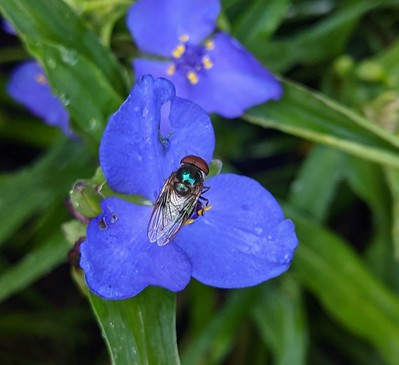
Bromeliad fly (Copestylum) on spiderwort (Tradescantia)

Hello,


This month is another grab bag: one paper on equity in fire management, two on biodiversity data, one asking how much conservation has helped species, and one pretty bad one on how ag practices impact nutrients.

If you know someone who wants to sign up to receive these summaries, they can do so at http://bit.ly/sciencejon (no need to email me).

FIRE MANAGEMENT:
Anderson et al. 2020 found that rich white communities who had a fire nearby tend to get additional prescribed fire (even when not needed). This is partly due to their ability to self-advocate at relevant planning meetings. It raises equity and social justice concerns about how we could instead base fire management on factors like social and/or ecological vulnerability. As context, here is a map showing how wildfire risk varies across the U.S.: https://www.nytimes.com/interactive/2022/05/16/climate/wildfire-risk-map-properties.html


BIODIVERSITY DATA:
Saran et al. 2022 has a good overview of biodiversity information portals, 16 global (Table 1) and 5 country-specific (from Australia, Canada, India, and the U.S., Table 2). It's a great complement to Nicholson et al. 2021 (an overview of ecosystem indicators) by providing actual data sources and some info about what each portal includes. The paper certainly isn't "comprehensive" as the title advertises, but it's a great start and I learned about some new useful resources by reading it.

Before threatened species can get protection, they need to be assessed to document how vulnerable they are. But there is a substantial backlog of species waiting to be assessed. Levin et al. 2022 offers a fairly simple (but ultimately unsuccessful) way to re-prioritize unassessed species for the IUCN red list to allow a better chance of assessing the ones that are in trouble so they can get protection. They use a rapid estimate of "extent of occurrence" (the species' range and spatial distribution of threats) as a proxy for vulnerability. At first it's exciting to see that it was 92% accurate at identifying which species were of the Least Concern (showing potential to flag species not worth assessing). But two questions are more relevant (and Fig 1 has the answers): what % of vulnerable species does it correctly recommend assessing (40%) and what % of recommendations for assessment are for species that are actually vulnerable (23%). The discussion has interesting notes on some of the aspects that confused the model (like 5 ash app threatened by Emerald Ash Borer and the American Chestnut threatened by blight) - widespread spp. hit hard by invasives are challenging to accurately assess using simple approaches like this. Hopefully the next iteration of the tool will be more successful, if they could substantially reduce false negatives for vulnerable species it could provide assessment priorities directly, or if they could substantially reduce false positives for vulnerable species it could help by indicating species that likely shouldn't be assessed.


CONSERVATION IMPACT:
Jellesmark et al. 2022 is a global (see Fig 1 map) preprint looking at how conservation has impacted targeted vertebrate species (by comparing pairs of populations targeted for conservation with those in the same country that did not receive conservation attention). I honestly don't know enough about the underlying data source (Living Planet Database) to speak to the reliability of their results (I'll wait for peer review for that, there is at least one very important typo where they use "invertebrate" when they clearly mean "vertebrate"). They found that population size of assessed vertebrates dropped 24% over 46 years, but estimate that without conservation it would have dropped 32% (and this likely underestimates the impact of conservation). They split out conservation actions into 7 groups (land/water protection, land/water mgmt, species mgmt, education/awareness, law/policy, livelihoods/incentives, and external capacity building), and capacity building followed by the first three showed the strongest results (Fig 5).


SUSTAINABLE AGRICULTURE:
Montgomery et al. 2022 asks how nutrients from ‘regenerative’ farms (that use no-till, crop  rotations, and cover crops) differ from other farms, but I wouldn't recommend it. This paper is pretty weak methodologically, results were inappropriately highlighted and over-interpreted, and the results I initially planned to write about didn’t hold up when I looked at raw data. Some key caveats: it is a very small sample size, 4/5 authors have financial interests the paper furthers, only one author appears to be a scientist (a geomorphologist), and the methods are thin and read like they may have gone looking for pairs of farms that would support the desired narrative (plus they used a very rough method to measure organic matter). At first I thought the most interesting / meaningful results are for cabbage: 10 assessed nutrients were substantially higher on regenerative farms, compared to 4 that were the same, 4 that were substantially lower, and 3 not assessed. But when you dive in, that 70% difference in vitamin E is from 0.004 to 0.007 mg/100g (essentially nil). Ditto with wheat results, 50% more calcium than “almost none” is still almost none. The animal results are hard to interpret because they don’t provide enough detail on differences between ‘regenerative’ vs. ‘conventional’ (although findings that grass-finished beef have more nutrient content have been reported in other lit, in alignment w/ results here). Some results look more meaningful (20% more vitamin C in cabbage is worthwhile) but there is such variation in the soil organic matter and soil health across the farms it’s really hard to know what is significant and what is accidental. One last note - 'regenerative' here almost certainly means 'genetically modified’ for most crops, since it’s hard to do no-till without them.


REFERENCES:

Anderson, S., Plantinga, A., & Wibbenmeyer, M. (2020). Inequality in Agency Responsiveness: Evidence from Salient Wildfire Events (Issue December). https://www.rff.org/publications/working-papers/inequality-agency-responsiveness-evidence-salient-wildfire-events/

Jellesmark, S., Blackburn, T. M., Dove, S., Geldmann, J., Visconti, P., Gregory, R. D., McRae, L., & Hoffmann, M. (2022). Assessing the global impact of targeted conservation actions on species abundance. BioRxiv, 2022.01.14.476374. https://doi.org/10.1101/2022.01.14.476374

Levin, M. O., Meek, J. B., Boom, B., Kross, S. M., & Eskew, E. A. (2022). Using publicly available data to conduct rapid assessments of extinction risk. Conservation Science and Practice, November 2020, 1–9. https://doi.org/10.1111/csp2.12628

Montgomery, D. R., Biklé, A., Archuleta, R., Brown, P., & Jordan, J. (2022). Soil health and nutrient density: preliminary comparison of regenerative and conventional farming. PeerJ, 10, e12848. https://doi.org/10.7717/peerj.12848

Saran, S., Chaudhary, S. K., Singh, P., Tiwari, A., & Kumar, V. (2022). A comprehensive review on biodiversity information portals. Biodiversity and Conservation, 0123456789. https://doi.org/10.1007/s10531-022-02420-x

Sincerely,
 
Jon
 
p.s. This photo is of what I think is a bromeliad fly (Copestylum) on a Tradescantia flower in my garden. First time I have seen one!

Monday, November 11, 2019

Soil carbon - what is it good for?

A while back I was on a soil carbon working group with the Science for Nature and People Partnership (SNAPP). Our recent journal article is about soil carbon and soil health. It’s a good read, and only 1,800 words: https://www.nature.com/articles/s41893-019-0431-y or https://rdcu.be/bWGfa if you don't have access.

Pondering soil health

The lead author did a phenomenal job getting the text to be clear and succinct, and the opening two lines actually sum it up very well:
"Soil-based initiatives to mitigate climate change and restore soil fertility both rely on rebuilding soil organic carbon. Controversy about the role soils might play in climate change mitigation is, consequently, undermining actions to restore soils for improved agricultural and environmental outcomes."

In other words: scientists disagree about how effective soil carbon is as a climate change mitigation strategy. We disagree a lot - more than you'd expect. Everything from "this is our best bet to start scaling up now" to "building soil carbon will not result in any net climate mitigation." So we argue about it a lot.

But that debate hides the fact that we generally strongly agree that rebuilding soil carbon is good for farmers and ranchers. Most agricultural soils have lost carbon over time. Regaining it can mean less erosion, better water retention, and better crop resilience to stress. With good management it can even mean less fertilizer use and cleaner water. How much carbon is ideal in different landscapes, and how to best increase it, varies. But it's worth remembering how strong the consensus is on the value of building soil carbon from an agricultural perspective.

Read the paper here: Soil carbon science for policy and practice
There's also a press release here: Building A ‘Solution Space’ for Soil

Thursday, November 1, 2018

November 2018 science journal article summary

Hi there,

Here are some mixed articles focused on general conservation, global agriculture, no-till farming, and remote sensing. Let me know if you need a copy of any of them. If you know someone who wants to sign up to receive these summaries, they can do so at http://eepurl.com/diB0nr

Also for anyone attending TNC's Global Science Gathering in Houston - let me know if you'd like to join for a side meeting for scientists working on sustainable agriculture.

CONSERVATION (GENERAL):
For over a year now, TNC staff have been hearing about a science analysis asking whether it's possible for both people and nature to thrive (in a shared conservation vision). Tallis et al 2018 is the newly available science paper behind that analysis. It compares two 2050 global scenarios: business as usual (BAU), and one designed to improve human and environmental outcomes (Sustainability). The latter would result in 577 million ha more habitat than BAU, while limiting climate change, improving air quality, and more. It doesn't assume we can drastically change diets, and sticks with biophysical constraints, but it does recognize that there are major social, economic, and political barriers to making the sustainability scenario a reality. The discussion has several thoughtful limits and caveats, but it's still exciting to see what is at least possible, if not easy to achieve. You will have to read the supplemental material to get a good sense of the work, but the main paper is conveniently short. One final note is that they assume climate change won't impact ag much in either scenario, which is optimistic. You can read all about the paper and its findings here: https://www.nature.org/en-us/what-we-do/our-insights/perspectives/the-science-of-sustainability/?vu=r.v_twopaths

The Nature Conservancy has recently shifted priorities away from land protection in general, to focusing on larger areas (to reduce fragmentation and improve resilience). Armsworth et al. 2018 asks how that focus affects the ecological return on investment (ROI). They found that larger areas are the most efficient way to improve connectivity and reduce fragmentation, offering 2-3 times the ecological return compared to small sites (TNC can buy properties that are 10x the size for just 5x the cost). However, smaller areas offer 5-8 times the ecological ROI for the number of species protected. Optimizing for species persistence rather than simply presence again favors larger areas (although the authors caution that this finding may be an artefact). These findings aren't surprising, but they are an important reminder that protecting some small areas will likely be important to protect endemic species.

GLOBAL AGRICULTURE:
Springman et al. 2018 asks what it would take to sharply reduce the impact of global food production by 2050 (and stay within resource constraints) without simply offsetting impacts like GHGs through reforestation or other mitigation. They look at 3 options (diet change, tech and management, and  reducing food waste) across 5 aspects: GHGs, fresh water use, land use, nitrogen, and phosphorous. They key finding is that no one category of solution is enough, and that for GHGs in particular major diet change (towards mostly plant based foods) would have to be part of the solution. Figure 3 summarizes this set of scenarios nicely. With their medium ambition scenario, they find halving food loss and waste improves impact 6-16% (relative to 2050), improving tech and management reduces impact 3-30%, and modest diet change improves 5-29% (see Figure 2), or they could all be combined for a 25-45% reduction. Note that their findings are global averages, and some places will deviate considerably (e.g. they find nuts and seeds don't account for much overall water use, but in places like California they have a big water footprint). Check the methods for country-level data. You can read two articles about this study here: https://www.washingtonpost.com/health/2018/10/10/how-will-or-billion-people-eat-without-destroying-environment/ and here: https://www.theguardian.com/environment/2018/oct/10/huge-reduction-in-meat-eating-essential-to-avoid-climate-breakdown

Pretty et al. 2018 has good news - they show improvements in global implementation of several forms of sustainable agricultural practices. They focus on practices that they see as representing "redesign" of agriculture as part of sustainable intensification or "SI" (offering yield and environmental benefits). This includes integrated pest management (IPM), conservation agriculture / soil health practices, and several others. They find some form of "SI" practices on 29% of global farms covering 9% of global agricultural land (crop and pasture). This shows progress is being made (although much remains to do). However, one caveat is not apparent in the paper: they define these practices as inherently intensifying or yield-promoting, but do NOT filter on farms where actual increases in yield have been measured. That's important as each of these practices has the potential to boost or reduce yield depending on how it's implemented, so it's unlikely that all of these farms actually represent true sustainable intensification. The lead author told me in a message that in developing nations would always be "win-win," and in more industrialized countries environmental benefits improved but yields could go up or down or stay the same.

Williams et al. 2018 is another paper on the land sparing vs. land sharing debate, focusing on carbon stocks. They use a mix of interviews and field data to model relationships between agricultural yield and above ground carbon, and then do a bit of modeling. They found that as crop yields go up, above ground carbon goes down (as expected). Nonetheless, across the landscapes they looked at, land sparing led to the most C stocks compared to land sharing or intermediate strategies. There are a few caveats which they helpfully admit to. First, results could vary for other environmental outcomes like water quality. They didn't look at social impacts (from either farms or ecosystem services from habitat). They don't look at methane or nitrous oxide, so for intense systems with inefficient fertilizer use the C benefit would be reduced. Finally, land sparing will not happen on its own - making farms more profitable gives them incentive to clear more habitat unless there are countervailing factors (e.g. zoning, taxes or penalties for clearing, incentives, etc.). You can read a blog about this one at https://www.npr.org/sections/thesalt/2018/08/03/634344754/which-vision-of-farming-is-better-for-the-planet

AGRICULTURE / NO-TILL:
Two recent papers (both Daryanto et al. 2017) find that no-till (NT) farming can increase the loss of nutrients under some conditions. They found that NT often increases loss of nitrate (NO3-) - generally there is similar or less runoff, but more leaching. But results vary across soil textures, climate, and crop management.

For phosphorous (P), overall NT led to lower nutrients ending up in aquatic ecosystems, and less  particulate P export (except during wet years). But it increased dissolved P loss. There are lots of caveats and conditions on the results (e.g. no-till most effectively reduced particulate P from 0-3% slope, but on 4-9% slopes it actually increased P load), so it's worth reading the papers in full. A key finding of both papers is that NT has to be combined with other practices to be effective in reducing nutrient loss, that it doesn't work as well in dryland regions, and that NT benefits decrease over time so they  recommend occasional tillage (once every ~10 years) despite likely tradeoffs in soil carbon. TNC’s Carrie Vollmer-Sanders has seen similar results for P. She recommends a focus on fertilizer placement (subsurface when possible), periodic tillage (every ~10 years), and strip tillage when it’s dry enough. There's a paper about the P results here: https://www.cornandsoybeandigest.com/fertilizer/no-till-benefits-challenged

REMOTE SENSING:
Seifert et al. 2018 has two parts: a remote sensing method to detect cover crops, and an analysis of their impact on crop yields. For remote sensing, "accuracy" is complicated but their method correctly identified whether or not cover crops were present 92% of the time, which is 68% better than expected by chance alone. They relied on readily available data, so this method should be applicable elsewhere. The second piece is that they found cover crops are grown on poor performing field (presumably in an effort to improve soils as they tended to be on poor soils). After a year of cover cropping corn yields went up on average by 0.65%, and soy by 0.35%, but read the results on p6 as there's a lot of variation (from long term cover crops reducing yields, or only improving after several years, etc., varying by state and crop). Hopefully making it easier to detect cover crops will improve our ability to understand their impacts.

If you've ever done remote sensing work in the tropics, you've noticed that you often want imagery when plants are growing, aka the rainy season when clouds limit available imagery. Pedraza et al. 2018 (from several TNC colleagues and their partners) uses radar data (ALOS PALSAR, which can see through clouds) to look for farm-level deforestation in Colombia. It worked reasonably well, mostly between 62% and 100% accurate: see table 4, focusing on user and producer accuracy as overally accuracy is skewed by the high proportion of nonforest. They found that accuracy was lower in dry forests and mountainous terrain, although they improved it by integrating some optical data. It's a useful paper for anyone looking at integrating radar data for tropical remote sensing.

REFERENCES:
Armsworth, P. R., Jackson, H. B., Cho, S. H., Clark, M., Fargione, J. E., Iacona, G. D., … Sutton, N. A. (2018). Is conservation right to go big? Protected area size and conservation return-on-investment. Biological Conservation, 225(November 2017), 229–236. https://doi.org/10.1016/j.biocon.2018.07.005

Daryanto, S., Wang, L., & Jacinthe, P.-A. (2017). Impacts of no-tillage management on nitrate loss from corn, soybean and wheat cultivation: A meta-analysis. Scientific Reports, 7(1), 12117. https://doi.org/10.1038/s41598-017-12383-7

Daryanto, S., Wang, L., & Jacinthe, P. A. (2017). Meta-analysis of phosphorus loss from no-till soils. Journal of Environmental Quality, 46(5), 1028–1037. https://doi.org/10.2134/jeq2017.03.0121

Pedraza, C., Clerici, N., Forero, C., Melo, A., Navarrete, D., Lizcano, D., … Galindo, G. (2018). Zero Deforestation Agreement Assessment at Farm Level in Colombia Using ALOS PALSAR. Remote Sensing, 10(9), 1464. https://doi.org/10.3390/rs10091464

Pretty, J., Benton, T. G., Bharucha, Z. P., Dicks, L. V, Flora, C. B., Godfray, H. C. J., … Wratten, S. (2018). Global assessment of agricultural system redesign for sustainable intensification. Nature Sustainability, 1(8), 441–446. https://doi.org/10.1038/s41893-018-0114-0

Seifert, C. A., Azzari, G., & Lobell, D. B. (2018). Satellite detection of cover crops and their effects on crop yield in the Midwestern United States. Environmental Research Letters, 13(6). https://doi.org/10.1088/1748-9326/aac4c8

Springmann, M., Clark, M., Mason-D’Croz, D., Wiebe, K., Bodirsky, B. L., Lassaletta, L., … Willett, W. (2018). Options for keeping the food system within environmental limits. Nature. https://doi.org/10.1038/s41586-018-0594-0

Tallis, H. M., Hawthorne, P. L., Polasky, S., Reid, J., Beck, M. W., Brauman, K., … McPeek, B. (2018). An attainable global vision for conservation and human well-being. Frontiers in Ecology and the Environment, 1–8. https://doi.org/10.1002/fee.1965

Williams, D. R., Phalan, B., Feniuk, C., Green, R. E., Williams, D. R., Phalan, B., … Balmford, A. (2018). Carbon Storage and Land-Use Strategies in Agricultural Landscapes across Three Continents. Current Biology, 28(15), 2500–2505. https://doi.org/10.1016/j.cub.2018.05.087


Sincerely,

Jon

p.s. as a reminder, you can search all of the science articles written by TNC staff (that we know of) here http://www.conservationgateway.org/ConservationPlanning/ToolsData/sitepages/article-list.aspx
(as you publish please email science_pubs@tnc.org to help keep this resource current).
If you'd like to keep track of what I write as well as what I read, I always link to both my informal blog posts and my formal publications (plus these summaries) at http://sciencejon.blogspot.com/

Thursday, June 4, 2015

Are unsustainable agriculture practices contributing to ALS and Alzheimer's?

I've always been told that no one knows what potential causes exist for ALS (amyotrophic lateral sclerosis, AKA Lou Gehrig's Disease) or Alzheimer's disease (with the exception of a relatively rare genetic form of ALS). So the idea that there is at least a plausible hypothesis as to what may be behind these terrible diseases caught my interest when I watched Dr. Michael Greger's excellent review of the issue in these two videos:
http://nutritionfacts.org/video/als-lou-gehrigs-disease-fishing-for-answers/
http://nutritionfacts.org/video/diet-and-amyotrophic-lateral-sclerosis-als/

He does an excellent job telling the story of how the research has progressed and the evidence started coming together, and reviews quite a few more articles than I do here. But I wanted to produce a short written summary for those who don't like videos, and to highlight where I think the data is relatively strong and weak.

Since my professional research focuses primarily on sustainable agriculture, my mother died from ALS, and my grandfather died from Alzheimer's, I have a strong interest in how these topics might intersect. That also means I likely lack the objectivity needed to review this from a completely neutral perspective, but I think the data paint a compelling picture that merits further study.

The basic hypothesis here is that BMAA (β-N-methylamino-L-alanine, a toxin created by cyanobacteria, AKA blue-green algae) forms when algae thrive (often due to excessive nutrient runoff from agriculture), accumulates in seafood, and can cause neurological damage including ALS, Alzheimer's, Parkinson's disease, and similar symptoms. Note that concern over microcystin, which is another toxin produced by cyanobacteria, led to the residents of Toledo being unable to drink their tap water for 48 hours in August of 2014.

Let's take a look at each of the steps in that theory.


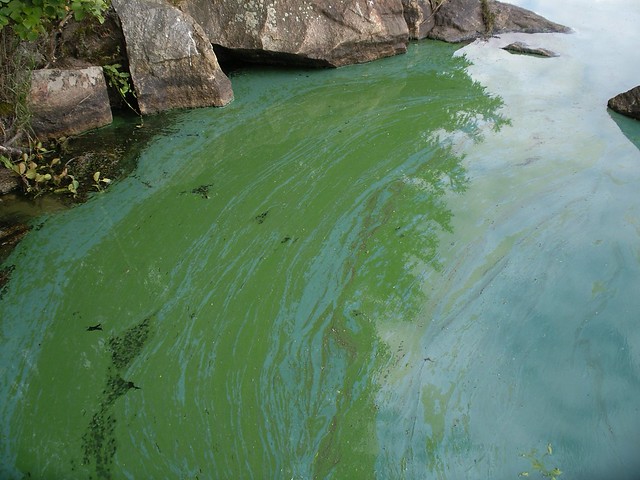
Cyanobacteria in Lake Littoistenjärvi
Cyanobacteria in Lake Littoistenjärvi, Flickr user Stefe

First, there is strong evidence that consumption of high levels of BMAA is associated with ALS / Alzheimer's. The classic case is in Guam, where incidence of ALS, Alzheimer's, and Parkinson's (referred to collectively as ALS-parkinsonism-dementia complex or ALS-PDC) was abnormally high among the Chamarro people there. These people eat flying foxes (a kind of bat), which in turn eat cycad seeds which are high in BMAA, and the BMAA accumulates in flying fox flesh at levels around 3,500 ug of BMAA per g of flesh (Cox et al. 2003). When you feed BMAA to macaques, they develop similar symptoms (Spencer et al. 1987), and BMAA was detected in brains of people in who died from ALS / Alzheimer's but not in brains of people who died of other causes (Cox et al. 2003, Pablo et al. 2009).

In addition to directly showing high levels of BMAA in the diet and presence of BMAA in brain tissue of symptomatic patients, there is some additional weaker correlative evidence. Torbick et al. 2014 found a correlation between hotspots of ALS and proximity to lakes with high nitrogen and turbidity. This may sound like a stretch, but there is solid evidence showing how nutrient and sediment runoff from agriculture leads to eutrophication and algal blooms in lakes and streams (in addition to hypoxia in the Gulf of Mexico), and since BMAA is produced by blue-green algae this is at least interesting data. Another very small study (Field et al. 2013) looked at three patients who lived on the same short street and all developed ALS (raising the possibility of an environmental trigger given the rarity of ALS). In looking for common factors, they found that all three patients consumed Chesapeake blue crab on a weekly basis, and they verified that these blue crabs had BMAA. However, the levels found (0-115 ug/g in the claws) were significantly lower than in the flying foxes, and some of the BMAA leaches into cooking water meaning the absorbed dose should be lower unless the broth is consumed.

This raises the question of how common seafood with potentially dangerous levels of BMAA is, and the evidence is mixed. On the one hand, Brand et al. 2010 measured BMAA concentrations in several types of seafood in S Florida and found high levels (up to 7,351 ug/g) in some samples of some species (with other samples having lower values or none). They found the highest levels in blue crab, pink shrimp, and one sample of pufferfish), and indeed those levels were higher than that of the flying foxes in Guam. On the other hand, Jiang et al. found BMAA at levels less than 1 ug/g in locally-caught Swedish seafood (although they did find detectable levels in about half of tested samples), and review the results and methods of a few other studies where BMAA levels were much lower than those found by Brand et al. This is an area where we really need more research; both measuring levels of BMAA in seafood, and determining how those concentrations relate to an increased risk of disease.

Finally we have the question of to what degree algal blooms are really associated with BMAA. Scott et al. (2014) found that 70% of the cyanobacteria blooms they sampled had BMAA (compared to 50% with microcystin). Apparently BMAA is produced more under low-nitrogen conditions, while microcystin is produced more under high-N conditions, but interestingly large algal blooms allow both to form simultaneously due to nutrient gradients within the bloom. Again we need more study to determine what drives BMAA production in the first place, and what nutrient levels we should aspire to achieve.

This leads to an alarming possibility: in addition to the potential risk from seafood, the fact that drinking water is generally not tested for BMAA and BMAA can occur even when microcystin levels (which are tested more frequently) are low means we could be missing a risk factor for some serious diseases.

So what are the implications of all this? First, there is enough evidence to raise concerns that consumption of BMAA could be a contributing factor to developing ALS and Alzheimer's disease. Second, while the wide variation in measured levels of BMAA in seafood means more study is needed, the fact that Brand et al. found some levels comparable to the infamous flying foxes in Guam should be motivation to look seriously at this. Third, since eutrophic waters are associated with BMAA production (and thus perhaps with ALS as indicated in the Torbick study), this is one more reason to work on improving agricultural practices to reduce nutrient and sediment runoff.

There are many promising possibilities to reduce nutrient runoff (precision agriculture, riparian buffers and wetlands, changes in cropping systems, changes in irrigation and drainage, and more) and the research is clear that we need different approaches in different contexts. If evidence continues to grow about the link between the way we grow our food and the incidence of ALS and Alzheimer's disease, so will our motivation to take swift and effective action to solve our nutrient runoff problem. Hopefully farmers, conservationists, and health professionals can come together to make that happen.

UPDATE: A more recent paper (Chernoff et al. 2017) has come out which concluded that there was NOT good evidence that BMAA leads to neurological diseases in humans. See https://www.tandfonline.com/doi/abs/10.1080/10937404.2017.1297592 for more detail


Brand, L. E., Pablo, J., Compton, A., Hammerschlag, N., & Mash, D. C. (2010). Cyanobacterial blooms and the occurrence of the neurotoxin, beta-N-methylamino-l-alanine (BMAA), in South Florida aquatic food webs. Harmful Algae, 9(6), 620–635. doi:10.1016/j.hal.2010.05.002

Chernoff, N., Hill, D. J., Diggs, D. L., Faison, B. D., Francis, B. M., Lang, J. R., ... & Schmid, J. E. (2017). A critical review of the postulated role of the non-essential amino acid, β-N-methylamino-L-alanine, in neurodegenerative disease in humans. Journal of Toxicology and Environmental Health, Part B, 20(4), 183-229.

Cox, P. A., Banack, S. A., & Murch, S. J. (2003). Biomagnification of cyanobacterial neurotoxins and neurodegenerative disease among the Chamorro people of Guam. Proceedings of the National Academy of Sciences of the United States of America, 100(23), 13380–13383. doi:10.1073/pnas.2235808100

Pablo, J., Banack, S. A., Cox, P. A., Johnson, T. E., Papapetropoulos, S., Bradley, W. G., … Mash, D. C. (2009). Cyanobacterial neurotoxin BMAA in ALS and Alzheimer’s disease. Acta Neurologica Scandinavica, 120(4), 216–25. doi:10.1111/j.1600-0404.2008.01150.x

Scott, L. L., Downing, S., Phelan, R. R., & Downing, T. G. (2014). Environmental modulation of microcystin and β-N-methylamino-l-alanine as a function of nitrogen availability. Toxicon, 87, 1–5. doi:10.1016/j.toxicon.2014.05.001

Spencer, P., Nunn, P., Hugon, J., Ludolph, A., Ross, S., Roy, D., & Robertson, R. (1987). Guam amyotrophic lateral sclerosis-parkinsonism-dementia linked to a plant excitant neurotoxin. Science, 237(4814), 517–522. doi:10.1126/science.3603037

Torbick, N., Hession, S., Stommel, E., & Caller, T. (2014). Mapping amyotrophic lateral sclerosis lake risk factors across northern New England Mapping amyotrophic lateral sclerosis lake risk factors across northern New England.