Showing posts with label climate adaptation. Show all posts

Tuesday, September 1, 2026

September 2026 Science Summary

Camelbak full of ice in backpack

 Greetings,


I've got four new articles this week. I continue to play with using AI to help me spot weak spots and interesting aspects of papers I review (after my initial review to avoid bias).

If you know someone who wants to sign up to receive these summaries, they can do so at http://subscribe.sciencejon.com (no need to email me).


WILDLIFE MIGRATION & CROSSINGS:

I didn't properly review Williamson et al. 2024. But had to share my delight at learning that there are "giant" hummingbirds in Chile which were documented migrating in a loop up to 8,335km long! Also to quote the paper, the migration "included a 3-wk, ~4,100-m ascent punctuated by upward bursts and pauses, resembling the acclimatization routines of human mountain climbers, and accompanied by surging blood-hemoglobin concentrations". Also they are big for a hummingbird, but still weighing only up to 31g (~2.5 strawberries).

Abra et al. 2026 conducted a BACI study on the impact of wildlife crossings under the BR-262 highway between Anastacio and Corumba in the Brazilian Pantanal. They found that underpasses combined w/ fencing reduced caiman mortality but not mortality of capybara or crab-eating fox, likely b/c of gaps in the fencing due to poor maintenance. They also found evidence of both a) a wide array of species using the underpasses (even though we know from research elsewhere that some species prefer overpasses) and b) of roadkill impacting some key species like giant anteater and jaguarundi.


WATER MANAGEMENT:

Wight et al. 2026 looks at how well capping water use works across 47 cases around the world (but ~1/2 in the US). They find that enforcement is of course critical (which in turn requires water users to all have permits and be regulated and monitored), so is adaptability (changing extraction in response to water levels every few years). 89% of cases with the best performance had a top score for enforcement, but the reverse doesn't hold true and they provide several examples of enforcement of an insufficient cap w/o adaptability failed (e.g., the Colorado River basin). Note that there are many kinds of caps and some cases used multiple options at once. Barriers include lack of water management staff and monitoring data, lack of support from water users (issues around trust, control, and livelihoods), and lack of authority for enforcement. They recommend clarity and transparency about the problem, the cap, and how it would work (including monitoring and defining success vs. failure), as well as trying to co-create a solution to get buy-in from water users (since everyone loses if supply continues to dwindle). See a related blog about a relatively simple water management framework https://www.sustainablewaters.org/a-simple-yet-powerful-fram...


CLIMATE ADAPTATION:

Vitorino et al. 2026 interviewed Pantaneiros (broadly, including fishers and farmers, not just ranchers) in 2012 and 2024 to see how perceptions had changed (although they didn't interview the same households). By 2024 almost everyone had noticed changes in temperature (substantially higher) and rain (slightly lower, although streamflow from upstream is also declining according to other papers). 90% reported adapting their practices in response. But some of those adaptations might be bad ideas - like reducing the number of crop species planted to a few that are easier to grow makes farming simpler but can potentially increase risk of crop failure vs. diverse farms. Also, moving closer to rivers could create higher flood risk in wetter years even though the overall trend is getting drier.


REFERENCES:
Abra, F. D., Goebel, L. G. A., Desbiez, A., Yogui, R., Costa, R., Laps, R. R., Ribeiro, Y. G. G., Guilherme, L., Mello, R. De, Cunha, L., Ascens, F., Pino, E. G. R. Del, Guazi, P. A. P. M., Ascenç, S. R. S., Nogueira, A. C., Oliveira, J. C. L. De, Barros, D. S., Varanis, E. N., Gregory, T., … Prist, P. R. (2026). From roadkill monitoring to evidence-based wildlife mitigation in the Brazilian Pantanal. 70. https://doi.org/10.1016/j.gecco.2026.e04347

Vitorino, B. D., da Frota, A. V. B., Arruda, M. A. do N., Vacchiano, M. C., Nunes, J. R. da S., & da Silva, C. J. (2026). Effects of climate change: an overview of perceptions, vulnerabilities and adaptations in the northern Pantanal wetland integrated with long-term climate data. Climatic Change, 179(8), 173. https://doi.org/10.1007/s10584-026-04268-4

Wight, C., Richter, B. D., Ayala, G., Blevins, L., Carter, K., Carter, S., Coughlin, B., Delzell, S., Diment, L., Fabiano, A., Farrell, C., Hanway, S., Heitmeyer, E., Herock, E., Jackman, S., Jenkins, R., Kelley, C., McNichols, A., Novak, D., … Yohannes, E. (2025). Taking stock of caps on water use: fostering sustainability or falling short? Water Policy, 27(1), 17–39. https://doi.org/10.2166/wp.2024.071

Williamson, J. L., Gyllenhaal, E. F., Bauernfeind, S. M., Bautista, E., Baumann, M. J., Gadek, C. R., Marra, P. P., Ricote, N., Valqui, T., Bozinovic, F., Singh, N. D., & Witt, C. C. (2024). Extreme elevational migration spurred cryptic speciation in giant hummingbirds. Proceedings of the National Academy of Sciences, 121(21), 2017. https://doi.org/10.1073/pnas.2313599121

Sincerely,

Jon


P.s. The picture above shows a trick I used to stay cool when biking in hot weather. It's a backpack with a mesh back and space for air to flow when riding, and I sometimes put a camelbak full of ice water in it so it feels kind of like air conditioning when I ride. Last time I did this the heat index was 113 but it didn't feel too unpleasant. Please be cautious if trying this out though - the risks of heat stress are real!


Monday, August 3, 2026

August 2026 Science Summary

Purple ipê trees


Hi all,

As always - If you know someone who wants to sign up to receive these summaries, they can do so at http://subscribe.sciencejon.com (no need to email me).

In addition to a handful of science papers below, check out this fascinating but scary article about a recently discovered contagious form of cancer in catfish (New York Times article: https://www.nytimes.com/2026/07/22/science/contagious-cancer... Nature article: https://www.nature.com/articles/s41586-026-10828-6).


AI TAKE ON A PAPER ABOUT WILDLIFE RESPONSE TO PEOPLE, PART 2

My July 2026 summary asked 3 AI tools (native Claude, Copilot using ChatGPT, and Elicit) for key points of a paper I summarized which were not obvious in the abstract. This month I got access to one more science AI tool (LeapSpace). Here's what it had to say:
"Three non-obvious points from the full paper are: (1) the species-level effects were often interactive, with human presence influencing wildlife more strongly in less modified habitats; (2) the authors could separate individual behavioral plasticity from species composition effects by comparing the same animals across 2019 and 2020; and (3) the paper’s applicability is narrower than the headline result suggests because it relies on GPS-tracked mammals and birds plus human-mobility data that are not broadly accessible and are often too coarse for fine-scale behavior"
JF note
:
the first point above is clearly stated in the abstract (boo), the third point is true but was stated more clearly by elicit (which broke it into two separate points), but the second point is a good one that all three other tools missed (although I included it in my own summary).
Another JF note
: I just started experimenting with a Copilot agent to read a science paper and produce "warning labels" where it identifies a potential problem meriting human review, including a conflict between the abstract / results / discussion (or between text, tables, and figures), what appears to be inappropriate generalization of the findings, and many more. If anyone is keen to collaborate on this email me and we can exchange ideas on the instructions and see if we can come up with something good enough to be useful.


GOOD NEWS ON MANGROVES:

Zhang et al. 2026 brings a bit of welcome good news: from 2010-2023 mangroves expanded on net! This means mangrove conversion and thinning / degradation have recently have been more than offset by regeneration and expanion into the sea. They found that relative to 1984, by 2010 2% of global mangroves had been lost, but that 1984-2023 showed a net loss of just 850 km2 (although with substantial uncertainty). On the other hand, replacing old mangroves with new can still result in the loss of carbon and biodiversity, and regional or local losses. So the net gain since 2010 is good news, but also hides 6,275 km2 of gross losses to mangroves since 2010. Note that 1984-2010 is twice as much time as 2010-2013, so to get loss and gain rates be sure to convert everything to change per year.


CLIMATE ADAPTATION:

Nippert et al. 2026 argues that grassland managers should stop using binary thinking and trying to fight all woody encroachment (which is not feasible anymore). Instead they recommend a shift to thinking about how to manage grasslands for biodiversity and productivity within what is realistic, ideally before woody encroachment becomes established. For a variety of reasons, fully reversing the encroachment of shrubs can be really hard or even impossible (especially for clonal species that resprout well and/or recolonize quickly). But shifting the composition and extent of encroachment is more feasible. They suggest using the RAD (resist, accept, direct) framework, and recognizing that a resist strategy may be too expensive in some cases (see Fig 3 for alternative options to consider). A focus on biodiversity, structural complexity, and feasibility of different management options (often using a mix of fire, grazing, and cutting, including herbicide in some cases) can help managers identify the best management options for their context. Thanks to Chris Helzer (one of the co-authors) for sending this my way, it sounds like it's spurred a lot of tough but important conversations.

de Castro Borba et al. 2026 looked at the vulnerability of the beautiful ipê trees (see above) to climate change, and found that:
1. The Pantanal is currently more suitable for purple ipê than yellow (Fig 2)
2. Under the most likely climate scenario (SSP2-4.5), the Pantanal will be much less suitable for purple ipê even by 2041-2060 (Fig 3, upper left panel, ignore the bottom 3 which won’t happen). As that happens, they predict that as it dies back and become spread out farther, it will be less connected and those lose access to relatively tolerant genes.
3. Yellow ipê will be roughly equally suitable (Fig 4, upper left panel) – some places a little better and some a little worse.
They didn’t look at corridors and seem pretty negative on the potential for purple ipê to adapt in the Pantanal.


FIRE MANAGEMENT:

Nunes et al. 2026 interviewed ranchers and traditional communities (mostly riverside fishers) spread all over the Pantanal about fire management during the 2019-2020 megafires. The finding that stuck out to me was that cattle ranchers are much more likely to report having handled fire management themselves (or w/ the help of neighbors) since they generally have more access to equipment and people w/ fire experience, while communities are more prone to report having asked for help from the government for fire management. Their multivariate model (table 2) didn't find significant differences from any variables other than social group (ranchers or traditional community members). But they ALSO note that based on observations during 2019-2020 fires, ranchers could be underreporting their reliance on government (wanting to emphasize their autonomy, and/or seeing government as negative despite potential support). Either way - collaboration and integrated fire management is likely to yield the best outcomes.


REFERENCES:

Curd, E. E., Hart, S. F. M., Lubkowitz, J., Tracy, K. M., Milazzo, L., Bodnar, M., Jones, T., Henderson, M. J., Emerson, P., & Dragon, J. A. (2026). Brown bullhead catfish melanoma represents a novel transmissible cancer. Nature, June 2025. https://doi.org/10.1038/s41586-026-10828-6

de Castro Borba, F., de Souza Bezerra, C., Souza Tomaz, J., Marques, M. J., Vieira Capucho, H. L., Freitas-de-Souza, S., Ferreyra-Ramos, S. L., Lopes, R., Salvino Gadelha de Meneses, C. H., & Gomes-Lopes, M. T. (2026). A modeling framework to assess climate vulnerability and future distributions of tropical tree species: a case study on Brazilian ipês. Bosque (Valdivia), 47, e4709. https://doi.org/10.4206/bosque.e4709

Nippert, J. B., Ahlering, M. A., Fuhlendorf, S. D., Helzer, C. J., McMillan, N. A., & Ratajczak, Z. (2026). Rethinking grassland management in the Great Plains during the era of woody plant encroachment. BioScience, 76(6), 554–562. https://doi.org/10.1093/biosci/biag033

Nunes, A. V., Chiaravalloti-Neto, F., Soresini, G., Lorenz, C., Semedo, T. B. F., Chiaravalloti, R. M., Libonati, R., Toma, T. S. P., Damasceno-Junior, G. A., Lucena, R. F. P., Tomas, W. M., Anderson, L. O., Magalhães, H. F., da Rosa Oliveira, M., Pereira, A. de M. M., Berlinck, C. N., Fernandes, G. W., & Roque, F. O. (2026). Institutional dependence and social inequalities as drivers of collaborative wildfire response networks in the Pantanal wetland. Journal of Pyrogeography, 100015. https://doi.org/10.1016/j.pyro.2026.100015

Zhang, Z., Murray, N. J., Song, X. P., Bunting, P., Worthington, T. A., Fatoyinbo, L., Mao, D., Jia, M., Arifanti, V. B., Aung, T., Htay, S. S., & Friess, D. A. (2026). Unexpected expansion and regrowth in Earth’s mangrove forests over the past four decades. Science, 392(6802), 1082–1087. https://doi.org/10.1126/science.aec9773

Sincerely,

Jon


P.s. The picture above is of a purple ipê tree as described in the paper by de Castro Borba et al. 2026


Wednesday, October 1, 2025

October 2025 Science Summary

Puppy party

Greetings,


I've got a mixed bag of four mostly unrelated science articles this month.

If you know someone who wants to sign up to receive these summaries, they can do so at http://subscribe.sciencejon.com (no need to email me).


CLIMATE CHANGE:
Chen et al. 2025 reviews the evidence (from 21 studies with at least 10 years of data) that climate change may cause 3 problems (see Fig 1): mountaintop species going extinct when conditions become too warm for them, species not able to move upslope as fast as conditions change, and bottomland diversity declining b/c no warm-tolerant species can replace areas abandoned by species moving upslope. Using a model they found that mountaintop extinctions are not happening more than expected w/o climate change, many species ARE moving upslope but rarely having range contract, and only limited homogenization of bottomland species. They note including moisture changes and nitrogen deposition could have changed the results, and more research is needed to figure out why these problems are occurring in limited cases.


FOREST CARBON:
Schnabel et al 2025 has experimental evidence that after 16 years, planted forests in Panama with a mix of 5 native species sequestered 57% more aboveground carbon than monocultures. Both treatments lost soil carbon relative to the pasture they started with (see section 4.3 for possible explanations) but still gained a net of 24.7 t C / ha (90.7 t CO2e/ha) due to the aboveground gains. See  https://news.mongabay.com/2025/04/diverse-forests-and-forest-rewilding-offer-resilience-against-climate-change/ for more.


DATA AND DEFORESTATION:
Roquette et al. 2025 is ostensibly about the technical details around land use mapping in Mato Grosso, Brazil. But it actually makes a much broader point: boring things like data sources and algorithms used can have an outsize backdoor policy impact. They argue that a shift in how land use was classified could sneakily allow a ton of deforestation. Basically by changing how "forest" is defined and reclassifying some forest as a type of savanna (confusingly, cerrado is an ecosystem but the Cerrado is a biome / region), this could allow deforestation since 80% of forest has to be set aside from development but only 35% of savanna does. In some cases the new map actually does the reverse (classifying what was savanna as forest) but that can be reversed upon request. The worst case scenario is that up to 4,1 million ha could be authorized for deforestation.


MINING AND TOXICITY:
Foerster et al. 2025 found that giant otters in the Pantanal are showing evidence of mercury contamination in the Pantanal – higher when they’re closer to gold mines (except for streams close to the mine over land but not connected by water). Their results aren’t conclusive but it seems likely that the values are high enough to be causing toxicity, and that otters aren’t able to flush out the mercury by molting their fur, nor by having selenium bind to the mercury. They measured mercury in fur rather than directly in the liver, but based on other research they think it’s likely levels are high enough in some animals to cause serious toxicity and perhaps even death. 


REFERENCES:
Chen, Y.-H., Lenoir, J., & Chen, I.-C. (2025). Limited evidence for range shift–driven extinction in mountain biota. Science, 388(6748), 741–747. https://doi.org/10.1126/science.adq9512

Foerster, N., Soresini, G., Leuchtenberger, C., Bócoli, D. de A., Paiva, J. de B., Brait, C. H. H., & Mourão, G. (2025). Pervasive mercury contamination of a semi-aquatic apex predator across the Pantanal wetland. Environmental Conservation, 1–6. https://doi.org/10.1017/S0376892925100155

Roquette, J. G., Vacchiano, M. C., Daher, F. R. G., & Finger, Z. (2025). Pseudo-legal deforestation due to changes in the classification of native vegetation in Mato Grosso, Brazil. Environmental Conservation, 1–7. https://doi.org/10.1017/S037689292510012X

Schnabel, F., Guillemot, J., Barry, K. E., Brunn, M., Cesarz, S., Eisenhauer, N., Gebauer, T., Guerrero‐Ramirez, N. R., Handa, I. T., Madsen, C., Mancilla, Lady, Monteza, J., Moore, T., Oelmann, Y., Scherer‐Lorenzen, M., Schwendenmann, L., Wagner, A., Wirth, C., & Potvin, C. (2025). Tree Diversity Increases Carbon Stocks and Fluxes Above—But Not Belowground in a Tropical Forest Experiment. Global Change Biology, 31(2). https://doi.org/10.1111/gcb.70089


Sincerely,
 
Jon
 
p.s. These four foster puppies were getting some wiggles out in my yard before a "puppy party" which raises money for an animal rescue (Homeward Trails) and helps them find homes

Tuesday, November 1, 2022

November 2022 science summary

Jack o' lantern w bloodshot eyes
Greetings,

Happy belated Halloween!

This month I have four articles on different facets of climate change (drought, ecological adaptation, and mitigation through peatlands), plus one big new global paper on the environmental impact of food.

If you know someone who wants to sign up to receive these summaries, they can do so at http://bit.ly/sciencejon


FOOD / AGRICULTURE:
Halpern et al. 2022 is the latest paper to try and compare the global environmental footprint of almost all foods (both aquatic and terrestrial), using greenhouse gases (GHGs but excluding land use change), "blue" water consumption (from irrigation), nutrient pollution (N&P, excluding crop N fixing), and land use. Note that blue water consumption excludes rainfall, and focuses on evaporation & transpiration as opposed to "water use" (the amount pumped out) much of which returns to surface and ground water. This lets us compare the impact of different foods, look at which foods have the most total impact (and thus offer the most opportunity to improve via changes in practice or biology), and see which countries have the most environmental impact from food (India, China, the U.S., Brazil, and Pakistan - see Figs 2, 3, and especially 4). Spend some time with Fig 4, it's dense and interesting. For example, you can see that India has slightly more total impact than China, but produces substantially less food by all 3 metrics (calories, protein, and mass). Most of the data here are similar to what we've seen before, but still interesting (e.g., U.S. soy is 2.4 times more efficient than Indian soy). Reporting "cumulative" impacts can be confusing - wheat and rice have similar total impact in Fig 5, but Fig 6 shows that rice is far more inefficient per tons of protein produced). Fig 5 and 6 would be useful in looking at which crops and livestock species to focus on improved genetics or practices to have the most impact. But if you want to know "what should I eat" this paper makes it really hard to find that (Fig 6 is closest, or look at Supplementary Data 3 for country-specific "total environmental pressure" data using the food key from Table S6). So for example they find goats have a higher impact than cows, and in the US soy is the most environmentally efficient source of protein while sugar beets are the most environmentally efficient source of calories.


CLIMATE CHANGE & DROUGHT:
Cook et al. 2015 estimates the likelihood of summer droughts (June through August) in the American Central Plains and Southwest between 2050 and 2100. Their findings are striking, even under the RCP 4.5 climate scenario (which they put in the supplement, focusing instead on the much less likely RCP 8.5 scenario). They predict the following chances of a decadal (11 year) or multidecadal (35 year) drought: decadal ~94% Central Plains and ~97% Southwest, multidecadal ~73%  Central Plains and ~80% for Southwest (see Fig S13 on the past page of the supplement). That's pretty scary, and they further note this is drier than even the historically dry period from the years 1100-1300. However, this is a lot more pessimistic than the IPCC (as the authors acknowledge), and I'm not qualified to go deep enough in the methods to weigh in as to how likely this is. But as we have already seen out West, droughts lasting multiple years have very different implications both for communities and agriculture. Tree crops will be increasingly untenable as the risk of multi-year droughts increase, and farmers may have to switch to very different crops to make it through these dry periods.


CLIMATE ADAPTATION (ECOLOGICAL):
Moore and Schindler 2022 is an opinion piece arguing that more diverse strategies are needed to help prepare ecosystems for climate change. They argue that conservation needs to adapt to shifting ecosystems and unpredictable futures by maintaining complexity, especially by promoting enhanced gene flow and facilitating the ability of habitat to shift to new places as climate changes. Given uncertainty in climate changes and ecosystem response, they argue that refugia may not be as robust as promoting climate corridors and habitat heterogeneity. Local conservation work to address current stresses and future threats is another important aspect of improving resilience: by working on known threats we can make ecosystems more able to withstand the unknown. Finally, as ecosystems and populations shift, resource management needs to adapt to these new realities rather than sticking to long-term plans.


PEATLANDS - CLIMATE MITIGATION:
Richardson et al. 2022 estimates the potential climate mitigation benefits of rewetting drained peatlands (specifically pocosin - a bog found in the SE US dominated by trees and/or shrubs). They measured water table depth, soil characteristics, dissolved organic carbon, and emissions of CO2 & methand & nitrous oxide at 5 sites (3 drained, 1 restored, 1 natural). The drained peatlands emitted a net of 21.2 t CO2e / ha (Table 2). They conducted additional detailed measurements on the drained peatlands, and combined the data into a model to predict how water table would impact emissions. Methane and nitrous oxide were excluded since CO2 was responsible for 98% of CO2e (Fig 3). Validation found the model to be conservative and w/in 18% of measurements out of the training sample. The pocosin always emit more carbon than they absorb in fall and winter, but re-wetting peat resulted in them being a net sink in spring and summer. Rewetting from a water table 60 cm deep tp 30 cm deep cut annual net emissions by 91% (abstract says 94% but see Table 2 for the correct numbers). Rewetting from to 20 cm deep switched the pocosoins from a carbon source to a sink, sequestering 3.3 t CO2e / ha / yr. Re-wetting also reduces the risk of peat fires which would increase emissions much more. Finally, Table 3 has their estimate of how much restorable peatlands (drained peatlands currently used for agriculture or forest plantations) could be re-wetted. Note that Evans et al. 2021 earlier found that raising the water table to these levels are likely to reduce crop yields (or require a switch to different crops and cultivars), but that raising the water level to the bottom of the root zone is a clear win-win.

Goldstein et al. 2020 looks at peat fires in Indonesia and what causes them, especially the sub-surface fires which cause the most air pollution and can burn for a long time. Their answer: it's complicated. They essentially find three requirements for sub-surface fires: 1) drainage lowers the water table and dries out the peat, 2) fire is ignited (for one of many reasons), and 3) enough fuel is present (like tree logs) that the fire burns long enough to reach deeper layers (dry weather also has a big influence). Much of the widespread use of fire does NOT result in these deep fires, b/c either the site isn't dry enough or it burns often enough there is insufficient fuel on the surface. The authors try hard not to blame anyone for these fires, but do argue that major drainage projects are likely a dominant factor.


REFERENCES:

Cook, B. I., Ault, T. R., & Smerdon, J. E. (2015). Unprecedented 21st century drought risk in the American Southwest and Central Plains. Science Advances, 1(1), 1–8. https://doi.org/10.1126/sciadv.1400082

Goldstein, J. E., Graham, L., Ansori, S., Vetrita, Y., Thomas, A., Applegate, G., Vayda, A. P., Saharjo, B. H., & Cochrane, M. A. (2020). Beyond slash‐and‐burn: The roles of human activities, altered hydrology and fuels in peat fires in Central Kalimantan, Indonesia. Singapore Journal of Tropical Geography, 41(2), 190–208. https://doi.org/10.1111/sjtg.12319

Halpern, B. S., Frazier, M., Verstaen, J., Rayner, P., Clawson, G., Blanchard, J. L., Cottrell, R. S., Froehlich, H. E., Gephart, J. A., Jacobsen, N. S., Kuempel, C. D., McIntyre, P. B., Metian, M., Moran, D., Nash, K. L., Többen, J., & Williams, D. R. (2022). The environmental footprint of global food production. Nature Sustainability. https://doi.org/10.1038/s41893-022-00965-x

Moore, J. W., & Schindler, D. E. (2022). Getting ahead of climate change for ecological adaptation and resilience. Science, 376(6600), 1421–1426. https://doi.org/10.1126/science.abo3608

Richardson, C. J., Flanagan, N. E., Wang, H., & Ho, M. (2022). Annual carbon sequestration and loss rates under altered hydrology and fire regimes in southeastern USA pocosin peatlands. Global Change Biology, July, 1–15. https://doi.org/10.1111/gcb.16366


Sincerely,
 
Jon
 
p.s. the photo was my attempt to make a Jack o 'lantern w/ bloodshot eyes

Tuesday, March 1, 2022

March 2022 science summary

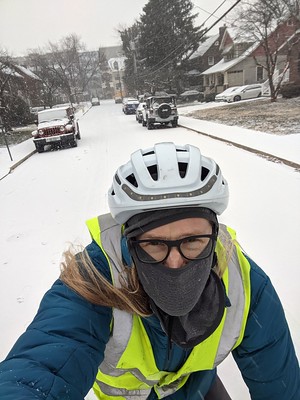
Winter biking


 Hello,


I've got a mix of papers this month but most relate to climate change (priorities for mitigation and adaptation, impacts on flooding, and how to plan for it) plus a couple of wildlife movement. 

If you know someone who wants to sign up to receive these summaries, they can do so at http://bit.ly/sciencejon (no need to email me).

CONSERVATION PRIORITIES / 30x30 / CLIMATE ADAPTATION:
Dreiss & Malcom 2022 is an analysis of priorities for protection under 30x30, considering hotspots of biodiversity and carbon, current protection (Fig 2), and threats. The two threats are risk of conversion (to non-habitat by 2050) and climate vulnerability (need for habitat / species to migrate elsewhere to survive, expressed in km/yr). They have two sets of hotspots, one with the top 10% of biodiversity (they calculated both imperiled species richness, and imperiled species range-size-rarity which captures how much habitat rare spp. have left), and one with the top 10% of carbon pools (not actual GHG mitigation potential, as it omits deep carbon like peat, other GHGs, and the albedo effect). Fig 3 has maps of their main results, but they're easier to see and explore in the interactive map at https://arcg.is/0SjGLK. Fig 4 highlights high conversion risk (>50%) and climate vulnerability for hotspots (top 10%) of biodiversity and carbon (4a = conversion & richness, 4b = conversion & carbon, 4c = climate vuln. & richness, 4d = climate vuln. & carbon). Upgrading all existing less strict protected areas (GAP 3) would achieve ~30% protection, but that would miss 80% of biodiversity hotspots (which are on private land). Similarly, 21% of unprotected biodiversity hotspots have at least a 50% chance of being converted by 2050. The authors didn't include political, social, or economic considerations, but there are still a lot of useful data in here.

Dreiss et al. 2022 identifies priority conservation locations within the contiguous US to support climate adaptation (via refugia and corridors). Fig 4c shows which climate refugia and corridors are unprotected (in gray) or underprotected (GAP 3 in orange). The bottom two rows in Table 3 shows that the best places for climate adaptation mostly don't overlap with the best places for biodiversity or carbon (~20-25% do). This means that focusing solely on biodiversity or carbon hotpsots is likely to miss critical refugia and corridors to help ensure resilience to climate change.


CLIMATE CHANGE IMPACTS:
Wing et al. 2022 modeled increasing US flooding risks due to both climate change (by 2050 under RCP4.5, which is 'medium' emissions but still means aggressive decarbonization) and changing populations. Note that the paper uses 'risk' in the engineering sense: likelihood of impact times magnitude of impact (so risk is reported as expected annual $ losses due to floods). Those losses are expected to go up 26% just from climate change (calculated at the building level based on current population data), but considering both climate change and population change they predict almost twice as many people will be impacted by flood each year (with that impact driven largely by population growth). The highest current flood risk is in predominantly white and extremely poor counties (partly b/c very poor people in areas at risk of floods have few financial assets not vulnerable to floods, so their relative risk is higher). The counties with the highest % Black population are expected to see twice as much risk increase by 2050 as counties with the fewest Black people. This is due a mix of increasing flooding risk in the Deep South, and the relatively low current risk of mostly Black counties. You can read more about this at https://www.washingtonpost.com/business/2022/01/31/climate-change-flooding-united-states/

Brown et al. 2022 has a good overview of recent improvements to incorporating climate change into conservation planning via the Conservation Standards (aka Open Standards for the Practice of Conservation). If you're not familiar with the Standards, this paper will be a bit overwhelming, but still has useful tidbits. Jump to figure 4 for a very helpful diagram of physical changes expected to result from climate change, and which of these changes make sense to classify as "direct climate threats" (in red text). What I love about this is it helps you move past (climate change will affect everything) and identify the specific changes that a) will affect focal species and ecosystems, and b) which you can affect via conservation. So rather than focusing on changes to rain, they identify decreased water availability and increased risk of landslides as climate threats. Then Fig 5b shows how the climate threats are integrated w/ other direct threats and linked to conservation targets (the species and ecosystems being prioritized for action). If you can handle switching examples, Figs 6 and 7 show how to move from a situation model (linking threats to targets and identifying possible strategies) to a results chain (showing the desired interim results and ultimate impacts of a strategy). There is some updated guidance available since this was published on the CMP web site.


WILDLIFE MOVEMENT / MIGRATION:
Merkle et al. 2022 addresses the problem that species which favor returning to fixed places to forage / breed / shelter have a hard time adjusting to habitat loss and resulting fragmentation. Figure 2 has a good example: mule deer in WY staying true to winter range despite oil & gas development, which the authors give as an example of an 'ecological trap' due to 'site fidelity' (they keep coming back even if they have better alternatives). They call for more research on what drives site fidelity (genetics, environmental conditions, or a mix), and for conservation plans to account for site fidelity rather than assuming animals will choose the best habitat possible.

Vynne et al. 2022 is a global analysis to find terrestrial ecoregions where only 1-3 large mammals (>33 lb, 298 species) are missing from the mammals that present 500 years ago (Fig 2 has a map of those results). Given the impact large mammals have on ecosystems, the idea is that getting back to the full suite of mammals that used to be there will have broader effects. But this is an assumption the authors make, rather than a conclusion of the analysis (most news headlines have implied the latter). The best known example of that is the impact of reintroducing wolves to Yellowstone leading to a trophic cascade (although unfortunately those effects have been widely exaggerated due to non-random aspen sampling and failing to account for confounding effects of human hunting and changes in streamflow due to climate). Their 30 priority ecoregions for reintroduction / restoration are in Table 2 and Figure S3. They note the challenges in reintroducing predators in particular, including the need to plan to avoid human conflict and difficulty of securing protection over large areas to allow for connectivity).


REFERENCES:

Brown, M. B., Morrison, J. C., Schulz, T. T., Cross, M. S., Püschel-Hoeneisen, N., Suresh, V., & Eguren, A. (2022). Using the Conservation Standards Framework to Address the Effects of Climate Change on Biodiversity and Ecosystem Services. Climate, 10(2), 13. https://doi.org/10.3390/cli10020013

Dreiss, L. M., & Malcom, J. W. (2022). Title identifying key federal, state, and private lands strategies for achieving 30 × 30 in the United States. Conservation Letters, May 2021, 1–12. https://doi.org/10.1111/conl.12849

Dreiss, L. M., Lacey, L. M., Weber, T. C., Delach, A., Niederman, T. E., & Malcom, J. W. (2022). Targeting current species ranges and carbon stocks fails to conserve biodiversity in a changing climate: opportunities to support climate adaptation under 30x30. Environmental Research Letters, 2(1), 0–31. https://doi.org/10.1088/1748-9326/ac4f8c

Merkle, J. A., Abrahms, B., Armstrong, J. B., Sawyer, H., Costa, D. P., & Chalfoun, A. D. (2022). Site fidelity as a maladaptive behavior in the Anthropocene. Frontiers in Ecology and the Environment, 1–8. https://doi.org/10.1002/fee.2456

Vynne, C., Gosling, J., Maney, C., Dinerstein, E., Lee, A. T. L., Burgess, N. D., Fernández, N., Fernando, S., Jhala, H., Jhala, Y., Noss, R. F., Proctor, M. F., Schipper, J., González‐Maya, J. F., Joshi, A. R., Olson, D., Ripple, W. J., & Svenning, J. (2022). An ecoregion‐based approach to restoring the world’s intact large mammal assemblages. Ecography, 1–12. https://doi.org/10.1111/ecog.06098

Wing, O. E. J., Lehman, W., Bates, P. D., Sampson, C. C., Quinn, N., Smith, A. M., Neal, J. C., Porter, J. R., & Kousky, C. (2022). Inequitable patterns of US flood risk in the Anthropocene. Nature Climate Change. https://doi.org/10.1038/s41558-021-01265-6

Sincerely,
 
Jon
 
p.s. If you'd like to keep track of what I write as well as what I read, I always link to both my informal blog posts and my formal publications (plus these summaries) at http://sciencejon.blogspot.com/
p.p.s. As shown in the pic above - I am a committed winter biker, and my wife and I very much enjoyed Arlington's winter bike games recently!