Showing posts with label corporate sustainability. Show all posts

Thursday, August 1, 2019

August 2019 science journal article summary


Photo from Mick Garratt

Greetings,

Hot weather and a vacation in the woods have me thinking about climate change and habitat conversion (with articles on deforestation, landscape conservation, biodiversity, and livestock sustainability).

If you know someone who wants to sign up to receive these summaries, they can do so at http://bit.ly/sciencejon

LANDSCAPE CONSERVATION:
Runting et al. 2019 argues that debates about 'land sparing' vs 'land sharing' miss an important point - good forest management is likely more important. They run several scenarios with different degrees of land sharing vs sparing, and conventional vs. improved management (reduced-impact logging, longer plantation rotation, and strictly enforcing protected areas). They saw the best outcomes with improved management and a mix of sparing and sharing (but favoring sparing, see Figure 4). Check out Figure 2 for what an 'optimal' scenario looks like compared to extreme sharing or sparing (but ignore the idea that tiny islands of protected areas or holes in larger ones are ideal - this is almost certainly an artifact). There's a blog on this one at https://nature4climate.org/news/headline-stories/cant-see-the-wood-for-the-trees-making-the-most-of-our-forests-for-biodiversity-and-wood-production/

Kennedy et al. 2019 calculates how modified by human activities land around the world is. While only 5% of land area was 'unmodified', most of the world was 'moderately modified.' The authors argue that ecoregions with moderate modification may be good candidates for high priority conservation action, because they tend to have some relatively intact lands near to highly modified lands (which thus may pose a threat in the near future). In particular, the tropical and subtropical dry broadleaf forests biome (mostly in Mexico, India, Argentina, & SE Asia) was found to be the most threatened (high conversion relative to protection). While they didn't include all threats (e.g. logging, invasive species, climate change, and more) these data can be used to evaluate the suitability of lands for protection. You can explore the findings and maps at http://gdra-tnc.org/current/ and you can download the data from http://s3.amazonaws.com/DevByDesign-Web/Apps/gHM/index.html


CLIMATE CHANGE:
Bastin et al. 2019 estimate 900 million ha of land could be reforested globally (excluding cropland and urban areas), which could store 205 Gt of carbon (752 Gt CO2e). Alternatively, they predict we'll lose 223 million ha of forest by 2050 under business as usual. This paper has been broadly criticized for overstating the role of reforestation in climate mitigation (while reforestation is important, the authors' conclusion that it's the most important solution is a fringe opinion), especially since they call for a focus on boreal plantings which reduces albedo relative to bare snow and ice (thus reducing the climate mitigation contribution). Here's a blog covering the paper including the critique: http://blogs.discovermagazine.com/crux/2019/07/10/reforestation-climate-change-plant-trees/#.XSdzAehJE2w

Diaz et al. 2018 looks at trade-offs between different forest management options for Douglas-fir in the NW US that could improve carbon storage. They compare managing the land to optimize net present value (NPV) to managing for sustained timber yield (with different levels of environmental management, e.g. longer rotations and some aspects of FSC certification). They find that environmental constraints boost carbon storage but hurt net present value. For example, one scenario had 26% more carbon, but 15% less timber and 21% lower NPV. They explore different policy options and challenges related to driving more carbon storage in timberlands.


DEFORESTATION:
Lambin et al. 2018 look at how effective company commitments to end deforestation are. The key finding is that public policy can significantly improve the likelihood of reducing deforestation relative to private action alone. For example, the Soy Moratorium combined sector-wide commitments with monitoring and public disincentives to clear forest in Brazil, with some success. They call for better company commitments (as called for by the Accountability Framework, https://accountability-framework.org/), and recommend public policies including: legal reform & enforcement, land tenure reform, working with people clearing the most forest, broadening scope (companies, commodities, & regions), incentivizing all actors in the supply chain to participate (e.g. fertilizer companies rarely engage in these commitments), improving traceability and transparency, and increasing demand for deforestation-free products.


LIVESTOCK SUSTAINABILITY:
Schader et al. 2015 looks at how shifting what we feed cattle could improve sustainability. The idea is to feed them less food humans could eat (like corn), and more grass and by-products we can't or don't eat (e.g. distiller's grains, bran, oilseed cake, etc.), which also limits the total amount of livestock which can be raised in this way. Figure 1 is a great overview of what this would mean, for example a big reduction in pigs and chicken and only modest increases in other livestock (that can eat grass). But note a cardinal data visualization sin: inconsistent scaling of bar charts (e.g. the soil erosion from water chart makes it look like their preferred scenario has only 42% the erosion of the reference scenario, but it actually has 88% the erosion) which means you have to look carefully. Still, it's an important concept to explore, and a useful contribution to the conversation.

What are the barriers to using livestock practices that reduce GHGs? Kipling et al. 2019 asked Welsh ranchers and other stakeholders in a series of interviews and workshops. They focused on the conceptual framework rather than the practices, splitting them into practical limitations (e.g. costs and infrastructure, see Figure 1), knowledge limitations (being unaware of options and how they work, see Figure 2), and cognitive limitations and interests (complexity and competing values, see Figures 3 & 4). There aren't any big surprises here, but it's a useful overview, especially the quotes from ranchers for each concept they present.


BIODIVERSITY:
Humphreys et al. 2019 looks at recent (since 1900) and historic plant extinction, and compares it to animal extinctions. The most interesting findings are that the IUCN Red List data on extinct plants are pretty poor (with 50 Red List species incorrectly listed as extinct, and 491 extinct species missing from the Red List), that 54% of plants reported extinct were later rediscovered (or reclassified to be the same as an extant species), that thousands of extant plant species are 'functionally extinct' (too few exist to form a viable population going forward), and that 55% of the 571 plant species that have gone extinct have done so since 1900. This is a short paper and worth reading.

REFERENCES:
Bastin, J.-F., Finegold, Y., Garcia, C., Mollicone, D., Rezende, M., Routh, D., … Crowther, T. W. (2019). The global tree restoration potential. Science, 365(6448), 76–79. https://doi.org/10.1126/science.aax0848

Diaz, D. D., Loreno, S., Ettl, G. J., & Davies, B. (2018). Tradeoffs in timber, carbon, and cash flow under alternative management systems for Douglas-Fir in the Pacific Northwest. Forests, 9(8), 1–25. https://doi.org/10.3390/f9080447

Humphreys, A. M., Govaerts, R., Ficinski, S. Z., Nic Lughadha, E., & Vorontsova, M. S. (2019). Global dataset shows geography and life form predict modern plant extinction and rediscovery. Nature Ecology & Evolution, 3(July). https://doi.org/10.1038/s41559-019-0906-2

Kennedy, C. M., Oakleaf, J. R., Theobald, D. M., Baruch-Mordo, S., & Kiesecker, J. (2019). Managing the Middle: A Shift in Conservation Priorities based on the Global Human Modification Gradient. Global Change Biology, (June 2018), 1–17. https://doi.org/10.1111/gcb.14549

Kipling, R. P., Taft, H. E., Chadwick, D. R., Styles, D., & Moorby, J. (2019). Challenges to implementing greenhouse gas mitigation measures in livestock agriculture: A conceptual framework for policymakers. Environmental Science and Policy, 92(November 2018), 107–115. https://doi.org/10.1016/j.envsci.2018.11.013

Lambin, F., Gibbs, H. K., Heilmayr, R., Carlson, K. M., Fleck, L., Garret, R., … Walker, N. (2017). The role of supply-chain initiatives in reducing deforestation. Nature Climate Change, 8(February), 109–116. https://doi.org/10.1038/s41558-017-0061-1

Runting, R. K., Ruslandi, Griscom, B. W., Struebig, M. J., Satar, M., Meijaard, E., … Venter, O. (2019). Larger gains from improved management over sparing–sharing for tropical forests. Nature Sustainability, 2(1), 53–61. https://doi.org/10.1038/s41893-018-0203-0

Schader, C., Muller, A., El-Hage Scialabba, N., Hecht, J., Isensee, A., Erb, K. H., … Niggli, U. (2015). Impacts of feeding less food-competing feedstuffs to livestock on global food system sustainability. Journal of the Royal Society Interface, 12(113). https://doi.org/10.1098/rsif.2015.0891


Sincerely,

Jon

p.s. If you'd like to keep track of what I write as well as what I read, I always link to both my informal blog posts and my formal publications (plus these summaries) at http://sciencejon.blogspot.com/

Friday, May 24, 2019

New book chapter (from CUP) available on agricultural metrics & corporate sustainability

Once upon a time (late 2013 or early 2014) I was asked to co-write a chapter on sustainable agriculture metrics with Peter Kareiva. I learned a lot writing it, and when I realized it would take a while to get published I wrote a blog post about the most surprising thing I learned (that global agricultural land had been decreasing since 1998, not rapidly expanding): https://blog.nature.org/science/2014/06/18/global-agriculture-land-sustainability-deforestation-foodsecurity

That surprise, and the blowback I got after publishing it, inspired me to write another book chapter which came out in late 2017:
http://fish.freeshell.org/publications/DataNotDogma-Chapter11-preformatted.pdf
and a follow-up blog since my writing wasn't clear enough: http://sciencejon.blogspot.com/2018/01/take-2-what-i-wish-id-put-in-my-recent.html

But now, 5+ years later, the actual original book is finally published!

Those interested can read the final chapter at http://fish.freeshell.org/publications/FisherKareiva_CUP_2019_preformatted.pdf

The first half is OK but is out of date and was written when I knew far less about agriculture. I'd skip to the 2nd half (start with the "Can Corporate Sustainability reporting be a force for improved agricultural practices?" section). There's some interesting content I haven't seen anywhere else on corporate sustainabiltiy and food labels.

I haven't read the rest of the book yet but am looking forward to it! You can get the whole book here:  Agricultural Resilience: Perspectives from Ecology and Economics (Cambridge University Press)

Wednesday, February 20, 2019

How many trees make a forest?


It seems bizarre, but it's surprisingly hard to agree on what should count as a forest, or deforestation. If we can't agree on what deforestation is and how to measure it, we can't stop it. I wrote a blog post about this surprising problem for Mongabay:
How many trees make a forest?

It explains the issue, and why The Accountability Framework (a coalition of NGOs providing guidance on how companies can set and implement credible deforestation-free commitments) is so critical to solve it.

Friday, February 1, 2019

February 2019 science journal article summary

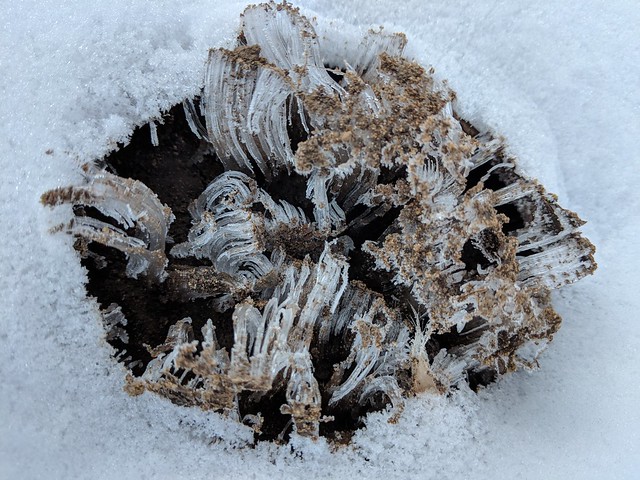
Needle ice
Hello,

Here are some articles focused on genomics, but with a few others on deforestation, ecosystem services, and sustainable agriculture. The photo above of needle ice in my backyard is totally unrelated, but I'd never seen or even heard of it, and I found it super cool. Read about it on wikipedia!

Let me know if you need a copy of any of these articles. If you know someone who wants to sign up to receive these summaries, they can do so at http://bit.ly/sciencejon

DEFORESTATION:
Jokpe & Schoneveld 2018 is a close look at zero-deforestation commitments (ZDC) by 50 influential  corporate "power brokers."  They identify several problems with implementation gaps and externalities. In particular they note that a lack of traceability and transparency about where commodities are sourced from makes verification difficult (and most companies rely on asking their suppliers to honestly self-report deforestation). They also report that 3/4 of companies with ZDC don't require company wide commitments from suppliers (so those suppliers can just sell deforestation linked products to other companies who don't care). This one is long but worth reading for breakouts by sector and other useful info. Note that TNC in this article refers to transnational companies and not The Nature Conservancy. The problems and gaps identified are things we're hoping to address with the Accountability Framework (https://accountability-framework.org/), which should be formally launched this spring.

ECOSYSTEM SERVICES:
There are many methods and tools to assess ecosystem services. Neugarten et al. 2018 is a report reviewing 9 assessment tools (EST, PA-BAT, TESSA, ARIES, C$N, InVEST, MIMES, SolVES, and WW) and providing decision trees on how to pick the right one for a given need. This is a fantastic reference for anyone working with ecosystem services, and it covers both written guidance documents and modeling tools. They recommend you identify the analysis question or need and think hard about expertise and resources you have to do the analysis before selecting a tool.

GENOMICS / GENE EDITING / GENETIC ENGINEERING:
Photosynthesis in plants relies on an enzyme called RuBisCO, sometimes called 'the most incompetent enzyme in the world' due to its inefficiency and energy loss during respiration. South et al. 2019 present a new transgenic GMO tobacco plant which improves the efficiency of respiration. As a result, their best modified tobacco plants had 41% higher biomass (including 33% more leaf biomass but also larger stems). It's not clear how much of the biomass gain could be translated to improved yields for grains or other crops, but that's still a potentially huge step forward which should be further explored. Eisenhut & Weber 2019 is a nice very short (1.5 page) summary of the article, and you can also read a blog about it here which includes some nice diagrams: https://phys.org/news/2019-01-scientists-shortcut-photosynthetic-glitch-boost.html

Kofler et al. 2018 is an editorial on benefits and risks of altering the DNA of wild organisms via gene editing. They call for collective oversight to ensure careful thought is given to environmental, social, and ethical concerns, and especially to local community involvement in each decision to potentially release an edited organism (as well as international bodies like IUCN). They stress that "using this technology irresponsibly or not using it at all could prove damaging" - and give good examples of each.

Sprink et al. 2016 looks at regulation of gene editing, and the difference between a process based approach (where the key factor is how an organism was modified) vs a product based approach (where the outcome is the key factor regardless of the process used). They argue that the European approach is outdated and doesn't reflect the continuum of modern technology (including several different applications of gene editing). They also dive into a legal argument of why it should be changed, and how it compares to the US and other countries. They make a good argument that regulation should be based on a genetic trait and product rather than the process used to develop it. This one is complex and wonky but a good reference, especially box 1 with definitions of several gene editing approaches.

Halewood et al. 2018 is an overview of how CGIAR is looking to use crop genome sequencing to drive more crop diversity and find crop traits that can deliver better outcomes for people and nature. Most readers can safely skip information on specific molecular markers (e.g. Table 1) but should read page 372 which lists several applications of gene editing technology and genotyping.

Zhong 2019 looks at how soy genotype and rhizobium inoculation (of seed or soil) impact plant growth, soy nodulation (the nodules help them fix nitrogen via bacteria), and microbiome. They found that the microbiome of soy varies depending on the genotype of soy. In particular whether the genotype forms high or low numbers of root nodules. Low-nodulation soy had more co-occurrence of the taxonomic groups (a more connected network) than the high-nodulation soy (figure 4). Both genotypes had their microbiome network connections increased by inoculation. The efficacy of the inoculant  varies depending on plant genotype. See figure 1c / 1d for details. Low-nodule soy got a significant boost in nodulation from inoculation, but still had fewer nodules than high-nodule soy (for which nodulation was unaffected by inoculation). Both genotypes of soy got a roughly similar growth boost from inoculation. This means that to evaluate biological seed treatments / inoculation we have to look at the intersection of the inoculant, plant genetics, and baseline soil microbiome.


SUSTAINABLE AGRICULTURE:
Eichler Inwood et al. 2018 is a thoughtful review of several different frameworks to assess agricultural sustainability (in different contexts and scales). Table 4 is a nice summary of the 9 frameworks they cover, with Table 5 providing more details on how and where they work. None are ideal in every context. Thy conclude with recommendations about how to select a framework (see Table 6 for properties they should have), choose indicators, collect data etc.

REFERENCES:
Eichler Inwood, S. E., López-Ridaura, S., Kline, K. L., Gérard, B., Monsalue, A. G., Govaerts, B., & Dale, V. H. (2018). Assessing sustainability in agricultural landscapes: a review of approaches. Environmental Reviews, 26(3), 299–315. https://doi.org/10.1139/er-2017-0058

Eisenhut, M., & Weber, A. P. M. (2019). Improving crop yield. Science, 363(6422), 32–33. https://doi.org/10.1126/science.aav8979

Halewood, M., Lopez Noriega, I., Ellis, D., Roa, C., Rouard, M., & Sackville Hamilton, R. (2018). Using Genomic Sequence Information to Increase Conservation and Sustainable Use of Crop Diversity and Benefit-Sharing. Biopreservation and Biobanking, 16(5), 368–376. https://doi.org/10.1089/bio.2018.0043

Jopke, P., & Schoneveld, G. C. (2018). Corporate commitments to zero deforestation: An evaluation of externality problems and implementation gaps. Occasional Paper 181. Bogor, Indonesia: CIFOR.

Kofler, N., Collins, J. P., Kuzma, J., Marris, E., Esvelt, K., Nelson, M. P., … Schmitz, O. J. (2018). Editing nature: Local roots of global governance: Science, 362(6414), 527–529. https://doi.org/10.1126/science.aat4612

Neugarten, R. A., Langhammer, P. F., Osipova, E., Bagstad, K. J., Bhagabati, N., Butchart, S. H. M., … Willcock, S. (2018). Tools for measuring, modelling, and valuing ecosystem services: guidance for Key Biodiversity Areas, natural World Heritage sites, and protected areas. (C. Groves, Ed.). Gland, Switzerland: IUCN. https://doi.org/10.2305/IUCN.CH.2018.PAG.28.en

South, P. F., Cavanagh, A. P., Liu, H. W., & Ort, D. R. (2019). Synthetic glycolate metabolism pathways stimulate crop growth and productivity in the field. Science, 363(6422), eaat9077. https://doi.org/10.1126/SCIENCE.AAT9077

Sprink, T., Eriksson, D., Schiemann, J., & Hartung, F. (2016). Regulatory hurdles for genome editing: process- vs. product-based approaches in different regulatory contexts. Plant Cell Reports, 35(7), 1493–1506. https://doi.org/10.1007/s00299-016-1990-2

Zhong, Y., Yang, Y., Liu, P., Xu, R., Rensing, C., Fu, X., & Liao, H. (2019). Genotype and rhizobium inoculation modulate the assembly of soybean rhizobacterial communities. Plant, Cell & Environment. https://doi.org/10.1111/pce.13519


Sincerely,

Jon

p.s. as a reminder, you can search all of the science articles written by TNC staff (that we know of) here http://www.conservationgateway.org/ConservationPlanning/ToolsData/sitepages/article-list.aspx
(as you publish please email science_pubs@tnc.org to help keep this resource current).
If you'd like to keep track of what I write as well as what I read, I always link to both my informal blog posts and my formal publications (plus these summaries) at http://sciencejon.blogspot.com/

Wednesday, April 11, 2018

April 2018 Science Journal Article Summary

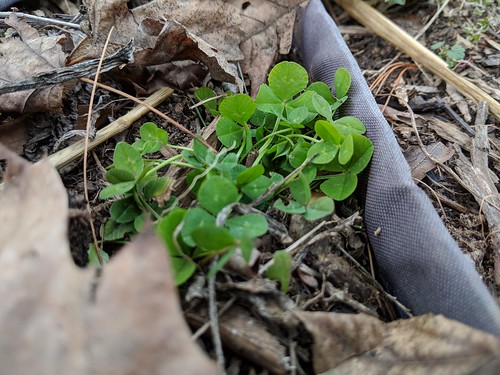
Red clover as attempted cover crop
Easter Greetings,

Farming is really hard! Cover crops (which cover farms after the primary crop is harvested) can offer benefits to both farmers and nature, but incorporating them is hard too. The photo above is the biggest patch of my attempted red clover cover crop in my tiny garden. So to get ready for the coming year, I've focused on several articles about cover crops, plus one new giant study on improving agriculture in China.

I can also finally share a book chapter I wrote 3 years ago which has languished "in press" after being accepted (it should be actually published late 2018). The first half is OK, but I'd skip to the 2nd half (start with the "Can Corporate Sustainability reporting be a force for improved agricultural practices?" section). There's some interesting content I haven't seen anywhere else on corporate sustainabiltiy and food labels. The chapter is available from: http://fish.freeshell.org/publications/FisherKareiva_CUP_2018_preformatted.pdf

Finally, fed up with people not finding your science journal articles, or having them inaccessible due to a paywall? I have answers to both problems in a new blog post: http://sciencejon.blogspot.com/2018/03/tips-for-helping-people-to-find-your.html

Let me know if you need a copy of any of the articles below.

AGRICULTURE (CHINA):
Cui et al 2018 reports on the results of an ambitious study that worked with 21 million farmers (!) of maize, rice, and wheat over 10 years. China currently has some of the least efficient farms in the world, presenting a huge need to improve. This study used a soil & crop management framework that resulted in ~11% improved yield while reducing N application by ~16% (and reactive N losses by ~25%), and GHGs by 14-22% depending on crop. The scale is impressive: altogether they influenced 37.7 million ha. Interestingly, extension staff impacted over 10 times the area per staff person (471 ha / person) compared to agribusiness partners (see Fig 2). Regardless, this is good news in showing that it's possible to achieve "win-win" outcomes at scale even with smallholders. On the other hand, nitrogen efficiency is so poor in China, that much larger changes are needed to bring them in line with world averages, let alone truly sustainable targets (highlighting that policy changes are likely needed as well). Fig 1 has a great breakdown of impacts by crop and region.

AGRICULTURE (COVER CROPS):
Why don't more farmers use cover crops? Roesch-McNally et al. 2017 asked them: what are the barriers, and how do cover crop users overcome them? Cover crops add complexity at very busy times for farmers, which is a key issue. They report concern about having time to plant cover crops in fall, and time to terminate them in spring without impacting cash crop planting. Lack of markets and equipment, narrow profits margins, and prevalence of rented land were also limiting. Farmers who overcame these barriers generally saw their farm as a "whole system" and were willing to experiment and modify other practices (e.g. tillage and fertilization). The authors wrap up by exploring several policy interventions (cost-sharing, new markets, promoting crop / livestock systems, and economic incentives).

Bergtold et al. 2017 dive more into the economic aspect of cover crops in Kansas (direct costs, indirect & opportunity costs, direct & indirect benefits, risk & crop insurance, and policy incentives). They find that on average cover crops will net farmers $7.04/ac on irrigated land, but cost them $28/ac on dryland (potentially $20/ac under less conservative assumptions). That difference is driven mainly by lower yields in drylands reducing the opportunity for a % boost in yield to add up to much. They honestly don't explain the rationale behind their calculations very well, so I wouldn't put too much stock in those specific numbers for net costs (and see Baschle below for different findings), but it's a useful reference for thinking through types of costs and benefits. It's long but even skimming the section headings will likely be informative.

Snapp et al. 2005 is a thoughtful review of cover crop benefits and costs, adding a key factor often overlooked. Different cover crops perform very differently in different contexts! The authors break down cover crop performance into USDA Hardiness Zone categories, and summer and winter crops. The whole article is a good resource, but I hadn't heard much about summer cover crops so was intrigued to read about their use to rehabilitate fields with poor performance. The main options were sorghum sudangrass and alfalfa in the north (although mixed grass-legume systems also show potential) and in the south sudangrass and a range of legumes (including pigeon pea, cowpea, and sunn hemp). This all reinforces the idea that cover crop selection is complicated and that a one size fits all approach won't work well.

Wilcoxen et al. 2018 (which includes TNC's Jeff Walk as a co-author) looks at a rarely studied aspect of cover crops: how do they impact birds? For both corn and soy, cover crops improved bird habitat / bird density. It's a small study and most fields were cereal rye, but their data seem to indicate the tall grass of rye was especially attractive. The authors note that terminating cover crops later would likely benefit birds, although as noted in the studies above that can prove challenging for farmers.

Basche et al. 2016 looks at how winter rye in the Midwestern US affects soil water capacity. The water paper asks whether cover crops reduce or improve water available for cash crops. They found the cover crop generally boosted plant water available to cash crops by ~21%, but did not impact crop yield (even during drought). At the end of p9 they have suggestions on how to manage cover crops to avoid water competition (e.g. terminate them early in dry years).


AGRICULTURE (SOIL HEALTH):
While not restricted to cover crops, Basche 2017 looks at how much different crop & grazing practices can affect water infiltration. Some of the recommendations aren't terribly practical currently, but Figure 3 shows which practices most consistently improve infiltration as a %, and Figure 4 shows which ones can lead to an absolute increase in infiltration of 1 inch during heavy rain storms. Cover crops were found to improve infiltration ~20-50%, and in about 1/3 of the studies that led to absorbing >1 inch of rain during heavy rain storms.

Woodard & Verteramo-Chiu look at how much better the Federal Crop Insurance Program (FCIP) could perform if it used soil data to establish rates and coverage. In other words, how could FCIP incentivize soil health practices that would reduce risks and costs of the program, while avoiding perverse incentives (e.g. in the past crop insurance was not available to farmers using cover crops). It's a fairly wonky economics paper, but they make a good case for much errors and bias exist in the current program. The key finding is that farms with high-quality soils are generally overpaying, and low-quality farms are underpaying. See Fig 3 for an example of how strong the pricing erors are (up to a factor of 6). By accounting for soils data (and perhaps current practices), this program could be an important driver to get farmers to start rebuilding healthier soils to keep premiums low. They focus on top corn producing states where soil quality is relatively homogeneous; benefits of accounting for soil should be higher in regions with more varied soil. With predicted volatility from climate change, improving crop insurance will be increasingly important.


REFERENCES:
Basche, A. D., Kaspar, T. C., Archontoulis, S. V., Jaynes, D. B., Sauer, T. J., Parkin, T. B., & Miguez, F. E. (2016). Soil water improvements with the long-term use of a winter rye cover crop. Agricultural Water Management, 172, 40–50. https://doi.org/10.1016/j.agwat.2016.04.006

Basche, A. (2017). Turning Soils into Sponges: How Farmers Can Fight Floods and Droughts. Retrieved from http://www.ucsusa.org/sites/default/files/attach/2017/08/turning-soils-into-sponges-full-report-august-2017.pdf

Bergtold, J. S., Ramsey, S., Maddy, L., & Williams, J. R. (2017). A review of economic considerations for cover crops as a conservation practice. Renewable Agriculture and Food Systems, 1–15. https://doi.org/10.1017/S1742170517000278

Cui, Z., Zhang, H., Chen, X., Zhang, C., Ma, W., Huang, C., … Dou, Z. (2018). Pursuing sustainable productivity with millions of smallholder farmers. Nature, 555, 363–366. https://doi.org/10.1038/nature25785

Roesch-McNally, G. E., Basche, A. D., Arbuckle, J. G., Tyndall, J. C., Miguez, F. E., Bowman, T., & Clay, R. (2017). The trouble with cover crops: Farmers’ experiences with overcoming barriers to adoption. Renewable Agriculture and Food Systems, 1–12. https://doi.org/10.1017/S1742170517000096

Snapp, S. S., Swinton, S. M., Labarta, R., Mutch, D., Black, J. R., Leep, R., … O’Neil, K. (2005). Evaluating Cover Crops for Benefits, Costs and Performance within Cropping System Niches. Agronomy Journal, 97, 322–332. https://doi.org/10.2134/agronj2005.0322

Wilcoxen, C. A., Walk, J. W., & Ward, M. P. (2018). Use of cover crop fields by migratory and resident birds. Agriculture, Ecosystems & Environment, 252, 42–50. https://doi.org/10.1016/j.agee.2017.09.039

Woodard, J. D., & Verteramo-Chiu, L. J. (2017). Efficiency impacts of utilizing soil data in the pricing of the federal crop insurance program. American Journal of Agricultural Economics, 99(3), 757–772. https://doi.org/10.1093/ajae/aaw099


Sincerely,

Jon

p.s. as a reminder, you can search all of the science articles written by TNC staff (that we know of) here http://www.conservationgateway.org/ConservationPlanning/ToolsData/sitepages/article-list.aspx
(as you publish please email science_pubs@tnc.org to help keep this resource current).
If you'd like to keep track of what I write as well as what I read, I always link to both my informal blog posts and my formal publications (plus these summaries) at http://sciencejon.blogspot.com/