Showing posts with label water quality. Show all posts

Monday, January 6, 2020

Can science boost credibility even if it isn't used?

Hamel et al. 2020 ("The value of hydrologic information for watershed management programs: The case of Camboriú, Brazil") looked at how scientific information was perceived and used in decision making for a water fund in Brazil (where a water treatment company pays for upstream conservation to reduce the costs of treating the water).

Through interviews, we determined that the hydrological modeling and monitoring data that we provided was NOT used in designing and implementing the water fund. But counter-intuitively, having done the analysis using complex models and high-resolution data was seen as important for the water fund to be seen as scientifically credible.

So ironically, even though the credible models were not actually used, their existence helped build support for the overall water fund. Despite this, as long as monitoring data was used to calibrate and validate the model, a simpler model (InVEST, as opposed to SWAT) and coarser data resolution (30m, as opposed to 1m) would have met the information needs of the users. We should have had more frank discussions up front with the ultimate users of the information to produce a model seen as credible and actually used, while avoiding over-investment in model complexity that wasn't needed.

You can read the full article here: https://www.sciencedirect.com/science/article/pii/S0048969719358668

Reference:
Hamel, P., Bremer, L. L., Ponette-González, A. G., Acosta, E., Fisher, J. R. B., Steele, B., … Brauman, K. A. (2020). The value of hydrologic information for watershed management programs: The case of Camboriú, Brazil. Science of The Total Environment, 135871. https://doi.org/10.1016/j.scitotenv.2019.135871

Friday, June 1, 2018

June 2018 science journal article roundup

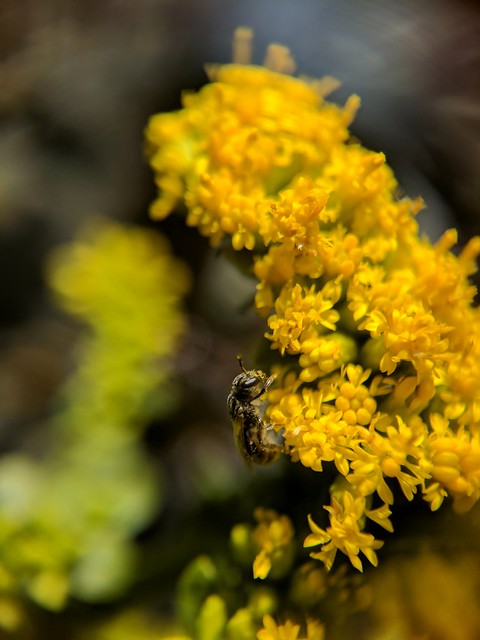
Tiny bee on dwarf goldenrod

Hi,

My garden is abuzz with bees and flies (the photo above is of a bee the size of a gnat), which has me thinking about pollinators and pesticides - the focus of this roundup. But I couldn't resist including one study on improving watershed-scale water quality via changing agriculture, as I've been gushing about it for years (hat tip to Steve Richter from TNC Wisconsin). Enjoy!

If you want to receive these monthly summaries by email you can sign up at http://eepurl.com/diB0nr, and if you want an email anytime I post something on this blog you can subscribe using the form on the top right of this page.

AGRICULTURE & WATER QUALITY:
Carvin et al 2018 is a study I've been eagerly awaiting for years. It is a rigorous paired watershed study looking at the impact of a carefully targeted set of agricultural interventions, and is one of the first papers in the US to show we CAN improve water quality at a watershed scale (50 km2) through shifting ag. Initial work had found 9% of the area was contributing 40% of the phosphorous load, so the authors really targeted those heavy contributors. They found a 55% reduction in phosphorus runoff loads and suspended sediment event loads decreased by 52% for events during unfrozen soil conditions  into the Pecatonica River tributary during storm events. This is big news as these outcomes have been elusive. However, this watershed was picked as one of the most likely to respond well, and those seeking to replicate these results should also carefully select their watersheds. Contact Steve Richter at TNC for more info.


POLLINATORS:
Klein et al. 2007 is a fantastic reference examining dependence on animal pollination across 115 major crop species (ignoring crops like corn which are entirely wind-pollinated). I mainly use Appendix 2, which for each crop lists how much it benefits from animal pollination (from entirely dependent on animal pollinators like cocoa or squash, to receiving almost no benefit) as well as listing the type of pollinator, pointing to references, etc. While the appendix is my favorite part, they also note in the main paper that a) non-insect pollinators (e.g. birds and bats) are less well studied and b) as agriculture intensifies wild pollinators are likely to decline. This means thinking about pollinator habitat in and around farms can be important for some crops, and the appendix can identify which ones are most likely to see more benefit.

Garibaldi et al 2016 argue that improving pollination is an underappreciated need to close crop yield gaps. They found that yields on small farms (<2 ha) could be improved by 24% on average by boosting pollinator density. Strangely for larger farms, when polinator diversity was low, yields actually dropped with incresing pollinator density (when diversity was high, yields went up with pollinator density as expected). The authors don't explain why (or even accurately convey that finding in the text), which makes me wonder if the sample was too small. They did find that isolation from natural habitats was one of the most important predictors of crop yield. This calls attention to the need for more specific data on how restoring habitat could boost crop yields (including testing crops and regions likely to receive the most benefit).

I recently wondered if camera traps and audio monitoring would work for pollinators, and Edwards et al. 2015 had a crafty idea that worked well: long-term time lapse video. They looked at visits by pollinators to 30 different plant species, then focus on a species of dogwood and had nearly complete records for a given flower. Check out Figure 1 and 2, you can clearly not only see the rough type of pollinator, but even see pollination take place as florets within the inflorescence close (a cluster of flowers, for a dogwood this looks like 1 "flower"). The system is relatively cheap and simple, and perhaps the biggest obstacle to doing lots of this is the need to manually review each video to classify pollinators seen in each frame (an hour of footage plays in 1.75 minutes, but scoring takes longer). There's also a question of how many flowers of how many species you'd need to monitoring to get a sense of total pollinator activity on a given piece of land. Still a really cool setup worth keeping an eye on.

I was recently surprised to hear that soybean can benefit from insect pollination (despite self-pollinating). Milfont et al. 2013 demonstrates this under field conditions (including typical pesticide application) in Brazil. They found wild pollinators may boost soy yields by 6%, and adding honeybees on top of wild pollinators raised yields 18%. They either caged plants to prevent access by pollinators, left them open (and did sampling for pollinators), or added honeybees nearby (without caging the bees to force pollination). The exciting thing is if even intense industrial soy gets a 6% boost, there is potential for soy with more careful pesticide application and more integrated pollinator habitat to do considerably better.

Gill and O'Neal 2015 also looks at insect pollination of soy, but focusing on the pollinators in Iowa rather than crop yield. They did lots of sampling, collecting >5,000 individuals from >50 species. 29-38% of the bees they sampled had collected at least some soy pollen. Strangely, although honeybee colonies were present on or near the farms they studied, they found almost no honeybees in their traps. This again emphasizes the potential value of wild pollinators. As an aside: the most common species of pollinator they found is one of the coolest kinds of bees I've ever seen (Agapostemon virescens, see the photo at the end of this email).


PESTICIDES / PEST CONTROL:
Eng et al 2017 provides the first experimental evidence that ingesting neonicotinoids (imidacloprid) and organophosphates (chlorpyrifos) can directly harm songbirds. Birds were fed low doses (the amount typically found on <0.1 corn seed, ~4 canola seeds) or high doses (0.2 corn seed, or 9 canola seeds) and lost 17-25% of their weight within 3 days of being dosed (for imidacloprid only) and were unable to sense north (which could impair migration), although they recovered within 14 days. This is concerning as birds may eat spilled treated seed (or even granules of the pesticide directly), which could lead to reduced breeding success. On the other hand, for some seeds birds typically remove seed hulls before eating the seed, which would reduce the effective dose. You can read a newspaper article about it here: https://amp.theguardian.com/environment/2017/nov/29/common-pesticide-can-make-migrating-birds-lose-their-way-research-shows and read the paper here: https://www.nature.com/articles/s41598-017-15446-x.epdf?author_access_token=60vOAq7fy3uoItENRL_WLtRgN0jAjWel9jnR3ZoTv0PBos7CYdu4-aOFIzRGcQZYPhLZT79bnumB3G0JwKQDqd8sXxokuXX20RybZGim1WNULIibibaVSnXR6616CbBcOjFXccxNhEZR_Q54lKeJqg%3D%3D

Tooker et al 2017 tackles a hot topic - what role do neonicotinoid seed treatments (NST) have in integrated pest management? Many ag companies assert they fit in well, since they can reduce aerial sprays which would have higher impact. On the other hand, there are concerns about effects on nontarget species, potential for resistance, and universal prophylactic application as opposed to the usual IPM approach of deploying pesticides in response to a pest outbreak. They have some interesting findings. First, they find that NST mostly target relatively uncommon pests by using almost universal application more suited to severe pests. They also note that current use of NST on corn and soy is much higher than historic benchmarks, indicating NST is not simply displacing other pesticides. They conclude by noting that more careful use of neonics is likely to both retain their value for pest control longer (by slowing down resistance), and that the challenge in finding corn and soy seeds without NST should be addressed.

Lechenet et al. 2017 looks at almost 1,000 farms in France, comparing farms with similar context to look at how the frequency of pesticide application relates to yield. They estimated that 3/4 of farms could reduce pesticide use without reducing yield or profit, and that on average for farms where they could get more specific, pesticide could be reduced on average by 42%. It's important to note they looked at correlations and predictions rather than empirically testing interventions, and they note that these reductions would likely be challenging for farmers.  Nonetheless, the article shows the importance of evaluating pest control strategies and looking for ways to reduce pesticide use.

I don't totally buy all of the conclusions of Bøhn and Lövei 2017, but they present some pretty interesting case studies. The basic theme is that a simple reductionist approach to pest control via GM-traits is unlikely to solve complex pest problems. They come out arguing that pesticides and transgenic traits are unlikely to be successful but also don't present clear alternatives. To me the interesting part of the paper is looking at the set of responses to a new transgenic plant (especially the surprises), and using that to think about what was missing and how we could build more robust pest control systems with more forethought and better design.

Bueno et al. 2017 is a primer on integrated pest management (IPM) for soybeans in Brazil. They list key pests, provide recommendations for scouting / sampling methods, evaluate several control methods (viruses, natural predators / parasitoids, insecticides, etc.). They also address how different pesticides impact natural enemies, finding that thiamethoxam harms natural enemies enough to actually allow pests to increase (although this is based on unpublished data, and appearing in a fairly low-quality journal, so it's an interesting thing to look into rather than a solid result). I see this article as a useful set of issues to consider for people working in this space.


REFERENCES:
Bøhn, T., & Lövei, G. L. (2017). Complex Outcomes from Insect and Weed Control with Transgenic Plants: Ecological Surprises? Frontiers in Environmental Science, 5(September), 1–8. https://doi.org/10.3389/fenvs.2017.00060

Bueno, R. C. O. F., Raetano, C. G., Junior, J. D., & Carvalho, F. K. (2017). Integrated Management of Soybean Pests: The Example of Brazil. Outlooks on Pest Management, (August), 149–153. https://doi.org/10.1564/v28

Carvin, R., Good, L. W., Fitzpatrick, F., Diehl, C., Songer, K., Meyer, K. J., … Richter, S. (2018). Testing a two-scale focused conservation strategy for reducing phosphorus and sediment loads from agricultural watersheds. Journal of Soil and Water Conservation, 73(3), 298–309. https://doi.org/10.2489/jswc.73.3.298

Edwards, J., Smith, G. P., & Mcentee, M. H. F. (2015). Long-term time-lapse video provides near complete records of floral visitation. Journal of Pollination Ecology, 16(13), 91–100.

Eng, M. L., Stutchbury, B. J. M., & Morrissey, C. A. (2017). Imidacloprid and chlorpyrifos insecticides impair migratory ability in a seed-eating songbird. Scientific Reports, 7(1), 1–9. https://doi.org/10.1038/s41598-017-15446-x

Garibaldi, L. A., Carvalheiro, L. G., Vaissière, B. E., Gemmill-herren, B., Hipólito, J., Freitas, B. M., … Zhang, H. (2016). Mutually beneficial pollinator diversity and crop yield outcomes in small and large farms. Science, 351(6271), 388–391. https://doi.org/10.1126/science.aac7287

Gill, K. A., & O’Neal, M. E. (2015). Survey of soybean insect pollinators: Community identification and sampling method analysis. Environmental Entomology, 44(3), 488–498. https://doi.org/10.1093/ee/nvv001

Klein, A.-M., Vaissière, B. E., Cane, J. H., Steffan-Dewenter, I., Cunningham, S. a, Kremen, C., & Tscharntke, T. (2007). Importance of pollinators in changing landscapes for world crops. Proceedings. Biological Sciences / The Royal Society, 274(1608), 303–313. https://doi.org/10.1098/rspb.2006.3721

Lechenet, M., Dessaint, F., Py, G., Makowski, D., & Munier-Jolain, N. (2017). Reducing pesticide use while preserving crop productivity and profitability on arable farms. Nature Plants, 3(3), 17008. https://doi.org/10.1038/nplants.2017.8

de O. Milfont, M., Rocha, E. E. M., Lima, A. O. N., & Freitas, B. M. (2013). Higher soybean production using honeybee and wild pollinators, a sustainable alternative to pesticides and autopollination. Environmental Chemistry Letters, 11(4), 335–341. https://doi.org/10.1007/s10311-013-0412-8

Tooker, J. F., Douglas, M. R., & Krupke, C. H. (2017). Neonicotinoid Seed Treatments: Limitations and Compatibility with Integrated Pest Management. Agricultural & Environmental Letters, 2(1), 0. https://doi.org/10.2134/ael2017.08.0026

Sincerely,

Jon

p.s. as a reminder, you can search all of the science articles written by TNC staff (that we know of) here http://www.conservationgateway.org/ConservationPlanning/ToolsData/sitepages/article-list.aspx
(as you publish please email science_pubs@tnc.org to help keep this resource current).
If you'd like to keep track of what I write as well as what I read, I always link to both my informal blog posts and my formal publications (plus these summaries) at http://sciencejon.blogspot.com/

Bonus photo: here's the type of bee Gill and O'Neal 2015 saw the most on soy fields in Iowa (Agapostemon, this one is on a dahlia in my garden):
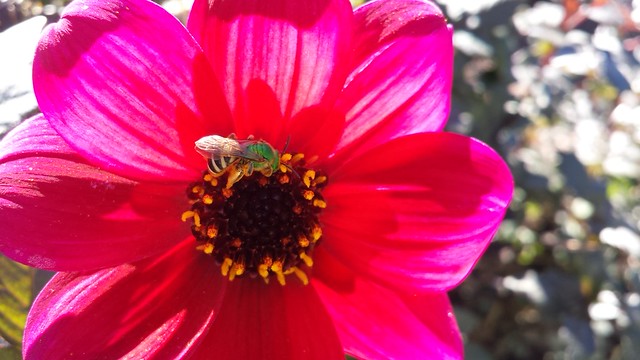
Agapostemon metallic green bee on "Dracula" dahlia

Tuesday, May 1, 2018

May 2018 Science Journal Article roundup

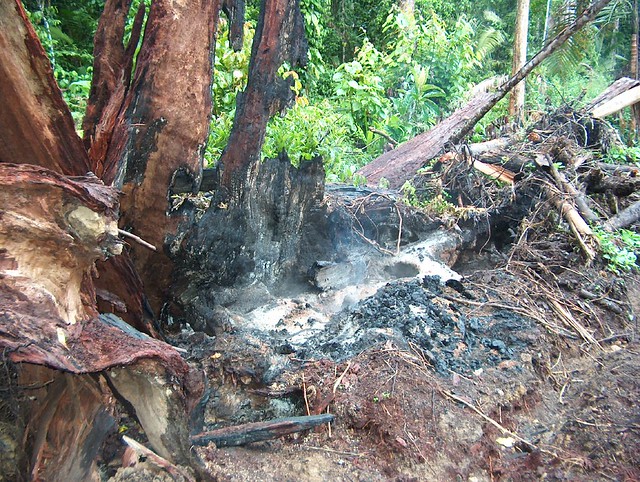
burning logged forest

Merry May!

Most of this summary was written on a red-eye flight to China, so apologies if it makes even less sense than usual, and please let me know if you spot errors or omissions! There's some focus on habitat conversion, but I threw in two water quality papers, plus one each on grazing and soil C, and one on knowledge diffusion.

KNOWLEDGE DIFFUSION / INFORMATION SHARING:
There's another paper out from the study of how Conservation by Design (CbD) 2.0 spread through TNC and beyond. This paper (led by Yuta Masuda, I'm a co-author) focuses on "boundary spanners" - people with informal connections across departments / geography. These “boundary spanners” are four times more likely to spread information about “innovations” (here that means info about CbD 2.0) and to drive changes in attitude that encourage adoption. However, their advantage in spreading info only exists when they have <4 direct reports and are relatively low in the organizational hierarchy (counting levels of who reports to their direct reports etc. etc.). There's a blog with more info at: https://www.sciencedaily.com/releases/2018/04/180409090127.htm and you can read the paper at http://rdcu.be/Kre4


HABITAT CONVERSION:
Nevle & Bird 2008 is grim but fascinating. They find a connection between seemingly unrelated factors: global CO2 levels and pandemics among indigenous people in the Americas brought on by European contact. They link the population crash to a reduction in burning of forests for swidden agriculture, subsequent forest regrowth storing ~5-10 Gt carbon, and argue this is a likely contributor to a small measured reduction in global atmospheric CO2 at the same time. It's more of an interesting hypothesis with data which is consistent than real 'proof' but it's still a fascinating (if depressing) read.

OK, you know food choices matter for habitat conversion, and several alternatives to conventional meat are 'hot' right now. But what protein source has the most promise for sustainability? Alexander 2017 has some answers. They look at a few categories: insects (crickets and mealworms), plant-based imitation meats (they looked at humble tofu rather than newer products like the 'bloody' impossible burger), cultured meat (real meat from animal cells grown in a lab), and aquaculture. Fig 1 has the results on efficiency - tofu came out on top (if you find it gross, let me know, preparation is key and rarely done right in the US), followed by bugs. Cultured meat didn't have much edge over pork and poultry. Table 2 then shows what the global impact on land use would be under different diet change scenarios (including odd ones like replacing 50% of current animal products with beef, doubling the ag footprint on earth). While insects came out as less efficient than plant foods, that could change if we found ways to use food waste for a significant portion of the insect feed.

Chaplin-Kramer 2015 asks how much it matters which lands get deforested in terms of impact on carbon storage and biodiversity. They look at two regions of Brazil and find where conversion happens affects its impact by a factor of 2-4, which conversion deep inside forests more harmful than nibbling away at the edges (although they note that their modelling scenarios use patterns different from what is typically seen in the real world). The discussion has some good points about how development of roads into new regions will likely have a higher impact than investment in infrastructure around existing agricultural lands.

Tyukavina et al 2017 has details on deforestation and forest degradation in the Brazilian Amazon since 2000. Figure 2A is my favorite - it conveys both the reduction in overall tree cover loss since a 2004 peak, and also the shift in what the land was cleared for. Pasture is consistently the biggest chunk, followed by swidden (small scale slash & burn) and then permanent croplands. There's lots of other interesting data here but that figure was the high point for me.

Wright et al 2017 uses a recent high-quality data set on conversion of natural habitat to / from farmland to show that there is a correlation between how much habitat was converted to farmland and how close the land is to the nearest ethanol refinery. While this study didn't correct for other factors, they point to another study which did and still found refinery proximity to be significant with conversion. The ability of refineries to stimulate conversion were highest where corn acreage was low to start. See http://wxpr.org/post/study-links-ethanol-production-habitat-destruction for a blog post aobut this one.

Kastens et al 2017 uses remote sensing data to look at conversion of forests in Brazil to soy farmland. The key finding is that the forest to soy conversion rate was cut in half after the 2006 soy moratorium. You can see the shift in Figure 5 by noting the change in the slope of the green line, but the abrupt difference right after the moratorium is more apparent in table 3.


AGRICULTURE (WATER QUALITY):
Hansen et al 2018 is a cool paper using empirical data to test how effective wetlands in the Minnesota River basin are at reducing nitrates in an ag landscape compared to cover crops and land retirement. They compared river water quality at ~200 sites under different flow conditions to high-resolution data on wetlands and land use to map correlations (they didn't get at true causation). They found wetlands were 5 times more effective per unit area at removing nitrates compared to cover crops and land retirement (although it's much harder to make a business case to a farmer around wetland creation). They also found wetlands strategically placed to intercept as much flow as possible were much more effective (see Fig 4 - the concept is obvious but the numbers are interesting). All these findings align well with prior work emphasizing the critical role of well-placed wetlands to improve water quality. If you read this paper watch out for the term "crop cover" (% of a given site area used to grow crops) as opposed to "cover crops" (presence of an additional crop on farmland that would otherwise be fallow for part of the year), as they're not super clear how they use the two terms.

Another potentially important tool to improve water quality can be controlled drainage aka "drainage water management" or DWM for short. The basic idea is that for cropland with 'tile drains' the nutrient-laden water can be stored and later reapplied to the field. Ross et al 2016 (led by several TNC colleagues) looked at both how effective DWM was on average in reducing the flow of water, N, and P from tile drained landscapes (they were all cut roughly in half), and identified what tended to make DWM work best. DWM performed better at higher fertilizer rates, when aggressively managed during the non-growing season, and there's a lot more evidence on N than P. Possible caveats: DWM can increase surface flow (and potentially erosion) as well as increase N2O by keeping fields wetter depending on how it's done.


GRAZING / SOIL CARBON:
Naverette 2016 (led by TNC's Diego Naverette) is another paper showing that we need different grazing strategies in temperate and tropical climates. There is considerable interest in temperate regions about the potential for high-intensity rotational grazing to improve soil carbon sequestration under some conditions. But this paper found in their study area (part of Colombia / Brazil / Peru), conversion from forest to grazing lands at intensities >1 head per ha led to soil carbon declining by 20% on average after 20 years, while conversion from forest to low-intensity grazing lands (<1 head / ha) actually led to a 40% increase! It's important to note rather than looking at individual pastures, the study looked at one "high intensity" region and one "low intensity region," so it's not controlling for soil type or other variables. Also note that the low intensity region includes a lot of abandoned pasture land which was regrowing with trees and shrubs, and questions of 'land sparing' by intensive grazing were not addressed. But this is useful baseline data we can use to evaluate the contribution of silvopastoral systems.

REFERENCES:
Alexander, P., Brown, C., Arneth, A., Dias, C., Finnigan, J., Moran, D., & Rounsevell, M. D. A. (2017). Could consumption of insects, cultured meat or imitation meat reduce global agricultural land use? Global Food Security, (April), 1–11. https://doi.org/10.1016/j.gfs.2017.04.001

Chaplin-Kramer, R., Sharp, R. P., Mandle, L., Sim, S., Johnson, J., Butnar, I., … Kareiva, P. M. (2015). Spatial patterns of agricultural expansion determine impacts on biodiversity and carbon storage. Proceedings of the National Academy of Sciences, 112(24), 7402–7407. https://doi.org/10.1073/pnas.1406485112

Hansen, A. T., Dolph, C. L., Foufoula-Georgiou, E., & Finlay, J. C. (2018). Contribution of wetlands to nitrate removal at the watershed scale. Nature Geoscience. https://doi.org/10.1038/s41561-017-0056-6

Kastens, J. H., Brown, J. C., Coutinho, A. C., & Esquerdo, D. M. (2017). Soy moratorium impacts on soybean and deforestation dynamics in Mato Grosso , Brazil, 1–21.

Masuda, Y. J., Liu, Y., Reddy, S. M. W., Frank, K. A., Burford, K., Fisher, J. R. B., & Montambault, J. (2018). Innovation diffusion within large environmental NGOs through informal network agents. Nature Sustainability, 1(4), 190–197. https://doi.org/10.1038/s41893-018-0045-9

Navarrete, D., Sitch, S., Aragão, L. E. O. C., & Pedroni, L. (2016). Conversion from forests to pastures in the Colombian Amazon leads to contrasting soil carbon dynamics depending on land management practices. Global Change Biology, 22(10), 3503–3517. https://doi.org/10.1111/gcb.13266

Nevle, R. J., & Bird, D. K. (2008). Effects of syn-pandemic fire reduction and reforestation in the tropical Americas on atmospheric CO2 during European conquest. Palaeogeography, Palaeoclimatology, Palaeoecology, 264(1–2), 25–38. https://doi.org/10.1016/j.palaeo.2008.03.008

Ross, J. A., Herbert, M. E., Sowa, S. P., Frankenberger, J. R., King, K. W., Christopher, S. F., … Yen, H. (2016). A synthesis and comparative evaluation of factors influencing the effectiveness of drainage water management. Agricultural Water Management, 178, 366–376. https://doi.org/10.1016/j.agwat.2016.10.011

Tyukavina, A., Hansen, M. C., Potapov, P. V., Stehman, S. V., Smith-Rodriguez, K., Okpa, C., & Aguilar, R. (2017). Types and rates of forest disturbance in Brazilian Legal Amazon, 2000–2013. Science Advances, 3(4), 1–16. https://doi.org/10.1126/sciadv.1601047

Wright, C. K., Larson, B., Lark, T. J., & Gibbs, H. K. (n.d.). Recent grassland losses are concentrated around U . S . ethanol refineries, 44001.


Sincerely,

Jon

p.s. as a reminder, you can search all of the science articles written by TNC staff (that we know of) here http://www.conservationgateway.org/ConservationPlanning/ToolsData/sitepages/article-list.aspx
(as you publish please email science_pubs@tnc.org to help keep this resource current).
If you'd like to keep track of what I write as well as what I read, I always link to both my informal blog posts and my formal publications (plus these summaries) at http://sciencejon.blogspot.com/

Friday, August 25, 2017

New paper and two blogs asking "how much data is enough?"


My new paper (Impact of satellite imagery spatial resolution on land use classification accuracy and modeled water quality) is essentially an analysis for the Camboriú water fund of how the choice of input data impacts the decision you'd make as a result. We compared a relatively quick analysis on free 30 m resolution data to a more complex analysis using 1 m data. I'd recommend most people skip most of the paper (which is quite technical) and skip to the discussion, or even the two blogs I wrote about it.

The first blog explains the overall project and the paper at a high level here:
Camboriú Conservation Field Test: How Much Data is Enough?

I also wrote a second blog aimed specifically at people who actually do spatial analysis to guide them in picking the right source of remotely sensed imagery:
How much data is enough? Investigating how spatial data resolution impacts conservation decision making

In short, we found that the simpler analysis would have led us to the same decision in Brazil, but that for other water funds the choice of data could be critical. The return on investment was over 1 with 1m data, but below 1 with 30m data, meaning if financial return was the dominant factor this distinction would be critical.

Table 5 and the discussion have several guidelines to consider in how to select whether relatively low or high resolution data is most appropriate for a given context. I'm pretty excited about that part of the paper, and I'd really welcome feedback on it from anyone so inclined.


Thursday, May 25, 2017

New paper: using high resolution satellites to map agricultural practices in Kenya


My latest paper (Ayana et al. 2017) describes a method we used to map drainage ditches and furrows (a few examples shown above) on farms in Kenya (specifically the Sasumua region of the Upper Tana, Northwest of Nairobi) using high-resolution satellite imagery, and has a rough analysis showing that these features could be reducing sediment export in the study area by about 80%. The technical aspect which is the core of the paper will not be of interest to many people reading this. But the key point is that it's important to have this information to build a reasonable water quality model of the area, and this method makes acquiring that information possible (it would be too expensive to map via field work alone). You can download it from http://fish.freeshell.org/publications/Ayana2017-IdentificationOfDitchesAndFurrows-AcceptedManuscript.pdf.

Wednesday, November 9, 2016

reThink Soil: A Roadmap to U.S. Soil Health

We just released a new report on the potential benefits of adoption soil health practices in the U.S., and the conclusions are pretty exciting! You can read a brief overview, the executive summary, and the full paper at http://nature.org/soil. Much of the analysis was done by consultants we worked with, but I provided lots of scientific guidance and review throughout the process.


The web page has a good summary of some of the key points, but to put it even more succinctly, we argue that the adoption of three soil health practices (no-till, cover crops, and crop rotations) on U.S. row crops could have massive benefits both to society (e.g. improved water quality, reduced GHGs) and to the farmers implementing them (reduced soil erosion, improved soil quality and resilience).

For instance, if half of the farmland used to grow corn, soy, and wheat were to adopt all three practices, it could generate $7.4 billion in total benefits, and if all the farmland for those three crops adopted them it could be $19.6 billion (note that it's not double because some farms already use some of these practices). If you take the more optimistic upper range of our estimates, total societal benefit for 100% adoption of all three practices could be $49.8 billion. A lot of the science is uncertain, so these estimates are rough but we drew on the best available data to come up with them, and we are confident that the magnitude of the opportunity is valid even if the exact numbers are off.

Tuesday, November 8, 2016

U.S. Beef Supply Chain - Impacts and Opportunities

Surprisingly, there are very few assessments of the overall environmental impact of beef across the supply chain (looking at all phases of their life). The only ones we've found have a clear bias either favoring industrial systems or grass-finished systems. So, The Nature Conservancy decided to fill that gap with a rapid assessment.
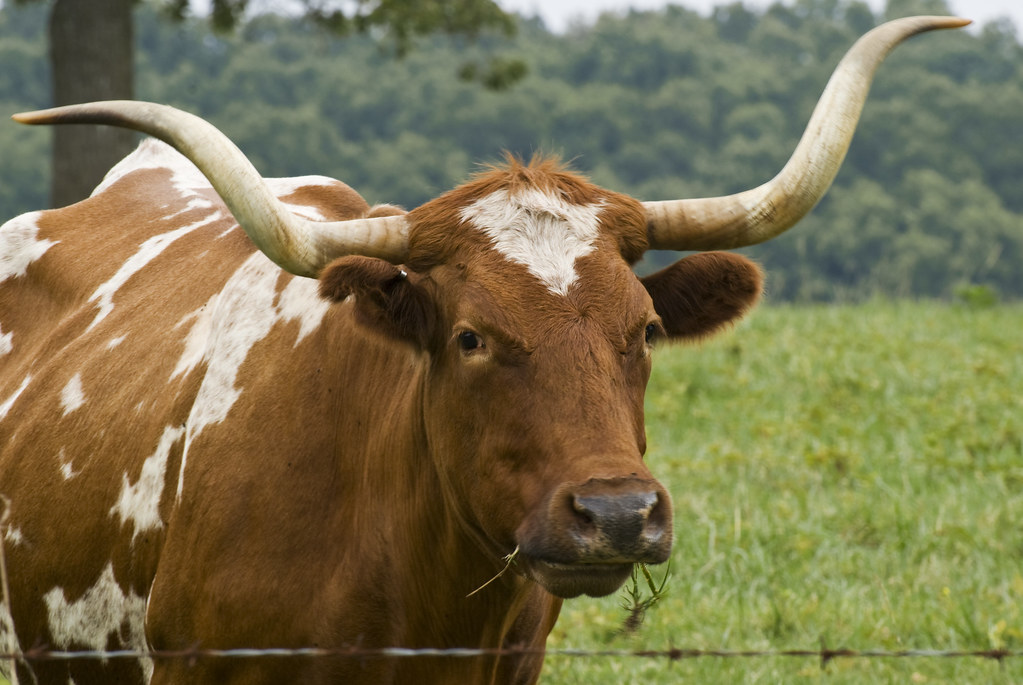
Longhorn
Longhorn in Southwest Missouri from Flickr user Jeff Weese. https://www.flickr.com/photos/jeffweese/3896957110/. Used under Creative Commons license (https://creativecommons.org/licenses/by/2.0/)
We looked at major impacts and opportunities to improve for each of the different production phases: ranch and farm grazing (cow-calf ranches, stockers, backgrounders, etc., when they're roaming about and grazing), feed production (growing hay / silage and row crops to be fed to cattle), feedlots (operation of the feedlot where they're fattened not including growing the feed), and harvest facilities (slaughterhouses).

You can read a bit about the report and our major findings here:

The report can be directly downloaded here:

The most interesting / surprising finding to me was that the grazing phase actually had the biggest impact. The key is that while it's fairly low impact per acre, it's by far both the largest footprint and where cattle spend the most time. So put together we actually see more greenhouse gas emissions, water quality impacts, and wildlife habitat impacts from that grazing phase.

A couple of key notes: Walmart provided funding for this report but had no editorial control or input into the content of the paper. Also, this was a rapid assessment (it took place over 6 months in between other work) by a small team of four scientists, so we do not have all the answers. Some critical issues we didn't have time to assess include impacts of dairy cattle, a comparison of the impact of beef to other protein sources (vegetable and animal), animal welfare and social issues, and the return on investment of different sustainability options (e.g. what would provide the most benefit per dollar spent). That's all important but was too much for us to tackle.

Finally, I occasionally have people ask me "Why should I trust you (as a vegan, or as an environmentalist) to give me accurate information about livestock and agriculture?" My answer is usually the same, which is that I encourage people not to simply trust me: instead look at the work, check my assumptions / calculations / sources, and come to your own decision about whether or not the analysis has merit. My job is to be as honest, accurate, and transparent as possible to make that process easy. Along those lines, I'm happy to take questions / critiques here.

Thursday, November 5, 2015

Using drones (UAVs) to measure turbidity (water quality) in small streams

I didn't write this myself, but I wanted to post the link anyway since this is a project I have been working on closely from design to data collection to analysis, along with a research fellow (Essayas Kaba Ayana) at Columbia University that I'm mentoring through the NatureNet program. We originally hoped to do this work in Kenya but legal and logistical difficulties required us to switch to Maryland:
http://blog.nature.org/science/2015/11/05/drones-in-the-field/

Monday, May 12, 2014

Measuring sustainabiilty in agriculture - focusing on outcomes

A white paper I wrote (along with my colleagues Tim Boucher and Samantha Atwood) is now available at:
http://www.nature.org/science-in-action/science-features/measuring-sustainability-in-agriculture-focusing-on-outcomes.xml


The basic premise is that the measure whether or not agriculture is truly sustainable we have to get past just measuring practices (what we do, such as conservation tillage or riparian buffers) and move to measuring outcomes (water quality & quantity, soil quality, etc.). We review the literature and suggest several metrics for environmental variables, although we do not include agronomic variables such as yield which are part of overall sustainability.