Showing posts with label soil carbon. Show all posts

Thursday, February 1, 2024

February 2024 science summary

Snowflake ornament illuminated by Christmas tree lights

 Hello,


This month is a bit of a grab bag again with an article on freshwater protection, another on koala-vehicle strikes, and two on soil carbon (both offering caution on the potential and flagging complexity).

If you know someone who wants to sign up to receive these summaries, they can do so at http://bit.ly/sciencejon (no need to email me).

FRESHWATER:
Flitcroft et al. 2023 notes that counting effective freshwater protection globally is really hard (as is getting effective protection to happen). Fig 1 has a nice summary of how restrictive different protection mechanisms are. They also call for both better management of existing protected areas (PAs) to include freshwater conservation needs, and protections for freshwater in new places. While issues around data resolution and data availability continue to pose challenges to freshwater conservation, they argue that more explicit consideration of both freshwater and terrestrial objectives in any area-based protection is a good start.


WILDLIFE-VEHICLE CONFLICTS:
Dexter et al. 2023 makes a point that seems obvious once you think about it, but which was new to me. Namely, hotspots of wildlife-vehicle collisions (they looked at koala strikes) are likely to be very dynamic over time as wildlife populations grow and shrink, as land use change drives shifts in their movement, and as roads and traffic change. They make the point that wildlife crossings are generally cited based on past collision data, and found that collision hotspots decline over time (as nearby populations decline and/or move). There was some unspecified 'road mitigation' which could have partially driven the reductions but the authors said the mitigation wasn't sufficient to explore the decline (pointing to unpublished data, unfortunately). They recommend instead taking a broader landscape approach considering habitat and trends as opposed to focusing crossings at local collision hotspots, and including crossings or other mitigation early when making infrastructure changes.


SOIL CARBON:
Ogle et al. 2023 looks at the soil carbon portion of U.S. plans to meet their contribution to the Paris agreement on climate mitigation. They review several well known challenges w/ soil carbon (C): changes are hard to predict and measure accurately, that additionality and permanence can be challenges, and that changing practices can have undesirable side-effects (increasing emissions from soil of strong GHGs like nitrous oxide or methane, shifting emissions to other farms, etc.). See Table 1 for a summary. They also provide an overview of policy options including mandates, subsidies and incentives, C taxes, and C offsets (see Table 2). They call for a suite of research to investigate these challenges and look for a path forward if one exists.

Wang et al. 2023 is a helpful review of the degree to which soil carbon sequestration can offset greenhouse gas (GHG) emissions from ruminants (mostly cattle, but also sheep, goats, and buffaloes). It's a nice example of fairly simple analysis revealing important insights. Their top level finding is that to offset ruminant emissions from manure and burping over a 100 year timeframe, we would need to roughly triple the current total global carbon stock in managed grasslands (adding 200% to existing stocks), with regional increases needed from ~25%-2000% (Fig 4b, and see 4c which is per ha). That large an increase is not feasible; while reducing net emissions on ranches is important, we shouldn't expect to get the global beef & other ruminant sector to help mitigate climate change on net. That's perhaps obvious, but fringe local cases of low-density ranches w/ lots of nature potentially being carbon negative are often cited as examples of something globally scalable, so it's a useful reminder that they are not unless we reduce the global supply of ruminants (farm and eat less of their meat and dairy). Fig 3 summarizes how cattle factor into this in a different way: depending on how a given grassland can sequester and how much methane each cow produces, the "offsettable" cattle density ranges from 0 to 1.2 (for the very best case scenario).


REFERENCES:
Dexter, C. E., Scott, J., Blacker, A. R. F., Appleby, R. G., Kerlin, D. H., & Jones, D. N. (2023). Koalas in space and time: Lessons from 20 years of vehicle‐strike trends and hot spots in South East Queensland. Austral Ecology, June 2021, 1–18. https://doi.org/10.1111/aec.13465

Flitcroft, R. L., Abell, R., Harrison, I., Arismendi, I., & Penaluna, B. E. (2023). Making global targets local for freshwater protection. Nature Sustainability. https://doi.org/10.1038/s41893-023-01193-7

Ogle, S. M., Conant, R. T., Fischer, B., Haya, B. K., Manning, D. T., McCarl, B. A., & Zelikova, T. J. (2023). Policy challenges to enhance soil carbon sinks: the dirty part of making contributions to the Paris agreement by the United States. Carbon Management, 14(1). https://doi.org/10.1080/17583004.2023.2268071

Wang, Y., de Boer, I. J. M., Persson, U. M., Ripoll-Bosch, R., Cederberg, C., Gerber, P. J., Smith, P., & van Middelaar, C. E. (2023). Risk to rely on soil carbon sequestration to offset global ruminant emissions. Nature Communications, 14(1), 7625. https://doi.org/10.1038/s41467-023-43452-3
Sincerely,
 
Jon
 
p.s. This is a photo of a handmade glass snowflake ornament reflecting and transmitting several colors of Christmas tree lights

Thursday, January 25, 2024

September 2023 science summary

Seal at Starlux mini golf

 Hello,


I had high hopes to do more reading this month but international travel and getting sick got in the way. So here are just two articles for some light summer reading.

If you know someone who wants to sign up to receive these summaries, they can do so at http://bit.ly/sciencejon (no need to email me).

RANGELANDS AND SOIL C:
Provencher et al. 2023 models the potential carbon gains (and costs) to restore degraded rangelands (remotely sensed) in UT and NV (and some of OR, ID, and CA). The restoration sometimes involves herbicide to kill invasives and always involves: seeding w/ native perennial plants, excluding grazing for only 3 years from pixels that were seeded (grazing resumes after 3 years), and ending fire suppression. They found that invasive annual species like cheatgrass are more common than other analyses have found (Fig 8). See Table 3 for the key results: sequestration rates were very low in two sites (compared to less arid ecosystems) and modest in a third. Overall they ranged from 0.022 - 0.730 t CO2e / ha / yr (0.6-20 g C / m2 / yr). The best case scenario is in UT where ~$66 / ha delivers ~0.73 t CO2e/yr (+-50%), or ~$90 / t CO2e / yr (comparable to reforestation). Conversely the other ranches would be >$3,000 / t CO2e / yr. But selecting sites likely to be favorable to carbon accumulation could help make the case for ecological restoration (with empirical data needed if one wanted to sell carbon credits). And there is a LOT of degraded rangeland globally, so there's room to scale. To make carbon trading feasible in the Intermountain West, making this kind of seeding cheaper and more successful is important. 

INVASIVE SPECIES:
I couldn't resist reading Clark et al. 2023 right away despite my sad backlog. I once had a native plant garden guy tell me "at best non-native plants offer no value to pollinators and other wildlife, and most are harmful." Obviously false as an absolute! But how do they compare? Clark looked at 10 species in a Connecticut forest and found some invasive species (like honeysuckle) had more bugs (mass and protein) than the average for natives, but others (Japanese barberry) had fewer bugs. But birds seemed to forage both equally. It's a tiny study and I wish they hadn't pooled all native species, but I do like a study that counters "it depends!" to a truism in conservation.

REFERENCES:

Clark, R. E. (2023). Are native plants always better for wildlife than invasives ? Insights from a community-level bird- exclusion experiment.

Provencher, L., Byer, S., Frid, L., Senthivasan, S., Badik, K. J., & Szabo, K. (2023). Carbon Sequestration in Degraded Intermountain West Rangelands, United States. Rangeland Ecology & Management, 90, 22–34. https://doi.org/10.1016/j.rama.2023.05.004


Sincerely,
 
Jon
 
p.s. This is a photo of a fountain at a mini golf course in Wildwood, NJ

Monday, December 2, 2019

December 2019 science journal article summary

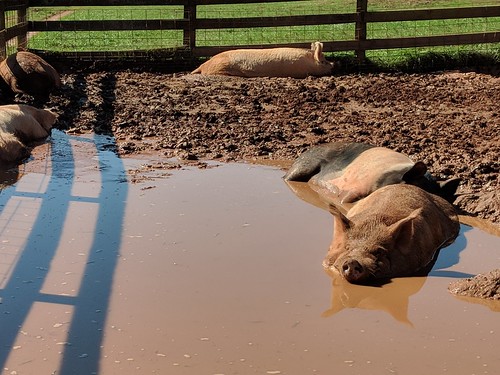
Pig in mud at poplar springs 2018 open house
Greetings,

This month I've just got a couple articles each on soil and learning from failure, plus one on social and environmental synergies and trade-offs. If you know someone who wants to sign up to receive these summaries, they can do so at http://bit.ly/sciencejon

Also, as a reminder, I'm hosting a webinar on December 3 (1p EST) with recommendations on how scientists may be able to achieve more real world impact via their research. You can learn more and register here: https://zoom.us/webinar/register/WN_Q78ubqH9TL6tkmLQCRyAsw and read the draft paper the talk is based on at http://bit.ly/strongerscience

SOIL:
Our paper opining on soil carbon (Bradford et al. 2019) is out! The opening two lines sum it up well: "Soil-based initiatives to mitigate climate change and restore soil fertility both rely on rebuilding soil organic carbon. Controversy about the role soils might play in climate change mitigation is, consequently, undermining actions to restore soils for improved agricultural and environmental outcomes." In other words, while scientists disagree a lot about whether boosting soil carbon is useful for climate mitigation, we all pretty much agree it's important for fertile and productive agricultural lands. Read a bit more at http://sciencejon.blogspot.com/2019/11/soil-carbon-what-is-it-good-for.html or just read the paper (it's only 1,800 words).

Lugato et al. 2018 uses daycent to model the net GHG impact of building soil carbon in farms via cover crops, reduced tillage, and keeping crop residues. They found a lot of variation across sites, but that overall reducing tillage and crop residue retention offered modest but long term (>80 years) net GHG benefits without impacting crop yield much. N-fixing cover crops led to stronger C sequestration and net GHG reductions over the first 20 years, but after 40 years it switched to being a GHG source (due to N2O) that strengthened over time (albeit with a small crop yield boost). If fertilization wasn't reduced to account for the new N from the cover crop, it would be a stronger GHG source much sooner. They also didn't model non-N-fixing cover crops like rye.


ORGANIZATIONAL LEARNING / FAILURE:
Catalano et al. 2018 argues that conservation would do well to learn how to deal with failure from other disciplines like medicine, business, and aviation. Specifically, we need to recognize how much we can learn from failure (sometimes more than success), rather than fearing it and avoiding tough measures as a result. They cover how we learn from failure, why it's hard to constructively engage with it, how understanding cognitive biases can help (see Table 1 for a great list to consider), and the role of leaders in supporting efforts to identify and learn from failure. The example of "no rank" military aviation debriefs is interesting - they promote a culture with sharing useful feedack at its core. My main take-away is that dealing with failure is not only key, but it's hard and requires careful thought to do well.

Catalano et al. 2019 is an analysis of 59 peer-reviewed articles discussing reported conservation failure (Table 2 has a great list of synonyms and euphemisms for failure). Most articles did use the term failure, and almost half did so in the abstract. See Table 3 for an interesting typology of causes of failure (including people, action, information, funding, and economic and political) and how common each was, and Table 4 for example text of each kind. Overall they found reporting failure in conservation is rare (~1/4 as often as reporting success), it's typically not framed as useful for learning, and 'people' are the most common cause of failure (e.g. especially stakeholder relationships, but also bad past experiences, fear, etc.). They also call for authors to report failure in a way that makes it easy for others to learn from their mistakes.


PEOPLE AND NATURE:
Gill et al. 2019 looks at 75 studies across 4 kinds of marine conservation work to evaluate social and environmental synergies and tradeoffs (as well as equity). Specifically: marine protected areas (MPAs - representing the majority of studies considered), community-based MPAs, environmental certification, and community-based management (CBM). They found diverse impacts, but with very few rigorous studies designed to show causality. But there was potential for both positive and negative cascading effects depending on access to resources (especially for fishers). Fig 6 has an interesting breakdown of how many studies covered each subtopic, and provides some potential categories of trade-offs to think about.


REFERENCES:
Bradford MA, Carey CJ, Atwood L, Bossio D, Fenichel EP, Gennet S, Fargione J, Fisher JRB, Fuller E, Kane DA, Lehmann J, Oldfield EE, Ordway EM, Rudek J, Sanderman J, Wood SA. 2019. Soil carbon science for policy and practice. Nature Sustainability .

Catalano AS, Redford K, Margoluis R, Knight AT. 2018. Black swans, cognition, and the power of learning from failure. Conservation Biology 32: 584–596.

Catalano AS, Lyons-White J, Mills MM, Knight AT. 2019. Learning from published project failures in conservation. Biological Conservation 238: 108223.

Gill DA, Cheng SH, Glew L, Aigner E, Bennett NJ, Mascia MB. 2019. Social Synergies, Tradeoffs, and Equity in Marine Conservation Impacts. Annual Review of Environment and Resources 44: 347–372.

Lugato E, Leip A, Jones A. 2018. Mitigation potential of soil carbon management overestimated by neglecting N2O emissions. Nature Climate Change 8: 219–223.


Sincerely,

Jon

p.s. If you'd like to keep track of what I write as well as what I read, I always link to both my informal blog posts and my formal publications (plus these summaries) at http://sciencejon.blogspot.com/

Monday, November 11, 2019

Soil carbon - what is it good for?

A while back I was on a soil carbon working group with the Science for Nature and People Partnership (SNAPP). Our recent journal article is about soil carbon and soil health. It’s a good read, and only 1,800 words: https://www.nature.com/articles/s41893-019-0431-y or https://rdcu.be/bWGfa if you don't have access.

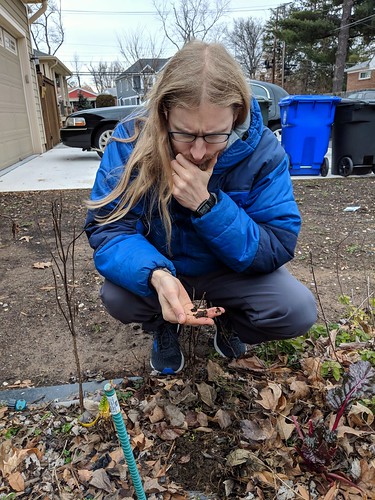
Pondering soil health

The lead author did a phenomenal job getting the text to be clear and succinct, and the opening two lines actually sum it up very well:
"Soil-based initiatives to mitigate climate change and restore soil fertility both rely on rebuilding soil organic carbon. Controversy about the role soils might play in climate change mitigation is, consequently, undermining actions to restore soils for improved agricultural and environmental outcomes."

In other words: scientists disagree about how effective soil carbon is as a climate change mitigation strategy. We disagree a lot - more than you'd expect. Everything from "this is our best bet to start scaling up now" to "building soil carbon will not result in any net climate mitigation." So we argue about it a lot.

But that debate hides the fact that we generally strongly agree that rebuilding soil carbon is good for farmers and ranchers. Most agricultural soils have lost carbon over time. Regaining it can mean less erosion, better water retention, and better crop resilience to stress. With good management it can even mean less fertilizer use and cleaner water. How much carbon is ideal in different landscapes, and how to best increase it, varies. But it's worth remembering how strong the consensus is on the value of building soil carbon from an agricultural perspective.

Read the paper here: Soil carbon science for policy and practice
There's also a press release here: Building A ‘Solution Space’ for Soil

Friday, March 1, 2019

Transition for monthly science updates


Greetings,

As many of you have heard, this is my last day at The Nature Conservancy; I'll be taking a new job at The Pew Charitable Trusts on their conservation science team. I don't know yet what will happen with these summaries but don't despair! I hope to keep them going in some form - likely with a different topical focus. If you know someone who is feeling lucky and wants to sign up to receive these summaries despite the uncertainty, they can do so at http://bit.ly/sciencejon

I've been frantically wrapping up work so have read less science than usual this month. But I did write a blog post explaining why seemingly silly questions like how to define forests and deforestation are actually both tricky and really important: How many trees make a forest? I talk about The Accountability Framework and the critical role it can play in helping to end deforestation:
https://news.mongabay.com/2019/02/how-many-trees-make-a-forest-commentary/

The only papers I reviewed this month are one about how scientists read scientific literature, and two soil papers (from TNC's Deborah Bossio and Steve Wood) which are both summarized on this blog: https://nature4climate.org/news/headline-stories/time-to-let-soil-shine-a-global-agenda-for-collective-action-on-soil-carbon/

READING SCIENTIFIC LITERATURE:
Colleagues working in applied conservation often tell me they have no time to read scientific literature. Tenopir et al. 2015 is an article about how faculty in five US universities seek out scholarly literature (including but not limited to the sciences)! I'll be honest - I skimmed this looking for two bits of information: scientists reported reading an average of 26 articles per month (Fig 1), and spent 32 minutes on each article (Fig 2). I read fewer articles, and usually read them faster. But even these academics are spending less than two days out of the month on this. Surely most of us can find a few hours! There are some other interesting tidbits here. Almost 2/3 of articles read are from the last two years - so have a good comms plan for your research! Also, NONE of the surveyed scientists read articles on a mobile device like a tablet, which is a huge missed opportunity for those long commutes on mass transit!

SOILS:
Soil organic carbon (SOC) is often claimed to improve crop yields.  Oldfield et al. 2019 tests that claim with a global meta-analysis of maize and wheat. They find higher SOC is associated with higher yields, up to ~2% SOC. They then look at the ~2/3 of global maize and wheat lands below 2% to estimate the opportunity to improve yield by boosting those soils to 2% SOC. Globally they estimate that we could produce ~5% more maize and ~10% more wheat, which represents 32% of the global yield gap for maize (largely in the US), and 60% for wheat (largely in China). Check out Figure 4 for global opportunity maps. Note that there is a lot of variance in the data, and it's even possible yields could decline slightly as SOC increases.

Vermeulen et al. 2019 is a call to action on improving global soil carbon stocks. It reviews some of the challenges that have impeded action at scale,and emerging opportunities that could give soil initiatives a boost. They call out three key needs, and look at possible actions to advance all three. First, a compelling vision for action led by political champions. Second, a stronger business case (including evidence of success for both public and private investors). Finally: a more compelling value proposition for farmers and land managers. They also highlight the need for practical measurement protocols, and several policy gaps. It's a quick read at 3 pages so worth a look.

REFERENCES:
Oldfield, E. E., Bradford, M. A., & Wood, S. A. (2019). Global meta-analysis of the relationship between soil organic matter and crop yields. SOIL, 5, 13–32. https://doi.org/10.5194/soil-2018-21

Tenopir, C., King, D. W., Christian, L., & Volentine, R. (2015). Scholarly article seeking, reading, and use: A continuing evolution from print to electronic in the sciences and social sciences. Learned Publishing, 28(2), 93–105. https://doi.org/10.1087/20150203

Vermeulen, S., Bossio, D., Lehmann, J., Luu, P., Paustian, K., Webb, C., … Warnken, M. (2019). A global agenda for collective action on soil carbon. Nature Sustainability, 2(1), 2–4. https://doi.org/10.1038/s41893-018-0212-z


Sincerely,

Jon

p.s. as a reminder, you can search all of the science articles written by TNC staff (that we know of) here http://www.conservationgateway.org/ConservationPlanning/ToolsData/sitepages/article-list.aspx
(as you publish please email science_pubs@tnc.org to help keep this resource current). This will be my last plug for this resource since I'm leaving TNC.
If you'd like to keep track of what I write as well as what I read, I always link to both my informal blog posts and my formal publications (plus these summaries) at http://sciencejon.blogspot.com/

Tuesday, May 1, 2018

May 2018 Science Journal Article roundup

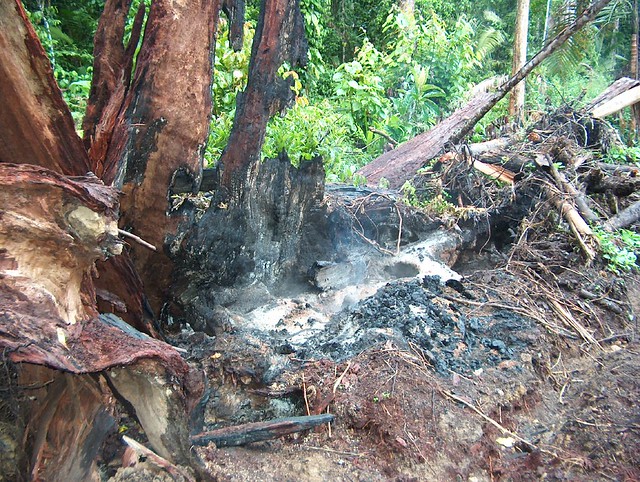
burning logged forest

Merry May!

Most of this summary was written on a red-eye flight to China, so apologies if it makes even less sense than usual, and please let me know if you spot errors or omissions! There's some focus on habitat conversion, but I threw in two water quality papers, plus one each on grazing and soil C, and one on knowledge diffusion.

KNOWLEDGE DIFFUSION / INFORMATION SHARING:
There's another paper out from the study of how Conservation by Design (CbD) 2.0 spread through TNC and beyond. This paper (led by Yuta Masuda, I'm a co-author) focuses on "boundary spanners" - people with informal connections across departments / geography. These “boundary spanners” are four times more likely to spread information about “innovations” (here that means info about CbD 2.0) and to drive changes in attitude that encourage adoption. However, their advantage in spreading info only exists when they have <4 direct reports and are relatively low in the organizational hierarchy (counting levels of who reports to their direct reports etc. etc.). There's a blog with more info at: https://www.sciencedaily.com/releases/2018/04/180409090127.htm and you can read the paper at http://rdcu.be/Kre4


HABITAT CONVERSION:
Nevle & Bird 2008 is grim but fascinating. They find a connection between seemingly unrelated factors: global CO2 levels and pandemics among indigenous people in the Americas brought on by European contact. They link the population crash to a reduction in burning of forests for swidden agriculture, subsequent forest regrowth storing ~5-10 Gt carbon, and argue this is a likely contributor to a small measured reduction in global atmospheric CO2 at the same time. It's more of an interesting hypothesis with data which is consistent than real 'proof' but it's still a fascinating (if depressing) read.

OK, you know food choices matter for habitat conversion, and several alternatives to conventional meat are 'hot' right now. But what protein source has the most promise for sustainability? Alexander 2017 has some answers. They look at a few categories: insects (crickets and mealworms), plant-based imitation meats (they looked at humble tofu rather than newer products like the 'bloody' impossible burger), cultured meat (real meat from animal cells grown in a lab), and aquaculture. Fig 1 has the results on efficiency - tofu came out on top (if you find it gross, let me know, preparation is key and rarely done right in the US), followed by bugs. Cultured meat didn't have much edge over pork and poultry. Table 2 then shows what the global impact on land use would be under different diet change scenarios (including odd ones like replacing 50% of current animal products with beef, doubling the ag footprint on earth). While insects came out as less efficient than plant foods, that could change if we found ways to use food waste for a significant portion of the insect feed.

Chaplin-Kramer 2015 asks how much it matters which lands get deforested in terms of impact on carbon storage and biodiversity. They look at two regions of Brazil and find where conversion happens affects its impact by a factor of 2-4, which conversion deep inside forests more harmful than nibbling away at the edges (although they note that their modelling scenarios use patterns different from what is typically seen in the real world). The discussion has some good points about how development of roads into new regions will likely have a higher impact than investment in infrastructure around existing agricultural lands.

Tyukavina et al 2017 has details on deforestation and forest degradation in the Brazilian Amazon since 2000. Figure 2A is my favorite - it conveys both the reduction in overall tree cover loss since a 2004 peak, and also the shift in what the land was cleared for. Pasture is consistently the biggest chunk, followed by swidden (small scale slash & burn) and then permanent croplands. There's lots of other interesting data here but that figure was the high point for me.

Wright et al 2017 uses a recent high-quality data set on conversion of natural habitat to / from farmland to show that there is a correlation between how much habitat was converted to farmland and how close the land is to the nearest ethanol refinery. While this study didn't correct for other factors, they point to another study which did and still found refinery proximity to be significant with conversion. The ability of refineries to stimulate conversion were highest where corn acreage was low to start. See http://wxpr.org/post/study-links-ethanol-production-habitat-destruction for a blog post aobut this one.

Kastens et al 2017 uses remote sensing data to look at conversion of forests in Brazil to soy farmland. The key finding is that the forest to soy conversion rate was cut in half after the 2006 soy moratorium. You can see the shift in Figure 5 by noting the change in the slope of the green line, but the abrupt difference right after the moratorium is more apparent in table 3.


AGRICULTURE (WATER QUALITY):
Hansen et al 2018 is a cool paper using empirical data to test how effective wetlands in the Minnesota River basin are at reducing nitrates in an ag landscape compared to cover crops and land retirement. They compared river water quality at ~200 sites under different flow conditions to high-resolution data on wetlands and land use to map correlations (they didn't get at true causation). They found wetlands were 5 times more effective per unit area at removing nitrates compared to cover crops and land retirement (although it's much harder to make a business case to a farmer around wetland creation). They also found wetlands strategically placed to intercept as much flow as possible were much more effective (see Fig 4 - the concept is obvious but the numbers are interesting). All these findings align well with prior work emphasizing the critical role of well-placed wetlands to improve water quality. If you read this paper watch out for the term "crop cover" (% of a given site area used to grow crops) as opposed to "cover crops" (presence of an additional crop on farmland that would otherwise be fallow for part of the year), as they're not super clear how they use the two terms.

Another potentially important tool to improve water quality can be controlled drainage aka "drainage water management" or DWM for short. The basic idea is that for cropland with 'tile drains' the nutrient-laden water can be stored and later reapplied to the field. Ross et al 2016 (led by several TNC colleagues) looked at both how effective DWM was on average in reducing the flow of water, N, and P from tile drained landscapes (they were all cut roughly in half), and identified what tended to make DWM work best. DWM performed better at higher fertilizer rates, when aggressively managed during the non-growing season, and there's a lot more evidence on N than P. Possible caveats: DWM can increase surface flow (and potentially erosion) as well as increase N2O by keeping fields wetter depending on how it's done.


GRAZING / SOIL CARBON:
Naverette 2016 (led by TNC's Diego Naverette) is another paper showing that we need different grazing strategies in temperate and tropical climates. There is considerable interest in temperate regions about the potential for high-intensity rotational grazing to improve soil carbon sequestration under some conditions. But this paper found in their study area (part of Colombia / Brazil / Peru), conversion from forest to grazing lands at intensities >1 head per ha led to soil carbon declining by 20% on average after 20 years, while conversion from forest to low-intensity grazing lands (<1 head / ha) actually led to a 40% increase! It's important to note rather than looking at individual pastures, the study looked at one "high intensity" region and one "low intensity region," so it's not controlling for soil type or other variables. Also note that the low intensity region includes a lot of abandoned pasture land which was regrowing with trees and shrubs, and questions of 'land sparing' by intensive grazing were not addressed. But this is useful baseline data we can use to evaluate the contribution of silvopastoral systems.

REFERENCES:
Alexander, P., Brown, C., Arneth, A., Dias, C., Finnigan, J., Moran, D., & Rounsevell, M. D. A. (2017). Could consumption of insects, cultured meat or imitation meat reduce global agricultural land use? Global Food Security, (April), 1–11. https://doi.org/10.1016/j.gfs.2017.04.001

Chaplin-Kramer, R., Sharp, R. P., Mandle, L., Sim, S., Johnson, J., Butnar, I., … Kareiva, P. M. (2015). Spatial patterns of agricultural expansion determine impacts on biodiversity and carbon storage. Proceedings of the National Academy of Sciences, 112(24), 7402–7407. https://doi.org/10.1073/pnas.1406485112

Hansen, A. T., Dolph, C. L., Foufoula-Georgiou, E., & Finlay, J. C. (2018). Contribution of wetlands to nitrate removal at the watershed scale. Nature Geoscience. https://doi.org/10.1038/s41561-017-0056-6

Kastens, J. H., Brown, J. C., Coutinho, A. C., & Esquerdo, D. M. (2017). Soy moratorium impacts on soybean and deforestation dynamics in Mato Grosso , Brazil, 1–21.

Masuda, Y. J., Liu, Y., Reddy, S. M. W., Frank, K. A., Burford, K., Fisher, J. R. B., & Montambault, J. (2018). Innovation diffusion within large environmental NGOs through informal network agents. Nature Sustainability, 1(4), 190–197. https://doi.org/10.1038/s41893-018-0045-9

Navarrete, D., Sitch, S., Aragão, L. E. O. C., & Pedroni, L. (2016). Conversion from forests to pastures in the Colombian Amazon leads to contrasting soil carbon dynamics depending on land management practices. Global Change Biology, 22(10), 3503–3517. https://doi.org/10.1111/gcb.13266

Nevle, R. J., & Bird, D. K. (2008). Effects of syn-pandemic fire reduction and reforestation in the tropical Americas on atmospheric CO2 during European conquest. Palaeogeography, Palaeoclimatology, Palaeoecology, 264(1–2), 25–38. https://doi.org/10.1016/j.palaeo.2008.03.008

Ross, J. A., Herbert, M. E., Sowa, S. P., Frankenberger, J. R., King, K. W., Christopher, S. F., … Yen, H. (2016). A synthesis and comparative evaluation of factors influencing the effectiveness of drainage water management. Agricultural Water Management, 178, 366–376. https://doi.org/10.1016/j.agwat.2016.10.011

Tyukavina, A., Hansen, M. C., Potapov, P. V., Stehman, S. V., Smith-Rodriguez, K., Okpa, C., & Aguilar, R. (2017). Types and rates of forest disturbance in Brazilian Legal Amazon, 2000–2013. Science Advances, 3(4), 1–16. https://doi.org/10.1126/sciadv.1601047

Wright, C. K., Larson, B., Lark, T. J., & Gibbs, H. K. (n.d.). Recent grassland losses are concentrated around U . S . ethanol refineries, 44001.


Sincerely,

Jon

p.s. as a reminder, you can search all of the science articles written by TNC staff (that we know of) here http://www.conservationgateway.org/ConservationPlanning/ToolsData/sitepages/article-list.aspx
(as you publish please email science_pubs@tnc.org to help keep this resource current).
If you'd like to keep track of what I write as well as what I read, I always link to both my informal blog posts and my formal publications (plus these summaries) at http://sciencejon.blogspot.com/