Showing posts with label water use. Show all posts

Tuesday, September 1, 2026

September 2026 Science Summary

Camelbak full of ice in backpack

 Greetings,


I've got four new articles this week. I continue to play with using AI to help me spot weak spots and interesting aspects of papers I review (after my initial review to avoid bias).

If you know someone who wants to sign up to receive these summaries, they can do so at http://subscribe.sciencejon.com (no need to email me).


WILDLIFE MIGRATION & CROSSINGS:

I didn't properly review Williamson et al. 2024. But had to share my delight at learning that there are "giant" hummingbirds in Chile which were documented migrating in a loop up to 8,335km long! Also to quote the paper, the migration "included a 3-wk, ~4,100-m ascent punctuated by upward bursts and pauses, resembling the acclimatization routines of human mountain climbers, and accompanied by surging blood-hemoglobin concentrations". Also they are big for a hummingbird, but still weighing only up to 31g (~2.5 strawberries).

Abra et al. 2026 conducted a BACI study on the impact of wildlife crossings under the BR-262 highway between Anastacio and Corumba in the Brazilian Pantanal. They found that underpasses combined w/ fencing reduced caiman mortality but not mortality of capybara or crab-eating fox, likely b/c of gaps in the fencing due to poor maintenance. They also found evidence of both a) a wide array of species using the underpasses (even though we know from research elsewhere that some species prefer overpasses) and b) of roadkill impacting some key species like giant anteater and jaguarundi.


WATER MANAGEMENT:

Wight et al. 2026 looks at how well capping water use works across 47 cases around the world (but ~1/2 in the US). They find that enforcement is of course critical (which in turn requires water users to all have permits and be regulated and monitored), so is adaptability (changing extraction in response to water levels every few years). 89% of cases with the best performance had a top score for enforcement, but the reverse doesn't hold true and they provide several examples of enforcement of an insufficient cap w/o adaptability failed (e.g., the Colorado River basin). Note that there are many kinds of caps and some cases used multiple options at once. Barriers include lack of water management staff and monitoring data, lack of support from water users (issues around trust, control, and livelihoods), and lack of authority for enforcement. They recommend clarity and transparency about the problem, the cap, and how it would work (including monitoring and defining success vs. failure), as well as trying to co-create a solution to get buy-in from water users (since everyone loses if supply continues to dwindle). See a related blog about a relatively simple water management framework https://www.sustainablewaters.org/a-simple-yet-powerful-fram...


CLIMATE ADAPTATION:

Vitorino et al. 2026 interviewed Pantaneiros (broadly, including fishers and farmers, not just ranchers) in 2012 and 2024 to see how perceptions had changed (although they didn't interview the same households). By 2024 almost everyone had noticed changes in temperature (substantially higher) and rain (slightly lower, although streamflow from upstream is also declining according to other papers). 90% reported adapting their practices in response. But some of those adaptations might be bad ideas - like reducing the number of crop species planted to a few that are easier to grow makes farming simpler but can potentially increase risk of crop failure vs. diverse farms. Also, moving closer to rivers could create higher flood risk in wetter years even though the overall trend is getting drier.


REFERENCES:
Abra, F. D., Goebel, L. G. A., Desbiez, A., Yogui, R., Costa, R., Laps, R. R., Ribeiro, Y. G. G., Guilherme, L., Mello, R. De, Cunha, L., Ascens, F., Pino, E. G. R. Del, Guazi, P. A. P. M., Ascenç, S. R. S., Nogueira, A. C., Oliveira, J. C. L. De, Barros, D. S., Varanis, E. N., Gregory, T., … Prist, P. R. (2026). From roadkill monitoring to evidence-based wildlife mitigation in the Brazilian Pantanal. 70. https://doi.org/10.1016/j.gecco.2026.e04347

Vitorino, B. D., da Frota, A. V. B., Arruda, M. A. do N., Vacchiano, M. C., Nunes, J. R. da S., & da Silva, C. J. (2026). Effects of climate change: an overview of perceptions, vulnerabilities and adaptations in the northern Pantanal wetland integrated with long-term climate data. Climatic Change, 179(8), 173. https://doi.org/10.1007/s10584-026-04268-4

Wight, C., Richter, B. D., Ayala, G., Blevins, L., Carter, K., Carter, S., Coughlin, B., Delzell, S., Diment, L., Fabiano, A., Farrell, C., Hanway, S., Heitmeyer, E., Herock, E., Jackman, S., Jenkins, R., Kelley, C., McNichols, A., Novak, D., … Yohannes, E. (2025). Taking stock of caps on water use: fostering sustainability or falling short? Water Policy, 27(1), 17–39. https://doi.org/10.2166/wp.2024.071

Williamson, J. L., Gyllenhaal, E. F., Bauernfeind, S. M., Bautista, E., Baumann, M. J., Gadek, C. R., Marra, P. P., Ricote, N., Valqui, T., Bozinovic, F., Singh, N. D., & Witt, C. C. (2024). Extreme elevational migration spurred cryptic speciation in giant hummingbirds. Proceedings of the National Academy of Sciences, 121(21), 2017. https://doi.org/10.1073/pnas.2313599121

Sincerely,

Jon


P.s. The picture above shows a trick I used to stay cool when biking in hot weather. It's a backpack with a mesh back and space for air to flow when riding, and I sometimes put a camelbak full of ice water in it so it feels kind of like air conditioning when I ride. Last time I did this the heat index was 113 but it didn't feel too unpleasant. Please be cautious if trying this out though - the risks of heat stress are real!

Wednesday, April 1, 2020

April 2020 Science Journal Article Summary

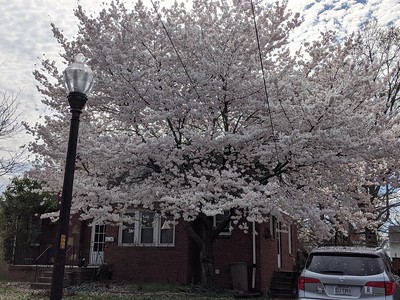
Cherry tree in bloom
Wow,

I'm guessing that most of you are reading more science while stuck at home, but that you're focusing on science related to the pandemic. I certainly am.

But for now, I figured I'd send the usual kind of summary (focused on protected areas this month), since this is where my expertise lies. I thought of reviewing some articles on how conservation can both help and hurt infectious disease transmission (depending on context), but that felt crass.

If you have thoughts on these summaries (if they should pause, change, etc. during the pandemic) please let me know. If you know someone who wants to sign up to receive these summaries, they can do so at http://bit.ly/sciencejon

PROTECTED AREAS:
Hannah et al. 2020 estimates that effectively conserving 30% of tropical land could cut predicted species extinction by ~1/2-2/3 (if the conserved areas are both cited ideally and managed well: this is not about legal protection alone). Conserving 50% could reduce extinction by more like 2/3-80% (see Table 1 for details including how this varies by region). This is useful to understand how effective conservation can be at different scales. But it's important to note that citing PAs in ideal locations continues to be elusive, this model relies on fairly simple assumptions using species-area curves, and the fact that the results didn't vary much with climate change (RCP2.6 vs RCP 8.5) is concerning. Nonetheless, this could be motivating to highlight the importance of protecting and managing enough of the right places on earth to slow species extinction.

How well does the current network of protected areas represent both biodiversity and the provision of ecosystem services in the tropics? Neugarten et al. 2020 has answers for five countries (Cambodia, Guyana, Liberia, Madagascar, and Suriname). They found that PAs are doing pretty well on biodiversity, forest protection, and forest carbon stocks, although with lots of room for improvement (Table 3). But PAs are not doing well on protecting non-timber forest products (like food and medicine) nor freshwater ecosystem services, both of which are mostly protected at about the same rate as land overall in each country (except Cambodia which did somewhat better on freshwater ecosystem services). Identifying opportunities to improve like this is critical to inform where to cite future PAs. They are up front about a few caveats: they looked only at designation of formal protected areas (rather than effective management on the ground), this may not be reflective of PAs across the tropics more broadly, and they had to rely on some squishy data (e.g. a mix of data sources and expert input to identify biodiversity priority areas). But it's still a good step to inform citing the next wave of PAs as interest in doing so ramps up across the globe. The authors have shared their data here: https://www.conservation.org/projects/mapping-natural-capital/mnc-data/ and are happy to help others to access and use it.

Wilhere 2008 makes an important point about analyses of how much conservation "is enough." He argues there's no single answer, since it depends on society's values for things like what risk of extinction is acceptable. Another key point is that the inputs into these models (which spp. or habitats to model and prioritize) are inherently value-driven as well. He recommends that these kinds of analyses: are transparent about the role of ethics / values (outside of science) in choosing conservation targets, recognize that any modeled policy options are only one of many possible choices, consider alternative targets to prioritize, and work with economists to produce cost estimates of any recommendations.

Wilhere et al. 2012 is a critique of one of the many 'half earth' papers arguing we need to effectively conserve at least half of the earth to avoid unacceptable biodiversity loss (Noss et al. 2012). The critique is similar to the Wilhere 2008 paper: the half earth target is presented as a "strict scientific point of view" without recognizing the value judgments that inform the results. They call for papers like Noss' to clearly articular the values of the author, and evaluate multiple policy options reflecting different values.

Finally, Armsworth et al. 2020 looks at  the best "bargains" exist for conservation: where the most species can be protected (from projected land conversion) for the lowest cost of land acquisition. In other words, how can we prevent the most species loss with a fixed budget for protection?
The new spatial prioritization model this is based on goes beyond binary models (which recommend protection or not), and instead allocates funding as a continuous variable. It also considers complementarity to avoid concentrating funding in areas rich with the same species. When they run the model for the coterminous U.S., attempting to conserve all species equally leads to the Southwest being a priority (since there's lots of cheap, intact habitat). But focusing on vertebrates vulnerable to extinction, priorities pop out in Texas (due to cave ecosystems with many unique & threatened species in small places) and the Southern Appalachians. There's a great discussion of how different assumptions and data inputs impact the results. There's a blog about this article here: http://www.nimbios.org/press/FS_conservetool

WATER USE:
Richter et al. 2020 has two key points about water scarcity (and the resulting impact on freshwater ecosystems) in the Western United States. First, cattle feed is the biggest driver - 1/3 of water consumed in 17 Western states is for cattle feed, and in the Colorado River basin it's 55% (Table 1). But in good news, there is a proven affordable solution - paying farmers to temporarily fallow (stop growing crops) some or all of their land used for cattle feed. We also would need to reduce some of the water transferred between basins to fully address the over-allocation of water. The paper also has good data on which cities are driving the most scarcity via demand for beef, impact of water scarcity on fish (including extinction risk), and the cost of payments to farmers for fallowing ($82-241 million / year). Finally, one of the authors (Arjen Hoekstra) passed away last year, and I wanted to express how much I appreciate his pioneering work on water footprinting, and how much influence he had on me as a scientist. He will be sorely missed.

MARINE ECOLOGY:
Hammerschlag et al. 2019 is a great overview of the many ecological functions and ecosystem services provided by aquatic predators (both marine and freshwater). It's well written enough to serve as a good introduction to the topic even for people like me with very little marine ecology background. Most of the benefits are fairly obvious, but benefits to climate mitigation (by reducing herbivores that can reduce carbon sequestration and storage) and inspiring products like boat coatings to reduce drag were especially interesting.

REFERENCES:
Armsworth, P. R., Benefield, A. E., Dilkina, B., Fovargue, R., Jackson, H. B., Le Bouille, D., & Nolte, C. (2020). Allocating resources for land protection using continuous optimization: biodiversity conservation in the United States. Ecological Applications, eap.2118. https://doi.org/10.1002/eap.2118

Hammerschlag, N., Schmitz, O. J., Flecker, A. S., Lafferty, K. D., Sih, A., Atwood, T. B., … Cooke, S. J. (2019). Ecosystem Function and Services of Aquatic Predators in the Anthropocene. Trends in Ecology & Evolution, 34(4), 369–383. https://doi.org/10.1016/j.tree.2019.01.005

Hannah, L., Roehrdanz, P. R., Marquet, P. A., Enquist, B. J., Midgley, G., Foden, W., … Svenning, J. (2020). 30% Land Conservation and Climate Action Reduces Tropical Extinction Risk By More Than 50%. Ecography, 1–11. https://doi.org/10.1111/ecog.05166

Neugarten, R. A., Moull, K., Martinez, N. A., Andriamaro, L., Bernard, C., Bonham, C., … Turner, W. (2020). Trends in protected area representation of biodiversity and ecosystem services in five tropical countries. Ecosystem Services, 42(January), 101078. https://doi.org/10.1016/j.ecoser.2020.101078

Richter, B. D., Bartak, D., Caldwell, P., Davis, K. F., Debaere, P., Hoekstra, A. Y., … Troy, T. J. (2020). Water scarcity and fish imperilment driven by beef production. Nature Sustainability. https://doi.org/10.1038/s41893-020-0483-z

Wilhere, G. F. (2008). The how-much-is-enough myth. Conservation Biology, 22(3), 514–517. https://doi.org/10.1111/j.1523-1739.2008.00926.x

Wilhere, G. F., Maguire, L. A., Scott, J. M., Rachlow, J. L., Goble, D. D., & Svancara, L. K. (2012). Conflation of Values and Science: Response to Noss et al. Conservation Biology, 26(5), 943–944. https://doi.org/10.1111/j.1523-1739.2012.01900.x


Stay safe, vigilant, and healthy,

Jon

p.s. If you'd like to keep track of what I write as well as what I read, I always link to both my informal blog posts and my formal publications (plus these summaries) at http://sciencejon.blogspot.com/

Tuesday, November 8, 2016

U.S. Beef Supply Chain - Impacts and Opportunities

Surprisingly, there are very few assessments of the overall environmental impact of beef across the supply chain (looking at all phases of their life). The only ones we've found have a clear bias either favoring industrial systems or grass-finished systems. So, The Nature Conservancy decided to fill that gap with a rapid assessment.
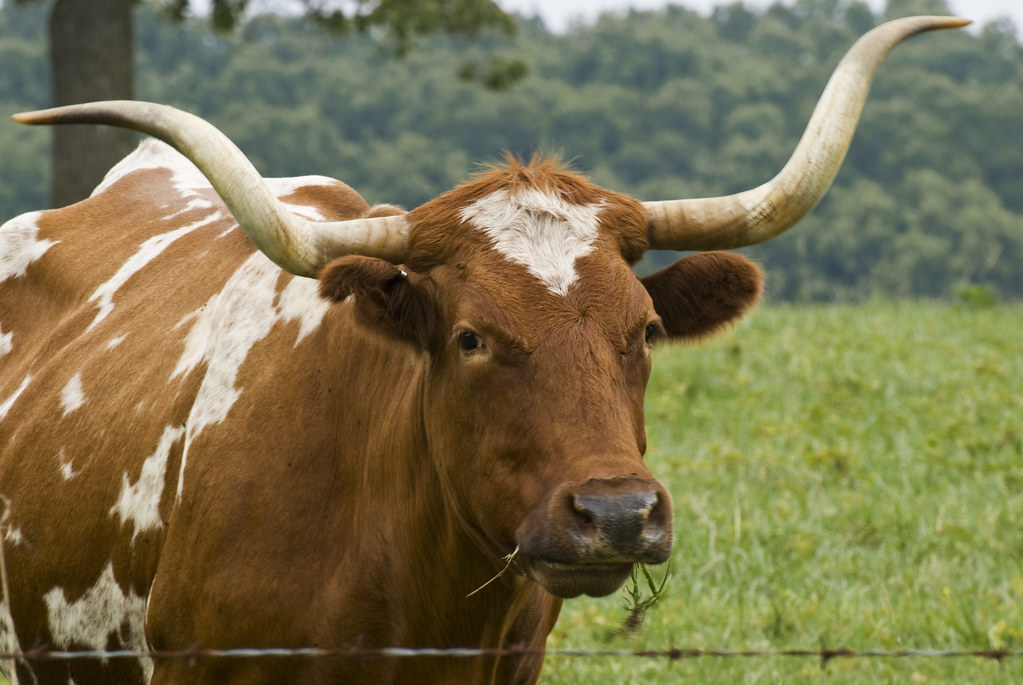
Longhorn
Longhorn in Southwest Missouri from Flickr user Jeff Weese. https://www.flickr.com/photos/jeffweese/3896957110/. Used under Creative Commons license (https://creativecommons.org/licenses/by/2.0/)
We looked at major impacts and opportunities to improve for each of the different production phases: ranch and farm grazing (cow-calf ranches, stockers, backgrounders, etc., when they're roaming about and grazing), feed production (growing hay / silage and row crops to be fed to cattle), feedlots (operation of the feedlot where they're fattened not including growing the feed), and harvest facilities (slaughterhouses).

You can read a bit about the report and our major findings here:

The report can be directly downloaded here:

The most interesting / surprising finding to me was that the grazing phase actually had the biggest impact. The key is that while it's fairly low impact per acre, it's by far both the largest footprint and where cattle spend the most time. So put together we actually see more greenhouse gas emissions, water quality impacts, and wildlife habitat impacts from that grazing phase.

A couple of key notes: Walmart provided funding for this report but had no editorial control or input into the content of the paper. Also, this was a rapid assessment (it took place over 6 months in between other work) by a small team of four scientists, so we do not have all the answers. Some critical issues we didn't have time to assess include impacts of dairy cattle, a comparison of the impact of beef to other protein sources (vegetable and animal), animal welfare and social issues, and the return on investment of different sustainability options (e.g. what would provide the most benefit per dollar spent). That's all important but was too much for us to tackle.

Finally, I occasionally have people ask me "Why should I trust you (as a vegan, or as an environmentalist) to give me accurate information about livestock and agriculture?" My answer is usually the same, which is that I encourage people not to simply trust me: instead look at the work, check my assumptions / calculations / sources, and come to your own decision about whether or not the analysis has merit. My job is to be as honest, accurate, and transparent as possible to make that process easy. Along those lines, I'm happy to take questions / critiques here.