Showing posts with label resilience. Show all posts

Friday, June 26, 2026

June 2026 science summary

Jon bike sailing in Scotland

Eyyyy!


I spent half of May on vacation visiting friends in Scotland and Germany so read less science than usual. But the three articles I have seem broadly interesting. To deepen my review, AFTER I finished my write up I asked Elicit (an AI tool) to look at each paper for 1-3 key points or findings or limitations not mentioned in the abstract that might be both important but non-obvious. It actually caught 1-2 things I decided to include in each summary: some I'd missed, most I'd noted and didn't see as important but on reflection decided they were worth including.

If you know someone who wants to sign up to receive these summaries, they can do so at http://subscribe.sciencejon.com (no need to email me).


CLIMATE CHANGE:
Can’t wait for the next IPCC climate report? Van Vuuren et al. 2026 lists the scenarios they plan to model in that report (results likely in a year or so). These will replace the RCPs. See section 2.3 for the full list, and note the shift to plain language and emphasis on plausibility: “medium emission scenario” means current policies and trends continue (~3C increase by 2100), “high emissions” means as much rollbacks as is plausible (~3.5C increase by 2100 but rising past that). They also have scenarios where we start high or medium but later step up action to low. We’ll have to wait to see the final model runs, expected impacts (physical and socioeconomic including equity), and associated storylines of each scenario. They also note that they use a simple approach for estimation past 2100 (2150 and 2500) but reflect that over time we need to extend the horizon of more complex modeling. They also note that not all potential carbon dioxide removal approaches are included in most scenarios (see section 5).


FOREST RESILIENCE:
Wang et al. 2026 has a nice list of 10 ways to improve the climate resilience of forests. Nothing brand new or surprising - except maybe the phrase "cohesive polycentric governance frameworks" for a coordinated mix of autonomous and shared decision-making across Indigenous people, governments, carbon market managers, etc. The abstract and Fig 2 have the full list; in addition to governance they have: diversity, disturbance, protection, restoration, adaptive mgmt, sustainable forestry / logging, monitoring, learning, and collaboration. Table 1 lists some examples of climate stresses and related forest vulnerabilities and resilience strategies. Figure 1 is an interesting map attempting to split 'natural' and 'social-ecological' forests (based on Forest Landscape Integrity Index as per Grantham et al. 2020 which docks points for forest cover loss and other observed human pressures plus loss of connectivity). Of the 10 - they assert that diversity and decentralization of authority are the most essential, but recognize limitations in seed sources, trade-offs (e.g., prescribed fire affecting human health, or lower timber yields w/ higher diversity and longer rotations), and cost.


OCEAN CONSERVATION:

Worm et al. 2026 provides the status of 2030 global goals to both 1) protect 30% of the ocean and 2) sustainably manage 100% of it. They look at 445 fish stocks in the 19 FAO "major fishing areas" that cover the entire ocean and collectively produce 72% of global marine fish harvest (the other 28% is from minor untracked species - which are often less well managed). They find 10% of the ocean is protected (from 2-20% by fishing area) of which 3% is either highly or fully protected (from 0.1-19%) meaning the marine protected area (MPA) is implemented w/ a management plan and a ban on damaging forms of extraction. For other non-marine people like me, "highly protected" specifically means: only small scale infrequent anchoring, only low-impact small scale unfed aquaculture, and that fishing is infrequent using a few kinds of selective low-impact gear. Sadly the paper points out big MPAs are typically in remote places w/ little fishing, avoiding conflict but also reducing the likelihood of impact and potential for coordination. The fishery management bit is more confusing: they report that 62% of the stocks (~45% of global marine fish harvest) were 'sustainably managed' using the criteria of fishing at or below a single-species maximum sustained yield, but the paper ALSO argues that's the wrong target and we need to be keeping harvest at or below a "multi-species maximum sustained yield" (see Fig 3) which is very rare. They also note that different agencies typically manage MPAs (often w/ a biodiversity focus) and fisheries (often w/ an economic and production focus), sometimes leading to poor coordination and even conflict.


REFERENCES:
Grantham, H. S., Duncan, A., Evans, T. D., Jones, K. R., Beyer, H. L., Schuster, R., Walston, J., Ray, J. C., Robinson, J. G., Callow, M., Clements, T., Costa, H. M., DeGemmis, A., Elsen, P. R., Ervin, J., Franco, P., Goldman, E., Goetz, S., Hansen, A., … Watson, J. E. M. (2020). Anthropogenic modification of forests means only 40% of remaining forests have high ecosystem integrity. Nature Communications, 11(1), 5978. https://doi.org/10.1038/s41467-020-19493-3

Van Vuuren, D. P., O’Neill, B. C., Tebaldi, C., Sanderson, B. M., Chini, L. P., Friedlingstein, P., Hasegawa, T., Riahi, K., Govindasamy, B., Bauer, N., Eyring, V., Fall, C. M. N., Frieler, K., Gidden, M. J., Gohar, L. K., Högner, A., Jones, A. D., Kikstra, J., King, A., … Ziehn, T. (2026). The Scenario Model Intercomparison Project for CMIP7 (ScenarioMIP-CMIP7). Geoscientific Model Development, 19(7), 2627–2656. https://doi.org/10.5194/gmd-19-2627-2026

Wang, L., Tagesson, T., Wei, F., Dong, W., Tian, F., Duan, Z., Luan, H., & Svenning, J. (2026). Ten Strategies to Promote Climate Resilience and Sustainability of Global Forests. WIREs Climate Change, 17(3). https://doi.org/10.1002/wcc.70064

Worm, B., Clausius, E., Grorud-Colvert, K., Palardy, J. E., Pauly, D., Pike, E. P., Pikitch, E. K., Roberts, C. M., Roberts, G. E., Richmond, R. H., Schiller, L., Stuart-Smith, R. D., & Sumaila, U. R. (2026). Integrating global targets for protected areas and sustainable fisheries. Marine Policy, 191(October 2025), 107152. https://doi.org/10.1016/j.marpol.2026.107152

Sincerely,

Jon


P.s. The pic is of me bike sailing (aka "land yachting" for some reason) on a beach in St. Andrews, Scotland. It is a lot of fun!


Monday, July 3, 2023

July 2023 science summary

Little mermaid food 
Greetings,

This month I have two articles on climate resilience, one on climate mitigation, and one on science-implementation partnerships. Plus a couple articles on AI as usual.

While it's a Canadian science fair project and not peer-reviewed science, I was interested to see this test of "you catch more flies with honey than vinegar." The experiment found that you catch more flies with honey and vinegar than with vinegar alone, which catches more than honey alone. But bringing it back to the saying: please don't be a jerk regardless.

My obligatory article on AI (and specifically Large Language Models [LLMs] like ChatGPT) is extra-fascinating this month. Can (and should) LLMs help us communicate more empathically? Check out this NY times article 'When Doctors Use a Chatbot to Improve Their Bedside Manner.' I love the idea of someone wanting to be kind by using the right words, not knowing what to say, and getting help with that. I have found it's very common for people to stay silent when they can't find 'the right words' around illness and death and grief, so I am all for helping people (including doctors) to get unstuck. I asked Bard (Google's LLM) for advice on how to support a friend who is grieving and found it mostly excellent. Not ideal but really good and something most of us could learn from. The idea of machines helping us to express empathy more effectively is so intriguing and I'm all for it.

The latest AI tool I tried out is "ChatPDF" which lets you upload a PDF and ask the tool questions about it. It works pretty well for some things, but is oddly dull in others. Like for one paper I asked it which species was responsible for most of the primary effect they reported (t CO2e of climate mitigation) and it didn't know. But when I asked it what the contribution was of the species I knew drove >80% of the effect, it reported it numerically. Apparently it was unable to divide the number it knew for the species in question by the total effect size number (which it also knew). But I thought it performed reasonably well with my questions about the IPCC report. TL;DR is that it seems better at finding / extracting info than any kind of reasoning.

If you know someone who wants to sign up to receive these summaries, they can do so at http://bit.ly/sciencejon (no need to email me).


CLIMATE MITIGATION:
Duncanson et al. 2023 estimates how much global forested protected areas may be reducing climate change. They matched forested protected areas to similar forested unprotected areas using data from 2000 (land cover, ecoregion, and biome; with additional control pixels that accounted for population etc. - see Table S1). Then they used the new (2019) GEDI lidar data to estimate aboveground forest biomass in 2020. 63% of forested PAs had significantly higher biomass than matched unprotected areas; on average PAs have 28% more aboveground biomass. Over a third of that effect globally comes from Brazil; Africa had less C dense forests and more human pressures on both PAs and unprotected areas. As you'd guess, most of the difference in unprotected sites was due to deforestation. But in 18% of PAs carbon was higher than unprotected sites even though optical sensors didn't detect deforestation (implying LiDAR is detecting either avoided degradation and/or enhanced growth in PAs). As a final note, other research has shown that both ICESat-2 and GEDI LiDAR satellites tend to underestimate forest canopy heights (mostly irrelevant here given the matching approach, but good to know for other global estimates).


CLIMATE RESILIENCE:
Anderson et al. 2023 is the latest paper supporting the data in The Nature Conservancy's Resilient Land Mapping Tool (https://maps.tnc.org/resilientland/). They looked for overlap in three layers across the US: biodiversity value (the union of TNC's ecoregional priority areas), resilient sites (places with diverse and connected microclimates), and 'climate flow' (a circuit theory analysis of where wildlife is likely to shift in response to climate change). See Fig 1 for their main results, or the web map is better since you can separate out the three main layers. The way 'biodiversity value' was assessed varies a lot by ecoregion, and some are more ambitious than others (e.g., the biggest biodiversity patch is in the Nebraska Sandhills, but other ecoregions also have some big blocks of intact habitat). So not every green blob is equally high-priority, but collectively it does have representation across all ecoregions which is good. On the main map, both blue and dark green blobs offer the most value for climate resilience, but again the web map lets you see the continuous data.

Rubenstein et al. 2023 is a systematic review of how documented range shifts (by plants and animals, presumably in response to climate change) compare to predictions. Across 311 papers, only 47% of shifts due to temperature were in expected directions (higher latitudes & elevations, and marine movement to deeper depths was seen but was non-significant). See Fig 4 for how results varied by taxonomic group, ecoystem type, and type of shift. Not many studies looked at precip but of those that did only 14% found species moving to stay in a precip niche. Note: this means simple assumptions of how species will move are of limited value, but NOT that local or regional predictions are inherently flawed. The authors note that considering local predictions of changing temp and precip will often depart from these simple assumptions, and other factors like water availability, fire, etc. are likely to be relevant. A final note on the last page was helpful: not all range shifts have equal relevance to management. In some cases a few individuals are moving to new places but most of the wildlife population doesn't shift at all. Both shifts AND non-shifts have implications for how management should change to keep species and ecosystems healthy! This paper has a LOT of nuance and variation in this paper, and a very detailed methods section with good recommendations for how scientists should continue these investigations. 


SCIENCE-IMPLEMENTATION PARTNERSHIPS:
Carter et al. 2020 is a call for better coordination of science across landscapes in the Western US to better inform land management. They walk through 5 examples of how it has worked (standard monitoring for national parks, tools to help restore arid & semi-arid landscapes, predictive soil maps of where reclaiming disturbed land could work, frameworks for sage-grouse monitoring, and targeted interventions to improve big-game connectivity). They ask agencies to better support boundary-spanning partnerships w/ scientists, and to make more specific asks to scientists about what information they need. I'm not convinced that's likely; White et al. 2019 and others have found land managers don't always see science as a key input, they're often too busy to even know where they need help, and a high-engagement partnership may not always be the best pitch to agency staff who are stretched thin.


REFERENCES:
Anderson, M. G., Clark, M., Olivero, A. P., Barnett, A. R., Hall, K. R., Cornett, M. W., Ahlering, M., Schindel, M., Unnasch, B., Schloss, C., & Cameron, D. R. (2023). A resilient and connected network of sites to sustain biodiversity under a changing climate. Proceedings of the National Academy of Sciences, 120(7), 1–9. https://doi.org/10.1073/pnas.2204434119

Carter, S. K., Pilliod, D. S., Haby, T., Prentice, K. L., Aldridge, C. L., Anderson, P. J., Bowen, Z. H., Bradford, J. B., Cushman, S. A., DeVivo, J. C., Duniway, M. C., Hathaway, R. S., Nelson, L., Schultz, C. A., Schuster, R. M., Trammell, E. J., & Weltzin, J. F. (2020). Bridging the research-management gap: landscape science in practice on public lands in the western United States. Landscape Ecology, 35(3), 545–560. https://doi.org/10.1007/s10980-020-00970-5

Duncanson, L., Liang, M., Leitold, V., Armston, J., Krishna Moorthy, S. M., Dubayah, R., Costedoat, S., Enquist, B. J., Fatoyinbo, L., Goetz, S. J., Gonzalez-Roglich, M., Merow, C., Roehrdanz, P. R., Tabor, K., & Zvoleff, A. (2023). The effectiveness of global protected areas for climate change mitigation. Nature Communications, 14(1), 2908. https://doi.org/10.1038/s41467-023-38073-9

Rubenstein, M. A., Weiskopf, S. R., Bertrand, R., Carter, S. L., Comte, L., Eaton, M. J., Johnson, C. G., Lenoir, J., Lynch, A. J., Miller, B. W., Morelli, T. L., Rodriguez, M. A., Terando, A., & Thompson, L. M. (2023). Climate change and the global redistribution of biodiversity: substantial variation in empirical support for expected range shifts. Environmental Evidence, 12(1), 7. https://doi.org/10.1186/s13750-023-00296-0


Sincerely,
 
Jon

p.s. The photo is of food we made for a little mermaid party, including crab cupcakes (no crab in them, they were vegan), mermaid tail ice cream cones, sugar cookies, and veggie sushi 

Thursday, September 1, 2022

September 2022 science summary

Goldfinches on cutleaf coneflowers

Hi,


First I wanted to say how sorry I was to hear that one of the lead authors I highlighted last month (Jonathan Higgins) has since passed away. Higs was a force of nature and he will be missed by many. I'm very glad that my last email exchange with him was about how useful his paper was and the impact I thought it would have, which made him very happy.

This month I am summarizing three articles on climate change, one on tropical forest recovery, and one on conservation and human well-being. If you know someone who wants to sign up to receive these summaries, they can do so at http://bit.ly/sciencejon (no need to email me).


CLIMATE CHANGE:
Gopalakrishna et al. 2022 highlights the need for local studies of climate mitigation potential. They found that if you avoid conflict w/ ag lands, forest restoration potential is lower in India than global estimates (and they suspect the same would be true in other tropical countries with lots of ag lands). They found 1.6 million ha of lands that could be restored; the plurality was degraded forest followed by scrub. If those lands were restored, they estimate it could provide 61.3 Mt (million tons) of carbon sequestration. They also roughly estimate 14.7 million ha of ag lands could incorporate agroforestry practices for up to another 98 Mt of carbon over 30 years. So the key take-aways here are a) we can't rely on global estimates for in-country work and b) if we can find ways to add trees to lands producing food w/o impacting food production (which is sometimes possible) there is a lot of opportunity there.

Noon et al. 2022 is a fantastic resource mapping global priority habitats for conservation to protect and/or manage to slow climate change. They focus on "irrecoverable carbon" - meaning carbon that will take 30+ years to recover after it is lost due to conversion or degradation. Fig 1 has a global map of irrecoverable carbon with a few hotspots highlighted (or use this web map which has slightly different symbology https://irrecoverable.resilienceatlas.org/map). But more useful is Fig 2 which splits out the carbon by how it's threatened (by land conversion, climate change, both, or neither) to identify where protection vs. management makes sense. Note that in Fig 2 darker colors mean more carbon within each of the four risks, but they are not consistent across the four risks (to see the highest total carbon you still need Fig 1). Fig 3 highlights how uneven irrecoverable carbon in, 50% of it is in just 3% of global land area! If you work on carbon in nature, read the whole paper. Many thanks to the authors who kindly answered my questions and sent me their data so I could make my own maps!

Reed 2021 tackles the thorny issue of how montane meadowns in California (wet grasslands in mountains) mitigate or worsen climate change. They found that a) these ecosystems store a lot of carbon, b) on net they can be either a big carbon source (10/13 sites) or a big carbon sink (3/13 sites) c) the sites that were a source had similar plant species to sink sites, but typically had groundwater closer to the surface, more root biomass, and less bare ground, d) methane emissions were consistently low, and e) they're not sure what caused most meadows to become net carbon sources (the high carbon stock indicate they all used to be sinks) but think it depends mostly on how much water and dissolved carbon flows into the meadows from uplands and thus upland forest loss is a likely culprit. The discussion is interesting - they hypothesize that hydrologic restoration in the meadow and upland forest management could slow carbon losses but think it's a safer bet to try and maintain sites that are currently net carbon sinks.


FOREST RESILIENCE / RECOVERY:
Poorter et al. 2021 look at how long it took for tropical forests (in Central & South America plus West Africa) to recover after deforestation, finding them pretty resilient. They found recovery to 90% of old growth values took 1-9 yrs for soil, plant function took 3-27 yrs, forest structure took 27-119 (tree size variation 27, max tree size 49, biomass 119), species diversity took 37-59, and species composition took 120 years. They thus argue secondary (regrowing) forests are still ecologically important and deserve conservation (protection, restoration, and management). Note that most of their sites had low to mid intensity land use after deforestation like swidden agriculture, so soil degradation was relatively minor. It's short and worth the read, but as is common w/ papers in Science I found the figures hard to decipher but useful once you put in the time. Fig 1B shows roughly how quickly different attributes recover over time (soil is brown, plant function is purple, structure is green, and diversity is turquoise); Fig 2 is similar but breaks out sub-indicators and is more precise; and Fig 3D is my favorite (how long it takes each attribute to return to 90% of old growth values). Here are the abbreviations since they are not defined in a single place! 
AGB=aboveground biomass
BD=soil bulk density
C=soil carbon
DMAX=maximum tree diameter
N=soil nitrogen
NF=proportional basal area of nitrogen-fixing species
SC=species composition (how similar abundance of each species is to old growth)
SD=Simpson diversity (~diversity of common species)
SH=structural heterogeneity (variation in tree size)
SR=species richness (number of species present)
SLA=community-weighted mean specific leaf area
WD=community-weighted mean wood density


NATURE & PEOPLE:
Huynh et al. 2022 is a global literature review of 300 peer-reviewed papers on the many intangible ways nature impacts people (what they call "cultural ecosystem services" or CESs). So it leaves out physical effects like providing food, clean water, reducing storms, etc. (which are well studied) and focuses on things like recreation, spiritual fulfillment, aesthetics, etc. If you enjoy taxonomies / classifications you will like this paper, and if not, you will find it a slog, since the heart of it is a framework to classify many ways people and nature interact (see Table 1 and Figure 2). But it's worth at least reading through Table 1 and pondering a bit. Ssome like how nature can help people bond ('Cohesive') were new to me but rang true; others felt like splitting hairs (e.g., splitting spiritual experiences into 'Intuitive' and 'Transcendentive'). Beyond the framework, they found 86% of over 1,000 observations positively impacted people (more studies looked at this and there is likely bias in the lit - it's not necessarily that nature is inherently overwhelmingly beneficial). Their expert judgment is that the biggest benefits come from mental and physical health, particularly from recreation (including tourism) and aesthetic values (the size of boxes in Fig 3 shows how many studies they had for each of 227 'pathways').The biggest negative impacts came from concern about safety ('Apprehensive'), or the loss of ecosystem services when nature is damaged or lost ('Destructive' - although it seems odd to me to mix that in with actual harms from nature itself), with only a few 'Irritative' (annoyance or disgust, e.g., from wildlife noise or excrement). In the end the paper gave me 'Cognitive' benefits but was not very 'Satisfactive.' The Washington Post has an overview of the paper here: https://www.washingtonpost.com/climate-solutions/2022/08/05/nature-study-impact-hiking-outdoors/


REFERENCES:

Gopalakrishna, T., Lomax, G., Aguirre‐Gutiérrez, J., Bauman, D., Roy, P. S., Joshi, P. K., & Malhi, Y. (2022). Existing land uses constrain climate change mitigation potential of forest restoration in India. Conservation Letters, December 2021, 1–11. https://doi.org/10.1111/conl.12867

Huynh, L. T. M., Gasparatos, A., Su, J., Dam Lam, R., Grant, E. I., & Fukushi, K. (2022). Linking the nonmaterial dimensions of human-nature relations and human well-being through cultural ecosystem services. Science Advances, 8(31), 1–22. https://doi.org/10.1126/sciadv.abn8042

Noon, M. L., Goldstein, A., Ledezma, J. C., Roehrdanz, P. R., Cook-Patton, S. C., Spawn-Lee, S. A., Wright, T. M., Gonzalez-Roglich, M., Hole, D. G., Rockström, J., & Turner, W. R. (2022). Mapping the irrecoverable carbon in Earth’s ecosystems. Nature Sustainability, 5(1), 37–46. https://doi.org/10.1038/s41893-021-00803-6

Poorter, L., Craven, D., Jakovac, C. C., van der Sande, M. T., Amissah, L., Bongers, F., Chazdon, R. L., Farrior, C. E., Kambach, S., Meave, J. A., Muñoz, R., Norden, N., Rüger, N., van Breugel, M., Almeyda Zambrano, A. M., Amani, B., Andrade, J. L., Brancalion, P. H. S., Broadbent, E. N., … Hérault, B. (2021). Multidimensional tropical forest recovery. Science, 374(6573), 1370–1376. https://doi.org/10.1126/science.abh3629

Reed, C. C., Merrill, A. G., Drew, W. M., Christman, B., Hutchinson, R. A., Keszey, L., Odell, M., Swanson, S., Verburg, P. S. J., Wilcox, J., Hart, S. C., & Sullivan, B. W. (2021). Montane Meadows: A Soil Carbon Sink or Source? Ecosystems, 24(5), 1125–1141. https://doi.org/10.1007/s10021-020-00572-x


p.s. the photo shows a goldfinch amidst my cutleaf coneflowers, watching me watch him (these flowers are only ~5 ft from a living room window)
Monday, November 11, 2019

Soil carbon - what is it good for?

A while back I was on a soil carbon working group with the Science for Nature and People Partnership (SNAPP). Our recent journal article is about soil carbon and soil health. It’s a good read, and only 1,800 words: https://www.nature.com/articles/s41893-019-0431-y or https://rdcu.be/bWGfa if you don't have access.

Pondering soil health

The lead author did a phenomenal job getting the text to be clear and succinct, and the opening two lines actually sum it up very well:
"Soil-based initiatives to mitigate climate change and restore soil fertility both rely on rebuilding soil organic carbon. Controversy about the role soils might play in climate change mitigation is, consequently, undermining actions to restore soils for improved agricultural and environmental outcomes."

In other words: scientists disagree about how effective soil carbon is as a climate change mitigation strategy. We disagree a lot - more than you'd expect. Everything from "this is our best bet to start scaling up now" to "building soil carbon will not result in any net climate mitigation." So we argue about it a lot.

But that debate hides the fact that we generally strongly agree that rebuilding soil carbon is good for farmers and ranchers. Most agricultural soils have lost carbon over time. Regaining it can mean less erosion, better water retention, and better crop resilience to stress. With good management it can even mean less fertilizer use and cleaner water. How much carbon is ideal in different landscapes, and how to best increase it, varies. But it's worth remembering how strong the consensus is on the value of building soil carbon from an agricultural perspective.

Read the paper here: Soil carbon science for policy and practice
There's also a press release here: Building A ‘Solution Space’ for Soil

Monday, November 4, 2019

November 2019 Science Journal Article Summary

Spider at Bodie lighthouse
Happy (belated) Halloween!

This month I'm focused on landscape ecology and climate change (yet again), and unfortunately not spiders or other spooky topics. I also have a webinar on research impact to plug, and a new paper out on the adoption of new practices. As always people can sign up for this newsletter at http://bit.ly/sciencejon

Are you a scientist who produces research that you want to have real-world impact? If so, I'll be hosting a session on December 3 (1p EST) with a series of recommendations from a paper that I have in review. You can learn more and register here: https://zoom.us/webinar/register/WN_Q78ubqH9TL6tkmLQCRyAsw and can read the draft paper at http://bit.ly/strongerscience


ORGANIZATIONAL LEARNING / BEHAVIOR CHANGE:
Reddy et al. 2019 (I'm a co-author) looked at the adoption of a new conservation planning framework (Conservation by Design 2.0) being rolled out by The Nature Conservancy. Some staff & teams were early adopters, but it was slow to spread. But people who worked on projects with early adopters from different teams were more likely to use the new practices. Having early adopters work with people from different teams who are slower to change can speed exposure to new ideas and help everyone to learn and adapt. Supervisors should encourage talent-sharing and learning exchanges so this happens more.


LANDSCAPE ECOLOGY:
Sawyer et al. 2019 looks at how which route animals take during migration impacts their survival. Their key finding was that both their choice of destination ("summer range") and how to get there had a big impact on survival. They found 'exterior' routes (near the edge of the migration corridor) had 30% lower survival compared to interior routes. However - look close at Figure 3 (red means high mortality risk, green low, blue medium). It appears to me that their finding may be an artifact of the fact that mortality is driven by specific destinations, and they didn't report this b/c of how they aggregated summer range boundaries. So it's unclear whether the risk comes from where they go or how they get there.

Tucker et al. 2018 uses GPS data from ~800 animals from 57 mammal species around the world (see Fig 1 for locations) to assess how animals move differently depending on how much humans have modified the landscape (e.g. through buildings, farms, lights, transit, etc.). Unsurprisingly they found more modified areas resulted in significantly less animal movement - especially over time periods of a day or more. They also compared species and confirmed that predators and larger animals tended to move farther, as did animals in resource-poor areas. No big shocks here, but an interesting read.

Tambosi et al. 2014 presents a method to identify priority areas that are highly likely to improve the ecological resilience of a landscape. They look for areas with intermediate resilience - meaning they have decent amounts of habitat and connectivity already, and through targeted restoration they could better connect more intact areas. They then apply this method to the Atlantic Forest in Brazil to identify ~15 million ha of priority areas to reforest (they don't report which subset of that is high vs low priority). It's a relatively simply graph theory approach to connectivity.


CLIMATE CHANGE:
Betts 2000 has a point that should be better known. He found boreal forests' ability to mitigate climate change is weak (and may even be negative). Dark needles (present year round) absorb a lot more infrared radiation than typically snow-covered ground. This reduction in albedo (diffuse reflectivity) reduces and in some cases outweighs the carbon sequestration. He compared forest to cropland, but didn't account for N2O emissions from fertilizer.

Li et al. 2015 compares the net impact of different kinds of forests on local weather, considering albedo and evapotranspiration. Their key finding is that "tropical forests have a strong cooling effect throughout the year; temperate forests show moderate cooling in summer and moderate warming in winter with net cooling annually; and boreal forests have strong warming in winter and moderate cooling in summer with net warming annually." This means that the net climatic effect (accounting for carbon sequestration as well as local weather) of tropical forests (and to a lesser extent, temperate forests) is stronger than indicated by carbon alone, while for boreal forests the carbon benefit is significantly offset.

Minx et al. 2018 is an overview from a 3-part series on negative emissions (which they define as reforestation, soil carbon, biochar, BECCS, DACCS, enhanced weathering & ocean alkalinization, and ocean fertilization). Table 2 summarizes potential impact and costs from various studies, and Fig 6 has a great visual synthesis of these data. They find afforestation, reforestation, and soil carbon as ready for large-scale deployment (albeit reversible), and all but ocean fertilization as having potential to deliver benefits by 2050. There are lots of other good insights here and it's worth reading.

Fuss et al. 2018 is a look at costs, potential, & side effects from a 3-part series on negative emissions (which they define as reforestation & afforestation, soil carbon, biochar, BECCS, DACCS, enhanced weathering & ocean alkalinization, and ocean fertilization). It has good details for each negative emissions option, but the most useful part for me was Figure 2, which shows the relative contribution needed from 'conventional abatement' (e.g. reducing fossil fuel emissions via clean energy & efficiency, and reducing land use change) vs 'negative emissions' over time.


REFERENCES:
Betts RA. 2000. Offset of the potential carbon sink from boreal forestation by decreases in surface albedo. Nature 408: 187–190.

Fuss S, Lamb WF, Callaghan MW, Hilaire J, Creutzig F, Amann T, Beringer T, Garcia W de O, Hartmann J, Khanna T, Luderer G, Nemet GF, Rogelj J, Smith P, Vicente JLV, Wilcox J, Dominguez M del MZ, Minx JC. 2018. Negative emissions — Part 2 : Costs , potentials and side effects. Environmental Research Letters 13: 063002.

Li Y, Zhao M, Motesharrei S, Mu Q, Kalnay E, Li S. 2015. Local cooling and warming effects of forests based on satellite observations. Nature Communications 6: 1–8.

Minx JC, Lamb WF, Callaghan MW, Fuss S, Hilaire J, Creutzig F, Amann T, Beringer T, De Oliveira Garcia W, Hartmann J, Khanna T, Lenzi D, Luderer G, Nemet GF, Rogelj J, Smith P, Vicente Vicente JL, Wilcox J, Del Mar Zamora Dominguez M. 2018. Negative emissions - Part 1: Research landscape and synthesis. Environmental Research Letters 13

Reddy SMW, Torphy K, Liu Y, Chen T, Masuda YJ, Fisher JRB, Galey S, Burford K, Frank KA, Montambault JR. 2019. How different forms of social capital created through project team assignments influence employee adoption of sustainability practices. Organization & Environment .

Sawyer H, LeBeau CW, McDonald TL, Xu W, Middleton AD. 2019. All routes are not created equal: An ungulate’s choice of migration route can influence its survival. Journal of Applied Ecology 1–10.

Tambosi LR, Martensen AC, Ribeiro MC, Metzger JP. 2014. A framework to optimize biodiversity restoration efforts based on habitat amount and landscape connectivity. Restoration Ecology 22: 169–177.

Tucker MA, Böhning-Gaese K, Fagan WF, Fryxell JM, Van Moorter B, Alberts SC, Ali AH, Allen AM, Attias N, Avgar T, Bartlam-Brooks H, Bayarbaatar B, Belant JL, Bertassoni A, Beyer D, Bidner L, van Beest FM, Blake S, Blaum N, Bracis C, Brown D, de Bruyn PJN, Cagnacci F, Calabrese JM, Camilo-Alves C, Chamaillé-Jammes S, Chiaradia A, Davidson SC, Dennis T, DeStefano S, Diefenbach D, Douglas-Hamilton I, Fennessy J, Fichtel C, Fiedler W, Fischer C, Fischhoff I, Fleming CH, Ford AT, Fritz SA, Gehr B, Goheen JR, Gurarie E, Hebblewhite M, Heurich M, Hewison AJM, Hof C, Hurme E, Isbell LA, Janssen R, Jeltsch F, Kaczensky P, Kane A, Kappeler PM, Kauffman M, Kays R, Kimuyu D, Koch F, Kranstauber B, LaPoint S, Leimgruber P, Linnell JDC, López-López P, Markham AC, Mattisson J, Medici EP, Mellone U, Merrill E, de Miranda Mourão G, Morato RG, Morellet N, Morrison TA, Díaz-Muñoz SL, Mysterud A, Nandintsetseg D, Nathan R, Niamir A, Odden J, O’Hara RB, Oliveira-Santos LGR, Olson KA, Patterson BD, Cunha de Paula R, Pedrotti L, Reineking B, Rimmler M, Rogers TL, Rolandsen CM, Rosenberry CS, Rubenstein DI, Safi K, Saïd S, Sapir N, Sawyer H, Schmidt NM, Selva N, Sergiel A, Shiilegdamba E, Silva JP, Singh N, Solberg EJ, Spiegel O, Strand O, Sundaresan S, Ullmann W, Voigt U, Wall J, Wattles D, Wikelski M, Wilmers CC, Wilson JW, Wittemyer G, ZiÄ™ba F, Zwijacz-Kozica T, Mueller T. 2018. Moving in the Anthropocene: Global reductions in terrestrial mammalian movements. Science 359: 466–469.


Sincerely,

Jon

Wednesday, November 1, 2017

November science journal article summary

Nihao November!


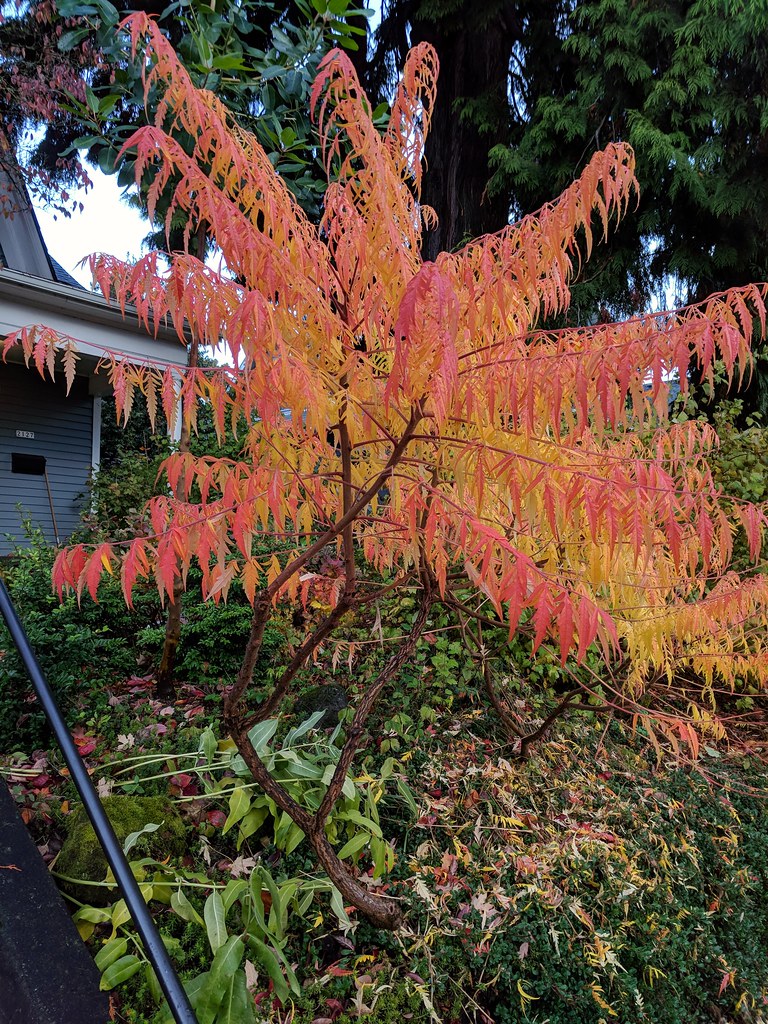
Fall sumac

I've got a good one for you this month! It's less focused than usual, but there are three key topics, plus a mix of a few others:
First, if you're about to delete this unread, please take this survey (which takes <1 minute) to let me know if you have input on how these summaries could be more useful: https://www.surveymonkey.com/r/BCVDKQR . Thanks to all who responded; results are summarized at the end of this email.

Second, the long-awaited "Natural Climate Solutions" paper from TNC is out. Read it: it's only 5 pages and will be highly relevant to virtually everyone working in conservation. It makes a solid case for how immediately investing in nature to reduce GHGs can buy us much-needed time to bring down emissions and invent new technology.

Third, a new book came out Oct 12: Effective Conservation Science: Data Not Dogma. It includes chapters from myself and several TNC authors, and is full of fascinating stories of how we react to science that counters conventional wisdom. I also share related articles below on how we can work through our biases.

CLIMATE CHANGE / NATURAL CLIMATE SOLUTIONS
Griscom et al 2017 (the natural climate solutions paper) packs a lot of good content in, but two things in particular excite me. First is making the case for massive rapid investment in nature: while we develop new tech and bring down emissions, we can use proven solutions like trees to buy time and make progress (see figure 2: nature could get us 37% of mitigation needs by 2030 at <$100/t CO2e / yr). We need the tech too, but nature is something that works today to bring down GHGs. Second is breaking down their top 20 options for nature-based climate mitigation into the theoretical maximum impact (about 1/2 of which would cost <$100 / t CO2e / yr), what we would need to hit Paris targets of <2 degrees C, and the subset of mitigation which is cheap (<$10/t CO2e / yr). See Figure 1 for this breakdown, which highlights that forests are absolutely critical (2/3 of cost-effective mitigation), and that the biggest opportunities for cheap mitigation are preventing forest loss (and improving forest management), improving fertilizer use on farms, and keeping peatlands intact. The forest goals rely heavily on a small reduction in grazing lands (4%). I'm leaving out lots of important details to keep this short: just read the paper. It's worth it. Read all about it (or watch videos) at https://global.nature.org/initiatives/natural-climate-solutions/natures-make-or-break-potential-for-climate-change

DATA NOT DOGMA:
The book Effective Conservation Science: Data Not Dogma tells stories of scientists whose unconventional and inconvenient results challenge us all to broaden our thinking and consider how we respond to new information that undermines what we think we know. My chapter is around how my analysis and blog post showing that globally agriculture has been taking up a smaller footprint since 1998. You can buy the book here: https://global.oup.com/academic/product/effective-conservation-science-9780198808985?cc=se&lang=en& and read a review of one chapter here: www.slate.com/articles/technology/future_tense/2017/08/conservation_biologists_are_struggling_to_balance_science_and_advocacy.html and read an ugly (unformatted) version of my chapter here: http://fish.freeshell.org/publications/DataNotDogma-Chapter11-preformatted.pdf  

Here are three more papers on the topic of scientific bias:
In 1992 E.O. Wilson asserted that invasive species were the second greatest driver of species extinction (second only to habitat destruction). He did so without providing evidence or details behind his calculations, but this claim was rapidly repeated and taken as gospel by environmental scientists. In fact, TNC played a major role in elevating Wilson's claim by not only citing it (in a BioScience paper and related book), but adding that "scientists generally agree" with Wilson's claim (again without evidence). Chew 2015 tells the captivating story about how this happened, using clear writing, thought-provoking questions, and numerous examples of bias in language that should be neutral and scientific. He also tells us how the idea eventually became subject to critique. I have seen this phenomenon firsthand; I follow a trail of citation breadcrumbs from authors to discover a primary source with an assertion that cannot be supported by what's in the paper (e.g. a book chapter on soil by Rattan Lal). When scientists don't closely read the papers we cite (or read them at all), our biases blossom and spread. If you're interested in invasive species or how spurious claims spread, this is a great read (albeit long).

Warren et al 2017 asks how common it is for scientists to be biased with regard to invasive species: using value-laden language and favoring interpretation that emphasizes the impacts of invasive species even when the data are not clear (as exemplified by the Chew 2015 article). They found bias to be common, but also that it has been declining since a series of papers in 2004-2005 that argued against language vilifying invasive species. This paper is fairly simplistic but gets at a key nuance: even a bias which is generally true is counter-productive in science. This paper shows hope that with awareness of bias, we can make efforts to at least reduce the expression of that bias in our work.

Holman et al 2015 provides more evidence of scientific bias, and argues for the use of "blinding" when conducting research to limit the potential for bias to affect study results. This means scientists collecting data don't know whether the subjects or area they're observing is a treatment or a control. This makes it harder for preconceptions to affect measurements (whether subjective, or even "rounding" seemingly objective metrics to fit bias), and they present evidence that nonblind studies often inflate the effect of the actions being studied. If "working blind" sounds extreme to you, read my blog post about "Clever Hans" - a horse who was believed to be able to do math (but in fact was only skilled at reading when his audience believed he had the right answer): https://blog.nature.org/science/2015/02/12/horses-doing-math-clever-hans-lessons-conservation-science/

As a final thought on bias, check out the Minasny & McBratney article in the Soil section below, which challenges a key assertion for TNC's agriculture work (that boosting soil organic matter improves water holding capacity). Read the summary below, and observe your feelings and reaction if it challenges what you believe.

SOIL
Minasny & McBratney 2017 use a meta-analysis to argue against something generally believed to be true by people working on sustainable agriculture: they provide evidence that increasing soil organic matter has a relatively small effect on water holding capacity (particularly for plant-available water content). If they're right, it reduces TNC's argument that improving soil health via boosting organic matter on farms will substantially improve crop resilience to drought. The authors note that soils that benefit most from increases in organic matter are sandy and very low in organic matter to begin (both of which make sense). They have a good discussion of limitations of their analysis, in particular the fact that they focused only on soil and not what's above it. Cover crops and crop residue / stubble are likely to add to the small benefits shown via soil. There is also a lot of nuance and potential to reframe their analysis in a way that could show larger benefits. At the same time, recognizing that most of us have a bias on this topic, this is a useful reminder to check our assumptions about both the efficacy of practices and the key mode of action and metrics that we should focus on. The authors led a key paper on the "4 per mille" initiative on boosting soil carbon, so are not hostile to the notion of boosting soil carbon. You can read a news article about this one here: https://phys.org/news/2017-10-adding-soil-limited-effect-capacity.html

GENERAL ECOLOGY / BIODIVERSITY
Remember as a kid how many bugs would get splattered on the windshield of your car? Ever notice there are less now? A recent study (Hallman et al 2017) indicates this is a real phenomenon, with dramatic declines in flying insects. The authors tracked the total biomass of insects at 63 locations within nature preserves in Germany; from 1989 to 2016 biomass plummeted by 76%. They sampled several habitat types and found consistent declines. It's alarming to see this within protected areas, although the authors note virtually all are surrounded by agriculture. That could both pull insects away from natural areas, and provide more pesticide drift into the natural areas. Other studies have shown major insect declines, but none this severe, and I don't know of others within protected areas.

SCIENCE COMMUNICATIONS
I've been pondering what we think we know and how to communicate thorny issues (as per data not dogma). I'd recommend a book I'm reading: "Do I make myself clear?" by Harold Evans, which is helping me. While not for scientists, I saw my writing sins laid bare in this book. I'm looking to simplify my writing in science papers, and to better talk about science in general. I have a long way to go! I'm working on summarizing key lessons amidst all of the stories in the book. One useful tool is the Hemingway app, which helps you identify problematic text and how to improve it: http://www.hemingwayapp.com/

AGRICULTURE:
As noted in my August 2017 review, neonicotinoids (neonics for short) are a class of insecticide currently under close scrutiny for impacts on bees. Mitchell et al 2017 found neonics in 75% of the 198 honey samples they tested, although mostly at very low levels. All neonics were at safe levels for humans, and most were at levels considered safe for bees. This is useful to show both that these pesticides are very common, that they are being consumed by bees, and that they often occur in concert with other neonics (all of which is concerning). But the reporting (and fundraising) around this has glossed over the very low levels. While 48% of samples had total neonic levels over a very conservative threshold for potential harm to bees (0.1 ng / g, a more reasonable (still likely conservative, albeit arbitrary) threshold of 2 ng / g was only detected in 8% of samples. The honey was collected via "citizen science"; the researchers asked colleagues, friends, and family to bring them honey produced in a known location. That also raises the question of whether or not these honey samples are typical.


RESULTS FROM SURVEY ABOUT THESE SUMMARIES:
I'm guessing the folks who didn't respond would have had more critical feedback, but overall here's what I learned from the ~40 respondents:
  • 90% of you usually at least skim these for relevant content
  • 90% of you found the level of detail about right (including some who said they could use less detail but were content to tolerate the current length), the rest found them too long.
  • Several folks especially liked both grouping articles by topic, and focusing each month primarily on one topic. I'll endeavor to keep that up, despite failing to do so this month.
Some opportunities to improve I'll be mulling over:
  • Set up a monthly journal club to talk about the papers (this one is already in the works, stay tuned for more info and let me know if you would like to provide input)
  • Make a lead theme more clear up front and include a short summary of the entire email
  • Tie each article to TNC's shared conservation agenda
  • Each quarter send a list of bullets of main issues under debate in conservation to encourage us to follow up
REFERENCES:
Chew, M. K. (2015). Ecologists, Environmentalists, Experts, and the Invasion of the “Second Greatest Threat.” International Review of Environmental History, 1, 7–41. Retrieved from http://www.academia.edu/14884830/Ecologists_Environmentalists_Experts_and_the_Invasion_of_the_Second_Greatest_Threat 

Evans, H. (2017). Do I make myself clear? Why writing well matters. Little, Brown, and Company: New York, NY. 416p.

Fisher, J. R. B. (2017). Global agricultural expansion – the sky isn’t falling (yet). In Kareiva, P., Silliman, B, and Marvier, M. (Eds), Effective Conservation Science: Data not Dogma. Oxford University Press, Oxford, UK, pages 73-79. https://global.oup.com/academic/product/effective-conservation-science-9780198808985?cc=se&lang=en&

Griscom, B. W., Adams, J., Ellis, P. W., Houghton, R. A., Lomax, G., Miteva, D. A., … Fargione, J. (2017). Natural Climate Solutions. Proceedings of the National Academy of Sciences, (6), 11–12. https://doi.org/10.1073/pnas.1710465114

Hallmann, C. A., Sorg, M., Jongejans, E., Siepel, H., Hofland, N., Schwan, H., … de Kroon, H. (2017). More than 75 percent decline over 27 years in total flying insect biomass in protected areas. Plos One, 12(10), e0185809. https://doi.org/10.1371/journal.pone.0185809

Holman, L., Head, M. L., Lanfear, R., & Jennions, M. D. (2015). Evidence of experimental bias in the life sciences: Why we need blind data recording. PLoS Biology, 13(7), 1–12. https://doi.org/10.1371/journal.pbio.1002190

Minasny, B., & Mcbratney, A. B. (2017). Limited effect of organic matter on soil available water capacity. European Journal of Soil Science, (2000), 1–9. https://doi.org/10.1111/ejss.12475

Mitchell, E. A. D., Mulhauser, B., Mulot, M., & Aebi, A. (2017). A worldwide survey of neonicotinoids in honey. Science, 111(October), 109–111. https://doi.org/10.1126/science.aan3684

Warren, R. J., King, J. R., Tarsa, C., Haas, B., & Henderson, J. (2017). A systematic review of context bias in invasion biology. PLoS ONE, 12(8), 1–12. https://doi.org/10.1371/journal.pone.0182502

Wednesday, November 9, 2016

reThink Soil: A Roadmap to U.S. Soil Health

We just released a new report on the potential benefits of adoption soil health practices in the U.S., and the conclusions are pretty exciting! You can read a brief overview, the executive summary, and the full paper at http://nature.org/soil. Much of the analysis was done by consultants we worked with, but I provided lots of scientific guidance and review throughout the process.


The web page has a good summary of some of the key points, but to put it even more succinctly, we argue that the adoption of three soil health practices (no-till, cover crops, and crop rotations) on U.S. row crops could have massive benefits both to society (e.g. improved water quality, reduced GHGs) and to the farmers implementing them (reduced soil erosion, improved soil quality and resilience).

For instance, if half of the farmland used to grow corn, soy, and wheat were to adopt all three practices, it could generate $7.4 billion in total benefits, and if all the farmland for those three crops adopted them it could be $19.6 billion (note that it's not double because some farms already use some of these practices). If you take the more optimistic upper range of our estimates, total societal benefit for 100% adoption of all three practices could be $49.8 billion. A lot of the science is uncertain, so these estimates are rough but we drew on the best available data to come up with them, and we are confident that the magnitude of the opportunity is valid even if the exact numbers are off.