Showing posts with label neonicotinoids. Show all posts

Friday, June 1, 2018

June 2018 science journal article roundup

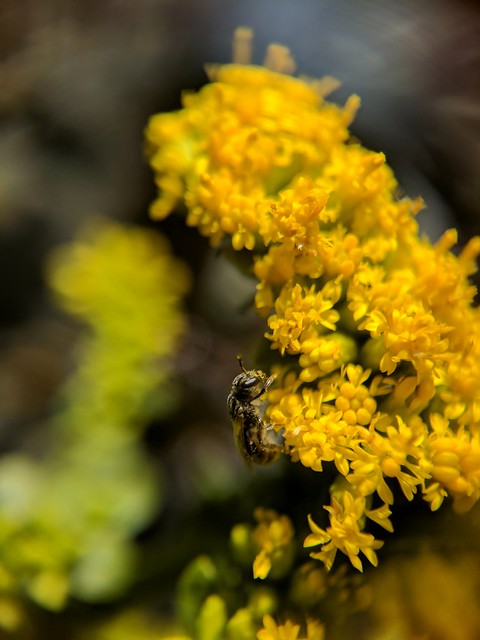
Tiny bee on dwarf goldenrod

Hi,

My garden is abuzz with bees and flies (the photo above is of a bee the size of a gnat), which has me thinking about pollinators and pesticides - the focus of this roundup. But I couldn't resist including one study on improving watershed-scale water quality via changing agriculture, as I've been gushing about it for years (hat tip to Steve Richter from TNC Wisconsin). Enjoy!

If you want to receive these monthly summaries by email you can sign up at http://eepurl.com/diB0nr, and if you want an email anytime I post something on this blog you can subscribe using the form on the top right of this page.

AGRICULTURE & WATER QUALITY:
Carvin et al 2018 is a study I've been eagerly awaiting for years. It is a rigorous paired watershed study looking at the impact of a carefully targeted set of agricultural interventions, and is one of the first papers in the US to show we CAN improve water quality at a watershed scale (50 km2) through shifting ag. Initial work had found 9% of the area was contributing 40% of the phosphorous load, so the authors really targeted those heavy contributors. They found a 55% reduction in phosphorus runoff loads and suspended sediment event loads decreased by 52% for events during unfrozen soil conditions  into the Pecatonica River tributary during storm events. This is big news as these outcomes have been elusive. However, this watershed was picked as one of the most likely to respond well, and those seeking to replicate these results should also carefully select their watersheds. Contact Steve Richter at TNC for more info.


POLLINATORS:
Klein et al. 2007 is a fantastic reference examining dependence on animal pollination across 115 major crop species (ignoring crops like corn which are entirely wind-pollinated). I mainly use Appendix 2, which for each crop lists how much it benefits from animal pollination (from entirely dependent on animal pollinators like cocoa or squash, to receiving almost no benefit) as well as listing the type of pollinator, pointing to references, etc. While the appendix is my favorite part, they also note in the main paper that a) non-insect pollinators (e.g. birds and bats) are less well studied and b) as agriculture intensifies wild pollinators are likely to decline. This means thinking about pollinator habitat in and around farms can be important for some crops, and the appendix can identify which ones are most likely to see more benefit.

Garibaldi et al 2016 argue that improving pollination is an underappreciated need to close crop yield gaps. They found that yields on small farms (<2 ha) could be improved by 24% on average by boosting pollinator density. Strangely for larger farms, when polinator diversity was low, yields actually dropped with incresing pollinator density (when diversity was high, yields went up with pollinator density as expected). The authors don't explain why (or even accurately convey that finding in the text), which makes me wonder if the sample was too small. They did find that isolation from natural habitats was one of the most important predictors of crop yield. This calls attention to the need for more specific data on how restoring habitat could boost crop yields (including testing crops and regions likely to receive the most benefit).

I recently wondered if camera traps and audio monitoring would work for pollinators, and Edwards et al. 2015 had a crafty idea that worked well: long-term time lapse video. They looked at visits by pollinators to 30 different plant species, then focus on a species of dogwood and had nearly complete records for a given flower. Check out Figure 1 and 2, you can clearly not only see the rough type of pollinator, but even see pollination take place as florets within the inflorescence close (a cluster of flowers, for a dogwood this looks like 1 "flower"). The system is relatively cheap and simple, and perhaps the biggest obstacle to doing lots of this is the need to manually review each video to classify pollinators seen in each frame (an hour of footage plays in 1.75 minutes, but scoring takes longer). There's also a question of how many flowers of how many species you'd need to monitoring to get a sense of total pollinator activity on a given piece of land. Still a really cool setup worth keeping an eye on.

I was recently surprised to hear that soybean can benefit from insect pollination (despite self-pollinating). Milfont et al. 2013 demonstrates this under field conditions (including typical pesticide application) in Brazil. They found wild pollinators may boost soy yields by 6%, and adding honeybees on top of wild pollinators raised yields 18%. They either caged plants to prevent access by pollinators, left them open (and did sampling for pollinators), or added honeybees nearby (without caging the bees to force pollination). The exciting thing is if even intense industrial soy gets a 6% boost, there is potential for soy with more careful pesticide application and more integrated pollinator habitat to do considerably better.

Gill and O'Neal 2015 also looks at insect pollination of soy, but focusing on the pollinators in Iowa rather than crop yield. They did lots of sampling, collecting >5,000 individuals from >50 species. 29-38% of the bees they sampled had collected at least some soy pollen. Strangely, although honeybee colonies were present on or near the farms they studied, they found almost no honeybees in their traps. This again emphasizes the potential value of wild pollinators. As an aside: the most common species of pollinator they found is one of the coolest kinds of bees I've ever seen (Agapostemon virescens, see the photo at the end of this email).


PESTICIDES / PEST CONTROL:
Eng et al 2017 provides the first experimental evidence that ingesting neonicotinoids (imidacloprid) and organophosphates (chlorpyrifos) can directly harm songbirds. Birds were fed low doses (the amount typically found on <0.1 corn seed, ~4 canola seeds) or high doses (0.2 corn seed, or 9 canola seeds) and lost 17-25% of their weight within 3 days of being dosed (for imidacloprid only) and were unable to sense north (which could impair migration), although they recovered within 14 days. This is concerning as birds may eat spilled treated seed (or even granules of the pesticide directly), which could lead to reduced breeding success. On the other hand, for some seeds birds typically remove seed hulls before eating the seed, which would reduce the effective dose. You can read a newspaper article about it here: https://amp.theguardian.com/environment/2017/nov/29/common-pesticide-can-make-migrating-birds-lose-their-way-research-shows and read the paper here: https://www.nature.com/articles/s41598-017-15446-x.epdf?author_access_token=60vOAq7fy3uoItENRL_WLtRgN0jAjWel9jnR3ZoTv0PBos7CYdu4-aOFIzRGcQZYPhLZT79bnumB3G0JwKQDqd8sXxokuXX20RybZGim1WNULIibibaVSnXR6616CbBcOjFXccxNhEZR_Q54lKeJqg%3D%3D

Tooker et al 2017 tackles a hot topic - what role do neonicotinoid seed treatments (NST) have in integrated pest management? Many ag companies assert they fit in well, since they can reduce aerial sprays which would have higher impact. On the other hand, there are concerns about effects on nontarget species, potential for resistance, and universal prophylactic application as opposed to the usual IPM approach of deploying pesticides in response to a pest outbreak. They have some interesting findings. First, they find that NST mostly target relatively uncommon pests by using almost universal application more suited to severe pests. They also note that current use of NST on corn and soy is much higher than historic benchmarks, indicating NST is not simply displacing other pesticides. They conclude by noting that more careful use of neonics is likely to both retain their value for pest control longer (by slowing down resistance), and that the challenge in finding corn and soy seeds without NST should be addressed.

Lechenet et al. 2017 looks at almost 1,000 farms in France, comparing farms with similar context to look at how the frequency of pesticide application relates to yield. They estimated that 3/4 of farms could reduce pesticide use without reducing yield or profit, and that on average for farms where they could get more specific, pesticide could be reduced on average by 42%. It's important to note they looked at correlations and predictions rather than empirically testing interventions, and they note that these reductions would likely be challenging for farmers.  Nonetheless, the article shows the importance of evaluating pest control strategies and looking for ways to reduce pesticide use.

I don't totally buy all of the conclusions of Bøhn and Lövei 2017, but they present some pretty interesting case studies. The basic theme is that a simple reductionist approach to pest control via GM-traits is unlikely to solve complex pest problems. They come out arguing that pesticides and transgenic traits are unlikely to be successful but also don't present clear alternatives. To me the interesting part of the paper is looking at the set of responses to a new transgenic plant (especially the surprises), and using that to think about what was missing and how we could build more robust pest control systems with more forethought and better design.

Bueno et al. 2017 is a primer on integrated pest management (IPM) for soybeans in Brazil. They list key pests, provide recommendations for scouting / sampling methods, evaluate several control methods (viruses, natural predators / parasitoids, insecticides, etc.). They also address how different pesticides impact natural enemies, finding that thiamethoxam harms natural enemies enough to actually allow pests to increase (although this is based on unpublished data, and appearing in a fairly low-quality journal, so it's an interesting thing to look into rather than a solid result). I see this article as a useful set of issues to consider for people working in this space.


REFERENCES:
Bøhn, T., & Lövei, G. L. (2017). Complex Outcomes from Insect and Weed Control with Transgenic Plants: Ecological Surprises? Frontiers in Environmental Science, 5(September), 1–8. https://doi.org/10.3389/fenvs.2017.00060

Bueno, R. C. O. F., Raetano, C. G., Junior, J. D., & Carvalho, F. K. (2017). Integrated Management of Soybean Pests: The Example of Brazil. Outlooks on Pest Management, (August), 149–153. https://doi.org/10.1564/v28

Carvin, R., Good, L. W., Fitzpatrick, F., Diehl, C., Songer, K., Meyer, K. J., … Richter, S. (2018). Testing a two-scale focused conservation strategy for reducing phosphorus and sediment loads from agricultural watersheds. Journal of Soil and Water Conservation, 73(3), 298–309. https://doi.org/10.2489/jswc.73.3.298

Edwards, J., Smith, G. P., & Mcentee, M. H. F. (2015). Long-term time-lapse video provides near complete records of floral visitation. Journal of Pollination Ecology, 16(13), 91–100.

Eng, M. L., Stutchbury, B. J. M., & Morrissey, C. A. (2017). Imidacloprid and chlorpyrifos insecticides impair migratory ability in a seed-eating songbird. Scientific Reports, 7(1), 1–9. https://doi.org/10.1038/s41598-017-15446-x

Garibaldi, L. A., Carvalheiro, L. G., Vaissière, B. E., Gemmill-herren, B., Hipólito, J., Freitas, B. M., … Zhang, H. (2016). Mutually beneficial pollinator diversity and crop yield outcomes in small and large farms. Science, 351(6271), 388–391. https://doi.org/10.1126/science.aac7287

Gill, K. A., & O’Neal, M. E. (2015). Survey of soybean insect pollinators: Community identification and sampling method analysis. Environmental Entomology, 44(3), 488–498. https://doi.org/10.1093/ee/nvv001

Klein, A.-M., Vaissière, B. E., Cane, J. H., Steffan-Dewenter, I., Cunningham, S. a, Kremen, C., & Tscharntke, T. (2007). Importance of pollinators in changing landscapes for world crops. Proceedings. Biological Sciences / The Royal Society, 274(1608), 303–313. https://doi.org/10.1098/rspb.2006.3721

Lechenet, M., Dessaint, F., Py, G., Makowski, D., & Munier-Jolain, N. (2017). Reducing pesticide use while preserving crop productivity and profitability on arable farms. Nature Plants, 3(3), 17008. https://doi.org/10.1038/nplants.2017.8

de O. Milfont, M., Rocha, E. E. M., Lima, A. O. N., & Freitas, B. M. (2013). Higher soybean production using honeybee and wild pollinators, a sustainable alternative to pesticides and autopollination. Environmental Chemistry Letters, 11(4), 335–341. https://doi.org/10.1007/s10311-013-0412-8

Tooker, J. F., Douglas, M. R., & Krupke, C. H. (2017). Neonicotinoid Seed Treatments: Limitations and Compatibility with Integrated Pest Management. Agricultural & Environmental Letters, 2(1), 0. https://doi.org/10.2134/ael2017.08.0026

Sincerely,

Jon

p.s. as a reminder, you can search all of the science articles written by TNC staff (that we know of) here http://www.conservationgateway.org/ConservationPlanning/ToolsData/sitepages/article-list.aspx
(as you publish please email science_pubs@tnc.org to help keep this resource current).
If you'd like to keep track of what I write as well as what I read, I always link to both my informal blog posts and my formal publications (plus these summaries) at http://sciencejon.blogspot.com/

Bonus photo: here's the type of bee Gill and O'Neal 2015 saw the most on soy fields in Iowa (Agapostemon, this one is on a dahlia in my garden):
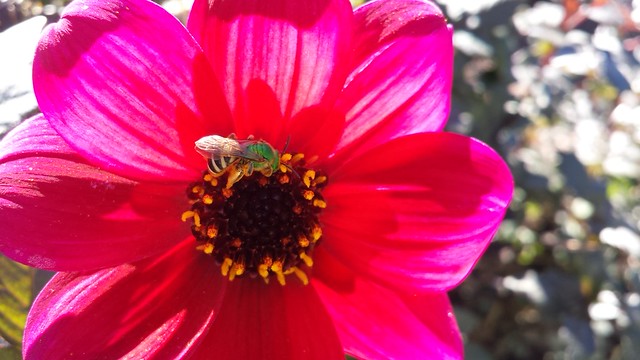
Agapostemon metallic green bee on "Dracula" dahlia

Wednesday, November 1, 2017

November science journal article summary

Nihao November!


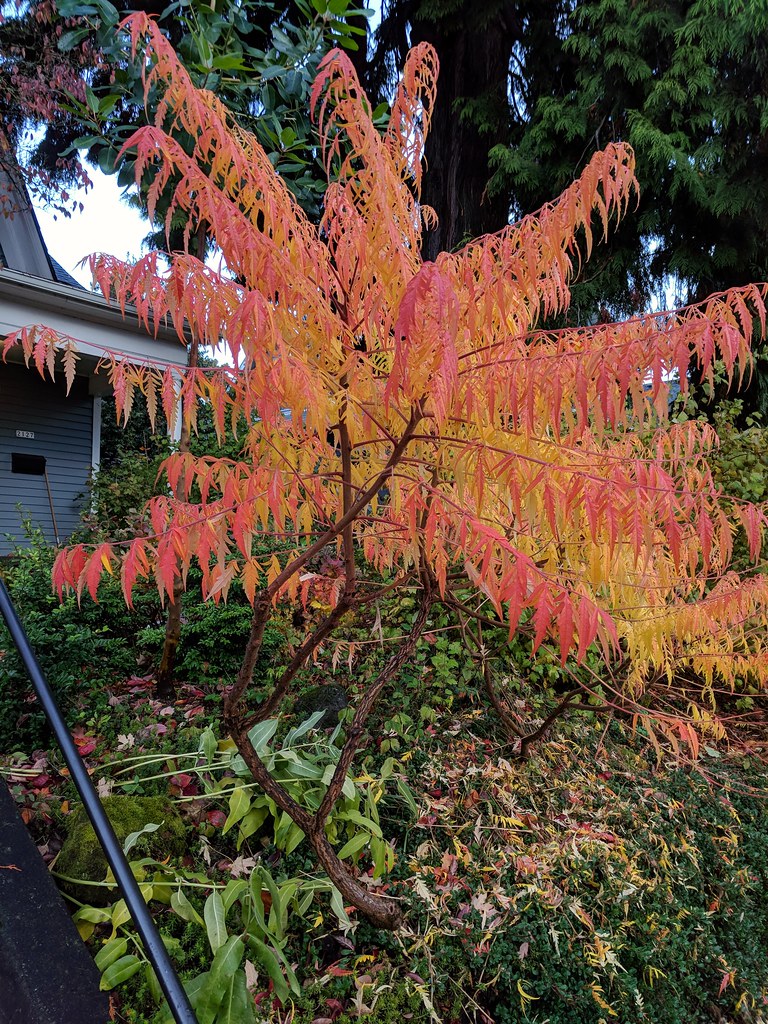
Fall sumac

I've got a good one for you this month! It's less focused than usual, but there are three key topics, plus a mix of a few others:
First, if you're about to delete this unread, please take this survey (which takes <1 minute) to let me know if you have input on how these summaries could be more useful: https://www.surveymonkey.com/r/BCVDKQR . Thanks to all who responded; results are summarized at the end of this email.

Second, the long-awaited "Natural Climate Solutions" paper from TNC is out. Read it: it's only 5 pages and will be highly relevant to virtually everyone working in conservation. It makes a solid case for how immediately investing in nature to reduce GHGs can buy us much-needed time to bring down emissions and invent new technology.

Third, a new book came out Oct 12: Effective Conservation Science: Data Not Dogma. It includes chapters from myself and several TNC authors, and is full of fascinating stories of how we react to science that counters conventional wisdom. I also share related articles below on how we can work through our biases.

CLIMATE CHANGE / NATURAL CLIMATE SOLUTIONS
Griscom et al 2017 (the natural climate solutions paper) packs a lot of good content in, but two things in particular excite me. First is making the case for massive rapid investment in nature: while we develop new tech and bring down emissions, we can use proven solutions like trees to buy time and make progress (see figure 2: nature could get us 37% of mitigation needs by 2030 at <$100/t CO2e / yr). We need the tech too, but nature is something that works today to bring down GHGs. Second is breaking down their top 20 options for nature-based climate mitigation into the theoretical maximum impact (about 1/2 of which would cost <$100 / t CO2e / yr), what we would need to hit Paris targets of <2 degrees C, and the subset of mitigation which is cheap (<$10/t CO2e / yr). See Figure 1 for this breakdown, which highlights that forests are absolutely critical (2/3 of cost-effective mitigation), and that the biggest opportunities for cheap mitigation are preventing forest loss (and improving forest management), improving fertilizer use on farms, and keeping peatlands intact. The forest goals rely heavily on a small reduction in grazing lands (4%). I'm leaving out lots of important details to keep this short: just read the paper. It's worth it. Read all about it (or watch videos) at https://global.nature.org/initiatives/natural-climate-solutions/natures-make-or-break-potential-for-climate-change

DATA NOT DOGMA:
The book Effective Conservation Science: Data Not Dogma tells stories of scientists whose unconventional and inconvenient results challenge us all to broaden our thinking and consider how we respond to new information that undermines what we think we know. My chapter is around how my analysis and blog post showing that globally agriculture has been taking up a smaller footprint since 1998. You can buy the book here: https://global.oup.com/academic/product/effective-conservation-science-9780198808985?cc=se&lang=en& and read a review of one chapter here: www.slate.com/articles/technology/future_tense/2017/08/conservation_biologists_are_struggling_to_balance_science_and_advocacy.html and read an ugly (unformatted) version of my chapter here: http://fish.freeshell.org/publications/DataNotDogma-Chapter11-preformatted.pdf  

Here are three more papers on the topic of scientific bias:
In 1992 E.O. Wilson asserted that invasive species were the second greatest driver of species extinction (second only to habitat destruction). He did so without providing evidence or details behind his calculations, but this claim was rapidly repeated and taken as gospel by environmental scientists. In fact, TNC played a major role in elevating Wilson's claim by not only citing it (in a BioScience paper and related book), but adding that "scientists generally agree" with Wilson's claim (again without evidence). Chew 2015 tells the captivating story about how this happened, using clear writing, thought-provoking questions, and numerous examples of bias in language that should be neutral and scientific. He also tells us how the idea eventually became subject to critique. I have seen this phenomenon firsthand; I follow a trail of citation breadcrumbs from authors to discover a primary source with an assertion that cannot be supported by what's in the paper (e.g. a book chapter on soil by Rattan Lal). When scientists don't closely read the papers we cite (or read them at all), our biases blossom and spread. If you're interested in invasive species or how spurious claims spread, this is a great read (albeit long).

Warren et al 2017 asks how common it is for scientists to be biased with regard to invasive species: using value-laden language and favoring interpretation that emphasizes the impacts of invasive species even when the data are not clear (as exemplified by the Chew 2015 article). They found bias to be common, but also that it has been declining since a series of papers in 2004-2005 that argued against language vilifying invasive species. This paper is fairly simplistic but gets at a key nuance: even a bias which is generally true is counter-productive in science. This paper shows hope that with awareness of bias, we can make efforts to at least reduce the expression of that bias in our work.

Holman et al 2015 provides more evidence of scientific bias, and argues for the use of "blinding" when conducting research to limit the potential for bias to affect study results. This means scientists collecting data don't know whether the subjects or area they're observing is a treatment or a control. This makes it harder for preconceptions to affect measurements (whether subjective, or even "rounding" seemingly objective metrics to fit bias), and they present evidence that nonblind studies often inflate the effect of the actions being studied. If "working blind" sounds extreme to you, read my blog post about "Clever Hans" - a horse who was believed to be able to do math (but in fact was only skilled at reading when his audience believed he had the right answer): https://blog.nature.org/science/2015/02/12/horses-doing-math-clever-hans-lessons-conservation-science/

As a final thought on bias, check out the Minasny & McBratney article in the Soil section below, which challenges a key assertion for TNC's agriculture work (that boosting soil organic matter improves water holding capacity). Read the summary below, and observe your feelings and reaction if it challenges what you believe.

SOIL
Minasny & McBratney 2017 use a meta-analysis to argue against something generally believed to be true by people working on sustainable agriculture: they provide evidence that increasing soil organic matter has a relatively small effect on water holding capacity (particularly for plant-available water content). If they're right, it reduces TNC's argument that improving soil health via boosting organic matter on farms will substantially improve crop resilience to drought. The authors note that soils that benefit most from increases in organic matter are sandy and very low in organic matter to begin (both of which make sense). They have a good discussion of limitations of their analysis, in particular the fact that they focused only on soil and not what's above it. Cover crops and crop residue / stubble are likely to add to the small benefits shown via soil. There is also a lot of nuance and potential to reframe their analysis in a way that could show larger benefits. At the same time, recognizing that most of us have a bias on this topic, this is a useful reminder to check our assumptions about both the efficacy of practices and the key mode of action and metrics that we should focus on. The authors led a key paper on the "4 per mille" initiative on boosting soil carbon, so are not hostile to the notion of boosting soil carbon. You can read a news article about this one here: https://phys.org/news/2017-10-adding-soil-limited-effect-capacity.html

GENERAL ECOLOGY / BIODIVERSITY
Remember as a kid how many bugs would get splattered on the windshield of your car? Ever notice there are less now? A recent study (Hallman et al 2017) indicates this is a real phenomenon, with dramatic declines in flying insects. The authors tracked the total biomass of insects at 63 locations within nature preserves in Germany; from 1989 to 2016 biomass plummeted by 76%. They sampled several habitat types and found consistent declines. It's alarming to see this within protected areas, although the authors note virtually all are surrounded by agriculture. That could both pull insects away from natural areas, and provide more pesticide drift into the natural areas. Other studies have shown major insect declines, but none this severe, and I don't know of others within protected areas.

SCIENCE COMMUNICATIONS
I've been pondering what we think we know and how to communicate thorny issues (as per data not dogma). I'd recommend a book I'm reading: "Do I make myself clear?" by Harold Evans, which is helping me. While not for scientists, I saw my writing sins laid bare in this book. I'm looking to simplify my writing in science papers, and to better talk about science in general. I have a long way to go! I'm working on summarizing key lessons amidst all of the stories in the book. One useful tool is the Hemingway app, which helps you identify problematic text and how to improve it: http://www.hemingwayapp.com/

AGRICULTURE:
As noted in my August 2017 review, neonicotinoids (neonics for short) are a class of insecticide currently under close scrutiny for impacts on bees. Mitchell et al 2017 found neonics in 75% of the 198 honey samples they tested, although mostly at very low levels. All neonics were at safe levels for humans, and most were at levels considered safe for bees. This is useful to show both that these pesticides are very common, that they are being consumed by bees, and that they often occur in concert with other neonics (all of which is concerning). But the reporting (and fundraising) around this has glossed over the very low levels. While 48% of samples had total neonic levels over a very conservative threshold for potential harm to bees (0.1 ng / g, a more reasonable (still likely conservative, albeit arbitrary) threshold of 2 ng / g was only detected in 8% of samples. The honey was collected via "citizen science"; the researchers asked colleagues, friends, and family to bring them honey produced in a known location. That also raises the question of whether or not these honey samples are typical.


RESULTS FROM SURVEY ABOUT THESE SUMMARIES:
I'm guessing the folks who didn't respond would have had more critical feedback, but overall here's what I learned from the ~40 respondents:
  • 90% of you usually at least skim these for relevant content
  • 90% of you found the level of detail about right (including some who said they could use less detail but were content to tolerate the current length), the rest found them too long.
  • Several folks especially liked both grouping articles by topic, and focusing each month primarily on one topic. I'll endeavor to keep that up, despite failing to do so this month.
Some opportunities to improve I'll be mulling over:
  • Set up a monthly journal club to talk about the papers (this one is already in the works, stay tuned for more info and let me know if you would like to provide input)
  • Make a lead theme more clear up front and include a short summary of the entire email
  • Tie each article to TNC's shared conservation agenda
  • Each quarter send a list of bullets of main issues under debate in conservation to encourage us to follow up
REFERENCES:
Chew, M. K. (2015). Ecologists, Environmentalists, Experts, and the Invasion of the “Second Greatest Threat.” International Review of Environmental History, 1, 7–41. Retrieved from http://www.academia.edu/14884830/Ecologists_Environmentalists_Experts_and_the_Invasion_of_the_Second_Greatest_Threat 

Evans, H. (2017). Do I make myself clear? Why writing well matters. Little, Brown, and Company: New York, NY. 416p.

Fisher, J. R. B. (2017). Global agricultural expansion – the sky isn’t falling (yet). In Kareiva, P., Silliman, B, and Marvier, M. (Eds), Effective Conservation Science: Data not Dogma. Oxford University Press, Oxford, UK, pages 73-79. https://global.oup.com/academic/product/effective-conservation-science-9780198808985?cc=se&lang=en&

Griscom, B. W., Adams, J., Ellis, P. W., Houghton, R. A., Lomax, G., Miteva, D. A., … Fargione, J. (2017). Natural Climate Solutions. Proceedings of the National Academy of Sciences, (6), 11–12. https://doi.org/10.1073/pnas.1710465114

Hallmann, C. A., Sorg, M., Jongejans, E., Siepel, H., Hofland, N., Schwan, H., … de Kroon, H. (2017). More than 75 percent decline over 27 years in total flying insect biomass in protected areas. Plos One, 12(10), e0185809. https://doi.org/10.1371/journal.pone.0185809

Holman, L., Head, M. L., Lanfear, R., & Jennions, M. D. (2015). Evidence of experimental bias in the life sciences: Why we need blind data recording. PLoS Biology, 13(7), 1–12. https://doi.org/10.1371/journal.pbio.1002190

Minasny, B., & Mcbratney, A. B. (2017). Limited effect of organic matter on soil available water capacity. European Journal of Soil Science, (2000), 1–9. https://doi.org/10.1111/ejss.12475

Mitchell, E. A. D., Mulhauser, B., Mulot, M., & Aebi, A. (2017). A worldwide survey of neonicotinoids in honey. Science, 111(October), 109–111. https://doi.org/10.1126/science.aan3684

Warren, R. J., King, J. R., Tarsa, C., Haas, B., & Henderson, J. (2017). A systematic review of context bias in invasion biology. PLoS ONE, 12(8), 1–12. https://doi.org/10.1371/journal.pone.0182502

Tuesday, August 1, 2017

August science journal article summary

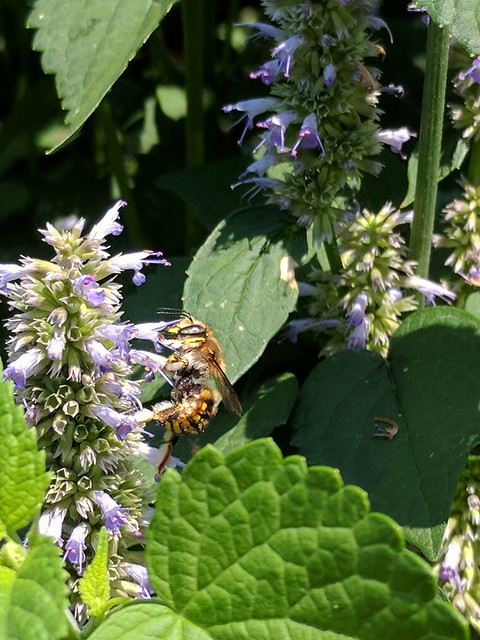
Bee (likely female Anthidium manicatum) on anise hyssop

Two significant articles came out in Science in June providing evidence for how neonicotinoids (a type of pesticide used for crop protection) are harming bees in field trials (there is some nuance, but the findings are concerning); I'm including reviews of those plus a few other  articles on the topic of pesticides and bees. Read to the end for an article of cattle intensification in Brazil, and a plea for scientists to write journal articles as if they wanted human beings to actually read and understand them.


BEE HEALTH / NEONICOTINOIDS / PESTICIDES:
If you don't want to read the two new studies, here are three stories about them (the one in the Guardian has more quotes from Syngenta pushing back on the findings, the Greenpeace one has a response to that critique from one of the lead authors). As background, it may help to know that in addition to honeybees (which most people are familiar with, they live in large hives) there are bumblebees (which live in much smaller colonies), and solitary wild bees (like the one shown in the photo above, taken in my garden). So when we talk about impacts of neonicotinoids or other pesticides (fungicides, other insecticides) on bees they are sometimes split by impacts on the colony (whether the colony dies out or not), lethal impacts on individual bees, and sublethal impacts (see below for details). So the science here is much broader than just colony collapse disorder in honeybees, which makes the results a bit more complex. For this summary I'm focusing only on bees as there is less science on impacts on other pollinators like butterflies and flies.
http://www.latimes.com/science/sciencenow/la-sci-sn-bees-pesticides-neonicotinoids-20170629-htmlstory.html
https://amp.theguardian.com/environment/2017/jun/29/pesticides-damage-survival-of-bee-colonies-landmark-study-shows
https://energydesk.greenpeace.org/2017/07/17/syngenta-bayer-ceh-study-neonicotinoids/

Tsvetkov et al. 2017 has three significant findings. The first is that some (not all) apiaries >3km from fields planted with neonicotinoid-treated seed still show neonicotinoids; the pollen analysis indicates that the contaminated pollen is coming from wildflowers (meaning that the neonicotinoids are being taken up by untreated plants relatively far from where the pesticide is applied). The second is that the lethality of neonicotinoids (clothianidin and thiamethoxam in this case) is significantly higher in the presence of a common fungicide called boscalid; boscalid on its own didn't harm bees but it made two neonicotinoids roughly twice as toxic when both pesticides were present in the same field. Third, they demonstrated several specific negative impacts on bees (mortality, "queenlessness," and declines in hygenic behavior) of exposure in the field to neonicotinoids at realistic doses. What makes this study different from earlier work showing harm is that rather than being lab-based they studied actual realistic doses and duration of exposure in the field. The best response to this research is tricky; simply banning neonicotinoids could potentially cause a shift to other pesticides that have been less studied (and may or may not be less toxic), and additional crop losses could potentially drive up food prices and lead to more habitat conversion. So more analysis on the trade-offs is needed, but this also appears to be the strongest evidence yet that in the real world neonicotinoids are harming bees (along with several other factors increasing their susceptibility).

Woodcock et al. 2017 has a lot more replication and their findings are less clear; they looked at 33 sites in the UK, Germany, and Hungary (all oilseed rape aka canola) that had seeds either untreated, treated with clothianidin, or treated with thiamethoxam (in addition to being treated with fungicides, other pesticides, and fertilizer as normal). They were looking for one of several potential impacts on honeybees, bumblebees, and solitary bees. Figure 2 shows how noisy the data is (a * indicates a significant effect); the two neonicotinoids often had a different effect across several metrics, and even stranger while they found negative effects of neonicotinoids in Hungary and the UK on honeybees, they also found positive effects in Germany (plus thiamethoxam had a positive effect on storage cells in the UK despite the negative impact of clothianidin there). They also found that reproductive impacts on wild bees were not well correlated with seed treatment, there was some correlation with total nest neonicotinoid residues (some of which appear to have come from earlier applications that remained in the landscape, indicating that impacts may persist for several years even if neonicotinoid use is halted). While there are some differences across the countries that could help to explain the difference in impacts, it's unclear to me why they would have seen positive impacts on honeybees in Germany, and makes me wonder what other variables may have been present that the researchers may not have accounted for. While this study doesn't present evidence as strong as the Tsvetkov paper, it also doesn't show that neonicotinoids are harmless, which makes me want to see more studies like this with lots of replicates but that are more tightly controlled. The lead author pushed back hard against the response from Bayer and Syngenta that this paper doesn't provide strong evidence of negative impacts: https://energydesk.greenpeace.org/2017/07/17/syngenta-bayer-ceh-study-neonicotinoids/

Rundlöf et al. 2015 is another important study of how neonicotinoids affect bees under real field conditions (as distinct from bees artificially fed neonicotinoids). They found impacts on wild bees (reduced density, total elimination of solitary bee nesting, and reduced bumblebee colony growth and reproduction) but did NOT see impacts on honeybees (unlike Tsvetkov). The authors note that some other research has found that honeybees do better than bumblebees with detoxifying after neonicotinoid exposure, and they also found bumblebees collected a higher percentage of pollen from the crop. Specifically this study looked at the neonicotinoid clothianidin in combination with the pyrethroid (insecticide) b-cyfluthrin and the fungicide thiram, based on common practice in Sweden.

Traynor et al. 2016 is another real-world study that looked at exposure to pesticides (measured by sampling bees, beeswax, and pollen) and how that related to colony survival and queen replacement. This is a complicated one so be warned. They found residues of 93 pesticides, and they provide detailed breakdowns of how common each one was, and how toxic it was to bees at the level detected (estimated via "hazard quotient" or HQ which is a model of lethality). Unsurprisingly, they found that when different pesticides that have the same  method of action (e.g. lumping organophosphates together as they work the same way) occured in the same sample they had a stronger effect. In addition to hazard quotient, they considered total number of pesticides each colony was exposed to, and the number of "relevant" pesticides (the ones at high enough levels they are expected to have a significant effect on bee mortality), and several different ways to measure impacts (it's a rich data set) but primarily having to do with lethality and queen replacement (they don't have the suite of sublethal effects the studies above report on). Anyway, the findings are complicated but they found a strong relationship between the total number of "relevant" pesticides and colony mortality within a month, overall number of pesticides exposed to over the study period was related to colony survival, and HQ was related to queen replacement. The strange thing is that this is a very simplistic model (as the authors acknowledge) but the findings could indicate that there are synergies between pesticides that are currently not well understood. Note that they did NOT find significant concentrations of neonicotinoids in the colony, which on the one hand means they couldn't evaluate the impact on colony health, but on the other hand simply finding low doses in hives is arguably good news. They DID find significant risk from two groups of fungicides (including chlorothalonil) and an insecticide group generally considered "bee-safe" (ecdysone receptor agonists). My take away from this study is that there are likely a ton of confounding effects and syngergies in these real-world studies, and that similar to the finding of Tsvetkov with boscalid and neonicotinoids together being much more toxic than separately, there are likely other combinations we're not aware of. This emphasizes the need for both lab studies to evaluate single chemicals in a controlled environment, but also more real-world studies which get at actual risk but will tend to have a lot more variation.

Simon-Delso et al. 2014 is a Belgian study similar to Traynor, comparing healthy honeybee colonies to colonies with a variety of disorders (e.g. dying out, queen loss, etc.) and looking for possible drivers or associated factors. They found that the virus load was not different between healthy and disordered colonies, and they did not see a relationship between disorders and the total number of insecticides or the total pesticide load (µg/kg). However, they did find a strong relationship between the number of fungicides present and disorders: they built a model estimating that ~26% of colonies without any fungicide would have disorders, vs. ~88% of colonies with 4 different fungicides. They also found that higher cropland area near the apiary increased the chance of disorders, while higher grassland area decreased it. Boscalid, cyprodinil, iprodione, and pyrimethanil were the most commonly detected fungicides; some of these are known to have synergistic effects with some insecticides, and/or to have metabolites which are significantly more toxic than the original formulation.

There's one more really interesting aspect to this research I couldn't resist including, as it provides a provocative twist. There has been a lot of debate and attention to the role of disesase in honeybee colony disorders, in paritcular viruses introduced via Varroa mites (as well as unrelated pathogens like Nosema ceranae). Sánchez-Bayo et al. 2016 is a review summarizing evidence that insecticides (neonicotinoids and fipronil) actually suppress the immune system of bees, so it's not as simple as asking whether the problem is insecticides or disease given the potential synergy. They reinforce the challenges in studying the impacts of a single stressor like neonicotinoids given relationships between Varroa mites, viruses, fungicides, insecticides, and other stressors. This is a well-written and engaging article, and if you're interested in bee diseases it'll be worth your time. If you're short on time skip to Figure 1 (a flow chart of how different stressors are related).


AGRICULTURE (RANCHING):
Merry & Soares-Filho is a study on cattle intensification in the Amazon and caused quite a splash. The authors argue (based on data from the US and Brazil, plus some conjecture about what is likely to occur in Brazil) that intensifying cattle production does not lead to conservation outcomes, BUT that conservation measures (removing land from production, better enforcement of laws, and eliminating subsidies and incentives that encourage expanding pasture) will actually lead to cattle intensification. They also note that aside from land use, intensification in the US has raised additional environmental and animal welfare concerns, and that to some degree significantly reducing beef consumption may be the most sure way to reduce beef impacts. Note that this study only shows data up to 2013, and in the last two years deforestation has substantially increased again in Brazil. As additional context, the CFA project that TNC is working on views deforestation-free corporate committments as the key driving conservation strategy, with support for intensification partly as a way to get buy-in from the cattle sector (who would oppose an approach limited to constraining production) and also to reduce leakage to other places with less regulated supply chains. So while we agree that intensification on its own wouldn't make sense, many TNC staff do see intensification as part of a successful strategy to address deforestation. You can read a story about the study here: https://news.mongabay.com/2017/06/is-intensification-of-beef-production-really-a-solution-to-amazonian-deforestation/


SCIENCE COMMUNICATIONS:
Doubleday and Connell 2017 argue that if scientists put more effort into writing well (not just accurately, but clearly and in a way that captivates readers) it would save us all time in reading these articles, and facilitate better understanding and collaboration. It's not a new point, but they make it well, and I especially like how they provide an alternative version of their abstract written in "The Official Style." They also do a good job talking scientists down from the immediate reaction that writing well means stooping to sensationalism, and provide good examples of the middle path. When I read articles like this, I am inspired, but I definitely will need help in actually overhauling my science papers prior to submission into something that would read well for a broad audience (but will not trigger peer reviewers to dismiss the paper as fluff). I imagine many of the non-scientists reading these summaries would be thrilled if the studies listed were easier to digest!


REFERENCES:
Doubleday, Z. A., & Connell, S. D. (2017). Publishing with Objective Charisma : Breaking Science’s Paradox. Trends in Ecology & Evolution. https://doi.org/10.1016/j.tree.2017.06.011

Merry, F., & Soares-filho, B. (2017). Will intensification of beef production deliver conservation outcomes in the Brazilian Amazon? Elementa: Science of the Anthropocene, 5(24).

Rundlöf, M., Andersson, G. K. S., Bommarco, R., Fries, I., Hederström, V., Herbertsson, L., … Smith, H. G. (2015). Seed coating with a neonicotinoid insecticide negatively affects wild bees. Nature, 521(7550), 77–80. https://doi.org/10.1038/nature14420

Sánchez-Bayo, F., Goulson, D., Pennacchio, F., Nazzi, F., Goka, K., & Desneux, N. (2016). Are bee diseases linked to pesticides? - A brief review. Environment International, 89–90(January), 7–11. https://doi.org/10.1016/j.envint.2016.01.0091

Simon-Delso, N., Martin, G. S., Bruneau, E., Minsart, L. A., Mouret, C., & Hautier, L. (2014). Honeybee colony disorder in crop areas: The role of pesticides and viruses. PLoS ONE, 9(7), 1–16. https://doi.org/10.1371/journal.pone.0103073

Traynor, K. S., Pettis, J. S., Tarpy, D. R., Mullin, C. A., Frazier, J. L., Frazier, M., & Vanengelsdorp, D. (2016). Inhive Pesticide Exposome: Assessing risks to migratory honey bees from inhive pesticide contamination in the Eastern United States. Nature Scientific Reports, 6(33207), 1–16. https://doi.org/10.1038/srep33207

Tsvetkov, N., Sood, K., Patel, H. S., Malena, D. A., Gajiwala, P. H., Maciukiewicz, P., … Zayed, A. (2017). Chronic exposure to neonicotinoids reduces honey bee health near corn crops. Science, 356(6345), 1395–1397.

Woodcock, B. A., Bullock, J. M., Shore, R. F., Heard, M. S., Pereira, M. G., Redhead, J., … Pywell, R. F. (2017). Country-specific effects of neonicotinoid pesticides on honey bees and wild bees. Science, 356(6345), 1393–1395.