Showing posts with label MPAs. Show all posts

Thursday, July 1, 2021

July 2021 science summary

Milkweed beetle

 Hello,


This month I've got a few papers on protected areas and three important papers about the role of forests in climate change. The photo above is just a milkweed beetle from my garden whose eye is bisected by its antenna!

Since there's been a lot of interest lately in protected areas and 30x30, I pulled together summaries of some of my favorites here: http://sciencejon.blogspot.com/2021/06/some-papers-on-30-x-30-and-protected.html

If you know someone who wants to sign up to receive these summaries, they can do so at http://bit.ly/sciencejon


PROTECTED AREAS:
Barnes et al. 2018 highlights the downside of area targets: they may drive siting protected areas (PAs) in bad places and poor enforcement / management. They promote a shift to outcome-based protected area targets (meaning the targets are about biodiversity gains or avoided losses), emphasizing representation and connectivity, and building the evidence base for which factors affect how well PAs deliver conservation outcomes.

Devillers et al. 2015 argues that marine protected areas (MPAs) have largely been cited in remote areas with low threats that the MPAs are intended to address. They point out that politics drive MPAs to be established in places that minimize costs and conflicts with commercial interests, but that MPAs that avoid potential conflicts will by definition have low impact relative to business as usual. They offer two Australian case studies and in particular highlight how well the 2004 rezoning of the great barrier reef was done in terms of improving ecological representation, although still with room to improve. They suggest planners of MPAs and/or no-take zones ask four questions: 1. Are MPAs intended to protect biodiversity? 2. Do proposed MPAs give precedence to more threatened biodiversity features? 3. Do MPAs adequately represent all biodiversity features of interest? and 4. Do MPAs adequately represent variation within features (like bioregions) to focus on the most threatened sub-areas?

Waldron et al. 2020 looks at global financial implications of 30 x 30 (6 terrestrial and 5 marine scenarios), and for tropical forests & mangroves adds in avoided costs and non-monetary ecosystem service values. They estimate that expanding protected areas (PAs) to 30% could result in increased direct global revenues of $64-454 billion / yr (depending on the scenario chosen, and mostly driven by increased nature tourism, see Table 3) as well as more food and wood production. Broader economic benefits (largely from avoided storm damage) could be $170-534 billion / yr more. With a estimated cost of $103-$178 billion / yr (which includes funding to manage existing PAs), they find net economic benefits to 30x30 across all scenarios (spend some time with Table 3 to see the details, but $235 billion / yr is the lowest net financial benefit). It's hard to vet this kind of complex analysis with a ton of assumptions. My gut tells me this is a pretty optimistic assessment due to several key assumptions (like a social cost of carbon at $135-540 / t CO2e , assuming big tourism increases and scarcity of wood driving up forest product revenue, etc.). But they point out that it could be an underestimate since they didn't include broader benefits of other ecosystems like grasslands. Thoughts welcome! Note that other scientists criticized the Waldron paper, noting that not nearly enough has been done to estimate how 30x30 would affect people (nor to consult with them), among other issues. The critique (Agrawal et al. 2020) is here: https://openlettertowaldronetal.wordpress.com/

Wenzel et al. 2020 (NOAA’s 2020 Marine Protected Area report) has a good overview of marine (and great lakes) protection in the U.S. 26% of US waters are in an MPA, but only 3% in a no-take zone. Page 5 of the PDF has a breakdown by region showing that some places like Alaska are disproportionately unprotected. The report also indicates MPA coverage by habitat type (e.g. 83% of mangroves are protected), calls for OECMs to improve MPA connectivity, and notes the need for better management of MPAs.


CLIMATE CHANGE:
As a number of NGOs look to invest in reforestation and forest protection as part of the solution to climate change, Williams et al. 2021 has a very important caveat. They found that while forests cool the earth by sequestering and storing carbon, they can also warm the earth in some cases by absorbing more heat than bare ground or snow would. So some forest loss in the U.S. (lower 48 where they did their modeling) has led to net cooling, even though overall it has led to warming. The cooling mostly happened in the Western US where there’s a lot of snow cover and the arid conditions make for light-color, reflective soils (so losing trees results in less local heat absorption). This paper is more pessimistic than the others I’ve read about temperate forests (for example Li et al. 2015 used remote sensing to actually measure temperature changes and compare nearby pixels with forest vs. open land cover) and finds that 15 years of forest loss only caused warming equal to 17% of a U.S. annual fossil fuel emissions (because the most forest loss has happened in Western states with lots of snow cover, balancing out more moderate forest loss elsewhere). Other work on this topic has found that boreal forests are the most likely to cause net warming (as per Mykleby et al. 2017), but for tropical forest accounting for evapotranspiration and albedo actually enhances their net cooling effect.

Mykleby et al. 2017 estimates how planting trees would affect climate change (both globally and locally) in Canada and the Nothern U.S. They found that in Northern Canada and some Western U.S. states, planting trees would on net warm the earth because the carbon gained is more than outweighed by covering up highly reflective snow with more absorbent tree leaves (Figure 2c). The key point here is that the impact of adding or losing trees depends a lot on location (consistent w/ Williams et al. 2021 and Betts et al. 2000), so tables w/ averages across regions (like Table 1) are not super helpful. This concern with albedo causing local warming is most significant for boreal forests, followed by temperate forests in snowy regions, and does not apply to tropical forests.

Randerson et al. 2006 is another paper looking at how boreal forest loss affects climate change. They used a 1999 boreal forest fire in Alaska as a case study, measuring not only carbon dioxide and methane, but also albedo changes (from exposing snow and ice which reflect more light, and from black carbon deposition which absorb more light) and aerosols in the burned site compared to a control site. They found that for the first ~15 years, the emissions from the fire outweigh the lower albedo and result in net warming. But after 15 years, the fire has a net cooling effect as the GHGs and black carbon and aerosols dissipate, but higher albedo persists (Fig 3b, green line).


REFERENCES:

Barnes, M. D., Glew, L., Wyborn, C., & Craigie, I. D. (2018). Prevent perverse outcomes from global protected area policy. Nature Ecology & Evolution, 2(5), 759–762. https://doi.org/10.1038/s41559-018-0501-y

Devillers, R., Pressey, R. L., Grech, A., Kittinger, J. N., Edgar, G. J., Ward, T., & Watson, R. (2015). Reinventing residual reserves in the sea: are we favouring ease of establishment over need for protection? Aquatic Conservation: Marine and Freshwater Ecosystems, 25(4), 480–504. https://doi.org/10.1002/aqc.2445

Betts, R. A. (2000). Offset of the potential carbon sink from boreal forestation by decreases in surface albedo. Nature, 408(6809), 187–190. https://doi.org/10.1038/35041545

Li, Y., Zhao, M., Motesharrei, S., Mu, Q., Kalnay, E., & Li, S. (2015). Local cooling and warming effects of forests based on satellite observations. Nature Communications, 6, 1–8. https://doi.org/10.1038/ncomms7603

Mykleby, P. M., Snyder, P. K., & Twine, T. E. (2017). Quantifying the trade-off between carbon sequestration and albedo in midlatitude and high-latitude North American forests. Geophysical Research Letters, 44(5), 2493–2501. https://doi.org/10.1002/2016GL071459

Waldron, A., Adams, V., Allan, J., Arnell, A., Asner, G., Atkinson, S., Baccini, A., Baillie, J. E., Balmford, A., Austin Beau, J., Brander, L., Brondizio, E., Bruner, A., Burgess, N., Burkart, K., Butchart, S., Button, R., Carrasco, R., Cheung, W., … Zhang, Y. (2020). Protecting 30% of the planet for nature: costs, benefits and economic implications.

Wenzel, L., D’Iorio, M., Wahle, C., Cid, G., Canizzo, Z., & Darr, K. (2020). Marine protected areas 2020: Building effective conservation networks. https://nmsmarineprotectedareas.blob.core.windows.net/marineprotectedareas-prod/media/docs/2020-mpa-building-effective-conservation-networks.pdf

Williams, C. A., Gu, H., & Jiao, T. (2021). Climate impacts of U.S. forest loss span net warming to net cooling. Science Advances, 7(7), 1–7. https://doi.org/10.1126/sciadv.aax8859

Sincerely,
 
Jon

Monday, August 3, 2020

August 2020 science article summary

Passion flower

Hello,

I'm on vacation in the woods with no phone or internet access, but sending this via the magic of delayed delivery. Getting away from people doesn't have as much allure these days, but getting away from the news does!

I've been looking at a lot of papers lately around big global conservation goals (which should be interesting to most), as well as more technical papers around metrics and indicators (with less broad appeal). There's also a very cool paper just out in Science on plastic pollution (and how to reduce it), and a paper from Chile finding that subsidies to plant trees had the side-effect of increasing forest cover loss (while dramatically expanding plantations).

If you know someone who wants to sign up to receive these summaries, they can do so at http://bit.ly/sciencejon

PLASTIC POLLUTION
Lau et al. 2020 is an important analysis of the scope of plastic pollution and how to reduce it. The paper found 29 Mt of plastic enters the environment each year (as of 2016, with ~1/3 going to the ocean), and plastic pollution to the ocean could triple by 2040 without immediate and sustained action. Current commitments by government and industry will only reduce the amount of plastic pollution to the ocean by 7% by 2040, but the report lays out eight measures that could reduce it by 80% by 2040 instead. There is a far better (and more thorough) summary of the paper at https://pew.org/32KPsgf


CONSERVATION GOALS
Bhola et al. 2020 sums up four different philosophies or perspectives for setting global conservation goals. 1) extending Aichi biodiversity target #11 (protecting & managing 17% of land and inland water, plus 10% coastal and marine, while considering biodiversity, equity, ecosystem services, and connectivity) to 2030 and ensuring the qualitative piece is achieved. 2) Big area-based goals like 'half earth' or protecting 30% of the earth by 2030 (still ensuring that the right places get protected). 3) ‘New conservation’ (broadening the tent for conservation via ecosystem services, ecotourism, and the private sector). 4) ‘Whole earth’ conservation which attacks root causes of habitat loss like inequality and economic growth (while arguing against separating people from nature). It's a quick read but start w/ Table 1 for a summary of the four perspectives, and Figure 1 which shows how the choice of goal (in this case, biodiversity vs. ecosystem service production) affects which areas you’d want to protect. 

Allan et al 2019 is a preprint (not peer reviewed yet) but has some weight behind it via the author list. Their approach was to start with the union of all Key Biodiversity Areas (KBAs), all wilderness areas, and all current protected areas, then see how much extra land was needed to capture enough of the range of ~29k spp. to enable their persistence. Their answer is that we need 44% of the land on earth for conservation. Note that they do NOT say 44% should be legally protected, but rather than it should be managed via a range of strategies. While there's no one single "right answer" to how much land we need (since it depends on your values, and on the assumptions and data you use), this is one of many defensible ways to approach this.

Gownaris et al. 2019 reviews 10 global analyses (from the UN and NGOs) of which parts of the ocean are the most important for conservation (see Table 1 for a list of criteria used to define importance in each). See Figure 2 for the key results; they found 49% of the ocean was both unprotected and identified as important by at least one analysis. 45% of the ocean wasn't listed as important by any analysis, 40% was important in only 1 analysis, 14% was important in 2-4 analyses (of which 88% was unprotected: not covered by an MPA of any level of protection), and <1% was important in 5 or more (of which 5% was unprotected). Virtually all important area was in blocks larger than 100 km2, and 97% of the area listed by at least two analyses was within exclusive economic zones (EEZs). They note that they couldn't get at efficacy or strength of protection, but this is a useful high level overview of some likely candidates for both new protection and improved management and/or protection in existing MPAs.


METRICS:
Fraser et al. 2006 discusses three case studies where communities were involved in choosing sustainability indicators (both environmental and human), along with external experts. Each case talks about the process they used to choose indicators, and shares example indicators. They found participatory indicator development is complex and slow (sometimes preventing use by policy makers), but empowers communities. Table 1 has some human wellbeing indicators (including some flagged as unmeasurable but representing important gaps in knowledge). Table 3 shows environmental indicators seen as providing early warning of pastoral degradation. Table 4 has a broad suite of categories of metrics (w/o detail on how to measure them) for both human and environmental issues.

Tucker et al. 2017 is an overview of metrics of phylogenetic diversity (which they break into richness, divergence / relatedness, and regularity). There is a highly technical review of 70 specific metrics, followed by a note on other key considerations like abundance, how to weight rare vs common species, and how to deal with correlations related to species richness. This could be a useful reference to someone at a project scale who really wanted to think hard about how to measure biodiversity.


LAND COVER CHANGE / CLIMATE:
Heilmayr et al. 2020 found that subsidies in Chile to increase tree cover actually led to expansion of exotic plantations (doubling in size from 1986-2011), but decreased native forests (by 13%). They estimate that biodiversity probably declined as well, while aboveground carbon only increased by 2% despite the expansion of plantations.


REFERENCES:

Allan, J. R., Possingham, H. P., Atkinson, S. C., Waldron, A., Marco, M. Di, Adams, V. M., … Watson, J. E. M. (2019). Conservation attention necessary across at least 44% of Earth’s terrestrial area to safeguard biodiversity. BioRxiv, (November), 839977. https://doi.org/10.1101/839977

Bhola, N., Klimmek, H., Kingston, N., Burgess, N. D., Soesbergen, A., Corrigan, C., … Kok, M. T. J. (2020). Perspectives on area‐based conservation and its meaning for future biodiversity policy. Conservation Biology, 00(0), cobi.13509. https://doi.org/10.1111/cobi.13509

Fraser, E. D. G., Dougill, A. J., Mabee, W. E., Reed, M., & McAlpine, P. (2006). Bottom up and top down: Analysis of participatory processes for sustainability indicator identification as a pathway to community empowerment and sustainable environmental management. Journal of Environmental Management, 78(2), 114–127. https://doi.org/10.1016/j.jenvman.2005.04.009

Gownaris, N. J., Santora, C. M., Davis, J. B., & Pikitch, E. K. (2019). Gaps in Protection of Important Ocean Areas: A Spatial Meta-Analysis of Ten Global Mapping Initiatives. Frontiers in Marine Science, 6(October 2019), 1–15. https://doi.org/10.3389/fmars.2019.00650

Heilmayr, R., Echeverría, C., & Lambin, E. F. (2020). Impacts of Chilean forest subsidies on forest cover, carbon and biodiversity. Nature Sustainability. https://doi.org/10.1038/s41893-020-0547-0

Lau, W. W. Y., Shiran, Y., Bailey, R. M., Cook, E., Stuchtey, M. R., Koskella, J., … Palardy, J. E. (2020). Evaluating scenarios toward zero plastic pollution. Science, 21(1), eaba9475. https://doi.org/10.1126/science.aba9475

Tucker, C. M., Cadotte, M. W., Carvalho, S. B., Jonathan Davies, T., Ferrier, S., Fritz, S. A., … Mazel, F. (2017). A guide to phylogenetic metrics for conservation, community ecology and macroecology. Biological Reviews, 92(2), 698–715. https://doi.org/10.1111/brv.12252


Sincerely,
 
Jon

Monday, December 2, 2019

December 2019 science journal article summary

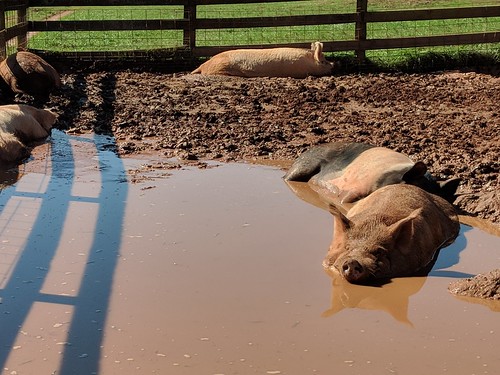
Pig in mud at poplar springs 2018 open house
Greetings,

This month I've just got a couple articles each on soil and learning from failure, plus one on social and environmental synergies and trade-offs. If you know someone who wants to sign up to receive these summaries, they can do so at http://bit.ly/sciencejon

Also, as a reminder, I'm hosting a webinar on December 3 (1p EST) with recommendations on how scientists may be able to achieve more real world impact via their research. You can learn more and register here: https://zoom.us/webinar/register/WN_Q78ubqH9TL6tkmLQCRyAsw and read the draft paper the talk is based on at http://bit.ly/strongerscience

SOIL:
Our paper opining on soil carbon (Bradford et al. 2019) is out! The opening two lines sum it up well: "Soil-based initiatives to mitigate climate change and restore soil fertility both rely on rebuilding soil organic carbon. Controversy about the role soils might play in climate change mitigation is, consequently, undermining actions to restore soils for improved agricultural and environmental outcomes." In other words, while scientists disagree a lot about whether boosting soil carbon is useful for climate mitigation, we all pretty much agree it's important for fertile and productive agricultural lands. Read a bit more at http://sciencejon.blogspot.com/2019/11/soil-carbon-what-is-it-good-for.html or just read the paper (it's only 1,800 words).

Lugato et al. 2018 uses daycent to model the net GHG impact of building soil carbon in farms via cover crops, reduced tillage, and keeping crop residues. They found a lot of variation across sites, but that overall reducing tillage and crop residue retention offered modest but long term (>80 years) net GHG benefits without impacting crop yield much. N-fixing cover crops led to stronger C sequestration and net GHG reductions over the first 20 years, but after 40 years it switched to being a GHG source (due to N2O) that strengthened over time (albeit with a small crop yield boost). If fertilization wasn't reduced to account for the new N from the cover crop, it would be a stronger GHG source much sooner. They also didn't model non-N-fixing cover crops like rye.


ORGANIZATIONAL LEARNING / FAILURE:
Catalano et al. 2018 argues that conservation would do well to learn how to deal with failure from other disciplines like medicine, business, and aviation. Specifically, we need to recognize how much we can learn from failure (sometimes more than success), rather than fearing it and avoiding tough measures as a result. They cover how we learn from failure, why it's hard to constructively engage with it, how understanding cognitive biases can help (see Table 1 for a great list to consider), and the role of leaders in supporting efforts to identify and learn from failure. The example of "no rank" military aviation debriefs is interesting - they promote a culture with sharing useful feedack at its core. My main take-away is that dealing with failure is not only key, but it's hard and requires careful thought to do well.

Catalano et al. 2019 is an analysis of 59 peer-reviewed articles discussing reported conservation failure (Table 2 has a great list of synonyms and euphemisms for failure). Most articles did use the term failure, and almost half did so in the abstract. See Table 3 for an interesting typology of causes of failure (including people, action, information, funding, and economic and political) and how common each was, and Table 4 for example text of each kind. Overall they found reporting failure in conservation is rare (~1/4 as often as reporting success), it's typically not framed as useful for learning, and 'people' are the most common cause of failure (e.g. especially stakeholder relationships, but also bad past experiences, fear, etc.). They also call for authors to report failure in a way that makes it easy for others to learn from their mistakes.


PEOPLE AND NATURE:
Gill et al. 2019 looks at 75 studies across 4 kinds of marine conservation work to evaluate social and environmental synergies and tradeoffs (as well as equity). Specifically: marine protected areas (MPAs - representing the majority of studies considered), community-based MPAs, environmental certification, and community-based management (CBM). They found diverse impacts, but with very few rigorous studies designed to show causality. But there was potential for both positive and negative cascading effects depending on access to resources (especially for fishers). Fig 6 has an interesting breakdown of how many studies covered each subtopic, and provides some potential categories of trade-offs to think about.


REFERENCES:
Bradford MA, Carey CJ, Atwood L, Bossio D, Fenichel EP, Gennet S, Fargione J, Fisher JRB, Fuller E, Kane DA, Lehmann J, Oldfield EE, Ordway EM, Rudek J, Sanderman J, Wood SA. 2019. Soil carbon science for policy and practice. Nature Sustainability .

Catalano AS, Redford K, Margoluis R, Knight AT. 2018. Black swans, cognition, and the power of learning from failure. Conservation Biology 32: 584–596.

Catalano AS, Lyons-White J, Mills MM, Knight AT. 2019. Learning from published project failures in conservation. Biological Conservation 238: 108223.

Gill DA, Cheng SH, Glew L, Aigner E, Bennett NJ, Mascia MB. 2019. Social Synergies, Tradeoffs, and Equity in Marine Conservation Impacts. Annual Review of Environment and Resources 44: 347–372.

Lugato E, Leip A, Jones A. 2018. Mitigation potential of soil carbon management overestimated by neglecting N2O emissions. Nature Climate Change 8: 219–223.


Sincerely,

Jon

p.s. If you'd like to keep track of what I write as well as what I read, I always link to both my informal blog posts and my formal publications (plus these summaries) at http://sciencejon.blogspot.com/