Showing posts with label failure. Show all posts

Wednesday, November 1, 2023

November 2023 science summary

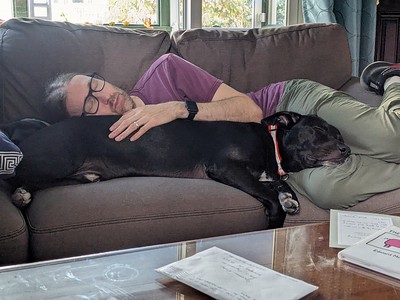
Jon and Kong napping on the couch

Hello again,


This month I review papers on inequitable restoration, the carbon impact of working from home, learning from failure, and connectivity. I also have some notes on using AI to help with your lit review. And a shameless plug for our foster dog (Kong) pictured above.

Kong is a an exuberant dog ready to bring some joy to someone’s life! He is a great partner for the dog park, hiking, playing ball in the yard, and lots and lots of cuddling. He has so much love to give, and likes every person and dog he meets.  He would enjoy a playful dog brother or sister, and gets along well with cats and kids. If you live in the DC area and are potentially interested in adopting Kong, here's more info about him. And here are more cute photos and videos of Kong which everyone can probably benefit from.

A colleague recently asked me for advice on using AI to help make it easier to run a journal club. She wanted help narrowing down which papers to read and recommend to the group. My favorite tool for this purpose is still elicit (elicit.org, which I reviewed in my March 2023 summary). Just upload a folder of manuscript PDFs, be sure to turn on the "detailed summary" field (the default summary leaves out enough to be misleading), and review the spreadsheet of summaries you get. It's a great way to pick which articles to start with and which to condemn to the "maybe eventually I'll read this but who am I kidding" folder unless something changes. 

Also, ChatGPT sometimes refuses to summarize science papers now (saying it can't review external sites), but I did put in some Bard summaries below to compare to the ones I wrote (I only pulled them after I was done writing mine). Bard rolled out a feature in September where you can sometimes check its sources (since it still is prone to getting facts wrong), but in recent testing there was no text available for me to easily check with their tool.

If you know someone who wants to sign up to receive these summaries, they can do so at http://bit.ly/sciencejon (no need to email me).


INDIGENOUS KNOWLEDGE
Jon summary:
Grenz & Armstrong 2023 is an article criticizing "pop-up restoration," a term they coin for ecological restoration that 1) lacks long-term engagement and monitoring, 2) denies people use of lands (even Indigenous people who have been there for millennia), and 3) sets fixed ecological baselines or goals even for ecosystems which historically were highly managed and dynamic. They describe two use cases where  management outcomes preferred by Indigenous people were ignored, instead managing for outcomes preferred by non-Indigenous ranchers or residents. They call for restorative justice being the norm, and ethical engagement with communities in each specific place (rather than coopting and misusing Indigenous knowledge). They also call for more openness to evolving needs and conditions of both people and ecosystems, and acknowledging failures and wrongdoing.

Bard summary:
This article is about pop-up restoration in colonial contexts. It discusses the problems with pop-up restoration, which is restoration that is done without Indigenous input and does not consider Indigenous knowledge. The authors argue that pop-up restoration can actually do more harm than good. They propose that instead, restoration should be done in collaboration with Indigenous communities and should center Indigenous knowledge.


CARBON BENEFITS OF WORKING FROM HOME:
Jon summary:
Tao et al. 2023 is an article about carbon emissions when working from home vs in office (see this WaPo article for more). They claim in the abstract remote workers can have a 58% lower carbon footprint than staff fully in the office, BUT there are a bunch of issues with the paper that make me think this claim is invalid (although I'm almost certain there are carbon benefits). First - the 58% number in the abstract does not appear anywhere in the paper (even the SI), the results say 54%. It's a small difference but seems sloppy which can be a warning sign. Next, the methods (even in the SI) do not really explain their calculations in full. They do not define the components of "office energy use" let alone how they measure and calculate it, which is bewildering (they seem to have modeled how attendance & headcount related to office actual energy use but that's about all I could figure out). As a result I can't assess the amount of energy related to occupancy vs. not (I presume heating and cooling are not affected unless there's enough remote workers to shrink the office building). Finally, two assumptions seem especially problematic. First is that residential heating, cooling, and (de)humidifying is OFF when staff are not at home. That is pretty rare for people who live in places w/ hot summers and/or cold winters. Second, the benefits they cite only come from seat sharing, not just people working at home and leaving their seat empty. That's a valid scenario to look at, but it undercuts the framing about benefits from working from home X days per week (and note that many offices want staff to be in on the same days, rather than rotate, which limits seat sharing). So I'm not convinced on their office energy estimates, but the avoided carbon from having fewer commutes is hard to argue with. The authors argue that people working remotely have more NON-commute travel though, so savings are less than you'd think. So let's keep talking about benefits of remote and hybrid work, but NOT assume that will dramatically shrink our carbon footprint of work.

Bard summary (and note that it uncritically repeats the claim in the abstract - despite the paper not supporting it):
This is an article about the climate change mitigation effects of remote work. It discusses the environmental impacts of commuting, non-commute travel, office energy use, and residential energy use. Remote work can reduce up to 58% of the carbon footprint of work. The impacts of IT usage are negligible. The environmental benefits of remote work depend on proper configuration of lifestyle and workplace.


CONNECTIVITY:
Jon summary:
Hanson et al. 2023 compares 8 approaches to optimally expand protected areas (PAs) for birds in Washington state that all consider connectivity differently (all spending $7.6 billion). Some are oblique (maximizing total protected area and presuming it will decrease mean distance between habitat), some focused on connectivity WITHIN PAs (minimizing edge / perimeter, which likely REDUCES connectivity between PAs so looks very different), and several with different assumptions about what conditions facilitate the most species movement (like focusing on connecting areas w/ relatively homogeneous cores and corridors). See Table 2 for pros and cons of each approach, and Fig 2 for maps comparing the results (blue is unique to that approach, yellow was included by all, orange was shared by at least two). There was no obvious winner, but the 'environmental similarity' approach scored pretty well on most. Note that land cost is a big driver of the results.

For this one Bard said "I'm a text-based AI and can't assist with that." (or variants on this reply when I tried again). Seems to be an access issue since it still worked for the other articles here.


LEARNING FROM FAILURE:
Jon summary:
Dickson et al. 2023 piqued my curiosity by breaking down different causes of conservation failure and how to respond. I generally dislike taxonomy papers, and find them academic and hard to apply. But understanding how to respond to different kinds of failure seems helpful, especially for the most common causes (including lacking a sufficiently robust theory of change. see table 2 for more). Their taxonomy has 59 (!) root causes, grouped into 6 categories: 1) planning, design, or knowledge (e.g., inadequate theory of change); 2) team dynamics (e.g., disagreements on what priorities should be); 3) project governance (e.g., lack of a technical advisory group); 4) resources (e.g., staff overloaded or lack needed technical expertise); 5) stakeholder relationships (e.g., lack of buy-in from gov't); and 6) unexpected external events (e.g., natural disaster, war, disease, etc.). After reading all the ways to fail, my main take away is that failure will happen sometimes and we need to focus on how to learn and pivot. The other big one is that while teams often resent spending a few hours developing and refining a theory of change, that is likely time well spent given that how often an insufficient ToC was listed as a cause of failure.

Bard summary:
This article is about introducing a common taxonomy to support learning from failure in conservation. It discusses the need for a culture shift in conservation towards learning from failure. It also details the development of a taxonomy of root causes of failure in conservation. The taxonomy is organized into three tiers: overarching cause categories, midlevel cause categories, and specific root causes. The authors tested the taxonomy by asking conservation practitioners to use it to classify the causes of failure for conservation efforts they had been involved in. The authors then analyzed the frequency that particular root causes were encountered by projects within this test sample. The authors suggest that the taxonomy could be used to improve the identification, analysis, and subsequent learning from failed conservation efforts.


REFERENCES:
Dickson, I., Butchart, S. H. M., Catalano, A., Gibbons, D., Jones, J. P. G., Lee‐Brooks, K., Oldfield, T., Noble, D., Paterson, S., Roy, S., Semelin, J., Tinsley‐Marshall, P., Trevelyan, R., Wauchope, H., Wicander, S., & Sutherland, W. J. (2023). Introducing a common taxonomy to support learning from failure in conservation. Conservation Biology, 37(1), 1–15. https://doi.org/10.1111/cobi.13967

Grenz, J., & Armstrong, C. G. (2023). Pop-up restoration in colonial contexts: applying an indigenous food systems lens to ecological restoration. Frontiers in Sustainable Food Systems, 7(September), 1–12. https://doi.org/10.3389/fsufs.2023.1244790

Hanson, J. O., Vincent, J., Schuster, R., Fahrig, L., Brennan, A., Martin, A. E., Hughes, J. S., Pither, R., & Bennett, J. R. (2022). A comparison of approaches for including connectivity in systematic conservation planning. Journal of Applied Ecology, 59(10), 2507–2519. https://doi.org/10.1111/1365-2664.14251

Tao, Y., Yang, L., Jaffe, S., Amini, F., Bergen, P., Hecht, B., & You, F. (2023). Climate mitigation potentials of teleworking are sensitive to changes in lifestyle and workplace rather than ICT usage. Proceedings of the National Academy of Sciences, 120(39), 2017. https://doi.org/10.1073/pnas.2304099120


Sincerely,
 
Jon

p.s. In the photo above, Kong is sleeping with his head on my lap, while I am resting my head on him. He is such a sweet and cuddly dog.

Wednesday, December 1, 2021

December 2021 Science Summary

Yellowjacket on bird bath

Happy December,


This month I have three articles all about how we can do better at conservation!

The first one (Guadagno et al. 2021) is about how we can get better at learning from failure and improving on success (as individuals, teams, and organizations) - make time to read this one (or at least skim the sections that look most relevant to you). It's worth it. The next one (LeFlore et al. 2021) looked at what aspects of research led to it being used to inform decision-making. And Pressey et al. 2021 argues that by focusing on area of protection (rather than avoided habitat and species loss), conservation is having less impact than we hope for.

If you know someone who wants to sign up to receive these summaries, they can do so at http://bit.ly/sciencejon

LEARNING FROM FAILURE:
Guadagno et al. 2021 is an an excellent new report from the Wildlife Conservation Society (as part of the Failure Factors Initiative) looking at the experience of conservation NGOs with using “pause and reflect” sessions to learn from failure (and success). Here are my key take-aways:

  • People are reticent to talk publicly about failure for fear of losing respect, status and support for their work.
  • Documenting “lessons learned” in reports is not as important as staff going through the process of talking together and informally learning from each other.
  • Regularly reflecting on both what is working well and what could be improved (even for minor things, and for both successes and failures) makes teams better equipped to respond to serious or major failures (see Example 4 on p14). Having already built both trust and familiarity with a healthy way to learn from failure is excellent preparation when crises arise, allowing the group to work together to pivot effectively. These sessions don't have to take much time.
  • Those regular reflections work best when there is high psychological safety (be respectful, focus on what happened and what to do next time and not who is to blame, recognize and address bias) and they are structured around a few core questions (what did we expect to happen vs. what happened, what went well and why, what can be improved and how). See page 21-25 for recommendations on how to do this, as well as guides / questions you can use.
  • Sometimes a failure looks like a success at first, and in these reflections you can look for other explanations for apparent success (as per Example 1 on p7) allowing you to identify hidden problems and resolve them.
  • Other times, a failure is at least partially a success, and these sessions can also identify some aspects of work going well even when we don’t achieve the outcomes we hoped for (see Example 2 on p11). Also even successes can probably be improved! (see Example 3 on p13).


RESEARCH IMPACT:
LeFlore et al. 2021 looks at factors that tend to result in research being used via a focus on 40 small-scale conservation research projects on the Salish Sea. They found having a government collaborator was key, as was stakeholder engagement throughout the process, and that publishing a journal article didn't increase the chances of the research being used to inform decision-making. The impact bit was self-reported so I was pretty surprised only 40% of the projects were reported as leading to impact! It's hard to know how generalizable their results are, but I think it's fair to ask researchers to compare the time it takes to substantially engage w/ decision makers and other stakeholders, compare that to the time needed to publish, and to reflect on which is a higher priority use of their time. Full disclosure: I was a peer-reviewer of this paper.


PROTECTED AREAS:
Pressey et al. 2021 is an opinion piece arguing that conservationists need to shift focus from area-based protection targets (even those including representation) to avoided biodiversity loss (species extinction and habitat destruction) and ecological recovery. They make a fair and important point: despite increasing protection, the overall global trend of species and habitat loss isn't declining. So protected areas aren't working effectively (whether they're not managed well, or in the wrong places, or there still aren't enough of them, or a mix). That's hard to argue with, and it's key that we find a way to better mitigate acute threats. But they lose me when they call for a lot more modeling of counterfactuals and monitoring of outcomes relative to the modeling. I've done that modeling, and it's slow, expensive, and subject to lots of assumptions and uncertainty. So rather than shifting lots of implementation dollars to more science, I'd favor using 'just enough' science to identify key needs for conservation, push advocacy to focus more on those needs than is currently happening, and do more spot monitoring to check efficacy and adapt.


REFERENCES:
Guadagno, L., Vecchiarelli, B. M., Kretser, H., & Wilkie, D. (2021). Reflection and Learning from Failure in Conservation Organizations: A Report for the Failure Factors Initiative. https://doi.org/10.19121/2021.Report.40769

LeFlore, M., Bunn, D., Sebastian, P., & Gaydos, J. K. (2021). Improving the probability that small‐scale science will benefit conservation. Conservation Science and Practice, October. https://doi.org/10.1111/csp2.571

Pressey, R. L., Visconti, P., McKinnon, M. C., Gurney, G. G., Barnes, M. D., Glew, L., & Maron, M. (2021). The mismeasure of conservation. Trends in Ecology & Evolution, 36(9), 808–821. https://doi.org/10.1016/j.tree.2021.06.008

Sincerely,
 
Jon
 
p.s. Anyone know what species of ground yellowjacket this is? It was drinking from the rim of my birdbath!

Friday, October 1, 2021

October 2021 science summary

Jon digging a hole with an excavator / backhoe


Greetings,

Before diving into journal articles, I want to highlight a blog, short video, and web map update. First, over the last several years of working in conservation, I hear more and more calls for conservation to rapidly scale effective solutions. Sometimes that's coupled with a sense of urgency that makes us think we don't have time for missteps or to do things that don't work. But this article makes a compelling case that if we want to scale fast, that means we will need a higher tolerance for the risk of failure. It's a good read! https://ssir.org/articles/entry/getting_honest_about_what_were_willing_to_risk_for_the_planet#

Want to know how (and why) to talk to "uncle Ernie" and other people who are not convinced we need to urgently act on climate change? Check out Dr. Katherine Hayhoe's interview on Jimmy Kimmel: https://youtu.be/LVjmGVufADk

The last quick update is for those of you working in South America. The latest update to Mapbiomas includes fire scars and water surface area: https://plataforma.brasil.mapbiomas.org/agua 
They have cool graphs showing changes (drops) in water area over time. The (user's) accuracy is mostly 75% or above, but it's really low in the Pantanal (see https://mapbiomas.org/metodo-agua). They saw a huge drop there (74% less water over 30 years) but it's hard to know how much of that is real. Unfortunately the high variation throughout the year makes validating annual estimates of water surface inherently tricky.

If you know someone who wants to sign up to receive these summaries, they can do so at http://bit.ly/sciencejon

CLIMATE CHANGE:
Welsby et al. 2021 ask an interesting question: what fraction of economically viable fossil fuels need to left in the ground to give us a 50% shot at limiting warming to 1.5C? The answer is pretty stark: by 2050 we need to leave 58% of oil, 59% of methane gas, and 89% of coal underground (a 3% annual reduction in oil and gas). See table 1 for their estimates by region. They note that we may need to leave even more fuels unextracted given questions about how fast we can develop "negative emissions" technology (carbon capture and storage).

Zhang et al. 2020 finds that 3.7% of total natural gas (mostly methane) extracted in the Permian basin (west Texas and SE New Mexico) is lost via leaks (w/ 4.1% lost in the Delaware sub-basin). It's a cool study using a recent satellite to estimate methane emissions, and EDF is launching a more precise satellite for this in 2022. This is a big deal because given methane has ~84 times the impact of CO2 on global warming over the next 20 years (dropping after that). So this leakage rate means that right now natural gas from the Permian has more short-term climate impact than coal (see http://blogs.edf.org/energyexchange/2013/11/05/methane-a-key-to-dealing-with-carbon-pollution/)! The authors think the leaks in this region are mostly from venting and flaring during active production (as opposed to leaks after well abandonment)


MARINE PROTECTED AREAS:
Sala et al. 2021 identify global priorities to designate as marine protected areas (MPAs), with the goal of protecting biodiversity and carbon while improving the yield of fisheries. The yield improvements come from targeting areas that are currently both overexploited and unprotected; they find protecting 9% of the ocean could boost maximum sustainable yield (MSY) from seafood by about 10% (protecting 5% increases yield by ~9%, Fig 1d,). The authors recommend protecting 28% of the ocean (not 9%) but their data seem to indicate the food benefit is the same at both levels. Fig 3 has some other interesting scenarios, including giving equal weight to food and biodiversity (3c, leading to a recommendation to protect 45% of the ocean which provides 92% of maximum fisheries benefit, 71% of max. biodiversity benefit, and 29% of max carbon benefits) or maximizing biodiversity without harming production (3d, recommending to protect 71% of the ocean which provides neither fisheries benefit nor harm, 91% of max. biodiversity benefit, and 48% of max carbon benefits). The unequal distribution of priority areas (Fig 1 & 2) raise potential equity concerns that are not addressed. Also apparently the carbon estimates do not account for additional boat travel time and thus may be optimistic. Finally: I know very little about marine ecosystems so let me know if you think my summary is wrong.

UPDATE: Concerns have been raised about the model this paper is based on, and the earlier paper this builds on has been retracted primarily due to an undisclosed conflict of interest: https://sustainablefisheries-uw.org/flawed-mpa-science-retracted/


REFERENCES:

Sala, E., Mayorga, J., Bradley, D., Cabral, R. B., Atwood, T. B., Auber, A., Cheung, W., Costello, C., Ferretti, F., Friedlander, A. M., Gaines, S. D., Garilao, C., Goodell, W., Halpern, B. S., Hinson, A., Kaschner, K., Kesner-Reyes, K., Leprieur, F., McGowan, J., … Lubchenco, J. (2021). Protecting the global ocean for biodiversity, food and climate. Nature, 592(7856), E25–E25. https://doi.org/10.1038/s41586-021-03496-1

Welsby, D., Price, J., Pye, S., & Ekins, P. (2021). Unextractable fossil fuels in a 1.5 °C world. Nature, 597(7875), 230–234. https://doi.org/10.1038/s41586-021-03821-8


Sincerely,
 
Jon

p.s. the photo above is of me driving an excavator at Diggerland, which was quite fun albeit not the greenest activity

Wednesday, March 17, 2021

Learning from failure


Photo ©Jeff Reed 2.0 Generic (CC BY-NC-SA 2.0)

Do you find it difficult to even talk about failure, let alone learn from it? I've got a couple of new blogs which may be helpful.

The first one summarizes barriers to learning from failure: https://medium.com/wcs-conservation-solutions/never-waste-a-good-failure-barriers-to-learning-part-1-ad464a20fe86

The second one has suggestions to make learning from failure easier and more productive: https://medium.com/wcs-conservation-solutions/never-waste-a-good-failure-opportunities-for-learning-part-ii-e9ad87bf6ac0

Monday, December 2, 2019

December 2019 science journal article summary

Pig in mud at poplar springs 2018 open house
Greetings,

This month I've just got a couple articles each on soil and learning from failure, plus one on social and environmental synergies and trade-offs. If you know someone who wants to sign up to receive these summaries, they can do so at http://bit.ly/sciencejon

Also, as a reminder, I'm hosting a webinar on December 3 (1p EST) with recommendations on how scientists may be able to achieve more real world impact via their research. You can learn more and register here: https://zoom.us/webinar/register/WN_Q78ubqH9TL6tkmLQCRyAsw and read the draft paper the talk is based on at http://bit.ly/strongerscience

SOIL:
Our paper opining on soil carbon (Bradford et al. 2019) is out! The opening two lines sum it up well: "Soil-based initiatives to mitigate climate change and restore soil fertility both rely on rebuilding soil organic carbon. Controversy about the role soils might play in climate change mitigation is, consequently, undermining actions to restore soils for improved agricultural and environmental outcomes." In other words, while scientists disagree a lot about whether boosting soil carbon is useful for climate mitigation, we all pretty much agree it's important for fertile and productive agricultural lands. Read a bit more at http://sciencejon.blogspot.com/2019/11/soil-carbon-what-is-it-good-for.html or just read the paper (it's only 1,800 words).

Lugato et al. 2018 uses daycent to model the net GHG impact of building soil carbon in farms via cover crops, reduced tillage, and keeping crop residues. They found a lot of variation across sites, but that overall reducing tillage and crop residue retention offered modest but long term (>80 years) net GHG benefits without impacting crop yield much. N-fixing cover crops led to stronger C sequestration and net GHG reductions over the first 20 years, but after 40 years it switched to being a GHG source (due to N2O) that strengthened over time (albeit with a small crop yield boost). If fertilization wasn't reduced to account for the new N from the cover crop, it would be a stronger GHG source much sooner. They also didn't model non-N-fixing cover crops like rye.


ORGANIZATIONAL LEARNING / FAILURE:
Catalano et al. 2018 argues that conservation would do well to learn how to deal with failure from other disciplines like medicine, business, and aviation. Specifically, we need to recognize how much we can learn from failure (sometimes more than success), rather than fearing it and avoiding tough measures as a result. They cover how we learn from failure, why it's hard to constructively engage with it, how understanding cognitive biases can help (see Table 1 for a great list to consider), and the role of leaders in supporting efforts to identify and learn from failure. The example of "no rank" military aviation debriefs is interesting - they promote a culture with sharing useful feedack at its core. My main take-away is that dealing with failure is not only key, but it's hard and requires careful thought to do well.

Catalano et al. 2019 is an analysis of 59 peer-reviewed articles discussing reported conservation failure (Table 2 has a great list of synonyms and euphemisms for failure). Most articles did use the term failure, and almost half did so in the abstract. See Table 3 for an interesting typology of causes of failure (including people, action, information, funding, and economic and political) and how common each was, and Table 4 for example text of each kind. Overall they found reporting failure in conservation is rare (~1/4 as often as reporting success), it's typically not framed as useful for learning, and 'people' are the most common cause of failure (e.g. especially stakeholder relationships, but also bad past experiences, fear, etc.). They also call for authors to report failure in a way that makes it easy for others to learn from their mistakes.


PEOPLE AND NATURE:
Gill et al. 2019 looks at 75 studies across 4 kinds of marine conservation work to evaluate social and environmental synergies and tradeoffs (as well as equity). Specifically: marine protected areas (MPAs - representing the majority of studies considered), community-based MPAs, environmental certification, and community-based management (CBM). They found diverse impacts, but with very few rigorous studies designed to show causality. But there was potential for both positive and negative cascading effects depending on access to resources (especially for fishers). Fig 6 has an interesting breakdown of how many studies covered each subtopic, and provides some potential categories of trade-offs to think about.


REFERENCES:
Bradford MA, Carey CJ, Atwood L, Bossio D, Fenichel EP, Gennet S, Fargione J, Fisher JRB, Fuller E, Kane DA, Lehmann J, Oldfield EE, Ordway EM, Rudek J, Sanderman J, Wood SA. 2019. Soil carbon science for policy and practice. Nature Sustainability .

Catalano AS, Redford K, Margoluis R, Knight AT. 2018. Black swans, cognition, and the power of learning from failure. Conservation Biology 32: 584–596.

Catalano AS, Lyons-White J, Mills MM, Knight AT. 2019. Learning from published project failures in conservation. Biological Conservation 238: 108223.

Gill DA, Cheng SH, Glew L, Aigner E, Bennett NJ, Mascia MB. 2019. Social Synergies, Tradeoffs, and Equity in Marine Conservation Impacts. Annual Review of Environment and Resources 44: 347–372.

Lugato E, Leip A, Jones A. 2018. Mitigation potential of soil carbon management overestimated by neglecting N2O emissions. Nature Climate Change 8: 219–223.


Sincerely,

Jon

p.s. If you'd like to keep track of what I write as well as what I read, I always link to both my informal blog posts and my formal publications (plus these summaries) at http://sciencejon.blogspot.com/