Showing posts with label social science. Show all posts

Wednesday, July 6, 2022

Two new papers: how gender impacts science publishing & conservation prioritization

After having 0 papers published in 2021, I was on author on two papers published last week (both open access - click the author name to go to the paper)! Here's a quick summary of each:

James et al. 2022 analyzed almost 3,000 peer-reviewed scientific publications with at least one author from The Nature Conservancy (TNC) by gender of the author(s) - all that we could find from 1968 to 2019. Roughly 1/3 of the TNC authors and authorships (# authors * # papers) were women, even though 45% of conservation and science staff are women. Most authorships were in the U.S. - 85% overall and 90% for women. This means men (especially men in the United States) are publishing at a significantly higher rate than women. We close with several recommendations to help shrink this gap. Some are aimed at individual scientists (e.g., self-education on bias and systemic barriers, asking men to collaborate more with women as male-led papers have far fewer women co-authors than female-led papers, and asking lead authors to be more inclusive in determining whose contributions merit being listed as an author), and others are aimed at organizations (e.g., providing more resources and support for women who wish to publish, especially for women who don't speak English as a first language). 

I learned a ton from both the data and my co-authors on this one, and we have another 1-2 papers on the subject coming which will get into the results of a survey the lead author did to get deeper into the experience of how gender impacts not only publication but perceptions of influence and career advancement. Note that our available data listed everyone's gender as male, female, or unknown - apologies to those who we misgendered or otherwise failed to reflect their lived experience with a relatively simple binary analysis (especially as gender diverse people appear to be even more underrepresented in science publications).

You can read blogs about the article at https://www.nature.org/en-us/newsroom/published-science-gender-gap/ and https://blog.nature.org/science/science-brief/conservation-science-publishing-has-a-gender-problem/ or the full paper is at https://onlinelibrary.wiley.com/doi/10.1111/csp2.12748


As conservation organizations try to work towards multiple goals, Vijay et al. 2022 asks whether we can protect places that efficiently advance multiple goals at once (win-wins), or if we have to pick between places good for one goal but that perform poorly for others (trade-offs). We looked at opportunities to advance five benefits by protecting land in the contiguous United States: vertebrate species richness, threatened vertebrate species richness, carbon storage, area protected, and recreational usage. Specifically we looked at Return On Investment (ROI) meaning the benefit score compared to the cost of the land (as a proxy for difficulty of protecting it). 

The results are a bit complicated: this paper focused only on unprotected habitat which is predicted to be converted by 2100, and with that framing the four environmental benefits were both highly correlated overall (r 0.89-0.99) and had a lot of the "top sites" in common (the highest scoring places for one benefit often had a top score for another benefit, 32-79% of the time). Recreation had less in common with environmental benefits (r 0.5-0.52, only 7-13% of the top sites were also a top site for another benefit). That still shows a lot of opportunity for win-wins across the nation! However, if you DON'T constrain conservation to places where land use is projected to change by 2100, win-wins are harder to find (as shown in the Supplementary Information). Species richness and area were the most compatible with a high r of 0.58 and 24% of top sites in common, and area and recreation were the least aligned, with an r of -0.65 and no top sites in common. 

There's a lot of interesting stuff in the paper (including comparing how three hypothetical policy scenarios score on each benefit), and I've written a slightly longer summary here: https://www.linkedin.com/posts/sciencejon_conservation-science-goalsetting-activity-6948122284528197632-OH0S/ or the full paper is at https://onlinelibrary.wiley.com/doi/10.1111/conl.12907

Monday, August 2, 2021

August 2021 science summary

Hi,

This month is a grab bag of a few articles on different topics I've been meaning to read. Sorry for the lack of a theme!

If you know someone who wants to sign up to receive these summaries, they can do so at http://bit.ly/sciencejon


BIODIVERSITY / ECOLOGY:
Maron et al. 2021 offers seven guidelines to set robust biodiversity goals (aimed at the Global Biodiversity Framework [GBF] under CBD), summarized in a nice diagram in Fig 1. 1. recognize limits to "net outcome" approaches (determine which spp and ecosystems are irreplaceable), 2. use net outcomes where needed since some losses are unavoidable, 3. specify a timeline for net outcome goals (a reference year and a target year), 4. set goals for net gains (since a reference year like 2020 has some spp. and ecosystems which have experienced high historic loss, so net gaines are needed to persist), 5. capture key biodiversity (with distinct goals for ecosystems, spp., and genetic diversity), 6. avoid unintended substitutions by ensuring any losses to one species (or ecosystem) is balanced with gains to a different one only if the losses are to a relatively unthreatened component, and 7. set ambitious goals (achievable, but more than adequate). They note several changed needed to the post-2020 GBF to meet these criteria.

Lutz et al. 2018 asks how important the biggest trees in forests are across the world. My favorite figure is that the biggest 1% in diameter made up ~50% of the aboveground biomass (of trees bigger than 1 cm), although with lots of variation by forest. If you use a consistent threshold of trees >2' in diameter instead of the top 1%, they're ~40% of biomass on average. Forests where the biggest trees took up a bigger % of total biomass tended to have fewer species in that top size class. They point out that for carbon sequestration, these big trees are super important, which Bill Moomaw has also emphasized in advocating for 'proforestation' where we just leave forests alone for longer before logging them as the rate of sequestration goes up as they get really big.

Hall et al. 2021 is about Circuitscape (software to analyze wildlife connectivity at the landscape scale) and the advantages of having ported it over to Julie (a high-performance computing language). From figure 3 it looks like the new version is about 7 times as fast as the python version, and it runs as a standalone without needing to know Julia. They make the broader point that collaborating with computer scientists can reduce costs and improve efficiency, allowing more conservation to get done.


SOCIAL SCIENCE:
Dieckman et al. 2021 surveyed people about how important different social and cultural issues were to government decision makers vs. the general public. Respondents thought that government decision makers care the most about economic aspects, but that the public cares more about other social and cultural aspects. More tangible impacts (like water quality and physical safety) were perceived to be more important than intangible ones (like emotional health and local practices). Interestingly, biodiversity had the lowest perceived support second only to native culture.


REFERENCES:

Dieckmann, N. F., Gregory, R., Satterfield, T., Mayorga, M., & Slovic, P. (2021). Characterizing public perceptions of social and cultural impacts in policy decisions. Proceedings of the National Academy of Sciences, 118(24), e2020491118. https://doi.org/10.1073/pnas.2020491118

Hall, K. R., Anantharaman, R., Landau, V. A., Clark, M., Dickson, B. G., Jones, A., Platt, J., Edelman, A., & Shah, V. B. (2021). Circuitscape in Julia: Empowering Dynamic Approaches to Connectivity Assessment. Land, 10(3), 301. https://doi.org/10.3390/land10030301

Lutz, J. A., Furniss, T. J., Johnson, D. J., Davies, S. J., Allen, D., Alonso, A., Anderson-Teixeira, K. J., Andrade, A., Baltzer, J., Becker, K. M. L., Blomdahl, E. M., Bourg, N. A., Bunyavejchewin, S., Burslem, D. F. R. P., Cansler, C. A., Cao, K., Cao, M., Cárdenas, D., Chang, L.-W., … Zimmerman, J. K. (2018). Global importance of large-diameter trees. Global Ecology and Biogeography, 27(7), 849–864. https://doi.org/10.1111/geb.12747

Maron, M., Juffe-Bignoli, D., Krueger, L., Kiesecker, J., Kümpel, N. F., ten Kate, K., Milner-Gulland, E. J., Arlidge, W. N. S., Booth, H., Bull, J. W., Starkey, M., Ekstrom, J. M., Strassburg, B., Verburg, P. H., & Watson, J. E. M. (2021). Setting robust biodiversity goals. Conservation Letters, May, 1–8. https://doi.org/10.1111/conl.12816

Sincerely,
 
Jon

Monday, June 1, 2020

June 2020 science journal article summary

Working on the porch with Leeta

Hello,

I hope you're all doing well. I'm finding working on my porch when I can gives me a chance to safely get in some bird-watching and socially distant contact w/ neighbors.

I hurt my arm, so I'm relying on voice dictation to type which has slowed me down a lot. As a result, I'm only covering a few science articles this month. But they're all good ones! Although I'm biased as I'm an author of two of them (recommendations for scientists to improve their research impact, and a methods paper w/ an easy way for social science surveys to collect more spatial data).

If you know someone who wants to sign up to receive these summaries, they can do so at http://bit.ly/sciencejon


RESEARCH IMPACT:
Fisher et al. 2020 is the paper I wish I had read when I started working as a scientist. It has clear recommendations for scientists to improve the impact of their research. We drew from our successes, failures, and suggestions from other colleagues and the scientific literature. Then we distilled all that into what we hope is a paper that is both practical and accessible to anyone. At a high level we recommend: (a) identify and understand the audience for the research; (b) clarify the need for evidence; (c) gather “just enough” evidence; and (d) share and discuss the evidence. For each we talk about why it matters and how to do it. You can read it at https://conbio.onlinelibrary.wiley.com/doi/full/10.1111/csp2.210 We are still working on a blog and 1-page version, but we do have a recording of a talk based on the paper here: https://www.openchannels.org/webinars/2019/improving-your-impact-guidelines-doing-science-influences-policy-and-management Feedback is welcome!


SOCIAL SCIENCE:
Masuda et al. 2020 is a fairly simple methods paper. We show that during household surveys, asking respondents to draw spatial boundaries (e.g. of their farm plots) on digital tablets w/ ArcGIS Collector is relatively easy, accurate, and practical. By making the surveys spatially explicit, we could then both use the survey data to improve remote sensing, and use remote sensing data to spot discrepancies in the survey data. Essentially we felt this method delivered a lot of value for very little effort, and that it should be used much more commonly. There's a blog about it at https://www.ifpri.org/blog/leveraging-local-knowledge-map-and-link-agricultural-plots-farmer-practices


CLIMATE CHANGE:
You've heard about the climate impacts of habitat destruction, but Goldstein et al. 2020 add a new twist. They identify which ecosystems have the most 'irrecoverable carbon,' which once lost can't be recovered in time to help with climate (see Figure 1). Figure 2 has the results; tropical peatlands followed by mangroves are clear priorities for protection (scored by total irrecoverable carbon rather than carbon density, although it's a similar ranking). The next tier is other peatlands, old-growth forests, marshes, and seagrasses. Other habitats generally have lower irrecoverable carbon. They note that they don't account for impacts of climate forcing, so boreal forest benefits are overestimated and tropical forests are underestimated. They only looked in the top meter of soil for peat, so over the long term the estimates for peat are likely on the low side. Finally, some of this carbon will be lost to climate change (e.g. thawing permafrost soils oxidizing) even without local conversion, so we should ensure protections for habitat actually address the dominant threat. You can read the article for free here: https://www.nature.com/articles/s41558-020-0738-8.epdf?author_access_token=poj3Fn4fkhP7_SK-yFKaTNRgN0jAjWel9jnR3ZoTv0OGVcM5jAVKvW5GyId6F2q0ve6uY5HlQ2nGzEyTtPTSUIuTOykc5x3bM9HdnsqyTZdAL_YY02dyngC4HUYA6LeqaLA-r26jCXCx1eABw5d_FQ%3D%3D


REFERENCES:
Fisher, J. R. B., Wood, S. A., Bradford, M. A., & Kelsey, T. R. (2020). Improving scientific impact: How to practice science that influences environmental policy and management. Conservation Science and Practice, e0210. https://doi.org/10.1111/csp2.210

Goldstein, A., Turner, W. R., Spawn, S. A., Anderson-Teixeira, K. J., Cook-Patton, S., Fargione, J., … Hole, D. G. (2020). Protecting irrecoverable carbon in Earth’s ecosystems. Nature Climate Change, 10(4), 287–295. https://doi.org/10.1038/s41558-020-0738-8

Masuda, Y. J., Fisher, J. R. B., Zhang, W., Castilla, C., Boucher, T. M., & Blundo-Canto, G. (2020). A respondent-driven method for mapping small agricultural plots using tablets and high resolution imagery. Journal of International Development. https://doi.org/10.1002/jid.3475

Sincerely,

Jon

p.s. If you'd like to keep track of what I write as well as what I read, I always link to both my informal blog posts and my formal publications (plus these summaries) at http://sciencejon.blogspot.com/

Monday, December 2, 2019

December 2019 science journal article summary

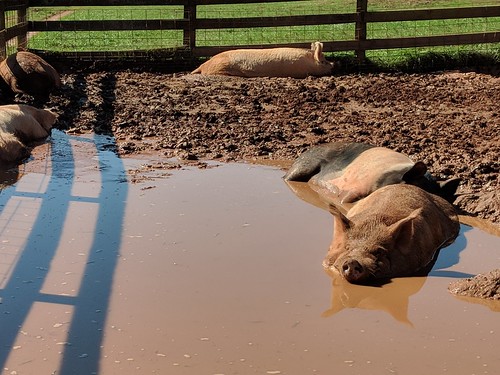
Pig in mud at poplar springs 2018 open house
Greetings,

This month I've just got a couple articles each on soil and learning from failure, plus one on social and environmental synergies and trade-offs. If you know someone who wants to sign up to receive these summaries, they can do so at http://bit.ly/sciencejon

Also, as a reminder, I'm hosting a webinar on December 3 (1p EST) with recommendations on how scientists may be able to achieve more real world impact via their research. You can learn more and register here: https://zoom.us/webinar/register/WN_Q78ubqH9TL6tkmLQCRyAsw and read the draft paper the talk is based on at http://bit.ly/strongerscience

SOIL:
Our paper opining on soil carbon (Bradford et al. 2019) is out! The opening two lines sum it up well: "Soil-based initiatives to mitigate climate change and restore soil fertility both rely on rebuilding soil organic carbon. Controversy about the role soils might play in climate change mitigation is, consequently, undermining actions to restore soils for improved agricultural and environmental outcomes." In other words, while scientists disagree a lot about whether boosting soil carbon is useful for climate mitigation, we all pretty much agree it's important for fertile and productive agricultural lands. Read a bit more at http://sciencejon.blogspot.com/2019/11/soil-carbon-what-is-it-good-for.html or just read the paper (it's only 1,800 words).

Lugato et al. 2018 uses daycent to model the net GHG impact of building soil carbon in farms via cover crops, reduced tillage, and keeping crop residues. They found a lot of variation across sites, but that overall reducing tillage and crop residue retention offered modest but long term (>80 years) net GHG benefits without impacting crop yield much. N-fixing cover crops led to stronger C sequestration and net GHG reductions over the first 20 years, but after 40 years it switched to being a GHG source (due to N2O) that strengthened over time (albeit with a small crop yield boost). If fertilization wasn't reduced to account for the new N from the cover crop, it would be a stronger GHG source much sooner. They also didn't model non-N-fixing cover crops like rye.


ORGANIZATIONAL LEARNING / FAILURE:
Catalano et al. 2018 argues that conservation would do well to learn how to deal with failure from other disciplines like medicine, business, and aviation. Specifically, we need to recognize how much we can learn from failure (sometimes more than success), rather than fearing it and avoiding tough measures as a result. They cover how we learn from failure, why it's hard to constructively engage with it, how understanding cognitive biases can help (see Table 1 for a great list to consider), and the role of leaders in supporting efforts to identify and learn from failure. The example of "no rank" military aviation debriefs is interesting - they promote a culture with sharing useful feedack at its core. My main take-away is that dealing with failure is not only key, but it's hard and requires careful thought to do well.

Catalano et al. 2019 is an analysis of 59 peer-reviewed articles discussing reported conservation failure (Table 2 has a great list of synonyms and euphemisms for failure). Most articles did use the term failure, and almost half did so in the abstract. See Table 3 for an interesting typology of causes of failure (including people, action, information, funding, and economic and political) and how common each was, and Table 4 for example text of each kind. Overall they found reporting failure in conservation is rare (~1/4 as often as reporting success), it's typically not framed as useful for learning, and 'people' are the most common cause of failure (e.g. especially stakeholder relationships, but also bad past experiences, fear, etc.). They also call for authors to report failure in a way that makes it easy for others to learn from their mistakes.


PEOPLE AND NATURE:
Gill et al. 2019 looks at 75 studies across 4 kinds of marine conservation work to evaluate social and environmental synergies and tradeoffs (as well as equity). Specifically: marine protected areas (MPAs - representing the majority of studies considered), community-based MPAs, environmental certification, and community-based management (CBM). They found diverse impacts, but with very few rigorous studies designed to show causality. But there was potential for both positive and negative cascading effects depending on access to resources (especially for fishers). Fig 6 has an interesting breakdown of how many studies covered each subtopic, and provides some potential categories of trade-offs to think about.


REFERENCES:
Bradford MA, Carey CJ, Atwood L, Bossio D, Fenichel EP, Gennet S, Fargione J, Fisher JRB, Fuller E, Kane DA, Lehmann J, Oldfield EE, Ordway EM, Rudek J, Sanderman J, Wood SA. 2019. Soil carbon science for policy and practice. Nature Sustainability .

Catalano AS, Redford K, Margoluis R, Knight AT. 2018. Black swans, cognition, and the power of learning from failure. Conservation Biology 32: 584–596.

Catalano AS, Lyons-White J, Mills MM, Knight AT. 2019. Learning from published project failures in conservation. Biological Conservation 238: 108223.

Gill DA, Cheng SH, Glew L, Aigner E, Bennett NJ, Mascia MB. 2019. Social Synergies, Tradeoffs, and Equity in Marine Conservation Impacts. Annual Review of Environment and Resources 44: 347–372.

Lugato E, Leip A, Jones A. 2018. Mitigation potential of soil carbon management overestimated by neglecting N2O emissions. Nature Climate Change 8: 219–223.


Sincerely,

Jon

p.s. If you'd like to keep track of what I write as well as what I read, I always link to both my informal blog posts and my formal publications (plus these summaries) at http://sciencejon.blogspot.com/

Friday, April 13, 2018

New paper: how "boundary spanners" help innovation spread

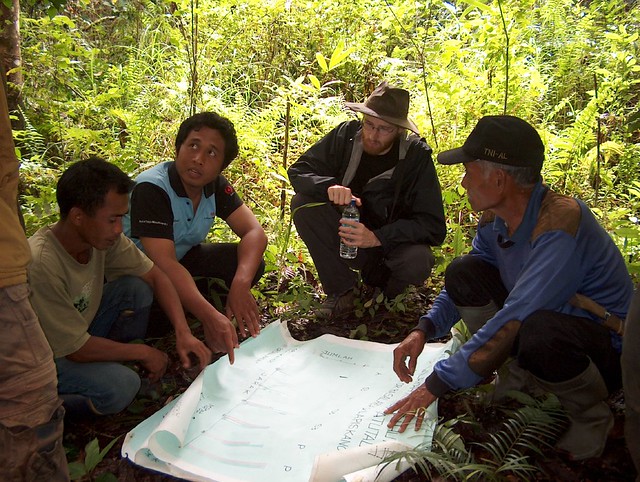
village conservation meeting

There's another paper out from the study of how Conservation by Design (CbD) 2.0 spread through TNC and beyond.

This paper (led by Yuta Masuda, I'm a co-author) focuses on "boundary spanners" - people with informal connections across departments / geography. These “boundary spanners” are four times more likely to spread information about “innovations” (here that means info about CbD 2.0) and to drive changes in attitude that encourage adoption. However, their advantage in spreading info only exists when they have <4 direct reports and are relatively low in the organizational hierarchy (counting levels of who reports to their direct reports etc. etc.).

There's a blog with more info at: https://www.sciencedaily.com/releases/2018/04/180409090127.htm and you can read the paper at http://rdcu.be/Kre4 

Masuda, Y. J., Liu, Y., Reddy, S. M. W., Frank, K. A., Burford, K., Fisher, J. R. B., & Montambault, J. (2018). Innovation diffusion within large environmental NGOs through informal network agents. Nature Sustainability. https://doi.org/10.1038/s41893-018-0045-9

Thursday, March 1, 2018

Share the good news: a paper on improving "knowledge diffusion"


Ever feel like you missed out on a super cool Kickstarter project and you can’t believe no one told you about it? Amidst the fire hose of blogs, podcasts, social media, and more, how can we help good ideas get noticed, get shared, “go viral,” and make change happen?

That’s the question that a few scientists at The Nature Conservancy (TNC) decided to tackle back in 2014 (http://blog.nature.org/science/2015/07/29/tracking-how-new-science-spreads/). Scientists usually don’t get to tell others what to do, and we don’t have many celebrity advocates or adorable cat videos to explain our research. So to influence others we often have to be creative, “lead by intrigue,” and hope our message catches on. But for a new idea to go viral, it helps to understand how it spreads from person to person.

Our first journal article on this research (published in PLoS ONE, http://journals.plos.org/plosone/article?id=10.1371/journal.pone.0193716) taps into a huge array of different data sources including tracking web page activity, TNC employee data, and more traditional detailed surveys to give us some initial clues about how people are learning about innovations and sharing them with others. Going this deep with different kinds of data to explore diffusion is novel, and we learned some cool tricks other scientists may want to use!

Scientists call the way that new ideas spread “diffusion of innovations.” The process includes learning about and considering a new idea, trying it out, and telling others about it (not necessarily in that order).

Some innovations are new technology or practices (e.g., seven science innovations changing conservation, http://blog.nature.org/science/2017/04/17/7-science-innovations-changing-conservation/). We focused on a more conceptual example: the spread of the new scientific principles and planning methodology at TNC: Conservation by Design AKA CbD, https://www.nature.org/science-in-action/conservation-by-design/index.htm. We asked how TNC staff and others received this new information, sought to learn more, and shared it.

CbD dates back 20 years and we saw lots of interest in it from beyond TNC in published science articles. Experts we interviewed said that ideas spread when you bring in partners early, invest in training and support, and do several other things which TNC did from the beginning).

We didn't find a silver bullet for communications that got people to seek out more information. But simple broad communications like short articles in internal newsletters and webinars to all staff worked best to promote seeking more information about CbD (as shown in the figure below, which tracks how many people went to a web site to learn about CbD in response to different events). The more venues through which someone heard about the new ideas in CbD 2.0, the more likely they were to share, so repetition was key.


There were several other factors that made people more likely to share information. Some were obvious, like people whose job included training others in conservation planning methods. Others were less obvious, e.g. people who took more online trainings (not limited to conservation) were more likely to share information about CbD 2.0.

We also learned that even with all the data available to us, there were still some surprising limitations. For example, Google Trends, much touted as a “Big Data” approach to track public interest in different topics, turned out to have unreliable data. Plus, it’s not specific enough: TNC’s “conservation by design” gets searched for less than a private company with the same name. So searches for “our” CbD got lost.

Most of my research tries to find how much information we need to make the right decisions without wasting time on unnecessary analysis. With the findings of this new paper, we have new insights into how we can share those tips and avoid either wasting time or making the wrong call.


So the next time you miss out on that sweet Kickstarter project, let me know, and let’s see if we can figure out how to better prepare for the next one.

Fisher, J. R. B., Montambault, J., Burford, K. P., Gopalakrishna, T., Masuda, Y. J., Reddy, S. M. W., … Salcedo, A. I. (2018). Knowledge diffusion within a large conservation organization and beyond. PLoS ONE, 13(3), 1–24. https://doi.org/10.1371/journal.pone.0193716

Friday, September 9, 2016

New journal article: "Advancing Conservation by Understanding and Influencing Human Behavior"

Interested in what works when it comes to getting people to change their behavior and start acting in support of conservation? This paper (which I'm a minor author on) outlines different approaches to behavior change, and includes some relevant questions to determine which approach will be most successful:
http://onlinelibrary.wiley.com/doi/10.1111/conl.12252/epdf

Here's the citation:
Reddy, Sheila MW, Jensen Montambault, Yuta J. Masuda, Ayelet Gneezy, Elizabeth Keenan, William Butler, Jonathan RB Fisher, and Stanley T. Asah. "Advancing Conservation by Understanding and Influencing Human Behavior." Conservation Letters (2016).