Hello,
It's grilling season (at least in the US), and lately I've been getting lots of articles about animal protein and sustainability. Some are on the impact of animal foods and how much we can sustainably consume, and others are on the details of livestock management and production. There's also one paper finding that agricultural intensification has rarely led to positive outcomes for both humans and the environment.
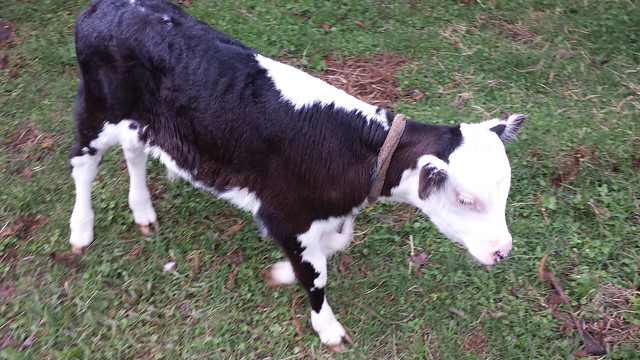
Incidentally, the photo above is of a new plant-based sausage that's good enough to be selling out within hours whenever they're stocked!
ANIMAL FOODS / DIET:
VanZanten et al. 2018 is a really thoughtful paper that takes a refreshing approach to looking at the environmental impact of animal foods in our diet. They note that while using arable land to feed livestock (rather than directly feeding humans) is inherently inefficient, there are some grasslands, food waste, and food by-products like distillers grains that humans can't eat. So to minimize land used to feed the world, ~10% of calories (& ~1/3 of protein needed) could come from animal foods. Fig 4 shows how animal consumption in different regions compares to the protein goal, and Fig 5 shows a similar breakdown for calories and other nutrients. They cover how different animals fit in (e.g. ruminants for grasslands, pigs for food waste, etc.), noted that GHGs are still higher in their scenario than an all-vegan diet, and cover several interesting caveats and twists. One thing they didn't mention - some of the underlying studies have a large role for milk, which people have trouble digesting in many places around the world. But is is a really well done paper and I highly recommend it.
Mottet et al. 2017 also looks at how much animal food relies on food humans can't eat, although it's more optimistic about the impact of livestock than most similar studies. They make several interesting points like the utility of livestock as draught animals and providing manure for crops, as well as estimating that globally only 2.8-3.2 kg of human edible feed is needed to produce 1 kg of meat (2.8 for ruminants like cows, 3.2 for monogastrics like chicken and pigs). Those numbers are lower than what's usually cited but I don't think I've seen it calculated only for the human edible fraction of feed.
Poore and Nemecek is a useful comprehensive global reference on the impact of different foods and diets (and how consumers and producers can reduce those impacts) but it's dense and somewhat hard to read and unpack. They note several opportunities to improve on the production side, but also that animal foods are much higher impact than similar plant foods, arguing consumer diet choice is a key part of sustainability. They call for better systems to measure and communicate about sustainability to consumers. Two things to watch out for: when they say even the lowest impact animal foods are higher impact than plant substitutes, they exclude tree nuts, and in the figures with tons of little charts and graphs note that the scale of the axes changes often.
Godfray et al. 2018 is a nice summary of recent and predicted trends in meat consumption, plus impacts on human health and the environment. They conclude with thoughts about possible ways to shift diets to counteract the growth in demand for animal foods (with Denmark's saturated fat tax one real world example). There's no big new message here, but lots of good tidbits sprinkled throughout and it covers quite a few related topics. I found two figures especially interesting - 1c shows the potential impact of a carbon tax on the price and consumption of different animal foods, and 3a shows the current and projected 2050 allocation of ag GHGs by food type (both plant and animal).
AGRICULTURAL INTENSIFICATION:
Rasmussen et al. 2018 is a global review of whether or not agricultural intensification is good for both people and the environment. While they find income and food production generally go up, ecosystem services go down in most cases. The figures have great summaries of results by geography, by metric of ecosystem services or human well being, and by separating 'win-win' cases from 'lose-lose' and mixed results in different contexts. The specific case studies are very interesting and thought provoking. Surprisingly, increased inputs were more likely to lead to win-win outcomes, with crop changes as reduced fallow more likely to lead to lose-lose. This is a relatively understudied area (this paper summarizes 53 studies) given the importance of intensification strategies; the lack of evidence for consistent positive outcomes doesn't mean intensification CAN'T work, but shows more work (design and monitoring) is needed to ensure we succeed in our goals. See https://www.scidev.net/global/agriculture/news/intensified-farming-rarely-aids-wellbeing-environment.html for a blog on the subject.
LIVESTOCK PRODUCTION:
Smith et al. 2017 tackle an important question - how much of corn grown in the US is used for livestock, and where is it sourced from? It sounds simple, but is complex since lots of corn is used for ethanol but the leftovers ("distiller's grains") are still used for feed. Figure 3 is a fascinating map series showing where corn is grown to supply ethanol refineries, broiler chickens, hogs, and beef, and it gives you a sense of the supply chain complexity around corn. The authors find that only 59% of US corn is used by these four sectors, which makes me fairly certain that they're missing some livestock (e.g. this probably omits dairy and perhaps some poultry since typically ethanol + livestock are reported as using >80% of US corn). That 59% is made up of 25% for ethanol, 14% for beef, 12% for pork, and 8% for broilers. I need to dig into the data to verify but I'd guess poultry overall should be considerably higher. Regardless, this is a super interesting paper with some novel findings.
Van Boeckel et al. 2017 looks at the role of antimicrobials in livestock production, and argues for reductions (whether through a policy capping levels used, reducing overall production of livestock and animal foods, or charging a fee on antimicrobials sold for use by nonhumans). They explore all three options and conclude that a mixture could be an effective way to reduce usage of antiomicrobials by livestock by up to 80%.
Pelletier 2008 answers a question I've been hearing a lot lately - where are the biggest opportunities to improve the impact of poultry production? He finds that it's all about the feed - on average across multiple dimensions (energy, GHGs, water pollution, etc.) ~90% of impact comes from feed and ~10% from on-farm management (mostly heating and ventilation). Note that this study is limited to the US, and that they assumed all poultry litter had a net positive impact by displacing the use of synthetic fertilizer (which may not be valid everywhere). He finds that the animal fraction of poultry feed (especially poultry fat, poultry trimmings, and fishmeal) have much higher impact than the plant portion of the diet, indicating that unless the animal-based feed would otherwise be wasted, overall impact could be improved by shifting to a higher percentage of plant foods.
If you've ever been to a hog farm, you likely noticed the smell. In addition to being unpleasant, it can cause air quality problems affecting both human health and GHGs. Maurer et al. 2017 was a pilot study to see if biochar could help. It didn't work very well. They found that the highest dose of biochar reduced ammonia emissions moderately but increased methane emission, with H2S (rotten egg smell) and N2O unaffected (and with lower doses having no significant effect).
York et al. 2017 is an interesting look at two ways to reduce GHGs in smallholder dairy farms in India - anaerobic digesters and controlling Foot and Mouth Disease. The government has been paying to install digesters and vaccinate cows, but the authors argue that digesters are actually INCREASING emissions, while the simpler vaccination approach reduces emissions ~4-13%. The authors make a lot of assumptions I can't speak to the validity of, but the underlying ideas seem to be that the digesters leak, and that since the manure is managed as a solid anyway the avoidable emissions are relatively low to begin with. They note that where manure is managed as a liquid (e.g. in North India) digesters would make more sense. To me this is a good reminder that low-tech cheap solutions like avoiding waste and lost productivity should be looked at before jumping to more pricy high-tech solutions. Fun fact - my parents told me I had foot and mouth disease as a baby, but apparently it's a different virus than the one livestock gets.
Crespi and Saitone 2018 is a bit esoteric - they look at the vertical integration of livestock in the US, comparing the beef industry to poultry and swine in particular. They dive into the specifics of different relationships between actors along the livestock supply chains, and why cattle haven't been as vertically integrated as other animals (longer life cycle, low relative cost of forage vs. farmed feed, spatial distribution of grazing lands vs. feedlots). They also note that the four largest beef packers in the US are moving away from integrated models. The primary relevance to conservation is that vertical integration makes it easier to drive changes in production through the entire supply chain (e.g. promoting conservation practices in growing feed or grazing).
REFERENCES:
Crespi, J. M., & Saitone, T. L. (2018). Are Cattle Markets the Last Frontier? Vertical Coordination in Animal-Based Procurement Markets. Annual Review of Resource Economics, (June), 1–21.
Godfray, H. C. J., Aveyard, P., Garnett, T., Hall, J. W., Key, T. J., Lorimer, J., … Jebb, S. A. (2018). Meat consumption, health, and the environment. Science, 361(243). https://doi.org/10.1126/science.aam5324
Maurer, D., Koziel, J., Kalus, K., Andersen, D., & Opalinski, S. (2017). Pilot-Scale Testing of Non-Activated Biochar for Swine Manure Treatment and Mitigation of Ammonia, Hydrogen Sulfide, Odorous Volatile Organic Compounds (VOCs), and Greenhouse Gas Emissions. Sustainability, 9(6), 929. https://doi.org/10.3390/su9060929
Mottet, A., de Haan, C., Falcucci, A., Tempio, G., Opio, C., & Gerber, P. (2017). Livestock: On our plates or eating at our table? A new analysis of the feed/food debate. Global Food Security, 14, 1–8. https://doi.org/10.1016/j.gfs.2017.01.001
Pelletier, N. (2008). Environmental performance in the US broiler poultry sector: Life cycle energy use and greenhouse gas, ozone depleting, acidifying and eutrophying emissions. Agricultural Systems, 98(2), 67–73. https://doi.org/10.1016/j.agsy.2008.03.007
Poore, J., & Nemecek, T. (2018). Reducing food’s environmental impacts through producers and consumers. Science, 992(6392), 987–992.
Rasmussen, L. V., Coolsaet, B., Martin, A., Mertz, O., Pascual, U., Corbera, E., … Ryan, C. M. (2018). Social-ecological outcomes of agricultural intensification. Nature Sustainability, 1(6), 275–282. https://doi.org/10.1038/s41893-018-0070-8
Smith, T. M., Goodkind, A. L., Kim, T., Pelton, R. E. O., Suh, K., & Schmitt, J. (2017). Subnational mobility and consumption-based environmental accounting of US corn in animal protein and ethanol supply chains. Proceedings of the National Academy of Sciences, 201703793. https://doi.org/10.1073/pnas.1703793114
Van Boeckel, T. P., Glennon, E. E., Chen, D., Gilbert, M., Robinson, T. P., Grenfell, B. T., … Laxminarayan, R. (2017). Reducing antimicrobial use in food animals. Science, 357(6358), 1350–1352. https://doi.org/10.1126/science.aao1495
Van Zanten, H. H. E., Herrero, M., Hal, O. Van, Röös, E., Muller, A., Garnett, T., … De Boer, I. J. M. (2018). Defining a land boundary for sustainable livestock consumption. Global Change Biology, (April). https://doi.org/10.1111/gcb.14321
York, L., He, C., & Rymer, C. (2017). A comparison of policies to reduce the methane emission intensity of smallholder dairy production in India. Agriculture, Ecosystems and Environment Environment, 246, 78–85. https://doi.org/10.1016/j.agee.2017.05.032
Sincerely,
Jon
p.s. as a reminder, you can search all of the science articles written by TNC staff (that we know of) here http://bit.ly/TNC_articles