Showing posts with label climate. Show all posts

Friday, November 1, 2024

November 2024 science summary

Jack o' lantern quesadillas

Howdy,


I've got summaries of articles on carbon credits, wetlands and climate mitigation, and the Pantanal (drought, fire, and habitat loss).

But first - two quick notes on the use of artificial intelligence (AI):

  1. When I mention AI tools I should say this every time: a) assume that any information you put into an AI may be shared in ways you don't want, so never put in sensitive / non-public information. b) that also means be wary of putting in copyrighted materials! Some publishers like Elsevier and New York Times have a blanket ban on using their publications in AI tools, and others allow some uses but not others!
  2. I'm continuing to find Elicit a really helpful tool to find and summarize or extract info from science papers. If you have questions or want to chat about it let me know. If you register for a free account I can send you links to my custom notebooks to show how some cool features work.

If you know someone who wants to sign up to receive these summaries, they can do so at http://bit.ly/sciencejon (no need to email me).

CARBON CREDITS
Trencher et al, 2024 is an analysis of the quality of credits on the voluntary carbon market. They focus on the 20 companies retiring the most credits between 2020-2023 (134 million metric tons CO2e), which is 20% of all global retirements on the three registries (see Fig 1 for company list). They found 87% of credits have a high risk of not providing real additional reductions (6% were low risk, most of the rest was medium), and 97% of credits focused on avoiding emissions rather than removal. Note that they classified all REDD+ (reducing deforestation and/or degradation) as high risk given that they have often 1) overestimated additionality, 2) not stopped deforestation, and/or 3) displaced deforestation elsewhere (aka 'leakage'). They also classify large-scale renewable energy as high-risk, since the price of credits is not typically the decisive factor in those projects (they are often built w/ or w/o credits) and they are often build in countries w strong government support for renewable energy. They also found that companies strongly prefer the cheapest credits (which creates demand for lower-quality offsets) often from older projects, although some companies have paid a lot more for REDD projects. The authors call for more regulation of the voluntary market, and for companies not using voluntary credits to support claims of offsetting emissions.

Blanchard et al. 2024 is a short opinion piece arguing that to fund nature conservation, we should pivot from an "offset" model (where companies buy credits to support assertions of lower net emissions and/or being carbon neutral) to a "contributions" model (where the financial contributions are recognized, but not taken as equivalent to reducing gross emissions). The authors say that 1) all entities should prioritize their own direct emissions reduction before seeking to pay others to do that, 2) we need to use the best science to pick what investments are most likely to lead to durable climate mitigation (considering reversibility, other GHGs, albedo, etc.), and 3) independent scientists should audit any quantitative claims made about the benefits of contributions to climate mitigation.


WETLANDS AND CLIMATE CHANGE MITIGATION
Arias-Ortiz et al. 2024 estimate how much methane different kinds of marshes in the U.S. emit each year. They found that warm freshwater marshes (>25.6C mean annual high temperature) produce the most methane by far (172 g CH4/m2/yr = 48.2 t CO2e / yr), followed by other freshwater marshes at low or medium elevation (producing ~1/3 that on average). Across all marshes the average is much lower (26 g CH4/m2/yr = 7.3 t CO2e / yr), and saltier marshes emit less methane. They report mangroves emit roughly twice as much methane flux as marshes, but seagrasses only emit 10% as much as marshes. Predicted methane was really close to measured methane (at least once they calibrated their estimates)


PANTANAL:
Marengo et al. 2021 is a review of the severe drought in the Pantanal in 2019 and 2020. The key direct cause was less warm humid air coming from Amazonia leading to much less rain across the Paraguay river basin, which in turn led to very low water levels in rivers and other wetlands, which reduced shipping goods by river (and economic losses) and enabled widespread fires. Previous studies looking at Pantanal rainfall trends have found only a small overall decrease but with a lot more variation each year. There are more days with no rain, the dry season has gotten drier, the Ládario river has been dropping ~3 cm / yr for 30 years, but the flooding in 2018 was unusually extensive. Part of the issue may be that the Pantanal has been relatively wet since roughly 1970, making a return to severe droughts that have not been seen for decades feel more unusual (see Fig 3). El Niño does not seem to be a driver of drought, nor do various climatic indices correlate well w/ drought years. But in 2019-2020 a strong South Atlantic Convergence Zone caused a shift in dominant winds to the Pantanal coming from drier and colder higher-latitude air.

Guerra et al. 2020 looked at the drivers of predicted habitat conversion in the Upper Paraguay River Basin (including the Pantanal, some of the Cerrado, and a bit of the Amazon) between 2008-2016 (broken into four 2-year periods). Key drivers in the Pantanal were unprotected status and existing land cover, with much weaker impact from elevation (higher means more loss), and in half the time periods there was also an influence of distance to roads (closer means more loss) and cattle (presence leading to more loss). Oddly there was LESS conversion near annual cropland which is very unusual except in dense fully converted ag landscapes. They only saw more habitat loss on land with good ag potential near rivers in the Pantanal from 2010-2012, which could be related to cropland moving closer to water due to the 2012 drought. Note that this model assumes deforestation expands from where it has already happened, rather than modeling other factors (economic, population modeling, commodity prices, planned roads, etc.) to look for what might change in the future.

Martins et al. 2024 recommend priority areas for fire prevention and/or restoration in the Upper Paraguay River Basin, based on the number of fire-sensitive species present (along w/ factors like fire frequency and intensity, dry biomass, and time since the last burn). The relatively few top priority areas for fire management are in red on Fig 2, and occur in a triangle roughly between Paiaguás, Aquidauana, and Bodoquena. There are many more areas flagged as a priority for restoration, but their top focus is 1,206 km2 of forest high in both resilience and sensitive species. But they also note ~6,000 km2 of potential restoration priorities that hadn't been burnt until recently (2019-2022, Fig 5). The supplement also maps the most important places for fire prevention (Supplementary Fig 15).


REFERENCES:

Arias-Ortiz, A., Wolfe, J., Bridgham, S. D., Knox, S., McNicol, G., Needelman, B. A., Shahan, J., Stuart-Haëntjens, E. J., Windham-Myers, L., Oikawa, P. Y., Baldocchi, D. D., Caplan, J. S., Capooci, M., Czapla, K. M., Derby, R. K., Diefenderfer, H. L., Forbrich, I., Groseclose, G., Keller, J. K., … Holmquist, J. R. (2024). Methane fluxes in tidal marshes of the conterminous United States. Global Change Biology, 30(9). https://doi.org/10.1111/gcb.17462

Blanchard, L., Haya, B. K., Anderson, C., Badgley, G., Cullenward, D., Gao, P., Goulden, M. L., Holm, J. A., Novick, K. A., Trugman, A. T., Wang, J. A., Williams, C. A., Wu, C., Yang, L., & Anderegg, W. R. L. (2024). Funding forests’ climate potential without carbon offsets. One Earth, 7(7), 1147–1150. https://doi.org/10.1016/j.oneear.2024.06.006

Guerra, A., Roque, F. de O., Garcia, L. C., Ochao-Quintero, J. M. O., Oliveira, P. T. S. de, Guariento, R. D., & Rosa, I. M. D. (2020). Drivers and projections of vegetation loss in the Pantanal and surrounding ecosystems. Land Use Policy, 91(April 2020). https://doi.org/10.1016/j.landusepol.2019.104388

Martins, P. I., Belém, L. B. C., Peluso, L. M., Szabo, J. K., Trindade, W. C. F., Pott, A., Junior, G. A. D., Jimenez, D., Marques, R., Peterson, A. T., Libonati, R., & Garcia, L. C. (2024). Fire-sensitive and threatened plants in the Upper Paraguay River Basin, Brazil: Identifying priority areas for Integrated Fire Management and ecological restoration. Ecological Engineering, 209(1), 107411. https://doi.org/10.1016/j.ecoleng.2024.107411

Marengo, J. A., Cunha, A. P., Cuartas, L. A., Deusdará Leal, K. R., Broedel, E., Seluchi, M. E., Michelin, C. M., De Praga Baião, C. F., Chuchón Angulo, E., Almeida, E. K., Kazmierczak, M. L., Mateus, N. P. A., Silva, R. C., & Bender, F. (2021). Extreme Drought in the Brazilian Pantanal in 2019–2020: Characterization, Causes, and Impacts. Frontiers in Water, 3(February). https://doi.org/10.3389/frwa.2021.639204

Trencher, G., Nick, S., Carlson, J., & Johnson, M. (2024). Demand for low-quality offsets by major companies undermines climate integrity of the voluntary carbon market. Nature Communications, 15(1), 6863. https://doi.org/10.1038/s41467-024-51151-w


Sincerely,
 
Jon
 
p.s. these are jack o' lantern vegan quesadillas from our Halloween party

Wednesday, November 1, 2017

November science journal article summary

Nihao November!


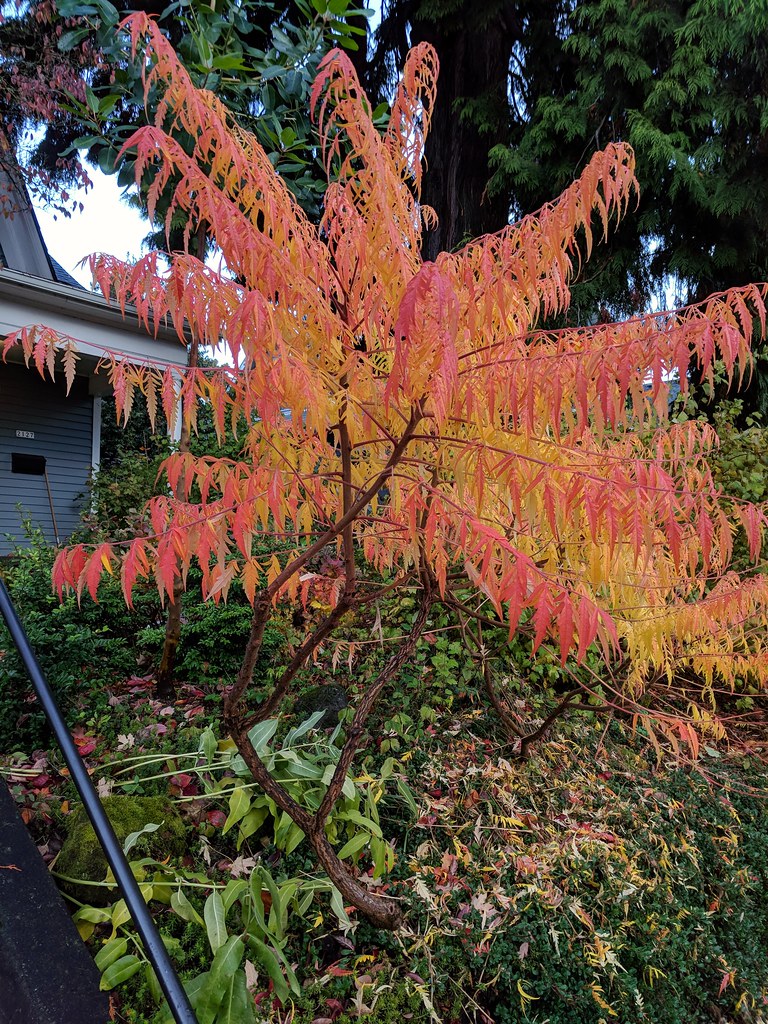
Fall sumac

I've got a good one for you this month! It's less focused than usual, but there are three key topics, plus a mix of a few others:
First, if you're about to delete this unread, please take this survey (which takes <1 minute) to let me know if you have input on how these summaries could be more useful: https://www.surveymonkey.com/r/BCVDKQR . Thanks to all who responded; results are summarized at the end of this email.

Second, the long-awaited "Natural Climate Solutions" paper from TNC is out. Read it: it's only 5 pages and will be highly relevant to virtually everyone working in conservation. It makes a solid case for how immediately investing in nature to reduce GHGs can buy us much-needed time to bring down emissions and invent new technology.

Third, a new book came out Oct 12: Effective Conservation Science: Data Not Dogma. It includes chapters from myself and several TNC authors, and is full of fascinating stories of how we react to science that counters conventional wisdom. I also share related articles below on how we can work through our biases.

CLIMATE CHANGE / NATURAL CLIMATE SOLUTIONS
Griscom et al 2017 (the natural climate solutions paper) packs a lot of good content in, but two things in particular excite me. First is making the case for massive rapid investment in nature: while we develop new tech and bring down emissions, we can use proven solutions like trees to buy time and make progress (see figure 2: nature could get us 37% of mitigation needs by 2030 at <$100/t CO2e / yr). We need the tech too, but nature is something that works today to bring down GHGs. Second is breaking down their top 20 options for nature-based climate mitigation into the theoretical maximum impact (about 1/2 of which would cost <$100 / t CO2e / yr), what we would need to hit Paris targets of <2 degrees C, and the subset of mitigation which is cheap (<$10/t CO2e / yr). See Figure 1 for this breakdown, which highlights that forests are absolutely critical (2/3 of cost-effective mitigation), and that the biggest opportunities for cheap mitigation are preventing forest loss (and improving forest management), improving fertilizer use on farms, and keeping peatlands intact. The forest goals rely heavily on a small reduction in grazing lands (4%). I'm leaving out lots of important details to keep this short: just read the paper. It's worth it. Read all about it (or watch videos) at https://global.nature.org/initiatives/natural-climate-solutions/natures-make-or-break-potential-for-climate-change

DATA NOT DOGMA:
The book Effective Conservation Science: Data Not Dogma tells stories of scientists whose unconventional and inconvenient results challenge us all to broaden our thinking and consider how we respond to new information that undermines what we think we know. My chapter is around how my analysis and blog post showing that globally agriculture has been taking up a smaller footprint since 1998. You can buy the book here: https://global.oup.com/academic/product/effective-conservation-science-9780198808985?cc=se&lang=en& and read a review of one chapter here: www.slate.com/articles/technology/future_tense/2017/08/conservation_biologists_are_struggling_to_balance_science_and_advocacy.html and read an ugly (unformatted) version of my chapter here: http://fish.freeshell.org/publications/DataNotDogma-Chapter11-preformatted.pdf  

Here are three more papers on the topic of scientific bias:
In 1992 E.O. Wilson asserted that invasive species were the second greatest driver of species extinction (second only to habitat destruction). He did so without providing evidence or details behind his calculations, but this claim was rapidly repeated and taken as gospel by environmental scientists. In fact, TNC played a major role in elevating Wilson's claim by not only citing it (in a BioScience paper and related book), but adding that "scientists generally agree" with Wilson's claim (again without evidence). Chew 2015 tells the captivating story about how this happened, using clear writing, thought-provoking questions, and numerous examples of bias in language that should be neutral and scientific. He also tells us how the idea eventually became subject to critique. I have seen this phenomenon firsthand; I follow a trail of citation breadcrumbs from authors to discover a primary source with an assertion that cannot be supported by what's in the paper (e.g. a book chapter on soil by Rattan Lal). When scientists don't closely read the papers we cite (or read them at all), our biases blossom and spread. If you're interested in invasive species or how spurious claims spread, this is a great read (albeit long).

Warren et al 2017 asks how common it is for scientists to be biased with regard to invasive species: using value-laden language and favoring interpretation that emphasizes the impacts of invasive species even when the data are not clear (as exemplified by the Chew 2015 article). They found bias to be common, but also that it has been declining since a series of papers in 2004-2005 that argued against language vilifying invasive species. This paper is fairly simplistic but gets at a key nuance: even a bias which is generally true is counter-productive in science. This paper shows hope that with awareness of bias, we can make efforts to at least reduce the expression of that bias in our work.

Holman et al 2015 provides more evidence of scientific bias, and argues for the use of "blinding" when conducting research to limit the potential for bias to affect study results. This means scientists collecting data don't know whether the subjects or area they're observing is a treatment or a control. This makes it harder for preconceptions to affect measurements (whether subjective, or even "rounding" seemingly objective metrics to fit bias), and they present evidence that nonblind studies often inflate the effect of the actions being studied. If "working blind" sounds extreme to you, read my blog post about "Clever Hans" - a horse who was believed to be able to do math (but in fact was only skilled at reading when his audience believed he had the right answer): https://blog.nature.org/science/2015/02/12/horses-doing-math-clever-hans-lessons-conservation-science/

As a final thought on bias, check out the Minasny & McBratney article in the Soil section below, which challenges a key assertion for TNC's agriculture work (that boosting soil organic matter improves water holding capacity). Read the summary below, and observe your feelings and reaction if it challenges what you believe.

SOIL
Minasny & McBratney 2017 use a meta-analysis to argue against something generally believed to be true by people working on sustainable agriculture: they provide evidence that increasing soil organic matter has a relatively small effect on water holding capacity (particularly for plant-available water content). If they're right, it reduces TNC's argument that improving soil health via boosting organic matter on farms will substantially improve crop resilience to drought. The authors note that soils that benefit most from increases in organic matter are sandy and very low in organic matter to begin (both of which make sense). They have a good discussion of limitations of their analysis, in particular the fact that they focused only on soil and not what's above it. Cover crops and crop residue / stubble are likely to add to the small benefits shown via soil. There is also a lot of nuance and potential to reframe their analysis in a way that could show larger benefits. At the same time, recognizing that most of us have a bias on this topic, this is a useful reminder to check our assumptions about both the efficacy of practices and the key mode of action and metrics that we should focus on. The authors led a key paper on the "4 per mille" initiative on boosting soil carbon, so are not hostile to the notion of boosting soil carbon. You can read a news article about this one here: https://phys.org/news/2017-10-adding-soil-limited-effect-capacity.html

GENERAL ECOLOGY / BIODIVERSITY
Remember as a kid how many bugs would get splattered on the windshield of your car? Ever notice there are less now? A recent study (Hallman et al 2017) indicates this is a real phenomenon, with dramatic declines in flying insects. The authors tracked the total biomass of insects at 63 locations within nature preserves in Germany; from 1989 to 2016 biomass plummeted by 76%. They sampled several habitat types and found consistent declines. It's alarming to see this within protected areas, although the authors note virtually all are surrounded by agriculture. That could both pull insects away from natural areas, and provide more pesticide drift into the natural areas. Other studies have shown major insect declines, but none this severe, and I don't know of others within protected areas.

SCIENCE COMMUNICATIONS
I've been pondering what we think we know and how to communicate thorny issues (as per data not dogma). I'd recommend a book I'm reading: "Do I make myself clear?" by Harold Evans, which is helping me. While not for scientists, I saw my writing sins laid bare in this book. I'm looking to simplify my writing in science papers, and to better talk about science in general. I have a long way to go! I'm working on summarizing key lessons amidst all of the stories in the book. One useful tool is the Hemingway app, which helps you identify problematic text and how to improve it: http://www.hemingwayapp.com/

AGRICULTURE:
As noted in my August 2017 review, neonicotinoids (neonics for short) are a class of insecticide currently under close scrutiny for impacts on bees. Mitchell et al 2017 found neonics in 75% of the 198 honey samples they tested, although mostly at very low levels. All neonics were at safe levels for humans, and most were at levels considered safe for bees. This is useful to show both that these pesticides are very common, that they are being consumed by bees, and that they often occur in concert with other neonics (all of which is concerning). But the reporting (and fundraising) around this has glossed over the very low levels. While 48% of samples had total neonic levels over a very conservative threshold for potential harm to bees (0.1 ng / g, a more reasonable (still likely conservative, albeit arbitrary) threshold of 2 ng / g was only detected in 8% of samples. The honey was collected via "citizen science"; the researchers asked colleagues, friends, and family to bring them honey produced in a known location. That also raises the question of whether or not these honey samples are typical.


RESULTS FROM SURVEY ABOUT THESE SUMMARIES:
I'm guessing the folks who didn't respond would have had more critical feedback, but overall here's what I learned from the ~40 respondents:
  • 90% of you usually at least skim these for relevant content
  • 90% of you found the level of detail about right (including some who said they could use less detail but were content to tolerate the current length), the rest found them too long.
  • Several folks especially liked both grouping articles by topic, and focusing each month primarily on one topic. I'll endeavor to keep that up, despite failing to do so this month.
Some opportunities to improve I'll be mulling over:
  • Set up a monthly journal club to talk about the papers (this one is already in the works, stay tuned for more info and let me know if you would like to provide input)
  • Make a lead theme more clear up front and include a short summary of the entire email
  • Tie each article to TNC's shared conservation agenda
  • Each quarter send a list of bullets of main issues under debate in conservation to encourage us to follow up
REFERENCES:
Chew, M. K. (2015). Ecologists, Environmentalists, Experts, and the Invasion of the “Second Greatest Threat.” International Review of Environmental History, 1, 7–41. Retrieved from http://www.academia.edu/14884830/Ecologists_Environmentalists_Experts_and_the_Invasion_of_the_Second_Greatest_Threat 

Evans, H. (2017). Do I make myself clear? Why writing well matters. Little, Brown, and Company: New York, NY. 416p.

Fisher, J. R. B. (2017). Global agricultural expansion – the sky isn’t falling (yet). In Kareiva, P., Silliman, B, and Marvier, M. (Eds), Effective Conservation Science: Data not Dogma. Oxford University Press, Oxford, UK, pages 73-79. https://global.oup.com/academic/product/effective-conservation-science-9780198808985?cc=se&lang=en&

Griscom, B. W., Adams, J., Ellis, P. W., Houghton, R. A., Lomax, G., Miteva, D. A., … Fargione, J. (2017). Natural Climate Solutions. Proceedings of the National Academy of Sciences, (6), 11–12. https://doi.org/10.1073/pnas.1710465114

Hallmann, C. A., Sorg, M., Jongejans, E., Siepel, H., Hofland, N., Schwan, H., … de Kroon, H. (2017). More than 75 percent decline over 27 years in total flying insect biomass in protected areas. Plos One, 12(10), e0185809. https://doi.org/10.1371/journal.pone.0185809

Holman, L., Head, M. L., Lanfear, R., & Jennions, M. D. (2015). Evidence of experimental bias in the life sciences: Why we need blind data recording. PLoS Biology, 13(7), 1–12. https://doi.org/10.1371/journal.pbio.1002190

Minasny, B., & Mcbratney, A. B. (2017). Limited effect of organic matter on soil available water capacity. European Journal of Soil Science, (2000), 1–9. https://doi.org/10.1111/ejss.12475

Mitchell, E. A. D., Mulhauser, B., Mulot, M., & Aebi, A. (2017). A worldwide survey of neonicotinoids in honey. Science, 111(October), 109–111. https://doi.org/10.1126/science.aan3684

Warren, R. J., King, J. R., Tarsa, C., Haas, B., & Henderson, J. (2017). A systematic review of context bias in invasion biology. PLoS ONE, 12(8), 1–12. https://doi.org/10.1371/journal.pone.0182502