Monday, October 3, 2022

October 2022 science summary

Calli & Jon on porch

Greetings,


This month I am summarizing two science articles on climate change and one on conservation prioritization

If you know someone who wants to sign up to receive these summaries, they can do so at http://bit.ly/sciencejon (no need to email me).

CONSERVATION PRIORITIES:
Belote et al. 2021 is a great analysis comparing how different ways of identifying spatial conservation priorities overlap and conflict in the lower 48 states of the US. They focus on 4 groups of vertebrates (mammals, birds, amphibians, and reptiles), and 4 methods of prioritizing: species richness, rarity-weighted richness, and two Zonation approaches that favor complementarity / representation (ABF favors species richness, CAZ favors rarity). Fig 1 has the most interesting maps if you want to compare the approaches, and Fig 3 highlights the places with the most agreement across models that they are in the top 30% of options. It's a great way to see how your values and methods can affect your results (but also that some places are pretty agreed on priorities). Two things to contrast with the NatureServe "map of biodiversity importacet" - that analysis includes plants and some invertebrates (this does not), and NatureServe focuses on imperiled species while this is threat-blind. One last note on the zonation approaches - these work best as a complete set; if you pick and choose among them they don't perform nearly as well, and it's rare that science recommendations are ever taken up entirely. But conversely a focus solely on richness or rarity misses lower diversity ecosystems and wide-ranging species.


CLIMATE CHANGE:
Temmink et al. 2022 is an overview of carbon storage and cycling in wetlands. They note peatlands and coastal wetlands have much higher carbon stock density than forests or oceans, and also sequester more carbon each year (see the figure in the Review Summary for a nice overview, or Fig 1 for more detail). They also focus on how healthy wetlands have feedbacks that support high productivity and/or low decomposition (see Fig 2), but that people are disrupting those feedbacks. They show how much of these ecosystems have been lost already, and how fast they are disappearing (Table 1) and estimate this amoutns to 500 million metric tons of C lost each year. They closeby arguing that keeping wetlands intact is key for climate mitigation. One caution though - they focus only on carbon, and some wetlands emit quite a lot of methane and nitrous oxide. Those are much stronger GHGs than CO2, so the net climate benefit of wetlands is smaller than you'd think from looking at carbon alone.

Law et al. 2018 is an analysis of how more trees in Oregon (planting, cutting less often, and halting cutting) can lead to more climate mitigation benefits and cobenefits of water availability (maybe, stay tuned on that). From 2011-2015, OR forests already on net sequestered the equivalent of 72% of OR's total GHGs (Fig 2), and they think that could be boosted by 56% with a series of programs. See Figure 3 for this potential, but note the bars each represent a single decade (and the lower figure is annual change within that decade), with cumulative results from 2015-2100 showing up as numbers in italics OVER the bars. This confused me pretty thoroughly, and it looks to me from the Figure like annual "net ecosystem carbon balance" (~=net carbon sequestered) by 2100 would increase by ~1.2 Tg C / yr, not the 2-3 they say in the text. They also find that using harvest residues for bioenergy would lead to a net increase in emissions (even assuming 1/2 of residues replace coal or natural gas). One thing that struck me as very odd: they propose afforesting grass crops which are irrigated but not used for food or forage, and claiming water will be freed up by doing so. But I can't figure why someone would irrigate grass if it wasn't used for food (or things like lawns or golf courses which forests wouldn't be compatible with)- maybe it's literally fields to produce grass seed sold for lawns?
Peter Ellis from TNC had this take which I found helpful (that this shouldn't be taken as having national implications): "The study is constrained to the Pacific Northwest (PNW). If you care about carbon, you can never really beat leaving a PNW forest alone. No attempts to sell the idea of mitigation through bioenergy or wood product storage are going to beat carbon storage in forests in a region where: 
•    Trees are largest in the world
•    They take forever to decompose, so coarse woody debris storage is really important.
Their proposal for Oregon’s forest actually makes a lot of sense to me: 'reforestation, afforestation, lengthened harvest cycles on private lands, and restricting harvest on public lands increased net ecosystem carbon balance by 56% by 2100'"

REFERENCES:

Belote, R. T., Barnett, K., Dietz, M. S., Burkle, L., Jenkins, C. N., Dreiss, L., Aycrigg, J. L., & Aplet, G. H. (2021). Options for prioritizing sites for biodiversity conservation with implications for “30 by 30.” Biological Conservation, 264, 109378. https://doi.org/10.1016/j.biocon.2021.109378

Law, B. E., Hudiburg, T. W., Berner, L. T., Kent, J. J., Buotte, P. C., & Harmon, M. E. (2018). Land use strategies to mitigate climate change in carbon dense temperate forests. Proceedings of the National Academy of Sciences, 115(14), 3663–3668. https://doi.org/10.1073/pnas.1720064115

Temmink, R. J. M., Lamers, L. P. M., Angelini, C., Bouma, T. J., Fritz, C., van de Koppel, J., Lexmond, R., Rietkerk, M., Silliman, B. R., Joosten, H., & van der Heide, T. (2022). Recovering wetland biogeomorphic feedbacks to restore the world’s biotic carbon hotspots. Science, 376(6593). https://doi.org/10.1126/science.abn1479


Sincerely,
 
Jon
 
p.s. This is a recent picture of me and my neighbor's adorable snaggletoothed dog Calli on our porch (we were dogsitting).

Thursday, September 1, 2022

September 2022 science summary

Goldfinches on cutleaf coneflowers

Hi,


First I wanted to say how sorry I was to hear that one of the lead authors I highlighted last month (Jonathan Higgins) has since passed away. Higs was a force of nature and he will be missed by many. I'm very glad that my last email exchange with him was about how useful his paper was and the impact I thought it would have, which made him very happy.

This month I am summarizing three articles on climate change, one on tropical forest recovery, and one on conservation and human well-being. If you know someone who wants to sign up to receive these summaries, they can do so at http://bit.ly/sciencejon (no need to email me).


CLIMATE CHANGE:
Gopalakrishna et al. 2022 highlights the need for local studies of climate mitigation potential. They found that if you avoid conflict w/ ag lands, forest restoration potential is lower in India than global estimates (and they suspect the same would be true in other tropical countries with lots of ag lands). They found 1.6 million ha of lands that could be restored; the plurality was degraded forest followed by scrub. If those lands were restored, they estimate it could provide 61.3 Mt (million tons) of carbon sequestration. They also roughly estimate 14.7 million ha of ag lands could incorporate agroforestry practices for up to another 98 Mt of carbon over 30 years. So the key take-aways here are a) we can't rely on global estimates for in-country work and b) if we can find ways to add trees to lands producing food w/o impacting food production (which is sometimes possible) there is a lot of opportunity there.

Noon et al. 2022 is a fantastic resource mapping global priority habitats for conservation to protect and/or manage to slow climate change. They focus on "irrecoverable carbon" - meaning carbon that will take 30+ years to recover after it is lost due to conversion or degradation. Fig 1 has a global map of irrecoverable carbon with a few hotspots highlighted (or use this web map which has slightly different symbology https://irrecoverable.resilienceatlas.org/map). But more useful is Fig 2 which splits out the carbon by how it's threatened (by land conversion, climate change, both, or neither) to identify where protection vs. management makes sense. Note that in Fig 2 darker colors mean more carbon within each of the four risks, but they are not consistent across the four risks (to see the highest total carbon you still need Fig 1). Fig 3 highlights how uneven irrecoverable carbon in, 50% of it is in just 3% of global land area! If you work on carbon in nature, read the whole paper. Many thanks to the authors who kindly answered my questions and sent me their data so I could make my own maps!

Reed 2021 tackles the thorny issue of how montane meadowns in California (wet grasslands in mountains) mitigate or worsen climate change. They found that a) these ecosystems store a lot of carbon, b) on net they can be either a big carbon source (10/13 sites) or a big carbon sink (3/13 sites) c) the sites that were a source had similar plant species to sink sites, but typically had groundwater closer to the surface, more root biomass, and less bare ground, d) methane emissions were consistently low, and e) they're not sure what caused most meadows to become net carbon sources (the high carbon stock indicate they all used to be sinks) but think it depends mostly on how much water and dissolved carbon flows into the meadows from uplands and thus upland forest loss is a likely culprit. The discussion is interesting - they hypothesize that hydrologic restoration in the meadow and upland forest management could slow carbon losses but think it's a safer bet to try and maintain sites that are currently net carbon sinks.


FOREST RESILIENCE / RECOVERY:
Poorter et al. 2021 look at how long it took for tropical forests (in Central & South America plus West Africa) to recover after deforestation, finding them pretty resilient. They found recovery to 90% of old growth values took 1-9 yrs for soil, plant function took 3-27 yrs, forest structure took 27-119 (tree size variation 27, max tree size 49, biomass 119), species diversity took 37-59, and species composition took 120 years. They thus argue secondary (regrowing) forests are still ecologically important and deserve conservation (protection, restoration, and management). Note that most of their sites had low to mid intensity land use after deforestation like swidden agriculture, so soil degradation was relatively minor. It's short and worth the read, but as is common w/ papers in Science I found the figures hard to decipher but useful once you put in the time. Fig 1B shows roughly how quickly different attributes recover over time (soil is brown, plant function is purple, structure is green, and diversity is turquoise); Fig 2 is similar but breaks out sub-indicators and is more precise; and Fig 3D is my favorite (how long it takes each attribute to return to 90% of old growth values). Here are the abbreviations since they are not defined in a single place! 
AGB=aboveground biomass
BD=soil bulk density
C=soil carbon
DMAX=maximum tree diameter
N=soil nitrogen
NF=proportional basal area of nitrogen-fixing species
SC=species composition (how similar abundance of each species is to old growth)
SD=Simpson diversity (~diversity of common species)
SH=structural heterogeneity (variation in tree size)
SR=species richness (number of species present)
SLA=community-weighted mean specific leaf area
WD=community-weighted mean wood density


NATURE & PEOPLE:
Huynh et al. 2022 is a global literature review of 300 peer-reviewed papers on the many intangible ways nature impacts people (what they call "cultural ecosystem services" or CESs). So it leaves out physical effects like providing food, clean water, reducing storms, etc. (which are well studied) and focuses on things like recreation, spiritual fulfillment, aesthetics, etc. If you enjoy taxonomies / classifications you will like this paper, and if not, you will find it a slog, since the heart of it is a framework to classify many ways people and nature interact (see Table 1 and Figure 2). But it's worth at least reading through Table 1 and pondering a bit. Ssome like how nature can help people bond ('Cohesive') were new to me but rang true; others felt like splitting hairs (e.g., splitting spiritual experiences into 'Intuitive' and 'Transcendentive'). Beyond the framework, they found 86% of over 1,000 observations positively impacted people (more studies looked at this and there is likely bias in the lit - it's not necessarily that nature is inherently overwhelmingly beneficial). Their expert judgment is that the biggest benefits come from mental and physical health, particularly from recreation (including tourism) and aesthetic values (the size of boxes in Fig 3 shows how many studies they had for each of 227 'pathways').The biggest negative impacts came from concern about safety ('Apprehensive'), or the loss of ecosystem services when nature is damaged or lost ('Destructive' - although it seems odd to me to mix that in with actual harms from nature itself), with only a few 'Irritative' (annoyance or disgust, e.g., from wildlife noise or excrement). In the end the paper gave me 'Cognitive' benefits but was not very 'Satisfactive.' The Washington Post has an overview of the paper here: https://www.washingtonpost.com/climate-solutions/2022/08/05/nature-study-impact-hiking-outdoors/


REFERENCES:

Gopalakrishna, T., Lomax, G., Aguirre‐Gutiérrez, J., Bauman, D., Roy, P. S., Joshi, P. K., & Malhi, Y. (2022). Existing land uses constrain climate change mitigation potential of forest restoration in India. Conservation Letters, December 2021, 1–11. https://doi.org/10.1111/conl.12867

Huynh, L. T. M., Gasparatos, A., Su, J., Dam Lam, R., Grant, E. I., & Fukushi, K. (2022). Linking the nonmaterial dimensions of human-nature relations and human well-being through cultural ecosystem services. Science Advances, 8(31), 1–22. https://doi.org/10.1126/sciadv.abn8042

Noon, M. L., Goldstein, A., Ledezma, J. C., Roehrdanz, P. R., Cook-Patton, S. C., Spawn-Lee, S. A., Wright, T. M., Gonzalez-Roglich, M., Hole, D. G., Rockström, J., & Turner, W. R. (2022). Mapping the irrecoverable carbon in Earth’s ecosystems. Nature Sustainability, 5(1), 37–46. https://doi.org/10.1038/s41893-021-00803-6

Poorter, L., Craven, D., Jakovac, C. C., van der Sande, M. T., Amissah, L., Bongers, F., Chazdon, R. L., Farrior, C. E., Kambach, S., Meave, J. A., Muñoz, R., Norden, N., Rüger, N., van Breugel, M., Almeyda Zambrano, A. M., Amani, B., Andrade, J. L., Brancalion, P. H. S., Broadbent, E. N., … Hérault, B. (2021). Multidimensional tropical forest recovery. Science, 374(6573), 1370–1376. https://doi.org/10.1126/science.abh3629

Reed, C. C., Merrill, A. G., Drew, W. M., Christman, B., Hutchinson, R. A., Keszey, L., Odell, M., Swanson, S., Verburg, P. S. J., Wilcox, J., Hart, S. C., & Sullivan, B. W. (2021). Montane Meadows: A Soil Carbon Sink or Source? Ecosystems, 24(5), 1125–1141. https://doi.org/10.1007/s10021-020-00572-x


p.s. the photo shows a goldfinch amidst my cutleaf coneflowers, watching me watch him (these flowers are only ~5 ft from a living room window)

Monday, August 1, 2022

August 2022 science summary

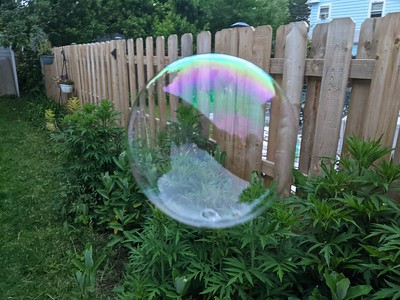
Bubble in garden

Hi,

After publishing no peer-reviewed science in 2021, two papers I'm a co-author on were published this month!

The first (Vijay et al. 2022) looks at how different conservation goals for people and nature tend to align and conflict: identifying both win-wins and trade-offs to inform conservation priorities. The second (James et al. 2022) is an analysis of scientific publications by staff at The Nature Conservancy split by gender, along with recommendations to improve the ability of women (especially from the Global South) to publish research. Let me know if you have questions about either after reading the summaries below!

I've also got an interesting article on the IUCN Red List of threatened ecosystems, and a great framework to think through freshwater conservation needs and approaches.

If you know someone who wants to sign up to receive these summaries, they can do so at http://bit.ly/sciencejon (no need to email me).

GENDER AND SCIENCE:
James et al. 2022 analyzed almost 3,000 peer-reviewed scientific publications with at least one author from The Nature Conservancy (TNC) by gender of the author(s) - all that we could find from 1968 to 2019. Roughly 1/3 of the TNC authors and authorships (# authors * # papers) were women, even though 45% of conservation and science staff are women. Most authorships were in the U.S. - 85% overall and 90% for women. This means men (especially men in the United States) are publishing at a significantly higher rate than women. We close with several recommendations to help shrink this gap. Some are aimed at individual scientists (e.g., self-education on bias and systemic barriers, asking men to collaborate more with women as male-led papers have far fewer women co-authors than female-led papers, and asking lead authors to be more inclusive in determining whose contributions merit being listed as an author), and others are aimed at organizations (e.g., providing more resources and support for women who wish to publish, especially for women who don't speak English as a first language). I learned a ton from both the data and my co-authors on this one, and we have another 1-2 papers on the subject coming which will get into the results of a survey the lead author did to get deeper into the experience of how gender impacts not only publication but perceptions of influence and career advancement. Note that our available data listed everyone's gender as male, female, or unknown - apologies to those who we misgendered or otherwise failed to reflect their lived experience with a relatively simple binary analysis (especially as gender diverse people appear to be even more underrepresented in science publications).
You can read blogs about the article at https://www.nature.org/en-us/newsroom/published-science-gender-gap/ and https://blog.nature.org/science/science-brief/conservation-science-publishing-has-a-gender-problem/


CONSERVATION PRIORITIZATION:
As conservation organizations try to work towards multiple goals, Vijay et al. 2022 asks whether we can protect places that efficiently advance multiple goals at once, or if we have to pick between places good for one goal but that perform poorly for others. We looked at opportunities to advance five benefits by protecting land in the contiguous United States: vertebrate species richness, threatened vertebrate species richness, carbon storage, area protected, and recreational usage. Specifically we looked at Return On Investment (ROI) meaning the benefit score compared to the cost of the land (as a proxy for difficulty of protecting it). The results are a bit complicated: this paper focused only on unprotected habitat which is predicted to be converted by 2100, and with that framing the four environmental benefits were both highly correlated overall (r 0.89-0.99) and had a lot of the "top sites" in common (the highest scoring places for one benefit often had a top score for another benefit, 32-79% of the time). Recreation had less in common with environmental benefits (r 0.5-0.52, only 7-13% of the top sites were also a top site for another benefit). That still shows a lot of opportunity for win-wins across the nation! However, if you DON'T constrain conservation to places where land use is projected to change by 2100, win-wins are harder to find (as shown in the Supplementary Information). Species richness and area were the most compatible with a high r of 0.58 and 24% of top sites in common, and area and recreation were the least aligned, with an r of -0.65 and no top sites in common. There's a lot of interesting stuff in the paper (including comparing how three hypothetical policy scenarios score on each benefit), and I've written a slightly longer summary here: https://www.linkedin.com/posts/sciencejon_conservation-science-goalsetting-activity-6948122284528197632-OH0S/

You're probably familiar with the IUCN's Red List of Threatened Species - which ranks how at risk species around the world are. Comer et al. 2022 is an analysis for the Red List of ECOSYSTEMS for North America - looking at the risk of ecological collapse for 655 terrestrial ecosystems considering: current extent, how much historic extent has been lost, degradation from historic fire regime, and disruption of biotic processes (focused on invasive species and landscape fragmentation). They found 1/3 of ecosystems were threatened, and Fig 2 shows which types of ecosystems were the most threatened (like Mediterranean Scrub & Grassland, which had the highest % of extent that was threatened, and Tropical Montane Grassland & Shrubland, which had the highest % Critically Endangered). Fig 1 has a great pair of maps showing both current and historic extent of all assessed ecosystems (colored by threat level). There is also an excellent discussion of the challenges and limitations in doing an analysis like this (section 4.2). Despite these limitations, this provides a useful complement to species-focused prioritizations (like range-size rarity).


FRESHWATER CONSERVATION:
Higgins et al. 2021 (from a team of scientists and lawyers) argues that since freshwater species are declining faster than terrestrial species, and effective durable freshwater conservation is typically harder to get right, we need more thoughtful design of freshwater protection and management. They offer a framework to do that, beginning with key questions (about things like what you value, key ecological attributes [KEAs] to conserve, threats to ecosystems, and protection options), which is summarized in Figure 1. Table 1 is extremely useful: it outlines 5 key ecological attributes that freshwater systems need: 1) hydrologic regime / healthy flow, 2) connectivity , 3) water quality (nutrients, sediment, toxins, etc.), 4) habitat (riparian, in-stream, other wetlands), 5) species (diversity, abundance, invasives). Table 1 also lists threats, Table 2 has conservation options, and Table 3 has helpful and relatively simple examples to get you started. Doing this work is hard! But I found this article to be a great challenge to keep thinking beyond protecting the land around freshwater ecosystems, and planning for what they need over the long-term.

REFERENCES:

Comer, P. J., Hak, J. C., & Seddon, E. (2022). Documenting at-risk status of terrestrial ecosystems in temperate and tropical North America. Conservation Science and Practice, 4(2), 1–13. https://doi.org/10.1111/csp2.603

Higgins, J., Zablocki, J., Newsock, A., Krolopp, A., Tabas, P., & Salama, M. (2021). Durable Freshwater Protection: A Framework for Establishing and Maintaining Long-Term Protection for Freshwater Ecosystems and the Values They Sustain. Sustainability, 13(4), 1950. https://doi.org/10.3390/su13041950

James, R., Ariunbaatar, J., Bresnahan, M., Carlos‐Grotjahn, C., Fisher, J. R. B., Gibbs, B., Hausheer, J. E., Nakozoete, C., Nomura, S., Possingham, H., & Lyons, K. (2022). Gender and conservation science: Men continue to out‐publish women at the world’s largest environmental conservation non‐profit organization. Conservation Science and Practice, January, 1–9. https://doi.org/10.1111/csp2.12748

Vijay, V., Fisher, J. R. B., & Armsworth, P. R. (2022). Co‐benefits for terrestrial biodiversity and ecosystem services available from contrasting land protection policies in the contiguous United States. Conservation Letters, February, 1–9. https://doi.org/10.1111/conl.12907


Sincerely,
 
Jon
 
p.s. This large bubble is over my 'butterfly garden' which is currently full of flowers and pollinators!

Wednesday, July 6, 2022

Two new papers: how gender impacts science publishing & conservation prioritization

After having 0 papers published in 2021, I was on author on two papers published last week (both open access - click the author name to go to the paper)! Here's a quick summary of each:

James et al. 2022 analyzed almost 3,000 peer-reviewed scientific publications with at least one author from The Nature Conservancy (TNC) by gender of the author(s) - all that we could find from 1968 to 2019. Roughly 1/3 of the TNC authors and authorships (# authors * # papers) were women, even though 45% of conservation and science staff are women. Most authorships were in the U.S. - 85% overall and 90% for women. This means men (especially men in the United States) are publishing at a significantly higher rate than women. We close with several recommendations to help shrink this gap. Some are aimed at individual scientists (e.g., self-education on bias and systemic barriers, asking men to collaborate more with women as male-led papers have far fewer women co-authors than female-led papers, and asking lead authors to be more inclusive in determining whose contributions merit being listed as an author), and others are aimed at organizations (e.g., providing more resources and support for women who wish to publish, especially for women who don't speak English as a first language). 

I learned a ton from both the data and my co-authors on this one, and we have another 1-2 papers on the subject coming which will get into the results of a survey the lead author did to get deeper into the experience of how gender impacts not only publication but perceptions of influence and career advancement. Note that our available data listed everyone's gender as male, female, or unknown - apologies to those who we misgendered or otherwise failed to reflect their lived experience with a relatively simple binary analysis (especially as gender diverse people appear to be even more underrepresented in science publications).

You can read blogs about the article at https://www.nature.org/en-us/newsroom/published-science-gender-gap/ and https://blog.nature.org/science/science-brief/conservation-science-publishing-has-a-gender-problem/ or the full paper is at https://onlinelibrary.wiley.com/doi/10.1111/csp2.12748


As conservation organizations try to work towards multiple goals, Vijay et al. 2022 asks whether we can protect places that efficiently advance multiple goals at once (win-wins), or if we have to pick between places good for one goal but that perform poorly for others (trade-offs). We looked at opportunities to advance five benefits by protecting land in the contiguous United States: vertebrate species richness, threatened vertebrate species richness, carbon storage, area protected, and recreational usage. Specifically we looked at Return On Investment (ROI) meaning the benefit score compared to the cost of the land (as a proxy for difficulty of protecting it). 

The results are a bit complicated: this paper focused only on unprotected habitat which is predicted to be converted by 2100, and with that framing the four environmental benefits were both highly correlated overall (r 0.89-0.99) and had a lot of the "top sites" in common (the highest scoring places for one benefit often had a top score for another benefit, 32-79% of the time). Recreation had less in common with environmental benefits (r 0.5-0.52, only 7-13% of the top sites were also a top site for another benefit). That still shows a lot of opportunity for win-wins across the nation! However, if you DON'T constrain conservation to places where land use is projected to change by 2100, win-wins are harder to find (as shown in the Supplementary Information). Species richness and area were the most compatible with a high r of 0.58 and 24% of top sites in common, and area and recreation were the least aligned, with an r of -0.65 and no top sites in common. 

There's a lot of interesting stuff in the paper (including comparing how three hypothetical policy scenarios score on each benefit), and I've written a slightly longer summary here: https://www.linkedin.com/posts/sciencejon_conservation-science-goalsetting-activity-6948122284528197632-OH0S/ or the full paper is at https://onlinelibrary.wiley.com/doi/10.1111/conl.12907

Friday, July 1, 2022

July 2022 science summary

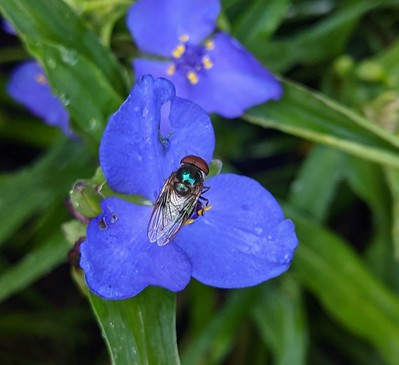
Bromeliad fly (Copestylum) on spiderwort (Tradescantia)

Hello,


This month is another grab bag: one paper on equity in fire management, two on biodiversity data, one asking how much conservation has helped species, and one pretty bad one on how ag practices impact nutrients.

If you know someone who wants to sign up to receive these summaries, they can do so at http://bit.ly/sciencejon (no need to email me).

FIRE MANAGEMENT:
Anderson et al. 2020 found that rich white communities who had a fire nearby tend to get additional prescribed fire (even when not needed). This is partly due to their ability to self-advocate at relevant planning meetings. It raises equity and social justice concerns about how we could instead base fire management on factors like social and/or ecological vulnerability. As context, here is a map showing how wildfire risk varies across the U.S.: https://www.nytimes.com/interactive/2022/05/16/climate/wildfire-risk-map-properties.html


BIODIVERSITY DATA:
Saran et al. 2022 has a good overview of biodiversity information portals, 16 global (Table 1) and 5 country-specific (from Australia, Canada, India, and the U.S., Table 2). It's a great complement to Nicholson et al. 2021 (an overview of ecosystem indicators) by providing actual data sources and some info about what each portal includes. The paper certainly isn't "comprehensive" as the title advertises, but it's a great start and I learned about some new useful resources by reading it.

Before threatened species can get protection, they need to be assessed to document how vulnerable they are. But there is a substantial backlog of species waiting to be assessed. Levin et al. 2022 offers a fairly simple (but ultimately unsuccessful) way to re-prioritize unassessed species for the IUCN red list to allow a better chance of assessing the ones that are in trouble so they can get protection. They use a rapid estimate of "extent of occurrence" (the species' range and spatial distribution of threats) as a proxy for vulnerability. At first it's exciting to see that it was 92% accurate at identifying which species were of the Least Concern (showing potential to flag species not worth assessing). But two questions are more relevant (and Fig 1 has the answers): what % of vulnerable species does it correctly recommend assessing (40%) and what % of recommendations for assessment are for species that are actually vulnerable (23%). The discussion has interesting notes on some of the aspects that confused the model (like 5 ash app threatened by Emerald Ash Borer and the American Chestnut threatened by blight) - widespread spp. hit hard by invasives are challenging to accurately assess using simple approaches like this. Hopefully the next iteration of the tool will be more successful, if they could substantially reduce false negatives for vulnerable species it could provide assessment priorities directly, or if they could substantially reduce false positives for vulnerable species it could help by indicating species that likely shouldn't be assessed.


CONSERVATION IMPACT:
Jellesmark et al. 2022 is a global (see Fig 1 map) preprint looking at how conservation has impacted targeted vertebrate species (by comparing pairs of populations targeted for conservation with those in the same country that did not receive conservation attention). I honestly don't know enough about the underlying data source (Living Planet Database) to speak to the reliability of their results (I'll wait for peer review for that, there is at least one very important typo where they use "invertebrate" when they clearly mean "vertebrate"). They found that population size of assessed vertebrates dropped 24% over 46 years, but estimate that without conservation it would have dropped 32% (and this likely underestimates the impact of conservation). They split out conservation actions into 7 groups (land/water protection, land/water mgmt, species mgmt, education/awareness, law/policy, livelihoods/incentives, and external capacity building), and capacity building followed by the first three showed the strongest results (Fig 5).


SUSTAINABLE AGRICULTURE:
Montgomery et al. 2022 asks how nutrients from ‘regenerative’ farms (that use no-till, crop  rotations, and cover crops) differ from other farms, but I wouldn't recommend it. This paper is pretty weak methodologically, results were inappropriately highlighted and over-interpreted, and the results I initially planned to write about didn’t hold up when I looked at raw data. Some key caveats: it is a very small sample size, 4/5 authors have financial interests the paper furthers, only one author appears to be a scientist (a geomorphologist), and the methods are thin and read like they may have gone looking for pairs of farms that would support the desired narrative (plus they used a very rough method to measure organic matter). At first I thought the most interesting / meaningful results are for cabbage: 10 assessed nutrients were substantially higher on regenerative farms, compared to 4 that were the same, 4 that were substantially lower, and 3 not assessed. But when you dive in, that 70% difference in vitamin E is from 0.004 to 0.007 mg/100g (essentially nil). Ditto with wheat results, 50% more calcium than “almost none” is still almost none. The animal results are hard to interpret because they don’t provide enough detail on differences between ‘regenerative’ vs. ‘conventional’ (although findings that grass-finished beef have more nutrient content have been reported in other lit, in alignment w/ results here). Some results look more meaningful (20% more vitamin C in cabbage is worthwhile) but there is such variation in the soil organic matter and soil health across the farms it’s really hard to know what is significant and what is accidental. One last note - 'regenerative' here almost certainly means 'genetically modified’ for most crops, since it’s hard to do no-till without them.


REFERENCES:

Anderson, S., Plantinga, A., & Wibbenmeyer, M. (2020). Inequality in Agency Responsiveness: Evidence from Salient Wildfire Events (Issue December). https://www.rff.org/publications/working-papers/inequality-agency-responsiveness-evidence-salient-wildfire-events/

Jellesmark, S., Blackburn, T. M., Dove, S., Geldmann, J., Visconti, P., Gregory, R. D., McRae, L., & Hoffmann, M. (2022). Assessing the global impact of targeted conservation actions on species abundance. BioRxiv, 2022.01.14.476374. https://doi.org/10.1101/2022.01.14.476374

Levin, M. O., Meek, J. B., Boom, B., Kross, S. M., & Eskew, E. A. (2022). Using publicly available data to conduct rapid assessments of extinction risk. Conservation Science and Practice, November 2020, 1–9. https://doi.org/10.1111/csp2.12628

Montgomery, D. R., Biklé, A., Archuleta, R., Brown, P., & Jordan, J. (2022). Soil health and nutrient density: preliminary comparison of regenerative and conventional farming. PeerJ, 10, e12848. https://doi.org/10.7717/peerj.12848

Saran, S., Chaudhary, S. K., Singh, P., Tiwari, A., & Kumar, V. (2022). A comprehensive review on biodiversity information portals. Biodiversity and Conservation, 0123456789. https://doi.org/10.1007/s10531-022-02420-x

Sincerely,
 
Jon
 
p.s. This photo is of what I think is a bromeliad fly (Copestylum) on a Tradescantia flower in my garden. First time I have seen one!

Wednesday, June 1, 2022

June 2022 science summary

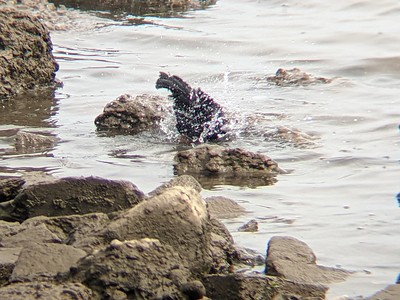
Red-winged blackbird

Greetings,


This month I only have three science articles but they're all good'uns.

If you know someone who wants to sign up to receive these summaries, they can do so at http://bit.ly/sciencejon (no need to email me).

PROTECTED AREAS:
Sullivan-Stack et al. 2022 is a great summary of marine protected areas (MPAs) in the U.S., and flags that achieving 30% U.S. ocean protection by 2030 is not on track to provide sufficient benefit to marine ecosystems. The key finding that stood out to me was the need for improving both geographic representation and efficacy / strength of protection (as well as climate resilience and equity). U.S. oceans are 26% protected overall (25% fully or highly protected), but 96% of that is in the central Pacific ocean. Excluding that region, only 2% has any protection (and only 22% of that 2% is fully or highly protected). See Table 3 for a summary of how much of each region is protected and at what level (Figure 1 has a map but it's not split by protection strength). Alaska has the lowest % protection of any kind (0.7%) while OR & WA have the weakest protection (4.2% of ocean is protected, but that's all minimal protection). Skip to section 4 for their recommendations: create more effective MPAs (via new ones and strengthening existing ones), improve representation of different marine regions & species & habitats in well-connected MPAs, improve equity & access, go beyond tracking % coverage and include impact assessments, make MPAs durable and climate resilient, coordinate state MPAs, reinstate and empower the MPA Federal Advisory Committee, strengthen & fund the NOAA MPA Center, and update the U.S. National Ocean Policy for holistic ocean planning and management.


ECOSYSTEM INDICATORS:
Nicholson et al. 2021 is chock full of useful diagrams and lists. They have a number of recommendations for setting ecosystem goals (which have milestones, targets, and indicators) for a global biodiversity framework, but which can be relevant to other efforts (like 30x30). At a high level they flag the need to track not only total ecosystem/habitat area (or extent), but also changes in ecosystem integrity (including the risk of ecosystem collapse - see Box 2 for definitions). Fig 2 is a nice visual summary of how different types of targets can collectively capture different threats and ecosystem attributes that need to be addressed for long term ecosystem health. Fig 3 is a super helpful review of many different environmental indices / metrics, and what aspects of ecosystems they include and omit. Spend some time with that one - even learning about all of the indices was very helpful for me. They close with 6 recommendations for picking indicators: we need a set of them (no single one suffices), they need to reflect goals (not actions), relevance to the goal is at least as important as data availability, we need more testing and validation of indicators, we need stronger connections between global indicators and national or local policies, and we need new indicators to provide early warning of ecosystem collapse.


ECOSYSTEM CONDITION:
There are good remote sensing data for land cover change, worse but decent data for land use change, but generally not much on degradation (which means we can underestimate ecological decline). Swaty et al. 2021 describe a "Vegetation Departure" (VDEP) spatial data set for the US which gets at this. This includes whether early or late successional stages are over-represented or under-represented (think of a logged forest w/ no old growth left but plenty of young forest, or a grassland being taken over by denser shrubs which were historically less common). They highlight several limitations of the existing LANDFIRE VDEP data (which focuses on canopy cover and height), and recommend that users consider other attributes that are important to their ecosystems of interest (e.g., biodiversity, wildlife populations, wildfire risk, etc.).


REFERENCES:

Nicholson, E., Watermeyer, K. E., Rowland, J. A., Sato, C. F., Stevenson, S. L., Andrade, A., Brooks, T. M., Burgess, N. D., Cheng, S.-T., Grantham, H. S., Hill, S. L., Keith, D. A., Maron, M., Metzke, D., Murray, N. J., Nelson, C. R., Obura, D., Plumptre, A., Skowno, A. L., & Watson, J. E. M. (2021). Scientific foundations for an ecosystem goal, milestones and indicators for the post-2020 global biodiversity framework. Nature Ecology & Evolution, 5(10), 1338–1349. https://doi.org/10.1038/s41559-021-01538-5

Sullivan-Stack, J., Aburto-Oropeza, O., Brooks, C. M., Cabral, R. B., Caselle, J. E., Chan, F., Duffy, J. E., Dunn, D. C., Friedlander, A. M., Fulton-Bennett, H. K., Gaines, S. D., Gerber, L. R., Hines, E., Leslie, H. M., Lester, S. E., MacCarthy, J. M. C., Maxwell, S. M., Mayorga, J., McCauley, D. J., … Grorud-Colvert, K. (2022). A Scientific Synthesis of Marine Protected Areas in the United States: Status and Recommendations. Frontiers in Marine Science, 9(May), 1–23. https://doi.org/10.3389/fmars.2022.849927

Swaty, R., Blankenship, K., Hall, K. R., Smith, J., Dettenmaier, M., & Hagen, S. (2021). Assessing Ecosystem Condition: Use and Customization of the Vegetation Departure Metric. Land, 11(1), 28. https://doi.org/10.3390/land11010028


Sincerely,
 
Jon
 
p.s. The photo above is of a red-winged blackbird bathing in the Potomac River at Dyke Marsh

Monday, May 2, 2022

May 2022 science summary

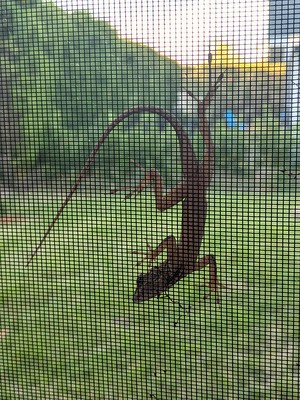
Lizard on a porch screen

Greetings,


This month I have a few science articles on freshwater, two on climate change and forest management, and one big one on biodiversity.

If you know someone who wants to sign up to receive these summaries, they can do so at http://bit.ly/sciencejon (no need to email me).

BIODIVERSITY:
Hamilton et al. 2022 is the latest analysis from NatureServe on biodiversity in the U.S., and potential priorities for new protection. They looked at habitat for 2,216 imperiled species (G1 or G2 globally, or Threatened or Endangered nationally) across the U.S., including often overlooked species like plants and bugs. There are several interesting methodological advances here (relatively fine 1-km pixels, inclusion of overlooked species, using both range maps and habitat suitability models and showing how that changes results in Fig 4, etc.), but I think most readers will want to focus on implications for new protections and management of existing protected areas. Fig 2 shows the most important areas to protect. They use protection-weighted range-size rarity, which is a kind of rarity-weighted richness focusing on places with a) relatively high # of species that b) have relatively little habitat left nationally. Table 2 has a nice summary of how many species have the majority of their habitat managed by different groups (federal agencies, state & local, private), showing there is a lot of potential for management on existing public lands (since 43% of imperiled species have most of their habitat on public lands). It's worth reading the whole thing, but if short on time I recommend the NY Times article about this and especially the interactive maps of their data.


CLIMATE CHANGE / FOREST MANAGEMENT:
Littlefield and D'Amato 2022 looks at trade-offs between maximizing forest carbon and maximizing biodiversity and habitat quality. In particular, they note that many species require disturbance (like fire or tree removal), while maximizing carbon generally involves promoting uniformly dense and mature trees. They note that robust data looking at how different species respond to forest management are surprisingly scarce, but offer several case studies where as tree biomass increased, wildlife abundance and/or diversity has declined. They recommend that conservation planning consider climate adaptation, which means keeping landscape diversity, complexity, and connectivity (accepting that means some reduction in potential carbon), and that we explicitly discuss and recognize trade-offs where they exist.

Stephenson et al. 2014 is a global analysis of how carbon sequestration by 403 tree species change as they grow and age. 87% of tree species sequester more annual carbon per year as they get bigger (even when they get huge). On average a 1m diameter tree sequesters about triple the carbon as a 1/2m diameter tree (similar to the trunk cross-section ration of 4:1). The biggest trees can add ~0.55-0.72 t biomass (not C, which would be much lower) per year (Fig 3). However, they note that at the forest level, as an even-aged stand gets older the annual carbon sequestered per land area goes down (as trees die, total sequestration declines despite remaining big trees sequestering more. Ideally forest management should think about 1) impacts on carbon pools (how much harvested tree biomass will be lost to the atmosphere), 2) impacts on carbon sequestration, and 3) impacts on forest ecology (both mature / older trees, and disturbances and younger trees have important roles).


FRESHWATER:
Broadley et al. 2022 is a global assessment (although w/ ~1/4 of studies coming from the US) of how marine fishery productivity (including invertebrates) depends on rivers. Their headline finding is that 72% of 276 fished species (77% of global catch by mass) are linked to river flows at some point in their life cycle, and 83% eat food linked to river flows. The biggest link is occasionally going to estuaries to eat (77% of species) as opposed to diadromous or estuarine-dependent species (23% of species), see Fig 5 for a map of where they're distributed. They also offer a conceptual review of how rivers influence fisheries by focusing on science literature for the top 10 fishery species by catch mass. They conclude that rivers influence fisheries via physical changes (flow quantity, timing, and quality [sediment, nutrients, salinity, temperature, etc.]), biological response of marine species to those physical changes (e.g. nutrients from a river increasing algae which zooplankton and fish respond to, changes in spawning in response to freshwater mixing, migration, etc.), and changes in fisher behavior and fishery productivity resulting from those biological changes (see Table 1). They recommend an integrated planning approach to rivers (including dam management) and marine fisheries.

Pennock et al. 2022 makes a case that rivers with relatively natural flow regimes should be priorities for conservation (specifically protection that limits consumptive water use or otherwise alters flow). They look at four tributaties of the Green River (which feeds the Colorado River): the White, Price, San Rafael, and Duchesne Rivers. Only the White River has a relatively natural flow regime (although median spring discharge is still down 25% relative to before 1949, and summer baseflow by 29%), and spring flow in the Duchesne and San Rafel are down ~80%. That drop in flow accompanies habitat degraded in several ways: less large woody debris, narrower channels, less regeneration of cottonwoods, loss of native fish spp, etc. They also point out that even dams managed for environmental flow has fallen well short of natural flood regimes.

Maasri et al. 2022 is a new global freshwater research agenda. They have 15 recommendations in 5 themes: 1) Data infrastructure (compile and integrate data sources on freshwater biodiversity, mobilize and share existing data w/ stakeholders, and develop accessible databases), 2) Monitoring (coordinate existing FW biodiversity monitoring and move towards global consistency, expand monitoring to places and species currently overlooked [like fungi and protists], and develop new monitoring methods [like eDNA, remote sensing, citizen science, etc.]), 3) Ecology (better understand how biodiversity relates to ecosystem health and services, study how biodiversity responds to multiple stressors, and study species and ecosystem responses to global change), 4) Management (rigorous assess how well restoration works, develop management strategies aligned with "Nature Futures" scenarios based on positive human-nature relationships, and develop watershed-based integrated management and restoration programs including dam building and operation), and 5 Social ecology (co-produce solutions to conflicts between conservation and people who use freshwater systems, develop adaptive management strategies that address trade-offs with a broad coalition of participants, and promote citizen science and participatory research). I was surprised that they left off legal research into how policy mechanisms for water management are working (or not), and am somewhat skeptical that agendas like this get used, but it's a nice overview of some needs and gaps.


REFERENCES:

Broadley, A., Stewart-Koster, B., Burford, M. A., & Brown, C. J. (2022). A global review of the critical link between river flows and productivity in marine fisheries. Reviews in Fish Biology and Fisheries, 0123456789. https://doi.org/10.1007/s11160-022-09711-0

Hamilton, H., Smyth, R. L., Young, B. E., Howard, T. G., Tracey, C., Breyer, S., Cameron, D. R., Chazal, A., Conley, A. K., Frye, C., & Schloss, C. (2022). Increasing taxonomic diversity and spatial resolution clarifies opportunities for protecting US imperiled species. Ecological Applications, 32(3), 1–19. https://doi.org/10.1002/eap.2534

Littlefield, C. E., & D’Amato, A. W. (2022). Identifying trade‐offs and opportunities for forest carbon and wildlife using a climate change adaptation lens. Conservation Science and Practice, 4(4), 1–14. https://doi.org/10.1111/csp2.12631

Maasri, A., Jähnig, S. C., Adamescu, M. C., Adrian, R., Baigun, C., Baird, D. J., Batista‐Morales, A., Bonada, N., Brown, L. E., Cai, Q., Campos‐Silva, J. V., Clausnitzer, V., Contreras‐MacBeath, T., Cooke, S. J., Datry, T., Delacámara, G., De Meester, L., Dijkstra, K. B., Do, V. T., … Worischka, S. (2022). A global agenda for advancing freshwater biodiversity research. Ecology Letters, 25(2), 255–263. https://doi.org/10.1111/ele.13931

Pennock, C. A., Budy, P., Macfarlane, W. W., Breen, M. J., Jimenez, J., & Schmidt, J. C. (2022). Native Fish Need A Natural Flow Regime. Fisheries, 47(3), 118–123. https://doi.org/10.1002/fsh.10703

Stephenson, N. L., Das, A. J., Condit, R., Russo, S. E., Baker, P. J., Beckman, N. G., Coomes, D. A., Lines, E. R., Morris, W. K., Rüger, N., Álvarez, E., Blundo, C., Bunyavejchewin, S., Chuyong, G., Davies, S. J., Duque, Á., Ewango, C. N., Flores, O., Franklin, J. F., … Zavala, M. A. (2014). Rate of tree carbon accumulation increases continuously with tree size. Nature, 507(7490), 90–93. https://doi.org/10.1038/nature12914


Sincerely,
 
Jon