Showing posts with label gender. Show all posts

Monday, April 3, 2023

April 2023 science summary

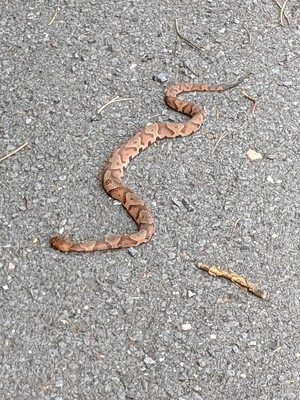
Snake

Hello,

In case you missed it last month, check out the paper I co-authored on gender equity (I repeated the summary below, read or skim the whole paper if you have time, or at least read this blog overview).

The IPCC's latest synthesis report came out recently (and I have a short summary below), so the need to do more on climate change is on my mind.

Want to work on climate change via energy modernization at Pew? We're hiring for three jobs right now on a team that I'm super excited about. If you have any questions and/or may be interested please take a look at the posts and then let me know if you want to know more (and please pass them on):

  1. Senior Officer, Clean Grid and Energy

    https://pewtrusts.wd5.myworkdayjobs.com/TrustsExternal/job/Washington-DC-901-E/Senior-Officer--Clean-Grid---Energy_R002036

  2. Officer, State Campaigns

    https://pewtrusts.wd5.myworkdayjobs.com/TrustsExternal/job/Washington-DC-901-E/Officer--State-Decarbonization-Campaign-Lead_R002067

  3. Senior Associate, State Campaigns

    https://pewtrusts.wd5.myworkdayjobs.com/TrustsExternal/job/Washington-DC-901-E/Senior-Associate--State-Decarbonization-Campaigner_R002086


Also - recently I am playing less w/ AI and reading more science myself, but thought this was a nice overview of strengths and weaknesses between ChatGPT, Bing, and Bard.


If you know someone who wants to sign up to receive these summaries, they can do so at http://bit.ly/sciencejon (no need to email me).

CLIMATE CHANGE (IPCC report):

The IPCC's latest report (the AR6 synthesis) recently became available (here’s a direct link to the 36 page summary for policy makers). If you've been following all the IPCC reports, there is no new info here. But there is a persistent thread of clarity that I found helpful. Of the many findings, the ones that stood out to me are:

  1. The planet has warmed 1.1 degrees C already (1.6C on land)

  2. The world is currently roughly on track for 3.2 C of warming based on implemented policies (Fig SPM5a, w/ range from 2.2C to 3.5C).

  3. Good news - that means that "business as usual" is a little worse than RCP4.5 (Intermediate Emissions), ranging from Working Group III scenarios C5 to C7 (C7=High GHG emissions or SSP3-7.0). The high emissions (RCP8.5) scenario is pretty unlikely since it would require emissions to go up substantially over what is predicted. See Table 1 in Box SPM.1 for details.

  4. Bad news - look more closely at Fig SPM5a. The paths to limit warming to 2C or 1.5C assume sharp cuts starting in 2020, which means even if we act immediately, cuts would have to be much sharper to make those pathways feasible (the report notes the lack of both commitments and financing). We should still make the attempt, but remember there is no magic binary threshold, and every bit of warming we avoid has real value.

  5. They project climate impacts on species loss, human health, and food production (see Figure SPM3).

I was struck by two quotes in particular:

“Adaptation options that are feasible and effective today [JF reminder - elsewhere they note: "‘today’ refers to 2019"] will become constrained and less effective with increasing global warming.”

“All global modelled pathways that limit warming to 1.5°C (>50%) with no or limited overshoot, and those that limit warming to 2°C (>67%), involve rapid and deep and, in most cases, immediate greenhouse gas emissions reductions in all sectors this decade.” (again, immediate relative to 2019).

The press release also notes that "Emissions should be decreasing by now [JF - again, that's 2019] and will need to be cut by almost half by 2030, if warming is to be limited to 1.5°C." This blog post highlights existing progress and what we need to do next.

AI side note: I asked Google Bard (their new beta AI) "What does the latest IPCC synthesis report say is the most likely amount of warming the world will experience?" and got a wrong answer: "The latest IPCC synthesis report says that the most likely amount of warming the world will experience is 1.5 degrees Celsius above pre-industrial levels.” (along with other text). But when I asked Bard "How much has the earth warmed so far, according to the latest IPCC synthesis report" it correctly states: "According to the latest IPCC synthesis report, the Earth has warmed by 1.1 degrees Celsius (2 degrees Fahrenheit) since the start of the industrial era."

CLIMATE CHANGE (other):

Pearson et al. 2023 investigate whether restoring whale populations is likely to have a significant impact on climate mitigation. The idea being evaluated is that beyond carbon stored in whales themselves (which ends up in the deep sea when they die), that their poop stimulates a lot of phytoplankton growth which leads to net carbon capture (see Fig 1). The TL;DR results: whales and their poop MAY provide climate mitigation benefits but: we don't know yet, it'll take a long time to know, and additionality may be low (so don't sell whale carbon credits, please). See Box 1 for concerns w/ whale carbon credits, and box 2 for outstanding questions to be answered. They do note that whale recovery can be a "low regret" strategy, and I'd agree as long as it doesn't delay emissions reductions or otherwise pull resources from more proven climate solutions.

BIODIVERSITY:

NatureServe's 2023 Biodiversity in Focus US report is a high level look at threatened species (imperiled or vulnerable) in the US. It's short and worth reading the whole thing. They find 34% of plant species and 40% of animal species are threatened, and 41% of the ~400 ecosystem groups in the US are at risk of "range-wide collapse" (meaning being replaced or substantially transformed). Figure 1 and 2 have breakdowns of averages for plants and animals by subgroups. For plants cacti are the worst off at 48% threatened and sedges are the least threatened at 14%. Freshwater snails are the most threatened animals (75%, and other FW groups are all more threatened than average) while birds are the least threatened (12%) and bees are about average (37%). Note that % of species that are threatened is different than looking at % of individual organisms or biomass that is threatened (all are useful metrics, Audubon's State of the Birds report looks at trends in bird population size). Figure 3 shows the most and least threatened ecosystems; unsurprisingly virtually all tropical ecosystems are threatened (they had relatively small extents originally, and are valuable for agriculture), while cliffs / rock and alpine and tundra ecosystems fare the best due to less threat of conversion to other land uses and higher rates of protection (Figure 5). They don't provide details but I would guess these are relatively short-term predictions, as climate change will threaten a lot of alpine and tundra ecosystems in the long term. Figure 4 shows how protected different species groups and ecosystems are. Almost 30% of vascular plant species are protected >50% of their range, but only 15% of vertebrate species are that protected. Finally, Figure 9b shows which states have the highest % of their area in at-risk ecosyetsms (NE, MT, and SD score the highest due to large at-risk grasslands), and Figure 11 shows priority areas for conserving imperiled species. With some exceptions (like FL) Figures 9 and 11 highlight different priority areas; Fig 11 focuses on relatively small and irreplaceable places that the most threatened species rely on, while Fig 9 focuses on more intact and lower diversity ecosystems that are at risk of being transformed (but with less potential for species extinctions). The authors conclude that the Restoring America's Wildlife Act (RAWA) guided by State Wildlife Action Plans (SWAPs) is our best bet to catalyze massive investment in conservation of the places that need it most.

WILDLIFE MANAGEMENT:

Jewell et al. 2023 surveyed directors and board members in charge of state wildlife agencies in the SE U.S. about future conservation challenges and how they plan to respond. They found that the respondents were focused on funding and 'agency relevance' (including changing values and fewer hunters) but less concerned about climate change (see Table 2). One quote stuck out at me, which was that they saw climate change impacts as important at time-scales beyond decades, and thus not urgent to act on (they also saw it as too political). By comparison, they saw education and outreach as critical to recruit hunters and tell the public the value of hunting and fishing. Agency directors average 5 years in office, so short-term things they can do may be more appealing. The authors call for engaging decision makers around the science of how climate change is already affecting wildlife, how that is expected to shift over time, and what actions or preparations can be taken now to help.

WILDLIFE VEHICLE COLLISIONS / ROADKILL:

Moore et al. 2023 is an interesting metanalysis of how vehicle collisions impact different wildlife populations around the world. Their 83 studies (of 150 populations of 69 species) are not representative / proportional of all wildlife. Most are of either even-toed ungulates (like elk and pigs) or carnivorans (like bear and big cats), roadkill studies inevitably concentrate on places where road mortality is significant, and a lot of the studies have really small samples. But they make a good case that it's a more important issue than is typically understood. Of the 58 studies that looked at roadkill as a % of all mortality over half found roadkill to be <15%, but 25 studies found 15-45% mortality from roadkill, 6 were 45-60%, and 3 were 60-80% (although they don't provide the data in a table, so I wonder if those 3 studies are weak / small N / outliers). They also found roadkill was the biggest source of mortality for 28% of populations studies, and it was in the top 3 for virtually all studies (again, likely a mix of it being an important threat AND a skewed study selection). Check out Figure 4A and 4B to see the biological orders hit hardest by roadkill (Tasmanian devils lost the most per year, opossums had the highest share of mortality from roads).


GENDER AND CONSERVATION (REPEAT FROM LAST MONTH):
James et al. 2023 asked over 900 science & conservation staff of The Nature Conservancy about their careers and influence, and how they perceived their gender as impacting that. We found that women had less influence, experienced many barriers to their careers (including harassment, discrimination, and fear of retaliation for speaking out), and that men overestimated gender equity. Only have 5 minutes? Skip to the recommendations on page 7 (we ask orgs to: show public leadership on equity, improve transparency and accountability, diversify teams and improve career pathways for women, be flexible, include training and mentoring as part of broader change, help women connect, address sexual discrimination and harassment, and consider intersectionality). If you have 15 minutes more, read the quotes in Table 2 (p5-8) because they're really compelling and illustrative. Or if you're with the half of men and 3/4 of women in our sample who think we have more to do on gender equity (rather than that we've already "gone overboard" or that it's not an issue as some men reported), just read the whole damn paper because there's a lot of interesting detail and nuance in the results. I learned a ton while helping out on it, and I'm excited to start advocating for the recommendations. You can read it at: https://bit.ly/TNCgenderpaper or a short blog at https://blog.nature.org/science-brief/gender-bias-holds-women-back-in-conservation-careers/


REFERENCES:

IPCC (2023). AR6 Synthesis Report. https://www.ipcc.ch/report/ar6/syr/ (accessed Mar 24, 2023).

James, R., Fisher, J. R. B., Carlos-Grotjahn, C., Boylan, M. S., Dembereldash, B., Demissie, M. Z., Diaz De Villegas, C., Gibbs, B., Konia, R., Lyons, K., Possingham, H., Robinson, C. J., Tang, T., & Butt, N. (2023). Gender bias and inequity holds women back in their conservation careers. Frontiers in Environmental Science, 10(January), 1–16. https://doi.org/10.3389/fenvs.2022.1056751 or https://bit.ly/TNCgenderpaper

Jewell, K., Peterson, M. N., Martin, M., Stevenson, K. T., Terando, A., & Teseneer, R. (2023). Conservation decision makers worry about relevancy and funding but not climate change. Wildlife Society Bulletin, November 2022, 1–14. https://doi.org/10.1002/wsb.1424

Moore, L. J. ., Petrovan, S. O., Bates, A. J., Hicks, H. L., Baker, P. J., Perkins, S. E., & Yarnell, R. W. (2023). Demographic effects of road mortality on mammalian populations: a systematic review. Biological Reviews, 3. https://doi.org/10.1111/brv.12942

NatureServe. (2023). Biodiversity in Focus: United States Edition. https://www.natureserve.org/sites/default/files/NatureServe_BiodiversityInFocusReport_medium.pdf

Pearson, H. C., Savoca, M. S., Costa, D. P., Lomas, M. W., Molina, R., Pershing, A. J., Smith, C. R., VillaseƱor-Derbez, J. C., Wing, S. R., & Roman, J. (2023). Whales in the carbon cycle: can recovery remove carbon dioxide? Trends in Ecology & Evolution, 38(3), 238–249. https://doi.org/10.1016/j.tree.2022.10.012


Sincerely,

Jon

p.s. The photo is of a dead copperhead I found on a road near Luray, VA

Friday, March 3, 2023

New paper on gender equity

In case you missed it in my February 2023 science summary, a new paper I co-authored on gender equity came out recently (James et al. 2023). Here's a quick summary:

James et al. 2023 asked over 900 science & conservation staff of The Nature Conservancy about their careers and influence, and how they perceived their gender as impacting that. We found that women had less influence, experienced many barriers to their careers (including harassment, discrimination, and fear of retaliation for speaking out), and that men overestimated gender equity. Only have 5 minutes? Skip to the recommendations on page 7 (you need to read the text for this list to make sense, but we ask orgs to: show public leadership on equity, improve transparency and accountability, diversify teams and improve career pathways for women, be flexible, include training and mentoring as part of broader change, help women connect, address sexual discrimination and harassment, and consider intersectionality). 

If you have 15 minutes more, read the quotes in Table 2 (p5-8) because they're really compelling and illustrative. Or if you're with the half of men and 3/4 of women in our sample who think we have more to do on gender equity (rather than that we've already "gone overboard" or that it's not an issue as some men reported), just read the whole damn paper because there's a lot of interesting detail and nuance in the results. If you're a man and don't think this is an issue at your organization, it's probably worth asking a few female colleagues about their experience to see if there's anything you're missing that you could help to improve. I learned a ton while helping out on it, and I'm excited to start advocating for the recommendations. 

You can read it at: https://bit.ly/TNCgenderpaper and there's a short blog at at https://blog.nature.org/science-brief/gender-bias-holds-women-back-in-conservation-careers/


Wednesday, March 1, 2023

March 2023 science summary

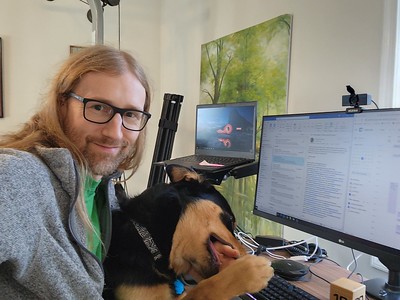
Vader trying to play while I work

Happy March!

A paper I'm an author on just came out (James et al. 2023) and I'm super excited about it. It looks at how science and conservation staff at The Nature Conservancy perceive gender equity in their work, and I learned a lot while working on it. Please check out the summary below, and read the whole paper if you have time, or at least read this blog overview.

Also, many of you were intrigued by the use of ChatGPT last month, so I thought I'd try another AI tool to highlight what it does well and what it's limitations are. It's part of elicit.org and it's called "TL;DR papers" (for too long; didn't read). I first read about it here. Elicit does many cool things, but I tested just one feature: uploading a science article and getting: 1) a 1-sentence summary of the abstract, 2) key info about the paper's design and methods, 3) critiques of the paper if it finds them, and 4) the ability to ask specific questions about the paper. I put what I did and the results below under "AI RESEARCH TOOLS." The TL;DR is that I highly recommend the "detailed abstract summary" over the default ones. I also like this guide to things to use AI for (thanks to Bob Lalasz for sending it).

If you know someone who wants to sign up to receive these summaries, they can do so at http://bit.ly/sciencejon (no need to email me).

GENDER AND CONSERVATION:
James et al. 2023 asked over 900 science & conservation staff of The Nature Conservancy about their careers and influence, and how they perceived their gender as impacting that. We found that women had less influence, experienced many barriers to their careers (including harassment, discrimination, and fear of retaliation for speaking out), and that men overestimated gender equity. Only have 5 minutes? Skip to the recommendations on page 7 (we ask orgs to: show public leadership on equity, improve transparency and accountability, diversify teams and improve career pathways for women, be flexible, include training and mentoring as part of broader change, help women connect, address sexual discrimination and harassment, and consider intersectionality). If you have 15 minutes more, read the quotes in Table 2 (p5-8) because they're really compelling and illustrative. Or if you're with the half of men and 3/4 of women in our sample who think we have more to do on gender equity (rather than that we've already "gone overboard" or that it's not an issue as some men reported), just read the whole damn paper because there's a lot of interesting detail and nuance in the results. I learned a ton while helping out on it, and I'm excited to start advocating for the recommendations. You can read it at: https://bit.ly/TNCgenderpaper or a short blog at https://blog.nature.org/science-brief/gender-bias-holds-women-back-in-conservation-careers/ 


AI RESEARCH TOOLS:
I decided to test out Elicit.org on some papers I'm an author on (to make it easy for me to judge how good or bad the info was). I picked my 5 papers that have the most citations (I'm a minor author on all but one of those), the paper which has generated the most response outside of academia (Fisher / Wood / Bradford / Kelsey 2020), and the two most recent papers I've worked on (James et al. 2023 and James et al. 2022). I used the "upload PDFs" option and uploaded all 8 PDFs at once. I pulled info from the summaries, and for each paper asked Elicit one question that I knew the paper had a good answer to. AFTER I was done I discovered Elicit has "detailed summaries" which you get by clicking in "search for paper information", so I went back and added those in with brief comments. I list direct output from Elicit in italics.

Bradford et al. 2019. Soil carbon science for policy and practice. PAPER BLOG
Elicit summary: "Controversy about the role soils might play in climate change mitigation is undermining actions to restore soils for improved agricultural and environmental outcomes."
Jon comments on summary: We had a 2-sentence abstract, and this is the key one. I wish it had the other key message of the paper (we know how to build soil C, and that it can help farmers) but that wasn't in our abstract so that's on us.
Elicit detailed summary: "This paper discusses soil carbon science for policy and practice. It argues that controversy about the role soils might play in climate change mitigation is undermining actions to restore soils for improved agricultural and environmental outcomes." I really like this summary.
Jon comments on other findings: They classified the paper as a literature review, but it's a 'comment' so more opinion although it draws on literature. It flagged we didn't mention our funding which surprised me but it was correct! It was interesting that they said the paper had "0 citations" (it has 88) but then it did list the text from a few papers citing this paper which was cool.
Jon's open question: "What does building soil carbon do?" 
Answer: "Building soil carbon increases yields and reduces erosion." That is pulled from the paper and is accurate.

Fisher et al. 2018. Impact of satellite imagery spatial resolution on land use classification accuracy and modeled water quality. PAPER BLOG
Elicit summary: "The choice of spatial resolution affected the estimated return on investment in watershed conservation for the municipal water company that finances much of this conservation."
Jon comments on summary: I struggled with this one, but have to agree that is the most important sentence from the abstract. I really wish they hadn't cut the 2nd half of the sentence though: ", although it is unlikely that this would have affected the company's decision to invest in the program." My TL;DR would be something like "Using free coarse imagery reduced the accuracy of our water quality modeling, but the coarse data sufficed for the purposes of the intended decision maker (a water treatment company)."
Elicit detailed summary: "This paper compares the impact of satellite image spatial resolution on land use classification and water quality modeling. It finds that higher resolution data is more accurate but also more expensive." This is the key result, but the more interesting implication is how that wouldn't have affected the decision the research was meant to inform.
Jon comments on other findings:
The test and outcomes were good, the answer to "who were the participants" was "Brazil" which isn't right. It even successfully pulled the funding source from the paper's main text (this is the only article that worked for). It listed four "possible critiques" of the paper which I was excited to see and evaluate! All four papers basically echoed some of our findings so it was interesting to see they showed up as critiques (they were not): it's a ton of work to use very high resolution data (need to do lots of precise ground references, long analysis times, etc.), data resolution choice can affect your results, and one time when high resolution imagery makes sense is to classify small and heterogeneous features.
Jon's open question: "When is it good to use low resolution data?"
Answer: "The paper concludes by saying that there are key criteria to assist in choosing an appropriate spatial resolution for different contexts, so it depends on the context." This is true, but Table 5 has a summary of what those criteria are, so I was bummed it didn't pull from the list of 12 answers we had to the question like: low budget, large study area, larger patches, need for frequent updates, etc.

Fisher / Wood / Bradford / Kelsey 2020 (we had equal contributions). Improving scientific impact: How to practice science that influences environmental policy and managementPAPER BLOG
Elicit summary: "Scientists who want to improve the impact their research has on decision-making should identify and understand the audience."
Jon comments on summary: Oh boy, this is a case where shorter is not better. We had 4 steps and it cut off the last 3. Here's the sentence it pulled this from "We outline a set of practical steps for scientists who want to improve the impact their research has on decision-making: (a) identify and understand the audience; (b) clarify the need for evidence; (c) gather 'just enough' evidence; and (d) share and discuss the evidence"
Elicit detailed summary: "This paper outlines a set of practical steps for scientists who want to improve the impact their research has on decision-making. These steps include: (a) identifying and understanding the audience; (b) clarifying the need for evidence; (c) gathering "just enough" evidence; and (d) sharing and discussing the evidence." Yup - that's a good summary albeit almost a direct quote!
Jon comments on other findings
: N/A (nothing was interesting enough to discuss)
Jon's open question: "Why should scientists read this paper?"
Answer: "The paper provides advice on how to make sure that 1's research has the desired impact." OK, it's weird to say "1's" for "one's", and I was hoping for noting how much research goes to waste, but this is not a bad answer.

James et al. 2022. Gender and conservation science: Men continue to out-publish women at the world’s largest environmental conservation non-profit organizationPAPER BLOG
Elicit summary: "The proportion of women to men remains below gender parity at TNC."
Jon comments on summary: This is a great example of where truncating a sentence makes it inaccurate. While this text does appear in our abstract, it's unclear from Elicit that women are PUBLISHING less scientific articles than men, despite the fact that 45% of conservation and science staff are women.
Elicit detailed summary: "This paper looks at the number of women publishing in conservation science at the Nature Conservancy (TNC) from 1968-2019. It finds that women are underrepresented, making up only 36% of authors, 31% of first authors, and 24% of last authors." This is a good summary and includes probably the most important high level result.
Jon comments on other findings: The question "what did they test" answers "The duration is 1968-2019" (as opposed to something like "The authors tested whether women and men at The Nature Conservancy published science articles at equal rates from 1968-2019"). The outcomes (# women publishing at TNC, proportion of women:men publishing at TNC, proportion of women from the Global South publishing at TNC) are incomplete but true. It didn't find the 3 citations Google know about.
Jon's open question: "How can gender equity in science publishing be improved?"
Answer: "The paper suggests that 'specific strategies and ongoing investments' are needed to address gender diversity among authors, especially women from outside the United States and specifically the Global South." That is frustrating, because it missed that there were seven bulleted and bolded recommendations listed under a heading called "Recommendations for building gender equity in publishing." A better (longer, but actually useful) answer would be "Gender equity in science publishing can be improved via building awareness around bias and systemic barriers, men should collaborate more with women (including in the Global South), include women performing 'invisible labor' as authors, support women to focus on publishing, support women who don't speak English as a 1st language to publish, offer dedicated publishing support for women, and manage impacts of COVID on women" (some of these don't really make sense when shortened like this, though.

James et al. 2023. Gender bias and inequity holds women back in their conservation careersPAPER
Elicit summary: "Gender bias and inequity holds women back in their conservation careers."
Jon comments on summary: I mean, I'm glad it thinks the title is a good summary! But a summary of the abstract could complement the title. Maybe something like "Surveying about 900 staff of The Nature Conservancy revealed gender equity problems; the authors have recommendations to improve them"?
Elicit detailed summary: "This paper discusses how gender bias and inequity affects women in their conservation careers." I actually think the title is still about as good as this one.
Jon comments on other findings: It got the participants right, and it pulled out a few details relevant to "can I trust this paper?" It couldn't find any citations b/c the paper is so new.
Jon's open question: "What are ways to improve gender equity?"
Answer: "The paper proposes a series of recommendations to improve gender equity in conservation, which involve continual reviewing and adjusting policies, systems, and norms to create a culture that fully leverages the benefits of diversity" Again, I wanted it to know that a question like "what are ways" means I am looking for specifics, not that "ways exist." A better answer could be "The authors recommend that organizations: show public leadership on equity, improve transparency and accountability, diversify teams and improve career pathways for women, be flexible, include training and mentoring as part of broader change, help women connect, address sexual discrimination and harassment, and consider intersectionality."

Kroeger et al. 2014. Reforestation as a novel abatement and compliance measure for ground-level ozone. PAPER BLOG
Elicit summary: "Reforestation is a novel abatement and compliance measure for ground-level ozone."
Jon comments on summary: Again, this is true, but why not go beyond the title? Better to have a longer answer than to waste text by repetition: "Reforestation was predicted to abate ozone at or below the cost of conventional alternatives if land doesn't need to be purchased, and can save money if carbon offsets are generated."
Elicit detailed summary: For some reason Elicit declined to produce a detailed abstract summary for this one, I have no idea why!
Jon comments on other findings: Elicit says "no mention found of funding source" but the paper clearly states that "This analysis was done as part of the collaboration between The Nature Conservancy and Dow Chemical Company and was funded by the Dow Chemical Company Foundation." Also the one paper listed as critique this paper didn't criticize it, and just listed it as a rare case of ecosystem service valuation within industry being published in a peer-reviewed journal.
Jon's open question: "What is the national potential for reforestation to abate ozone?"
Answer: "Reforestation could be a viable, novel approach for abating ground level O3 pollution that complements conventional technology based controls." I was hoping for "Figure 2 maps the places in the contiguous United States where reforestation could be used to abate ozone."

Mcdonald et al. 2009. Urban effects, distance, and protected areas in an urbanizing worldPAPER
Elicit summary: "The median distance from a park to an urban area is already less than 50 km in many regions."
Jon comments on summary: That is not the key point. A better summary would be "A global review of how cities affect protected areas found that 2/3 of effects only apply within 50 km, but this proximity is common in many regions so cities are already having an impact."
Elicit detailed summary: "This paper looks at the effects of urbanization on protected areas. It finds that thousands of protected areas are already impacted by urban areas and many more will be impacted in the future." Not bad, I like my summary better but this is still good.
Jon comments on other findings: Again Elicit missed a partial funding statement "One of us (R.I.M.) was funded by a David H. Smith Conservation Biology Fellowship." It also couldn't access the text of any of this paper's 246 citations!
Jon's open question: "What were the most common threats cities posed to nature?"
Answer: "The most common threats cities posed to nature were "housing and urban areas," "household sewage and urban waste water," "dams & water management," and "logging and wood harvesting."." Sadly this is badly wrong. It misinterpreted a few sentences this was pulled from. To be fair, the best answer is in graphic format (Fig 3) and I don't think this tool can yet read the text of images and extract insights. A better answer would be "Invasive species, housing & urban areas, fire & fire suppression, and dams & water management / use."

Reddy et al. 2017. Advancing Conservation by Understanding and Influencing Human Behavior. PAPER  
Elicit summary: "Integrating two or more behavior change approaches that target multiple, context-dependent factors may be most successful."
Jon comments on summary: True, but a more helpful summary would be broader: "The authors review behavior change models, providing examples and guidance on how to choose an effective one for a given context."
Elicit detailed summary: "This paper discusses how behavioral sciences can help inform conservation policy. It provides a set of guiding questions for applying behavioral insights to conservation policy, including how to define the conservation problem as a behavior change problem, understand behavioral mechanisms, and identify and evaluate behavior change approaches." This is a good summary, no complaints.
Jon comments on other findings: The measured outcomes were wrong, but they got the funding source right (it was in the acknowledgments).
Jon's open question: "What kinds of behavior change interventions use incentives?"
Answer: "The paper mentions that incentives are 1 of 3 behavior change approaches." This is true and it pointed me to the text listing them (awareness, incentives, and nudges). But I was looking for something like "financial or social incentives can be used to create behavior change" as per Fig 3 and a good bit of text. But to be fair I don't think we use the same terms consistently throughout.


REFERENCES:

James, R., Fisher, J. R. B., Carlos-Grotjahn, C., Boylan, M. S., Dembereldash, B., Demissie, M. Z., Diaz De Villegas, C., Gibbs, B., Konia, R., Lyons, K., Possingham, H., Robinson, C. J., Tang, T., & Butt, N. (2023). Gender bias and inequity holds women back in their conservation careers. Frontiers in Environmental Science, 10(January), 1–16. https://doi.org/10.3389/fenvs.2022.1056751 or https://bit.ly/TNCgenderpaper

Sincerely,
 
Jon
 
p.s. This is a photo of our former foster dog Vader letting me know that it was time for hand-chewing and playing, and not time for working.

Monday, August 1, 2022

August 2022 science summary

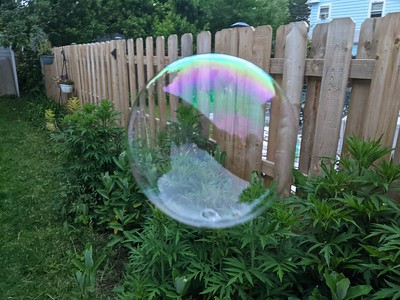
Bubble in garden

Hi,

After publishing no peer-reviewed science in 2021, two papers I'm a co-author on were published this month!

The first (Vijay et al. 2022) looks at how different conservation goals for people and nature tend to align and conflict: identifying both win-wins and trade-offs to inform conservation priorities. The second (James et al. 2022) is an analysis of scientific publications by staff at The Nature Conservancy split by gender, along with recommendations to improve the ability of women (especially from the Global South) to publish research. Let me know if you have questions about either after reading the summaries below!

I've also got an interesting article on the IUCN Red List of threatened ecosystems, and a great framework to think through freshwater conservation needs and approaches.

If you know someone who wants to sign up to receive these summaries, they can do so at http://bit.ly/sciencejon (no need to email me).

GENDER AND SCIENCE:
James et al. 2022 analyzed almost 3,000 peer-reviewed scientific publications with at least one author from The Nature Conservancy (TNC) by gender of the author(s) - all that we could find from 1968 to 2019. Roughly 1/3 of the TNC authors and authorships (# authors * # papers) were women, even though 45% of conservation and science staff are women. Most authorships were in the U.S. - 85% overall and 90% for women. This means men (especially men in the United States) are publishing at a significantly higher rate than women. We close with several recommendations to help shrink this gap. Some are aimed at individual scientists (e.g., self-education on bias and systemic barriers, asking men to collaborate more with women as male-led papers have far fewer women co-authors than female-led papers, and asking lead authors to be more inclusive in determining whose contributions merit being listed as an author), and others are aimed at organizations (e.g., providing more resources and support for women who wish to publish, especially for women who don't speak English as a first language). I learned a ton from both the data and my co-authors on this one, and we have another 1-2 papers on the subject coming which will get into the results of a survey the lead author did to get deeper into the experience of how gender impacts not only publication but perceptions of influence and career advancement. Note that our available data listed everyone's gender as male, female, or unknown - apologies to those who we misgendered or otherwise failed to reflect their lived experience with a relatively simple binary analysis (especially as gender diverse people appear to be even more underrepresented in science publications).
You can read blogs about the article at https://www.nature.org/en-us/newsroom/published-science-gender-gap/ and https://blog.nature.org/science/science-brief/conservation-science-publishing-has-a-gender-problem/


CONSERVATION PRIORITIZATION:
As conservation organizations try to work towards multiple goals, Vijay et al. 2022 asks whether we can protect places that efficiently advance multiple goals at once, or if we have to pick between places good for one goal but that perform poorly for others. We looked at opportunities to advance five benefits by protecting land in the contiguous United States: vertebrate species richness, threatened vertebrate species richness, carbon storage, area protected, and recreational usage. Specifically we looked at Return On Investment (ROI) meaning the benefit score compared to the cost of the land (as a proxy for difficulty of protecting it). The results are a bit complicated: this paper focused only on unprotected habitat which is predicted to be converted by 2100, and with that framing the four environmental benefits were both highly correlated overall (r 0.89-0.99) and had a lot of the "top sites" in common (the highest scoring places for one benefit often had a top score for another benefit, 32-79% of the time). Recreation had less in common with environmental benefits (r 0.5-0.52, only 7-13% of the top sites were also a top site for another benefit). That still shows a lot of opportunity for win-wins across the nation! However, if you DON'T constrain conservation to places where land use is projected to change by 2100, win-wins are harder to find (as shown in the Supplementary Information). Species richness and area were the most compatible with a high r of 0.58 and 24% of top sites in common, and area and recreation were the least aligned, with an r of -0.65 and no top sites in common. There's a lot of interesting stuff in the paper (including comparing how three hypothetical policy scenarios score on each benefit), and I've written a slightly longer summary here: https://www.linkedin.com/posts/sciencejon_conservation-science-goalsetting-activity-6948122284528197632-OH0S/

You're probably familiar with the IUCN's Red List of Threatened Species - which ranks how at risk species around the world are. Comer et al. 2022 is an analysis for the Red List of ECOSYSTEMS for North America - looking at the risk of ecological collapse for 655 terrestrial ecosystems considering: current extent, how much historic extent has been lost, degradation from historic fire regime, and disruption of biotic processes (focused on invasive species and landscape fragmentation). They found 1/3 of ecosystems were threatened, and Fig 2 shows which types of ecosystems were the most threatened (like Mediterranean Scrub & Grassland, which had the highest % of extent that was threatened, and Tropical Montane Grassland & Shrubland, which had the highest % Critically Endangered). Fig 1 has a great pair of maps showing both current and historic extent of all assessed ecosystems (colored by threat level). There is also an excellent discussion of the challenges and limitations in doing an analysis like this (section 4.2). Despite these limitations, this provides a useful complement to species-focused prioritizations (like range-size rarity).


FRESHWATER CONSERVATION:
Higgins et al. 2021 (from a team of scientists and lawyers) argues that since freshwater species are declining faster than terrestrial species, and effective durable freshwater conservation is typically harder to get right, we need more thoughtful design of freshwater protection and management. They offer a framework to do that, beginning with key questions (about things like what you value, key ecological attributes [KEAs] to conserve, threats to ecosystems, and protection options), which is summarized in Figure 1. Table 1 is extremely useful: it outlines 5 key ecological attributes that freshwater systems need: 1) hydrologic regime / healthy flow, 2) connectivity , 3) water quality (nutrients, sediment, toxins, etc.), 4) habitat (riparian, in-stream, other wetlands), 5) species (diversity, abundance, invasives). Table 1 also lists threats, Table 2 has conservation options, and Table 3 has helpful and relatively simple examples to get you started. Doing this work is hard! But I found this article to be a great challenge to keep thinking beyond protecting the land around freshwater ecosystems, and planning for what they need over the long-term.

REFERENCES:

Comer, P. J., Hak, J. C., & Seddon, E. (2022). Documenting at-risk status of terrestrial ecosystems in temperate and tropical North America. Conservation Science and Practice, 4(2), 1–13. https://doi.org/10.1111/csp2.603

Higgins, J., Zablocki, J., Newsock, A., Krolopp, A., Tabas, P., & Salama, M. (2021). Durable Freshwater Protection: A Framework for Establishing and Maintaining Long-Term Protection for Freshwater Ecosystems and the Values They Sustain. Sustainability, 13(4), 1950. https://doi.org/10.3390/su13041950

James, R., Ariunbaatar, J., Bresnahan, M., Carlos‐Grotjahn, C., Fisher, J. R. B., Gibbs, B., Hausheer, J. E., Nakozoete, C., Nomura, S., Possingham, H., & Lyons, K. (2022). Gender and conservation science: Men continue to out‐publish women at the world’s largest environmental conservation non‐profit organization. Conservation Science and Practice, January, 1–9. https://doi.org/10.1111/csp2.12748

Vijay, V., Fisher, J. R. B., & Armsworth, P. R. (2022). Co‐benefits for terrestrial biodiversity and ecosystem services available from contrasting land protection policies in the contiguous United States. Conservation Letters, February, 1–9. https://doi.org/10.1111/conl.12907


Sincerely,
 
Jon
 
p.s. This large bubble is over my 'butterfly garden' which is currently full of flowers and pollinators!

Wednesday, July 6, 2022

Two new papers: how gender impacts science publishing & conservation prioritization

After having 0 papers published in 2021, I was on author on two papers published last week (both open access - click the author name to go to the paper)! Here's a quick summary of each:

James et al. 2022 analyzed almost 3,000 peer-reviewed scientific publications with at least one author from The Nature Conservancy (TNC) by gender of the author(s) - all that we could find from 1968 to 2019. Roughly 1/3 of the TNC authors and authorships (# authors * # papers) were women, even though 45% of conservation and science staff are women. Most authorships were in the U.S. - 85% overall and 90% for women. This means men (especially men in the United States) are publishing at a significantly higher rate than women. We close with several recommendations to help shrink this gap. Some are aimed at individual scientists (e.g., self-education on bias and systemic barriers, asking men to collaborate more with women as male-led papers have far fewer women co-authors than female-led papers, and asking lead authors to be more inclusive in determining whose contributions merit being listed as an author), and others are aimed at organizations (e.g., providing more resources and support for women who wish to publish, especially for women who don't speak English as a first language). 

I learned a ton from both the data and my co-authors on this one, and we have another 1-2 papers on the subject coming which will get into the results of a survey the lead author did to get deeper into the experience of how gender impacts not only publication but perceptions of influence and career advancement. Note that our available data listed everyone's gender as male, female, or unknown - apologies to those who we misgendered or otherwise failed to reflect their lived experience with a relatively simple binary analysis (especially as gender diverse people appear to be even more underrepresented in science publications).

You can read blogs about the article at https://www.nature.org/en-us/newsroom/published-science-gender-gap/ and https://blog.nature.org/science/science-brief/conservation-science-publishing-has-a-gender-problem/ or the full paper is at https://onlinelibrary.wiley.com/doi/10.1111/csp2.12748


As conservation organizations try to work towards multiple goals, Vijay et al. 2022 asks whether we can protect places that efficiently advance multiple goals at once (win-wins), or if we have to pick between places good for one goal but that perform poorly for others (trade-offs). We looked at opportunities to advance five benefits by protecting land in the contiguous United States: vertebrate species richness, threatened vertebrate species richness, carbon storage, area protected, and recreational usage. Specifically we looked at Return On Investment (ROI) meaning the benefit score compared to the cost of the land (as a proxy for difficulty of protecting it). 

The results are a bit complicated: this paper focused only on unprotected habitat which is predicted to be converted by 2100, and with that framing the four environmental benefits were both highly correlated overall (r 0.89-0.99) and had a lot of the "top sites" in common (the highest scoring places for one benefit often had a top score for another benefit, 32-79% of the time). Recreation had less in common with environmental benefits (r 0.5-0.52, only 7-13% of the top sites were also a top site for another benefit). That still shows a lot of opportunity for win-wins across the nation! However, if you DON'T constrain conservation to places where land use is projected to change by 2100, win-wins are harder to find (as shown in the Supplementary Information). Species richness and area were the most compatible with a high r of 0.58 and 24% of top sites in common, and area and recreation were the least aligned, with an r of -0.65 and no top sites in common. 

There's a lot of interesting stuff in the paper (including comparing how three hypothetical policy scenarios score on each benefit), and I've written a slightly longer summary here: https://www.linkedin.com/posts/sciencejon_conservation-science-goalsetting-activity-6948122284528197632-OH0S/ or the full paper is at https://onlinelibrary.wiley.com/doi/10.1111/conl.12907

Saturday, May 12, 2018

Men stepping up to be stronger allies

Over the last year I've been struck by how hard it can be for us all to move from good intentions to being able to act around issues of diversity. How can we all do our part to build a better place to work for everyone? One phrase I have heard again and again from men (including in my own head) is "I don't know what I can do." Here are a few tips on gender that I've heard in the conversations I've had during Engaging Across Difference (a 2.5 day diversity workshop at The Nature Conservancy) and some subsequent workshops I've been co-leading at my office.

First and foremost, take the time to get better educated and prepared to act. For TNC staff, Engaging Across Difference is a fantastic workshop that will provide the tools necessary to work more effectively across differences. Challenge yourself to read books or articles, or watch movies / videos that can expand your perspective on gender. Let me know if you want some suggestions. You may want to set yourself a monthly reminder to keep yourself honest. Through hearing stories, you will likely be surprised how differently women often experience the workplace compared to men, and how much experiences vary among women.

Next, ask your friends and colleagues about their experiences as women. When have they felt possible gender bias or uncomfortable due to gender, especially at work? What, if anything, do they wish was different at work? It could be systemic (policies) or individual (what people do). Take the time to truly listen, ask questions, and thank them for being honest (even if it's difficult). Remember that the goal is just to listen and understand – to hear and validate their experiences, and that to work you need a foundation of trust and authentic curiosity. Everyone I have spoken to has emphasized that they want to be engaged as an individual, not lumped in with others based on characteristics, so don't just do this with one person and assume it will apply to others!

Third, if you're able to do so with an open mind, you can ask your colleagues specifically for ideas about how you can be a better ally. That can include making yourself available for support and discussion in the future, or talking about situations to watch out for in the future (e.g. I've had a few women request that when they get interrupted in meetings, I should say something like "hold on, I want to hear what ___ had to say"). Whatever feedback you get, thank them for their honesty, take time to reflect about it, and ask questions seeking to understand (but not to agree / disagree / fix). It's important to realize that even when our intent is good, we can still have a negative impact on others without meaning to. I plan to do this for the upcoming annual review cycle, and welcome input from anyone reading this.

Finally, and this one is likely the hardest: speak up when you see problematic behavior (even when it feels awkward, which it almost always will). If you notice the youngest woman in the room is often asked to take notes despite having a similar position to others, volunteer to take them yourself or ask for other volunteers. If someone makes a sexist joke, call it out. You can do this in a lighthearted way so that you are diffusing tension and still setting a positive example (Active Bystander training has ideas), and if it feels best you can do it 1:1 after the fact. Emphasize your positive intent, and that you're trying to alert them to unintended impacts of their behavior rather than criticizing them. I have found that I struggle the most to speak up in a group of all men, but in a way, this is the most important time to do so. It sets norms of what gets men a high five and laughs, and what gets a more awkward and critical response.

If that sounds too abstract, here are a few examples of how you can speak up that I've seen work well. Especially for people who are probably clueless why their behavior is problematic, you can talk to them one on one and say something like "I know you're a nice person and wouldn't want to make anyone uncomfortable, so I wanted to share with you that what you said could be hurtful." If they don't buy it, you can share examples of when people have mentioned how similar behavior made them feel. Another is when a group of men is going on about how hot an athlete / actress / colleague is, you could say something like "When can we start valuing women for their accomplishments and not just their looks? This woman is an amazing athlete, can't we talk about that?" Finally, for low-grade clueless and inappropriate behavior I sometimes just say "Wow, gross!" or "What's wrong with you?" in a semi-joking tone (but if they don't let it drop, I make it clear it's uncool).

If you only take one thing away from this- take the time to actively listen with a real sense of curiosity and a desire to improve. While this blog was written about gender, I've heard the same themes consistently in discussions on race, sexual orientation, and other related topics. I'm still surprised sometimes when my wife calls me out on something I've done (or not done), but that just means I'll keep learning (she also helped to make this blog better). The fear of looking ignorant by asking questions is the biggest enemy we have to learning how to support each other better.

What has your experience been?