Friday, April 13, 2018

New paper: how "boundary spanners" help innovation spread

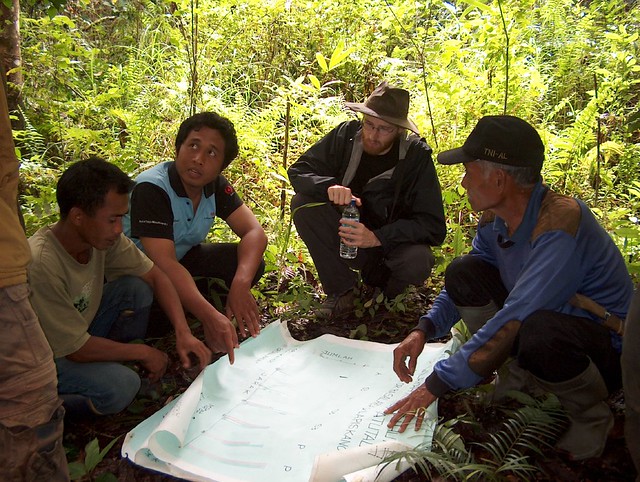
village conservation meeting

There's another paper out from the study of how Conservation by Design (CbD) 2.0 spread through TNC and beyond.

This paper (led by Yuta Masuda, I'm a co-author) focuses on "boundary spanners" - people with informal connections across departments / geography. These “boundary spanners” are four times more likely to spread information about “innovations” (here that means info about CbD 2.0) and to drive changes in attitude that encourage adoption. However, their advantage in spreading info only exists when they have <4 direct reports and are relatively low in the organizational hierarchy (counting levels of who reports to their direct reports etc. etc.).

There's a blog with more info at: https://www.sciencedaily.com/releases/2018/04/180409090127.htm and you can read the paper at http://rdcu.be/Kre4 

Masuda, Y. J., Liu, Y., Reddy, S. M. W., Frank, K. A., Burford, K., Fisher, J. R. B., & Montambault, J. (2018). Innovation diffusion within large environmental NGOs through informal network agents. Nature Sustainability. https://doi.org/10.1038/s41893-018-0045-9

Wednesday, April 11, 2018

April 2018 Science Journal Article Summary

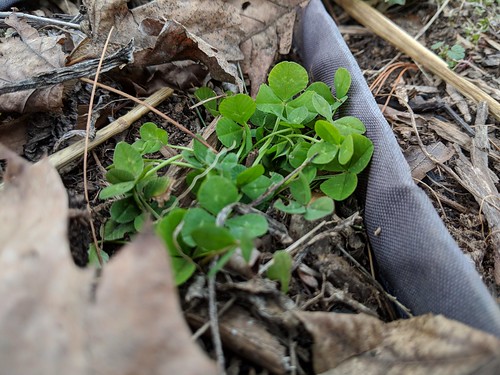
Red clover as attempted cover crop
Easter Greetings,

Farming is really hard! Cover crops (which cover farms after the primary crop is harvested) can offer benefits to both farmers and nature, but incorporating them is hard too. The photo above is the biggest patch of my attempted red clover cover crop in my tiny garden. So to get ready for the coming year, I've focused on several articles about cover crops, plus one new giant study on improving agriculture in China.

I can also finally share a book chapter I wrote 3 years ago which has languished "in press" after being accepted (it should be actually published late 2018). The first half is OK, but I'd skip to the 2nd half (start with the "Can Corporate Sustainability reporting be a force for improved agricultural practices?" section). There's some interesting content I haven't seen anywhere else on corporate sustainabiltiy and food labels. The chapter is available from: http://fish.freeshell.org/publications/FisherKareiva_CUP_2018_preformatted.pdf

Finally, fed up with people not finding your science journal articles, or having them inaccessible due to a paywall? I have answers to both problems in a new blog post: http://sciencejon.blogspot.com/2018/03/tips-for-helping-people-to-find-your.html

Let me know if you need a copy of any of the articles below.

AGRICULTURE (CHINA):
Cui et al 2018 reports on the results of an ambitious study that worked with 21 million farmers (!) of maize, rice, and wheat over 10 years. China currently has some of the least efficient farms in the world, presenting a huge need to improve. This study used a soil & crop management framework that resulted in ~11% improved yield while reducing N application by ~16% (and reactive N losses by ~25%), and GHGs by 14-22% depending on crop. The scale is impressive: altogether they influenced 37.7 million ha. Interestingly, extension staff impacted over 10 times the area per staff person (471 ha / person) compared to agribusiness partners (see Fig 2). Regardless, this is good news in showing that it's possible to achieve "win-win" outcomes at scale even with smallholders. On the other hand, nitrogen efficiency is so poor in China, that much larger changes are needed to bring them in line with world averages, let alone truly sustainable targets (highlighting that policy changes are likely needed as well). Fig 1 has a great breakdown of impacts by crop and region.

AGRICULTURE (COVER CROPS):
Why don't more farmers use cover crops? Roesch-McNally et al. 2017 asked them: what are the barriers, and how do cover crop users overcome them? Cover crops add complexity at very busy times for farmers, which is a key issue. They report concern about having time to plant cover crops in fall, and time to terminate them in spring without impacting cash crop planting. Lack of markets and equipment, narrow profits margins, and prevalence of rented land were also limiting. Farmers who overcame these barriers generally saw their farm as a "whole system" and were willing to experiment and modify other practices (e.g. tillage and fertilization). The authors wrap up by exploring several policy interventions (cost-sharing, new markets, promoting crop / livestock systems, and economic incentives).

Bergtold et al. 2017 dive more into the economic aspect of cover crops in Kansas (direct costs, indirect & opportunity costs, direct & indirect benefits, risk & crop insurance, and policy incentives). They find that on average cover crops will net farmers $7.04/ac on irrigated land, but cost them $28/ac on dryland (potentially $20/ac under less conservative assumptions). That difference is driven mainly by lower yields in drylands reducing the opportunity for a % boost in yield to add up to much. They honestly don't explain the rationale behind their calculations very well, so I wouldn't put too much stock in those specific numbers for net costs (and see Baschle below for different findings), but it's a useful reference for thinking through types of costs and benefits. It's long but even skimming the section headings will likely be informative.

Snapp et al. 2005 is a thoughtful review of cover crop benefits and costs, adding a key factor often overlooked. Different cover crops perform very differently in different contexts! The authors break down cover crop performance into USDA Hardiness Zone categories, and summer and winter crops. The whole article is a good resource, but I hadn't heard much about summer cover crops so was intrigued to read about their use to rehabilitate fields with poor performance. The main options were sorghum sudangrass and alfalfa in the north (although mixed grass-legume systems also show potential) and in the south sudangrass and a range of legumes (including pigeon pea, cowpea, and sunn hemp). This all reinforces the idea that cover crop selection is complicated and that a one size fits all approach won't work well.

Wilcoxen et al. 2018 (which includes TNC's Jeff Walk as a co-author) looks at a rarely studied aspect of cover crops: how do they impact birds? For both corn and soy, cover crops improved bird habitat / bird density. It's a small study and most fields were cereal rye, but their data seem to indicate the tall grass of rye was especially attractive. The authors note that terminating cover crops later would likely benefit birds, although as noted in the studies above that can prove challenging for farmers.

Basche et al. 2016 looks at how winter rye in the Midwestern US affects soil water capacity. The water paper asks whether cover crops reduce or improve water available for cash crops. They found the cover crop generally boosted plant water available to cash crops by ~21%, but did not impact crop yield (even during drought). At the end of p9 they have suggestions on how to manage cover crops to avoid water competition (e.g. terminate them early in dry years).


AGRICULTURE (SOIL HEALTH):
While not restricted to cover crops, Basche 2017 looks at how much different crop & grazing practices can affect water infiltration. Some of the recommendations aren't terribly practical currently, but Figure 3 shows which practices most consistently improve infiltration as a %, and Figure 4 shows which ones can lead to an absolute increase in infiltration of 1 inch during heavy rain storms. Cover crops were found to improve infiltration ~20-50%, and in about 1/3 of the studies that led to absorbing >1 inch of rain during heavy rain storms.

Woodard & Verteramo-Chiu look at how much better the Federal Crop Insurance Program (FCIP) could perform if it used soil data to establish rates and coverage. In other words, how could FCIP incentivize soil health practices that would reduce risks and costs of the program, while avoiding perverse incentives (e.g. in the past crop insurance was not available to farmers using cover crops). It's a fairly wonky economics paper, but they make a good case for much errors and bias exist in the current program. The key finding is that farms with high-quality soils are generally overpaying, and low-quality farms are underpaying. See Fig 3 for an example of how strong the pricing erors are (up to a factor of 6). By accounting for soils data (and perhaps current practices), this program could be an important driver to get farmers to start rebuilding healthier soils to keep premiums low. They focus on top corn producing states where soil quality is relatively homogeneous; benefits of accounting for soil should be higher in regions with more varied soil. With predicted volatility from climate change, improving crop insurance will be increasingly important.


REFERENCES:
Basche, A. D., Kaspar, T. C., Archontoulis, S. V., Jaynes, D. B., Sauer, T. J., Parkin, T. B., & Miguez, F. E. (2016). Soil water improvements with the long-term use of a winter rye cover crop. Agricultural Water Management, 172, 40–50. https://doi.org/10.1016/j.agwat.2016.04.006

Basche, A. (2017). Turning Soils into Sponges: How Farmers Can Fight Floods and Droughts. Retrieved from http://www.ucsusa.org/sites/default/files/attach/2017/08/turning-soils-into-sponges-full-report-august-2017.pdf

Bergtold, J. S., Ramsey, S., Maddy, L., & Williams, J. R. (2017). A review of economic considerations for cover crops as a conservation practice. Renewable Agriculture and Food Systems, 1–15. https://doi.org/10.1017/S1742170517000278

Cui, Z., Zhang, H., Chen, X., Zhang, C., Ma, W., Huang, C., … Dou, Z. (2018). Pursuing sustainable productivity with millions of smallholder farmers. Nature, 555, 363–366. https://doi.org/10.1038/nature25785

Roesch-McNally, G. E., Basche, A. D., Arbuckle, J. G., Tyndall, J. C., Miguez, F. E., Bowman, T., & Clay, R. (2017). The trouble with cover crops: Farmers’ experiences with overcoming barriers to adoption. Renewable Agriculture and Food Systems, 1–12. https://doi.org/10.1017/S1742170517000096

Snapp, S. S., Swinton, S. M., Labarta, R., Mutch, D., Black, J. R., Leep, R., … O’Neil, K. (2005). Evaluating Cover Crops for Benefits, Costs and Performance within Cropping System Niches. Agronomy Journal, 97, 322–332. https://doi.org/10.2134/agronj2005.0322

Wilcoxen, C. A., Walk, J. W., & Ward, M. P. (2018). Use of cover crop fields by migratory and resident birds. Agriculture, Ecosystems & Environment, 252, 42–50. https://doi.org/10.1016/j.agee.2017.09.039

Woodard, J. D., & Verteramo-Chiu, L. J. (2017). Efficiency impacts of utilizing soil data in the pricing of the federal crop insurance program. American Journal of Agricultural Economics, 99(3), 757–772. https://doi.org/10.1093/ajae/aaw099


Sincerely,

Jon

p.s. as a reminder, you can search all of the science articles written by TNC staff (that we know of) here http://www.conservationgateway.org/ConservationPlanning/ToolsData/sitepages/article-list.aspx
(as you publish please email science_pubs@tnc.org to help keep this resource current).
If you'd like to keep track of what I write as well as what I read, I always link to both my informal blog posts and my formal publications (plus these summaries) at http://sciencejon.blogspot.com/

Friday, March 16, 2018

Tips for helping people to find your journal articles (and be able to read them)

After years of working on a project and getting it accepted for publication at a journal, it can be heartbreaking when no one reads it.

The two biggest barriers are usually: finding out about it, and having it behind a paywall. Since open-source publishing usually costs extra, I don't always have funding to do it. But here are tips on overcoming both barriers.

Helping people discover that your article exists:
People mostly find my research either through Google Scholar or Researchgate, although occasionally ORCID brings people in. Researchgate is easy to edit manually to add entries (but don't upload the full-text there publicly, see the section below for important legal considerations), and both ORCID and Google Scholar do a good job pulling articles directly from the journals (usually within a few weeks of publication). However! If ORCID or Google Scholar is missing any of your research you think should be listed, you can manually add entries there too (in Google go to your profile and hit the gray + above the list of articles, in ORCID hit "+ add works"). Note that blogs and other non-peer-reviewed sources will show up in Google Scholar if someone cites the source.

That helps scientists find your articles. But for anything you really hope will have an impact, sit down and make a communications plan, ideally when you're first designing the research in conjunction with key stakeholders and communications experts. Who do you hope will read the article, and what do you hope they will do as a result? Once you have your key audiences, consider whether writing a blog or two would help get people get interested (and get clear on the point of the paper), and enlist help in getting the message to the right people. The reason doing this early is so important is that you may actually write a different paper once you know what your intended audience currently thinks and cares about, and what may motivate them to take action.

OK, hopefully you've verified your research is all discoverable, but what if people want to actually read it? Most journals don't let you share the final version of the article at all (unless it's open-source), and they also don't let you host even a submitted / pre-formatted version on Researchgate. So here's the two-part trick I use:

Helping people access your article:
First, get a personal web site of some kind (there are plenty of free options, but it's important it's a personal site and not a repository like researchgate; I use freeshell.org which is crusty but very cheap - $36 for life).

Next, double-check the legal agreement for any publishers you want to share your content from (this is critical: this blog is not legal advice or a substitute for doing your homework on licensing for your articles). Most publishers grant permission to share a "submitted" version of the article on the author's personal web site (but nowhere else), and the ones that don't (or have an embargo) often grant it upon request (this just happened with me and Cambridge University Press). This is often called "self-archiving" or "green open access". So once you have verified permission, upload the files to your web site.

Then set up a "publications" page on your web site, which will help Google discover it. Google has instructions on how to do this and I have an example you can copy if desired here: http://fish.freeshell.org/publications.html
Usually once I add the entry to this page linking to the new pdf, Google Scholar finds it within about 3 weeks. The main thing is naming the web page "publications.html" and linking to the PDF via the article title.

Finally, people often request papers via Researchgate even though the PDF is already discoverable via Google Scholar. This is annoying since you usually can't legally host your paper there. But what you can do is create a redirect document in Word and save to pdf, and host that redirect document in Researchgate (e.g. see this example I made). That way it shows up as 'full text available' and people click through to the paper.

Of course, none of this ensures that your paper will be clearly written and compelling, but hopefully you're all over that, right?

Thursday, March 1, 2018

March 2018 Science Journal Article Summary


Hi,

It has been a hectic month so I haven't read much science. I'm including two articles on beef sustainability (one exciting case study, and one much broader review), as well as a new paper of mine that was finally published after an epic 14 month review. My paper looks at how information about CbD 2.0 spread within TNC and beyond, and while it's long and dense I'd encourage you to at least check out the summary below for tips on how to aid "knowledge diffusion" and how to study it.

BEEF SUSTAINABILITY:
Stanley et al. 2018 is a paper arguing that proper grazing management may be able to make beef a net carbon sink. They don't go quite that far, but it's a reasonable extrapolation. While this is an encouraging case study and we should look carefully at how to apply it, there are some really important caveats to interpreting this more broadly. Specifically, they found using "adaptive multi-paddock (AMP)" grazing for the finishing phase of cattle instead of feeding them grain resulted in a sink of ~6.7 kg CO2e / kg carcass weight, compared to a source of ~6.1 kg CO2e / kg for feedlot beef. The study is designed well, and soil C improvements were measured empirically over 4 years, in three types of soil in the Upper Midwest. That being said, there are a few big issues that challenge the narrative of "carbon positive beef" being possible at wide scales:
  1. The soil sequestration here (3.6 Mg C / ha / yr) is much higher than is typically reported (although some studies have shown similar rates).
  2. These rates would diminish over time; it's not clear how fast the soil would saturate but high rates like this would be most likely in early years after improving management of highly degraded soils.
  3. This study was on alfalfa pasture (which fixes N); it's unlikely these results would apply to unfertilized rangelands
  4. The study did not include soil nitrous oxide emissions which are often substantial in leguminous pastures.
  5. Finally, the grass-finished beef took up twice as much space as the feedlot beef. That could be good from a perspective of prevent conversion of grasslands by keeping them in production, but it also means that if we scaled up grass-finished beef at this density, we'd have to find twice as much land to graze cattle on, which could drive conversion. It would also likely raise costs for producers and consumers.

Garnett et al. 2017 ("Grazed and Confused") is a very thoughtful review of the climate change / GHG impact of ruminants (largely cattle). Their first key findings is that even with good grazing ruminants still have high net GHG emissions. They also note sequestering soil carbon often has trade-offs with methane and nitrous oxide. Finally, as demand for animal protein rises sharply there is likely to be both land conversion and increasing GHGs as a result. These have all been reported widely in other studies, but it's a nice summary. On the one hand, it's hard to pull out quantitative results from this paper. On the other, it does a great job of covering the various arguments and counterpoints around cattle and carbon, and presenting the data in a value-neutral tone. Anyone interested in this topic should at least skim the 8-page summary.

KNOWLEDGE DIFFUSION:
Fisher et al. 2018 ("Knowledge diffusion within a large conservation organization and beyond") looks at how people find information about innovations and share them, specifically the spread of Conservation by Design 2.0 (CbD 2.0). We review how earlier versions of CbD spread from TNC (looking at published science articles and expert interviews), then use tons of varied data to look at CbD 2.0. I wrote a blog about the paper here: http://sciencejon.blogspot.com/2018/03/share-good-news-paper-on-improving.html
and the full paper is at: http://journals.plos.org/plosone/article?id=10.1371/journal.pone.0193716
but here's a summary of what we learned:
  1. Sending repeated broadly-targeted communications (e.g. all-staff email / newsletters / etc.) that make it easy for recipients to find out more worked better than more narrowly focused communications (e.g. plenary talks, emails from executives).
  2. Expert interviews revealed several factors to promote diffusion: bringing in partners early to develop and test methods, committing up front to sustain support for the planning methods, having in-person workshops, using peer-review and shared learning, providing financial support, explaining how the methods address existing needs planners already have, and the existence of a support and learning network like the conservation coaches network (CCNET). 
  3. Organizations may wish to use internal data to identify staff likely to play a key role in diffusing so that they can encourage that process (the paper has details on how, with more forthcoming in an upcoming paper)
  4. Working with academics on publications represents a potential way to get the word out with relatively low effort for organizations (academics I have worked with in other contexts are often very interested in data no one else has access to, and have published cool papers from those data). 
  5. For scientists interested in this topic, we learned a lot about how to study knowledge diffusion, and share tips for researchers (e.g. thinking about image-blocking, legal and privacy constraints, distinguishing internal and external website visits, etc.).

REFERENCES:
Fisher, J. R. B., Montambault, J., Burford, K. P., Gopalakrishna, T., Masuda, Y. J., Reddy, S. M. W., … Salcedo, A. I. (2018). Knowledge diffusion within a large conservation organization and beyond. PLoS ONE, 13(3), 1–24. https://doi.org/10.1371/journal.pone.0193716

Garnett T., Godde C., Muller A., Röös E., Smith P., de Boer I.J.M., Ermgassen E., Herrero M., van Middelaar C., Schader C. and van Zanten H. (2017). Grazed and confused? Ruminating on cattle, grazing systems, methane, nitrous oxide, the soil carbon sequestration question. Food Climate Research Network, University of Oxford http://www.fcrn.org.uk

Stanley, P. L., Rowntree, J. E., Beede, D. K., DeLonge, M. S., & Hamm, M. W. (2018). Impacts of soil carbon sequestration on life cycle greenhouse gas emissions in Midwestern USA beef finishing systems. Agricultural Systems, 162(November 2017), 249–258. https://doi.org/10.1016/j.agsy.2018.02.003

Share the good news: a paper on improving "knowledge diffusion"


Ever feel like you missed out on a super cool Kickstarter project and you can’t believe no one told you about it? Amidst the fire hose of blogs, podcasts, social media, and more, how can we help good ideas get noticed, get shared, “go viral,” and make change happen?

That’s the question that a few scientists at The Nature Conservancy (TNC) decided to tackle back in 2014 (http://blog.nature.org/science/2015/07/29/tracking-how-new-science-spreads/). Scientists usually don’t get to tell others what to do, and we don’t have many celebrity advocates or adorable cat videos to explain our research. So to influence others we often have to be creative, “lead by intrigue,” and hope our message catches on. But for a new idea to go viral, it helps to understand how it spreads from person to person.

Our first journal article on this research (published in PLoS ONE, http://journals.plos.org/plosone/article?id=10.1371/journal.pone.0193716) taps into a huge array of different data sources including tracking web page activity, TNC employee data, and more traditional detailed surveys to give us some initial clues about how people are learning about innovations and sharing them with others. Going this deep with different kinds of data to explore diffusion is novel, and we learned some cool tricks other scientists may want to use!

Scientists call the way that new ideas spread “diffusion of innovations.” The process includes learning about and considering a new idea, trying it out, and telling others about it (not necessarily in that order).

Some innovations are new technology or practices (e.g., seven science innovations changing conservation, http://blog.nature.org/science/2017/04/17/7-science-innovations-changing-conservation/). We focused on a more conceptual example: the spread of the new scientific principles and planning methodology at TNC: Conservation by Design AKA CbD, https://www.nature.org/science-in-action/conservation-by-design/index.htm. We asked how TNC staff and others received this new information, sought to learn more, and shared it.

CbD dates back 20 years and we saw lots of interest in it from beyond TNC in published science articles. Experts we interviewed said that ideas spread when you bring in partners early, invest in training and support, and do several other things which TNC did from the beginning).

We didn't find a silver bullet for communications that got people to seek out more information. But simple broad communications like short articles in internal newsletters and webinars to all staff worked best to promote seeking more information about CbD (as shown in the figure below, which tracks how many people went to a web site to learn about CbD in response to different events). The more venues through which someone heard about the new ideas in CbD 2.0, the more likely they were to share, so repetition was key.


There were several other factors that made people more likely to share information. Some were obvious, like people whose job included training others in conservation planning methods. Others were less obvious, e.g. people who took more online trainings (not limited to conservation) were more likely to share information about CbD 2.0.

We also learned that even with all the data available to us, there were still some surprising limitations. For example, Google Trends, much touted as a “Big Data” approach to track public interest in different topics, turned out to have unreliable data. Plus, it’s not specific enough: TNC’s “conservation by design” gets searched for less than a private company with the same name. So searches for “our” CbD got lost.

Most of my research tries to find how much information we need to make the right decisions without wasting time on unnecessary analysis. With the findings of this new paper, we have new insights into how we can share those tips and avoid either wasting time or making the wrong call.


So the next time you miss out on that sweet Kickstarter project, let me know, and let’s see if we can figure out how to better prepare for the next one.

Fisher, J. R. B., Montambault, J., Burford, K. P., Gopalakrishna, T., Masuda, Y. J., Reddy, S. M. W., … Salcedo, A. I. (2018). Knowledge diffusion within a large conservation organization and beyond. PLoS ONE, 13(3), 1–24. https://doi.org/10.1371/journal.pone.0193716

Monday, February 5, 2018

Scaling Sustainable Agriculture

As part of getting trained in science communications via the Science Impact Project, I had to prepare and deliver a "TED-style" talk. It was terrifying and hard work, especially to slow down and take a more personal storytelling approach to my work (talking about my family's farm), but I'm pretty happy with the end result.

This blog includes the video of my talk at the top, and the text is more or less a transcript of what I say (with a few additions):

Scaling Sustainable Agriculture (blog at Cool Green Science)


Here is a pic of the farm (we couldn't find many):

and a pic of (from right to left) my great-grandfather Robert and great-grandmother Marjorie (the original farmers), my grandfather Hickman and grandmother Jurie, and two people I'm not sure about!

Thursday, February 1, 2018

February 2018 Science Journal Article Summary

Sad winter kale
Greetings,

The struggle to find good produce in the depth of winter (see my sad kale above) has me thinking about nutrients, so this month I've focused on papers about nutrients in the sense of fertilizer on croplands (focused on N & P, plus one about crop nutrition).

Interested in short blogs or talks? I have a new blog connecting the story of my family's farm with my work on scaling sustainable agriculture. The blog is at https://blog.nature.org/science/2018/01/25/scaling-sustainable-agriculture/ and was adopted from my "TED-style" talk: https://www.youtube.com/watch?v=EPDBKJj_fSo. Here's another with the "so what" that was missing from my recent book chapter on global agriculture land use trends. http://sciencejon.blogspot.com/2018/01/take-2-what-i-wish-id-put-in-my-recent.html

Finally: unrelated to science, I was impressed how much the Engaging Across Differences has jump-started the way I think about and engage around diversity. They're looking for people to sign up for the next workshops, and I'd encourage all TNC staff to give it serious thought. Let me know if you'd like to discuss further; it's led me to co-host an ongoing workshop at our headquarters about how we can all step up and be better allies to each other.

AGRICULTURE (NITROGEN)The first three papers all come from Xin Zhang at China Agricultural University in Beijing.
Zhang et al 2015 (in Nature) looks at global historic patterns of nitrogen fertilizer use and efficiency, identifying opportunities for improvement. Optimizing nitrogen use efficiency (NUE) means avoiding N loss to the air and water, but also ensuring crops have enough N. Start with Table 1 - which highlights the severe (and worsening) excess in India and China, driven partly by low subsidized fertilizer prices. Fig 4 is also really interesting - it compares efficency in the US and China, partly due to efficiency, and partly due to what we grow (e.g. in the US we grow a lot of soy that doesn't need N).

The other Zhang et al 2015 article (in JEQ) looks at how the economics of promoting technology and best management practices to improve nitrogen use efficiency (NUE) on farms. They model different kinds of improvements, whether they maintain yields at a lower input rate, improve yields at a similar input rate, or improve yields but require more fertilizer as well (e.g. by improving crop genetics). It's a cool (albeit wonky) paper, and Figures 4-7 explore the conditions under which implementing these practices can boost both profit and environmental outcomes. Table 4 shows that for Midwestern corn, at relatively high fertilizer prices improved genetics can be the best strategy, while at lower prices other approaches perform better (with changing the crop running the risk of environmental harm from excess nitrogen). They conclude with policy recommendations around how shifting from subsidies for fertilizer to subsidies for improved practices can help improve NUE. Table 6 has guidelines on how to find the optimal price ranges for both fertilizer and BMPs. A final twist: practices that don't boost yield are less likely to be adopted (even if they save cost), while yield-boosting practices are more appealing but also run more risk of excess N being lost.

Zhang et al. 2017 has some good news in the form of a case study in Huantai county in northern China. While China's overall NUE has gotten worse over the past several decades, it has improved in Huantai. Primary drivers appear to be incorporation of crop straw into soil, and subsidized mechanization of farmland in the area. Overuse of groundwater for irrigation, however, remains a major challenge. Nonetheless, this provides a road map for how the rest of China may be able to follow suit.

Wagner-Riddle et al. 2017 looks specifically at the importance of soil freezing and thawing in correctly estimating N2O emissions. Essentially, when frozen soil thaws, it emits a lot more N2o (a potent greenhouse gas). They estimate that global N2O emissions from cropland may be 17-28% too low due to neglecting to account for soil freezing and thawing.

Sweeney 2017 is another paper finding that long term no-till redistributes soil carbon to the surface but doesn't boost total soil carbon (this case was a claypan soil). More oddly, they found tillage and N fertilization didn't impact soil bulk density or resistance.


AGRICULTURE (phosphorous): The next two articles are cited in this blog about phosphorous (P) in Lake Erie (thanks to Joe F for passing it on, and to Carrie V-S for following up): https://blogs.nicholas.duke.edu/citizenscientist/phosphorus-in-lake-erie/
Christianson et al. 2016 is a review of phosphorous being lost via farm drainage, both subsurface (tile) drains and surface drains like ditches. There is a lot of interesting data packed in here, but three things jumped out at me. First is that overall P loads were higher in surface drainage than subsurface drainage (Fig 2). The other was that no-till fields lost about triple the P compared to conventional or even conservation tillage. So no-till may reduce sediment losses but increase P losses, presenting an interesting trade-off. Third is that P losses tend to be relatively small (<5% applied) compared to N losses (~15-20%), which reduces the economic incentive for farmers to address P loss.

Jarvie et al. 2017 looked at soluble reactive phosphorous (SRP) in the Western Lake Erie Basin, and looked for correlations with changing agricultural practices. They had data for changes in tillage, and used changing "flashiness" of river flow as a proxy for increased drainage. They note that many factors could have caused the increasing river SRP loads, but attribute 1/3 to increased drainage water flow and 2/3 to an increase in SRP delivery. They concluded that no-till and drainage were both likely responsible for the increasing SRP delivery, but I'm not convinced. Figure 3 and Table 4 show that across the three studied rivers there was not a clear relationship between tillage and drainage and SRP.


AGRICULTURE
(nutrition):
I had a few people mention stories about Myers et al 2014 recently about how climate change will impact crop nutrition. This study found that CO2 levels of ~550ppm (which we will likely hit in ~50 years) zinc and iron levels will be lower in wheat, rice, peas, and soy (and wheat and rice having lower protein as well). The decreases are modest; the biggest decline was in wheat, with 9% lower zinc and 5% less iron. This is a legitimate concern (albeit a minor one), but what I find most interesting is how people I spoke to thought the results were much worse. One person told me that even now (not 50 years away) even healthy foods like kale were basically junk food, another thought we were already seeing nutrient deficiencies because of this. So, let's watch out for how climate is changing nutrient density, but in the meantime, keep loading up on those collard greens! If you're worried about zinc and iron there are some great options like pumpkin seeds and sesame seeds. You can read a story about this at https://news.nationalgeographic.com/news/2014/05/140507-crops-nutrition-climate-change-carbon-dioxide-science/ and the full article at https://www.nature.com/articles/nature13179.epdf?referrer_access_token=76wOkmaasSrVgR9Mzrl9ltRgN0jAjWel9jnR3ZoTv0PMO7CPYghaROZ8qcdXJ1XpBQ-HSZ0qsiW_gsnZNm-k2tQbZpybQuj_TyTm_QE_T7II9y4nRL-jY0UkROfWdT1gnDq8RPHQf8p05_0tlFvHfeU6vWI1uWKmjMIFQ4iSJEGlh4PO6nfwfm-1i-9N-5wi&tracking_referrer=news.nationalgeographic.com

REFERENCES:
Christianson, L. E., Harmel, R. D., Smith, D., Williams, M. R., & King, K. (2016). Assessment and Synthesis of 50 Years of Published Drainage Phosphorus Losses. Journal of Environment Quality, 45(5), 1467. https://doi.org/10.2134/jeq2015.12.0593

Jarvie, H. P., Johnson, L. T., Sharpley, A. N., Smith, D. R., Baker, D. B., Bruulsema, T. W., & Confesor, R. (2017). Increased Soluble Phosphorus Loads to Lake Erie: Unintended Consequences of Conservation Practices? Journal of Environment Quality, 46(1), 123. https://doi.org/10.2134/jeq2016.07.0248

Myers, S. S., Zanobetti, A., Kloog, I., Huybers, P., Leakey, A. D. B., Bloom, A. J., … Usui, Y. (2014). Increasing CO2 threatens human nutrition. Nature, 510, 139. Retrieved from http://dx.doi.org/10.1038/nature13179

Sweeney, D. W. (2017). Does 20 Years of Tillage and N Fertilization Influence Properties of a Claypan Soil in the Eastern Great Plains? Agricultural & Environmental Letters, 2(1), 0. https://doi.org/10.2134/ael2017.08.0025

Wagner-Riddle, C., Congreves, K. A., Abalos, D., Berg, A. A., Brown, S. E., Ambadan, J. T., … Tenuta, M. (2017). Globally important nitrous oxide emissions from croplands induced by freeze–thaw cycles. Nature Geoscience, 10(March). https://doi.org/10.1038/ngeo2907

Zhang, X., Davidson, E. A., Mauzerall, D. L., Searchinger, T. D., Dumas, P., & Shen, Y. (2015). Managing nitrogen for sustainable development. Nature, 528(7580), doi:10.1038/nature15743. https://doi.org/10.1038/nature15743

Zhang, X., Mauzerall, D. L., Davidson, E. a, Kanter, D. R., & Cai, R. (2015). The economic and environmental consequences of implementing nitrogen-efficient technologies and management practices in agriculture. Journal of Environmental Quality, 44(2), 312–24. https://doi.org/10.2134/jeq2014.03.0129

Zhang, X., Bol, R., Rahn, C., Xiao, G., Meng, F., & Wu, W. (2017). Agricultural sustainable intensification improved nitrogen use efficiency and maintained high crop yield during 1980–2014 in Northern China. Science of The Total Environment, 596–597, 61–68. https://doi.org/10.1016/j.scitotenv.2017.04.064