Friday, August 25, 2017

New paper and two blogs asking "how much data is enough?"


My new paper (Impact of satellite imagery spatial resolution on land use classification accuracy and modeled water quality) is essentially an analysis for the Camboriú water fund of how the choice of input data impacts the decision you'd make as a result. We compared a relatively quick analysis on free 30 m resolution data to a more complex analysis using 1 m data. I'd recommend most people skip most of the paper (which is quite technical) and skip to the discussion, or even the two blogs I wrote about it.

The first blog explains the overall project and the paper at a high level here:
Camboriú Conservation Field Test: How Much Data is Enough?

I also wrote a second blog aimed specifically at people who actually do spatial analysis to guide them in picking the right source of remotely sensed imagery:
How much data is enough? Investigating how spatial data resolution impacts conservation decision making

In short, we found that the simpler analysis would have led us to the same decision in Brazil, but that for other water funds the choice of data could be critical. The return on investment was over 1 with 1m data, but below 1 with 30m data, meaning if financial return was the dominant factor this distinction would be critical.

Table 5 and the discussion have several guidelines to consider in how to select whether relatively low or high resolution data is most appropriate for a given context. I'm pretty excited about that part of the paper, and I'd really welcome feedback on it from anyone so inclined.


Tuesday, August 1, 2017

August science journal article summary

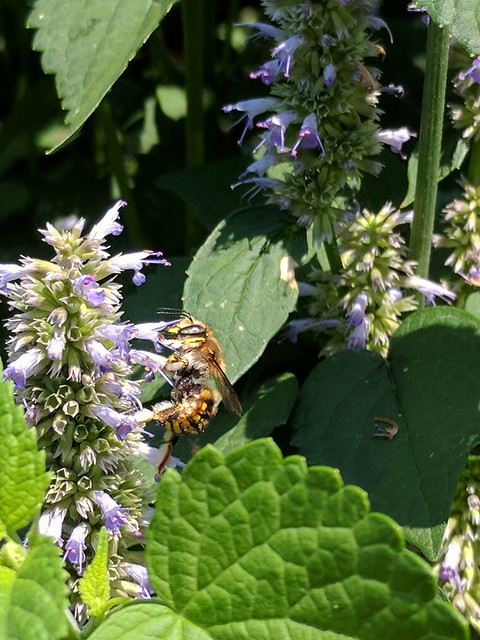
Bee (likely female Anthidium manicatum) on anise hyssop

Two significant articles came out in Science in June providing evidence for how neonicotinoids (a type of pesticide used for crop protection) are harming bees in field trials (there is some nuance, but the findings are concerning); I'm including reviews of those plus a few other  articles on the topic of pesticides and bees. Read to the end for an article of cattle intensification in Brazil, and a plea for scientists to write journal articles as if they wanted human beings to actually read and understand them.


BEE HEALTH / NEONICOTINOIDS / PESTICIDES:
If you don't want to read the two new studies, here are three stories about them (the one in the Guardian has more quotes from Syngenta pushing back on the findings, the Greenpeace one has a response to that critique from one of the lead authors). As background, it may help to know that in addition to honeybees (which most people are familiar with, they live in large hives) there are bumblebees (which live in much smaller colonies), and solitary wild bees (like the one shown in the photo above, taken in my garden). So when we talk about impacts of neonicotinoids or other pesticides (fungicides, other insecticides) on bees they are sometimes split by impacts on the colony (whether the colony dies out or not), lethal impacts on individual bees, and sublethal impacts (see below for details). So the science here is much broader than just colony collapse disorder in honeybees, which makes the results a bit more complex. For this summary I'm focusing only on bees as there is less science on impacts on other pollinators like butterflies and flies.
http://www.latimes.com/science/sciencenow/la-sci-sn-bees-pesticides-neonicotinoids-20170629-htmlstory.html
https://amp.theguardian.com/environment/2017/jun/29/pesticides-damage-survival-of-bee-colonies-landmark-study-shows
https://energydesk.greenpeace.org/2017/07/17/syngenta-bayer-ceh-study-neonicotinoids/

Tsvetkov et al. 2017 has three significant findings. The first is that some (not all) apiaries >3km from fields planted with neonicotinoid-treated seed still show neonicotinoids; the pollen analysis indicates that the contaminated pollen is coming from wildflowers (meaning that the neonicotinoids are being taken up by untreated plants relatively far from where the pesticide is applied). The second is that the lethality of neonicotinoids (clothianidin and thiamethoxam in this case) is significantly higher in the presence of a common fungicide called boscalid; boscalid on its own didn't harm bees but it made two neonicotinoids roughly twice as toxic when both pesticides were present in the same field. Third, they demonstrated several specific negative impacts on bees (mortality, "queenlessness," and declines in hygenic behavior) of exposure in the field to neonicotinoids at realistic doses. What makes this study different from earlier work showing harm is that rather than being lab-based they studied actual realistic doses and duration of exposure in the field. The best response to this research is tricky; simply banning neonicotinoids could potentially cause a shift to other pesticides that have been less studied (and may or may not be less toxic), and additional crop losses could potentially drive up food prices and lead to more habitat conversion. So more analysis on the trade-offs is needed, but this also appears to be the strongest evidence yet that in the real world neonicotinoids are harming bees (along with several other factors increasing their susceptibility).

Woodcock et al. 2017 has a lot more replication and their findings are less clear; they looked at 33 sites in the UK, Germany, and Hungary (all oilseed rape aka canola) that had seeds either untreated, treated with clothianidin, or treated with thiamethoxam (in addition to being treated with fungicides, other pesticides, and fertilizer as normal). They were looking for one of several potential impacts on honeybees, bumblebees, and solitary bees. Figure 2 shows how noisy the data is (a * indicates a significant effect); the two neonicotinoids often had a different effect across several metrics, and even stranger while they found negative effects of neonicotinoids in Hungary and the UK on honeybees, they also found positive effects in Germany (plus thiamethoxam had a positive effect on storage cells in the UK despite the negative impact of clothianidin there). They also found that reproductive impacts on wild bees were not well correlated with seed treatment, there was some correlation with total nest neonicotinoid residues (some of which appear to have come from earlier applications that remained in the landscape, indicating that impacts may persist for several years even if neonicotinoid use is halted). While there are some differences across the countries that could help to explain the difference in impacts, it's unclear to me why they would have seen positive impacts on honeybees in Germany, and makes me wonder what other variables may have been present that the researchers may not have accounted for. While this study doesn't present evidence as strong as the Tsvetkov paper, it also doesn't show that neonicotinoids are harmless, which makes me want to see more studies like this with lots of replicates but that are more tightly controlled. The lead author pushed back hard against the response from Bayer and Syngenta that this paper doesn't provide strong evidence of negative impacts: https://energydesk.greenpeace.org/2017/07/17/syngenta-bayer-ceh-study-neonicotinoids/

Rundlöf et al. 2015 is another important study of how neonicotinoids affect bees under real field conditions (as distinct from bees artificially fed neonicotinoids). They found impacts on wild bees (reduced density, total elimination of solitary bee nesting, and reduced bumblebee colony growth and reproduction) but did NOT see impacts on honeybees (unlike Tsvetkov). The authors note that some other research has found that honeybees do better than bumblebees with detoxifying after neonicotinoid exposure, and they also found bumblebees collected a higher percentage of pollen from the crop. Specifically this study looked at the neonicotinoid clothianidin in combination with the pyrethroid (insecticide) b-cyfluthrin and the fungicide thiram, based on common practice in Sweden.

Traynor et al. 2016 is another real-world study that looked at exposure to pesticides (measured by sampling bees, beeswax, and pollen) and how that related to colony survival and queen replacement. This is a complicated one so be warned. They found residues of 93 pesticides, and they provide detailed breakdowns of how common each one was, and how toxic it was to bees at the level detected (estimated via "hazard quotient" or HQ which is a model of lethality). Unsurprisingly, they found that when different pesticides that have the same  method of action (e.g. lumping organophosphates together as they work the same way) occured in the same sample they had a stronger effect. In addition to hazard quotient, they considered total number of pesticides each colony was exposed to, and the number of "relevant" pesticides (the ones at high enough levels they are expected to have a significant effect on bee mortality), and several different ways to measure impacts (it's a rich data set) but primarily having to do with lethality and queen replacement (they don't have the suite of sublethal effects the studies above report on). Anyway, the findings are complicated but they found a strong relationship between the total number of "relevant" pesticides and colony mortality within a month, overall number of pesticides exposed to over the study period was related to colony survival, and HQ was related to queen replacement. The strange thing is that this is a very simplistic model (as the authors acknowledge) but the findings could indicate that there are synergies between pesticides that are currently not well understood. Note that they did NOT find significant concentrations of neonicotinoids in the colony, which on the one hand means they couldn't evaluate the impact on colony health, but on the other hand simply finding low doses in hives is arguably good news. They DID find significant risk from two groups of fungicides (including chlorothalonil) and an insecticide group generally considered "bee-safe" (ecdysone receptor agonists). My take away from this study is that there are likely a ton of confounding effects and syngergies in these real-world studies, and that similar to the finding of Tsvetkov with boscalid and neonicotinoids together being much more toxic than separately, there are likely other combinations we're not aware of. This emphasizes the need for both lab studies to evaluate single chemicals in a controlled environment, but also more real-world studies which get at actual risk but will tend to have a lot more variation.

Simon-Delso et al. 2014 is a Belgian study similar to Traynor, comparing healthy honeybee colonies to colonies with a variety of disorders (e.g. dying out, queen loss, etc.) and looking for possible drivers or associated factors. They found that the virus load was not different between healthy and disordered colonies, and they did not see a relationship between disorders and the total number of insecticides or the total pesticide load (µg/kg). However, they did find a strong relationship between the number of fungicides present and disorders: they built a model estimating that ~26% of colonies without any fungicide would have disorders, vs. ~88% of colonies with 4 different fungicides. They also found that higher cropland area near the apiary increased the chance of disorders, while higher grassland area decreased it. Boscalid, cyprodinil, iprodione, and pyrimethanil were the most commonly detected fungicides; some of these are known to have synergistic effects with some insecticides, and/or to have metabolites which are significantly more toxic than the original formulation.

There's one more really interesting aspect to this research I couldn't resist including, as it provides a provocative twist. There has been a lot of debate and attention to the role of disesase in honeybee colony disorders, in paritcular viruses introduced via Varroa mites (as well as unrelated pathogens like Nosema ceranae). Sánchez-Bayo et al. 2016 is a review summarizing evidence that insecticides (neonicotinoids and fipronil) actually suppress the immune system of bees, so it's not as simple as asking whether the problem is insecticides or disease given the potential synergy. They reinforce the challenges in studying the impacts of a single stressor like neonicotinoids given relationships between Varroa mites, viruses, fungicides, insecticides, and other stressors. This is a well-written and engaging article, and if you're interested in bee diseases it'll be worth your time. If you're short on time skip to Figure 1 (a flow chart of how different stressors are related).


AGRICULTURE (RANCHING):
Merry & Soares-Filho is a study on cattle intensification in the Amazon and caused quite a splash. The authors argue (based on data from the US and Brazil, plus some conjecture about what is likely to occur in Brazil) that intensifying cattle production does not lead to conservation outcomes, BUT that conservation measures (removing land from production, better enforcement of laws, and eliminating subsidies and incentives that encourage expanding pasture) will actually lead to cattle intensification. They also note that aside from land use, intensification in the US has raised additional environmental and animal welfare concerns, and that to some degree significantly reducing beef consumption may be the most sure way to reduce beef impacts. Note that this study only shows data up to 2013, and in the last two years deforestation has substantially increased again in Brazil. As additional context, the CFA project that TNC is working on views deforestation-free corporate committments as the key driving conservation strategy, with support for intensification partly as a way to get buy-in from the cattle sector (who would oppose an approach limited to constraining production) and also to reduce leakage to other places with less regulated supply chains. So while we agree that intensification on its own wouldn't make sense, many TNC staff do see intensification as part of a successful strategy to address deforestation. You can read a story about the study here: https://news.mongabay.com/2017/06/is-intensification-of-beef-production-really-a-solution-to-amazonian-deforestation/


SCIENCE COMMUNICATIONS:
Doubleday and Connell 2017 argue that if scientists put more effort into writing well (not just accurately, but clearly and in a way that captivates readers) it would save us all time in reading these articles, and facilitate better understanding and collaboration. It's not a new point, but they make it well, and I especially like how they provide an alternative version of their abstract written in "The Official Style." They also do a good job talking scientists down from the immediate reaction that writing well means stooping to sensationalism, and provide good examples of the middle path. When I read articles like this, I am inspired, but I definitely will need help in actually overhauling my science papers prior to submission into something that would read well for a broad audience (but will not trigger peer reviewers to dismiss the paper as fluff). I imagine many of the non-scientists reading these summaries would be thrilled if the studies listed were easier to digest!


REFERENCES:
Doubleday, Z. A., & Connell, S. D. (2017). Publishing with Objective Charisma : Breaking Science’s Paradox. Trends in Ecology & Evolution. https://doi.org/10.1016/j.tree.2017.06.011

Merry, F., & Soares-filho, B. (2017). Will intensification of beef production deliver conservation outcomes in the Brazilian Amazon? Elementa: Science of the Anthropocene, 5(24).

Rundlöf, M., Andersson, G. K. S., Bommarco, R., Fries, I., Hederström, V., Herbertsson, L., … Smith, H. G. (2015). Seed coating with a neonicotinoid insecticide negatively affects wild bees. Nature, 521(7550), 77–80. https://doi.org/10.1038/nature14420

Sánchez-Bayo, F., Goulson, D., Pennacchio, F., Nazzi, F., Goka, K., & Desneux, N. (2016). Are bee diseases linked to pesticides? - A brief review. Environment International, 89–90(January), 7–11. https://doi.org/10.1016/j.envint.2016.01.0091

Simon-Delso, N., Martin, G. S., Bruneau, E., Minsart, L. A., Mouret, C., & Hautier, L. (2014). Honeybee colony disorder in crop areas: The role of pesticides and viruses. PLoS ONE, 9(7), 1–16. https://doi.org/10.1371/journal.pone.0103073

Traynor, K. S., Pettis, J. S., Tarpy, D. R., Mullin, C. A., Frazier, J. L., Frazier, M., & Vanengelsdorp, D. (2016). Inhive Pesticide Exposome: Assessing risks to migratory honey bees from inhive pesticide contamination in the Eastern United States. Nature Scientific Reports, 6(33207), 1–16. https://doi.org/10.1038/srep33207

Tsvetkov, N., Sood, K., Patel, H. S., Malena, D. A., Gajiwala, P. H., Maciukiewicz, P., … Zayed, A. (2017). Chronic exposure to neonicotinoids reduces honey bee health near corn crops. Science, 356(6345), 1395–1397.

Woodcock, B. A., Bullock, J. M., Shore, R. F., Heard, M. S., Pereira, M. G., Redhead, J., … Pywell, R. F. (2017). Country-specific effects of neonicotinoid pesticides on honey bees and wild bees. Science, 356(6345), 1393–1395.

Saturday, July 1, 2017

July journal article summary

This month I focused mostly on studies about the value of information, and if you're short on time I'd start with McGowan et al 2016 and Runge et al 2011.

If you're super excited about the book "data not dogma" (previewed a few months ago, it includes chapters from several TNC authors including myself), you can now pre-order it. It should be published in mid-October: https://global.oup.com/academic/product/effective-conservation-science-9780198808985?facet_narrowbybinding_facet=Paperback&lang=en&cc=se
The chapters I've read so far are very interesting, so hopefully it's worth checking out.

VALUE OF INFORMATION (VOI):
I have a paper coming out soon that examines the value of using high resolution (1m) vs coarser resolution (30m) spatial data in a water funds context, asking the question of whether or not it's worth buying the high-res imagery and spending a lot more time to analyze it, or if the coarse free data would lead you to make the same decision (stay tuned for details). It turns out there is a whole field around this called Value of Information (or VOI) - thanks to Timm Kroeger and especially Hugh Possingham for getting me started on this, as it is a theme in much of my research. For this month's review I've started getting up to speed on existing literature around this. I'm going to be doing a lot of thinking about VOI in the near to mid future so let me know if you'd like to discuss further.

McGowan and Possingham 2016 is a short commentary article on the topic of value of information (VOI), specifically looking at how movement ecology (related to wildlife tracking) can inform decision making. They emphasize the importance of translating broad goals (e.g. reversing the decline in salmon stocks) into quantitative objectives (e.g. boost salmon population to X by time Y, or intermediate objectives like removing river barriers so Z% of salmon enters upstream spawning habitat), and they provide a flow chart to help decide when to collect additional data vs. making a decision with the data you have (although a similar flow chart in the following article is more clear).

McGowan et al 2016 explores the idea of the article above more fully. The abstract actually sums up the paper quite nicely; it centers around asking two questions about animal telemetry data (although the concept applies much more broadly): 1) would (or could) I take a different action if I had more data, and 2) is the expected gain of making the different decision worth the cost ($ and time) to collect more data? She provides a continuum for how data is expected to be used from more abstract to highly concrete: pure research, engaging the public, raising awareness, tactical research, active adaptive management, and state-dependent management (e.g. quota-setting for harvestable species).

Runge et al 2011 shows a real-world example of applying VOI to whooping crane conservation (figuring out why it wasn't working), and I think it will really help conservationists to see how incorporating VOI can actually be useful (it's a good read), and not too technical. Essentially, there was a lot they didn't know, and many options for taking action. They evaluated many hypotheses for why whooping crane nests were failing (based on expert input), along with accompanying management actions to address each. The cool thing is that they found optimal strategies for each hypothesis, but also an optimal strategy if we had no additional information (suboptimal under any hypothesis, but useful across all of them). They also looked at the potential value of investigating each of the hypotheses and were able to determine which hypotheses were the most important to resolve, and what data would be most useful to resolve it.

Maxwell et al 2015 is an example of why considering the value of information is important. They looked at how to best manage a hypothetical declining koala population using a theoretical modeling framework that examined which management actions would be ideal depending on how much data you had (what was known and what was uncertain). They found that the optimal management decisions were fairly fixed (based on how cost efficient those options were), and that the value of collecting data on things like koala survival and fecundity (as well as how habitat cover affects mortality threats) was fairly low since it wouldn't lead you to make a different decision. The point is not that additional information is generally not useful, but rather that if more information won't lead you to make a different decision in support of your specific objectives, it's likely not worth spending much time and money on it.

If you have the patience to work through the equations and concepts in the two case studies, Canessa et al 2015 does a really nice job of explaining VOI in a quantitative way. Essentialy using expected probabilities for a range of variables (e.g. whether or not a disease is actually present at a given site, the chance of false positives or negatives of a test for the disease, etc.) and the expected outcomes of different scenarios, you can calculate how much value collecting data is likely to have in terms of your objective. Fig 1 makes the point that with more uncertainty the VOI is higher, and as our sampling density increases the VOI also increases. However, as the authors note, they do not include the issue of cost. There is the cost of collecting the actual information you need to support the decision, the time cost of actually running a formal VOI analysis, and potentially the cost of providing input data into the VOI analysis (e.g., if you don't even have credible guesses). Nonetheless, this is a great paper for understanding the key concept, and they provide spreadsheets for the two case studies.


GENERAL:
There is an increasing trend of greater transparency in science, and for the most part that's a very good thing. With more requirements to share data in public repositories we get better peer review, make it easier for researchers to build on each other's work, and improve the credibility of science. But a new essay (Lindenmayer & Scheele, 2017) makes a point near to TNC's heart: by sharing information on rare and endangered species (especially online) scientists are making it easier for poachers to find those species. TNC and NatureServe have dealt with this issue for a long time; our ecoregional portfolio sites (aka conservation areas) that were based primarily on rare species are typically buffered and sometimes only shared with other conservation organizations (removed from the public version of our data). This essay argues that in addition to facilitating poaching, it's upsetting landowners (who may be angry at scientists if trespassers start looking for rare species), and that even well-intentioned tourists can cause habitat damage in their search. Accordingly we should always be thinking about potential benefits vs harms in publishing this kind of data.

AGRICULTURE:
Roy et al 2009 is a good overview of life cycle assessments (LCAs), specifically in an ag context. They explain what they are (essentially a cradle to grave assessment of all of the inputs and outputs/impacts involved in producing a given product) & what the components of them are, give examples, list standards, etc.

REMOTE SENSING:
Mello et al 2013 uses a Bayesian network to estimate where current soybean production is most likely in Mato Grosso, Brazil. A Bayesian approach relies on expert input (and training data) to infer a variable of interest (in this case, soybean production) based on known context variables (e.g. distance to road, soil suitability, slope, etc.). Their accuracy ~90% was a lot higher than I'd expect; it's not clear to me whether the model is that good, or if the model is over-trained. Typically these kinds of models perform pretty well once you train them as long as drivers of the outcome variable don't shift much (e.g. if soy expands into smaller new fields in different areas, the model is much less likely to find them until it is updated). But it's a good overview of how Bayesian models work, and it looks like an approach worth replicating where we need crop maps that don't exist.

SOIL:
Minasny 2017 provides more detail on the "4 per mille" soil organic matter program (aiming to increase soil organic matter by 0.4% each year), including a suite of 20 case studies around the world showing what this target would look like in different places. They also provide a nice overview of different management strategies, key limitations, and compare what implementation would look like in different contexts.

REFERENCES:
Canessa, S., Guillera-Arroita, G., Lahoz-Monfort, J. J., Southwell, D. M., Armstrong, D. P., Chadès, I., … Converse, S. J. (2015). When do we need more data? A primer on calculating the value of information for applied ecologists. Methods in Ecology and Evolution, 6(10), 1219–1228. https://doi.org/10.1111/2041-210X.12423

Lindenmayer, B. D., & Scheele, B. (2017). Do not publish. Science, 356(6340), 800–801. https://doi.org/10.1126/science.aan1362

Maxwell, S. L., Rhodes, J. R., Runge, M. C., Possingham, H. P., Ng, C. F., & Mcdonald-Madden, E. (2015). How much is new information worth? Evaluating the financial benefit of resolving management uncertainty. Journal of Applied Ecology, 52(1), 12–20. https://doi.org/10.1111/1365-2664.12373

McGowan, J., & Possingham, H. P. (2016). Commentary: Linking Movement Ecology with Wildlife Management and Conservation. Frontiers in Ecology and Evolution, 4(March), 1–3. https://doi.org/10.3389/fevo.2016.00030

McGowan, J., Beger, M., Lewison, R. L., Harcourt, R., Campbell, H., Priest, M., … Possingham, H. P. (2016). Integrating research using animal-borne telemetry with the needs of conservation management. Journal of Applied Ecology, 54(2), 423–429. https://doi.org/10.1111/1365-2664.12755

Mello, M. P., Risso, J., Atzberger, C., Aplin, P., Pebesma, E., Vieira, C. A. O., & Rudorff, B. F. T. (2013). Bayesian networks for raster data (BayNeRD): Plausible reasoning from observations. Remote Sensing, 5(11), 5999–6025. https://doi.org/10.3390/rs5115999

Minasny, B., Malone, B. P., McBratney, A. B., Angers, D. A., Arrouays, D., Chambers, A., … Winowiecki, L. (2017). Soil carbon 4 per mille. Geoderma, 292, 59–86. https://doi.org/10.1016/j.geoderma.2017.01.002

Roy, P., Nei, D., Orikasa, T., Xu, Q., Okadome, H., Nakamura, N., & Shiina, T. (2009). A review of life cycle assessment (LCA) on some food products. Journal of Food Engineering, 90(1), 1–10. https://doi.org/10.1016/j.jfoodeng.2008.06.016

Runge, M. C., Converse, S. J., & Lyons, J. E. (2011). Which uncertainty? Using expert elicitation and expected value of information to design an adaptive program. Biological Conservation, 144(4), 1214–1223. https://doi.org/10.1016/j.biocon.2010.12.020

Thursday, June 1, 2017

June journal article summary

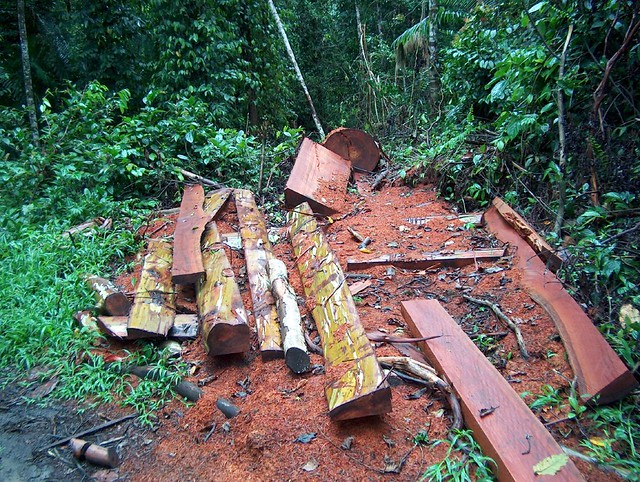
logging

I did a lot more writing than reading last month so this review is a more reasonable length than the last one. I don't want to always highlight one paper in these but if you have time for only one, read Bastin both because of the significance of having more accurate dryland forest maps, but also because it's short and the methods are interesting (the photo above of logging in Indonesia is more appropriate for the Gaveau paper).

Also, this isn't an article, but if you publish in science journals, please take a moment to check out https://scirev.sc/ and consider submitting reviews for the journals you have published in. The site is intended to show both how long the review and publication process takes at different journals, as well as how well the process went. Currently I have one paper about to be published in IJRS which was fast and provided extremely insightful and helpful review, and a few others where the process has been slow and unhelpful. This site can help us figure out which journals to target so we waste less time with bad editorial process. Please spread the word!


FOREST COVER / DEFORESTATION:
Bastin et al 2017 is a really cool new paper mapping global dryland forests. Think of it as an update to the Hansen global forest paper, but focusing on drylands (aridity index<0.65) and incorporating very high resolution imagery (<1m in 82% of the 214k plots, using >10m in only 7%) and ground photos to improve accuracy (although the higher resolution data necessitated measuring sample plots rather than directly processing all imagert) . They found 40-47% more dryland forest than previously reported, adding 9% to estimates of global forest cover (and potentially 2-20% to global carbon stocks). This is a good example of how in some cases higher resolution data can tell a different story, although there are several accompanying challenges as well to consider. The data is public and will be useful for other research, as will the methodology (be sure to check out the supplement if you're into remote sensing, especially figures S1 and S2 which visually explain the approach).

Ahrends et al 2017 also used remote sensing to look at forests, but they focused on tree planting in China. They found that from 2000-2010, China gained almost half a million square km of forest using the FAO's definition, but that is generally sparse low plantations, and denser forests have grown <10% of that figure. China's investment in reforestation (while a good thing) is focusing in areas marginal for forest growth (e.g. mountain slopes which are steep, high, dry, and cold) which means they are unlikely to lead to what most people think of as "forest." A key caveat is that one of the study's criteria for forest (height over 5m) makes sense for established stands, but it seems to me that it is misleading to argue that trees planted in the last ten years not growing past 5m necessarily represents failure of those efforts. However, the points about afforestation being concentrated on unsuitable lands is important, as is the prevalence of single species plantations. This really highlights the importance of good definitions, good measurements, and careful interpretation of the measurements. You can read a blog about this one at https://eurekalert.org/pub_releases/2017-05/wac-nla050217.php

Gaveau et al 2016 looks at deforestation and expansion of plantations in Borneo between 1973 and 2015, in order to detemine how much plantations were replacing already degraded forest or driving new deforestation. They found that most new plantations were established within 5 years of deforestation, especially in Malaysia (indicating that they are likely the cause, although attribution isn't certain). While Indonesia's deforestation over the last 40 years appears to have been much less driven by plantations, since 2005 it has sharply increased and is the leading cause of rapid net forest conversion. It's an interesting read, and if you plan to use their data be sure to check out the caveats section.


AGRICULTURE AND WATER QUALITY:
My latest paper (Ayana et al. 2017, the first author Essayas was a NatureNet fellow) describes a method we used to map drainage ditches and furrows on farms in Kenya using high-resolution satellite imagery, and has a rough analysis showing that these features could be reducing sediment export in the study area by about 80%. The technical aspect which is the core of the paper will not be of interest to many people reading this. But the key point is that it's important to have this information to build a reasonable water quality model of the area, and this method makes acquiring that information possible (it would be too expensive to map via field work alone). Feel free to share this one, you can download it from http://www.tandfonline.com/eprint/rE79XqPNAqIawt7ndwQq/full and if I use up my 50 free eprints I'll put a copy on my personal web site.

Vollmer-Sanders et al 2016 is a TNC-led article about efforts to get farmers in the Western Lake Erie Basin to get voluntarily certified in the 4Rs (to reduce nutrient pollution). They were able to reach 35% of farmland in the Basin within two years, and this paper describes how the certification program was developed by a broad group of stakeholders. They don't yet have outcome measures on water quality, crop yield, etc. but should have data by July 2019, by which point they hope to have continued to get more farms on board.

Tomer and Locke 2011 is a synthesis from CEAP (Conservation Effects Assessment Project) about the efficacy of various ag practices in improving water quality. Similar to other studies, they found improving water quality in large watershed very challenging both to achieve and to measure. They identified a few key barriers to success: 1) conservation practices were insufficiently targeted, 2) stream sediment was predominantly from channel & bank erosion rather than soil erosion from fields, 3) timing lags and legacy issues can mask improvements for several years, and 4) focusing on single contaminants prevented optimizing across them (e.g. focusing on P rather than P / N / sediment).


SOCIAL SCIENCE:
Amel et al 2017 is a review of the need for applying research in psychology about how to shift human behavior in order to meet conservation goals (something Sheila Reddy at TNC has been focusing on for some time). They argue that most people feel disconnected from nature and since they don't see short-term threats to them from environmental degradation they are unmotivated to act (they call these and other causes "dragons of inaction"). There's a good brief review of how to design interventions to overcome these barriers to action. Since moving beyond individual action to public advocacy is more challenging they focus on the need to foster collective action and  to instill an ecologically grounded worldview in leaders. They conclude with the need to improve the ability of city dwellers to connect with nature. Folks interested in this topic may also be interested in a recent paper Sheila wrote on how to pick the right approach for a given context: http://onlinelibrary.wiley.com/doi/10.1111/conl.12252/full

It's not a journal article, but "The Undoing Project" by Michael Lewis is both a highly entertaining read, as well as a great way to get up to speed in learning about some of the ways our minds systematically make errors due to biases we are generally unaware of. It's told through stories about Daniel Kahneman and Amos Tversky, so while the author does get into the science it's in a very accessible way. As you read, you will likely be shocked and annoyed to see that you are not immune to these biases and errors, but the reason the book is so fascinating is that they are fairly universal even among statisticians. This research changed science and medicine in significant ways, and I think virtually anyone would find it interesting for one reason or another.

REFERENCES:
Ahrends, A., Hollingsworth, P. M., Beckschäfer, P., Chen, H., Zomer, R. J., Zhang, L., … Xu, J. (2017). China’s fight to halt tree cover loss. Proceedings of the Royal Society of London B: Biological Sciences, 284(1854), 1–10. Retrieved from http://rspb.royalsocietypublishing.org/content/284/1854/20162559

Amel, E., Manning, C., Scott, B., & Koger, S. (2017). Beyond the roots of human inaction: Fostering collective effort toward ecosystem conservation. Science, 356(6335), 275–279. https://doi.org/10.1126/science.aal1931

Ayana, E. K., Fisher, J. R. B., Hamel, P., & Boucher, T. M. (2017). Identification of ditches and furrows using remote sensing: application to sediment modelling in the Tana watershed, Kenya. International Journal of Remote Sensing, 38(16), 4611–4630. https://doi.org/10.1080/01431161.2017.1327125

Bastin, J.-F., Berrahmouni, N., Grainger, A., Maniatis, D., Mollicone, D., Moore, R., … Castro, R. (2017). The extent of forest in dryland biomes. Science, 356(6338), 635–638. https://doi.org/10.1126/science.aam6527

Gaveau, D. L. A., Sheil, D., Husnayaen, Salim, M. A., Arjasakusuma, S., Ancrenaz, M., … Meijaard, E. (2016). Rapid conversions and avoided deforestation: examining four decades of industrial plantation expansion in Borneo. Scientific Reports, 6(October 2015), 32017. https://doi.org/10.1038/srep32017

Lewis, M. (2017). The undoing project. A Friendship that changed our Minds” New York: WW Norton & Company.

Tomer, M. D., & Locke, M. A. (2011). The challenge of documenting water quality benefits of conservation practices: A review of USDA-ARS’s conservation effects assessment project watershed studies. Water Science and Technology, 64(1), 300–310. https://doi.org/10.2166/wst.2011.555

Vollmer-Sanders, C., Allman, A., Busdeker, D., Moody, L. B., & Stanley, W. G. (2016). Building partnerships to scale up conservation : 4R Nutrient Stewardship Certification Program in the Lake Erie watershed. Journal of Great Lakes Research, 42(6), 1395–1402. https://doi.org/10.1016/j.jglr.2016.09.004

Thursday, May 25, 2017

New paper: using high resolution satellites to map agricultural practices in Kenya


My latest paper (Ayana et al. 2017) describes a method we used to map drainage ditches and furrows (a few examples shown above) on farms in Kenya (specifically the Sasumua region of the Upper Tana, Northwest of Nairobi) using high-resolution satellite imagery, and has a rough analysis showing that these features could be reducing sediment export in the study area by about 80%. The technical aspect which is the core of the paper will not be of interest to many people reading this. But the key point is that it's important to have this information to build a reasonable water quality model of the area, and this method makes acquiring that information possible (it would be too expensive to map via field work alone). You can download it from http://fish.freeshell.org/publications/Ayana2017-IdentificationOfDitchesAndFurrows-AcceptedManuscript.pdf.

Friday, May 19, 2017

Talk and interview at the DC March for Science

At the DC March for Science I was fortunate enough to give the first talk of the day (on Danny Karp's research on wildlife habitat and food safety), and to talk with The Weather Channel about The Nature Conservancy's work on soil.

Here's the interview from The Weather Channel:


And here's a video of my talk (the lighting wasn't great, apologies for that); note that if you go to http://salad.sciencejon.com you can download my slides and copy / paste text to ask companies to discourage their growers from clearing habitat:

Tips on lowering your carbon footprint

I was recently interviewed by budgetdumpster.com for some tips about how to lower your carbon footprint. There are a couple of things in the article that aren't quite right, but overall it's a good collection of things you can do to reduce your impact on climate change. The article is called:
11 Quick and Relatively Painless Ways to Lower Your Carbon Footprint

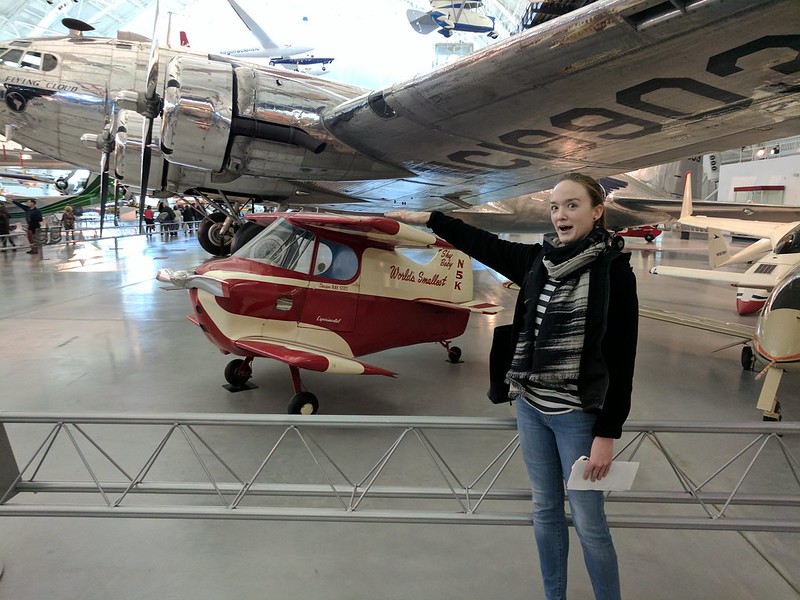
Hint: one of them is not to simply switch to smaller and more adorable planes:
Udvar-Hazy center