Showing posts with label wildlife migration. Show all posts

Monday, June 2, 2025

June 2025 science summary

Mushroom in West Virginia

Hi,

It occurred to me that since I focused on fire in April and water in May, I should continue with the elemental theme and cover terrestrial papers this month. Doing air/wind in July is unlikely :) It's still a bit of a mix with papers on global threats, forest degradation, protected areas, and wildlife migration.

If you know someone who wants to sign up to receive these summaries, they can do so at http://bit.ly/sciencejon (no need to email me).

GLOBAL THREATS:
Oakleaf et al. 2024 is a long-awaited global analysis of likelihood of short-term (by 2030) habitat conversion (1 km resolution, see Fig 5 for the results). They include not only cropland and city expansion, but also land use change for energy (fossil or renewable) and mining, and considered several suitability factors (like slope and land cover). Their approach assumes recent trends (2000-2015) will continue rather than modeling different scenarios of economic development. Like any global data you can find places where it seems wrong, but it's a great resource nonetheless. You can grab the data at https://figshare.com/articles/dataset/Conversion_Pressure_Index/25340668 or view the data in a web map at https://tnc-ps-web.s3.amazonaws.com/GDRA/CPI/index.html There's also a blog about the paper at https://blog.nature.org/science-brief/mapping-global-land-conversion-to-support-conservation-planning/


FOREST DEGRADATION:
Bourgoin et al. 2024 is a global analysis of degradation of tropical moist forests using LiDAR satellite data (from GEDI) along with Landsat optical imagery. It's worth reading the whole paper, but a few key findings: 1) degradation is hard to sense but a) a good predictor of deforestation in addition to b) being inherently meaningful. 2) Forest height is reduced by selective logging (15%) and fire (50%) and recovery is low after 20 years. 3) Expansion of ag and roads leads to a 20-30% drop in canopy height and biomass at the edge, with effects up to 1.5km in from the edge. Fig 1 has maps of global results - it's a bit confusing but the x-axis of the charts is height in meters, so lower numbers mean more degradation or younger forests. There's an article about this one at https://phys.org/news/2024-07-reveals-human-degradation-tropical-forests.html#google_vignette


EFFICACY OF PROTECTED AREAS:
Huais et al. 2025 looked at the impact of protected areas (PAs) in the Chaco (across Bolivia, Argentina, and Paraguay) in slowing deforestation both within their boundaries and nearby. The bad news: only 34% of PAs actually reduced deforestation within the area, and 9% of PAs actually saw MORE deforestation than expected (with the other 58% seeing no impact). Most of the effective area was in Bolivia (see Fig 3a), although Bolivia also had a lot of PAs they couldn't analyze due to a lack of suitable control / counterfactual areas. In good news, only 4% of PAs saw leakage (deforestation shifting from within a PA to a nearby area - they didn't consider long-distance leakage), and better yet 21% of PAs seemed to decrease deforestation in nearby areas. In other words ~2/3 of the PAs that actually slowed deforestation within their borders ALSO had a broader positive impact (Fig 3b), likely by a) discouraging infrastructure and access to the nearby areas, b) the presence of some Indigenous territories near PAs, and c) buffer areas around each PA.


WILDLIFE MIGRATION:
Aikens et al. 2025 has a nice summary up front already! They found that during a very bad snowstorm (see Fig 1), pronghorn died more when they couldn't get away from deep snow fast enough (Fig 2D). Roads and fences blocking their way meant they were exposed to snow longer (and thus at higher risk). 1/2 of monitored pronghorn (they had GPS collars) died from the storm, and they moved up to 400 km to try and get away! Pronghorn tend to crawl under fences so when snow is deep they may be unable to cross them at all (Fig 3D has a photo).

Haworth et al. 2025 (non-peer-reviewed) looked at a handful of roadways with different kinds of medians (e.g. vegetated, just paint, cable, concrete, or metal guardrail) to compare how medians affected wildlife crossings for different species (see Table 3 on p22). They assert that some species were impacted by median types, and that in general constructed medians lead to fewer animals entering the roadway at all (so less permeability may also reduce collision risk). But when you get into the results it’s less convincing – the pairwise comparisons don’t have any clear trends (except a weak tendency of fewer collisions from harder barriers). Figure 4 also has some weird findings for mule deer (painted stripe saw the most collisions, cable and gravel the lowest, but oddly concrete and metal beam are closer to the painted stripe) and then Figure 5 for coyote shows that painted stripe had the least collisions! My take-away is that either 1) it’s easy for small studies to show effects due to uncontrolled variables, especially for wildlife movement which can vary a lot and/or 2) the relationship is complicated and there’s not a simple policy answer (like X median will best reduce risk of WVC while also allowing wildlife movement).


REFERENCES:
Aikens, E. O., Merkle, J. A., Xu, W., & Sawyer, H. (2025). Pronghorn movements and mortality during extreme weather highlight the critical importance of connectivity. Current Biology, 35(8), 1927-1934.e2. https://doi.org/10.1016/j.cub.2025.03.010

Bourgoin, C., Ceccherini, G., Girardello, M., Vancutsem, C., Avitabile, V., Beck, P. S. A., Beuchle, R., Blanc, L., Duveiller, G., Migliavacca, M., Vieilledent, G., Cescatti, A., & Achard, F. (2024). Human degradation of tropical moist forests is greater than previously estimated. Nature, 631(8021), 570–576. https://doi.org/10.1038/s41586-024-07629-0

Haworth, L., Hodgson, B., Hecht, L., See, M., Henderson, A., Lemieux, S., Morris, L., Waetjen, D., Shilling, F., Haworth, L., Hodgson, B., Hecht, L., See, M., Henderson, A., Lemieux, S., Morris, L., Waetjen, D., & Shilling, F. (2025). Wildlife Connectivity and Which Median Barrier Designs Provide the Most Effective Permeability for Wildlife Crossings. https://doi.org/10.7922/G2BV7DZ6

Huais, P. Y., Kuemmerle, T., Nori, J., Tomba, A. N., Cordier, J. M., & Baumann, M. (2025). Only one-third of protected areas in the Chaco effectively curb woodland loss, but their impact extends beyond their boundaries. Biological Conservation, 308(March), 111196. https://doi.org/10.1016/j.biocon.2025.111196

Oakleaf, J., Kennedy, C., Wolff, N. H., Terasaki Hart, D. E., Ellis, P., Theobald, D. M., Fariss, B., Burkart, K., & Kiesecker, J. (2024). Mapping global land conversion pressure to support conservation planning. Scientific Data, 11(1), 830. https://doi.org/10.1038/s41597-024-03639-9

Sincerely,
 
Jon
 
p.s. this is a lovely mushroom I saw in West Virginia

Thursday, January 2, 2025

Best of 2024 science summaries

Sarah and Jon before Christmas caroling

Happy New Year,


How better to celebrate the new year than with old science?!

As usual, here are my favorite 15 reruns (article summaries) from 2024, plus a few of my favorite bits about AI since I keep getting requests for more of that:

Upset at the articles I missed? Please email me your own favorites from 2024 and I'll do what I can to include them in upcoming summaries.

As always people can sign up to receive these summaries at http://bit.ly/sciencejon (no need to email me). On with the reruns!


CLIMATE CHANGE
OK, for years people have been hyping the potential of a kind of seaweed (Asparagopsis) to reduce methane emissions in cattle. But the in vitro evidence was mixed - with potential toxicity and downsides a concern if the dose wasn't just right. George et al 2024 is a live trial with good news! They found methane emissions from cattle given an Asparagopsis additive were cut roughly in half compared to control, with 6.6% higher weight gain per unit of feed and no substantial impacts on quality or health (fat color maybe a bit better, tenderness maybe a bit worse). The methane reduction peaked at day 21 and declined afterwards, but since most cattle are in feedlots only ~3 months (ranging from 1.5-4) the decline after day 100 is pretty moot. That's a lot of potential! The only potential downsides were ~50% higher bromine residues in kidney and muscle (I couldn't quickly find guidance on safe levels). Caveats: 1) there were no conflicts declared but the authors appear to almost all work as feedlot consultants and it's single rather than double-blinded, 2) in the US the feedlot phase is only about 15% of the lifecycle emissions of a cow (and of that, some is from growing crops and nitrous oxide) so TOTAL impact on CO2e / kg beef is not as dramatic. Overall my take is 1) this should absolutely be tested and replicated more - anything that reduces the very high carbon of beef is worth pursuing. BUT 2) if this is marketed as "green beef" or license to avoid reductions, it could be net harmful for the climate. and 3) IF spraying this solution on grass worked similarly and didn't inhibit development of calves, the impact could be much higher (since ~80%ish of a cow's life is grazing prior to feedlot, and methane emissions are higher on grass than feed). So let's test that too (note: there’s a new study claiming a ~1/3 reduction in methane during grazing via seaweed supplements that I haven’t reviewed yet). There's a blog about this at https://www.theguardian.com/australia-news/article/2024/aug/18/feeding-seaweed-supplement-to-cattle-halved-methane-emissions-in-australian-feedlot-study-finds

Trencher et al, 2024 is an analysis of the quality of carbon credits on the voluntary market. They focus on the 20 companies retiring the most credits between 2020-2023 (134 million metric tons CO2e), which is 20% of all global retirements on the three registries (see Fig 1 for company list). They found 87% of credits have a high risk of not providing real additional reductions (6% were low risk, most of the rest was medium), and 97% of credits focused on avoiding emissions rather than removal. Note that they classified all REDD+ (reducing deforestation and/or degradation) as high risk given that they have often 1) overestimated additionality, 2) not stopped deforestation, and/or 3) displaced deforestation elsewhere (aka 'leakage'). They also classify large-scale renewable energy as high-risk, since the price of credits is not typically the decisive factor in those projects (they are often built w/ or w/o credits) and they are often build in countries w strong government support for renewable energy. They also found that companies strongly prefer the cheapest credits (which creates demand for lower-quality offsets) often from older projects, although some companies have paid a lot more for REDD projects. The authors call for more regulation of the voluntary market, and for companies not using voluntary credits to support claims of offsetting emissions.

 
CONSERVATION IMPACT:
Langhammer et al. 2024 is the big splashy new Science paper looking at the global impact of conservation. It's a meta-analysis of trials comparing interventions to counterfactuals (similar areas w/o action). They found conservation helps 2/3 of the time (45% of trials led to absolute improvement in biodiversity, 21% reduced biodiversity loss), but is harmful 1/3 of the time (in 21% of trials biodiversity declined more due to conservation, in 12% it improved less due to conservation), and only 2% of trials showed no difference). That's not a great track record - I'd hoped net harm would be rare (1/3 is very high!), and just over half the time we're losing biodiversity despite trying to stop it. Fig 2 helpfully shows how impact varies by type of intervention: protected areas show the smallest positive effect on average, and invasive species removal shows the largest positive effect. I'd ignore "sustainable use of species" b/c it's a weirdly broad category that somehow only included 4 papers on wildlife hunting and 1 on fishing, although a few fishing papers are included under protected areas (details in the supplement - this makes me think their sample is not representative of conservation broadly). While the authors conclude conservation is working and we should do more of it, I bet if this was a paper on medical efficacy we'd consider interventions that are 2/3 helpful and 1/3 harmful an urgent cry to improve efficacy BEFORE we try to scale work that is so often ineffective or harmful. Would you send your kids to a school where 1/3 of students learned less than kids not in school at all?


EVIDENCE ASSESSMENTS / SCIENTIFIC REPRODUCIBILITY:
Scientists often complain policy makers don't follow our recommendations (or even read them). But Brisco et al. 2023 finds that recommendations from meta-analyses tend to change over time as research continues. They looked at 79 papers (121 meta-analyses) and found that over time 93% of analyses either had a big change in effect size (+- 50% or more, see Fig 2 for examples) or change in statistical significance (see Fig 3). The key results are in Fig 5, which I find pretty confusing. Results staying consistently statistically significant w/ each study is rare, and ~25% of analyses showed a reversal in effect (from positive to negative or vice versa). Those reversals are the change we care the most about since it means action can backfire. BUT if you ignore the studies that were never statistically significant (seems safe) it's only 12% of analyses that flip, and if you also ignore the ones that lost significance (meaning the reversal is less meaningful) it goes down to 11%. That's still pretty bad though - 1 time out of 9 the scientific recommendation might lead to the opposite outcome we intend. They recommend scientists use cumulative meta-analyses to look for trends, and the reminder that we're often wrong reinforces the need for adaptive management and an empirical approach to seeing what works in a given context.
 
 
FIRE:
Pivello et al. 2021 is a good comprehensive overview of wildfire across Brazil. It's long and dense so hard to summarize! Natural fires are most common at the beginning of the wet season when lightning ignites accumulated dry vegetation. Fig 1 has an overview of fire by biome: the Amazon followed by Cerrado have the most fires; the Pantanal and Cerrado typically have the highest % burned (they are both fire-dependent, as is the Pampas, see Fig 2), and in 2020 the Pantanal had roughly triple the % burned and fire density as others. Pollen evidence (from a different study, Power et al. 2016) indicates fire activity in the Pantanal peaked about 12,000 years ago (people have only lived there for about 8,000 years, and grazed cattle for ~250). Introducing cattle has caused a shift from burning every 3-6 years (mostly in the beginning or sometimes end of the wet season) to burning every year or two during a relatively dry part of the wet season (see Fig 6). Conversely, fire suppression in the Cerrado has also driven woody encroachment of savannas. In the Amazon and Atlantic Forest, natural fire is rare and very infrequent, making fire especially harmful as species are not adapted to it. The combination of deforestation and drought make it much easier for fire to spread (and Amazonian deforestation means more drought in the Pantanal). 1/3 of the forest in the Amazon from 2003-2019 were associated w/ deforestation. Indigenous people mostly used fires in small areas, but since European colonization it's used at larger scales to clear land permanently (or alternately suppressed, see Fig 7 for a nice timeline of fire landmarks). Integrated fire management (IFM) is uncommon (except a few federal protected areas, mostly in the Cerrado). Only Minas Gerais and Roraima states have IFM laws. The authors recommend: 1) fire management policy should include climate mitigation and poverty reduction to reduce fire risk; 2) better fire monitoring and management systems; 3) filling knowledge gaps around drivers of fire, how fire impacts wetlands, human dimensions of fire, impacts of different fire regimes on grazing productivity and carbon; 4) better enforcement of illegal fire use (including more resources); 5) including local communities in developing fire management plans, and 6) national and state level fire policies with adequate resources for implementation (including data collection and sharing, and clear and simple rules about fire use).
 
Balch et al. 2024 found that over the last 20 years fires in the US have been spreading faster. In the Western US over 20 years the average peak daily growth rate (the average of the fastest each fire grew on a given day) increased 2.5 times (in California they increased by 4 times). The fastest 3% of fires nationally (spreading more than 1,620 ha in a day) destroyed between 78-89% of the buildings lost to fire (the paper lists each number in different section for the same stat). I’ve heard a lot more about severity and frequency and extent of fire, but thinking about speed is also important as faster fires are harder to respond do, and may make really smooth coordination increasingly important. Increases in drought conditions and potential increases in high winds could make this worse over time. 


FRESHWATER:
Flitcroft et al. 2023 notes that counting effective freshwater protection globally is really hard (as is getting effective protection to happen). Fig 1 has a nice summary of how restrictive different protection mechanisms are. They also call for both better management of existing protected areas (PAs) to include freshwater conservation needs, and protections for freshwater in new places. While issues around data resolution and data availability continue to pose challenges to freshwater conservation, they argue that more explicit consideration of both freshwater and terrestrial objectives in any area-based protection is a good start.
 
Jasechko et al. 2024 is a global assessment of groundwater levels since 2000 (using 170,000 wells and 1,700 aquifers) and comparing them to earlier trends for ~1/3 of those aquifers. They found 36% of aquifers were drying up (water level dropping deeper by 0.1 m / yr or more), and 6% of aquifers were improving (water level rising 0.1 m / yr or more), w/ 58% of aquifers not changing quickly in this century. 30% of the aquifers where they had 40 years of data declined faster in the 21st century than the 20 years prior (see Fig 3), but in 49% of those aquifers declines slowed or reversed. Unsurprisingly the trend is worst in drylands w/ farmland, and groundwater deepening is globally correlated w/ low precipitation, high evapotranspiration, and extent of agriculture. See Fig 1 and 2 for global map of trends, highlighting hotspots of decline in CA, the US high plains, Iran, India, central Chile, and a few others. There's a news article about the study at https://www.cnn.com/2024/01/24/climate/groundwater-global-study-scn/index.html

Wang et al. 2024 looks at how climate change has changed the seasonality of river flow (how much it varies month to month, including frequency of droughts and floods). They found that ~14% of long-term river gauges show changes in seasonality over the last 50 years that isn't driven by changing annual precipitation. The surprise is that seasonality is mostly DECREASING counter to the narrative of more floods and droughts (see Fig 1 for a map of results, and Fig 2 which adds detail). In their figures brown means less seasonality (more even flow): "L+" means low flows become higher flows (NOT higher frequency of drought) while "H-" means floods see lower flood volume (again NOT lower frequency of flood events). You'll see most of North America, most of Europe, and some of Russia have seen reduced seasonality in recent decades. Blue means MORE seasonality, focused in: SE Brazil, some European countries, and in the US the SE and some of the Rocky Mountains. The explanation is worth reading in full, but in brief: 1) snow melting earlier means less runoff from snow at the same time as spring rains, 2) early spring greening means more water gets transpired, 3) it's more complicated in places not dominated by snowmelt.
 

HORIZON SCANNING / EMERGING ISSUES:
I realized I've only rarely reviewed Bill Sutherland's annual "horizon scan" article listing 15 emerging conservation issues that potentially deserve to be better-known. Last year (I just read the 2024 version a year late) they used artificial intelligence to generate some of the ideas but none made the cut. Here's the final list so you can decide if any are worth looking up (and here’s the brand new 2025 paper if you want to catch up):
1. New sources of hydrogen for energy (mining or electrolysis instead of natural gas),
2. Decarbonized ammonia (making fertilizer w/ lower carbon emissions but could increase fertilizer wasted),
3. Feeding people and/or animals w/ cultivated bacteria,
4. Light-free artificial photosynthesis (yes, it's as weird as it sounds) for indoor ag,
5. Enhanced rock weathering at scale (putting rock dust on croplands to sequester carbon),
6. Potential global declines in earthworm populations (more data is needed to see if UK decline is representative),
7. Ecoacoustics to monitor soil ecology (testing how meaningful soil sounds are for estimating things like biodiversity and water flow),
8. Wildfire affecting El Niño and La Niña phase (aerosols leading to the La Niña phase),
9. Benchtop DNA printers (potential to eventually allow guerilla genetic engineering),
10. Better predicting chemical toxicity from early data,
11. a skyscraper city planned in Saudi Arabia that birds could crash into when migrating from Europe to Africa.,
12. Sea urchin die-offs (possibly from disease) leading to algal overgrowth on corals and other marine ecosystems,
13. Ocean-based carbon removal (from the air or dissolved in water to stable forms),
14. Warming "twilight zones" (200-1000m below sea surface) affecting global nutrient and carbon cycles, and
15. Melting Antarctic ice changing deep sea currents.


MAMMALS:
Greenspoon et. al 2023 is an attempt to estimate the biomass of all wild mammals on earth (combined), arriving at 60 Mt total: 20 Mt (million metric tons) on land (half from "even-hoofed" mammals, see FIg 2), and 40 Mt in oceans (23 Mt of which comes from baleen whales). But the kicker is that they estimate human biomass at 390 Mt, and livestock biomass at 630 Mt (420 Mt from cattle: which is more than all humans plus all wild land mammals). Fig 4 awkwardly tries to compare all mammal biomass on earth, showing how wild species have been squeezed. The wild mammal estimates mostly come from the IUCN red list which skews towards expert assessments of more threatened spp., and the numbers won't be "right" for several reasons (these estimates are hard, and the data are highly limiting). But it seems solid that humans and livestock substantially outweigh wild mammals.
There's a good critique of the paper (arguing that Greenspoon et al. underestimate biomass by a factor of 5.5) by Santini et al. here https://www.pnas.org/doi/10.1073/pnas.2308958121 and a reply from the Greenspoon authors pointing out why the methods used in the critique are also (differently) flawed: https://www.pnas.org/doi/10.1073/pnas.2316314121
 

MIGRATORY SPECIES / WILDLIFE CONNECTIVITY:
The new State of the World's Migratory Species report (UNEP-WCMC 2024) has an update on how the 1,189 migratory species in CMS are doing. Almost half (44%) are in decline (with 22% at risk of extinction, including 97% of listed fish spp), 1/3 are stable, and the rest are split between improving and unknown. The report also notes that 399 spp not even listed in CMS (including ~200 fish spp, ~150 bird spp, and ) are at risk (from critically endangered to near threatened). See Fig 2.10b for an overview of which migratory species CMS leaves out (including horseshoe crabs!) and 2.10c for the subset at risk. Unsurprisingly the main threats are habitat loss (along w/ degradation and fragmentation) and overexploitation (hunting and fishing). Recommendations on page ix-xi are familiar and unsurprising (albeit important). There's a blog about this paper with key highlights at: https://www.unep.org/news-and-stories/press-release/landmark-un-report-worlds-migratory-species-animals-are-decline-and
 
Littlefield et al. 2024 (I'm a minor author) examines how wildlife road crossings can be beneficial to help species adapt to climate change. We recommend that when siting crossings we should consider a) current wildlife movements, AND expected short-term and long-term shifts in species range and migrations due to b) climate change AND c) human land use change (expansion of housing, ag, etc.). We show how doing this was accomplished for elk in Colorado.
For this to work well, diversion fencing is important to channel wildlife to crossings, and avoiding future fragmentation is key. The paper is open access. There's a press release for the paper here: https://fish.freeshell.org/publications/Littlefield2024-PressRelease.pdf


POLLINATORS:
Li et al. 2024 is a methods paper about using land cover data to predict floral resource availability for pollinators. I'm an author despite minimal input; the lead author based this on work by the last author, who I provided some guidance to when he was a postdoc. There are a few potentially interesting things in here. 1) Most pollinators don't make much honey, so their populations are limited by the time of year w/ the least food available (pollen and nectar). The methods here help you figure out those bottlenecks if you want to target habitat restoration to boost pollinator populations. 2) Plants vary a lot in how much nectar and pollen they make. Not every crop makes flowers that feed pollinators (likely obvious, but some crops and cover crops are harvested or terminated before flowering, and wind-pollinated plants don't have nectar). Trees produce a ton of nectar and pollen. 3) The paper looked at two different ways to map land cover, and surprisingly the simpler approach worked as well (similar error levels)! It's a good reminder to always question whether you need more complexity and accuracy. If you just have a garden and want more bees and other pollinators, this blog post I wrote may help: https://sciencejon.blogspot.com/2024/05/new-paper-on-mapping-pollinator.html
 

WETLANDS:
The latest report on the status of wetlands in the US (excluding AK and HI) is a bummer but has some useful info. Key summaries are in Fig 9 and Table 2, but in short on net 221,000 acres of wetlands were converted, mostly to ag and tree plantations followed by housing developments. But that net change hides that fact that we actually lost 670,000 acres of vegetated wetlands, with non-vegetated wetlands like ponds, sandbars, and mudflats increasing (but NOT providing nearly as much ecological value). The report calls for more coordination to achieve no net loss of wetlands, to update and improve the National Wetlands Inventory, develop and implement better wetland conservation and management (duh), and commit to long-term monitoring and adaptive management.


REFERENCES:

Balch, J. K., Iglesias, V., Mahood, A. L., Cook, M. C., Amaral, C., DeCastro, A., Leyk, S., McIntosh, T. L., Nagy, R. C., St. Denis, L., Tuff, T., Verleye, E., Williams, A. P., & Kolden, C. A. (2024). The fastest-growing and most destructive fires in the US (2001 to 2020). Science, 386(6720), 425–431. https://doi.org/10.1126/science.adk5737
 
Brisco, E., Kulinskaya, E., & Koricheva, J. (2023). Assessment of temporal instability in the applied ecology and conservation evidence base. Research Synthesis Methods, November, 1–15. https://doi.org/10.1002/jrsm.1691
 
Flitcroft, R. L., Abell, R., Harrison, I., Arismendi, I., & Penaluna, B. E. (2023). Making global targets local for freshwater protection. Nature Sustainability. https://doi.org/10.1038/s41893-023-01193-7
 
George, M. M., Platts, S. V., Berry, B. A., Miller, M. F., Carlock, A. M., Horton, T. M., & George, M. H. (2024). Effect of SeaFeed, a canola oil infused with Asparagopsis armata , on methane emissions, animal health, performance, and carcass characteristics of Angus feedlot cattle. Translational Animal Science, 8(August). https://doi.org/10.1093/tas/txae116
 
Greenspoon, L., Krieger, E., Sender, R., Rosenberg, Y., Bar-On, Y. M., Moran, U., Antman, T., Meiri, S., Roll, U., Noor, E., & Milo, R. (2023). The global biomass of wild mammals. Proceedings of the National Academy of Sciences, 120(10), 2017. https://doi.org/10.1073/pnas.2204892120

REPLY AND COUNTER-REPLY TO GREENSPOON:

  • Santini, L., Berzaghi, F., & Benítez-López, A. (2024). Total population reports are ill-suited for global biomass estimation of wild animals. Proceedings of the National Academy of Sciences, 121(4), 1–3. https://doi.org/10.1073/pnas.2308958121   
  • Greenspoon, L., Rosenberg, Y., Meiri, S., Roll, U., Noor, E., & Milo, R. (2024). Reply to Santini et al.: Total population reports are necessary for global biomass estimation of wild mammals. Proceedings of the National Academy of Sciences of the United States of America, 121(4), 1–2. https://doi.org/10.1073/pnas.2316314121

Jasechko, S., Seybold, H., Perrone, D., Fan, Y., Shamsudduha, M., Taylor, R. G., Fallatah, O., & Kirchner, J. W. (2024). Rapid groundwater decline and some cases of recovery in aquifers globally. Nature, 625(7996), 715–721. https://doi.org/10.1038/s41586-023-06879-8
 
Lang, M. W., Ingebritsen, J. C., & Griffin, R. K. (2024). Status and Trends of Wetlands in the Conterminous United States 2009 to 2019. U.S. Department of the Interior; Fish and Wildlife Service, Washington, D.C. 43 pp. https://www.fws.gov/project/2019-wetlands-status-and-trends-report

Langhammer, P. F., Bull, J. W., Bicknell, J. E., Oakley, J. L., Brown, M. H., Bruford, M. W., Butchart, S. H. M., Carr, J. A., Church, D., Cooney, R., Cutajar, S., Foden, W., Foster, M. N., Gascon, C., Geldmann, J., Genovesi, P., Hoffmann, M., Howard-McCombe, J., Lewis, T., … Brooks, T. M. (2024). The positive impact of conservation action. Science, 384(6694), 453–458. https://doi.org/10.1126/science.adj6598

Li, K., Fisher, J., Power, A., & Iverson, A. (2024). A map of pollinator floral resource habitats in the agricultural landscape of Central New York. One Ecosystem, 9. https://doi.org/10.3897/oneeco.9.e118634
 
Littlefield, C. E., Suraci, J. P., Kintsch, J., Callahan, R., Cramer, P., Cross, M. S., Dickson, B. G., Duncan, L. A., Fisher, J. R., Freeman, P. T., Seidler, R., Wearn, A., Andrews, K. M., Brocki, M., Dodd, N., Gagnon, J., Johnson, A., Krosby, M., Skroch, M., & Sutherland, R. (2024). Evaluating and elevating the role of wildlife road crossings in climate adaptation. Frontiers in Ecology and the Environment, 1–10. https://doi.org/10.1002/fee.2816
 
Pivello, V. R., Vieira, I., Christianini, A. V., Ribeiro, D. B., da Silva Menezes, L., Berlinck, C. N., Melo, F. P. L., Marengo, J. A., Tornquist, C. G., Tomas, W. M., & Overbeck, G. E. (2021). Understanding Brazil’s catastrophic fires: Causes, consequences and policy needed to prevent future tragedies. Perspectives in Ecology and Conservation, 19(3), 233–255. https://doi.org/10.1016/j.pecon.2021.06.005
 
Sutherland, W. J., Bennett, C., Brotherton, P. N. M., Butchart, S. H. M., Butterworth, H. M., Clarke, S. J., Esmail, N., Fleishman, E., Gaston, K. J., Herbert-Read, J. E., Hughes, A. C., James, J., Kaartokallio, H., Le Roux, X., Lickorish, F. A., Newport, S., Palardy, J. E., Pearce-Higgins, J. W., Peck, L. S., … Thornton, A. (2024). A horizon scan of global biological conservation issues for 2024. Trends in Ecology & Evolution, 39(1), 89–100. https://doi.org/10.1016/j.tree.2023.11.001
 
Trencher, G., Nick, S., Carlson, J., & Johnson, M. (2024). Demand for low-quality offsets by major companies undermines climate integrity of the voluntary carbon market. Nature Communications, 15(1), 6863. https://doi.org/10.1038/s41467-024-51151-w
 
UNEP-WCMC, 2024. State of the World’s Migratory Species. UNEP-WCMC, Cambridge, United Kingdom.
https://www.cms.int/en/publication/state-worlds-migratory-species-report
 
Wang, H., Liu, J., Klaar, M., Chen, A., Gudmundsson, L., & Holden, J. (2024). Anthropogenic climate change has influenced global river flow seasonality. Science, 383(6686), 1009–1014. https://doi.org/10.1126/science.adi9501


Sincerely,
 
Jon
 
p.s. I inherited that Christmas sweater from my dad, and typically only pull it out once a year for a Christmas sing-along

Monday, December 2, 2024

December 2024 science summary

Buddy's house without roof or back

Congratulations,

If you're reading this you made it to December! I've got four unrelated reviews this month; the first is a new paper about wildlife road crossings to promote climate adaptation (I'm a minor author).

Also - this is a great piece on how to get better at using AI: https://www.oneusefulthing.org/p/getting-started-with-ai-good-enough The short version is: don't treat AI like a search engine! Give it more context and instructions and let it figure out precisely what you want through iteration. The author says it probably takes ~10 hrs of experimentation to get good enough at using AI for it to be working well.

If you know someone who wants to sign up to receive these summaries, they can do so at http://bit.ly/sciencejon (no need to email me).


WILDLIFE CONNECTIVITY & CLIMATE ADAPTATION:
Littlefield et al. 2024 (I'm a minor author) examines how wildlife road crossings can be beneficial to help species adapt to climate change. We recommend that when siting crossings we should consider a) current wildlife movements, AND expected short-term and long-term shifts in species range and migrations due to b) climate change AND c) human land use change (expansion of housing, ag, etc.). We show how doing this was accomplished for elk in Colorado.
For this to work well, diversion fencing is important to channel wildlife to crossings, and avoiding future fragmentation is key. The paper is open access. There's a press release for the paper here: https://fish.freeshell.org/publications/Littlefield2024-PressRelease.pdf


HORIZON SCANNING / EMERGING ISSUES:
I realized I've only rarely reviewed Bill Sutherland's annual "horizon scan" article listing 15 emerging conservation issues that potentially deserve to be better-known.This year they used artificial intelligence to generate some of the ideas but none made the cut. Here's the final list so you can decide if any are worth looking up:
1. New sources of hydrogen for energy (mining or electrolysis instead of natural gas),
2. Decarbonized ammonia (making fertilizer w/ lower carbon emissions but could increase fertilizer wasted),
3. Feeding people and/or animals w/ cultivated bacteria,
4. Light-free artificial photosynthesis (yes, it's as weird as it sounds) for indoor ag,
5. Enhanced rock weathering at scale (putting rock dust on croplands to sequester carbon),
6. Potential global declines in earthworm populations (more data is needed to see if UK decline is representative),
7. Ecoacoustics to monitor soil ecology (testing how meaningful soil sounds are for estimating things like biodiversity and water flow),
8. Wildfire affecting El Niño and La Niña phase (aerosols leading to the La Niña phase),
9. Benchtop DNA printers (potential to eventually allow guerilla genetic engineering),
10. Better predicting chemical toxicity from early data,
11. a skyscraper city planned in Saudi Arabia that birds could crash into when migrating from Europe to Africa.,
12. Sea urchin die-offs (possibly from disease) leading to algal overgrowth on corals and other marine ecosystems,
13. Ocean-based carbon removal (from the air or dissolved in water to stable forms),
14. Warming "twilight zones" (200-1000m below sea surface) affecting global nutrient and carbon cycles, and
15. Melting Antarctic ice changing deep sea currents.


RIVERS:
Brinkerhoff et al. 2024 (summarized by Harvey & Kampf 2024) asks how much rivers in the continental US originate from ephemeral streams (which rely on rain to flow, as they are always disconnected from groundwater, see Fig 1). The answer is 55% by total streamflow and 59% by total stream length- which may seem surprisingly high at first (and they have a few reasons it's likely an underestimate)! But it makes sense; streams have to start SOMEwhere, and that's either rain or groundwater or a mix. If it's rain those source headwater streams would dry out faster than bigger downstream reaches. Smaller streams and the West are more reliant on ephemeral streams (where they are dry more often), and the Great Lakes region and Florida are the least dependent on ephemeral flow. The paper notes that since they found the majority of river water comes from ephemeral streams, excluding those streams from the Clean Water Act (due to the Sackett ruling) makes it much harder to regulate water quality overall.


FIRE:
Balch et al. 2024 found that over the last 20 years fires in the US have been spreading faster. In the Western US over 20 years the average peak daily growth rate (the average of the fastest each fire grew on a given day) increased 2.5 times (in California they increased by 4 times). The fastest 3% of fires nationally (spreading more than 1,620 ha in a day) destroyed between 78-89% of the buildings lost to fire (the paper lists each number in different section for the same stat). I’ve heard a lot more about severity and frequency and extent of fire, but thinking about speed is also important as faster fires are harder to respond do, and may make really smooth coordination increasingly important. Increases in drought conditions and potential increases in high winds could make this worse over time. 


REFERENCES:
Balch, J. K., Iglesias, V., Mahood, A. L., Cook, M. C., Amaral, C., DeCastro, A., Leyk, S., McIntosh, T. L., Nagy, R. C., St. Denis, L., Tuff, T., Verleye, E., Williams, A. P., & Kolden, C. A. (2024). The fastest-growing and most destructive fires in the US (2001 to 2020). Science, 386(6720), 425–431. https://doi.org/10.1126/science.adk5737

Brinkerhoff, C. B., Gleason, C. J., Kotchen, M. J., Kysar, D. A., & Raymond, P. A. (2024). Ephemeral stream water contributions to United States drainage networks. Science, 384(6703), 1476–1482. https://doi.org/10.1126/science.adg9430

Harvey, J. W., & Kampf, S. K. (2024). The transitory origins of rivers. Science, 384(6703), 1402–1403. https://doi.org/10.1126/science.adq1714

Littlefield, C. E., Suraci, J. P., Kintsch, J., Callahan, R., Cramer, P., Cross, M. S., Dickson, B. G., Duncan, L. A., Fisher, J. R., Freeman, P. T., Seidler, R., Wearn, A., Andrews, K. M., Brocki, M., Dodd, N., Gagnon, J., Johnson, A., Krosby, M., Skroch, M., & Sutherland, R. (2024). Evaluating and elevating the role of wildlife road crossings in climate adaptation. Frontiers in Ecology and the Environment, 1–10. https://doi.org/10.1002/fee.2816

Sutherland, W. J., Bennett, C., Brotherton, P. N. M., Butchart, S. H. M., Butterworth, H. M., Clarke, S. J., Esmail, N., Fleishman, E., Gaston, K. J., Herbert-Read, J. E., Hughes, A. C., James, J., Kaartokallio, H., Le Roux, X., Lickorish, F. A., Newport, S., Palardy, J. E., Pearce-Higgins, J. W., Peck, L. S., … Thornton, A. (2024). A horizon scan of global biological conservation issues for 2024. Trends in Ecology & Evolution, 39(1), 89–100. https://doi.org/10.1016/j.tree.2023.11.001


Sincerely,
 
Jon
 
p.s. The photo is of my neighbor Buddy's old house; the new owners are adding more levels to it but so far have just removed the roof and back and people who walk by are always surprised to see it.

Wednesday, May 1, 2024

May 2024 science summary

Blackwater River trail

Ahoy,

This month I have a mixed bag of four unrelated articles: the efficacy of conservation globally, the state of wetlands in the US, the state of the world's migratory species, and one on how biodiversity relates to productivity in forests.

If you know someone who wants to sign up to receive these summaries, they can do so at http://bit.ly/sciencejon (no need to email me).

CONSERVATION IMPACT:
Langhammer et al. 2024 is the big splashy new Science paper looking at the impact of conservation. It's a meta-analysis of trials comparing interventions to counterfactuals (similar areas w/o action). They found conservation helps 2/3 of the time (45% of trials led to absolute improvement in biodiversity, 21% reduced biodiversity loss), but is harmful 1/3 of the time (in 21% of trials biodiversity declined more due to conservation, in 12% it improved less due to conservation), and only 2% of trials showed no difference). That's not a great track record - I'd hoped net harm would be rare (1/3 is very high!), and just over half the time we're losing biodiversity despite trying to stop it. Fig 2 helpfully shows how impact varies by type of intervention: protected areas show the smallest positive effect on average, and invasive species removal shows the largest positive effect. I'd ignore "sustainable use of species" b/c it's a weirdly broad category that somehow only included 4 papers on wildlife hunting and 1 on fishing, although a few fishing papers are included under protected areas (details in the supplement - this makes me think their sample is not representative of conservation broadly). While the authors conclude conservation is working and we should do more of it, I bet if this was a paper on medical efficacy we'd consider interventions that are 2/3 helpful and 1/3 harmful an urgent cry to improve efficacy BEFORE we try to scale work that is so often ineffective or harmful. Would you send your kids to a school where 1/3 of students learned less than kids not in school at all?


WETLANDS:
The latest report on the status of wetlands in the US (excluding AK and HI) is a bummer but has some useful info. Key summaries are in Fig 9 and Table 2, but in short on net 221,000 acres of wetlands were converted, mostly to ag and tree plantations followed by housing developments. But that net change hides that fact that we actually lost 670,000 acres of vegetated wetlands, with non-vegetated wetlands like ponds, sandbars, and mudflats increasing (but NOT providing nearly as much ecological value). The report calls for more coordination to achieve no net loss of wetlands, to update and improve the National Wetlands Inventory, develop and implement better wetland conservation and management (duh), and commit to long-term monitoring and adaptive management.


MIGRATORY SPECIES:
The new State of the World's Migratory Species report (UNEP-WCMC 2024) has an update on how the 1,189 migratory species in CMS are doing. Almost half (44%) are in decline (with 22% at risk of extinction, including 97% of listed fish spp), 1/3 are stable, and the rest are split between improving and unknown. The report also notes that 399 spp not even listed in CMS (including ~200 fish spp, ~150 bird spp, and ) are at risk (from critically endangered to near threatened). See Fig 2.10b for an overview of which migratory species CMS leaves out (including horseshoe crabs!) and 2.10c for the subset at risk. Unsurprisingly the main threats are habitat loss (along w/ degradation and fragmentation) and overexploitation (hunting and fishing). Recommendations on page ix-xi are familiar and unsurprising (albeit important). There's a blog about this paper with key highlights at: https://www.unep.org/news-and-stories/press-release/landmark-un-report-worlds-migratory-species-animals-are-decline-and


BIODIVERSITY:
At first I thought Liu et al. 2024 was saying that productivity (the rate at which biomass is created) is a great predictor of forest species richness / biodiversity. That's not right though! Look at Fig 2 - they're actually saying that to predict productivity there is a significant but weak positive correlation to tree species richness, which is about the same as the correlation w/ more compelx metrics (functional attribute diversity and phylogenetic diversity). But forest stands under 30 show lower productivity with higher richness, and wildlife richness is left out entirely. So this is less of a strong & clear relationship, and more of a "if you're going to compare the two you may as well use the simpler metric" result.

REFERENCES:

Lang, M. W., Ingebritsen, J. C., & Griffin, R. K. (2024). Status and Trends of Wetlands in the Conterminous United States 2009 to 2019. U.S. Department of the Interior; Fish and Wildlife Service, Washington, D.C. 43 pp. https://www.fws.gov/project/2019-wetlands-status-and-trends-report

Langhammer, P. F., Bull, J. W., Bicknell, J. E., Oakley, J. L., Brown, M. H., Bruford, M. W., Butchart, S. H. M., Carr, J. A., Church, D., Cooney, R., Cutajar, S., Foden, W., Foster, M. N., Gascon, C., Geldmann, J., Genovesi, P., Hoffmann, M., Howard-McCombe, J., Lewis, T., … Brooks, T. M. (2024). The positive impact of conservation action. Science, 384(6694), 453–458. https://doi.org/10.1126/science.adj6598

Liu, Y., Hogan, J. A., Lichstein, J. W., Guralnick, R. P., Soltis, D. E., Soltis, P. S., & Scheiner, S. M. (2024). Biodiversity and productivity in eastern US forests. Proceedings of the National Academy of Sciences, 121(14), 2017. https://doi.org/10.1073/pnas.2314231121

UNEP-WCMC, 2024. State of the World’s Migratory Species. UNEP-WCMC, Cambridge, United Kingdom.
https://www.cms.int/en/publication/state-worlds-migratory-species-report

Sincerely,
 
Jon

 
p.s. This photo is on the Blackwater River Trail in the Canaan Valley Resort State Park, where we were treated to some April snow on vacation!

Tuesday, August 1, 2023

August 2023 science summary

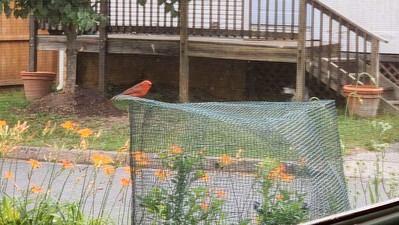
Cardinal on blueberry cage

Hi,


I'm behind on science reading again but still have three articles to share. Two are on wildlife migrations, and one is on bullshit (really)!

If you know someone who wants to sign up to receive these summaries, they can do so at http://bit.ly/sciencejon (no need to email me).

BULLSHIT:
Turpin et al 2021 finds that being able to produce satisfying and seemingly accurate bullshit ("communication characterised by an intent to be convincing or impressive without concern for truth") seems correlated with real intelligence (albeit using weak proxies of a 10-item vocabulary test, and ratings of how others perceived their intelligence from writing samples). See Fig 1 for how they rated how convincing bullshit was. Interestingly people who scored better on the vocab test were slightly less willing to bullshit, and people more willing to bullshit were less able to distinguish bullshit from meaningful info. So a TL;DR could be that smarter people are less susceptible to bullshit, less willing to bullshit, but also better at bullshitting convincingly. Hat tip to Patrick Beary for sending this. And in case you're thinking this is a one-off joke, another paper on bullshit I reviewed ("On the reception and detection of pseudo-profound bullshit") has 597 citations!

WILDLIFE MIGRATION:
Remember the 'lockdown' in the early days of COVID where people were asked to stay at home as much as possible, and traffic and even people walking around plummeted? Tucker et al. 2023 looks at how that impacted 43 species of mammals around the world. They found it varied a ton, but that in the short term (hour to hour) animals moved a bit less (presumably from less trying to avoid people). They found longer-term movement (10-day distance) only changed for coutnries with the strictest lockdowns like Italy and France, and Fig 3a makes it clear that while that change is significant it's dwarfed by the variation in effect. The findings on roads are not significant at the individual level and the effects they're reporting don't seem very compelling so I'm leaving those out. There's a Washington Post article about this paper here which includes some stories about some of the more adventurous animals: https://wapo.st/4660hHW

Young et al. 2023 monitored wildlife crossings along the Toowoomba Bypass in eastern Australia and found they were mostly used by non-native animals like feral cats, European redfoxes, and European hares (as well as dingoes). They also compared wildlife presence and density to adjacent bushland; only 61% of all the species they found were detected at crossings at all. The only difference they saw between viaducts, culverts, and underpasses was that swamp wallabies and hares both preferred the viaduct.

REFERENCES:

Tucker, M. A., Schipper, A. M., Adams, T. S. F., Attias, N., Avgar, T., Babic, N. L., Barker, K. J., Bastille-Rousseau, G., Behr, D. M., Belant, J. L., Beyer, D. E., Blaum, N., Blount, J. D., Bockmühl, D., Pires Boulhosa, R. L., Brown, M. B., Buuveibaatar, B., Cagnacci, F., Calabrese, J. M., … Mueller, T. (2023). Behavioral responses of terrestrial mammals to COVID-19 lockdowns. Science, 380(6649), 1059–1064. https://doi.org/10.1126/science.abo6499

Turpin, M. H., Kara-Yakoubian, M., Walker, A. C., Walker, H. E. K., Fugelsang, J. A., & Stolz, J. A. (2021). Bullshit Ability as an Honest Signal of Intelligence. Evolutionary Psychology, 19(2), 1–10. https://doi.org/10.1177/14747049211000317

Young, G., King, R., & Allen, B. L. (2023). Where do wildlife cross the road? Experimental evaluation reveals fauna preferences for multiple types of crossing structures. Global Ecology and Conservation, e02570. https://doi.org/10.1016/j.gecco.2023.e02570

Sincerely,
 
Jon
 
p.s. After the birds ate every single blueberry I grew last year, I built a cage this year w/ gaps big enough to let some pollinators in but keep birds out (until we harvested enough and let them have the last of them). They periodically would check for gaps, and twice robins managed to squeeze in and get stuck until I let them out. I'll improve the design next year.

Monday, May 1, 2023

May 2023 science summary

Nut Case by Katie Hudnall

Greetings,

Does spring feel like it came early or late? It's not just you! DC leafed out 3 weeks ahead of schedule.

This month is a bit of a grab bag: three papers on fishery management, one on assisted migration for wildlife, one on forests & fire, and one on the role of wildlife in climate mitigation that I found pretty misleading.

If you know someone who wants to sign up to receive these summaries, they can do so at http://bit.ly/sciencejon (no need to email me).

CLIMATE CHANGE & WILDLIFE:
Schmitz et al. 2023 makes a fair point but uses some egregious estimates to do so (please don't trust the estimated climate mitigation benefits). They argue that the role of animals in boosting carbon sequestration (and/or reducing soil carbon and methane emissions) in underappreciated, and they may be right. Fig 1 is a cool thought experiment looking at potential impacts of boosting animal populations in different case studies. BUT the estimate of a huge 6.41 additional Gt CO2e / yr that could be reduced via animals is based on some really weak assumptions. For example, 86% of that 6.41 Gt comes from marine fish (5.5 Gt / yr). But that 5.5 Gt comes from another report, and is actually an estimate of CURRENT fish carbon flux (not potential to increase additional sequestration via conservation) recognizing a ton of uncertainty. Their bison estimate (another 9% of the 6.41 Gt) assumes that bison start grazing ungrazed lands when in fact they'd be displacing cattle in most cases (and one of the papers they cite lists the C benefit of cattle and bison as about the same). The only other animal with a substantial contribution is grey wolves (4% of total), and it's based on a single study on net primary productivity in Michigan which ignores the albedo effect. So overall, this study starts with decent evidence but makes some really flawed assumptions about how to translate them into global climate mitigation potential.


WILDLIFE AND ASSISTED MIGRATION:

Fitzpatrick et al. 2023 looks at the potential for assisted migration (moving individual animals to different habitats, sometimes along w/ targeted captive breeding) as a form of 'genetic rescue' to restore gene flow across fragmented federally listed vertebrate populations in the US via assisted migration. They gave 222 spp a score from -1->4, with 2/3 of spp scoring 2 or higher (and thus may be candidates for assisted migration, see Fig 1b for results by type of animal, or Fig 2 for example candidate spp). Only 5% of spp. had a management plan mentioning "genetic rescue" (or the general concept), but 44% of candidate species had already used assisted migration (more frequent in fishes and mammals)). Note that italicized words are in a glossary at the end. Also note this paper does NOT include other connectivity strategies like habitat restoration, wildlife crossings, etc.


FORESTS & FIRE:
Prichard et al. 2021 is a review of several questions related to fire in US western forests (see Table 1 for the summary of questions & answers). They include whether and when/ how to use cutting trees and prescribed burns as tools for reducing wildfire risk and/or climate mitigation and/or ecological restoration. The authors argue that many dry forests (and some moist forests mixed into dry forest landscapes) historically experienced more frequent fires of low to moderate intensity (often set by Native Americans), but that these forests are now denser and more likely to have severe crown fires (especially as summers become warmer and drier). That in turn will cause some forests to be lost and shift to grasslands or other ecosystems. Read Table 1 for key takeaways, including that for many (not all) Western forests, thinning and prescribed burning are important tools. Side note: given the active debate on this topic, I asked for input from a few forest scientists deep in the lit, and they recommended this article.


FISHERY MANAGEMENT:
Cinner et al. 2019 is a 16 year study of rotational fishing / closure in Papua. They found success in compliance with the system (due to strong social cohesion driven by leaders sharing info, a "carrot and stick" approach, and lots of community participation) BUT even though closed areas rebounded, over the study period fish biomass dropped by about half. So even though the closure program worked as intended, it wasn't enough to offset overfishing when areas were open.

Cinner et al. 2012 is a study of 42 co-management arrangements for coral-dependent fisheries across 5 countries. Co-management led to more biomass than non-locally managed fished areas, and less than no-take closures (Fig 3). But see Fig 4 for key results (fish biomass was higher when markets were farther, and lower when more people replied on fishing for their primary income). They found just 54% of resource users saw co-management as improving their livelihoods (it seemed to benefit wealthier fishers w/ longer history of co-management and more agency).

Hughes et al. 2012 looks at how vulnerable different countries are to declining coral-dependent fisheries leading to reduced food security. Tables 2-4 have ratings of 27 countries vulnerability to declining fisheries impacting food security, as well as ratings of assets, flexibility, learning, and social organization. The most vulnerable countries are Indonesia, Liberia, Ivory Coast, and Kenya.


REFERENCES:
Cinner, J. E., McClanahan, T. R., MacNeil, M. A., Graham, N. A. J., Daw, T. M., Mukminin, A., Feary, D. A., Rabearisoa, A. L., Wamukota, A., Jiddawi, N., Campbell, S. J., Baird, A. H., Januchowski-Hartley, F. A., Hamed, S., Lahari, R., Morove, T., & Kuange, J. (2012). Comanagement of coral reef social-ecological systems. Proceedings of the National Academy of Sciences, 109(14), 5219–5222. https://doi.org/10.1073/pnas.1121215109

Cinner, J. E., Lau, J. D., Bauman, A. G., Feary, D. A., Januchowski-Hartley, F. A., Rojas, C. A., Barnes, M. L., Bergseth, B. J., Shum, E., Lahari, R., Ben, J., & Graham, N. A. J. (2019). Sixteen years of social and ecological dynamics reveal challenges and opportunities for adaptive management in sustaining the commons. Proceedings of the National Academy of Sciences, 116(52), 26474–26483. https://doi.org/10.1073/pnas.1914812116

Fitzpatrick, S. W., Mittan-Moreau, C., Miller, M., & Judson, J. M. (2023). Genetic rescue remains underused for aiding recovery of federally listed vertebrates in the United States. Journal of Heredity, March, 1–13. https://doi.org/10.1093/jhered/esad002

Hughes, S., Yau, A., Max, L., Petrovic, N., Davenport, F., Marshall, M., McClanahan, T. R., Allison, E. H., & Cinner, J. E. (2012). A framework to assess national level vulnerability from the perspective of food security: The case of coral reef fisheries. Environmental Science & Policy, 23, 95–108. https://doi.org/10.1016/j.envsci.2012.07.012

Prichard, S. J., Hessburg, P. F., Hagmann, R. K., Povak, N. A., Dobrowski, S. Z., Hurteau, M. D., Kane, V. R., Keane, R. E., Kobziar, L. N., Kolden, C. A., North, M., Parks, S. A., Safford, H. D., Stevens, J. T., Yocom, L. L., Churchill, D. J., Gray, R. W., Huffman, D. W., Lake, F. K., & Khatri‐Chhetri, P. (2021). Adapting western North American forests to climate change and wildfires: 10 common questions. Ecological Applications, 31(8). https://doi.org/10.1002/eap.2433

Schmitz, O. J., Sylvén, M., Atwood, T. B., Bakker, E. S., Berzaghi, F., Brodie, J. F., Cromsigt, J. P. G. M., Davies, A. B., Leroux, S. J., Schepers, F. J., Smith, F. A., Stark, S., Svenning, J.-C., Tilker, A., & Ylänne, H. (2023). Trophic rewilding can expand natural climate solutions. Nature Climate Change. https://doi.org/10.1038/s41558-023-01631-6

Sincerely,
 
Jon
 

p.p.s. The photo is of a piece at the Renwick gallery in DC. The caption says: 'A mature oak tree produces about two thousand acorns a year, but only one in ten thousand acorns reaches maturity. Hudnall explains, “I think the idea of constant, repeated, tiny attempts for success, with the understanding that most will go nowhere, became a way for me to think about slow progress toward health in my own life.” '

Tuesday, March 1, 2022

March 2022 science summary

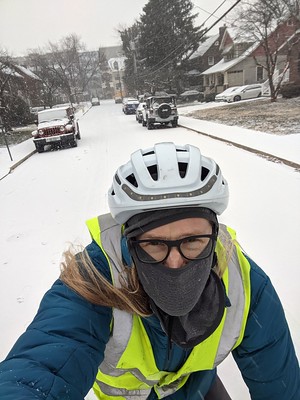
Winter biking


 Hello,


I've got a mix of papers this month but most relate to climate change (priorities for mitigation and adaptation, impacts on flooding, and how to plan for it) plus a couple of wildlife movement. 

If you know someone who wants to sign up to receive these summaries, they can do so at http://bit.ly/sciencejon (no need to email me).

CONSERVATION PRIORITIES / 30x30 / CLIMATE ADAPTATION:
Dreiss & Malcom 2022 is an analysis of priorities for protection under 30x30, considering hotspots of biodiversity and carbon, current protection (Fig 2), and threats. The two threats are risk of conversion (to non-habitat by 2050) and climate vulnerability (need for habitat / species to migrate elsewhere to survive, expressed in km/yr). They have two sets of hotspots, one with the top 10% of biodiversity (they calculated both imperiled species richness, and imperiled species range-size-rarity which captures how much habitat rare spp. have left), and one with the top 10% of carbon pools (not actual GHG mitigation potential, as it omits deep carbon like peat, other GHGs, and the albedo effect). Fig 3 has maps of their main results, but they're easier to see and explore in the interactive map at https://arcg.is/0SjGLK. Fig 4 highlights high conversion risk (>50%) and climate vulnerability for hotspots (top 10%) of biodiversity and carbon (4a = conversion & richness, 4b = conversion & carbon, 4c = climate vuln. & richness, 4d = climate vuln. & carbon). Upgrading all existing less strict protected areas (GAP 3) would achieve ~30% protection, but that would miss 80% of biodiversity hotspots (which are on private land). Similarly, 21% of unprotected biodiversity hotspots have at least a 50% chance of being converted by 2050. The authors didn't include political, social, or economic considerations, but there are still a lot of useful data in here.

Dreiss et al. 2022 identifies priority conservation locations within the contiguous US to support climate adaptation (via refugia and corridors). Fig 4c shows which climate refugia and corridors are unprotected (in gray) or underprotected (GAP 3 in orange). The bottom two rows in Table 3 shows that the best places for climate adaptation mostly don't overlap with the best places for biodiversity or carbon (~20-25% do). This means that focusing solely on biodiversity or carbon hotpsots is likely to miss critical refugia and corridors to help ensure resilience to climate change.


CLIMATE CHANGE IMPACTS:
Wing et al. 2022 modeled increasing US flooding risks due to both climate change (by 2050 under RCP4.5, which is 'medium' emissions but still means aggressive decarbonization) and changing populations. Note that the paper uses 'risk' in the engineering sense: likelihood of impact times magnitude of impact (so risk is reported as expected annual $ losses due to floods). Those losses are expected to go up 26% just from climate change (calculated at the building level based on current population data), but considering both climate change and population change they predict almost twice as many people will be impacted by flood each year (with that impact driven largely by population growth). The highest current flood risk is in predominantly white and extremely poor counties (partly b/c very poor people in areas at risk of floods have few financial assets not vulnerable to floods, so their relative risk is higher). The counties with the highest % Black population are expected to see twice as much risk increase by 2050 as counties with the fewest Black people. This is due a mix of increasing flooding risk in the Deep South, and the relatively low current risk of mostly Black counties. You can read more about this at https://www.washingtonpost.com/business/2022/01/31/climate-change-flooding-united-states/

Brown et al. 2022 has a good overview of recent improvements to incorporating climate change into conservation planning via the Conservation Standards (aka Open Standards for the Practice of Conservation). If you're not familiar with the Standards, this paper will be a bit overwhelming, but still has useful tidbits. Jump to figure 4 for a very helpful diagram of physical changes expected to result from climate change, and which of these changes make sense to classify as "direct climate threats" (in red text). What I love about this is it helps you move past (climate change will affect everything) and identify the specific changes that a) will affect focal species and ecosystems, and b) which you can affect via conservation. So rather than focusing on changes to rain, they identify decreased water availability and increased risk of landslides as climate threats. Then Fig 5b shows how the climate threats are integrated w/ other direct threats and linked to conservation targets (the species and ecosystems being prioritized for action). If you can handle switching examples, Figs 6 and 7 show how to move from a situation model (linking threats to targets and identifying possible strategies) to a results chain (showing the desired interim results and ultimate impacts of a strategy). There is some updated guidance available since this was published on the CMP web site.


WILDLIFE MOVEMENT / MIGRATION:
Merkle et al. 2022 addresses the problem that species which favor returning to fixed places to forage / breed / shelter have a hard time adjusting to habitat loss and resulting fragmentation. Figure 2 has a good example: mule deer in WY staying true to winter range despite oil & gas development, which the authors give as an example of an 'ecological trap' due to 'site fidelity' (they keep coming back even if they have better alternatives). They call for more research on what drives site fidelity (genetics, environmental conditions, or a mix), and for conservation plans to account for site fidelity rather than assuming animals will choose the best habitat possible.

Vynne et al. 2022 is a global analysis to find terrestrial ecoregions where only 1-3 large mammals (>33 lb, 298 species) are missing from the mammals that present 500 years ago (Fig 2 has a map of those results). Given the impact large mammals have on ecosystems, the idea is that getting back to the full suite of mammals that used to be there will have broader effects. But this is an assumption the authors make, rather than a conclusion of the analysis (most news headlines have implied the latter). The best known example of that is the impact of reintroducing wolves to Yellowstone leading to a trophic cascade (although unfortunately those effects have been widely exaggerated due to non-random aspen sampling and failing to account for confounding effects of human hunting and changes in streamflow due to climate). Their 30 priority ecoregions for reintroduction / restoration are in Table 2 and Figure S3. They note the challenges in reintroducing predators in particular, including the need to plan to avoid human conflict and difficulty of securing protection over large areas to allow for connectivity).


REFERENCES:

Brown, M. B., Morrison, J. C., Schulz, T. T., Cross, M. S., Püschel-Hoeneisen, N., Suresh, V., & Eguren, A. (2022). Using the Conservation Standards Framework to Address the Effects of Climate Change on Biodiversity and Ecosystem Services. Climate, 10(2), 13. https://doi.org/10.3390/cli10020013

Dreiss, L. M., & Malcom, J. W. (2022). Title identifying key federal, state, and private lands strategies for achieving 30 × 30 in the United States. Conservation Letters, May 2021, 1–12. https://doi.org/10.1111/conl.12849

Dreiss, L. M., Lacey, L. M., Weber, T. C., Delach, A., Niederman, T. E., & Malcom, J. W. (2022). Targeting current species ranges and carbon stocks fails to conserve biodiversity in a changing climate: opportunities to support climate adaptation under 30x30. Environmental Research Letters, 2(1), 0–31. https://doi.org/10.1088/1748-9326/ac4f8c

Merkle, J. A., Abrahms, B., Armstrong, J. B., Sawyer, H., Costa, D. P., & Chalfoun, A. D. (2022). Site fidelity as a maladaptive behavior in the Anthropocene. Frontiers in Ecology and the Environment, 1–8. https://doi.org/10.1002/fee.2456

Vynne, C., Gosling, J., Maney, C., Dinerstein, E., Lee, A. T. L., Burgess, N. D., Fernández, N., Fernando, S., Jhala, H., Jhala, Y., Noss, R. F., Proctor, M. F., Schipper, J., González‐Maya, J. F., Joshi, A. R., Olson, D., Ripple, W. J., & Svenning, J. (2022). An ecoregion‐based approach to restoring the world’s intact large mammal assemblages. Ecography, 1–12. https://doi.org/10.1111/ecog.06098

Wing, O. E. J., Lehman, W., Bates, P. D., Sampson, C. C., Quinn, N., Smith, A. M., Neal, J. C., Porter, J. R., & Kousky, C. (2022). Inequitable patterns of US flood risk in the Anthropocene. Nature Climate Change. https://doi.org/10.1038/s41558-021-01265-6

Sincerely,
 
Jon
 
p.s. If you'd like to keep track of what I write as well as what I read, I always link to both my informal blog posts and my formal publications (plus these summaries) at http://sciencejon.blogspot.com/
p.p.s. As shown in the pic above - I am a committed winter biker, and my wife and I very much enjoyed Arlington's winter bike games recently!

Monday, May 3, 2021

May 2021 science summary

Leeta sitting

 Hi,


Unfortunately this is the second month in a row with a memorial dedication. Our dog (and recent office-mate) Leeta recently passed away. She was an extremely sweet 'muttweiler' who lived with us almost 13 years. She provided incredible emotional support during the pandemic, when I was dealing with harsh peer reviews on scientific papers, etc. We're struggling to adjust, so if my email replies are slow or disappointing, that's likely why.

I've just got reviews of three miscellaneous articles I read before she died (on long-distance mammal migration, forest fragmentation & degradation, and remote sensing forest canopy height).

If you know someone who wants to sign up to receive these summaries, they can do so at http://bit.ly/sciencejon

MIGRATION:
Teitelbaum et al. 2015 is an analysis of how far big herbivorous mammals migrate. They looked at 94 populations of 25 species migrating from between 10-1600 km (~6-1000 mi). The longest migrations were from caribou, onagers (a kind of Asian donkeys), and saiga antelope (figure 1). The biggest driver of migration distance was how much green vegetation was present - animals go much farther when food is sparser (table 1, figure 3). There's a nice discussion of other relevant variables, but overall they struggled to accurately model migration distance.

FORESTS:
Grantham et al. 2020 estimates how much forests have been fragmented and modified around the world. They look at proximity to infrastructure, agriculture, and tree cover loss, along with lost forest connectivity, to estimate forest modification. The way they defined modification means that only forests in the most remote and sparsely populated areas are scored as having high landscape integrity (see figure 2 and figure 4), although this was still ~40% of global forest area. They find 56% of protected forests have high landscape-level integrity (table 2). I agree with the authors that forest modification and degradation is important, but I don't think the authors made a good case that a) their findings are new / surprising, or that b) just mapping proximity to people is a great way to estimate ecological degradation let alone prioritize conservation action. It's true that being farther from people is generally helpful to forests, but the flip side is that this paper heavily devalues the natural areas that people most appreciate for recreation and ecosystem services, even though with high ecological function.

REMOTE SENSING:
Li et al. 2020 evaluates the new ICESat-2 LiDAR satellite's forest canopy height product in northeastern China, and uses machine learning applied to radar and optical satellite imagery (Sentinel-1, Sentinel-2, Landsat-8) to fill in the gaps between ICESat-2's sample points. They found ICESat-2 performed well (compared to aerial LiDAR) at moderate resolution (30-500m, with 250m performing best, and 10m and 1km performing relatively poorly). There are some issues (e.g., their aerial data was taken with deciduous leaves present, but ICESat data was taken in winter with leaves absent, and they note the correlations appear to vary by site so will always will require local calibration), but overall this confirms the utility of ICESat and offers some options for producing seamless forest canopy height maps.

REFERENCES:
Grantham, H. S., Duncan, A., Evans, T. D., Jones, K. R., Beyer, H. L., Schuster, R., Walston, J., Ray, J. C., Robinson, J. G., Callow, M., Clements, T., Costa, H. M., DeGemmis, A., Elsen, P. R., Ervin, J., Franco, P., Goldman, E., Goetz, S., Hansen, A., … Watson, J. E. M. (2020). Anthropogenic modification of forests means only 40% of remaining forests have high ecosystem integrity. Nature Communications, 11(1), 1–10. https://doi.org/10.1038/s41467-020-19493-3

Li, W., Niu, Z., Shang, R., Qin, Y., Wang, L., & Chen, H. (2020). High-resolution mapping of forest canopy height using machine learning by coupling ICESat-2 LiDAR with Sentinel-1, Sentinel-2 and Landsat-8 data. International Journal of Applied Earth Observation and Geoinformation, 92(April), 102163. https://doi.org/10.1016/j.jag.2020.102163

Teitelbaum, C. S., Fagan, W. F., Fleming, C. H., Dressler, G., Calabrese, J. M., Leimgruber, P., & Mueller, T. (2015). How far to go? Determinants of migration distance in land mammals. Ecology Letters, 18(6), 545–552. https://doi.org/10.1111/ele.12435


Sincerely,
 
Jon
 
p.s. If you'd like to keep track of what I write as well as what I read, I always link to both my informal blog posts and my formal publications (plus these summaries) at http://sciencejon.blogspot.com/

Tuesday, December 1, 2020

December 2020 science article summary

Cracking pecans with a garlic press

Hello,

I've been falling behind on my science reading lately, but given the recent fires in the Pantanal (a South American wetland region) I thought I'd include a few papers on that, plus one bonus paper on fencing & wildlife. Next month I'll send out my usual "best of 2020" recap of my favorite articles that I read this year. 

If you know someone who wants to sign up to receive these summaries, they can do so at http://bit.ly/sciencejon

PANTANAL:
Alho and Sabino 2012 is a nice overview of the hydrology & biodiversity of the Pantanal, and how it has been modified by human activities. It covers the seasonal flooding (which inundates ~40-80% of the area), and how that relates to the species known to occur there (and notes that there are certainly a number of species not yet described by Western science). They flag hydroelectric dams and deforestation (mostly for pasture and farms) as two key threats to the hydrology. Dams reduce the floods in the wet season, and deforestation has reduced water retention, increased evaporative losses, and introduced invasive grass species which make the area more susceptible to fire. They also note overfishing, water pollution, and roads as additional threats.

de Oliveira 2014 compared riparian forests that were unburned to others that had burned roughly every four years, with variation in flooding frequency in both. They found that fire didn't affect species richness, but did reduce stem density and also substantially affected the species composition / proportion (with relatively few species in burned areas accounting for most of the plants in those areas, Fig 4). More days of floods reduced both species richness and stem density.

Lázaro et al. 2020 uses data on rain, streamflow, and satellite imagery to evaluate how the Northern Pantanal's hydrology has changed in recent years. They found that the Northern Pantanal has 13% more days without rain compared to the 1960s, plus a 16% drop in inundated area in August (the peak of the dry season) from 2008 to 2018. These changes are likely driven by both lower rainfall (delayed onset and shorter duration of the rainy season over the last decade) and hydrological modifications. Given the critical role of flooding to the Pantanal's ecology, this is a major threat to the viability of the ecosystems in the Pantanal. They note deforestation, water pollution from agriculture, and dredging for the passage of boats to ship agricultural commodities as additional threats beyond the changing hydrology.

Santos et al. 2020 reviews how one family of bats responded to 2005 fires in the Pantanal. They sampled six small forest patches (0.5-5 ha) both immediately and 3 months after a fire, of which three were completely burned, one was partially burned, and two were entirely unburned. They found that predatory bats were most abundant in burned patches right after the fire, but 3 months later those predators had been entirely replaced with few species of generalist fruit-eating bats (with the predators returning to unburned sites). It's a very small study on one family of bats, so may or may not be representative of fire response in the Pantanal more broadly.

Schulz et al. 2019 is an overview of the Pantanal, including it's environmental history, biodiversity, traditional use and management by humans (for fishing and low-intensity ranching), and current threats. It's a dense read with lots of good information, but the loss of traditional ecological knowledge is flagged as one interesting threat. Other key threats include deforestation, changing hydrology (from hydropower dams, deforestation, and climate change), river dredging, agricultural intensification, water pollution from upland areas near the Pantanal, overfishing (recreational and commercial). They find relatively little quantitative socio-economic data, lack of distinction between different subregions of the Pantanal, and many more research gaps.


WILDLIFE MIGRATION / FENCING:
McInturff et al. 2020 calls for 'fence ecology' as needing synthesis of existing research as well as more mapping and analysis of fences. The lack of good data on fences mean that barriers to migration and human footprint are likely underestimated. They model fence densities across most of 9 states in the Western US (Figure 2). They have a great summary of which species and ecosystem traits benefit or are harmed by different kinds of fences (Table 1), and even provide a typology of ecological impacts (Table 2), while noting that for every winner there are multiple losers. Finally, they synthesize 446 fencing studies and note several biases and related gaps. They found that research has focused on: economically important medium-sized ungulates (table 3), small plots (as opposed to large landscapes), few countries (the U.S., China, Australia, Botswana, and South Africa account for more than half of studies), conservation fencing (with livestock fencing and other kinds understudied), and impacts on the species a fence was built for (~2/3 of studies only studied impact on the target species as opposed to other species which may be impacted). They close by calling for policy action on wildlife-friendly fencing design and placement, and on removing fencing (and limiting new construction). There's a blog about this paper at https://theconversation.com/fences-have-big-effects-on-land-and-wildlife-around-the-world-that-are-rarely-measured-147797

Laskin et al. 2020 compares how different fence designs fare at preventing bison from crossing while letting other wildlife pass through. As you might expect, the most open fence was the most permeable for wildlife (with just 2 wires, 80cm and 100cm off the ground). The authors found that they could adjust the fence to a 5-wire configuration as needed to better contain bison despite being worse for wildlife, then adjust it back to 2-wire when bison are no longer expected to interact with the fence.


REFERENCES:
Alho, C. J. R., & Sabino, J. (2012). Seasonal Pantanal Flood Pulse: Implications for Biodiversity Conservation – a Review. Oecologia Australis, 16(4), 958–978. https://doi.org/10.4257/oeco.2012.1604.17

de Oliveira, M. T., Damasceno-Junior, G. A., Pott, A., Paranhos Filho, A. C., Suarez, Y. R., & Parolin, P. (2014). Regeneration of riparian forests of the Brazilian Pantanal under flood and fire influence. Forest Ecology and Management, 331, 256–263. https://doi.org/10.1016/j.foreco.2014.08.011

Laskin, D. N., Watt, D., Whittington, J., & Heuer, K. (2020). Designing a fence that enables free passage of wildlife while containing reintroduced bison: a multispecies evaluation. Wildlife Biology, 2020(4). https://doi.org/10.2981/wlb.00751

Lázaro, W. L., & Oliveira-júnior, E. S. (2020). Thematic Section : Opinions about Aquatic Ecology in a Changing World Climate change reflected in one of the largest wetlands in the world : an overview of the Northern Pantanal water regime. Acta Limnologica Brasiliensia, 32, 8.

McInturff, A., Xu, W., Wilkinson, C. E., Dejid, N., & Brashares, J. S. (2020). Fence Ecology: Frameworks for Understanding the Ecological Effects of Fences. BioScience, 70(11), 971–985. https://doi.org/10.1093/biosci/biaa103

Santos, C. F., Teixeira, R. C., Raizer, J., & Fischer, E. (2020). Post-fire phyllostomid assemblages in forest patches of the Pantanal wetland. Mammalia, 1–4. https://doi.org/10.1515/mammalia-2020-0037

Schulz, C., Whitney, B. S., Rossetto, O. C., Neves, D. M., Crabb, L., de Oliveira, E. C., … Saito, C. H. (2019). Physical, ecological and human dimensions of environmental change in Brazil’s Pantanal wetland: Synthesis and research agenda. Science of the Total Environment, 687, 1011–1027. https://doi.org/10.1016/j.scitotenv.2019.06.023


Sincerely,
 
Jon
 
p.s. If you'd like to keep track of what I write as well as what I read, I always link to both my informal blog posts and my formal publications (plus these summaries) at http://sciencejon.blogspot.com/