Thursday, January 25, 2024

December 2023 science summary

Anglerfish pumpkin / jack-o'-lantern

 Hi,


On Friday Nov 17, the earth was 2C warmer than historic pre-industrial average (1850-1900), and 1.17C over the 1991-2020 average. This does not mean the earth has warmed 2C yet! That would require a sustained set of temperatures high above average. But still not great news. https://wapo.st/3MLWDes

This month I have three science articles but am also sharing some informal thoughts about how scientists might want to consider using (and not using) generative artificial intelligence tools.

If you know someone who wants to sign up to receive these summaries, they can do so at http://bit.ly/sciencejon (no need to email me).

CLIMATE CHANGE:
Knauer et al. 2023 has good news - better modeling estimates forests could sequester more carbon than we thought. But it's likely very small good news. Their best case is 20% more "gross primary productivity" (GPP, energy captured by photosynthesis), BUT a) that's using an extremely unlikely 'worst case' cliamte scenario which is actually hard to achieve, (RCP8.5) and b) only a fraction of GPP ends up sequestered as carbon (see Cabon et al. 2022 for more). Since forests offset roughly 25% of annual human emissions, the results likely mean <1% of annual emissions could be offset. I'll take it, but we still need to reduce gross emissions as fast as possible.

CATTLE RANCHING:
Chiaravalloti et al. 2023 assessed how well cattle ranches in the Brazilian Pantanal (among the world's largest wetlands) aligned w/ Elinor Ostrom's principles (for sustainable use of natural resources, see Table 2 for a nice summary). They interviewed 49 cattle ranchers, other people working in the beef supply chain, conservationists, and policy makers. Flooding, very low stocking density, lack of transportation, and the fire regime all make ranching in the Pantanal unusual. They found the Pantanal ranches do well on the first 3 principles: clearly defined boundaries, appropriate rules for resource use reflecting local conditions, and collective decision making. But there is a lack of the other principles: limited monitoring, no graduated sanctions, lack of accessible conflict resolution, lack of recognition for self-governance on sustainability, and nested enterprises that coordinate governance and monitoring and the rest. They call for a series of specific recommendations to address these deficits, including celebrating early examples of things that are working well.

Gomes et al. 2023 is a case study in the Brazilian Pantanal assessing 14 cattle ranches (cow-calf operations) using the Fazenda Pantaneira Sustentável (FPS) tool. The tool assesses 1) financial performance (costs of management, inputs, labor, etc., along w/ gross income), 2) productive performance (which favors native grass forage availability and producing calves), and 3) environmental performance (landscape diversity conservation index, which favors diverse vegetation types that have been maintained on the ranch), and combined them into a composite score. Table 2 has the results and highlights how much variation there is across ranches. Table 3 has an easier to read narrative summary of how the ranches are performing. They recommend using the relative high performing ranches as baselines for what performance level the others should aspire to.

THOUGHTS ON GENERATIVE ARTIFICIAL INTELLIGENCE (AI):
I am in no way an expert on AI. I am a person who has played with a variety of tools, and is sometimes asked for my opinion. The thoughts here are my own, and don't reflect the views of my employer or anyone who actually knows what they're taking about. They are general guidance skewed by what I've tried, and the tools evolve fast so could already be wrong. Two things to keep in mind throughout - 1) when you ask AI for answers they often confidently provide wrong answers, and 2) don't put sensitive / non-public information in there as some of these tools have the right to reuse or share what you put in. Watch out for those!

With that caveat, I wanted to share some suggestions for how to use generative AI (including large language models [LLMs] like ChatGPT and Bard, plus image generating tools like DALL-E). Other kinds of AI are not included. I split use cases into three categories:

GREEN: relatively safe uses/ DO:

  • Reword emails / blogs / reports, including for length or tone or clarity. LLMs perform very well at producing text which is clear and understandable to a general audience, with few to no grammatical errors. It's also surprisingly good at adjusting emotional tone, e.g., doctors are using ChatGPT to write more empathetic emails to patients. Again, be wary of putting in sensitive info. A final edit and review for factual accuracy is essential. 
  • Use Elicit.com for screening a set of science paper PDFs (it produces a spreadsheet with summaries, methods, etc. which a researcher can use to decide where to start reading). Use “detailed summary” as the shorter summary leaves important stuff out (the link does to a detailed review I wrote of Elicit). This used to be free but they charge you now.
  • Help finding other kinds of information hard to find with traditional search engines. For example, a search for strategic planning frameworks for nonprofits (roughly similar to the conservation standards) was mostly unproductive, but similar queries to Bard produced an excellent science paper with a comparison between 5 frameworks.
    • Note that this only means looking for sources you will actually read, NOT asking it to pull out facts. It's a great way to find references you may otherwise miss.
  • Help finding hotels that meet criteria you can’t easily filter on in other travel sites (like quiet, dining options, offering special rates, etc.). Again - read reviews and the hotel website to verify the info, in some cases I was offered hotels that did not meet my criteria, but in other cases it helped me.
 
YELLOW: offers value but also some risk/ CAUTIOUSLY DO:
  • Look for key facts buried in long reports / science papers (either w/ ChatPDF or online LLMs) - then verify those facts are real / correct / actually in the source (ChatPDF will often tell you the correct page number for a factual assertion if asked). It is typically faster than reading long documents or searching through them (e.g.,  I used for the suites of IPCC AR6 reports). The 'cautiously' part is that I can't stress enough that these tools often make things up and provide fictional sources!
  • Summarize science papers or other long reports in plain language. Again, check any key points for veracity. Here's a long review comparing how ChatGPT summaries of papers compare to my own, and another one evaluating Elicit's short and detailed summaries of papers I co-authored.
  • Write sample code you either don't know how to write or that would take a long time. It may perform poorly and/or be hard to debug, but may be ‘good enough’ in cases where time is limited. On the other hand, in some cases it could introduce security and/or performance risks. This is best when you know how to code (and understand code you read) and are looking for sample code to start with.
  • Use Elicit.com to identify potential issues / problems with science papers. While existing functions around critiques of papers and methodological limitations or conflicts of interest do not work very well, in some cases they do work and have potential if refined. I'll say it again: verify anything it tells you.
  • List common arguments for or against a given topic. This can provide helpful context but should not be treated as definitive
  • Produce an initial outline for something like a paper or a report – suggesting possible topics and how to organize them as a way to stimulate thought and get started. My teacher friends also said it can be great for suggesting things to include in a syllabus.
 
RED: use cases to be avoided/ DO NOT:
  • Ask for facts and trust the results w/o carefully checking references (LLMs regularly fabricate false info and provide fictional references [hallucitations] for it)
  • Assume content provided (code, images, text) can be used w/o copyright issues. Often it cannot, and using a bit of LLM-generated content can screw w the copyright of the bigger report it goes into.
  • Assume LLMs will include caveats or methodological limitations when reporting results from reports (they generally do not)
  • Put sensitive, nonpublic, or other confidential text, data, or code into LLMs
  • Assume you know how the tools work. They change so fast you probably don't. Treat it as a black box which sometimes spits out candy, but sometimes you get those Harry Potter jelly beans that taste like vomit or earwax.


Again, please use the above as ideas you can try out and verify for yourself. Don't trust my judgment on AIs any more than you would trust their assessment of their limitations.


REFERENCES:

Cabon, A., Kannenberg, S. A., Arain, A., Babst, F., Baldocchi, D., Belmecheri, S., Delpierre, N., Guerrieri, R., Maxwell, J. T., McKenzie, S., Meinzer, F. C., Moore, D. J. P., Pappas, C., Rocha, A. V., Szejner, P., Ueyama, M., Ulrich, D., Vincke, C., Voelker, S. L., … Anderegg, W. R. L. (2022). Cross-biome synthesis of source versus sink limits to tree growth. Science, 376(6594), 758–761. https://doi.org/10.1126/science.abm4875

Chiaravalloti, R. M., Tomas, W. M., Akre, T., Morato, R. G., Camilo, A. R., Giordano, A. J., & Leimgruber, P. (2023). Achieving conservation through cattle ranching: The case of the Brazilian Pantanal. Conservation Science and Practice, September. https://doi.org/10.1111/csp2.13006

Gomes, E. G., Santos, S. A., Paula, E. S. de, Nogueira, M. A., Oliveira, M. D. de, Salis, S. M., Soriano, B. M. A., & Tomas, W. M. (2023). Multidimensional performance assessment of a sample of beef cattle ranches in the Pantanal from a data envelopment analysis perspective. Ciência Rural, 53(12), 1–12. https://doi.org/10.1590/0103-8478cr20220595

Knauer, J., Cuntz, M., Smith, B., Canadell, J. G., Medlyn, B. E., Bennett, A. C., Caldararu, S., & Haverd, V. (2023). Higher global gross primary productivity under future climate with more advanced representations of photosynthesis. Science Advances, 9(46), 24–28. https://doi.org/10.1126/sciadv.adh9444

Sincerely,
 
Jon
 
p.s. This anglerfish jack-o-lantern was carved by my wife and me; we got the pumpkin with a really long stem and wanted a theme that would make good use of it

September 2023 science summary

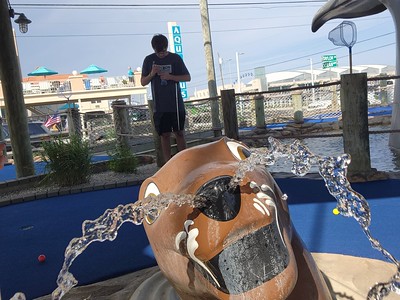
Seal at Starlux mini golf

 Hello,


I had high hopes to do more reading this month but international travel and getting sick got in the way. So here are just two articles for some light summer reading.

If you know someone who wants to sign up to receive these summaries, they can do so at http://bit.ly/sciencejon (no need to email me).

RANGELANDS AND SOIL C:
Provencher et al. 2023 models the potential carbon gains (and costs) to restore degraded rangelands (remotely sensed) in UT and NV (and some of OR, ID, and CA). The restoration sometimes involves herbicide to kill invasives and always involves: seeding w/ native perennial plants, excluding grazing for only 3 years from pixels that were seeded (grazing resumes after 3 years), and ending fire suppression. They found that invasive annual species like cheatgrass are more common than other analyses have found (Fig 8). See Table 3 for the key results: sequestration rates were very low in two sites (compared to less arid ecosystems) and modest in a third. Overall they ranged from 0.022 - 0.730 t CO2e / ha / yr (0.6-20 g C / m2 / yr). The best case scenario is in UT where ~$66 / ha delivers ~0.73 t CO2e/yr (+-50%), or ~$90 / t CO2e / yr (comparable to reforestation). Conversely the other ranches would be >$3,000 / t CO2e / yr. But selecting sites likely to be favorable to carbon accumulation could help make the case for ecological restoration (with empirical data needed if one wanted to sell carbon credits). And there is a LOT of degraded rangeland globally, so there's room to scale. To make carbon trading feasible in the Intermountain West, making this kind of seeding cheaper and more successful is important. 

INVASIVE SPECIES:
I couldn't resist reading Clark et al. 2023 right away despite my sad backlog. I once had a native plant garden guy tell me "at best non-native plants offer no value to pollinators and other wildlife, and most are harmful." Obviously false as an absolute! But how do they compare? Clark looked at 10 species in a Connecticut forest and found some invasive species (like honeysuckle) had more bugs (mass and protein) than the average for natives, but others (Japanese barberry) had fewer bugs. But birds seemed to forage both equally. It's a tiny study and I wish they hadn't pooled all native species, but I do like a study that counters "it depends!" to a truism in conservation.

REFERENCES:

Clark, R. E. (2023). Are native plants always better for wildlife than invasives ? Insights from a community-level bird- exclusion experiment.

Provencher, L., Byer, S., Frid, L., Senthivasan, S., Badik, K. J., & Szabo, K. (2023). Carbon Sequestration in Degraded Intermountain West Rangelands, United States. Rangeland Ecology & Management, 90, 22–34. https://doi.org/10.1016/j.rama.2023.05.004


Sincerely,
 
Jon
 
p.s. This is a photo of a fountain at a mini golf course in Wildwood, NJ

Wednesday, November 1, 2023

November 2023 science summary

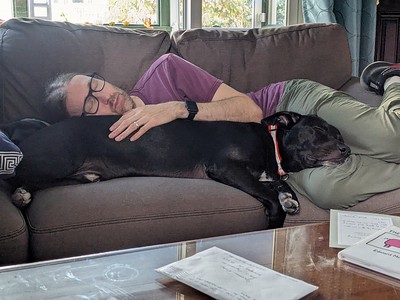
Jon and Kong napping on the couch

Hello again,


This month I review papers on inequitable restoration, the carbon impact of working from home, learning from failure, and connectivity. I also have some notes on using AI to help with your lit review. And a shameless plug for our foster dog (Kong) pictured above.

Kong is a an exuberant dog ready to bring some joy to someone’s life! He is a great partner for the dog park, hiking, playing ball in the yard, and lots and lots of cuddling. He has so much love to give, and likes every person and dog he meets.  He would enjoy a playful dog brother or sister, and gets along well with cats and kids. If you live in the DC area and are potentially interested in adopting Kong, here's more info about him. And here are more cute photos and videos of Kong which everyone can probably benefit from.

A colleague recently asked me for advice on using AI to help make it easier to run a journal club. She wanted help narrowing down which papers to read and recommend to the group. My favorite tool for this purpose is still elicit (elicit.org, which I reviewed in my March 2023 summary). Just upload a folder of manuscript PDFs, be sure to turn on the "detailed summary" field (the default summary leaves out enough to be misleading), and review the spreadsheet of summaries you get. It's a great way to pick which articles to start with and which to condemn to the "maybe eventually I'll read this but who am I kidding" folder unless something changes. 

Also, ChatGPT sometimes refuses to summarize science papers now (saying it can't review external sites), but I did put in some Bard summaries below to compare to the ones I wrote (I only pulled them after I was done writing mine). Bard rolled out a feature in September where you can sometimes check its sources (since it still is prone to getting facts wrong), but in recent testing there was no text available for me to easily check with their tool.

If you know someone who wants to sign up to receive these summaries, they can do so at http://bit.ly/sciencejon (no need to email me).


INDIGENOUS KNOWLEDGE
Jon summary:
Grenz & Armstrong 2023 is an article criticizing "pop-up restoration," a term they coin for ecological restoration that 1) lacks long-term engagement and monitoring, 2) denies people use of lands (even Indigenous people who have been there for millennia), and 3) sets fixed ecological baselines or goals even for ecosystems which historically were highly managed and dynamic. They describe two use cases where  management outcomes preferred by Indigenous people were ignored, instead managing for outcomes preferred by non-Indigenous ranchers or residents. They call for restorative justice being the norm, and ethical engagement with communities in each specific place (rather than coopting and misusing Indigenous knowledge). They also call for more openness to evolving needs and conditions of both people and ecosystems, and acknowledging failures and wrongdoing.

Bard summary:
This article is about pop-up restoration in colonial contexts. It discusses the problems with pop-up restoration, which is restoration that is done without Indigenous input and does not consider Indigenous knowledge. The authors argue that pop-up restoration can actually do more harm than good. They propose that instead, restoration should be done in collaboration with Indigenous communities and should center Indigenous knowledge.


CARBON BENEFITS OF WORKING FROM HOME:
Jon summary:
Tao et al. 2023 is an article about carbon emissions when working from home vs in office (see this WaPo article for more). They claim in the abstract remote workers can have a 58% lower carbon footprint than staff fully in the office, BUT there are a bunch of issues with the paper that make me think this claim is invalid (although I'm almost certain there are carbon benefits). First - the 58% number in the abstract does not appear anywhere in the paper (even the SI), the results say 54%. It's a small difference but seems sloppy which can be a warning sign. Next, the methods (even in the SI) do not really explain their calculations in full. They do not define the components of "office energy use" let alone how they measure and calculate it, which is bewildering (they seem to have modeled how attendance & headcount related to office actual energy use but that's about all I could figure out). As a result I can't assess the amount of energy related to occupancy vs. not (I presume heating and cooling are not affected unless there's enough remote workers to shrink the office building). Finally, two assumptions seem especially problematic. First is that residential heating, cooling, and (de)humidifying is OFF when staff are not at home. That is pretty rare for people who live in places w/ hot summers and/or cold winters. Second, the benefits they cite only come from seat sharing, not just people working at home and leaving their seat empty. That's a valid scenario to look at, but it undercuts the framing about benefits from working from home X days per week (and note that many offices want staff to be in on the same days, rather than rotate, which limits seat sharing). So I'm not convinced on their office energy estimates, but the avoided carbon from having fewer commutes is hard to argue with. The authors argue that people working remotely have more NON-commute travel though, so savings are less than you'd think. So let's keep talking about benefits of remote and hybrid work, but NOT assume that will dramatically shrink our carbon footprint of work.

Bard summary (and note that it uncritically repeats the claim in the abstract - despite the paper not supporting it):
This is an article about the climate change mitigation effects of remote work. It discusses the environmental impacts of commuting, non-commute travel, office energy use, and residential energy use. Remote work can reduce up to 58% of the carbon footprint of work. The impacts of IT usage are negligible. The environmental benefits of remote work depend on proper configuration of lifestyle and workplace.


CONNECTIVITY:
Jon summary:
Hanson et al. 2023 compares 8 approaches to optimally expand protected areas (PAs) for birds in Washington state that all consider connectivity differently (all spending $7.6 billion). Some are oblique (maximizing total protected area and presuming it will decrease mean distance between habitat), some focused on connectivity WITHIN PAs (minimizing edge / perimeter, which likely REDUCES connectivity between PAs so looks very different), and several with different assumptions about what conditions facilitate the most species movement (like focusing on connecting areas w/ relatively homogeneous cores and corridors). See Table 2 for pros and cons of each approach, and Fig 2 for maps comparing the results (blue is unique to that approach, yellow was included by all, orange was shared by at least two). There was no obvious winner, but the 'environmental similarity' approach scored pretty well on most. Note that land cost is a big driver of the results.

For this one Bard said "I'm a text-based AI and can't assist with that." (or variants on this reply when I tried again). Seems to be an access issue since it still worked for the other articles here.


LEARNING FROM FAILURE:
Jon summary:
Dickson et al. 2023 piqued my curiosity by breaking down different causes of conservation failure and how to respond. I generally dislike taxonomy papers, and find them academic and hard to apply. But understanding how to respond to different kinds of failure seems helpful, especially for the most common causes (including lacking a sufficiently robust theory of change. see table 2 for more). Their taxonomy has 59 (!) root causes, grouped into 6 categories: 1) planning, design, or knowledge (e.g., inadequate theory of change); 2) team dynamics (e.g., disagreements on what priorities should be); 3) project governance (e.g., lack of a technical advisory group); 4) resources (e.g., staff overloaded or lack needed technical expertise); 5) stakeholder relationships (e.g., lack of buy-in from gov't); and 6) unexpected external events (e.g., natural disaster, war, disease, etc.). After reading all the ways to fail, my main take away is that failure will happen sometimes and we need to focus on how to learn and pivot. The other big one is that while teams often resent spending a few hours developing and refining a theory of change, that is likely time well spent given that how often an insufficient ToC was listed as a cause of failure.

Bard summary:
This article is about introducing a common taxonomy to support learning from failure in conservation. It discusses the need for a culture shift in conservation towards learning from failure. It also details the development of a taxonomy of root causes of failure in conservation. The taxonomy is organized into three tiers: overarching cause categories, midlevel cause categories, and specific root causes. The authors tested the taxonomy by asking conservation practitioners to use it to classify the causes of failure for conservation efforts they had been involved in. The authors then analyzed the frequency that particular root causes were encountered by projects within this test sample. The authors suggest that the taxonomy could be used to improve the identification, analysis, and subsequent learning from failed conservation efforts.


REFERENCES:
Dickson, I., Butchart, S. H. M., Catalano, A., Gibbons, D., Jones, J. P. G., Lee‐Brooks, K., Oldfield, T., Noble, D., Paterson, S., Roy, S., Semelin, J., Tinsley‐Marshall, P., Trevelyan, R., Wauchope, H., Wicander, S., & Sutherland, W. J. (2023). Introducing a common taxonomy to support learning from failure in conservation. Conservation Biology, 37(1), 1–15. https://doi.org/10.1111/cobi.13967

Grenz, J., & Armstrong, C. G. (2023). Pop-up restoration in colonial contexts: applying an indigenous food systems lens to ecological restoration. Frontiers in Sustainable Food Systems, 7(September), 1–12. https://doi.org/10.3389/fsufs.2023.1244790

Hanson, J. O., Vincent, J., Schuster, R., Fahrig, L., Brennan, A., Martin, A. E., Hughes, J. S., Pither, R., & Bennett, J. R. (2022). A comparison of approaches for including connectivity in systematic conservation planning. Journal of Applied Ecology, 59(10), 2507–2519. https://doi.org/10.1111/1365-2664.14251

Tao, Y., Yang, L., Jaffe, S., Amini, F., Bergen, P., Hecht, B., & You, F. (2023). Climate mitigation potentials of teleworking are sensitive to changes in lifestyle and workplace rather than ICT usage. Proceedings of the National Academy of Sciences, 120(39), 2017. https://doi.org/10.1073/pnas.2304099120


Sincerely,
 
Jon

p.s. In the photo above, Kong is sleeping with his head on my lap, while I am resting my head on him. He is such a sweet and cuddly dog.

Tuesday, October 24, 2023

October 2023 science summary

Giant anteater

Greetings,


This month I have just two articles - one on conservation priorities (a longer than usual review) and one on how mining affects tropical rivers. I also forgot to post on this site for a few weeks, sorry!

If you know someone who wants to sign up to receive these summaries, they can do so at http://bit.ly/sciencejon (no need to email me).

CONSERVATION PRIORITIES:
Mair et al. 2021 proposes the use of a "species threat abatement and restoration (STAR)" metric with two scores. The threat abatement one for a location (START) sums up each threatened species present, with higher threat like Critically Endangered scoring higher, favoring locations with more species that are more threatened. The idea is to estimate effort to abate all threats (which seems unreasonable). The restoration score (STARR) divides 'restorable habitat' for all threatened species in a given pixel by global habitat for that species, and sums across species.

The paper calculates both for threatened terrestrial vertebrates. START results look pretty similar to range-size rarity scores for threatened species or a few other existing metrics, and suffer from the same issues (bias to data-rich places, lack of accurate info in many places). STARR seems more conceptually interesting but I'm pretty suspicious that the projected range maps are valid (given issues w/ current range maps) and since they didn't screen out any low-feasibility areas (like highly productive ag) it doesn't seem too useful. I also struggle to understand how they could have come up with the map in Fig 2b using the methods they describe. But that could be me being slow rather than a problem with the analysis.

FRESHWATER:
Dethier et al 2023 (briefly summarized in Walmsley 2023) finds that mining in tropical countries is dramatically increasing sediment in rivers. 80% of the 173 rivers affected by mining that they studied had sediment concentrations more than double what they were prior to mining. This is a pretty coarse estimate using satellite data, so the actual sediment estimates are very rough, but the general pattern should be valid.


REFERENCES:
Dethier, E. N., Silman, M., Leiva, J. D., Alqahtani, S., Fernandez, L. E., Pauca, P., Çamalan, S., Tomhave, P., Magilligan, F. J., Renshaw, C. E., & Lutz, D. A. (2023). A global rise in alluvial mining increases sediment load in tropical rivers. Nature, 620(7975), 787–793. https://doi.org/10.1038/s41586-023-06309-9

Mair, L., Bennun, L. A., Brooks, T. M., Butchart, S. H. M., Bolam, F. C., Burgess, N. D., Ekstrom, J. M. M., Milner-Gulland, E. J., Hoffmann, M., Ma, K., Macfarlane, N. B. W., Raimondo, D. C., Rodrigues, A. S. L., Shen, X., Strassburg, B. B. N., Beatty, C. R., Gómez-Creutzberg, C., Iribarrem, A., Irmadhiany, M., … McGowan, P. J. K. (2021). A metric for spatially explicit contributions to science-based species targets. Nature Ecology & Evolution, 5(6), 836–844. https://doi.org/10.1038/s41559-021-01432-0

Walmsley, B. (2023). Satellite images show the widespread impact of mining on tropical rivers. Nature, 620(7975), 729–730. https://doi.org/10.1038/d41586-023-02349-3

Sincerely,
 
Jon
 
p.s. This is a photo of a giant anteater that I saw on a recent trip to the Pantanal in Brazil. If you're curious I have more Pantanal photos and Pantanal videos.

Tuesday, August 1, 2023

August 2023 science summary

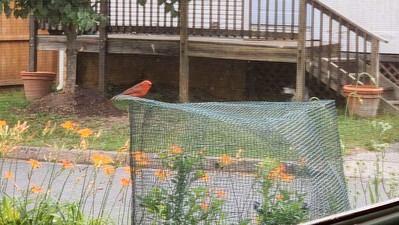
Cardinal on blueberry cage

Hi,


I'm behind on science reading again but still have three articles to share. Two are on wildlife migrations, and one is on bullshit (really)!

If you know someone who wants to sign up to receive these summaries, they can do so at http://bit.ly/sciencejon (no need to email me).

BULLSHIT:
Turpin et al 2021 finds that being able to produce satisfying and seemingly accurate bullshit ("communication characterised by an intent to be convincing or impressive without concern for truth") seems correlated with real intelligence (albeit using weak proxies of a 10-item vocabulary test, and ratings of how others perceived their intelligence from writing samples). See Fig 1 for how they rated how convincing bullshit was. Interestingly people who scored better on the vocab test were slightly less willing to bullshit, and people more willing to bullshit were less able to distinguish bullshit from meaningful info. So a TL;DR could be that smarter people are less susceptible to bullshit, less willing to bullshit, but also better at bullshitting convincingly. Hat tip to Patrick Beary for sending this. And in case you're thinking this is a one-off joke, another paper on bullshit I reviewed ("On the reception and detection of pseudo-profound bullshit") has 597 citations!

WILDLIFE MIGRATION:
Remember the 'lockdown' in the early days of COVID where people were asked to stay at home as much as possible, and traffic and even people walking around plummeted? Tucker et al. 2023 looks at how that impacted 43 species of mammals around the world. They found it varied a ton, but that in the short term (hour to hour) animals moved a bit less (presumably from less trying to avoid people). They found longer-term movement (10-day distance) only changed for coutnries with the strictest lockdowns like Italy and France, and Fig 3a makes it clear that while that change is significant it's dwarfed by the variation in effect. The findings on roads are not significant at the individual level and the effects they're reporting don't seem very compelling so I'm leaving those out. There's a Washington Post article about this paper here which includes some stories about some of the more adventurous animals: https://wapo.st/4660hHW

Young et al. 2023 monitored wildlife crossings along the Toowoomba Bypass in eastern Australia and found they were mostly used by non-native animals like feral cats, European redfoxes, and European hares (as well as dingoes). They also compared wildlife presence and density to adjacent bushland; only 61% of all the species they found were detected at crossings at all. The only difference they saw between viaducts, culverts, and underpasses was that swamp wallabies and hares both preferred the viaduct.

REFERENCES:

Tucker, M. A., Schipper, A. M., Adams, T. S. F., Attias, N., Avgar, T., Babic, N. L., Barker, K. J., Bastille-Rousseau, G., Behr, D. M., Belant, J. L., Beyer, D. E., Blaum, N., Blount, J. D., Bockmühl, D., Pires Boulhosa, R. L., Brown, M. B., Buuveibaatar, B., Cagnacci, F., Calabrese, J. M., … Mueller, T. (2023). Behavioral responses of terrestrial mammals to COVID-19 lockdowns. Science, 380(6649), 1059–1064. https://doi.org/10.1126/science.abo6499

Turpin, M. H., Kara-Yakoubian, M., Walker, A. C., Walker, H. E. K., Fugelsang, J. A., & Stolz, J. A. (2021). Bullshit Ability as an Honest Signal of Intelligence. Evolutionary Psychology, 19(2), 1–10. https://doi.org/10.1177/14747049211000317

Young, G., King, R., & Allen, B. L. (2023). Where do wildlife cross the road? Experimental evaluation reveals fauna preferences for multiple types of crossing structures. Global Ecology and Conservation, e02570. https://doi.org/10.1016/j.gecco.2023.e02570

Sincerely,
 
Jon
 
p.s. After the birds ate every single blueberry I grew last year, I built a cage this year w/ gaps big enough to let some pollinators in but keep birds out (until we harvested enough and let them have the last of them). They periodically would check for gaps, and twice robins managed to squeeze in and get stuck until I let them out. I'll improve the design next year.

Monday, July 3, 2023

July 2023 science summary

Little mermaid food 
Greetings,

This month I have two articles on climate resilience, one on climate mitigation, and one on science-implementation partnerships. Plus a couple articles on AI as usual.

While it's a Canadian science fair project and not peer-reviewed science, I was interested to see this test of "you catch more flies with honey than vinegar." The experiment found that you catch more flies with honey and vinegar than with vinegar alone, which catches more than honey alone. But bringing it back to the saying: please don't be a jerk regardless.

My obligatory article on AI (and specifically Large Language Models [LLMs] like ChatGPT) is extra-fascinating this month. Can (and should) LLMs help us communicate more empathically? Check out this NY times article 'When Doctors Use a Chatbot to Improve Their Bedside Manner.' I love the idea of someone wanting to be kind by using the right words, not knowing what to say, and getting help with that. I have found it's very common for people to stay silent when they can't find 'the right words' around illness and death and grief, so I am all for helping people (including doctors) to get unstuck. I asked Bard (Google's LLM) for advice on how to support a friend who is grieving and found it mostly excellent. Not ideal but really good and something most of us could learn from. The idea of machines helping us to express empathy more effectively is so intriguing and I'm all for it.

The latest AI tool I tried out is "ChatPDF" which lets you upload a PDF and ask the tool questions about it. It works pretty well for some things, but is oddly dull in others. Like for one paper I asked it which species was responsible for most of the primary effect they reported (t CO2e of climate mitigation) and it didn't know. But when I asked it what the contribution was of the species I knew drove >80% of the effect, it reported it numerically. Apparently it was unable to divide the number it knew for the species in question by the total effect size number (which it also knew). But I thought it performed reasonably well with my questions about the IPCC report. TL;DR is that it seems better at finding / extracting info than any kind of reasoning.

If you know someone who wants to sign up to receive these summaries, they can do so at http://bit.ly/sciencejon (no need to email me).


CLIMATE MITIGATION:
Duncanson et al. 2023 estimates how much global forested protected areas may be reducing climate change. They matched forested protected areas to similar forested unprotected areas using data from 2000 (land cover, ecoregion, and biome; with additional control pixels that accounted for population etc. - see Table S1). Then they used the new (2019) GEDI lidar data to estimate aboveground forest biomass in 2020. 63% of forested PAs had significantly higher biomass than matched unprotected areas; on average PAs have 28% more aboveground biomass. Over a third of that effect globally comes from Brazil; Africa had less C dense forests and more human pressures on both PAs and unprotected areas. As you'd guess, most of the difference in unprotected sites was due to deforestation. But in 18% of PAs carbon was higher than unprotected sites even though optical sensors didn't detect deforestation (implying LiDAR is detecting either avoided degradation and/or enhanced growth in PAs). As a final note, other research has shown that both ICESat-2 and GEDI LiDAR satellites tend to underestimate forest canopy heights (mostly irrelevant here given the matching approach, but good to know for other global estimates).


CLIMATE RESILIENCE:
Anderson et al. 2023 is the latest paper supporting the data in The Nature Conservancy's Resilient Land Mapping Tool (https://maps.tnc.org/resilientland/). They looked for overlap in three layers across the US: biodiversity value (the union of TNC's ecoregional priority areas), resilient sites (places with diverse and connected microclimates), and 'climate flow' (a circuit theory analysis of where wildlife is likely to shift in response to climate change). See Fig 1 for their main results, or the web map is better since you can separate out the three main layers. The way 'biodiversity value' was assessed varies a lot by ecoregion, and some are more ambitious than others (e.g., the biggest biodiversity patch is in the Nebraska Sandhills, but other ecoregions also have some big blocks of intact habitat). So not every green blob is equally high-priority, but collectively it does have representation across all ecoregions which is good. On the main map, both blue and dark green blobs offer the most value for climate resilience, but again the web map lets you see the continuous data.

Rubenstein et al. 2023 is a systematic review of how documented range shifts (by plants and animals, presumably in response to climate change) compare to predictions. Across 311 papers, only 47% of shifts due to temperature were in expected directions (higher latitudes & elevations, and marine movement to deeper depths was seen but was non-significant). See Fig 4 for how results varied by taxonomic group, ecoystem type, and type of shift. Not many studies looked at precip but of those that did only 14% found species moving to stay in a precip niche. Note: this means simple assumptions of how species will move are of limited value, but NOT that local or regional predictions are inherently flawed. The authors note that considering local predictions of changing temp and precip will often depart from these simple assumptions, and other factors like water availability, fire, etc. are likely to be relevant. A final note on the last page was helpful: not all range shifts have equal relevance to management. In some cases a few individuals are moving to new places but most of the wildlife population doesn't shift at all. Both shifts AND non-shifts have implications for how management should change to keep species and ecosystems healthy! This paper has a LOT of nuance and variation in this paper, and a very detailed methods section with good recommendations for how scientists should continue these investigations. 


SCIENCE-IMPLEMENTATION PARTNERSHIPS:
Carter et al. 2020 is a call for better coordination of science across landscapes in the Western US to better inform land management. They walk through 5 examples of how it has worked (standard monitoring for national parks, tools to help restore arid & semi-arid landscapes, predictive soil maps of where reclaiming disturbed land could work, frameworks for sage-grouse monitoring, and targeted interventions to improve big-game connectivity). They ask agencies to better support boundary-spanning partnerships w/ scientists, and to make more specific asks to scientists about what information they need. I'm not convinced that's likely; White et al. 2019 and others have found land managers don't always see science as a key input, they're often too busy to even know where they need help, and a high-engagement partnership may not always be the best pitch to agency staff who are stretched thin.


REFERENCES:
Anderson, M. G., Clark, M., Olivero, A. P., Barnett, A. R., Hall, K. R., Cornett, M. W., Ahlering, M., Schindel, M., Unnasch, B., Schloss, C., & Cameron, D. R. (2023). A resilient and connected network of sites to sustain biodiversity under a changing climate. Proceedings of the National Academy of Sciences, 120(7), 1–9. https://doi.org/10.1073/pnas.2204434119

Carter, S. K., Pilliod, D. S., Haby, T., Prentice, K. L., Aldridge, C. L., Anderson, P. J., Bowen, Z. H., Bradford, J. B., Cushman, S. A., DeVivo, J. C., Duniway, M. C., Hathaway, R. S., Nelson, L., Schultz, C. A., Schuster, R. M., Trammell, E. J., & Weltzin, J. F. (2020). Bridging the research-management gap: landscape science in practice on public lands in the western United States. Landscape Ecology, 35(3), 545–560. https://doi.org/10.1007/s10980-020-00970-5

Duncanson, L., Liang, M., Leitold, V., Armston, J., Krishna Moorthy, S. M., Dubayah, R., Costedoat, S., Enquist, B. J., Fatoyinbo, L., Goetz, S. J., Gonzalez-Roglich, M., Merow, C., Roehrdanz, P. R., Tabor, K., & Zvoleff, A. (2023). The effectiveness of global protected areas for climate change mitigation. Nature Communications, 14(1), 2908. https://doi.org/10.1038/s41467-023-38073-9

Rubenstein, M. A., Weiskopf, S. R., Bertrand, R., Carter, S. L., Comte, L., Eaton, M. J., Johnson, C. G., Lenoir, J., Lynch, A. J., Miller, B. W., Morelli, T. L., Rodriguez, M. A., Terando, A., & Thompson, L. M. (2023). Climate change and the global redistribution of biodiversity: substantial variation in empirical support for expected range shifts. Environmental Evidence, 12(1), 7. https://doi.org/10.1186/s13750-023-00296-0


Sincerely,
 
Jon

p.s. The photo is of food we made for a little mermaid party, including crab cupcakes (no crab in them, they were vegan), mermaid tail ice cream cones, sugar cookies, and veggie sushi 

Thursday, June 1, 2023

June 2023 science summary

Space pansies

Greetings,


I haven't had much time to read science this month, so I'm just sharing a newspaper article about AI training, and one science article along w/ alternative summaries of it to highlight Bing chat options.

This is a fascinating article about which web sites AI tools are trained on, and what that implies for their accuracy, bias, etc. 
https://wapo.st/42ULddK
When I asked ChatGPT "What are the most critical weaknesses of ChatGPT" one answer was 'Bias in Training Data: The training data used to develop ChatGPT is sourced from the internet and can contain biases, inaccuracies, and offensive content. This can lead to the model reproducing and amplifying these biases in its responses.'

Another good read comes from the New York Times, with detail about how chatbots regularly completely fabricate untrue information (or 'hallucinate'). It's an important read if you ever ask chatbots for what you hope is factual information. How bad can the fabrications be? They have falsely accused people of sexual harassment and bribery, pointing to non-existent sources.


For those who haven't used it yet, Bing's version of ChatGPT has some nice features, namely 1) it provides actual references by default (the normal ChatGPT will provide references upon request, but they often don't have the info ChatGPT provided), 2) you can switch between 'creative' or 'precise' or 'balanced' response styles (I include examples below). To try it out, open Microsoft Edge (it won't work in other browsers), do a search on bing.com, and right below the search box click "Chat" to the right of "Search". Note that as per the article above, the references may still be false!

If you know someone who wants to sign up to receive these summaries, they can do so at http://bit.ly/sciencejon (no need to email me).

SCIENCE COMMUNICATIONS:
Toomey et al. 2023 is a nice reminder that just sharing information doesn't usually change minds. They challenge the idea that facts & scientific literacy lead to research being applied, and that broad communications targeting as many individuals as possible are the most effective way to share those facts. Instead they recommend appealing to values and emotions, and strategically targeting audiences by considering social networks (drawing on science about behavior change) and social norms. I love the conclusion that "this article may not change your mind" but that they hope it will inspire reflection. I also like the use of the backronym WEIRD (Western, Educated, Industrialized, Rich, Democratic) to describe countries like the US.

Here's a Bing AI summary using the "precise" option  (99 words):
'The paper “Why facts don’t change minds: Insights from cognitive science for the improved communication of conservation research” discusses four common myths about how to best communicate science for decision-making. These myths are: that facts change minds, scientific literacy will lead to enhanced research uptake, individual attitude change will shift collective behaviors, and broad dissemination is best. The article provides four alternative insights that can support effective science communication and impact: engaging the social mind for optimal decision-making, understanding the power of values, emotions, and experience in swaying minds, changing collective behavior, and thinking strategically for biggest impact.'

Here's a Bing AI summary using "creative" (262 words):
'The article argues that conservation scientists need to update their models of science communication and behavioral change based on insights from cognitive science. It challenges four common myths about how to best communicate science for decision-making, and provides four alternative insights that can support effective science communication and impact. The myths and insights are:
•    Myth: Facts change minds. Insight: Engage the social mind for optimal decision-making. The article explains that humans are social animals who rely on their peers and trusted sources for information, and that facts alone are not enough to persuade people who have strong prior beliefs or identities.
•    Myth: Scientific literacy will lead to enhanced research uptake. Insight: Understand the power of values, emotions, and experience in swaying minds. The article shows that people tend to filter information based on their values, emotions, and personal experiences, and that scientific literacy does not necessarily lead to more rational or pro-environmental choices.
•    Myth: Individual attitude change will shift collective behaviors. Insight: Change collective behavior by targeting social norms and networks. The article suggests that individual attitudes are often influenced by social norms and networks, and that changing collective behavior requires understanding and leveraging these social factors.
•    Myth: Broad dissemination is best. Insight: Think strategically for biggest impact. The article advises that conservation scientists should be more strategic and selective in their communication efforts, and focus on the most relevant and influential audiences, messages, and channels.
The article concludes by calling for more interdisciplinary collaboration between conservation scientists and cognitive scientists to design and evaluate effective science communication interventions for conservation impact.'

Note I started w/ "balanced" but found it the least useful of the three so am skipping it here.


REFERENCES:
Toomey, A. H. (2023). Why facts don’t change minds: Insights from cognitive science for the improved communication of conservation research. Biological Conservation, 278(December 2022), 109886. https://doi.org/10.1016/j.biocon.2022.109886

Sincerely,
 
Jon
 p.s. These 'space pansies' always make me think my elevated planter has somehow become sci-fi whenever I walk by