Showing posts with label pest control. Show all posts

Monday, December 3, 2018

December 2018 science journal article summary

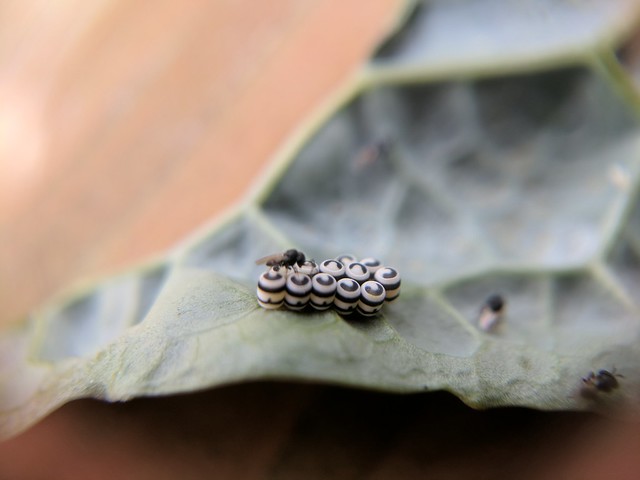
Cool insect eggs (Harlequin bug)

Greetings,

Here are some articles focused on pest control (the photo above is of harlequin bug eggs on kale), food safety, climate change, evidence, and even beer! Let me know if you need a copy of any of them. If you know someone who wants to sign up to receive these summaries, they can do so at http://bit.ly/sciencejon


CLIMATE CHANGE / NATURAL CLIMATE SOLUTIONS:
Almost everyone who works for or closely with The Nature Conservancy heard about the 2017 "Natural Climate Solutions" paper (Griscom et al. 2017, I reviewed it in November 2017). If you've been waiting for the sequel - good news! Fargione et al. 2018 just provided a similar analysis specifically for the United States. It's short, excellent, and worth reading, but if you're impatient skip to Figure 1. That summarizes the potential of each pathway and splits out how much is achievable at different carbon prices. They found a maximum potential of 1.2 Pg (aka 1200 million metric tons) CO2e / yr (21% of current US emissions and ~27% of 2005 emissions), and ~300 Tg (million metric tons) achievable at $10 / t CO2e (~5% of US emissions). The biggest low cost opportunities are in planting cover crops followed by forest management, avoided habitat conversion, and improved farm nutrient management. You can read more about it on TNC's web site at https://www.nature.org/en-us/explore/newsroom/natural-climate-solutions-study/ or at https://eurekalert.org/pub_releases/2018-11/cu-nsr111418.php

ORGANIC AGRICULTURE / FOOD SAFETY:
This is an interesting study on how consumption of organic vs. conventional foods affects cancer risk. They did find the people who ate the most organic food had 24% less cancer compared to the people who ate the least (even after controlling for quite a few lifestyle and diet variables, see Model 3 in Table 2). Unfortunately, they didn't test for pesticide residue (to confirm the hypothesis that pesticide was driving these results), there was a short follow-up time, they used a single unvalidated diet assessment, and there are enough odd findings (e.g. finding processed meat intake doesn't intake cancer risk) to make me suspect they didn't discover a causative relationship. I also don't understand how their model could find the organic diet has such a strong impact on cancer but then find that people eating a high quality diet AND lots of organic food didn't have reduced risk relative to those eating a low quality diet and little organic food (and supplemental table 6 looks like there IS a reduced risk although perhaps the confidence interval is too high to state it definitively). In short, this was an interesting paper but I don't think it is strong evidence for the conclusions they present. You can read a blog about this one at https://www.nytimes.com/2018/10/23/well/eat/can-eating-organic-food-lower-your-cancer-risk.html


EVIDENCE & DECISION MAKING:
To be effective in conservation, we need reliable evidence about the impact of different actions and strategies. This lets us focus on the strategies that will best help us reach our goals. Game et al. 2018 (led by TNC's Eddie Game) has timely guidance for how scientists should assess the quality of evidence (across multiple disciplines). They recommend beginning with a results chain to map out causal associations between actions, intermediate results, and outcomes, and then looking for the evidence of each link. They also note that in conservation a broader approach is needed than in other disciplines like medicine. The key point is the set of four principles they use to assess the strength of evidence. They are: variety (multiple types of evidence available), consistency (the evidence has consistent findings), credibility (the evidence comes from trusted sources), and applicability (the evidence matches the context of the issue being evaluated). You can read a blog about the paper at https://sustainabilitycommunity.nature.com/channels/1385-behind-the-paper/posts/38893-required-rethink-on-what-is-evidence

Bennett et al. 2018 is an attempt to make value of information (VOI) theory more practical. While still theoretical, they show how to apply VOI theory across multiple "management units." In each unit, the model compares two choices: acting with existing imperfect information, or doing more monitoring to support decision making. The revised model is a step forward, and I also enjoyed the discussion of limitations. For example, they mention that their model is risk neutral, which is often not the case with real decision makers.


CLIMATE CHANGE & BEER:
As we approach a major holiday season in the U.S., many people celebrate with alcohol. Xie et al. 2018 has a dire warning from the ghost of Christmas future: climate change may reduce barley yields (3-17%) and beer supply while driving up prices. Essentially they predict worsening drought and extreme heat will reduce barley production, and that during extreme years barley for beer will be reduced in favor of livestock feed and direct consumption. See Figure 3 for a nice summary of patterns of barley use by country now and under climate change. Some important limits: they don't predict future demand for beer (likely to increase), and they don't look at adaptation (e.g. making more beer w/ rice and corn as some major brewers do already, improved seed genetics, etc.). These caveats reinforce my skepticism of some predictions such as the price of beer in Ireland almost doubling (it's hard to imagine that could happen without a strong adaptive response). Nonetheless, most science predicting future food demand and supply focuses more on staples than luxuries, and this is an interesting twist.


REFERENCES:
Baudry, J., Ke, A., Touvier, M., Allès, B., Seconda, L., Latino-Martel, P., … Kesse-Guyot, E. (2018). Association of Frequency of Organic Food Consumption with Cancer Risk: Findings From the NutriNet-Santé Prospective Cohort Study. JAMA Internal Medicine. https://doi.org/10.1001/jamainternmed.2018.4357

Bennett, J. R., Maxwell, S. L., Martin, A. E., Chadès, I., Fahrig, L., & Gilbert, B. (2018). When to monitor and when to act: Value of information theory for multiple management units and limited budgets. Journal of Applied Ecology, 55(January), 2102–2113. https://doi.org/10.1111/1365-2664.13132

Deutsch, C. A., Tewksbury, J. J., Tigchelaar, M., Battisti, D. S., Merrill, S. C., Huey, R. B., & Naylor, R. L. (2018). Increase in crop losses to insect pests in a warming climate Downloaded from. Science, 361(August), 31. https://doi.org/10.1126/science.aat3466

Fargione, J. E., Bassett, S., Boucher, T., Bridgham, S. D., Conant, R. T., Cook-patton, S. C., … Griscom, B. W. (2018). Natural climate solutions for the United States. Science Advances, 4(November).

Game, E. T., Tallis, H., Olander, L., Alexander, S. M., Busch, J., Cartwright, N., … Sutherland, W. J. (2018). Cross-discipline evidence principles for sustainability policy. Nature Sustainability, 1(9), 452–454. https://doi.org/10.1038/s41893-018-0141-x

Karp, D. S., Chaplin-Kramer, R., Meehan, T., Martin, E., DeClerck, F., Grab, H., … Zou, Y. (2018). Crop pests and predators exhibit inconsistent responses to surrounding landscape composition. Proceedings of the National Academy of Sciences of the United States of America. https://doi.org/10.1073/pnas.1800042115

Waterfield, G., & Zilberman, D. (2012). Pest Management in Food Systems: An Economic Perspective. Annual Review of Environment and Resources, 37, 223–247. https://doi.org/10.1146/annurev-environ-040911-105628

Xie, W., Xiong, W., Pan, J., Ali, T., Cui, Q., Guan, D., … Davis, S. J. (2018). Decreases in global beer supply due to extreme drought and heat. Nature Plants. https://doi.org/10.1038/s41477-018-0263-1


Sincerely,

Jon

p.s. as a reminder, you can search all of the science articles written by TNC staff (that we know of) here http://www.conservationgateway.org/ConservationPlanning/ToolsData/sitepages/article-list.aspx
(as you publish please email science_pubs@tnc.org to help keep this resource current).
If you'd like to keep track of what I write as well as what I read, I always link to both my informal blog posts and my formal publications (plus these summaries) at http://sciencejon.blogspot.com/

Monday, September 3, 2018

September 2018 science journal article roundup


Aloha,

This is the 50th of these science summaries, and somehow I am still not caught up with all the interesting papers I have! For that occasion, I'm tackling a number of papers that didn't group nicely but still looked relevant. So there are papers on GMOs, fertilization and nitrogen fixation, food security, and Chinese ag.


GMOs:
You've probably heard the debate about whether or not to label genetically engineered / modified food. On the one hand, consumers argue that food should be transparent about its origins to enable consumers to choose. The counterargument has been that since there isn't good evidence that GMOs can harm human health, it could result in consumers thinking it's being labeled b/c it's dangerous. But Kolodinsky and Lusk (2018) have some surprising good news - after GMO labels became mandatory in Vermont, consumer concern / opposition to GMOs actually went down (while in other states there was a non-significant small increase)! Figure 1 shows this graphically. However, after looking at Table 1 I'm less convinced as they have data for five points in time, and concern in the most recent data is about the same as the earliest data. So the finding could be an artifact of how they did their regression, but it's still a promising possibility worth looking into to better understand how these kinds of
labels may affect consumer beliefs.

Cheke 2018 is a commentary on how the use of pest control traits by GM crops can have unintended side-effects, just as traditional chemical pesticide use can. He presents brief interesting case studies, and essentially argues that we need long-term monitoring data to understand how novel forms of pest control impact target pests, non-target pests, and natural predators of pests. To be clear, this isn't an anti-GM paper, it just notes that switching from aerial sprays to toxins within the plant may have unintended consequences. See Zhang et al. 2018 under Chinese Agriculture below for more detail on Bt cotton as a case study.


FOOD SECURITY:
Hasegawa et al. 2018 is an analysis of how climate mitigation may impact food security. They find that climate mitigation may cause more hunger than the direct effects of climate change. Livestock in particular would be more expensive (given higher GHG emissions and land use). The primary drivers would be food price increases driven by: tax on GHG emissions, higher land rents if ag expansion is slowed, and land competition by biofuel. However, this outcome isn't inevitable if policy is crafted more carefully. For example, a tax focused on animal products could drive a shift to producing more food consumable directly by humans, and revenue could be used for food aid. The key questions are thinking about who will bear the costs of implementation, and how it may affect food prices and thus food security for poor people in particular.


AGRICULTURE / NITROGEN FIXATION / FERTILIZER:
Van Deynze et al 2018 has been getting lots of press. The authors describe a landrace (local cultivar) of maize in Mexico that can fix its own nitrogen via microbes that hang out in aerial roots covered in goopy sugary mucilage. The authors did isotope tracing to verify that N was coming from the air and entering the aerial roots. Since corn uses tons of fertilizer, having it make its own sounds pretty exciting. In this case, it allows corn to be grown in nitrogen-depleted fields in Mexico, with ~30-80% of needed nitrogen coming from the air (varying by field and growth stage, but often ~50%). Unfortunately, this type of N-fixation is not as efficient as how legumes do it, and N-fixing maize is not brand new (Steve Wood sent me this paper from 1975 on the topic: http://www.pnas.org/content/72/6/2389.short). But (as Steve also pointed out) this is a pretty understudied area and there's a lot we don't know about the potential, which if nothing else shows the value in promoting crop diversity
so we don't lose potentially useful varities like this!
See https://news.wisc.edu/corn-that-acquires-its-own-nitrogen-identified-reducing-need-for-fertilizer/ for a blog post on this research.

Given how much research there is on trying to get crops to fix their own nitrogen, the finding by Griesmann et al. 2018 that many plants have lost the ability to fix N blew my mind. By comparing genomes of N-fixing plants to those that don't, they were able to find that ~3/4 of the species in their sample that didn't fix N had an ancestor that could! They suggest that the fact this ability has been lost multiple times reflects that plants spend a lot of energy to support N fixation, and that when N levels are adequate in the soil they eventually can lose the ability to fix it. In other words, as we try to engineer plants to fix their own N, it's worth reflecting on the costs that may have led plants in the past to reject this evolutionary path.
There's a blog on this one at http://www.sciencemag.org/news/2018/05/many-plants-need-bacterial-roommates-survive-so-why-do-some-kick-them-out

Chen et al. 2018 takes a different approach to improving fertilizer use in ag. They provide a review of possible ways to improve the environmental impacts of making chemical nitrogenous fertilizer. Currently the Haber-Bosch process relies on methane, so getting hydrogen from water instead could have many benefits if the higher energy cost can be overcome. This is a pretty technical paper but the first page is an overview that is much more accessible and introduces the possibilities.


CHINESE AGRICULTURE:
Zuo et al 2018 is a nice dense analysis of how Chinese agriculture has changed over the past ~20 years, focusing on crop yield and five environmental indicators (irrigation water, excess N, excess P, land use, and GHGs). While total crop calories produced increased by 66% (with only 1% more net land use), and environmental intensity (impact per calorie) went down, the total environmental impact still worsened quite a bit. This is a common challenge in sustainable intensification - it's often relatively easy to boost yields, but challenging to reduce actual impacts to the environment at the same time. The authors also note that urbanization has pushed cropland to more marginal and water-scarce areas, and future shifts in cropland may pose further challenges. This is worth reading in its entirety for anyone working in Chinese ag, but Table 1 summarizes the changes well, and Figure 3 is an intriguing map with potential priority areas to focus on different indicators.

Zhang et al. 2018 is a look at the impacts of planting Bt cotton (genetically engineered to produce the Bt toxin) in China on three major pests, and how that relates to farm management and nearby land use. The good news is that the use of Bt cotton decreased spraying for bollworm, which in turn allowed natural predators of aphids to recover (which reduced aphid population). Unfortunately, the reduced spraying also allowed mirid bugs to increase. Figure 3 shows how the infestations and spraying changed over time as Bt cotton was rolled out. These trade-offs show the need to think holistically about pest control. Farms in landscapes with more non-farm land use (urban, water, forest, grass, 'unused') had less aphids and mirid bugs (but bollworms were unaffected, and other research has found diverse land use may promote mirid bugs). Finally, farmers were found to spray for aphids and bollwords at non-damaging levels, which represents a missed opportunity to increase their profits (via reduced
costs) and improve their sustainability.


REFERENCES:
Cheke, R. A. (2018). New pests for old as GMOs bring on substitute pests. Proceedings of the National Academy of Sciences, 201811261. https://doi.org/10.1073/pnas.1811261115

Chen, J. G., Crooks, R. M., Seefeldt, L. C., Bren, K. L., Bullock, R. M., Darensbourg, M. Y., … Schrock, R. R. (2018). Beyond fossil fuel–driven nitrogen transformations. Science, 360(6391), eaar6611. https://doi.org/10.1126/science.aar6611

Griesmann, M., Chang, Y., Liu, X., Song, Y., Haberer, G., Crook, M. B., … Cheng, S. (2018). Phylogenomics reveals multiple losses of nitrogen-fixing root nodule symbiosis. Science, 361(6398). https://doi.org/10.1126/science.aat1743

Hasegawa, T., Fujimori, S., Havlík, P., Valin, H., Bodirsky, B. L., Doelman, J. C., … Witzke, P. (2018). Risk of increased food insecurity under stringent global climate change mitigation policy. Nature Climate Change, 8(8), 699–703. https://doi.org/10.1038/s41558-018-0230-x

Kolodinsky, J., & Lusk, J. L. (2018). Mandatory Labels can Improve Attitudes toward Genetically Engineered Food. Science Advances, In press(June), 1–6. https://doi.org/10.1126/sciadv.aaq1413

Van Deynze, A., Zamora, P., Delaux, P., Heitmann, C., Jayaraman, D., Rajasekar, S., … Bennett, A. B. (2018). Nitrogen fixation in a landrace of maize is supported by a mucilage-associated diazotrophic microbiota. PLOS Biology, 16(8), e2006352. https://doi.org/10.1371/journal.pbio.2006352

Zhang, W., Lu, Y., Werf, W. Van Der, Huang, J., Wu, F., Zhou, K., & Deng, X. (2018). Multidecadal, county-level analysis of the effects of land use, Bt cotton, and weather on cotton pests in China. Proceedings of the National Academy of Sciences. https://doi.org/10.1073/pnas.1721436115

Zuo, L., Zhang, Z., Carlson, K. M., MacDonald, G. K., Brauman, K. A., Liu, Y., … West, P. C. (2018). Progress towards sustainable intensification in China challenged by land-use change. Nature Sustainability, 1(6), 304–313. https://doi.org/10.1038/s41893-018-0076-2