Showing posts with label water footprint. Show all posts

Monday, February 2, 2026

February 2026 science summary

A four pound turnip

Greetings,


A new paper I'm a co-author on just came out in Conservation Letters. It's about what counts as a "rapid evidence assessment" and how to do one well. Here's a 275 word blog about it: https://sciencejon.blogspot.com/2026/01/new-paper-rapid-evidence-assessments.html , the full paper (~3400 words) is here: https://conbio.onlinelibrary.wiley.com/doi/10.1111/con4.70005 , and I've summarized it below.

For any other map nerds out there; Esri has a new web map to make it easy to see 40 years of USGS land cover data at https://links.esri.com/LCExplorer . There's a blog about it at https://www.esri.com/about/newsroom/arcnews/40-years-of-usgs-land-cover-data-in-arcgis-living-atlas

If you know someone who wants to sign up to receive these summaries, they can do so at http://subscribe.sciencejon.com (no need to email me).

FRESHWATER PROTECTION:
Until very recently, we didn't have a decent estimate of which rivers were protected across the United States! Comte et al. 2026 describes how the first such database (the National Protected Rivers Assessment) was compiled and launched in Feb 2025. Since freshwater-specific protection is rare it relies mostly on assumptions about how likely different kinds of terrestrial protection are to effectively conserve the 5 key ecological attributes (KEAs) of rivers (flow, water quality, connectivity, habitat, and fish/wildlife/plants/etc. - see Fig 1). They find 19% of river length (12% of CONUS river length) has "viable" protection, although only 0.9% is comprehensively protected. Note their bar for "viable" protection (good enough) is fairly low - a score of 1.25/5 on their index. The index combines length and KEAs, so a 1.25 could mean 25% of the river provides protection for each of the 5 KEAs (overlapping or distinct), or all the river has protection for 1 KEA, and 25% has protection for another, but the other 3 KEAs are unaddressed. Hypothetically a river w/ 100% protection on 4 KEAs would score as "comprehensive" protection but could lack any protection from water withdrawals that would make the river run dry. See Fig 4 for rivers in the best shape that are most important for drinking water. This is a super useful resource. Explore the data at https://map.myriver.americanrivers.org/


CARBON AND WATER FOOTPRINT OF AI:
Xiao et al. has granular state projections of demand for AI through 2030, plus the carbon and water footprint of AI in each state. They recommend trying to steer data center growth to four states (TX, MT, NE, SD) given relatively low water scarcity and abundance of renewable energy (and potential to expand wind and solar). With the middle case assumptions by 2030 AI's water footprint would only be ~0.2% of current US crop water footprint, and the energy consumption would be ~2% of current total electric power generation. AI can have important local impacts and is growing fast, but national impacts are still projected to be relatively small.


IMPACT EVALUATION:
Neugarten et al. 2025 is a good overview to how to evaluate if conservation worked or not. They define impact evaluation and key terms like counterfactuals (what would have happened w/o conservation), confounders (variables that make understanding impact harder), and cover different types of evaluation (randomized experimental, quasi-experimental, and qualitative methods). They also discuss why looking at trends alone can be misleading (wildlife population might be dropping, but would have dropped more w/o action). They conclude recommending impact evaluation for projects that are high stakes, expensive, over big areas, untested, and/or assume additionality.


RAPID EVIDENCE ASSESSMENTS:
Webb et al. 2026 (I'm a co-author) proposes a consensus definition of what should count as a "rapid evidence assessment" (or REA) in conservation. It can be hard to find the sweet spot when assessing evidence. Too quick and dirty and you can get wrong answers, but too rigorous and the results 1) may come too late to be useful and 2) take a lot of resources that could be spent on multiple smaller studies. The paper has our final definition, recommended steps for a REA, and Table 1 has a nice little guide to picking what level of rigor may be the best fit in different circumstances.


REFERENCES:

Comte, L., Olden, J. D., Littlefield, C., Dickson, B. G., Zablocki, J., & Moryc, D. (2026). National assessment of river protection in the United States. Nature Sustainability. https://doi.org/10.1038/s41893-025-01693-8

Neugarten, R., Rodewald, A., Eklund, J., & O’Garra, T. (2025). An introduction to impact evaluation for conservation. Conservation Science and Practice, 7(11), 1–9. https://doi.org/10.1111/csp2.70169

Xiao, T., Nerini, F. F., Matthews, H. D., Tavoni, M., & You, F. (2025). Environmental impact and net-zero pathways for sustainable artificial intelligence servers in the USA. Nature Sustainability, 8(12), 1541–1553. https://doi.org/10.1038/s41893-025-01681-y

Webb, J. A., Schofield, K. A., Cook, C. N., Fisher, J. R. B., Cheng, S. H., Christie, A., Cooke, S. J., Dubois, N. S., Frampton, G., Macura, B., Nichols, S. J., Richards, R., Aicher, R. J., Mason, S., Anderson, E., Betley, E., Borsuk, M., Busch, J., Carlson, S., … Ridley, C. E. (2026). A Standardized Definition of Rapid Evidence Assessment for Environmental Applications. Conservation Letters, 19(1), 1–7. https://doi.org/10.1111/con4.70005


Sincerely,
 
Jon
 
p.s. This is a four pound turnip. I bought it at the farmer's market out of curiosity, and split it across two recipes and it was tasty!

Wednesday, April 1, 2020

April 2020 Science Journal Article Summary

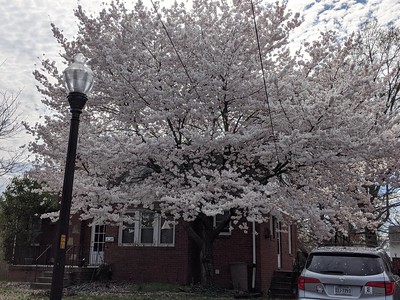
Cherry tree in bloom
Wow,

I'm guessing that most of you are reading more science while stuck at home, but that you're focusing on science related to the pandemic. I certainly am.

But for now, I figured I'd send the usual kind of summary (focused on protected areas this month), since this is where my expertise lies. I thought of reviewing some articles on how conservation can both help and hurt infectious disease transmission (depending on context), but that felt crass.

If you have thoughts on these summaries (if they should pause, change, etc. during the pandemic) please let me know. If you know someone who wants to sign up to receive these summaries, they can do so at http://bit.ly/sciencejon

PROTECTED AREAS:
Hannah et al. 2020 estimates that effectively conserving 30% of tropical land could cut predicted species extinction by ~1/2-2/3 (if the conserved areas are both cited ideally and managed well: this is not about legal protection alone). Conserving 50% could reduce extinction by more like 2/3-80% (see Table 1 for details including how this varies by region). This is useful to understand how effective conservation can be at different scales. But it's important to note that citing PAs in ideal locations continues to be elusive, this model relies on fairly simple assumptions using species-area curves, and the fact that the results didn't vary much with climate change (RCP2.6 vs RCP 8.5) is concerning. Nonetheless, this could be motivating to highlight the importance of protecting and managing enough of the right places on earth to slow species extinction.

How well does the current network of protected areas represent both biodiversity and the provision of ecosystem services in the tropics? Neugarten et al. 2020 has answers for five countries (Cambodia, Guyana, Liberia, Madagascar, and Suriname). They found that PAs are doing pretty well on biodiversity, forest protection, and forest carbon stocks, although with lots of room for improvement (Table 3). But PAs are not doing well on protecting non-timber forest products (like food and medicine) nor freshwater ecosystem services, both of which are mostly protected at about the same rate as land overall in each country (except Cambodia which did somewhat better on freshwater ecosystem services). Identifying opportunities to improve like this is critical to inform where to cite future PAs. They are up front about a few caveats: they looked only at designation of formal protected areas (rather than effective management on the ground), this may not be reflective of PAs across the tropics more broadly, and they had to rely on some squishy data (e.g. a mix of data sources and expert input to identify biodiversity priority areas). But it's still a good step to inform citing the next wave of PAs as interest in doing so ramps up across the globe. The authors have shared their data here: https://www.conservation.org/projects/mapping-natural-capital/mnc-data/ and are happy to help others to access and use it.

Wilhere 2008 makes an important point about analyses of how much conservation "is enough." He argues there's no single answer, since it depends on society's values for things like what risk of extinction is acceptable. Another key point is that the inputs into these models (which spp. or habitats to model and prioritize) are inherently value-driven as well. He recommends that these kinds of analyses: are transparent about the role of ethics / values (outside of science) in choosing conservation targets, recognize that any modeled policy options are only one of many possible choices, consider alternative targets to prioritize, and work with economists to produce cost estimates of any recommendations.

Wilhere et al. 2012 is a critique of one of the many 'half earth' papers arguing we need to effectively conserve at least half of the earth to avoid unacceptable biodiversity loss (Noss et al. 2012). The critique is similar to the Wilhere 2008 paper: the half earth target is presented as a "strict scientific point of view" without recognizing the value judgments that inform the results. They call for papers like Noss' to clearly articular the values of the author, and evaluate multiple policy options reflecting different values.

Finally, Armsworth et al. 2020 looks at  the best "bargains" exist for conservation: where the most species can be protected (from projected land conversion) for the lowest cost of land acquisition. In other words, how can we prevent the most species loss with a fixed budget for protection?
The new spatial prioritization model this is based on goes beyond binary models (which recommend protection or not), and instead allocates funding as a continuous variable. It also considers complementarity to avoid concentrating funding in areas rich with the same species. When they run the model for the coterminous U.S., attempting to conserve all species equally leads to the Southwest being a priority (since there's lots of cheap, intact habitat). But focusing on vertebrates vulnerable to extinction, priorities pop out in Texas (due to cave ecosystems with many unique & threatened species in small places) and the Southern Appalachians. There's a great discussion of how different assumptions and data inputs impact the results. There's a blog about this article here: http://www.nimbios.org/press/FS_conservetool

WATER USE:
Richter et al. 2020 has two key points about water scarcity (and the resulting impact on freshwater ecosystems) in the Western United States. First, cattle feed is the biggest driver - 1/3 of water consumed in 17 Western states is for cattle feed, and in the Colorado River basin it's 55% (Table 1). But in good news, there is a proven affordable solution - paying farmers to temporarily fallow (stop growing crops) some or all of their land used for cattle feed. We also would need to reduce some of the water transferred between basins to fully address the over-allocation of water. The paper also has good data on which cities are driving the most scarcity via demand for beef, impact of water scarcity on fish (including extinction risk), and the cost of payments to farmers for fallowing ($82-241 million / year). Finally, one of the authors (Arjen Hoekstra) passed away last year, and I wanted to express how much I appreciate his pioneering work on water footprinting, and how much influence he had on me as a scientist. He will be sorely missed.

MARINE ECOLOGY:
Hammerschlag et al. 2019 is a great overview of the many ecological functions and ecosystem services provided by aquatic predators (both marine and freshwater). It's well written enough to serve as a good introduction to the topic even for people like me with very little marine ecology background. Most of the benefits are fairly obvious, but benefits to climate mitigation (by reducing herbivores that can reduce carbon sequestration and storage) and inspiring products like boat coatings to reduce drag were especially interesting.

REFERENCES:
Armsworth, P. R., Benefield, A. E., Dilkina, B., Fovargue, R., Jackson, H. B., Le Bouille, D., & Nolte, C. (2020). Allocating resources for land protection using continuous optimization: biodiversity conservation in the United States. Ecological Applications, eap.2118. https://doi.org/10.1002/eap.2118

Hammerschlag, N., Schmitz, O. J., Flecker, A. S., Lafferty, K. D., Sih, A., Atwood, T. B., … Cooke, S. J. (2019). Ecosystem Function and Services of Aquatic Predators in the Anthropocene. Trends in Ecology & Evolution, 34(4), 369–383. https://doi.org/10.1016/j.tree.2019.01.005

Hannah, L., Roehrdanz, P. R., Marquet, P. A., Enquist, B. J., Midgley, G., Foden, W., … Svenning, J. (2020). 30% Land Conservation and Climate Action Reduces Tropical Extinction Risk By More Than 50%. Ecography, 1–11. https://doi.org/10.1111/ecog.05166

Neugarten, R. A., Moull, K., Martinez, N. A., Andriamaro, L., Bernard, C., Bonham, C., … Turner, W. (2020). Trends in protected area representation of biodiversity and ecosystem services in five tropical countries. Ecosystem Services, 42(January), 101078. https://doi.org/10.1016/j.ecoser.2020.101078

Richter, B. D., Bartak, D., Caldwell, P., Davis, K. F., Debaere, P., Hoekstra, A. Y., … Troy, T. J. (2020). Water scarcity and fish imperilment driven by beef production. Nature Sustainability. https://doi.org/10.1038/s41893-020-0483-z

Wilhere, G. F. (2008). The how-much-is-enough myth. Conservation Biology, 22(3), 514–517. https://doi.org/10.1111/j.1523-1739.2008.00926.x

Wilhere, G. F., Maguire, L. A., Scott, J. M., Rachlow, J. L., Goble, D. D., & Svancara, L. K. (2012). Conflation of Values and Science: Response to Noss et al. Conservation Biology, 26(5), 943–944. https://doi.org/10.1111/j.1523-1739.2012.01900.x


Stay safe, vigilant, and healthy,

Jon

p.s. If you'd like to keep track of what I write as well as what I read, I always link to both my informal blog posts and my formal publications (plus these summaries) at http://sciencejon.blogspot.com/

Thursday, October 31, 2013

Does eating more veggies use more water?

I got an interesting question via "Ask the Conservationist" at work:
"Barbara Wimmel of Freiburg, Germany writes: As I have been a vegetarian for many years, one question has been on my mind for a long time. We are told incessantly to eat lots of fruit and vegetables: But isn't it true that (most? all? which?) vegetables can be grown only while needing a lot of water (and this often seems to mean irrigation)? If so what possible solution(s) exist for this problem?"

See the answer here: http://www.nature.org/science-in-action/science-features/ask-the-conservationist-october-2013.xml