Showing posts with label priority areas. Show all posts

Tuesday, July 1, 2025

July 2025 science summary

Dramatic sunset in Wildwood

 Happy July,


In addition to the usual summaries, I have a request the non-scientists among you (or at least people doing policy or implementation and not JUST science). I have a one-question open-ended survey asking "What one piece of advice would you give scientists to be more effective? What should they do more or less of?" I'd welcome the input and will also share what I hear back in the next summary (and will split the results by advice from scientists and non-scientists if people self-identify). https://forms.cloud.microsoft/r/DXG1n76Q9V  Please reply by Friday July 25 to give me time to read and summarize everything.

The seven summaries cover conservation priorities for birds and people in the US, fire, how fire influences water quantity, and four covering various topics in the Pantanal.

If you know someone who wants to sign up to receive these summaries, they can do so at http://subscribe.sciencejon.com (no need to email me).

CONSERVATION PRIORITIES IN THE U.S. (BIRDS AND PEOPLE):
Neugarten et al. 2025 analyzes overlap of places in the US important to birds with places important for ecosystem services (ES, with climate mitigation broken out separately). They use the 37% of the US producing the most ES (as per Chaplin-Kramer et al. 2023, and from the same paper the 44% of the US storing 90% of vulnerable carbon as carbon priority areas) and bird abundance data form eBird. My TL;DR for this paper is that the natural places people need most help birds better than average, BUT they perform badly for wetland birds and generalists so we need to conserve places good for people AND places good for birds that people don't need as much. Longer take-aways 1) places good for ecosystem services are better than random places for a slight majority of bird species, 2) only 42% of species did better than random w/ carbon priority areas (mostly forest birds as you'd guess), 3) most of the 57 "tipping point" species (who lost 1/2 of their population size over 50 years and are on track to go extinct) don't do well with either ES or carbon priorities, 4) wetland birds and generalists (and to some degree aridland birds) are poorly represented by ES and carbon priorities, 5) "Regions with especially high co-benefits for birds, ES and carbon include the Appalachian Mountains, the southeastern U.S., New England, the Ozarks, and the Sierras and Cascade mountain ranges (Fig. 2a)". This news article has a good summary (although note that my quote about this research being useful to inform where and how conservationists work cut off the end of the sentence which was "along with other strategic considerations" since feasibility and other factors are key). https://news.mongabay.com/short-article/2025/05/study-identifies-us-regions-that-benefit-birds-people-climate-the-most/


FIRE:
Siquiera et al. 2025 has a helpful reminder that finer data isn't always better. They found free MODIS data (which is relatively fast and easy to process due to 500m resolution) actually did a little better at detecting areas that had burned in the Pantanal than Sentinel 2 data (also free but needs more babying and at 10m [2500* finer resolution] it takes a ton more processing time). LANDSAT (at 30m) did worse than either. The only caveat is that their validation for “burned areas” is fire foci which are partly derived from MODIS which likely biases the results somewhat. But anytime we can get away with using coarser data to save time and money it’s good news! One of my papers (https://zslpublications.onlinelibrary.wiley.com/doi/full/10.1002/rse2.61) has a table about when coarser vs. finer data may be better, and that table is in a blog here: https://rsecjournal.blog/2017/08/25/how-much-data-is-enough-investigating-how-spatial-data-resolution-impacts-conservation-decision-making/


FIRE AND WATER QUANTITY:
Guzmán-Rojo et al. 2025 is an interesting model of how fires in the Bolivian Chiquitano dry forest affect water availability, focusing on soil changes (crusting, ash deposition, and reduced porosity which can decrease infiltration and increase runoff) rather than vegetation loss. They found ~40% lower recharge in the first year after a hypothetical very severe fire, returning to ~10% lower than pre-fire after two years. However, they note that field data showed that moderate to severe fires actually reduced soil porosity by 39%, while their hypothetical very severe fire assumed a 70% reduction which is probably an upper bound for how much soil permeability could be reduced. They also note that if they had accounted for vegetation loss in their model, the recharge may have been lower in some areas where dense vegetation transpires more water than it intercepts. While they had limited data to validate their model they used other studies and proxies where they could.


BIODIVERSITY OFFSETTING / PANTANAL:
While Lourival et al. 2025 ponders 10 questions for biodiversity offsetting in the Brazilian Pantanal and its watershed (listed at the top of the 3rd page), it's relevant to biodiversity offsets in general. I especially like Fig 4 with different ways to think about equivalence for offsets (area, economic value, ecosystem value, or a mix). So for example if you clear high-value land in the Cerrado, you could need to protect a much larger lower-value area in the Pantanal. They find 57% of properties in the highlands feeding the Pantanal are out of compliance with the Forest Code (Table 1, Fig 3). Properties WITHIN the Pantanal are only 22% out of compliance, so considering the whole river basin could offer opportunities BUT ecological equivalence may be low and state regulations restrict what is possible. One could argue that's a huge market for offset purchases OR evidence the law is toothless and demand will be low.


PANTANAL:
Guerra et al. 2025 looks at how ecosystem services in the Pantanal and its highlands will change by 2050 under three scenarios (S1 - business as usual (BAU), S2 - increased expansion of ag and industry, and S3 - sustainable intensification). The sustainable scenario could cut soil runoff into rivers almost in half (Figs 4 & 5) and reduce habitat loss by a third compared to BAU (Fig 3). The authors point to some promising new policies that could help the sustainable path, including the growth of the FPS system for ranching and payments for ecosystem services (PES) at national and state (Mato Grosso do Sul) levels, altough there are no PES programs in the Pantanal yet.

Tomasella et al. 2025 found that over recent decades (the time periods are weirdly overlapping and of different length, e.g., 1981-2000 vs 1991-2020) the Pantanal has seen a 4.8% drop in precipitation, 2.9% increase in potential evapotranspiration, and the aridity index (the ratio of those two – with a lower aridity index meaning drier conditions) decreased by 7.5% (brown areas in Fig 5 at right). Fig 3 shows that a chunk of the Pantanal (11,500 km) has dried out enough to change biome from humid to “dry sub-humid.”

Fernandes et al. 2025 uses remote sensing to see how changing sediment loads affected river geomorphology (how the river channel moves over time) in the Cuiabá river in the Pantanal. Stream ecologists often focus on sediment as a pollutant coming from deforestation and agriculture, and that is an issue here (as it is in the nearby Taquari river). But in this case, the construction of the large Manso dam in 2002 has reduced sediment load more than land use change has increased it, perhaps below healthy sediment levels (see Fig 9) for 500km downstream of the dam.


REFERENCES:
Chaplin-Kramer, R., Neugarten, R. A., Sharp, R. P., Collins, P. M., Polasky, S., Hole, D., Schuster, R., Strimas-Mackey, M., Mulligan, M., Brandon, C., Diaz, S., Fluet-Chouinard, E., Gorenflo, L. J., Johnson, J. A., Kennedy, C. M., Keys, P. W., Longley-Wood, K., McIntyre, P. B., Noon, M., … Watson, R. A. (2022). Mapping the planet’s critical natural assets. Nature Ecology & Evolution, 7(1), 51–61. https://doi.org/10.1038/s41559-022-01934-5

Fernandes, B. S., de Oliveira, S. C., & Pupim, F. N. (2025). Anthropogenic disturbances drive the morphological and sedimentary changes of the Cuiabá River, Pantanal, Brazil: a remotely sensed approach. Earth Science, Systems and Society. https://doi.org/10.1144/esss2024-007

Guerra, A., Resende, F., Bergier, I., Fairbrass, A., Bernardino, C., Centurião, D. A. S., Bolzan, F., Marcel, G., Rosa, I. M. D., da Silva, J. C. S., Garcia, L. C., Larcher, L., de Oliveira, P. T. S., Chiaravalloti, R. M., Roscoe, R., Louzada, R., Santos, S., Tomas, W. M., Nunes, A. V., & de Oliveira Roque, F. (2025). Land use and regulating ecosystem services scenarios for the Brazilian Pantanal and its surroundings under different storylines of future regional development. Conservation Science and Practice, August 2024, 1–16. https://doi.org/10.1111/csp2.70012

Guzmán-Rojo, M., Silva de Freitas, L., Coritza Taquichiri, E., & Huysmans, M. (2025). Groundwater Vulnerability in the Aftermath of Wildfires at the El Sutó Spring Area: Model-Based Insights and the Proposal of a Post-Fire Vulnerability Index for Dry Tropical Forests. Fire, 8(3), 86. https://doi.org/10.3390/fire8030086

Lourival, R. F. F., de Roque, F. de O., Bolzan, F. P., Guerra, A., Nunes, A. P., Lacerda, A. C. R., Nunes, A. V., Alves, A., Filho, A. C. P., Ribeiro, D. B., Eaton, D. P., Brito, E. S., Fischer, E., Neto, F. V., Porfirio, G., Seixas, G. H. F., Pinto, J. O. P., Quintero, J. M. O., Sabino, J., … Tomas, W. M. (2025). Ten relevant questions for applying biodiversity offsetting in the Pantanal wetland. Conservation Science and Practice, July 2022, 1–21. https://doi.org/10.1111/csp2.13274

Neugarten, R. A., Davis, C. L., Duran, G., & Rodewald, A. D. (2025). Co-benefits of nature for birds, people, and climate in the United States. Ecosystem Services, 73(May), 101733. https://doi.org/10.1016/j.ecoser.2025.101733

Siqueira, R. G., Moquedace, C. M., Silva, L. V., de Oliveira, M. S., Cruz, G. D. B., Francelino, M. R., Schaefer, C. E. G. R., & Fernandes-Filho, E. I. (2025). Do finer-resolution sensors better discriminate burnt areas? A case study with MODIS, Landsat-8 and Sentinel-2 spectral indices for the Pantanal 2020 wildfire detection. International Journal of Remote Sensing, 00(00), 1–24. https://doi.org/10.1080/01431161.2025.2496000

Tomasella, J., do Amaral Cunha, A. M., Zeri, M., & Costa, L. C. O. (2025). Changes in the aridity index across Brazilian biomes. Science of The Total Environment, 989(March), 179869. https://doi.org/10.1016/j.scitotenv.2025.179869


Happy reading,
 
Jon
 
p.s. The photo above was an especially vivid winter sunset in Wildwood, NJ

Tuesday, October 24, 2023

October 2023 science summary

Giant anteater

Greetings,


This month I have just two articles - one on conservation priorities (a longer than usual review) and one on how mining affects tropical rivers. I also forgot to post on this site for a few weeks, sorry!

If you know someone who wants to sign up to receive these summaries, they can do so at http://bit.ly/sciencejon (no need to email me).

CONSERVATION PRIORITIES:
Mair et al. 2021 proposes the use of a "species threat abatement and restoration (STAR)" metric with two scores. The threat abatement one for a location (START) sums up each threatened species present, with higher threat like Critically Endangered scoring higher, favoring locations with more species that are more threatened. The idea is to estimate effort to abate all threats (which seems unreasonable). The restoration score (STARR) divides 'restorable habitat' for all threatened species in a given pixel by global habitat for that species, and sums across species.

The paper calculates both for threatened terrestrial vertebrates. START results look pretty similar to range-size rarity scores for threatened species or a few other existing metrics, and suffer from the same issues (bias to data-rich places, lack of accurate info in many places). STARR seems more conceptually interesting but I'm pretty suspicious that the projected range maps are valid (given issues w/ current range maps) and since they didn't screen out any low-feasibility areas (like highly productive ag) it doesn't seem too useful. I also struggle to understand how they could have come up with the map in Fig 2b using the methods they describe. But that could be me being slow rather than a problem with the analysis.

FRESHWATER:
Dethier et al 2023 (briefly summarized in Walmsley 2023) finds that mining in tropical countries is dramatically increasing sediment in rivers. 80% of the 173 rivers affected by mining that they studied had sediment concentrations more than double what they were prior to mining. This is a pretty coarse estimate using satellite data, so the actual sediment estimates are very rough, but the general pattern should be valid.


REFERENCES:
Dethier, E. N., Silman, M., Leiva, J. D., Alqahtani, S., Fernandez, L. E., Pauca, P., Çamalan, S., Tomhave, P., Magilligan, F. J., Renshaw, C. E., & Lutz, D. A. (2023). A global rise in alluvial mining increases sediment load in tropical rivers. Nature, 620(7975), 787–793. https://doi.org/10.1038/s41586-023-06309-9

Mair, L., Bennun, L. A., Brooks, T. M., Butchart, S. H. M., Bolam, F. C., Burgess, N. D., Ekstrom, J. M. M., Milner-Gulland, E. J., Hoffmann, M., Ma, K., Macfarlane, N. B. W., Raimondo, D. C., Rodrigues, A. S. L., Shen, X., Strassburg, B. B. N., Beatty, C. R., Gómez-Creutzberg, C., Iribarrem, A., Irmadhiany, M., … McGowan, P. J. K. (2021). A metric for spatially explicit contributions to science-based species targets. Nature Ecology & Evolution, 5(6), 836–844. https://doi.org/10.1038/s41559-021-01432-0

Walmsley, B. (2023). Satellite images show the widespread impact of mining on tropical rivers. Nature, 620(7975), 729–730. https://doi.org/10.1038/d41586-023-02349-3

Sincerely,
 
Jon
 
p.s. This is a photo of a giant anteater that I saw on a recent trip to the Pantanal in Brazil. If you're curious I have more Pantanal photos and Pantanal videos.

Monday, October 3, 2022

October 2022 science summary

Calli & Jon on porch

Greetings,


This month I am summarizing two science articles on climate change and one on conservation prioritization

If you know someone who wants to sign up to receive these summaries, they can do so at http://bit.ly/sciencejon (no need to email me).

CONSERVATION PRIORITIES:
Belote et al. 2021 is a great analysis comparing how different ways of identifying spatial conservation priorities overlap and conflict in the lower 48 states of the US. They focus on 4 groups of vertebrates (mammals, birds, amphibians, and reptiles), and 4 methods of prioritizing: species richness, rarity-weighted richness, and two Zonation approaches that favor complementarity / representation (ABF favors species richness, CAZ favors rarity). Fig 1 has the most interesting maps if you want to compare the approaches, and Fig 3 highlights the places with the most agreement across models that they are in the top 30% of options. It's a great way to see how your values and methods can affect your results (but also that some places are pretty agreed on priorities). Two things to contrast with the NatureServe "map of biodiversity importacet" - that analysis includes plants and some invertebrates (this does not), and NatureServe focuses on imperiled species while this is threat-blind. One last note on the zonation approaches - these work best as a complete set; if you pick and choose among them they don't perform nearly as well, and it's rare that science recommendations are ever taken up entirely. But conversely a focus solely on richness or rarity misses lower diversity ecosystems and wide-ranging species.


CLIMATE CHANGE:
Temmink et al. 2022 is an overview of carbon storage and cycling in wetlands. They note peatlands and coastal wetlands have much higher carbon stock density than forests or oceans, and also sequester more carbon each year (see the figure in the Review Summary for a nice overview, or Fig 1 for more detail). They also focus on how healthy wetlands have feedbacks that support high productivity and/or low decomposition (see Fig 2), but that people are disrupting those feedbacks. They show how much of these ecosystems have been lost already, and how fast they are disappearing (Table 1) and estimate this amoutns to 500 million metric tons of C lost each year. They closeby arguing that keeping wetlands intact is key for climate mitigation. One caution though - they focus only on carbon, and some wetlands emit quite a lot of methane and nitrous oxide. Those are much stronger GHGs than CO2, so the net climate benefit of wetlands is smaller than you'd think from looking at carbon alone.

Law et al. 2018 is an analysis of how more trees in Oregon (planting, cutting less often, and halting cutting) can lead to more climate mitigation benefits and cobenefits of water availability (maybe, stay tuned on that). From 2011-2015, OR forests already on net sequestered the equivalent of 72% of OR's total GHGs (Fig 2), and they think that could be boosted by 56% with a series of programs. See Figure 3 for this potential, but note the bars each represent a single decade (and the lower figure is annual change within that decade), with cumulative results from 2015-2100 showing up as numbers in italics OVER the bars. This confused me pretty thoroughly, and it looks to me from the Figure like annual "net ecosystem carbon balance" (~=net carbon sequestered) by 2100 would increase by ~1.2 Tg C / yr, not the 2-3 they say in the text. They also find that using harvest residues for bioenergy would lead to a net increase in emissions (even assuming 1/2 of residues replace coal or natural gas). One thing that struck me as very odd: they propose afforesting grass crops which are irrigated but not used for food or forage, and claiming water will be freed up by doing so. But I can't figure why someone would irrigate grass if it wasn't used for food (or things like lawns or golf courses which forests wouldn't be compatible with)- maybe it's literally fields to produce grass seed sold for lawns?
Peter Ellis from TNC had this take which I found helpful (that this shouldn't be taken as having national implications): "The study is constrained to the Pacific Northwest (PNW). If you care about carbon, you can never really beat leaving a PNW forest alone. No attempts to sell the idea of mitigation through bioenergy or wood product storage are going to beat carbon storage in forests in a region where: 
•    Trees are largest in the world
•    They take forever to decompose, so coarse woody debris storage is really important.
Their proposal for Oregon’s forest actually makes a lot of sense to me: 'reforestation, afforestation, lengthened harvest cycles on private lands, and restricting harvest on public lands increased net ecosystem carbon balance by 56% by 2100'"

REFERENCES:

Belote, R. T., Barnett, K., Dietz, M. S., Burkle, L., Jenkins, C. N., Dreiss, L., Aycrigg, J. L., & Aplet, G. H. (2021). Options for prioritizing sites for biodiversity conservation with implications for “30 by 30.” Biological Conservation, 264, 109378. https://doi.org/10.1016/j.biocon.2021.109378

Law, B. E., Hudiburg, T. W., Berner, L. T., Kent, J. J., Buotte, P. C., & Harmon, M. E. (2018). Land use strategies to mitigate climate change in carbon dense temperate forests. Proceedings of the National Academy of Sciences, 115(14), 3663–3668. https://doi.org/10.1073/pnas.1720064115

Temmink, R. J. M., Lamers, L. P. M., Angelini, C., Bouma, T. J., Fritz, C., van de Koppel, J., Lexmond, R., Rietkerk, M., Silliman, B. R., Joosten, H., & van der Heide, T. (2022). Recovering wetland biogeomorphic feedbacks to restore the world’s biotic carbon hotspots. Science, 376(6593). https://doi.org/10.1126/science.abn1479


Sincerely,
 
Jon
 
p.s. This is a recent picture of me and my neighbor's adorable snaggletoothed dog Calli on our porch (we were dogsitting).

Monday, August 1, 2022

August 2022 science summary

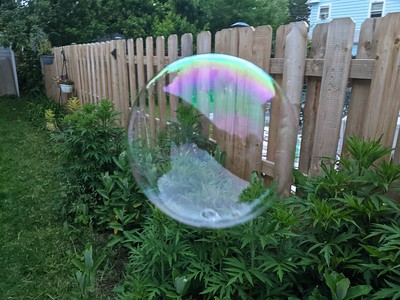
Bubble in garden

Hi,

After publishing no peer-reviewed science in 2021, two papers I'm a co-author on were published this month!

The first (Vijay et al. 2022) looks at how different conservation goals for people and nature tend to align and conflict: identifying both win-wins and trade-offs to inform conservation priorities. The second (James et al. 2022) is an analysis of scientific publications by staff at The Nature Conservancy split by gender, along with recommendations to improve the ability of women (especially from the Global South) to publish research. Let me know if you have questions about either after reading the summaries below!

I've also got an interesting article on the IUCN Red List of threatened ecosystems, and a great framework to think through freshwater conservation needs and approaches.

If you know someone who wants to sign up to receive these summaries, they can do so at http://bit.ly/sciencejon (no need to email me).

GENDER AND SCIENCE:
James et al. 2022 analyzed almost 3,000 peer-reviewed scientific publications with at least one author from The Nature Conservancy (TNC) by gender of the author(s) - all that we could find from 1968 to 2019. Roughly 1/3 of the TNC authors and authorships (# authors * # papers) were women, even though 45% of conservation and science staff are women. Most authorships were in the U.S. - 85% overall and 90% for women. This means men (especially men in the United States) are publishing at a significantly higher rate than women. We close with several recommendations to help shrink this gap. Some are aimed at individual scientists (e.g., self-education on bias and systemic barriers, asking men to collaborate more with women as male-led papers have far fewer women co-authors than female-led papers, and asking lead authors to be more inclusive in determining whose contributions merit being listed as an author), and others are aimed at organizations (e.g., providing more resources and support for women who wish to publish, especially for women who don't speak English as a first language). I learned a ton from both the data and my co-authors on this one, and we have another 1-2 papers on the subject coming which will get into the results of a survey the lead author did to get deeper into the experience of how gender impacts not only publication but perceptions of influence and career advancement. Note that our available data listed everyone's gender as male, female, or unknown - apologies to those who we misgendered or otherwise failed to reflect their lived experience with a relatively simple binary analysis (especially as gender diverse people appear to be even more underrepresented in science publications).
You can read blogs about the article at https://www.nature.org/en-us/newsroom/published-science-gender-gap/ and https://blog.nature.org/science/science-brief/conservation-science-publishing-has-a-gender-problem/


CONSERVATION PRIORITIZATION:
As conservation organizations try to work towards multiple goals, Vijay et al. 2022 asks whether we can protect places that efficiently advance multiple goals at once, or if we have to pick between places good for one goal but that perform poorly for others. We looked at opportunities to advance five benefits by protecting land in the contiguous United States: vertebrate species richness, threatened vertebrate species richness, carbon storage, area protected, and recreational usage. Specifically we looked at Return On Investment (ROI) meaning the benefit score compared to the cost of the land (as a proxy for difficulty of protecting it). The results are a bit complicated: this paper focused only on unprotected habitat which is predicted to be converted by 2100, and with that framing the four environmental benefits were both highly correlated overall (r 0.89-0.99) and had a lot of the "top sites" in common (the highest scoring places for one benefit often had a top score for another benefit, 32-79% of the time). Recreation had less in common with environmental benefits (r 0.5-0.52, only 7-13% of the top sites were also a top site for another benefit). That still shows a lot of opportunity for win-wins across the nation! However, if you DON'T constrain conservation to places where land use is projected to change by 2100, win-wins are harder to find (as shown in the Supplementary Information). Species richness and area were the most compatible with a high r of 0.58 and 24% of top sites in common, and area and recreation were the least aligned, with an r of -0.65 and no top sites in common. There's a lot of interesting stuff in the paper (including comparing how three hypothetical policy scenarios score on each benefit), and I've written a slightly longer summary here: https://www.linkedin.com/posts/sciencejon_conservation-science-goalsetting-activity-6948122284528197632-OH0S/

You're probably familiar with the IUCN's Red List of Threatened Species - which ranks how at risk species around the world are. Comer et al. 2022 is an analysis for the Red List of ECOSYSTEMS for North America - looking at the risk of ecological collapse for 655 terrestrial ecosystems considering: current extent, how much historic extent has been lost, degradation from historic fire regime, and disruption of biotic processes (focused on invasive species and landscape fragmentation). They found 1/3 of ecosystems were threatened, and Fig 2 shows which types of ecosystems were the most threatened (like Mediterranean Scrub & Grassland, which had the highest % of extent that was threatened, and Tropical Montane Grassland & Shrubland, which had the highest % Critically Endangered). Fig 1 has a great pair of maps showing both current and historic extent of all assessed ecosystems (colored by threat level). There is also an excellent discussion of the challenges and limitations in doing an analysis like this (section 4.2). Despite these limitations, this provides a useful complement to species-focused prioritizations (like range-size rarity).


FRESHWATER CONSERVATION:
Higgins et al. 2021 (from a team of scientists and lawyers) argues that since freshwater species are declining faster than terrestrial species, and effective durable freshwater conservation is typically harder to get right, we need more thoughtful design of freshwater protection and management. They offer a framework to do that, beginning with key questions (about things like what you value, key ecological attributes [KEAs] to conserve, threats to ecosystems, and protection options), which is summarized in Figure 1. Table 1 is extremely useful: it outlines 5 key ecological attributes that freshwater systems need: 1) hydrologic regime / healthy flow, 2) connectivity , 3) water quality (nutrients, sediment, toxins, etc.), 4) habitat (riparian, in-stream, other wetlands), 5) species (diversity, abundance, invasives). Table 1 also lists threats, Table 2 has conservation options, and Table 3 has helpful and relatively simple examples to get you started. Doing this work is hard! But I found this article to be a great challenge to keep thinking beyond protecting the land around freshwater ecosystems, and planning for what they need over the long-term.

REFERENCES:

Comer, P. J., Hak, J. C., & Seddon, E. (2022). Documenting at-risk status of terrestrial ecosystems in temperate and tropical North America. Conservation Science and Practice, 4(2), 1–13. https://doi.org/10.1111/csp2.603

Higgins, J., Zablocki, J., Newsock, A., Krolopp, A., Tabas, P., & Salama, M. (2021). Durable Freshwater Protection: A Framework for Establishing and Maintaining Long-Term Protection for Freshwater Ecosystems and the Values They Sustain. Sustainability, 13(4), 1950. https://doi.org/10.3390/su13041950

James, R., Ariunbaatar, J., Bresnahan, M., Carlos‐Grotjahn, C., Fisher, J. R. B., Gibbs, B., Hausheer, J. E., Nakozoete, C., Nomura, S., Possingham, H., & Lyons, K. (2022). Gender and conservation science: Men continue to out‐publish women at the world’s largest environmental conservation non‐profit organization. Conservation Science and Practice, January, 1–9. https://doi.org/10.1111/csp2.12748

Vijay, V., Fisher, J. R. B., & Armsworth, P. R. (2022). Co‐benefits for terrestrial biodiversity and ecosystem services available from contrasting land protection policies in the contiguous United States. Conservation Letters, February, 1–9. https://doi.org/10.1111/conl.12907


Sincerely,
 
Jon
 
p.s. This large bubble is over my 'butterfly garden' which is currently full of flowers and pollinators!

Wednesday, July 6, 2022

Two new papers: how gender impacts science publishing & conservation prioritization

After having 0 papers published in 2021, I was on author on two papers published last week (both open access - click the author name to go to the paper)! Here's a quick summary of each:

James et al. 2022 analyzed almost 3,000 peer-reviewed scientific publications with at least one author from The Nature Conservancy (TNC) by gender of the author(s) - all that we could find from 1968 to 2019. Roughly 1/3 of the TNC authors and authorships (# authors * # papers) were women, even though 45% of conservation and science staff are women. Most authorships were in the U.S. - 85% overall and 90% for women. This means men (especially men in the United States) are publishing at a significantly higher rate than women. We close with several recommendations to help shrink this gap. Some are aimed at individual scientists (e.g., self-education on bias and systemic barriers, asking men to collaborate more with women as male-led papers have far fewer women co-authors than female-led papers, and asking lead authors to be more inclusive in determining whose contributions merit being listed as an author), and others are aimed at organizations (e.g., providing more resources and support for women who wish to publish, especially for women who don't speak English as a first language). 

I learned a ton from both the data and my co-authors on this one, and we have another 1-2 papers on the subject coming which will get into the results of a survey the lead author did to get deeper into the experience of how gender impacts not only publication but perceptions of influence and career advancement. Note that our available data listed everyone's gender as male, female, or unknown - apologies to those who we misgendered or otherwise failed to reflect their lived experience with a relatively simple binary analysis (especially as gender diverse people appear to be even more underrepresented in science publications).

You can read blogs about the article at https://www.nature.org/en-us/newsroom/published-science-gender-gap/ and https://blog.nature.org/science/science-brief/conservation-science-publishing-has-a-gender-problem/ or the full paper is at https://onlinelibrary.wiley.com/doi/10.1111/csp2.12748


As conservation organizations try to work towards multiple goals, Vijay et al. 2022 asks whether we can protect places that efficiently advance multiple goals at once (win-wins), or if we have to pick between places good for one goal but that perform poorly for others (trade-offs). We looked at opportunities to advance five benefits by protecting land in the contiguous United States: vertebrate species richness, threatened vertebrate species richness, carbon storage, area protected, and recreational usage. Specifically we looked at Return On Investment (ROI) meaning the benefit score compared to the cost of the land (as a proxy for difficulty of protecting it). 

The results are a bit complicated: this paper focused only on unprotected habitat which is predicted to be converted by 2100, and with that framing the four environmental benefits were both highly correlated overall (r 0.89-0.99) and had a lot of the "top sites" in common (the highest scoring places for one benefit often had a top score for another benefit, 32-79% of the time). Recreation had less in common with environmental benefits (r 0.5-0.52, only 7-13% of the top sites were also a top site for another benefit). That still shows a lot of opportunity for win-wins across the nation! However, if you DON'T constrain conservation to places where land use is projected to change by 2100, win-wins are harder to find (as shown in the Supplementary Information). Species richness and area were the most compatible with a high r of 0.58 and 24% of top sites in common, and area and recreation were the least aligned, with an r of -0.65 and no top sites in common. 

There's a lot of interesting stuff in the paper (including comparing how three hypothetical policy scenarios score on each benefit), and I've written a slightly longer summary here: https://www.linkedin.com/posts/sciencejon_conservation-science-goalsetting-activity-6948122284528197632-OH0S/ or the full paper is at https://onlinelibrary.wiley.com/doi/10.1111/conl.12907

Tuesday, March 1, 2022

March 2022 science summary

Winter biking


 Hello,


I've got a mix of papers this month but most relate to climate change (priorities for mitigation and adaptation, impacts on flooding, and how to plan for it) plus a couple of wildlife movement. 

If you know someone who wants to sign up to receive these summaries, they can do so at http://bit.ly/sciencejon (no need to email me).

CONSERVATION PRIORITIES / 30x30 / CLIMATE ADAPTATION:
Dreiss & Malcom 2022 is an analysis of priorities for protection under 30x30, considering hotspots of biodiversity and carbon, current protection (Fig 2), and threats. The two threats are risk of conversion (to non-habitat by 2050) and climate vulnerability (need for habitat / species to migrate elsewhere to survive, expressed in km/yr). They have two sets of hotspots, one with the top 10% of biodiversity (they calculated both imperiled species richness, and imperiled species range-size-rarity which captures how much habitat rare spp. have left), and one with the top 10% of carbon pools (not actual GHG mitigation potential, as it omits deep carbon like peat, other GHGs, and the albedo effect). Fig 3 has maps of their main results, but they're easier to see and explore in the interactive map at https://arcg.is/0SjGLK. Fig 4 highlights high conversion risk (>50%) and climate vulnerability for hotspots (top 10%) of biodiversity and carbon (4a = conversion & richness, 4b = conversion & carbon, 4c = climate vuln. & richness, 4d = climate vuln. & carbon). Upgrading all existing less strict protected areas (GAP 3) would achieve ~30% protection, but that would miss 80% of biodiversity hotspots (which are on private land). Similarly, 21% of unprotected biodiversity hotspots have at least a 50% chance of being converted by 2050. The authors didn't include political, social, or economic considerations, but there are still a lot of useful data in here.

Dreiss et al. 2022 identifies priority conservation locations within the contiguous US to support climate adaptation (via refugia and corridors). Fig 4c shows which climate refugia and corridors are unprotected (in gray) or underprotected (GAP 3 in orange). The bottom two rows in Table 3 shows that the best places for climate adaptation mostly don't overlap with the best places for biodiversity or carbon (~20-25% do). This means that focusing solely on biodiversity or carbon hotpsots is likely to miss critical refugia and corridors to help ensure resilience to climate change.


CLIMATE CHANGE IMPACTS:
Wing et al. 2022 modeled increasing US flooding risks due to both climate change (by 2050 under RCP4.5, which is 'medium' emissions but still means aggressive decarbonization) and changing populations. Note that the paper uses 'risk' in the engineering sense: likelihood of impact times magnitude of impact (so risk is reported as expected annual $ losses due to floods). Those losses are expected to go up 26% just from climate change (calculated at the building level based on current population data), but considering both climate change and population change they predict almost twice as many people will be impacted by flood each year (with that impact driven largely by population growth). The highest current flood risk is in predominantly white and extremely poor counties (partly b/c very poor people in areas at risk of floods have few financial assets not vulnerable to floods, so their relative risk is higher). The counties with the highest % Black population are expected to see twice as much risk increase by 2050 as counties with the fewest Black people. This is due a mix of increasing flooding risk in the Deep South, and the relatively low current risk of mostly Black counties. You can read more about this at https://www.washingtonpost.com/business/2022/01/31/climate-change-flooding-united-states/

Brown et al. 2022 has a good overview of recent improvements to incorporating climate change into conservation planning via the Conservation Standards (aka Open Standards for the Practice of Conservation). If you're not familiar with the Standards, this paper will be a bit overwhelming, but still has useful tidbits. Jump to figure 4 for a very helpful diagram of physical changes expected to result from climate change, and which of these changes make sense to classify as "direct climate threats" (in red text). What I love about this is it helps you move past (climate change will affect everything) and identify the specific changes that a) will affect focal species and ecosystems, and b) which you can affect via conservation. So rather than focusing on changes to rain, they identify decreased water availability and increased risk of landslides as climate threats. Then Fig 5b shows how the climate threats are integrated w/ other direct threats and linked to conservation targets (the species and ecosystems being prioritized for action). If you can handle switching examples, Figs 6 and 7 show how to move from a situation model (linking threats to targets and identifying possible strategies) to a results chain (showing the desired interim results and ultimate impacts of a strategy). There is some updated guidance available since this was published on the CMP web site.


WILDLIFE MOVEMENT / MIGRATION:
Merkle et al. 2022 addresses the problem that species which favor returning to fixed places to forage / breed / shelter have a hard time adjusting to habitat loss and resulting fragmentation. Figure 2 has a good example: mule deer in WY staying true to winter range despite oil & gas development, which the authors give as an example of an 'ecological trap' due to 'site fidelity' (they keep coming back even if they have better alternatives). They call for more research on what drives site fidelity (genetics, environmental conditions, or a mix), and for conservation plans to account for site fidelity rather than assuming animals will choose the best habitat possible.

Vynne et al. 2022 is a global analysis to find terrestrial ecoregions where only 1-3 large mammals (>33 lb, 298 species) are missing from the mammals that present 500 years ago (Fig 2 has a map of those results). Given the impact large mammals have on ecosystems, the idea is that getting back to the full suite of mammals that used to be there will have broader effects. But this is an assumption the authors make, rather than a conclusion of the analysis (most news headlines have implied the latter). The best known example of that is the impact of reintroducing wolves to Yellowstone leading to a trophic cascade (although unfortunately those effects have been widely exaggerated due to non-random aspen sampling and failing to account for confounding effects of human hunting and changes in streamflow due to climate). Their 30 priority ecoregions for reintroduction / restoration are in Table 2 and Figure S3. They note the challenges in reintroducing predators in particular, including the need to plan to avoid human conflict and difficulty of securing protection over large areas to allow for connectivity).


REFERENCES:

Brown, M. B., Morrison, J. C., Schulz, T. T., Cross, M. S., Püschel-Hoeneisen, N., Suresh, V., & Eguren, A. (2022). Using the Conservation Standards Framework to Address the Effects of Climate Change on Biodiversity and Ecosystem Services. Climate, 10(2), 13. https://doi.org/10.3390/cli10020013

Dreiss, L. M., & Malcom, J. W. (2022). Title identifying key federal, state, and private lands strategies for achieving 30 × 30 in the United States. Conservation Letters, May 2021, 1–12. https://doi.org/10.1111/conl.12849

Dreiss, L. M., Lacey, L. M., Weber, T. C., Delach, A., Niederman, T. E., & Malcom, J. W. (2022). Targeting current species ranges and carbon stocks fails to conserve biodiversity in a changing climate: opportunities to support climate adaptation under 30x30. Environmental Research Letters, 2(1), 0–31. https://doi.org/10.1088/1748-9326/ac4f8c

Merkle, J. A., Abrahms, B., Armstrong, J. B., Sawyer, H., Costa, D. P., & Chalfoun, A. D. (2022). Site fidelity as a maladaptive behavior in the Anthropocene. Frontiers in Ecology and the Environment, 1–8. https://doi.org/10.1002/fee.2456

Vynne, C., Gosling, J., Maney, C., Dinerstein, E., Lee, A. T. L., Burgess, N. D., Fernández, N., Fernando, S., Jhala, H., Jhala, Y., Noss, R. F., Proctor, M. F., Schipper, J., González‐Maya, J. F., Joshi, A. R., Olson, D., Ripple, W. J., & Svenning, J. (2022). An ecoregion‐based approach to restoring the world’s intact large mammal assemblages. Ecography, 1–12. https://doi.org/10.1111/ecog.06098

Wing, O. E. J., Lehman, W., Bates, P. D., Sampson, C. C., Quinn, N., Smith, A. M., Neal, J. C., Porter, J. R., & Kousky, C. (2022). Inequitable patterns of US flood risk in the Anthropocene. Nature Climate Change. https://doi.org/10.1038/s41558-021-01265-6

Sincerely,
 
Jon
 
p.s. If you'd like to keep track of what I write as well as what I read, I always link to both my informal blog posts and my formal publications (plus these summaries) at http://sciencejon.blogspot.com/
p.p.s. As shown in the pic above - I am a committed winter biker, and my wife and I very much enjoyed Arlington's winter bike games recently!

Wednesday, October 3, 2012

The influence of priority areas on conservation land acquisitions

I just had this paper published in PLoS ONE, which examines the influence that defining priority areas had on where The Nature Conservancy acquired land. In other words, did setting priorities actually cause us to behave differently, or not? Rather than spoil it for you, you can read the answer for yourself here:
http://dx.plos.org/10.1371/journal.pone.0046429