Showing posts with label birds. Show all posts

Tuesday, July 1, 2025

July 2025 science summary

Dramatic sunset in Wildwood

 Happy July,


In addition to the usual summaries, I have a request the non-scientists among you (or at least people doing policy or implementation and not JUST science). I have a one-question open-ended survey asking "What one piece of advice would you give scientists to be more effective? What should they do more or less of?" I'd welcome the input and will also share what I hear back in the next summary (and will split the results by advice from scientists and non-scientists if people self-identify). https://forms.cloud.microsoft/r/DXG1n76Q9V  Please reply by Friday July 25 to give me time to read and summarize everything.

The seven summaries cover conservation priorities for birds and people in the US, fire, how fire influences water quantity, and four covering various topics in the Pantanal.

If you know someone who wants to sign up to receive these summaries, they can do so at http://subscribe.sciencejon.com (no need to email me).

CONSERVATION PRIORITIES IN THE U.S. (BIRDS AND PEOPLE):
Neugarten et al. 2025 analyzes overlap of places in the US important to birds with places important for ecosystem services (ES, with climate mitigation broken out separately). They use the 37% of the US producing the most ES (as per Chaplin-Kramer et al. 2023, and from the same paper the 44% of the US storing 90% of vulnerable carbon as carbon priority areas) and bird abundance data form eBird. My TL;DR for this paper is that the natural places people need most help birds better than average, BUT they perform badly for wetland birds and generalists so we need to conserve places good for people AND places good for birds that people don't need as much. Longer take-aways 1) places good for ecosystem services are better than random places for a slight majority of bird species, 2) only 42% of species did better than random w/ carbon priority areas (mostly forest birds as you'd guess), 3) most of the 57 "tipping point" species (who lost 1/2 of their population size over 50 years and are on track to go extinct) don't do well with either ES or carbon priorities, 4) wetland birds and generalists (and to some degree aridland birds) are poorly represented by ES and carbon priorities, 5) "Regions with especially high co-benefits for birds, ES and carbon include the Appalachian Mountains, the southeastern U.S., New England, the Ozarks, and the Sierras and Cascade mountain ranges (Fig. 2a)". This news article has a good summary (although note that my quote about this research being useful to inform where and how conservationists work cut off the end of the sentence which was "along with other strategic considerations" since feasibility and other factors are key). https://news.mongabay.com/short-article/2025/05/study-identifies-us-regions-that-benefit-birds-people-climate-the-most/


FIRE:
Siquiera et al. 2025 has a helpful reminder that finer data isn't always better. They found free MODIS data (which is relatively fast and easy to process due to 500m resolution) actually did a little better at detecting areas that had burned in the Pantanal than Sentinel 2 data (also free but needs more babying and at 10m [2500* finer resolution] it takes a ton more processing time). LANDSAT (at 30m) did worse than either. The only caveat is that their validation for “burned areas” is fire foci which are partly derived from MODIS which likely biases the results somewhat. But anytime we can get away with using coarser data to save time and money it’s good news! One of my papers (https://zslpublications.onlinelibrary.wiley.com/doi/full/10.1002/rse2.61) has a table about when coarser vs. finer data may be better, and that table is in a blog here: https://rsecjournal.blog/2017/08/25/how-much-data-is-enough-investigating-how-spatial-data-resolution-impacts-conservation-decision-making/


FIRE AND WATER QUANTITY:
Guzmán-Rojo et al. 2025 is an interesting model of how fires in the Bolivian Chiquitano dry forest affect water availability, focusing on soil changes (crusting, ash deposition, and reduced porosity which can decrease infiltration and increase runoff) rather than vegetation loss. They found ~40% lower recharge in the first year after a hypothetical very severe fire, returning to ~10% lower than pre-fire after two years. However, they note that field data showed that moderate to severe fires actually reduced soil porosity by 39%, while their hypothetical very severe fire assumed a 70% reduction which is probably an upper bound for how much soil permeability could be reduced. They also note that if they had accounted for vegetation loss in their model, the recharge may have been lower in some areas where dense vegetation transpires more water than it intercepts. While they had limited data to validate their model they used other studies and proxies where they could.


BIODIVERSITY OFFSETTING / PANTANAL:
While Lourival et al. 2025 ponders 10 questions for biodiversity offsetting in the Brazilian Pantanal and its watershed (listed at the top of the 3rd page), it's relevant to biodiversity offsets in general. I especially like Fig 4 with different ways to think about equivalence for offsets (area, economic value, ecosystem value, or a mix). So for example if you clear high-value land in the Cerrado, you could need to protect a much larger lower-value area in the Pantanal. They find 57% of properties in the highlands feeding the Pantanal are out of compliance with the Forest Code (Table 1, Fig 3). Properties WITHIN the Pantanal are only 22% out of compliance, so considering the whole river basin could offer opportunities BUT ecological equivalence may be low and state regulations restrict what is possible. One could argue that's a huge market for offset purchases OR evidence the law is toothless and demand will be low.


PANTANAL:
Guerra et al. 2025 looks at how ecosystem services in the Pantanal and its highlands will change by 2050 under three scenarios (S1 - business as usual (BAU), S2 - increased expansion of ag and industry, and S3 - sustainable intensification). The sustainable scenario could cut soil runoff into rivers almost in half (Figs 4 & 5) and reduce habitat loss by a third compared to BAU (Fig 3). The authors point to some promising new policies that could help the sustainable path, including the growth of the FPS system for ranching and payments for ecosystem services (PES) at national and state (Mato Grosso do Sul) levels, altough there are no PES programs in the Pantanal yet.

Tomasella et al. 2025 found that over recent decades (the time periods are weirdly overlapping and of different length, e.g., 1981-2000 vs 1991-2020) the Pantanal has seen a 4.8% drop in precipitation, 2.9% increase in potential evapotranspiration, and the aridity index (the ratio of those two – with a lower aridity index meaning drier conditions) decreased by 7.5% (brown areas in Fig 5 at right). Fig 3 shows that a chunk of the Pantanal (11,500 km) has dried out enough to change biome from humid to “dry sub-humid.”

Fernandes et al. 2025 uses remote sensing to see how changing sediment loads affected river geomorphology (how the river channel moves over time) in the Cuiabá river in the Pantanal. Stream ecologists often focus on sediment as a pollutant coming from deforestation and agriculture, and that is an issue here (as it is in the nearby Taquari river). But in this case, the construction of the large Manso dam in 2002 has reduced sediment load more than land use change has increased it, perhaps below healthy sediment levels (see Fig 9) for 500km downstream of the dam.


REFERENCES:
Chaplin-Kramer, R., Neugarten, R. A., Sharp, R. P., Collins, P. M., Polasky, S., Hole, D., Schuster, R., Strimas-Mackey, M., Mulligan, M., Brandon, C., Diaz, S., Fluet-Chouinard, E., Gorenflo, L. J., Johnson, J. A., Kennedy, C. M., Keys, P. W., Longley-Wood, K., McIntyre, P. B., Noon, M., … Watson, R. A. (2022). Mapping the planet’s critical natural assets. Nature Ecology & Evolution, 7(1), 51–61. https://doi.org/10.1038/s41559-022-01934-5

Fernandes, B. S., de Oliveira, S. C., & Pupim, F. N. (2025). Anthropogenic disturbances drive the morphological and sedimentary changes of the Cuiabá River, Pantanal, Brazil: a remotely sensed approach. Earth Science, Systems and Society. https://doi.org/10.1144/esss2024-007

Guerra, A., Resende, F., Bergier, I., Fairbrass, A., Bernardino, C., Centurião, D. A. S., Bolzan, F., Marcel, G., Rosa, I. M. D., da Silva, J. C. S., Garcia, L. C., Larcher, L., de Oliveira, P. T. S., Chiaravalloti, R. M., Roscoe, R., Louzada, R., Santos, S., Tomas, W. M., Nunes, A. V., & de Oliveira Roque, F. (2025). Land use and regulating ecosystem services scenarios for the Brazilian Pantanal and its surroundings under different storylines of future regional development. Conservation Science and Practice, August 2024, 1–16. https://doi.org/10.1111/csp2.70012

Guzmán-Rojo, M., Silva de Freitas, L., Coritza Taquichiri, E., & Huysmans, M. (2025). Groundwater Vulnerability in the Aftermath of Wildfires at the El Sutó Spring Area: Model-Based Insights and the Proposal of a Post-Fire Vulnerability Index for Dry Tropical Forests. Fire, 8(3), 86. https://doi.org/10.3390/fire8030086

Lourival, R. F. F., de Roque, F. de O., Bolzan, F. P., Guerra, A., Nunes, A. P., Lacerda, A. C. R., Nunes, A. V., Alves, A., Filho, A. C. P., Ribeiro, D. B., Eaton, D. P., Brito, E. S., Fischer, E., Neto, F. V., Porfirio, G., Seixas, G. H. F., Pinto, J. O. P., Quintero, J. M. O., Sabino, J., … Tomas, W. M. (2025). Ten relevant questions for applying biodiversity offsetting in the Pantanal wetland. Conservation Science and Practice, July 2022, 1–21. https://doi.org/10.1111/csp2.13274

Neugarten, R. A., Davis, C. L., Duran, G., & Rodewald, A. D. (2025). Co-benefits of nature for birds, people, and climate in the United States. Ecosystem Services, 73(May), 101733. https://doi.org/10.1016/j.ecoser.2025.101733

Siqueira, R. G., Moquedace, C. M., Silva, L. V., de Oliveira, M. S., Cruz, G. D. B., Francelino, M. R., Schaefer, C. E. G. R., & Fernandes-Filho, E. I. (2025). Do finer-resolution sensors better discriminate burnt areas? A case study with MODIS, Landsat-8 and Sentinel-2 spectral indices for the Pantanal 2020 wildfire detection. International Journal of Remote Sensing, 00(00), 1–24. https://doi.org/10.1080/01431161.2025.2496000

Tomasella, J., do Amaral Cunha, A. M., Zeri, M., & Costa, L. C. O. (2025). Changes in the aridity index across Brazilian biomes. Science of The Total Environment, 989(March), 179869. https://doi.org/10.1016/j.scitotenv.2025.179869


Happy reading,
 
Jon
 
p.s. The photo above was an especially vivid winter sunset in Wildwood, NJ

Friday, June 1, 2018

June 2018 science journal article roundup

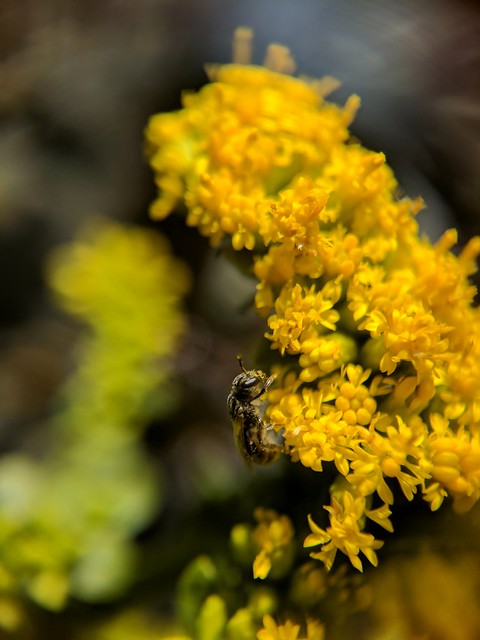
Tiny bee on dwarf goldenrod

Hi,

My garden is abuzz with bees and flies (the photo above is of a bee the size of a gnat), which has me thinking about pollinators and pesticides - the focus of this roundup. But I couldn't resist including one study on improving watershed-scale water quality via changing agriculture, as I've been gushing about it for years (hat tip to Steve Richter from TNC Wisconsin). Enjoy!

If you want to receive these monthly summaries by email you can sign up at http://eepurl.com/diB0nr, and if you want an email anytime I post something on this blog you can subscribe using the form on the top right of this page.

AGRICULTURE & WATER QUALITY:
Carvin et al 2018 is a study I've been eagerly awaiting for years. It is a rigorous paired watershed study looking at the impact of a carefully targeted set of agricultural interventions, and is one of the first papers in the US to show we CAN improve water quality at a watershed scale (50 km2) through shifting ag. Initial work had found 9% of the area was contributing 40% of the phosphorous load, so the authors really targeted those heavy contributors. They found a 55% reduction in phosphorus runoff loads and suspended sediment event loads decreased by 52% for events during unfrozen soil conditions  into the Pecatonica River tributary during storm events. This is big news as these outcomes have been elusive. However, this watershed was picked as one of the most likely to respond well, and those seeking to replicate these results should also carefully select their watersheds. Contact Steve Richter at TNC for more info.


POLLINATORS:
Klein et al. 2007 is a fantastic reference examining dependence on animal pollination across 115 major crop species (ignoring crops like corn which are entirely wind-pollinated). I mainly use Appendix 2, which for each crop lists how much it benefits from animal pollination (from entirely dependent on animal pollinators like cocoa or squash, to receiving almost no benefit) as well as listing the type of pollinator, pointing to references, etc. While the appendix is my favorite part, they also note in the main paper that a) non-insect pollinators (e.g. birds and bats) are less well studied and b) as agriculture intensifies wild pollinators are likely to decline. This means thinking about pollinator habitat in and around farms can be important for some crops, and the appendix can identify which ones are most likely to see more benefit.

Garibaldi et al 2016 argue that improving pollination is an underappreciated need to close crop yield gaps. They found that yields on small farms (<2 ha) could be improved by 24% on average by boosting pollinator density. Strangely for larger farms, when polinator diversity was low, yields actually dropped with incresing pollinator density (when diversity was high, yields went up with pollinator density as expected). The authors don't explain why (or even accurately convey that finding in the text), which makes me wonder if the sample was too small. They did find that isolation from natural habitats was one of the most important predictors of crop yield. This calls attention to the need for more specific data on how restoring habitat could boost crop yields (including testing crops and regions likely to receive the most benefit).

I recently wondered if camera traps and audio monitoring would work for pollinators, and Edwards et al. 2015 had a crafty idea that worked well: long-term time lapse video. They looked at visits by pollinators to 30 different plant species, then focus on a species of dogwood and had nearly complete records for a given flower. Check out Figure 1 and 2, you can clearly not only see the rough type of pollinator, but even see pollination take place as florets within the inflorescence close (a cluster of flowers, for a dogwood this looks like 1 "flower"). The system is relatively cheap and simple, and perhaps the biggest obstacle to doing lots of this is the need to manually review each video to classify pollinators seen in each frame (an hour of footage plays in 1.75 minutes, but scoring takes longer). There's also a question of how many flowers of how many species you'd need to monitoring to get a sense of total pollinator activity on a given piece of land. Still a really cool setup worth keeping an eye on.

I was recently surprised to hear that soybean can benefit from insect pollination (despite self-pollinating). Milfont et al. 2013 demonstrates this under field conditions (including typical pesticide application) in Brazil. They found wild pollinators may boost soy yields by 6%, and adding honeybees on top of wild pollinators raised yields 18%. They either caged plants to prevent access by pollinators, left them open (and did sampling for pollinators), or added honeybees nearby (without caging the bees to force pollination). The exciting thing is if even intense industrial soy gets a 6% boost, there is potential for soy with more careful pesticide application and more integrated pollinator habitat to do considerably better.

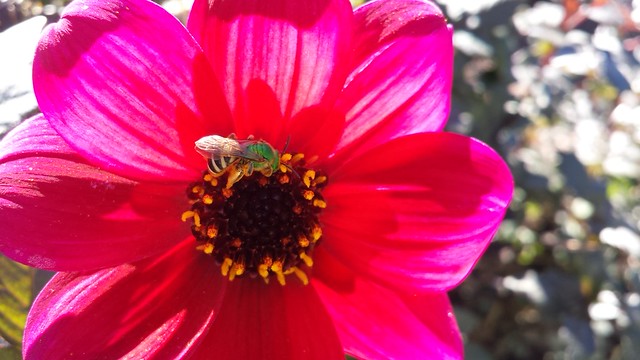
Gill and O'Neal 2015 also looks at insect pollination of soy, but focusing on the pollinators in Iowa rather than crop yield. They did lots of sampling, collecting >5,000 individuals from >50 species. 29-38% of the bees they sampled had collected at least some soy pollen. Strangely, although honeybee colonies were present on or near the farms they studied, they found almost no honeybees in their traps. This again emphasizes the potential value of wild pollinators. As an aside: the most common species of pollinator they found is one of the coolest kinds of bees I've ever seen (Agapostemon virescens, see the photo at the end of this email).


PESTICIDES / PEST CONTROL:
Eng et al 2017 provides the first experimental evidence that ingesting neonicotinoids (imidacloprid) and organophosphates (chlorpyrifos) can directly harm songbirds. Birds were fed low doses (the amount typically found on <0.1 corn seed, ~4 canola seeds) or high doses (0.2 corn seed, or 9 canola seeds) and lost 17-25% of their weight within 3 days of being dosed (for imidacloprid only) and were unable to sense north (which could impair migration), although they recovered within 14 days. This is concerning as birds may eat spilled treated seed (or even granules of the pesticide directly), which could lead to reduced breeding success. On the other hand, for some seeds birds typically remove seed hulls before eating the seed, which would reduce the effective dose. You can read a newspaper article about it here: https://amp.theguardian.com/environment/2017/nov/29/common-pesticide-can-make-migrating-birds-lose-their-way-research-shows and read the paper here: https://www.nature.com/articles/s41598-017-15446-x.epdf?author_access_token=60vOAq7fy3uoItENRL_WLtRgN0jAjWel9jnR3ZoTv0PBos7CYdu4-aOFIzRGcQZYPhLZT79bnumB3G0JwKQDqd8sXxokuXX20RybZGim1WNULIibibaVSnXR6616CbBcOjFXccxNhEZR_Q54lKeJqg%3D%3D

Tooker et al 2017 tackles a hot topic - what role do neonicotinoid seed treatments (NST) have in integrated pest management? Many ag companies assert they fit in well, since they can reduce aerial sprays which would have higher impact. On the other hand, there are concerns about effects on nontarget species, potential for resistance, and universal prophylactic application as opposed to the usual IPM approach of deploying pesticides in response to a pest outbreak. They have some interesting findings. First, they find that NST mostly target relatively uncommon pests by using almost universal application more suited to severe pests. They also note that current use of NST on corn and soy is much higher than historic benchmarks, indicating NST is not simply displacing other pesticides. They conclude by noting that more careful use of neonics is likely to both retain their value for pest control longer (by slowing down resistance), and that the challenge in finding corn and soy seeds without NST should be addressed.

Lechenet et al. 2017 looks at almost 1,000 farms in France, comparing farms with similar context to look at how the frequency of pesticide application relates to yield. They estimated that 3/4 of farms could reduce pesticide use without reducing yield or profit, and that on average for farms where they could get more specific, pesticide could be reduced on average by 42%. It's important to note they looked at correlations and predictions rather than empirically testing interventions, and they note that these reductions would likely be challenging for farmers.  Nonetheless, the article shows the importance of evaluating pest control strategies and looking for ways to reduce pesticide use.

I don't totally buy all of the conclusions of Bøhn and Lövei 2017, but they present some pretty interesting case studies. The basic theme is that a simple reductionist approach to pest control via GM-traits is unlikely to solve complex pest problems. They come out arguing that pesticides and transgenic traits are unlikely to be successful but also don't present clear alternatives. To me the interesting part of the paper is looking at the set of responses to a new transgenic plant (especially the surprises), and using that to think about what was missing and how we could build more robust pest control systems with more forethought and better design.

Bueno et al. 2017 is a primer on integrated pest management (IPM) for soybeans in Brazil. They list key pests, provide recommendations for scouting / sampling methods, evaluate several control methods (viruses, natural predators / parasitoids, insecticides, etc.). They also address how different pesticides impact natural enemies, finding that thiamethoxam harms natural enemies enough to actually allow pests to increase (although this is based on unpublished data, and appearing in a fairly low-quality journal, so it's an interesting thing to look into rather than a solid result). I see this article as a useful set of issues to consider for people working in this space.


REFERENCES:
Bøhn, T., & Lövei, G. L. (2017). Complex Outcomes from Insect and Weed Control with Transgenic Plants: Ecological Surprises? Frontiers in Environmental Science, 5(September), 1–8. https://doi.org/10.3389/fenvs.2017.00060

Bueno, R. C. O. F., Raetano, C. G., Junior, J. D., & Carvalho, F. K. (2017). Integrated Management of Soybean Pests: The Example of Brazil. Outlooks on Pest Management, (August), 149–153. https://doi.org/10.1564/v28

Carvin, R., Good, L. W., Fitzpatrick, F., Diehl, C., Songer, K., Meyer, K. J., … Richter, S. (2018). Testing a two-scale focused conservation strategy for reducing phosphorus and sediment loads from agricultural watersheds. Journal of Soil and Water Conservation, 73(3), 298–309. https://doi.org/10.2489/jswc.73.3.298

Edwards, J., Smith, G. P., & Mcentee, M. H. F. (2015). Long-term time-lapse video provides near complete records of floral visitation. Journal of Pollination Ecology, 16(13), 91–100.

Eng, M. L., Stutchbury, B. J. M., & Morrissey, C. A. (2017). Imidacloprid and chlorpyrifos insecticides impair migratory ability in a seed-eating songbird. Scientific Reports, 7(1), 1–9. https://doi.org/10.1038/s41598-017-15446-x

Garibaldi, L. A., Carvalheiro, L. G., Vaissière, B. E., Gemmill-herren, B., Hipólito, J., Freitas, B. M., … Zhang, H. (2016). Mutually beneficial pollinator diversity and crop yield outcomes in small and large farms. Science, 351(6271), 388–391. https://doi.org/10.1126/science.aac7287

Gill, K. A., & O’Neal, M. E. (2015). Survey of soybean insect pollinators: Community identification and sampling method analysis. Environmental Entomology, 44(3), 488–498. https://doi.org/10.1093/ee/nvv001

Klein, A.-M., Vaissière, B. E., Cane, J. H., Steffan-Dewenter, I., Cunningham, S. a, Kremen, C., & Tscharntke, T. (2007). Importance of pollinators in changing landscapes for world crops. Proceedings. Biological Sciences / The Royal Society, 274(1608), 303–313. https://doi.org/10.1098/rspb.2006.3721

Lechenet, M., Dessaint, F., Py, G., Makowski, D., & Munier-Jolain, N. (2017). Reducing pesticide use while preserving crop productivity and profitability on arable farms. Nature Plants, 3(3), 17008. https://doi.org/10.1038/nplants.2017.8

de O. Milfont, M., Rocha, E. E. M., Lima, A. O. N., & Freitas, B. M. (2013). Higher soybean production using honeybee and wild pollinators, a sustainable alternative to pesticides and autopollination. Environmental Chemistry Letters, 11(4), 335–341. https://doi.org/10.1007/s10311-013-0412-8

Tooker, J. F., Douglas, M. R., & Krupke, C. H. (2017). Neonicotinoid Seed Treatments: Limitations and Compatibility with Integrated Pest Management. Agricultural & Environmental Letters, 2(1), 0. https://doi.org/10.2134/ael2017.08.0026

Sincerely,

Jon

p.s. as a reminder, you can search all of the science articles written by TNC staff (that we know of) here http://www.conservationgateway.org/ConservationPlanning/ToolsData/sitepages/article-list.aspx
(as you publish please email science_pubs@tnc.org to help keep this resource current).
If you'd like to keep track of what I write as well as what I read, I always link to both my informal blog posts and my formal publications (plus these summaries) at http://sciencejon.blogspot.com/

Bonus photo: here's the type of bee Gill and O'Neal 2015 saw the most on soy fields in Iowa (Agapostemon, this one is on a dahlia in my garden):
Agapostemon metallic green bee on "Dracula" dahlia